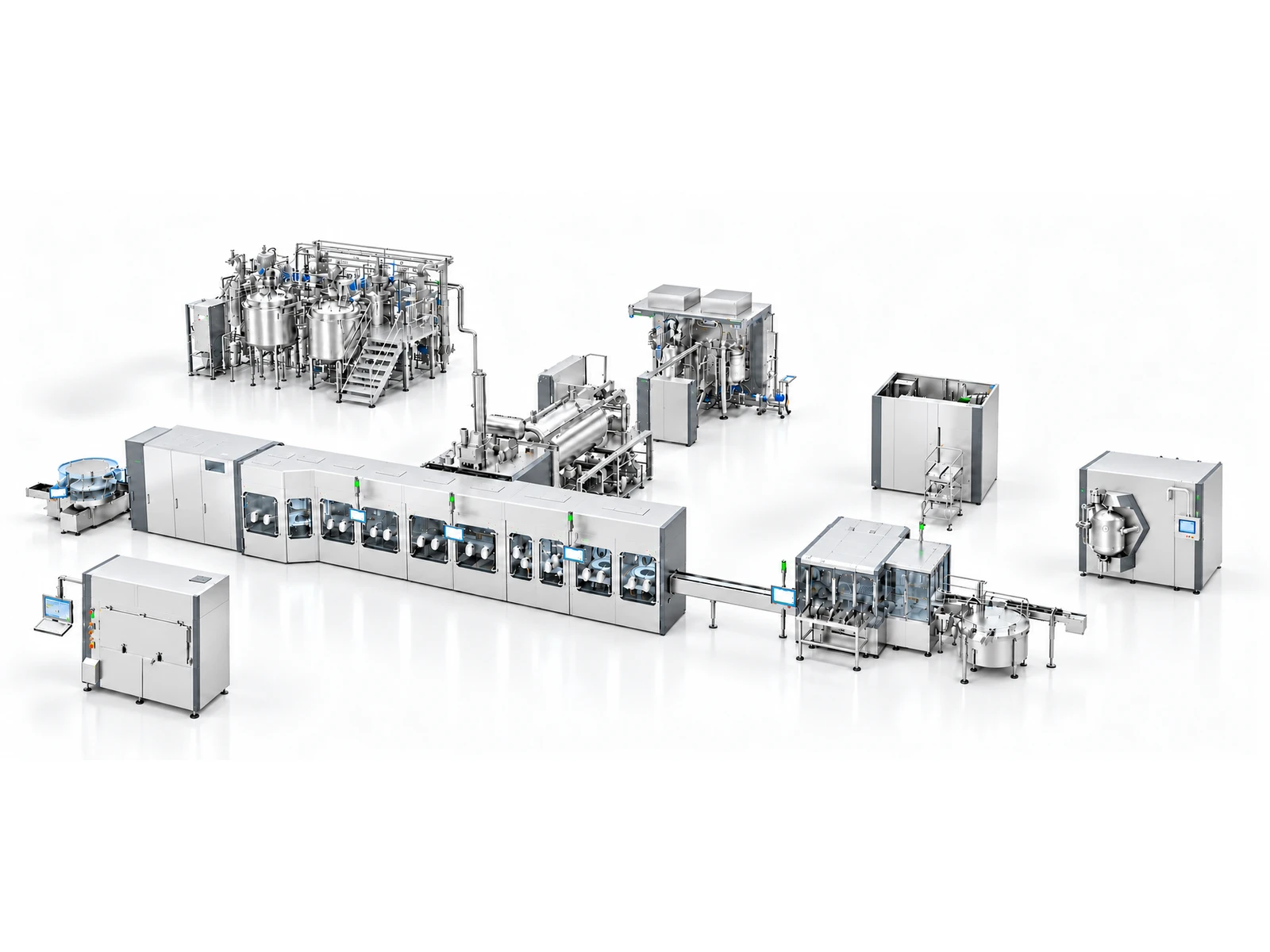
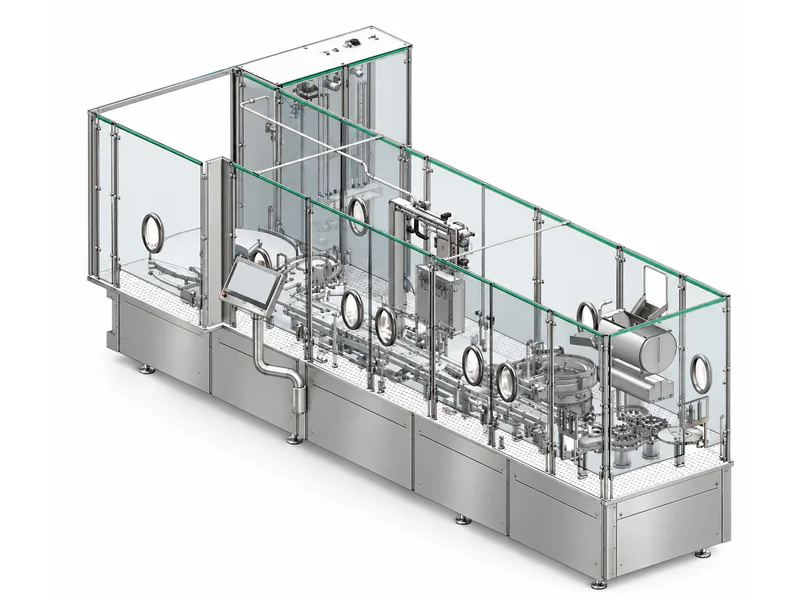
Review the main filling and closing operations, with container preparation and support equipment selected for the project.
The six process subjects below describe the required interfaces. Dose checking is associated with dosing; container preparation and supporting systems are selected separately.
01 / Prepared vials and powder
Confirm the incoming powder, vial and component condition before dosing. The vial supply route may use prepared bulk containers or an assessed ready-to-use system.
02 / Powder feeding and filling
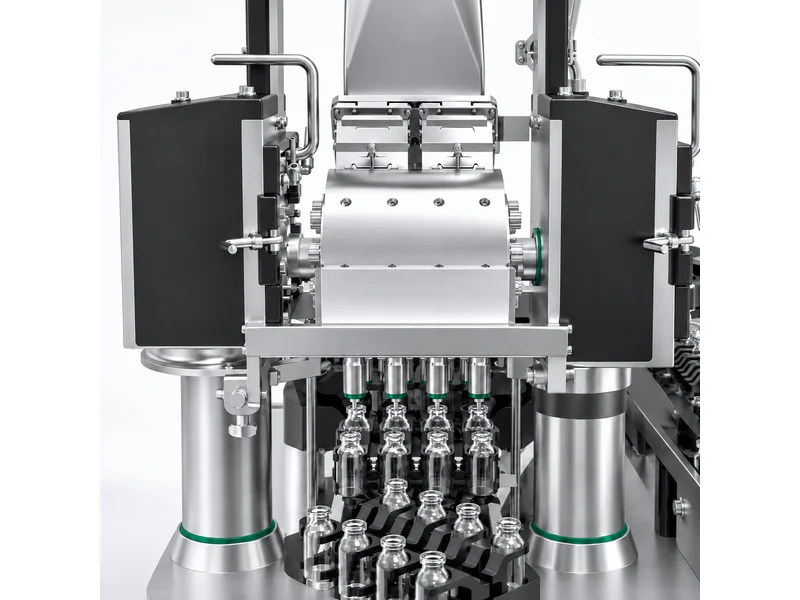
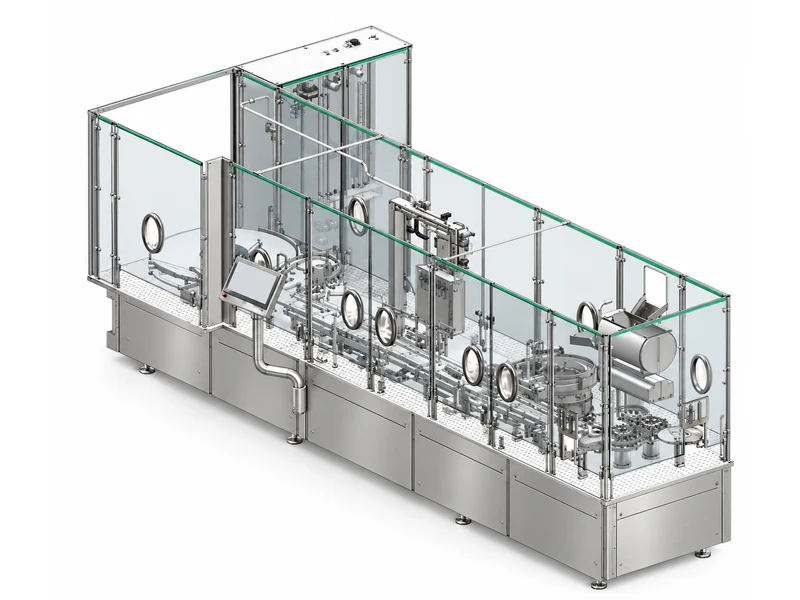
Feed prepared powder to the selected dosing system and transfer the dose through the vial mouth. Evaluate powder flow, refill conditions, the target mass and deposits near the closure surface.
Related equipment
Review the configuration for the intended container and process.
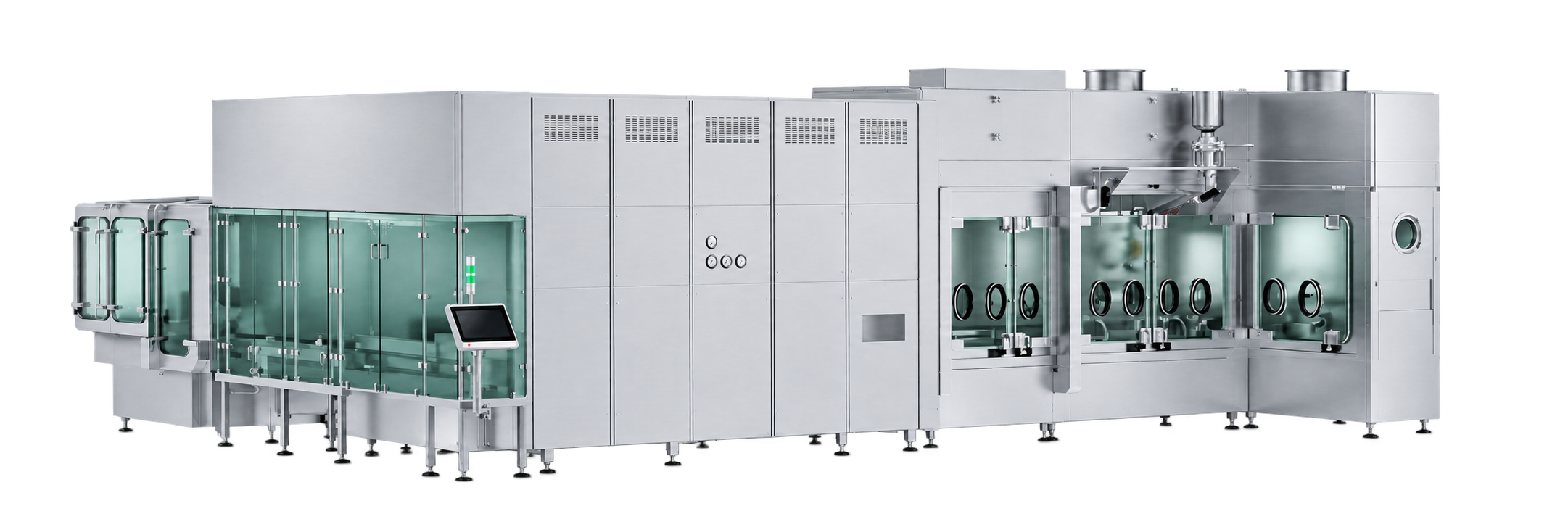
Shown equipment example
Powder-filling equipment example; preparation, checks and closure interfaces are defined for the project.
03 / Dose checks and rejection
Define the measurement coverage and track each checked vial to its acceptance or reject destination. A net-mass result needs an appropriate tare basis; gross vial mass alone is insufficient.
Measurement placement
A paired tare/gross method checks before and after filling; sampled checks may be off-line. Do not draw this card as a compulsory standalone machine between filling and closure.
04 / Stoppering and capping
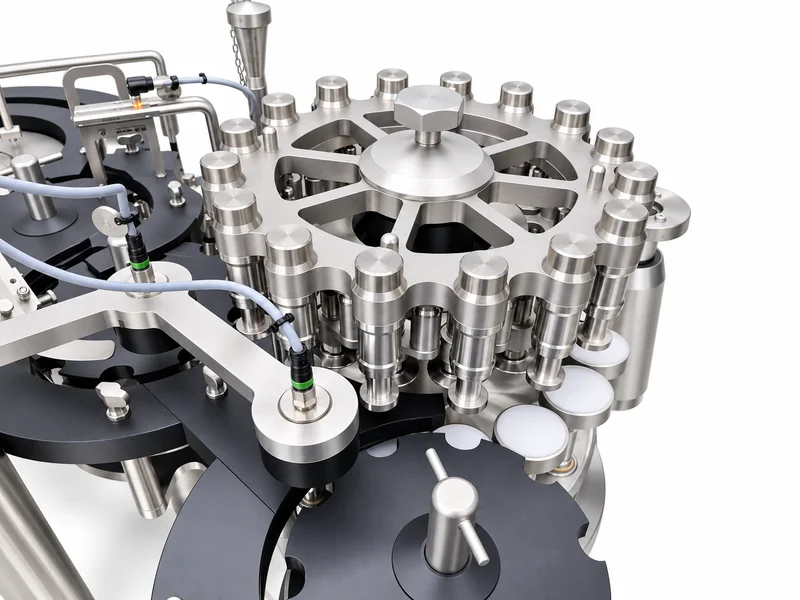
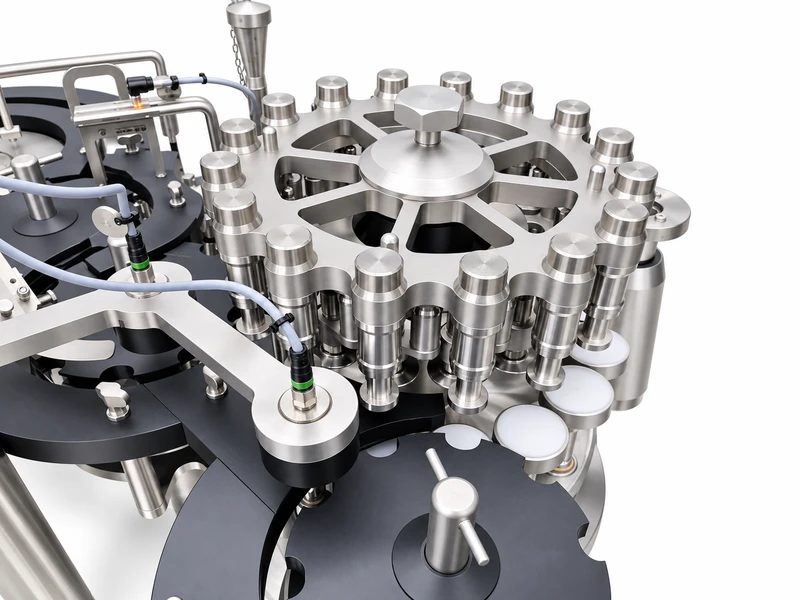
Seat the specified stopper after powder delivery, then secure the selected cap. Check stopper seating, cap condition and powder contamination at the sealing interface.
Closure interface
Full stoppering for the assessed direct-fill presentation; partial stoppering for a lyophilizer is not the default.
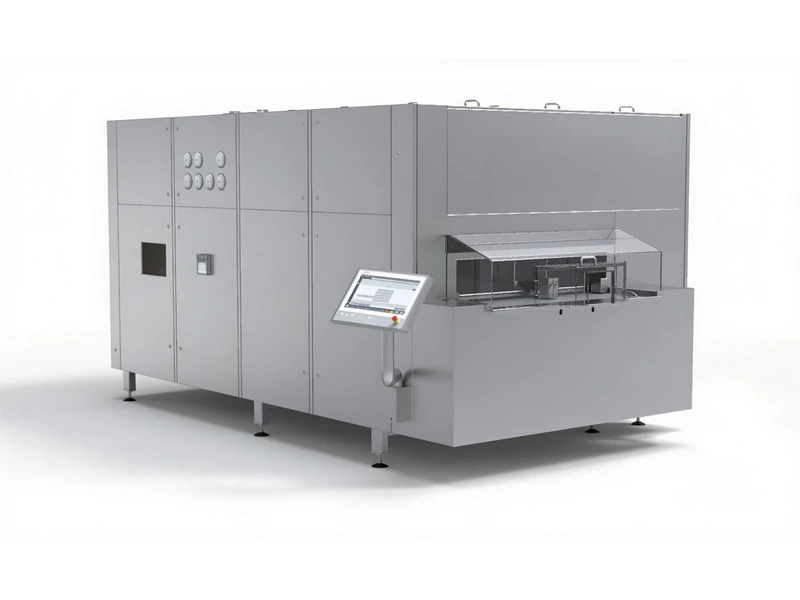
05 / Closed-vial inspection
Define the visible vial, closure and product defects that matter for the filled presentation. Assess closure-integrity testing separately for the actual powder, container and closure.
Related equipment
Review the configuration for the intended container and process.
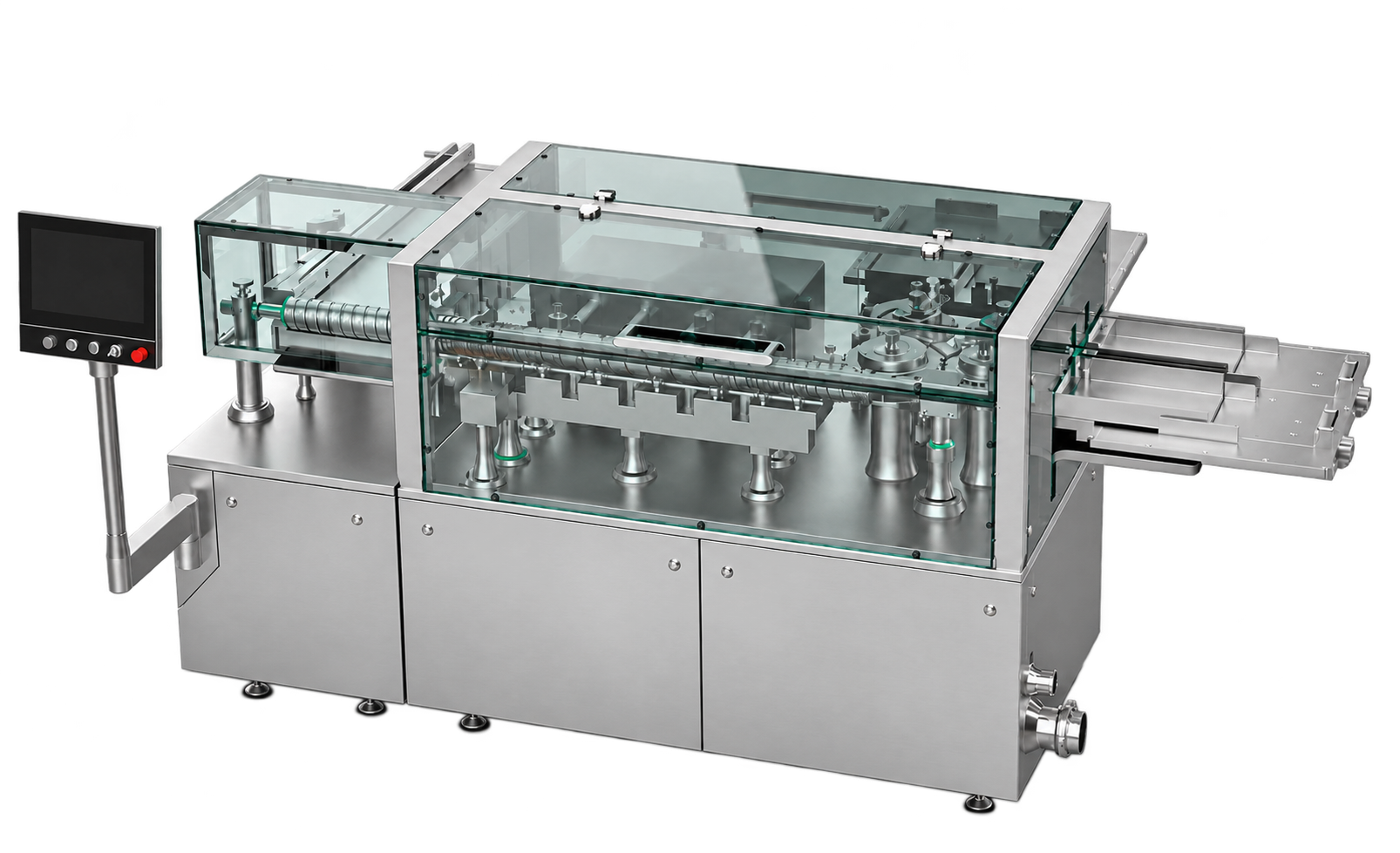
Shown equipment example
Inspection equipment example; configuration depends on the closed-vial presentation and selected checks.
06 / Labelling and secondary packaging
Transfer accepted closed vials to the selected labelling and secondary-packaging operations, maintaining identification and the defined reject separation.
Related equipment
Review the configuration for the intended container and process.
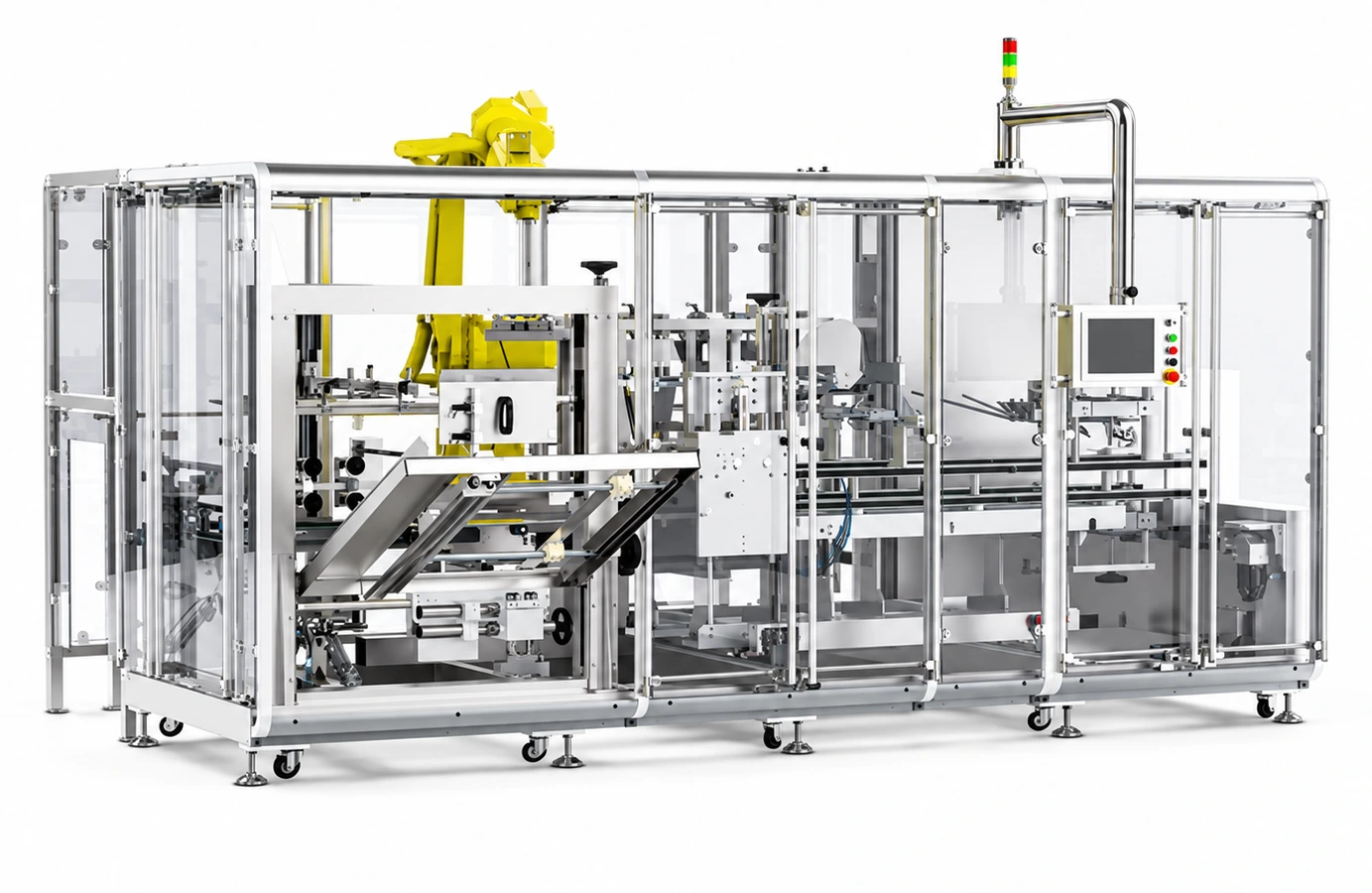
Shown equipment example
Optional. Secondary case-packing equipment example, selected for the finished pack format.
Supply alternatives and supporting systems
Select these interfaces for the project; they are alternatives or supporting requirements, not additional serial filling stations.
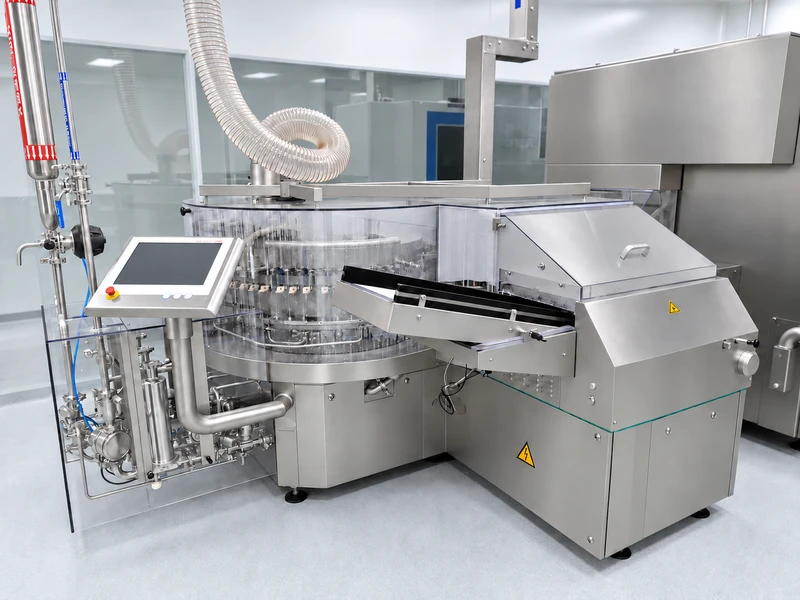
Bulk-vial preparation
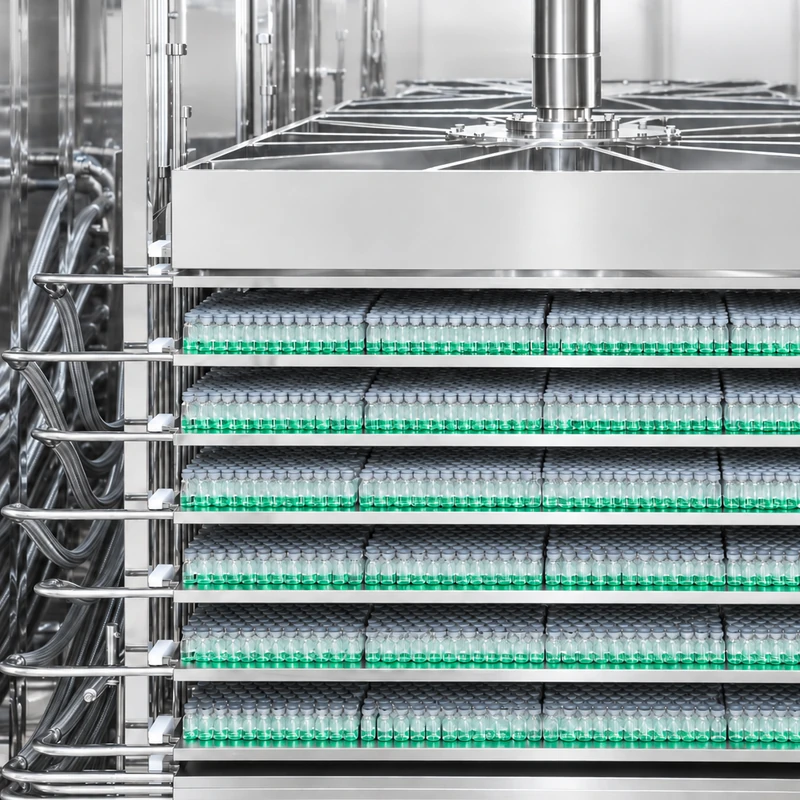
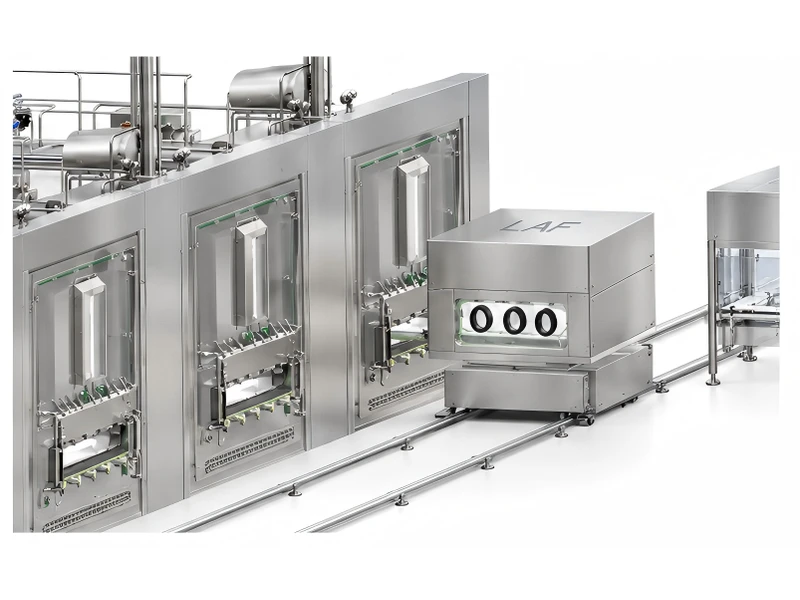
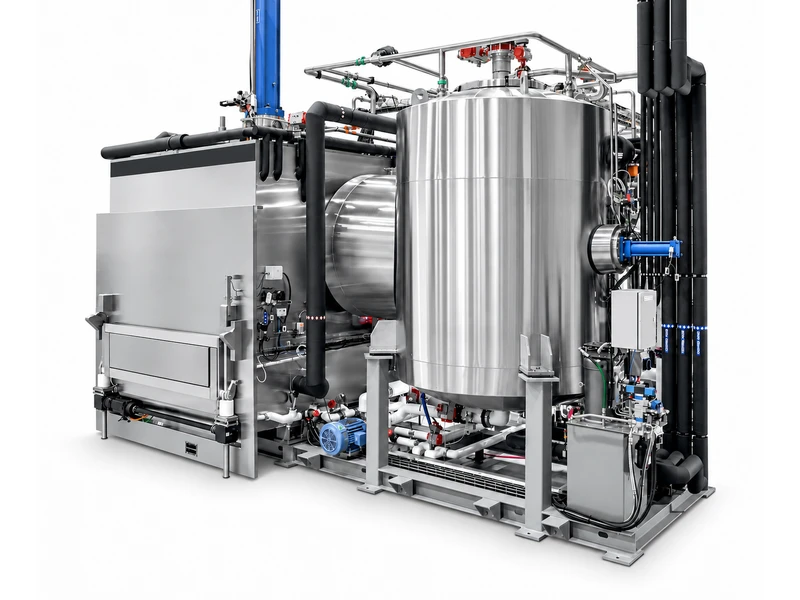
For the selected bulk-vial route, define washing and any required thermal treatment before transfer to filling. The treatment and qualification depend on the product and component specification.
Ready-to-use vial supply
Where a compatible ready-to-use container supply is selected, assess package opening and transfer to the filling boundary. This route is an alternative to an assumed in-line wash/tunnel train.
Stopper and component preparation
Prepare stoppers and product-contact components using the selected cleaning and, where required, sterilization processes. Their transfer and holding conditions are part of the project scope.
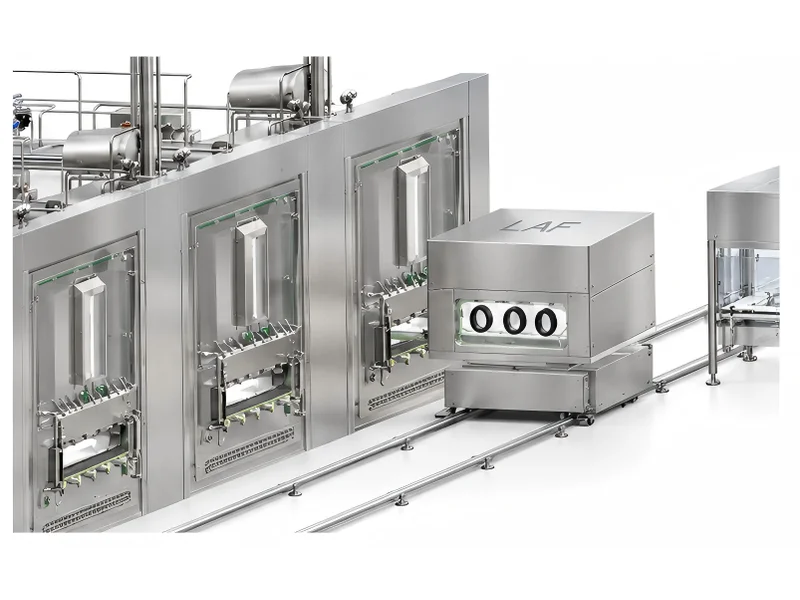
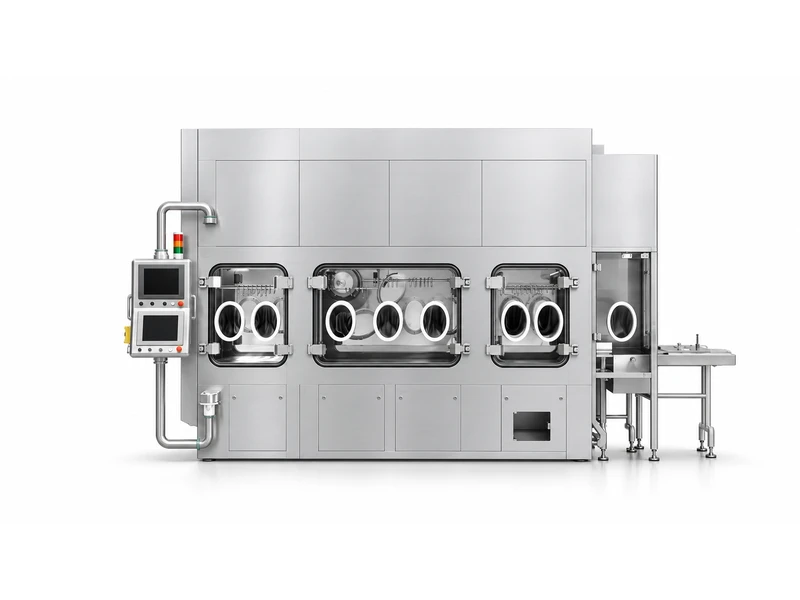
Product protection and powder containment
Select the environment, barrier and transfer arrangements for the product. Aseptic protection and powder-exposure control are separate design duties and may both apply.
Prepared-powder supply
The line receives powder with an identified formulation and preparation status. Any powder manufacturing or sterilization step is separately scoped.
Product-dependent operating conditions
Assess humidity, inert-gas use, hold time and cleaning requirements using the actual powder and process.