Skip to content

Process expertise. Chinese manufacturing. Global perspective.

PREASYS

Equipment & technology

cGMP Pharmaceutical Liquid, Media & Buffer Preparation System

A pharmaceutical preparation system combines ingredient addition, mixing and controlled transfer to make the specified solution or suspension. The formulation determines the vessel, mixing action, temperature control and product-contact path. Media and buffer preparation use the same process questions, while fermentation or cell culture requires a separately defined bioreactor scope.

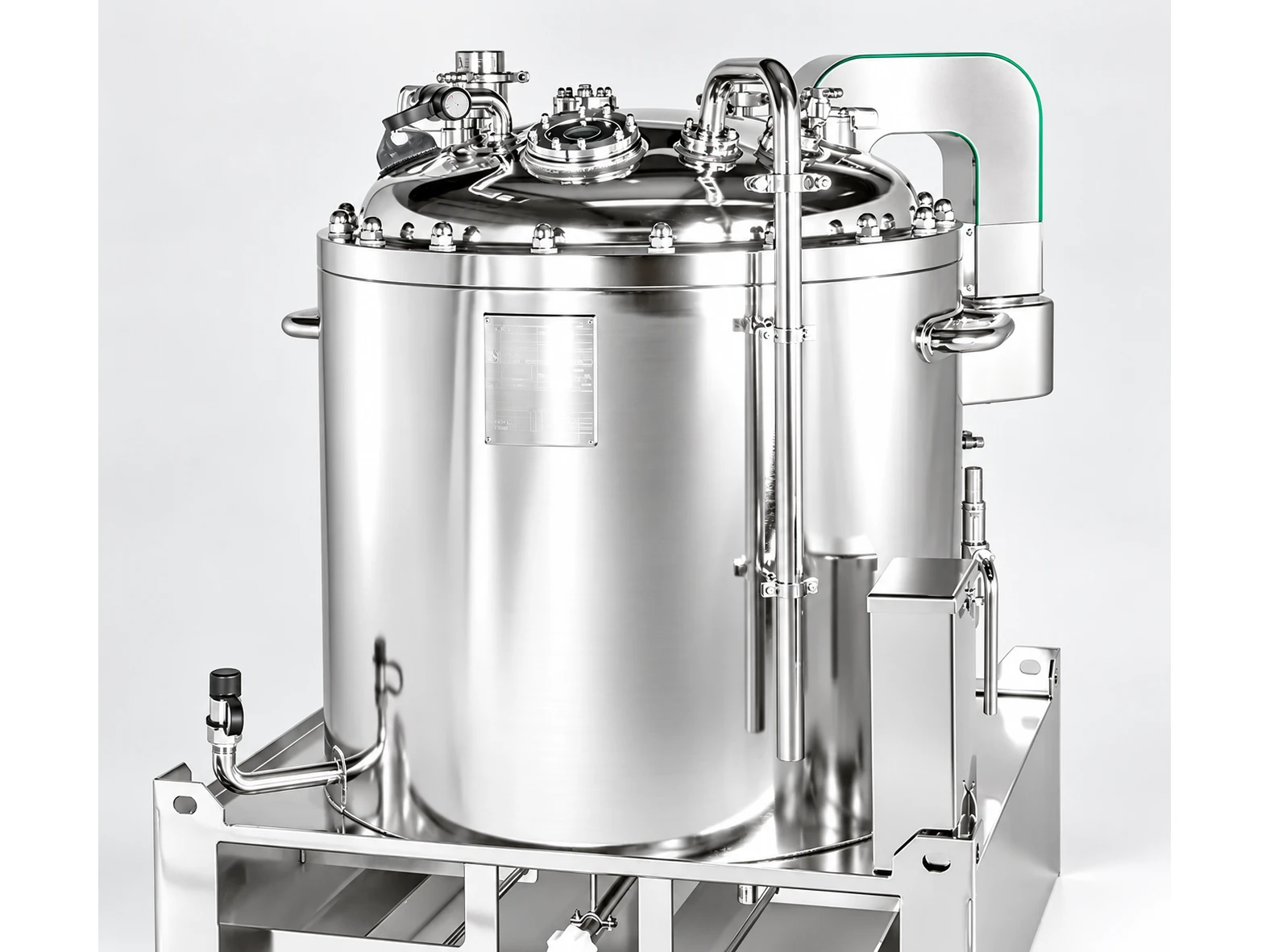
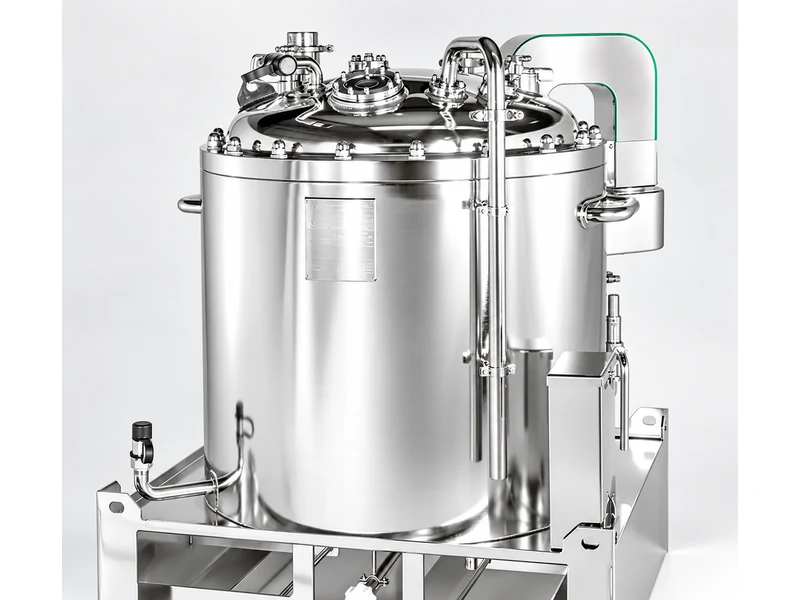
Stainless steel preparation vessel with top-mounted service connections

From ingredients to a defined liquid batch

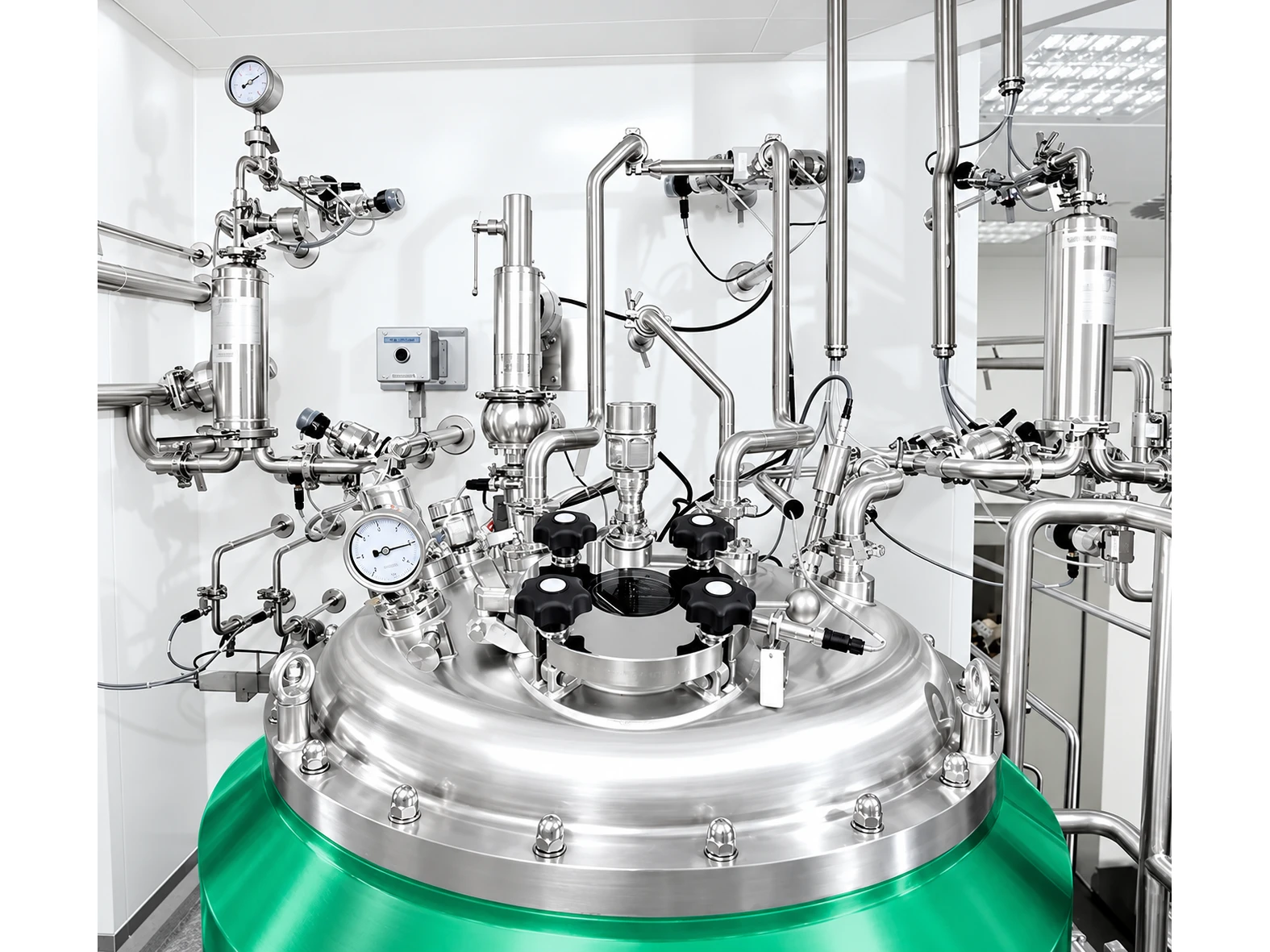
Valves and product connections on the lid of a preparation vessel

Ingredient order, addition rate and mixing action determine how solids disperse or dissolve in the liquid. The working volume must keep the selected mixer effective without excessive foam, air entrainment or unwanted shear. Sampling then checks the attributes that matter to the formulation, rather than treating mixing time as proof of a uniform batch.

The preparation boundary continues through holding and transfer. Product temperature, allowable hold time, the discharge path and the receiving equipment affect the condition delivered downstream. Vessel and pipework selection, cleaning and any sterile-processing requirements are assessed for the actual product and installed system.

Preparation scope

This summary describes the process boundary. Vessel volume, surface finish and other model data require confirmed drawings and specifications.

Prepare

Ingredient addition, mixing, hold and transfer

Your process, your benefits

Mixing order, batch size, temperature and the hold time before filling determine the vessel and transfer arrangement.

Mixing across the working-volume range

Preparation brings ingredients into solution or suspension and supplies the filler through a controlled transfer path.

Vessel geometry and mixer position affect circulation as liquid level changes. Dissolution, suspension stability and temperature response therefore need assessment across the intended batch range, not only at the nominal volume.

Valves and product connections on the lid of a preparation vessel

How is a change in batch volume assessed?

How is a change in batch volume assessed?

Changing batch volume changes liquid depth, mixer immersion and circulation. Compare mixing and heat-transfer behavior across the proposed working range using representative material and suitable sampling. A new batch size or modified product path can require additional assessment and qualification; a recipe change alone does not establish scale-up.

Product path and recoverable volume

Preparation brings ingredients into solution or suspension and supplies the filler through a controlled transfer path.

The material remaining after discharge is a property of the complete product path. Vessel outlet, valves, filters, hoses and sampling connections all contribute. The selected recovery method must protect the batch specification and the next product from carryover.

Valves and product connections on the lid of a preparation vessel

How is the transfer path checked for product retention?

How is the transfer path checked for product retention?

Residual product can remain in the vessel heel, valves, filter housings and transfer tubing. Examine drainage, line length, sampling losses and the displacement strategy against the product specification. A recovery or flush step must be justified for that batch; it must not automatically carry residual product into the next batch.

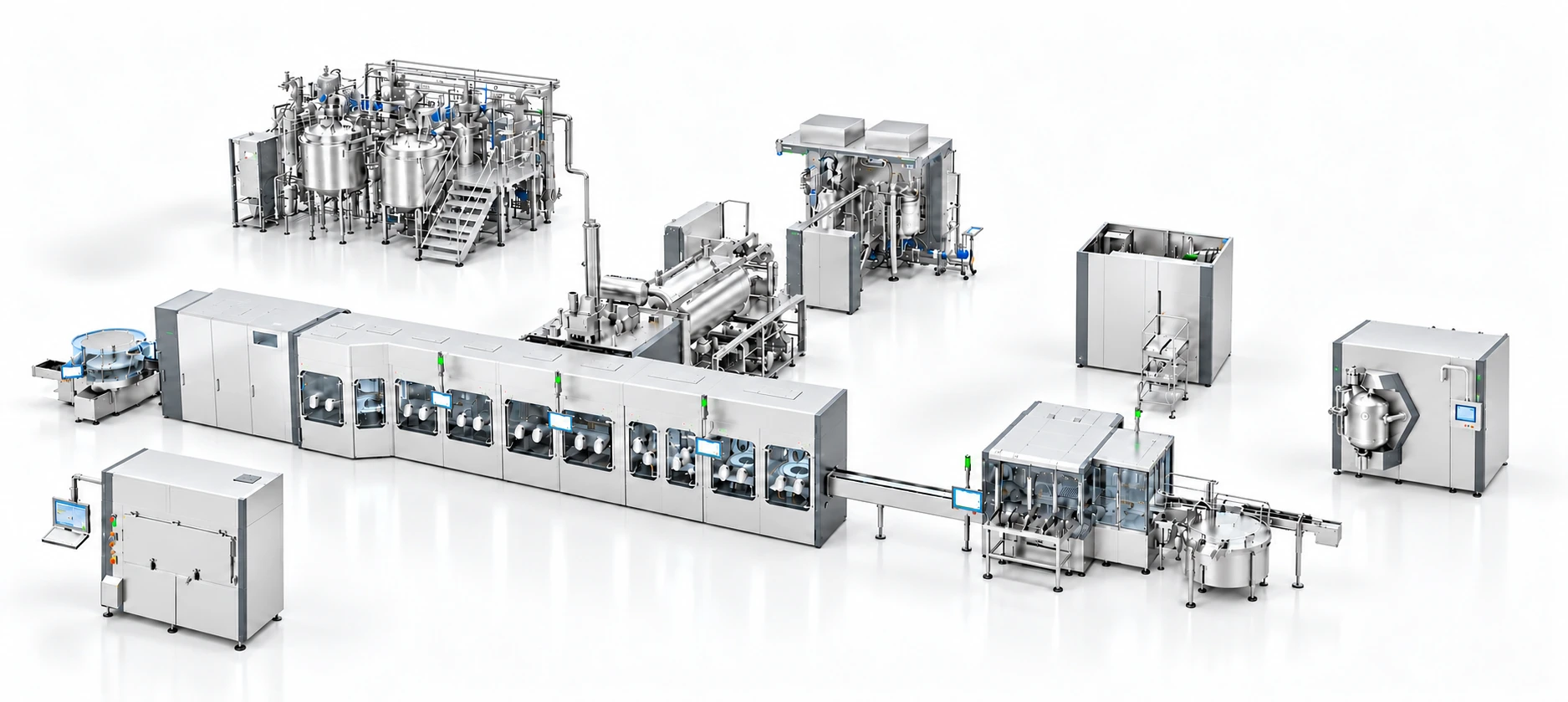
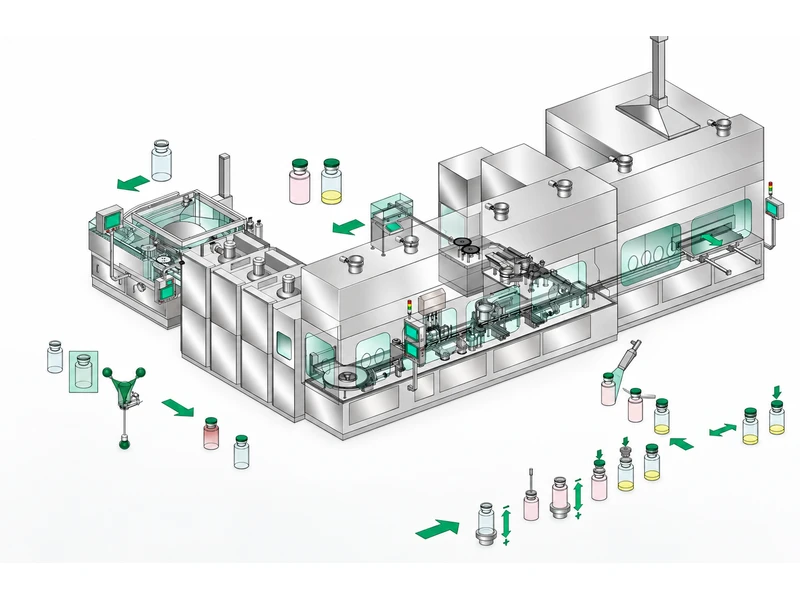
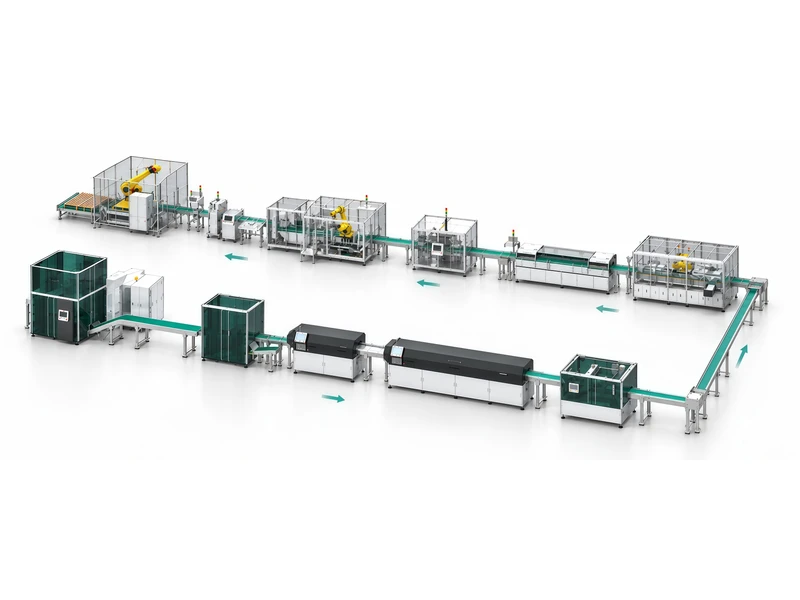
Liquid vial preparation and filling. Follow the preparation, washing, tunnel and vial filling stations. The separate drying equipment serves lyophilized presentations.

Production line · Equipment context

Liquid vial preparation and filling

Explore the process areas on the production line associated with this equipment.

Skip tour
Selected process route 8 equipment areas · Scroll to explore

Connected utilities and batch transfer

Preparation brings ingredients into solution or suspension and supplies the filler through a controlled transfer path.

The water outlet, preparation skid and filler have different duties. Their pressures, temperatures, demand cycles and permissives must work together at the agreed connection points. The boundary remains explicit even when equipment is supplied as one project.

Valves and product connections on the lid of a preparation vessel

How are the preparation and filling interfaces coordinated?

Valves and product connections on the lid of a preparation vessel

Integration connects the formulation skid to its actual water, heating/cooling, gas and downstream product-transfer interfaces. Define signal ownership, permissives, isolation and the data that follow the batch. Common controls can coordinate equipment, but they do not remove the need to test each physical and software interface.

Preparation decisions that affect the batch

Valves and product connections on the lid of a preparation vessel

Ingredient addition and mixing

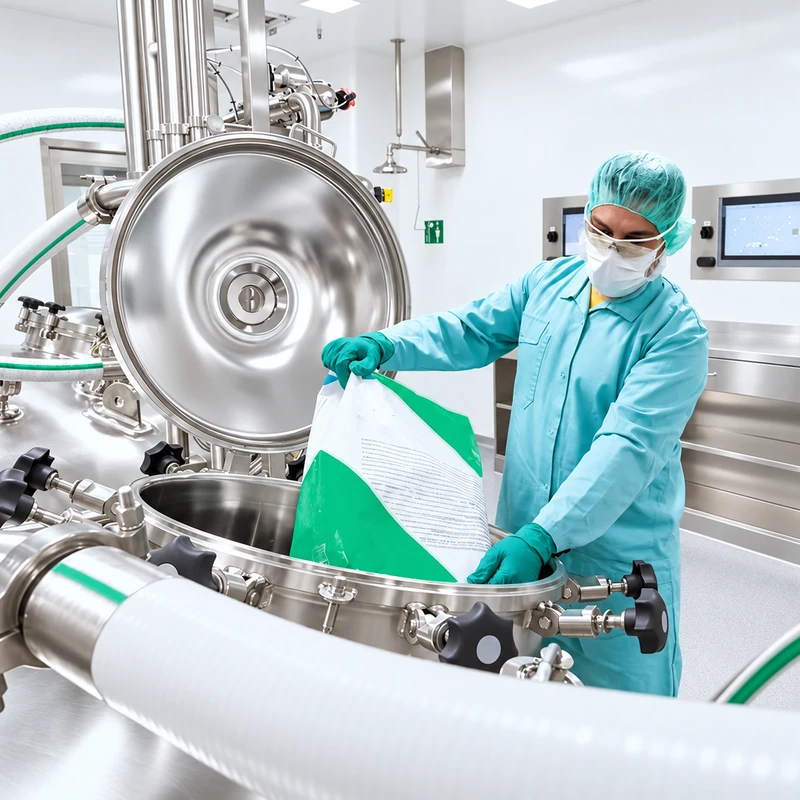
The powder or liquid addition sequence can affect wetting, dissolution, agglomeration and foam. The charge connection also determines how the operator and product are protected.

Working-volume range

Minimum and maximum working volumes depend on mixer immersion, circulation and heat transfer. Validate the intended range with formulation-relevant measurements.

Product recovery and carryover

Measure retained product at the defined discharge endpoint. Separate recoverable material from cleaning waste and assess residual carryover before the next batch.

Utility and transfer interfaces

The skid inlet and outlet specification identifies utilities, product transfer, sampling, drains and controls. A clear boundary makes joint testing and site connection possible.

Related equipment and interfaces

Water system

Pure Water & Steam Systems

Define the water quality and steam interfaces required at the formulation skid boundary.

Read more

The preparation skid consumes water of the specified quality; it is not itself a PW or WFI generator. Define quality at the point of use, instantaneous demand, pressure, temperature and the sanitization boundary. Where steam is needed, specify its duty and the condensate/drainage interface separately.

Filling line

Filling & Finishing Lines

Coordinate the preparation skid and filling equipment for the selected container format.

Read more

The receiving filler needs a defined liquid condition and supply behavior. Transfer pressure, flow, tank level and any recirculation affect the filler feed. Identify the hold point and ownership of sampling and batch release before product enters the filling operation.

Vial filling — Connect the prepared product to the selected liquid dosing path. Bulk-vial preparation or RTU handling has its own container route; it does not change what the preparation skid must deliver at its liquid outlet.

Cartridge filling — Match the product outlet and feed-control behavior to the selected cartridge filler. The cartridge format, dose, line operating mode and allowed hold interval determine the handoff; a catalogue rate is not a guarantee for this combined system.

Syringe and other RTU formats — Protected container opening and transfer are distinct from formulation transfer. Define the liquid contact path, pressure conditions and any filtration requirement for the selected filling and stopper-insertion arrangement.

Controls and product protection — Define batch identification, permissives, alarms and the records exchanged across the preparation/filling boundary. Cleaning, sterilization, weighing coverage and barriers depend on the supplied configuration and intended process.

Visual inspection

Visual Inspection

Read more

Downstream inspection examines its specified container, product and defect set. Representative samples determine optical coverage and reject behavior. Inspection does not replace formulation sampling, concentration assessment or a separately justified container-integrity test.

Steam and sterilization interfaces

Where the proposed vessel is connected to steam, define the supply condition, valve and vent boundary, condensate removal and monitoring points. Cleaning and sterilization cycles have distinct endpoints; each needs evidence for the actual installed flow paths and load.

Support throughout your project and production

Define the batch and transfer duty

Translate formulation steps, mixing needs, sampling, hold conditions and receiving-equipment demand into a documented equipment boundary.

Learn more

Test mixing and the installed path

Use representative material and meaningful sample locations to assess the proposed working range, temperature response, discharge and cleaning boundary. Define the evidence needed for any sterile filtration or sterilization step.

Learn more

Prepare for routine batches

Establish charging, sampling, discharge and cleaning procedures for the supplied system. Identify valves, seals, instruments and product-contact parts that need inspection or replacement, together with the records used for each batch.

Learn more

Knowledge hub

2 resources

Frequently asked questions

Is a preparation system a PW or WFI generator?

No. It receives the specified process water and other ingredients, then mixes and transfers the formulation. Water generation, storage and distribution have separate quality and operating boundaries, even when included in the same project.

Does every batch use the same mixing intensity?

No. Dissolving a solid, maintaining a suspension and handling a shear-sensitive liquid can require different circulation and shear conditions. Mixer design, speed, addition sequence and working volume are assessed against the actual formulation and measured result.

Can batch size be changed by entering a new recipe?

Only within an assessed equipment and process range. Liquid depth, mixer immersion, circulation and heating/cooling response change with volume. A control recipe does not prove that a different batch size has the same mixing or transfer performance.

Is sterile filtration always part of preparation?

No. Filtration suitability depends on the product and intended process. A filter can retain components that the product needs, including cells or suspended material. Where sterilizing filtration is justified, specify the filter, compatibility, integrity-testing sequence and transfer boundary for the actual formulation.

How are stainless-steel and single-use paths compared?

Evaluate product compatibility, mixing and temperature duty, extractables/leachables where relevant, cleaning or replacement, handling and waste. Neither construction is a universal choice. The complete contact path and connections must suit the formulation and process.

Does media preparation include fermentation or cell culture?

Preparing and holding media is different from growing cells or microorganisms. A bioreactor has its own gas transfer, monitoring, mixing and biological-process requirements. Do not infer that scope from a media or buffer preparation vessel.

What proves that cleaning or sterilization is adequate?

Evidence must address the actual equipment and installed flow paths. Cleaning assesses removal of the specified soils and residues. A sterilization process, where required, has separate acceptance criteria, cycle monitoring and qualification. A surface-finish value or a CIP/SIP label is not a substitute for that evidence.

Contact

For a configuration review, include container drawing, product-contact materials, intended dose, closure format, batch size.

Discuss your project