Skip to content

Process expertise. Chinese manufacturing. Global perspective.

PREASYS

Equipment & technology

Syringe Labelling & Assembly Machine

Post-fill syringe assembly fits the specified plunger rod and external components to a closed prefilled syringe, with labeling and checks matched to that device.

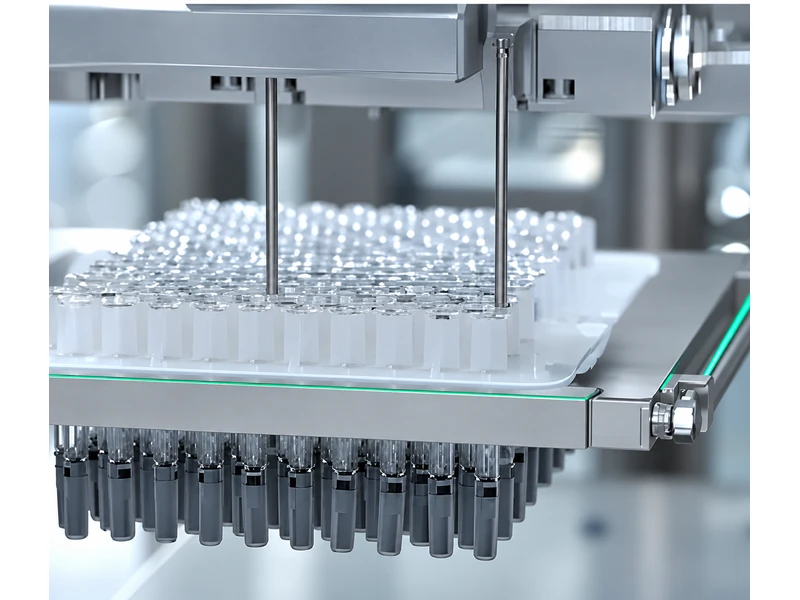
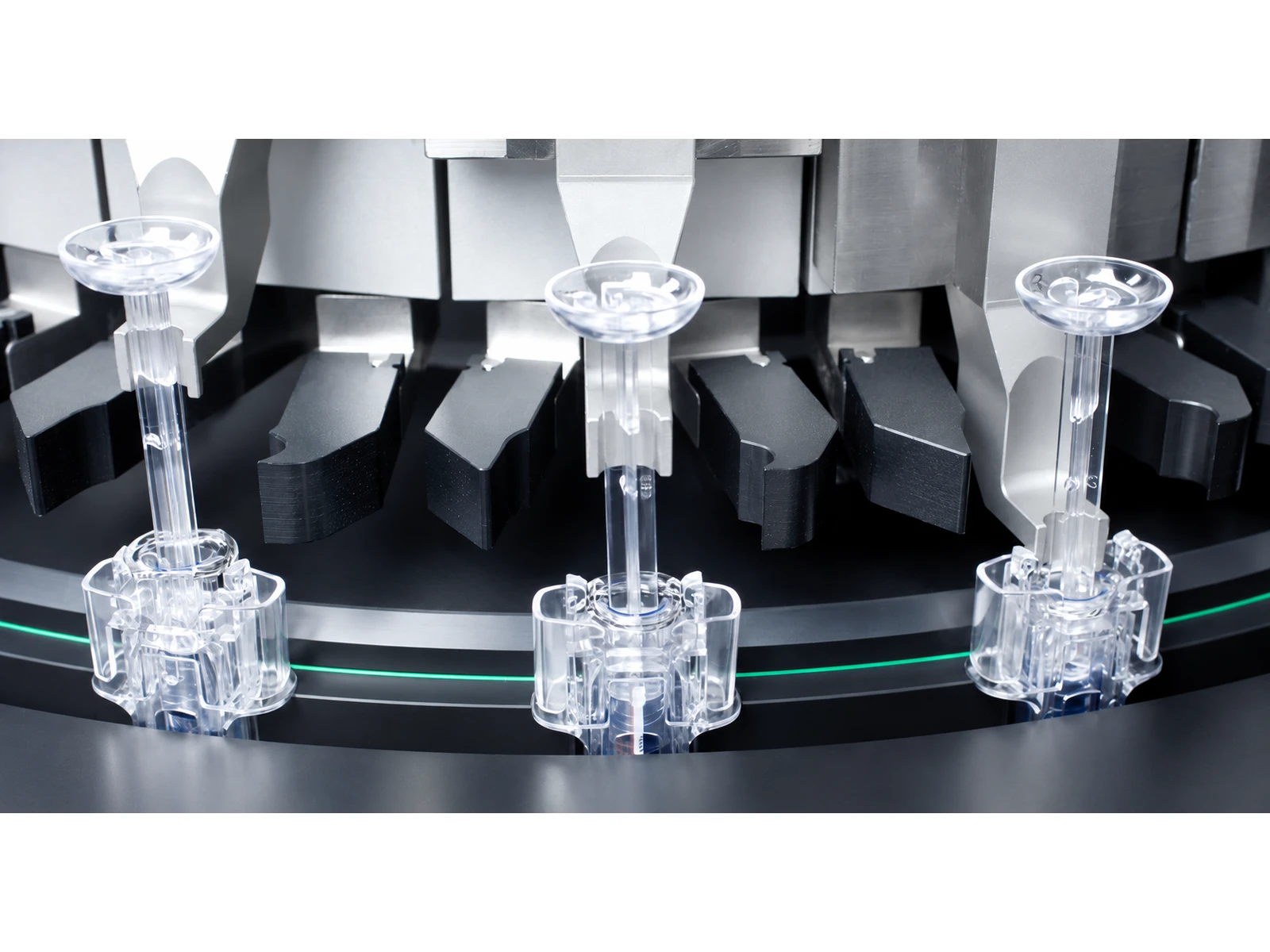
Rod handling tools positioned above syringe carriers

Syringe Labelling & Assembly Machine

Post-fill assembly and identification

Join external components without disturbing the closed syringe

The incoming prefilled syringe already contains its product-side stopper. This station can fit the specified plunger rod, finger flange, back-stop or safety component and apply identification within the agreed scope. Rod engagement must preserve the intended stopper position and barrel support. Each joining and labeling result stays associated with the syringe through rejection and downstream packing.

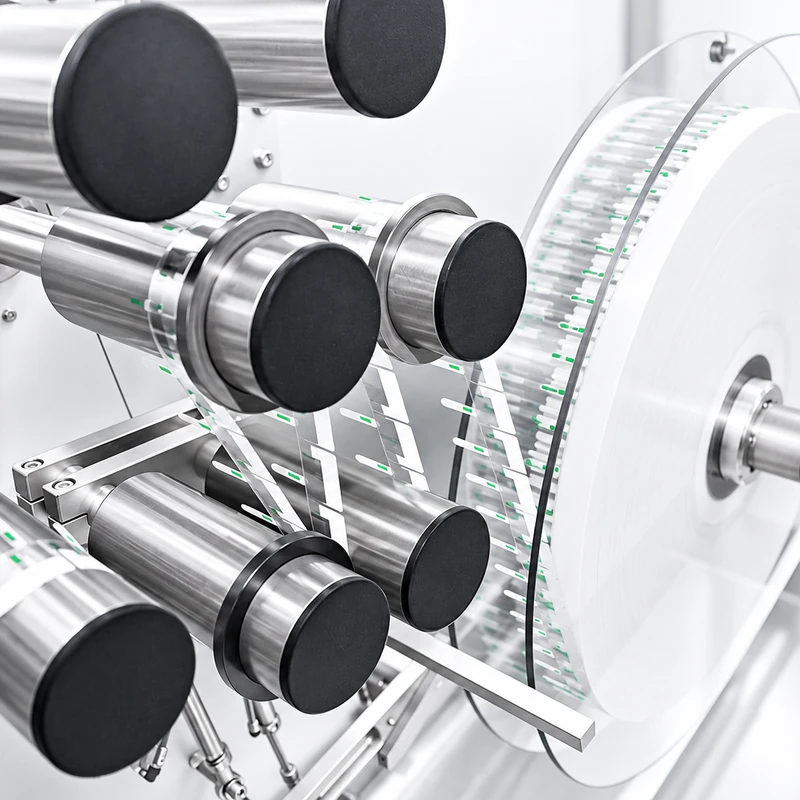
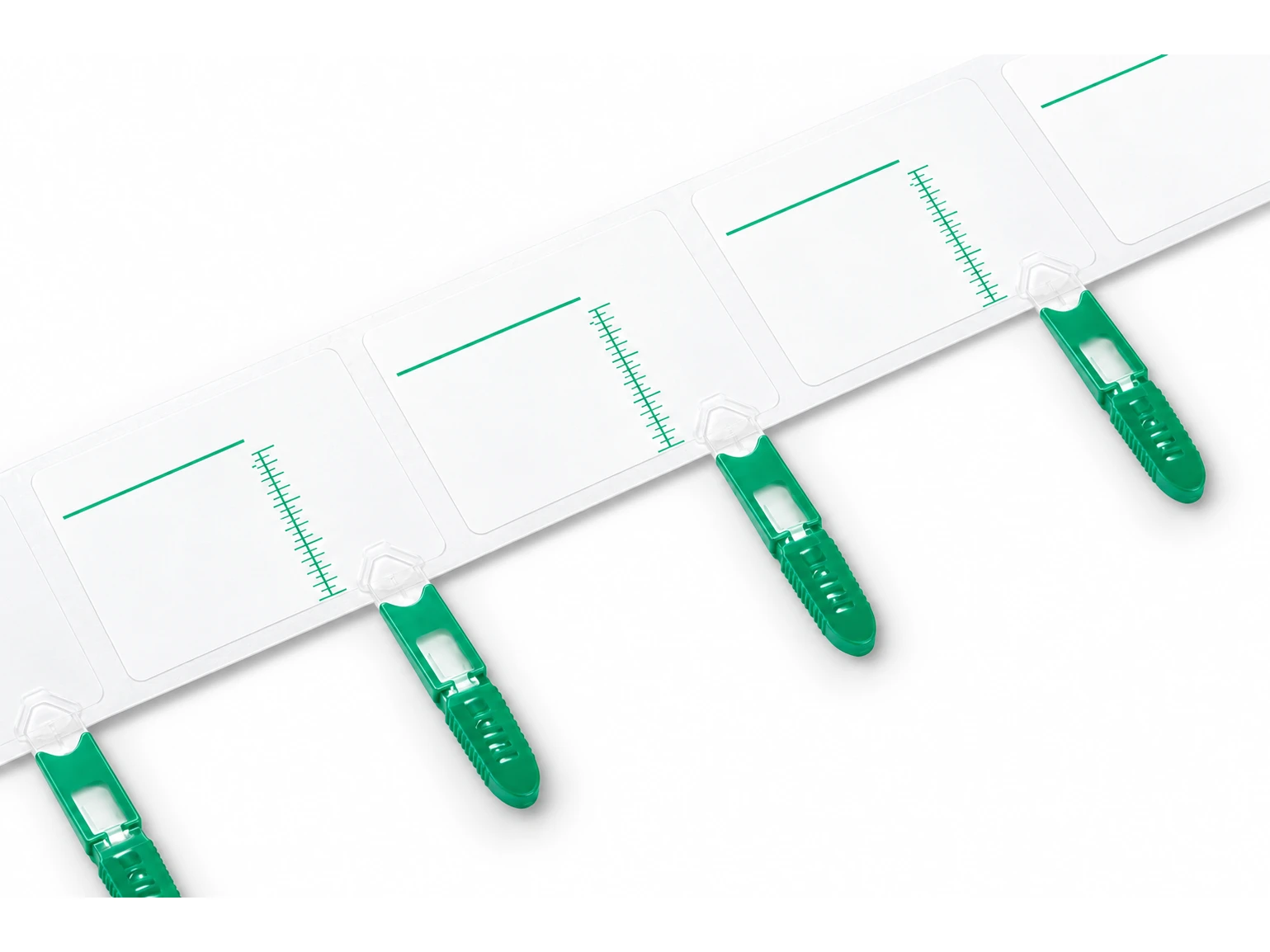
Strip of syringe labels with projecting tabs

Process at a glance

Plunger-rod fitting is distinct from inserting the product-contact stopper during filling and closing.

Join

Fit the external rod and selected components

Identify

Label and track the closed prefilled syringe

Process challenges

Label-web gaps can disrupt application timing. The next syringe must retain the correct label and identity through recovery.

Read details

Label-web gaps can disrupt application timing. The next syringe must retain the correct label and identity through recovery.

Rod engagement loads the stopper interface and syringe support. Alignment and the joining response determine whether the intended assembly state is reached without unwanted movement.

The barrel and flange provide limited handling surfaces. Carrier geometry must leave the label zone accessible while supporting the joining task.

Clear labels need material-compatible sensing. Their successful detection is verified with the intended carrier and artwork.

A print failure detected before application and a label failure detected on the syringe require different reject actions.

Printed fields, readability and product identity are separate checks. Each needs an approved reference and a defined result association.

External safety components have device-specific orientation and retention features. Their installation is not interchangeable across designs.

The outfeed must preserve syringe support and assembly status. Accumulation or an unsupported transfer can affect the finished device after the station has accepted it.

Technical data & features

Define which operations belong to this station, including rod insertion, labelling and checks of the finished device.

Strip of syringe labels with projecting tabs
Plunger-rod fitting and labeling scope Accepted output depends on the selected joining and verification sequence Barrel and flange geometry define the carrier Rod geometry and engagement features define the joining tool Label dimensions follow the usable barrel surface Reel and carrier specifications define the dispenser interface Labeling-only scope where assembly is completed upstream Labeling cycle established with the selected syringe and stock Rod fitting treated as a separate joining operation Carrier tooling selected for the barrel and flange External components where required by the device Back-stop fitting with the specified retention check Safety-component fitting according to the approved device design Finger-flange fitting and position assessment Special-purpose labels only with the selected package specification Defined assembly and labeling checks Verification of specified printed data against the approved job Print check at the selected position in the label path Applied-label presence and position assessment Code reading and association with the syringe

Keep assembly and optical decisions distinct

Rod engagement, external-component position and label correctness are different attributes. The selected sensor or test addresses each required attribute at its appropriate stage.

Separate label and syringe reject paths

Faulty-label removal before application and rejection of an assembled syringe require separate tracking. Interrupted or uncertain units follow the defined recovery procedure.

Selected printing process Printing technology matched to the label material and data Approved fixed artwork and variable data Reel-change and web-splice handling assessed with the selected stock

Installation and operating boundaries

Electrical requirements follow the selected transport, joining stations and printer. They are established in the configuration documentation.

Pneumatic or vacuum services, where used, follow the selected handling and component-feeding functions.

Layout includes component supply, guarding and maintenance access Carrier contact surfaces and cleaning tasks defined for the syringe assembly Recipe and result interfaces agreed with the line control system Operator prompts distinguish setup, production and recovery states Design, factory-test and site-qualification responsibilities defined by the project Handling sequence Support the syringe through the joining operation Infeed from the specified tray, nest or conveyor presentation Guides and carriers matched to the selected syringe format

Support the barrel and flange at defined surfaces

The joining tool aligns the rod with the stopper engagement feature. Screw or press movement follows the approved component design; force, travel or torque assessment must detect abnormal engagement without assuming that a nominal setting proves closure integrity.

Component feeding presents rods in the required orientation while protecting their engagement surfaces. Misfed parts are separated before they enter the joining point.

Coordinate label release with syringe presentation

The dispenser uses the selected label pitch and detection method. Gaps, splices and restarts are assessed with both the next label position and the syringe identity.

Label sensing selected for the actual stock and carrier

Application height referenced to the syringe drawing

How it works

How is plunger-rod engagement assessed?

Use the approved component drawing to define the joining motion and accepted final state. Record the relevant force, travel or torque response and inspect rod engagement and stopper position on identified samples.

How do we check that joining has not disturbed the stopper?

Compare the stopper position before and after the assembly trial using the defined method. Investigate unintended movement alongside tool alignment and syringe support; the joining trace alone does not establish closure integrity.

How are a finger flange or safety component assessed?

Inspect installed position and apply the specified retention or functional test. The allowed handling surfaces and loads come from the device design.

How is label recovery tested?

Challenge a missing label, web splice and controlled stop with known syringe identities. Compare the next application, inspection result and physical reject route.

How is the downstream handoff checked?

Run the assembled syringe into the intended carrier or packaging inlet. Observe support, contact forces and component clearance through transfer and accumulation.

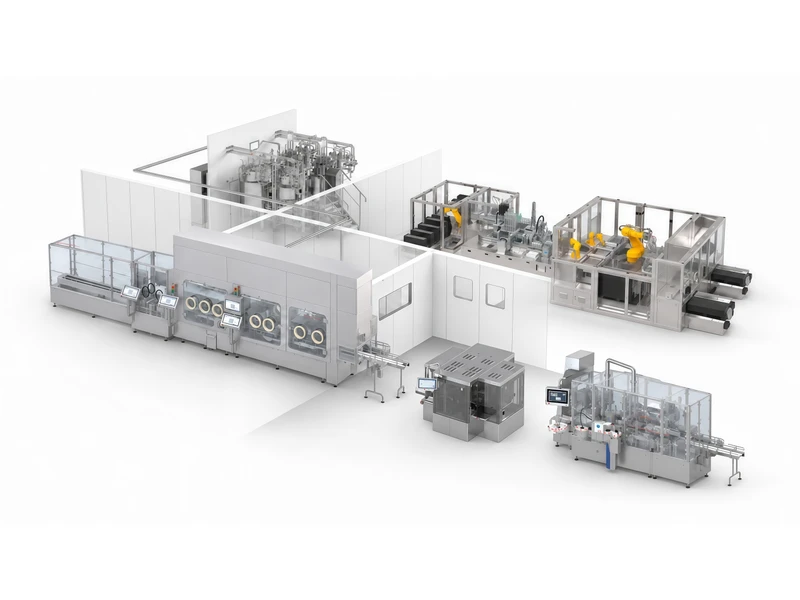
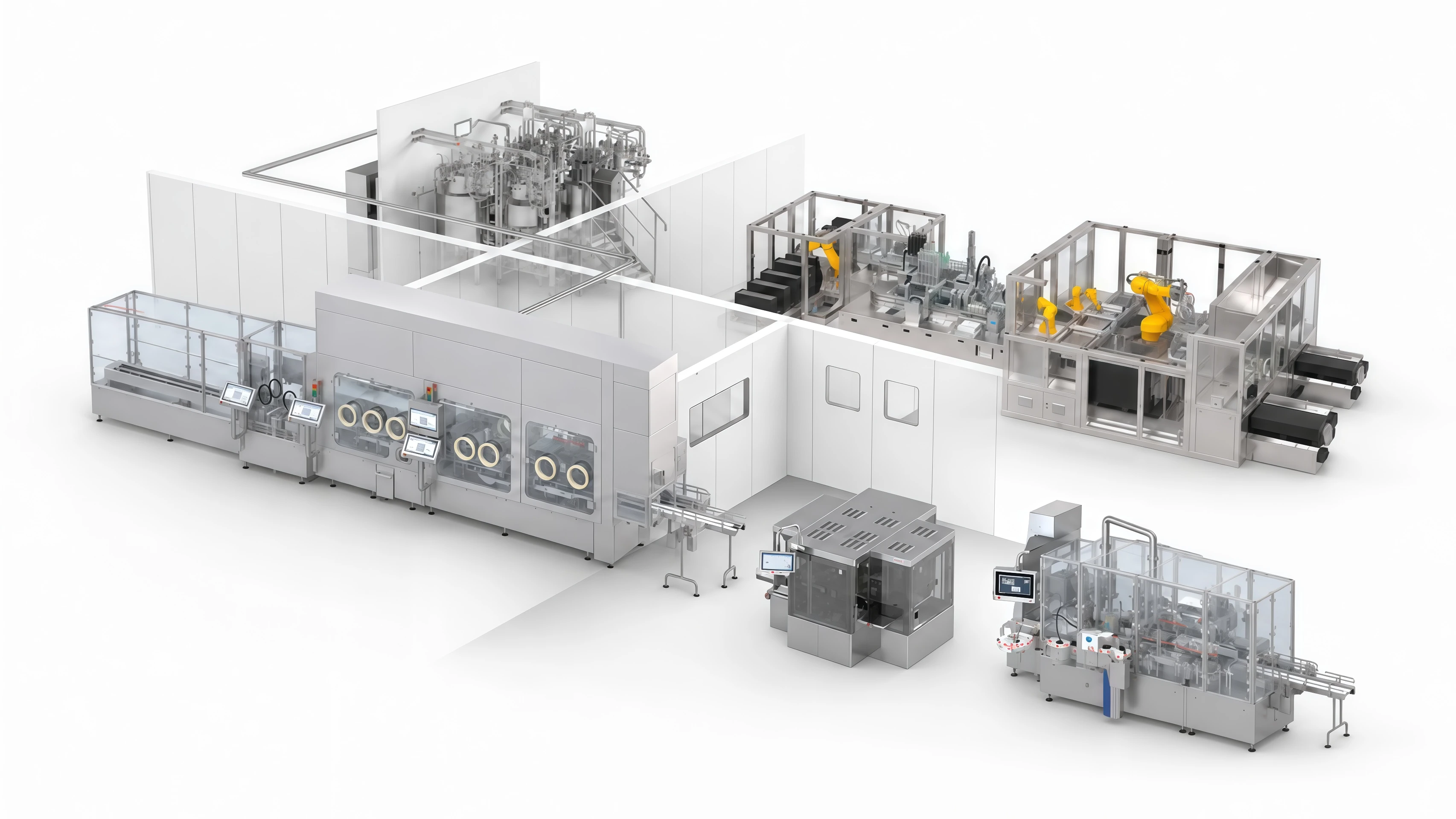
Nested syringe filling line. Follow the ready-to-use container branch, from bag removal to filling and downstream pack handling. The line provides process context; the individual product is not identified as a separate station in this view.

Production line · Equipment context

Nested syringe filling line

Explore the process areas on the production line associated with this equipment.

Skip tour
Production layout 7 equipment areas · Scroll to explore

Follow the ready-to-use container branch, from bag removal to filling and downstream pack handling. The line provides process context; the individual product is not identified as a separate station in this view.

Related production lines: Prefilled Syringe Filling & Packaging Lines

Line integration

Nest Removal (syringes from nests) ↓ Visual Inspection

↓

Selected syringe labeling and external-component assembly sequence:

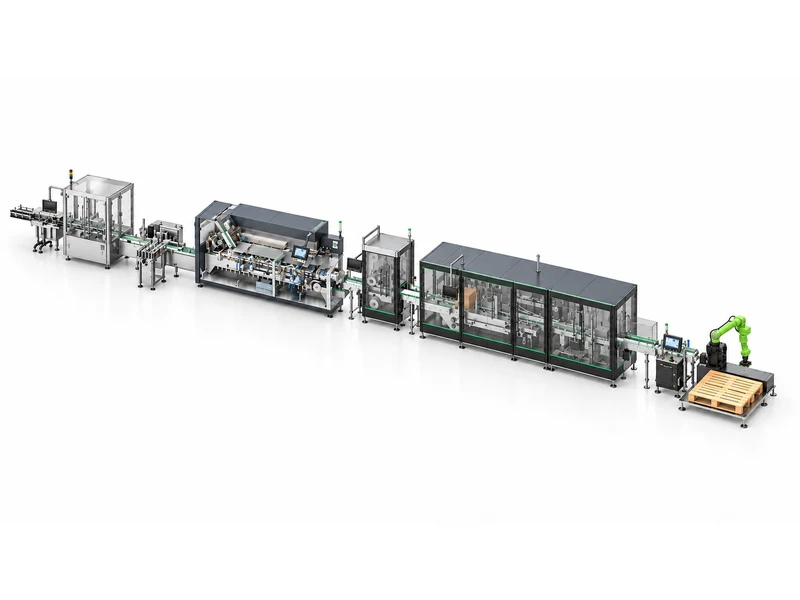
Supported syringe infeed → Oriented rod supply → Specified joining operation → Selected external-component fitting and labeling sequence → Vision check → Reject lanes ↓ Outfeed support matched to the downstream carrier or packer ↓

Secondary Packaging / Cartoning

Support throughout your project and production

Define the equipment scope

Define which operations belong to this station, including rod insertion, labelling and checks of the finished device.

Learn more

Agree the acceptance test

Verify rod position and label clearance against the next assembly or packing operation.

Learn more

Prepare for operation

Identify the contact parts and format tooling for Syringe Labelling & Assembly Machine. Agree access for cleaning, the spares to hold and the operating records the site will need.

Learn more

Knowledge hub

2 resources

Frequently asked questions

Is the plunger rod the same component as the stopper?

No. The stopper seals the product inside the barrel. The external rod engages with it so the device can be used; fitting the rod is a later assembly task.

Can a fixed number of rotations prove correct rod engagement?

No universal setting proves the joint. The actual rod and stopper design determines the accepted position and appropriate monitoring; tolerances and abnormal engagement must be assessed.

Does this station correct an upstream sterile or closure defect?

No. It receives a syringe in its defined closed state. Upstream filling, stoppering and integrity acceptance remain separate responsibilities.

Can a safety component be added to any syringe?

Compatibility depends on the approved barrel, flange and component design. Tooling, retention and functional evidence are required for that combination.

Does a complete joining record establish dose performance?

It documents the selected assembly operation. Delivered-dose and other device-performance attributes require their own appropriate tests.

Contact

For a configuration review, include container drawing, product-contact materials, intended dose, closure format, batch size.

Discuss your project
Strip of syringe labels with projecting tabs