

Container and residue scope
Use the actual closure assembly and residue properties to assess supports, shielding, media and drainage. Confirm which surfaces the selected wash is intended to treat.
Learn moreProcess expertise. Chinese manufacturing. Global perspective.

Equipment & technology
External bottle washing removes residue from the outside of filled, closed containers. Cleaning-media access and surface drying are coordinated with the vial or bottle finish, cap and stopper so the container can pass to its next handling or packaging operation.
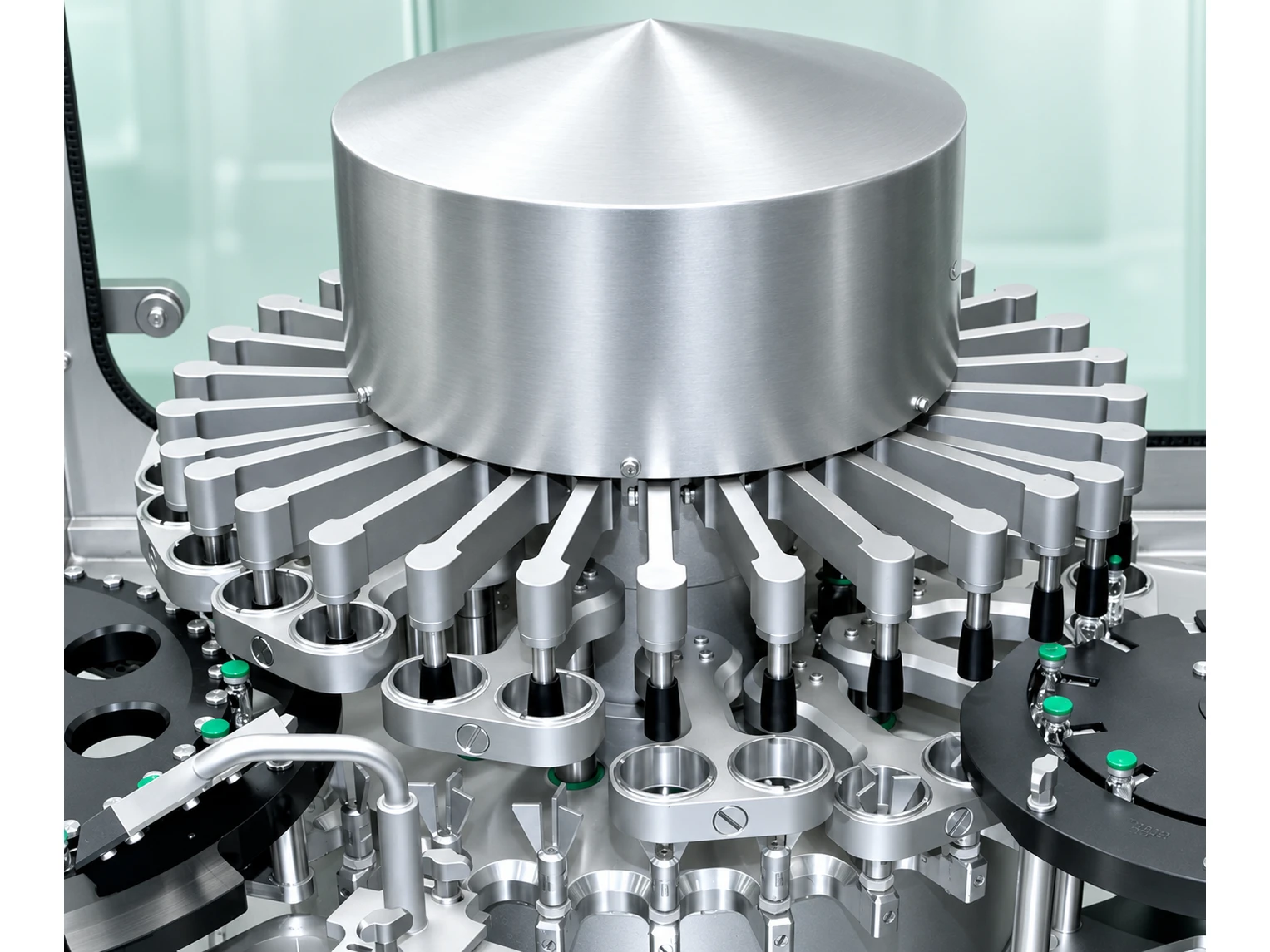
Residue can remain on the shoulder, body or base after filling and closing. Directed cleaning media contact those surfaces, while the grip and shielding arrangement protect the closure. The chosen chemistry and exposure must address the actual residue; a visually clean exterior alone does not establish an acceptable residual level.
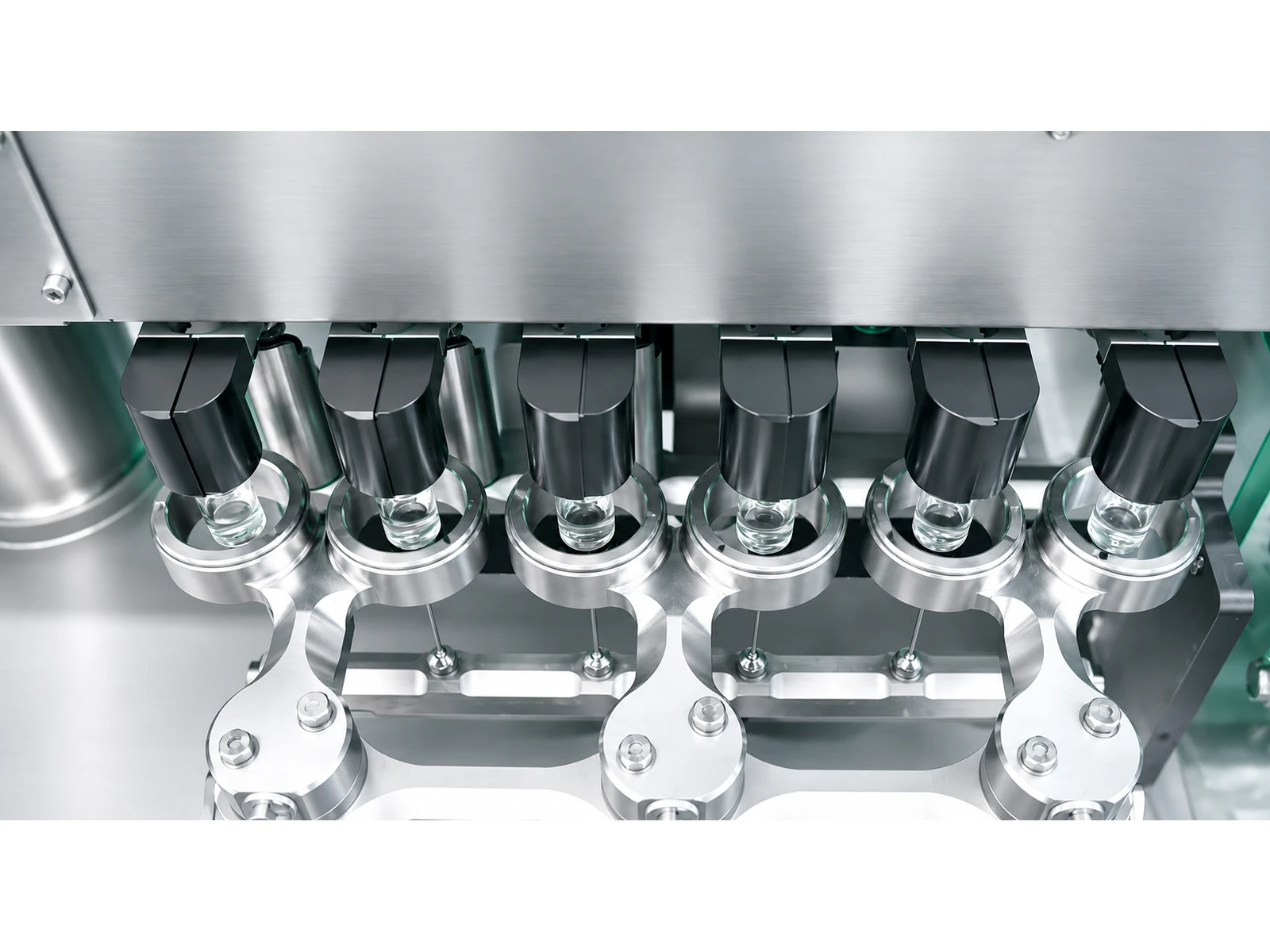
Example project input
Challenge the shoulder, body and base separately. Examine residue removal and remaining surface water before the labeler; the trial does not assess the container interior.
3
External residue challenge locations
8
Closed containers per location
24
Containers for the wash comparison
—
Process options
Exterior washing creates a defined handoff between a closed-container process and downstream handling. Its value is a measurable reduction of the specified surface residue, with the container and closure left suitable for inspection, labelling or packing. Drying matters because remaining droplets can affect both handling and label adhesion.
The container support exposes the surfaces that need washing without damaging the neck finish or closure. Spray access, contact time and drainage work together: a stronger jet cannot compensate for an area shielded by the gripping mechanism.
Rinsing, liquid removal and drying follow the selected wash treatment. For potent residues, enclosure, extraction and segregated waste handling must be defined alongside the cleaning method; exterior cleaning is not evidence of zero residue or sterile product.
Container drawings and residue information establish the washing trial. The selected equipment limits and acceptance conditions should be attached to that configuration rather than inferred from container size alone.
| Project input | What to record and why |
|---|---|
| Container finish | Record the container body, shoulder, base, neck and cap dimensions. Identify the support points and surfaces that must remain accessible to the cleaning media. |
| Residue to remove | Identify residue chemistry, concentration and drying history. Choose a suitable assay, sampling locations and recovery method so removal can be assessed against a defined limit. |
| Closure protection | Challenge the selected cap and stopper assembly for damage or liquid ingress under the wash and drying conditions. Closure protection does not replace a separate integrity assessment. |
| Drying and label interface | Assess the surface at the actual downstream transfer time. Residual moisture, temperature and carryover of cleaning media can affect inspection and label adhesion. |

Apply or identify a representative residue challenge on the agreed surfaces, then run the selected wash and drying conditions. Sample the shoulder, body and base as appropriate using a method with known recovery. The result concerns the exterior and does not assess the filled product.
Run the proposed container and label combination at the intended transfer interval. Examine surface moisture and any remaining cleaning-media residue, then assess label placement and adhesion under the agreed test conditions.
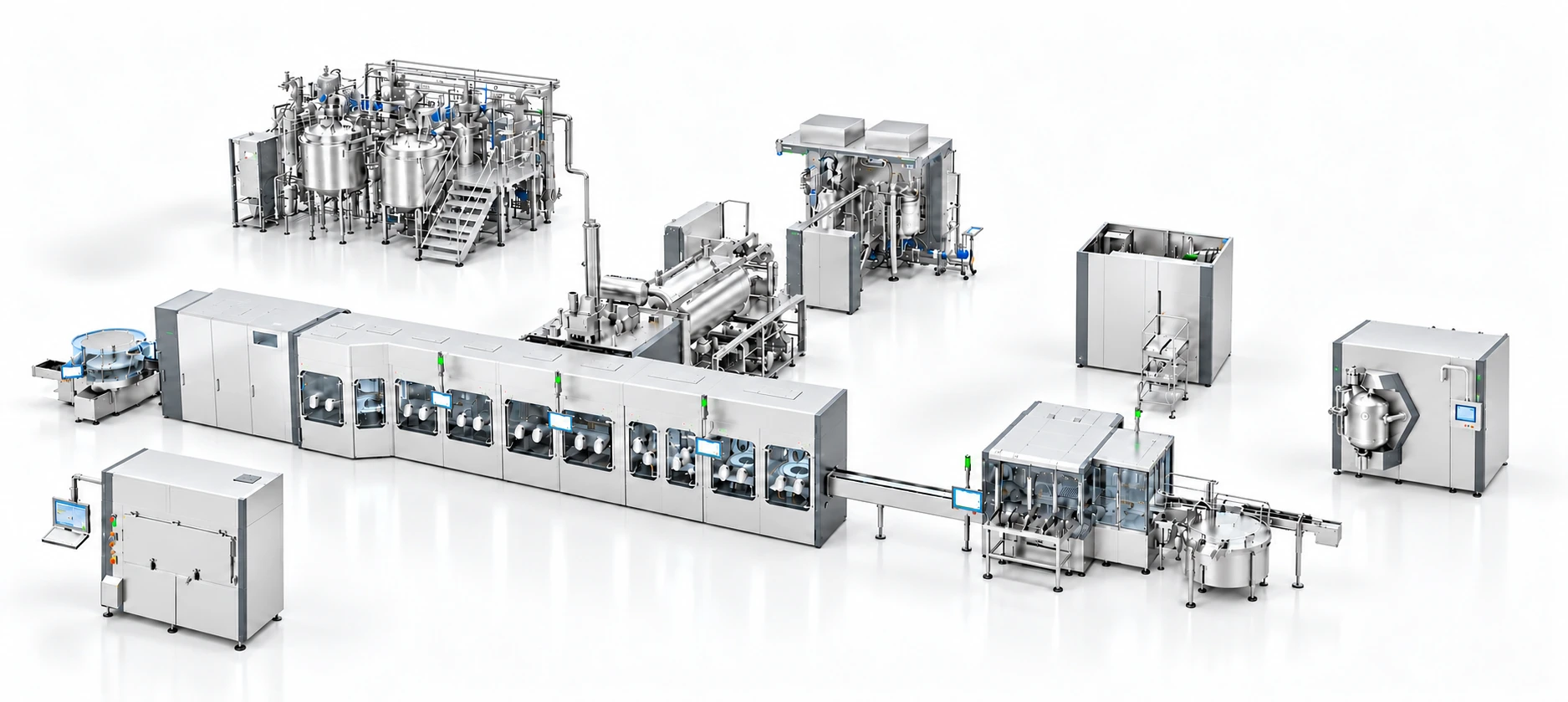
Production line · Equipment context
Explore the process areas on the production line associated with this equipment.
Explore vial preparation, filling, dryer transfer and freeze drying, with closing and parallel support equipment.
Related production lines: Antibody-Drug Conjugate Manufacturing & Fill-Finish · Vaccine Formulation & Fill-Finish Equipment
The inlet receives the specified filled and closed container assembly. Following exterior washing and drying, the outlet transfers containers to the agreed inspection, labelling or packaging step. Keep rejects and wash waste identified; define the process position and containment boundary around the actual product risk.

Use the actual closure assembly and residue properties to assess supports, shielding, media and drainage. Confirm which surfaces the selected wash is intended to treat.
Learn moreAgree the assay, recovery and sampling locations, then check exterior cleanliness, closure condition and downstream surface dryness under representative conditions.
Learn moreDocument cleaning-media preparation, changeover checks and handling of wash waste. Include drying checks, nozzle access and a response to blocked or abnormal flow.
Learn moreShare container finish, residue to remove and closure protection.
Request product information
Brochure
External Bottle Washing Machine
Available by enquiry
Request product information2 resources
No. This page concerns the exterior of a filled, closed vial or bottle. Empty-vial internal washing and later sterilization or depyrogenation are separate process duties.
No general zero-residue claim is appropriate. The process must be assessed against a specified residue limit using suitable sampling and assay recovery under representative conditions.
Protection depends on the actual closure, shielding, support and wash conditions. Challenge the selected assembly for damage and ingress; no closure design should be assumed compatible without that assessment.
The enclosure, operator access, waste segregation and cleaning of the washer need to be considered with residue removal. Those controls are part of a defined project scope, not implied by the presence of an exterior-wash station.
For an exterior-washing review, provide container and closure drawings, residue properties, expected inlet condition and the next handling step. Identify containment and waste requirements as well as the acceptance method.
Discuss your project

