Skip to content

Process expertise. Chinese manufacturing. Global perspective.

PREASYS

Equipment & technology

Lab Scale Roller Compactor for Benchtop Dry Granulation| Preasys

Use a laboratory roller compactor to test whether a powder blend can form a workable ribbon and be milled into granules without adding a granulating liquid. The trial should measure granule quality and subsequent tabletability, not only the amount of material processed.

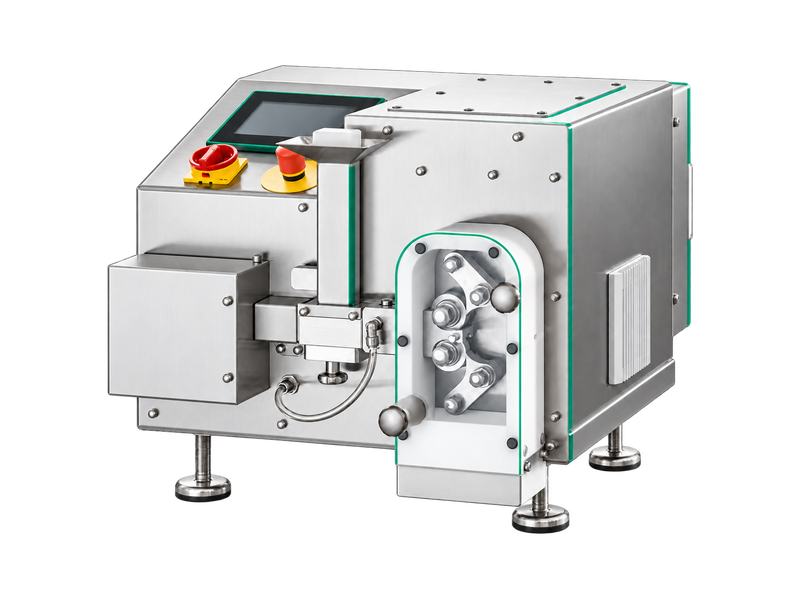
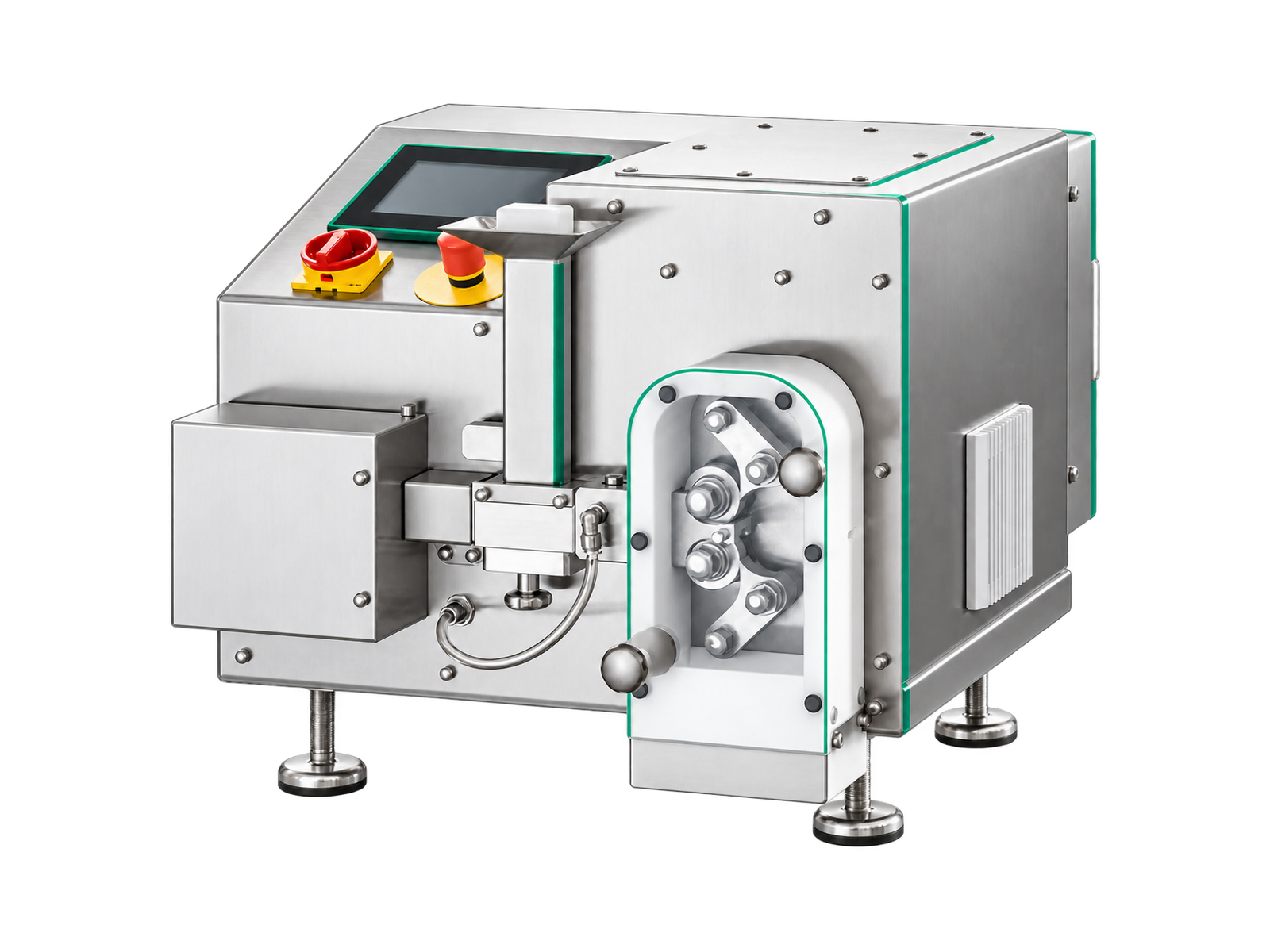
Roller compactor with removable product-contact tooling
The compact roller compactor exposes the feeding and roll assemblies for setup. Confirm the smallest usable trial charge with the actual powder.

Dry Granulator

Benchtop roller compaction for formulation development

Powder is fed into the nip between counter-rotating rolls, compressed into a ribbon and passed to a mill. At laboratory scale, the useful question is how feed behaviour, compaction and milling affect the material available for the next operation.

Dry granulation removes the liquid-addition and drying steps of a wet route. Compression and milling can still generate heat and change compactability. Check product temperature, ribbon condition and downstream performance with the actual formulation.

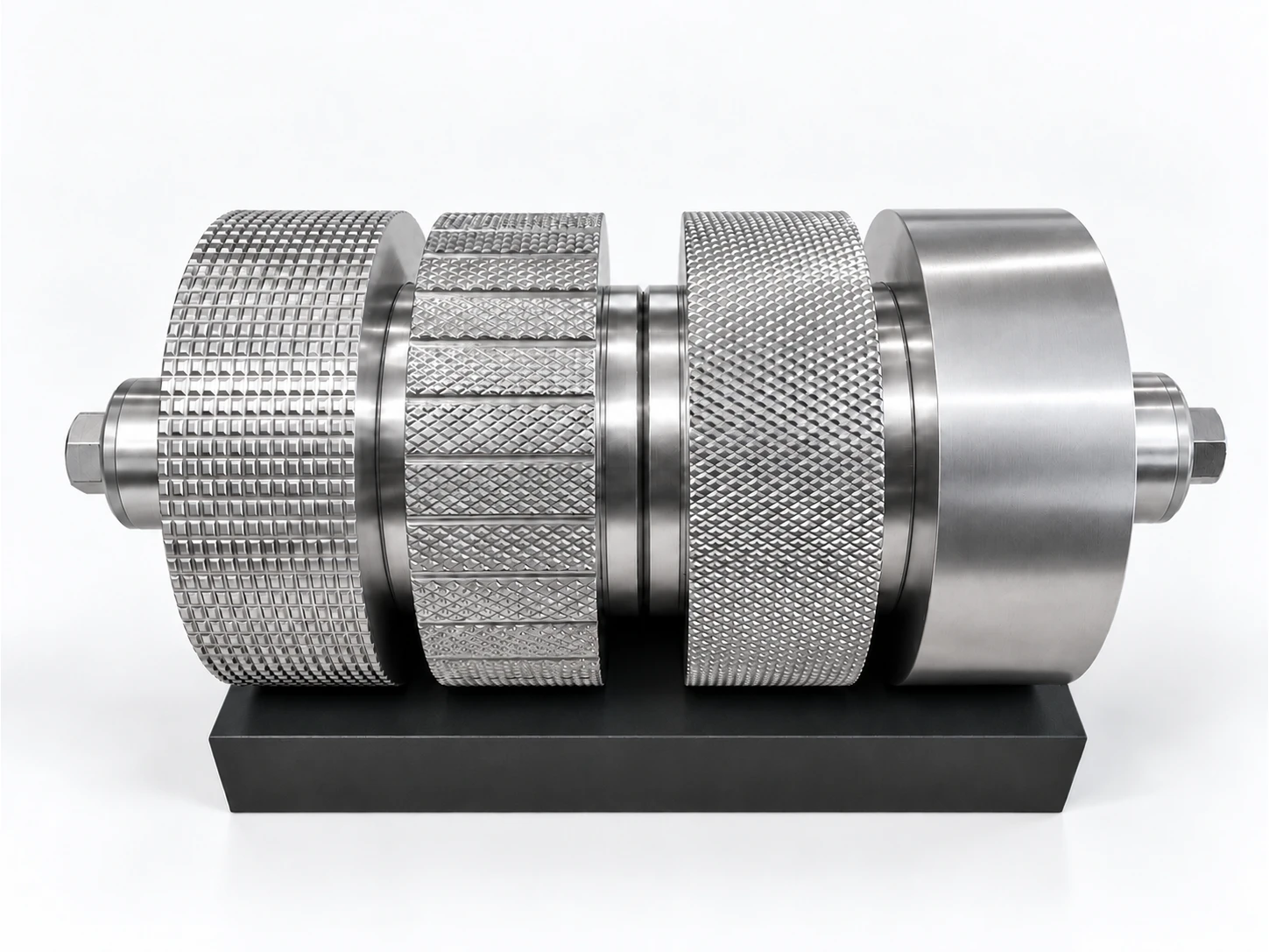
Grooved and smooth roller surfaces for dry compaction

Observe the whole dry-granulation route

Ribbon quality and the milled fraction answer different development questions.

Ribbon

Relate compaction conditions to ribbon integrity

Granules

Assess size distribution and downstream compactability

Process challenges

Liquid-sensitive formulations need a route that avoids adding a granulating liquid, while still checking temperature and mechanical stress.

Read details

Liquid-sensitive formulations need a route that avoids adding a granulating liquid, while still checking temperature and mechanical stress.

Non-uniform ribbons — force drift causes density and size variability.

Poor flow properties — fine, cohesive powders jam feeders and presses.

Potent powders require assessed containment during charging, compaction, milling, discharge and cleaning.

Laboratory results need a defined transfer basis; equal settings alone do not establish equivalent production granules.

Granule quality inconsistency — wrong roll speed, force or screen yields fines and oversize.

Industry problem What the development trial should establish
Heat/moisture-sensitive API Avoid granulating liquid; measure any temperature rise during compaction and milling.
Ribbon variability Compare ribbon condition against recorded force and gap behaviour.
Poor powder flow Measure whether the resulting granules feed the next operation more consistently.
High-potency dust risk Assess charging, discharge and cleaning against an agreed exposure target.
Scale-up gap Compare the compaction and milling mechanisms before selecting scale-up conditions.
Particle size targets Use particle-size analysis to select roll, rotor and screen settings.

Technical data & features

Use consistent feed material when comparing roll gap and force settings.

Grooved and smooth roller surfaces for dry compaction

Trial size: agree the minimum useful charge after allowing for feeder, roll and mill hold-up. Distinguish the mass charged from the material processed per hour.

Scale-up scope: retain the laboratory feed and ribbon data for comparison with the proposed production compactor. Confirm roll dimensions, control strategy and containment independently.

Roll force and gap: record the variables actually controlled Feed control: observe consistency at the roll inlet

Select the roll surface for the powder

Mill selection: compare rotor and screen combinations using representative ribbons. Measure fines and oversize as well as the central particle-size fraction.

Trial record: include blend properties, feed setting, roll speed, force, gap, ribbon samples, mill setting and material balance. Check access to feed screws, rolls and screens for cleaning between experiments.

How it works

How do you separate compaction effects from milling effects?

Hold the feed material consistent and retain a ribbon sample from each condition before milling. Compare ribbon integrity and granule-size results together, recording mill settings rather than attributing all fines to the compaction force.

How should trial granules be evaluated?

Measure particle-size distribution, fines and flow, then assess the intended tablet or capsule step. Examine material retained in the feeder and mill and reconcile recovered samples. Clean the roll surfaces and screen before the next formulation.

Line integration

Line Integration

Inputs: a characterized blend and a defined sampling plan

Collect ribbon and milled-granule samples separately. This distinguishes variation introduced at the rolls from attrition or size reduction at the mill.

Outputs: trial granules for flow, particle-size and compaction evaluation

Transfer package: settings, material history and observed quality

Support throughout your project and production

Define the equipment scope

Use consistent feed material when comparing roll gap and force settings.

Learn more

Agree the acceptance test

Measure ribbon condition, fines and downstream tabletability from each trial.

Learn more

Prepare for operation

Identify the contact parts and format tooling for Dry Granulator. Agree access for cleaning, the spares to hold and the operating records the site will need.

Learn more

Knowledge hub

2 resources

Frequently asked questions

Is dry granulation heat-free?

No. It does not need a deliberate liquid-addition and drying cycle, but mechanical work can raise product temperature. A temperature-sensitive formulation still needs a measured trial.

Is the minimum batch mass the same as throughput?

No. Batch mass is the material available for an experiment; throughput is a rate. Feeder and mill hold-up determine how much of a small charge can be recovered for evaluation.

Will laboratory roll settings transfer directly to production?

Not necessarily. Compare roll geometry, feed arrangement, control strategy and milling conditions, then use ribbon and granule quality as the transfer evidence. Confirm the larger machine with its own acceptance trial.

Contact

Send the powder properties, trial quantity and target granule attributes for a laboratory compaction review.

Discuss your project →
Grooved and smooth roller surfaces for dry compaction