Skip to content

Process expertise. Chinese manufacturing. Global perspective.

PREASYS

Equipment & technology

Automatic RTU Tub Debagger & Bag Removal Machine

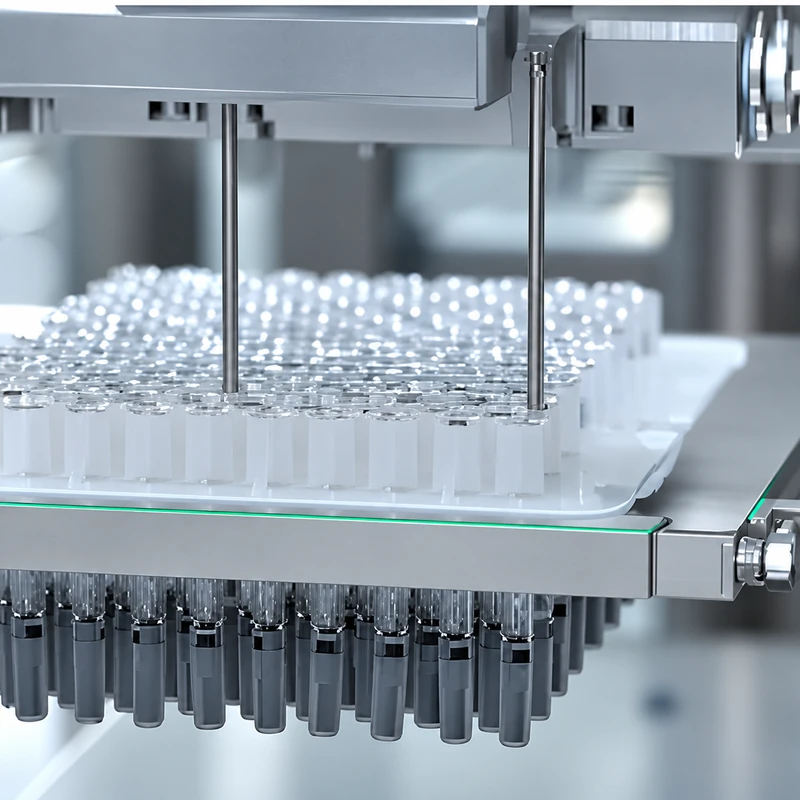
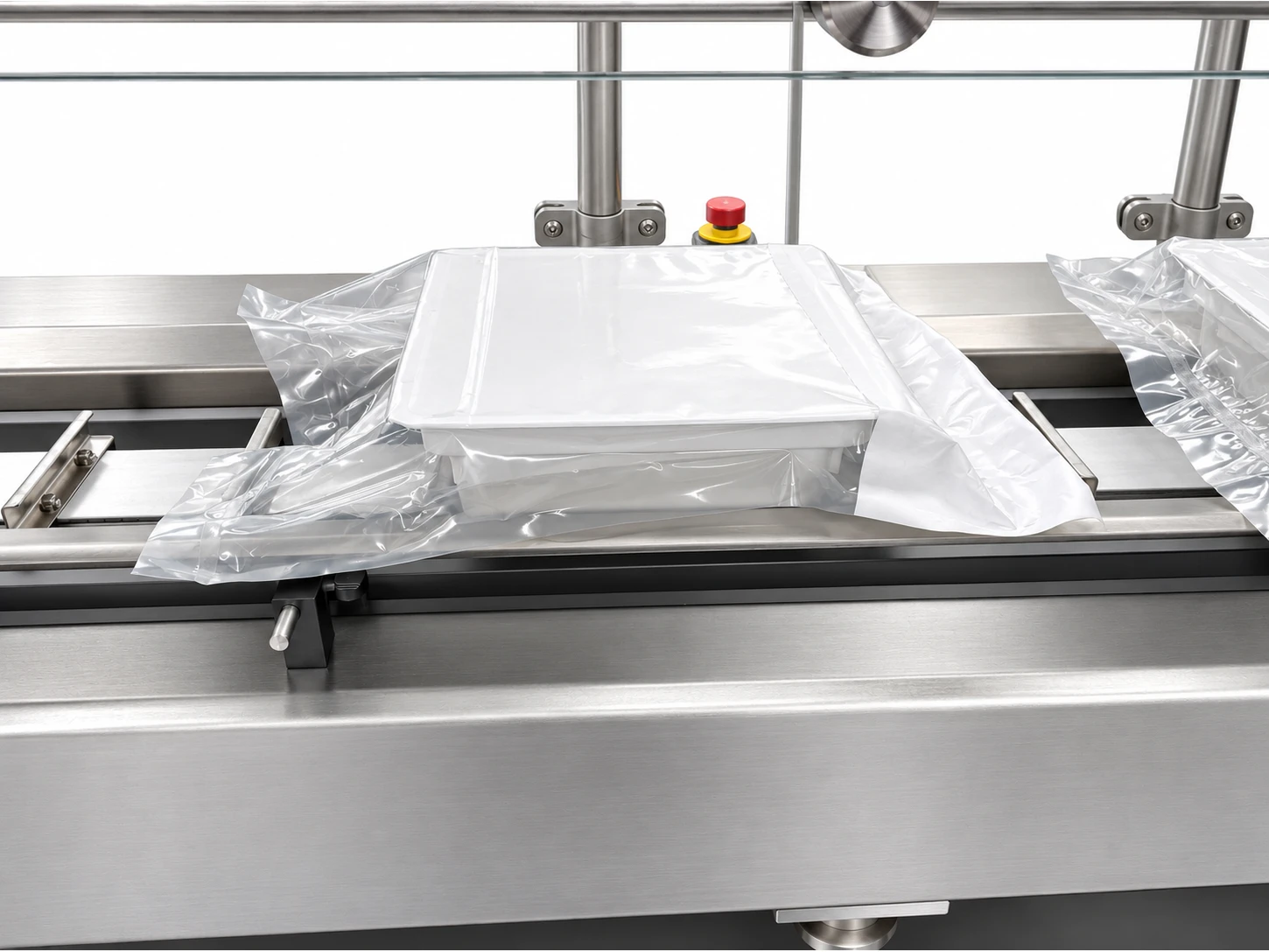
The debagging station removes the outer wrap while the tub remains oriented for the next transfer.

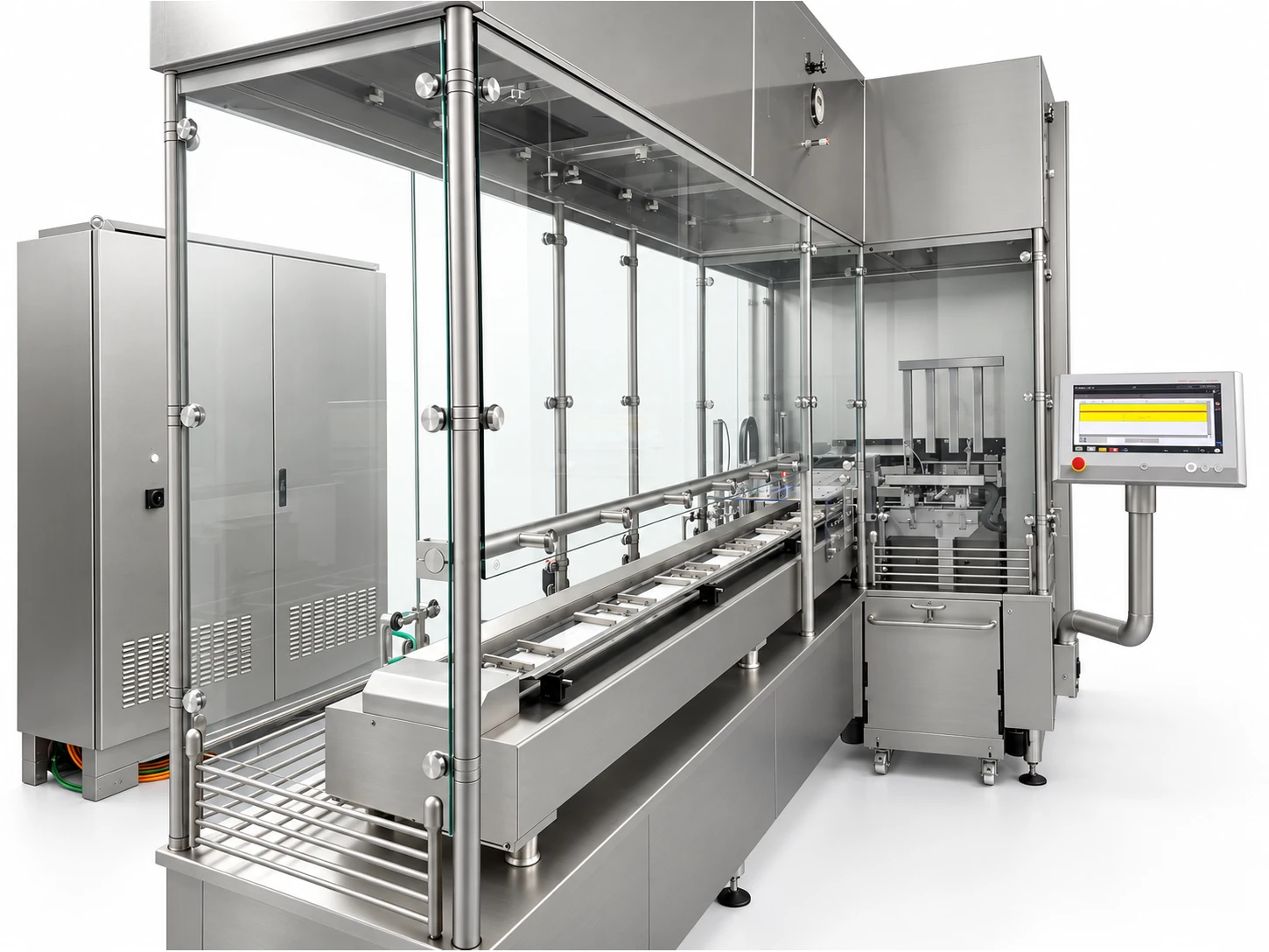
Conveyor and operator enclosure at a tub handling station

Debagger

Preasys Debagging Machine — RTU Container Depacking

RTU debagging and protected tub transfer

RTU (Ready-to-Use) containers arrive double-bagged, pre-sterilized, and packed in nests inside tubs. The critical question is how to get those sterile containers into your Grade A filling zone without contamination. Preasys debagging machines open the bags, transfer the tub through the pressure cascade via the mousehole, and deliver the nest to the filling machine — all without an operator touching the tub.

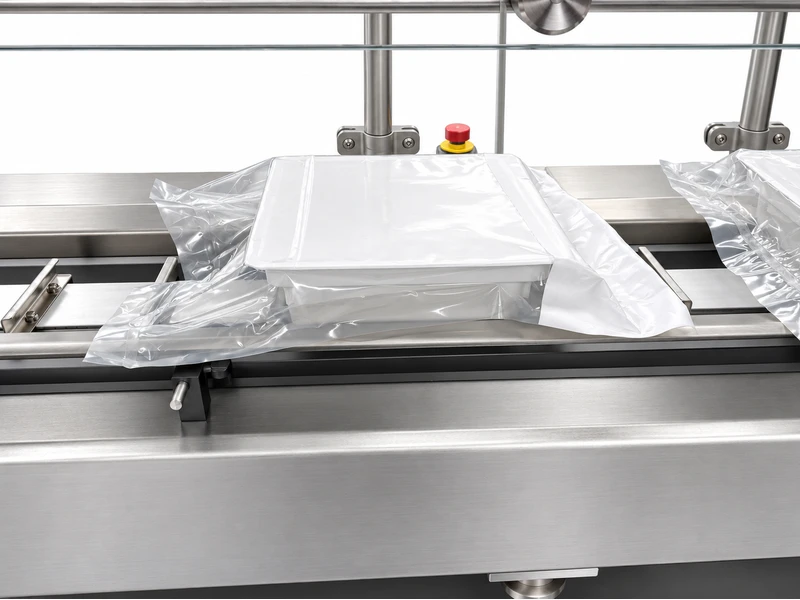
Wrapped tub on the infeed of a ready-to-use container system

Configuration data

Automatic tub debagging configurations. Review incoming wrap, tub orientation and barrier transfer with the selected layout.

Up to 375 tubs/h

Automatic debagging

Up to 375 tubs/h

Automatic alignment and debagging

Process challenges

- Opening the bag at the wrong point pulls contamination into the tub — if the bag is cut and opened too early, before the mousehole, room air floods into the sterile nest.

Read details

- Opening the bag at the wrong point pulls contamination into the tub — if the bag is cut and opened too early, before the mousehole, room air floods into the sterile nest. Particles ride the airflow straight onto your containers

- Operators touch the tub during transfer — gloved hands pushing the tub through a wall opening are a direct contact with the sterile product container. Annex 1 counts this as an intervention

- Bag alignment is inconsistent — if the bag is skewed on the conveyor, the cutter blade misses or tears the bag. Broken bag = aborted batch, waste, and clean-up

- Pressure cascade at the mousehole is poorly designed — without proper laminar flow and pressure differential, air flows from the dirtier side into the cleaner side every time the mousehole opens

- Format parts change over for every container size — each new vial or syringe format requires new guides, new clamps, new adjustments. Line changeover takes hours

- Waste bag accumulates inside the clean area — the cut bag and liner have to exit the cleanroom. If the waste bin is not isolated, the bag becomes a contamination source

Technical data & features

Define the number of wrapping layers, tub dimensions and the barrier boundary at which each layer is removed.

Wrapped tub on the infeed of a ready-to-use container system
- Semi-automatic model: up to 180 tubs/h, manual loading and alignment

- automatic debagging: up to 375 tubs/h, no format parts for any container size

- automatic alignment + debagging: up to 375 tubs/h, isolator-compatible, full automatic bag alignment

- Handles RTU syringes, vials, cartridges — all common sizes

- Single bag and double bag processing

- No Touch Transfer (NTT): tub is never touched by operator or machine gripper during transfer

- Bag held sealed by clamping bars until directly at the mousehole - Vacuum-assisted bag opening upstream of the mousehole - Pressure cascade: Grade D → Grade C/B → Grade B/A → Grade A - Laminar flow (UDAF) optimized by CFD and smoke study validation - Automatic bag discharge into sealed collecting bin (exchangeable) Confirm the materials and finish of the surfaces that contact the supplied tub or bag. Use the drawing to review the transfer into the protected zone.

- Integrates with isolator or RABS at the mousehole interface

How it works

How-To

How NTT (No Touch Transfer) works — step by step?

1. Hold — the double-bagged tub enters in Grade D. Clamping bars grip the bag edges securely, holding the tub in position

2. Cut — a clean blade cuts the outer bag at a defined position. The bag remains clamped, open but not exposed

3. Transport — the clamped bag, now open, moves toward the mousehole. The tub inside is never touched

4. Open — at the mousehole (Grade B/A transition), the clamping bars release the bag opening fully. Laminar flow pushes particles away from the tub

5. Transfer — the tub is pushed through the mousehole into the Grade A zone without any contact. The cut bag remains behind, discharged into a sealed bin

How to choose the right model?

1. Semi-automatic — clinical batches, small-scale (up to 180 tubs/h), manual loading, compact footprint. Best for small batch lines

2. Fully automatic debagging — medium to high throughput (up to 375 tubs/h). Manual delivery and alignment, fully automatic debagging. No format parts needed

3. automatic alignment + debagging — full automatic including bag alignment station. Isolator-compatible. Best when the upstream line delivers bags automatically and you need zero manual handling

How to maintain the pressure cascade at the mousehole?

- The opening side (Grade B/C) is slightly lower pressure than the receiving side (Grade A)

How do we observe airflow through the transfer opening?

With the barrier in its defined operating state, observe the approved airflow study at the opening while a container passes. Record obstructions or disturbance at the interface.

How do we check airflow when a transfer is in motion?

Review the airflow study with the relevant doors and transfer device operating. Compare the observed direction with the agreed containment and product-protection design.

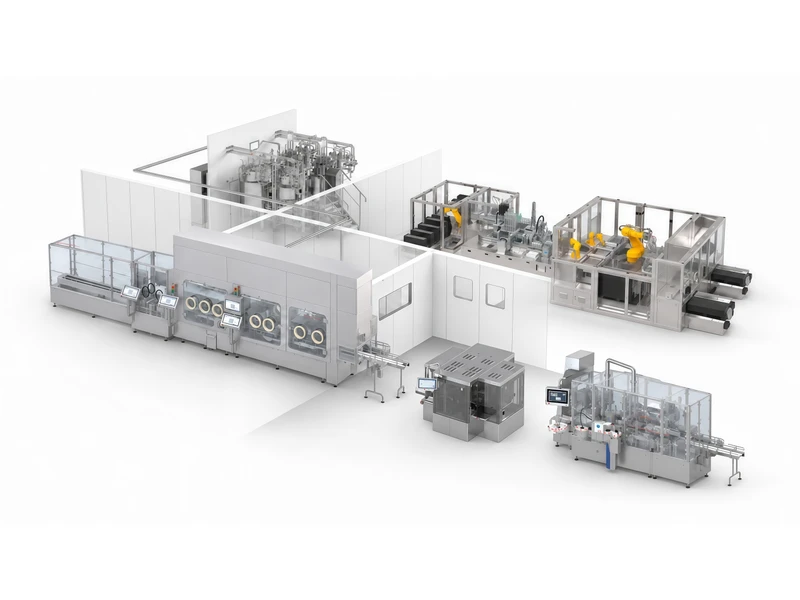
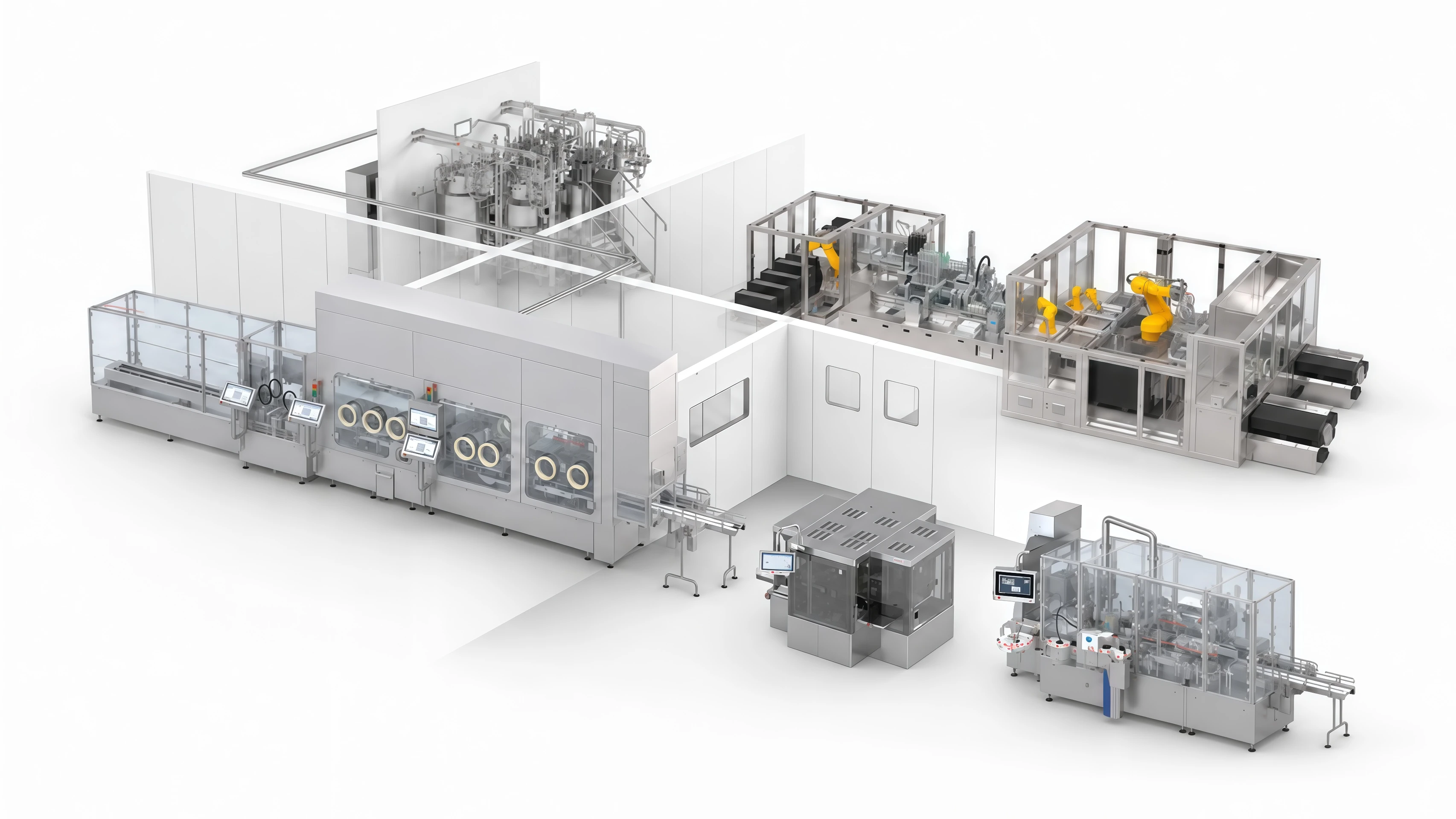
Nested syringe filling line. Follow the ready-to-use container branch, from bag removal to filling and downstream pack handling.

Production line · Equipment context

Nested syringe filling line

Explore the process areas on the production line associated with this equipment.

Skip tour
Production layout 7 equipment areas · Scroll to explore

Follow the ready-to-use container branch, from bag removal to filling and downstream pack handling.

Related production lines: Prefilled Syringe Filling & Packaging Lines · Antibody-Drug Conjugate Manufacturing & Fill-Finish · GLP-1 Filling & Drug-Delivery Equipment · Vaccine Formulation & Fill-Finish Equipment · Advanced Therapy Manufacturing Equipment

Line integration

Tub sanitizer

Tub opener

RTU Filler

Isolator

Support throughout your project and production

Define the equipment scope

Define the number of wrapping layers, tub dimensions and the barrier boundary at which each layer is removed.

Learn more

Agree the acceptance test

Run representative incoming packs through opening and discharge, including a damaged-wrap recovery trial.

Learn more

Prepare for operation

Identify the contact parts and format tooling for Debagger. Agree access for cleaning, the spares to hold and the operating records the site will need.

Learn more

Knowledge hub

2 resources

Frequently asked questions

What determines the configuration for Debagger?

Define the number of wrapping layers, tub dimensions and the barrier boundary at which each layer is removed.

What should we send when specifying Debagger?

Container drawing, product-contact materials, intended dose, closure format, batch size.

Wrapped tub on the infeed of a ready-to-use container system