Read details

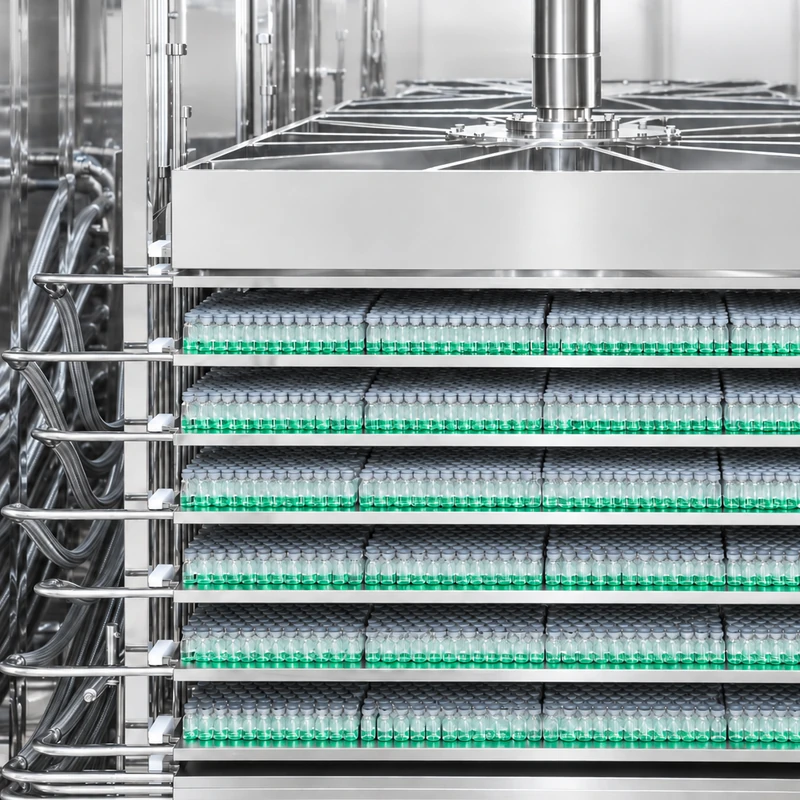
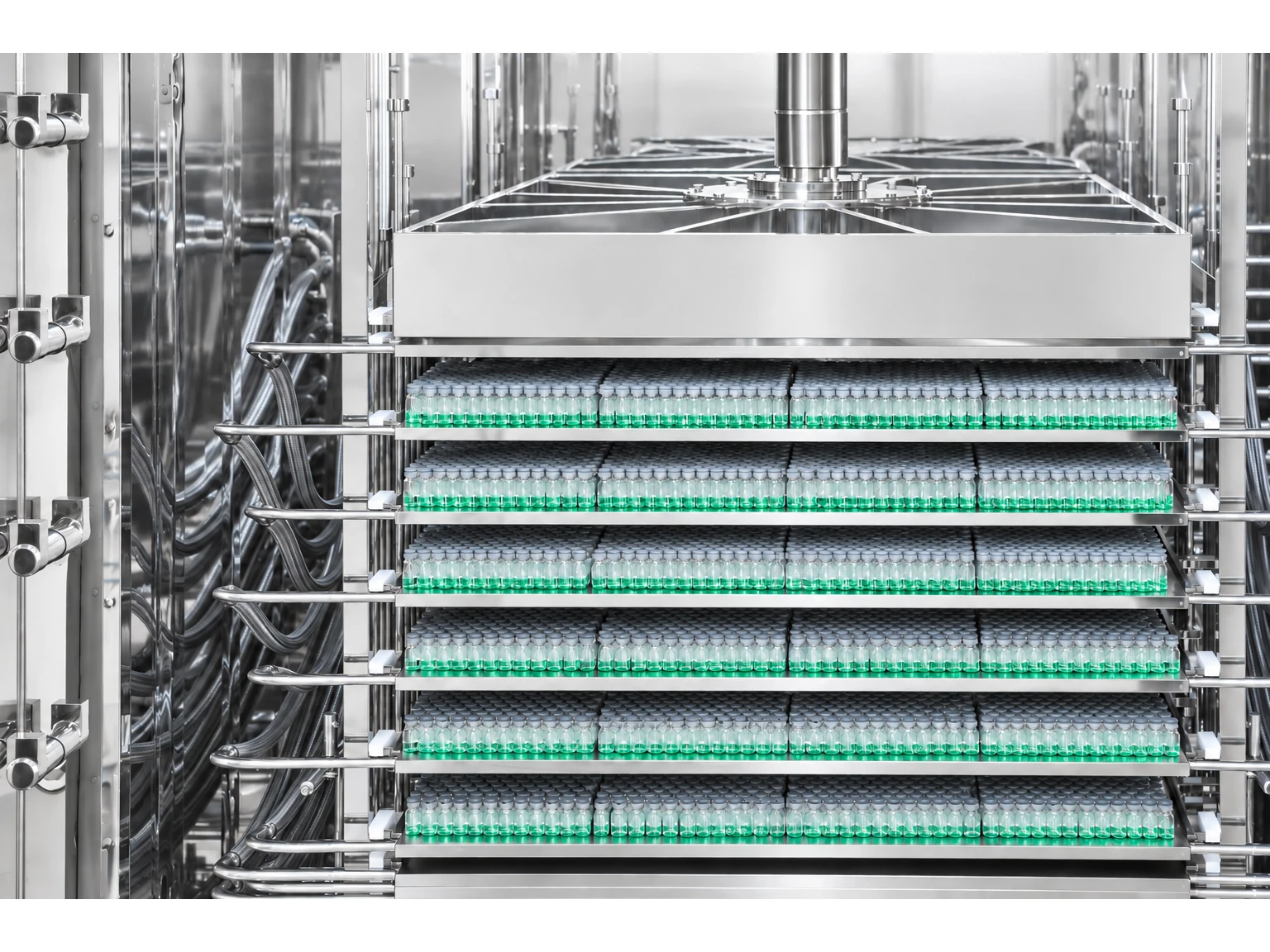
- Vials chip and scratch during manual shelf loading — glass-on-glass contact from hand placement creates particulate that ends up as a subvisible particle in the final product
- Manual loading takes too long — a 20 m² shelf takes 40–60 minutes to load by hand. The filler sits idle, OEE drops, and operators are in Grade B for the entire duration
- Vials topple on the shelf edge — when a row of vials transitions from the conveyor to the shelf, misalignment tips them over. One fallen vial stops the entire load
- Backpusher inside the dryer collects residue — the retrieval mechanism sits inside the chamber between cycles. Lyophilized powder builds up on it. CIP spray does not reach it. It becomes a contamination source
- No traceability of vial position in the dryer — when a batch fails investigation, nobody knows which vials were on which shelf, near the door, or near the condenser
- Loading speed does not match filler output — filler runs at 400 vials/min, the pusher handles 200. The filler buffers, then starves, then buffers again. Fill weight control drifts with interruptions