Read details

Dry granulation removes the liquid-addition and drying stages of a wet route. Mechanical work can still generate heat and change the material, so moisture sensitivity and temperature response remain part of formulation evaluation.
Densification changes bulk density and particle structure. It may improve feeding, but the resulting flow and tabletability depend on the formulation and compaction history rather than the presence of granules alone.
Powder and fines remain present at feed, mill and discharge points. Dust control must cover these interfaces and cleaning tasks; granulation itself does not establish operator protection.
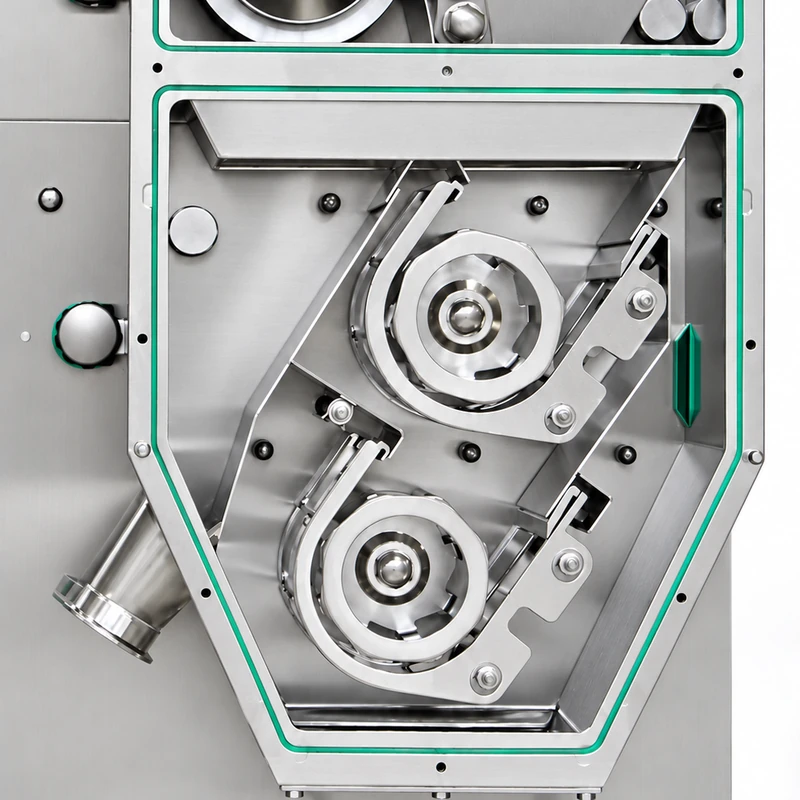
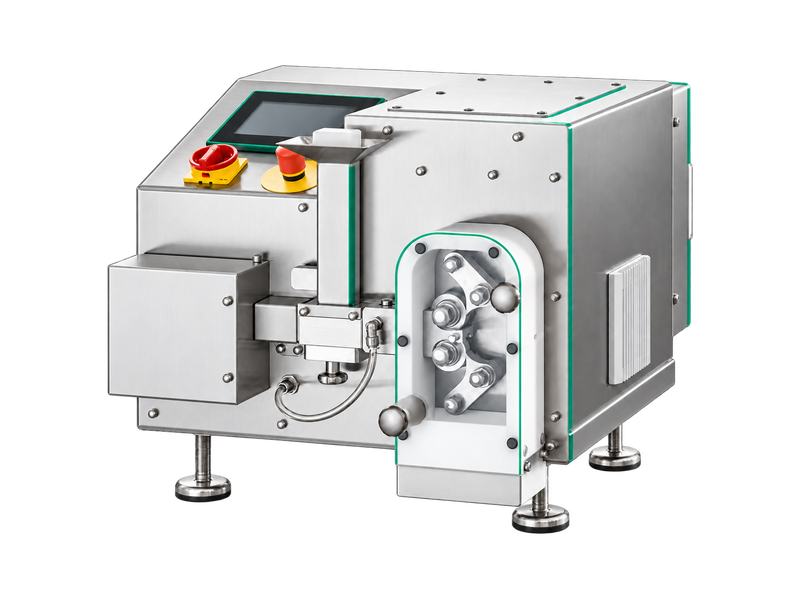
Feed variation changes the material entering the nip. Force and gap behaviour should be interpreted alongside feed consistency and ribbon condition, rather than treating one indicated value as a complete quality measure.
Air displaced by compaction can interrupt powder feed. Compare nip feeding and ribbon consistency with the proposed vent path and the actual bulk density.
Returned fines add material with a different process history to the feed. Recycling requires a defined return path and evidence that composition and granule properties remain acceptable through the run.
Containment is a system property of charging, seals, transfers, discharge and cleaning. The required exposure target and test approach must be agreed for the proposed powder and installation.
The screen geometry and working gap influence the granule size distribution. Compare accepted material, fines and oversize at the intended feed rate.
Roll, side-seal and screen access influence residue removal and restoration after changeover. Cleaning procedures should cover the actual contact surfaces and the sequence used to reassemble them.