Skip to content

Process expertise. Chinese manufacturing. Global perspective.

PREASYS

Equipment & technology

Capsule Filling

Capsule shells are separated, filled and closed while their orientation is maintained through each station.

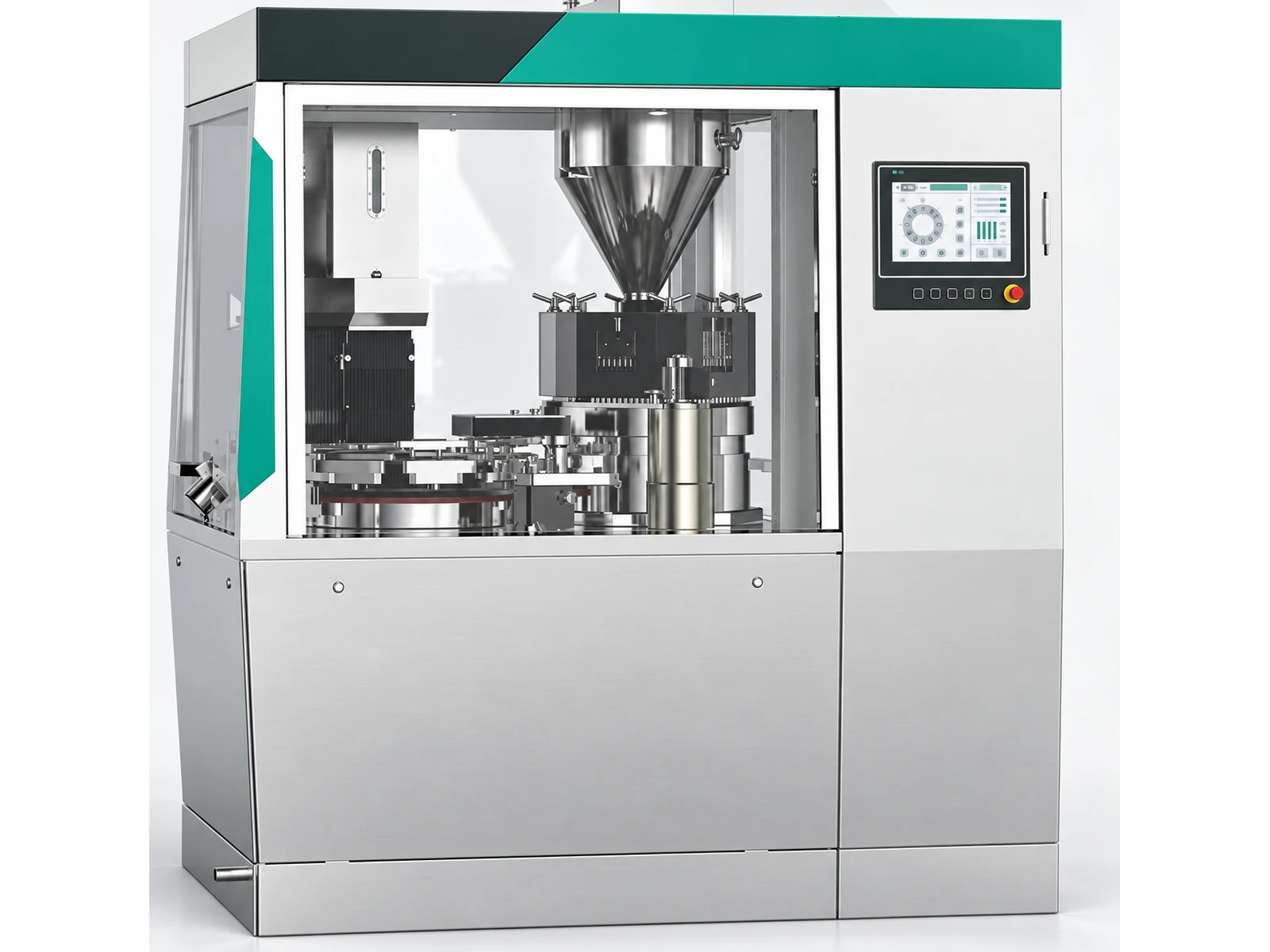
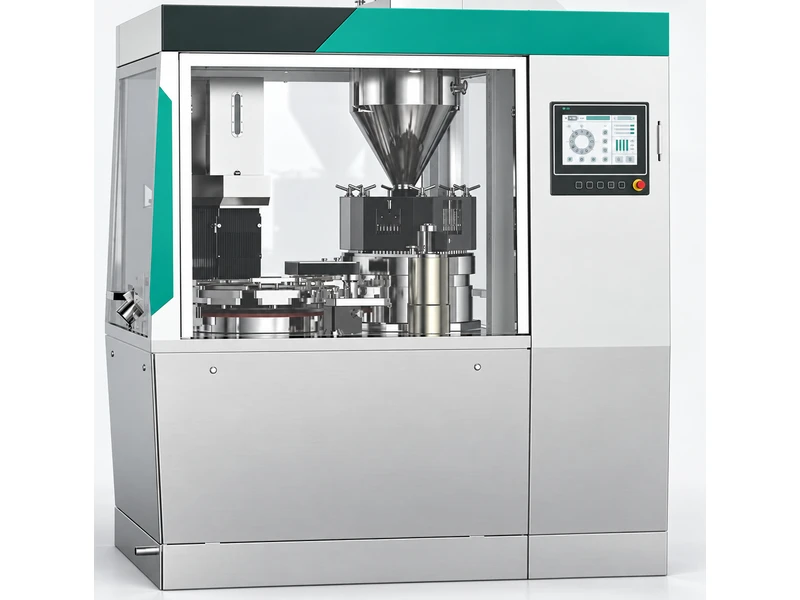
Hopper and dosing tools behind the front guard of a capsule filler

Capsule Filling

Preasys CF Series — Capsule Filling Machines

Preasys CF Series — Capsule Filling from 3,600 to 360,000 Capsules per Hour

The CF family handles hard-shell capsule filling. A powder, pellet, micro-tablet or liquid fill requires different dosing tooling. Supply the shell, target fill and material behaviour, then compare delivered fill and capsule closure in a trial.

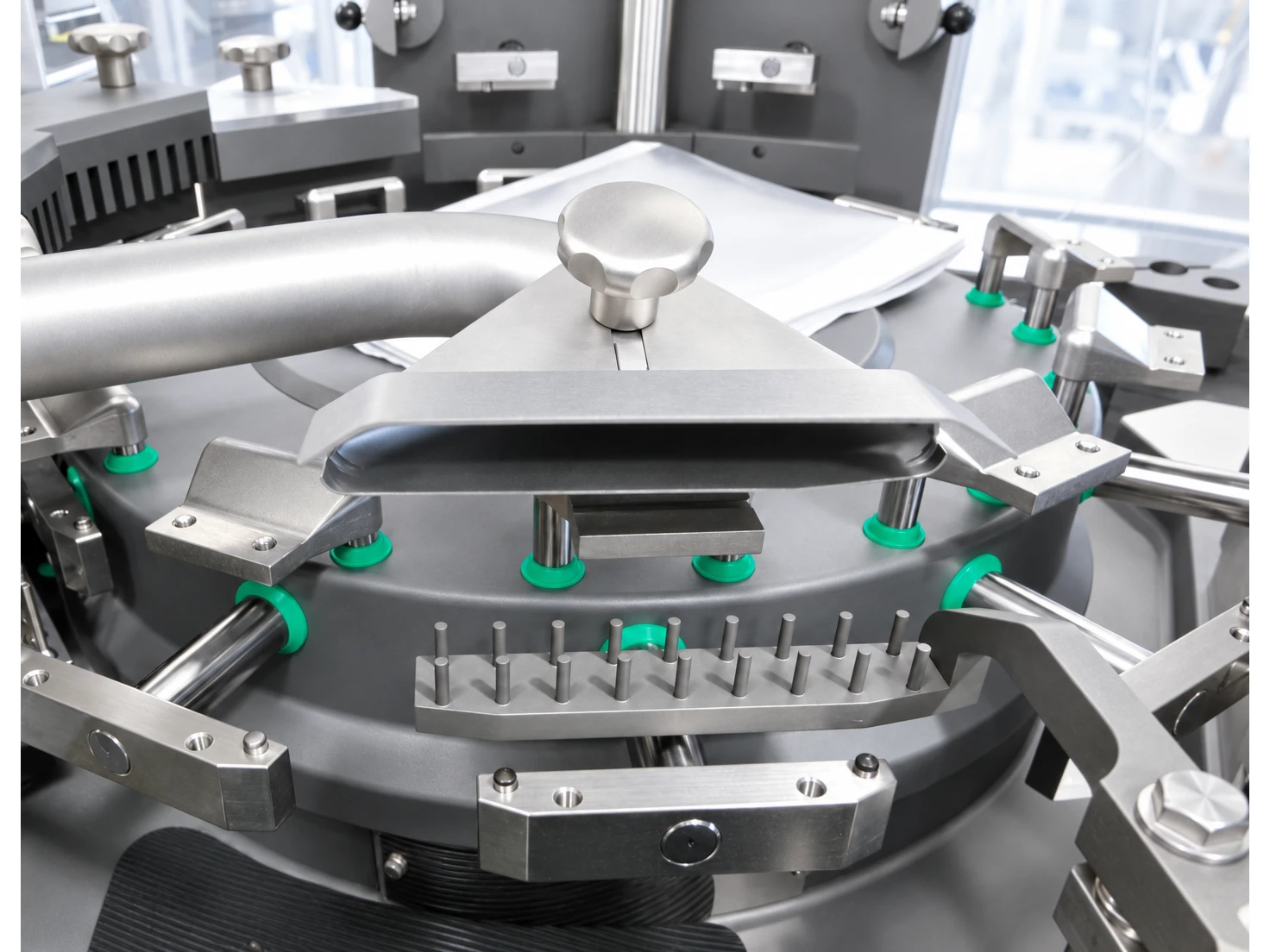
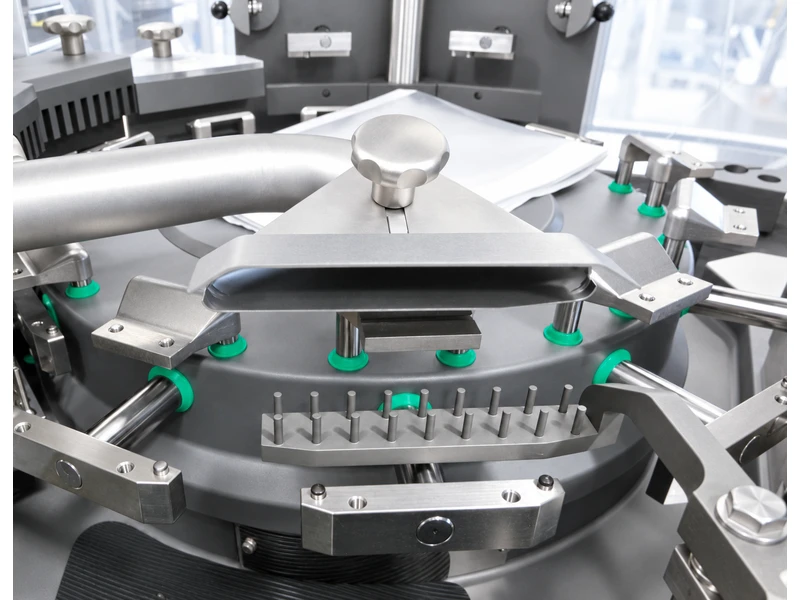
Circular capsule tooling inside the filling station

Configuration data

Values below refer to the indicated configurations in the technical comparison on this page.

max. 140/min

Machine cycles · CF-140

Filling technologies

Filling technology

Powder filling

Powder is metered using an auger or a vacuum-based dosing system, depending on the selected configuration. Flow behaviour, bulk density, dose size and containment requirements guide the equipment discussion. The powder and container should be evaluated together during process development.

Explore technology
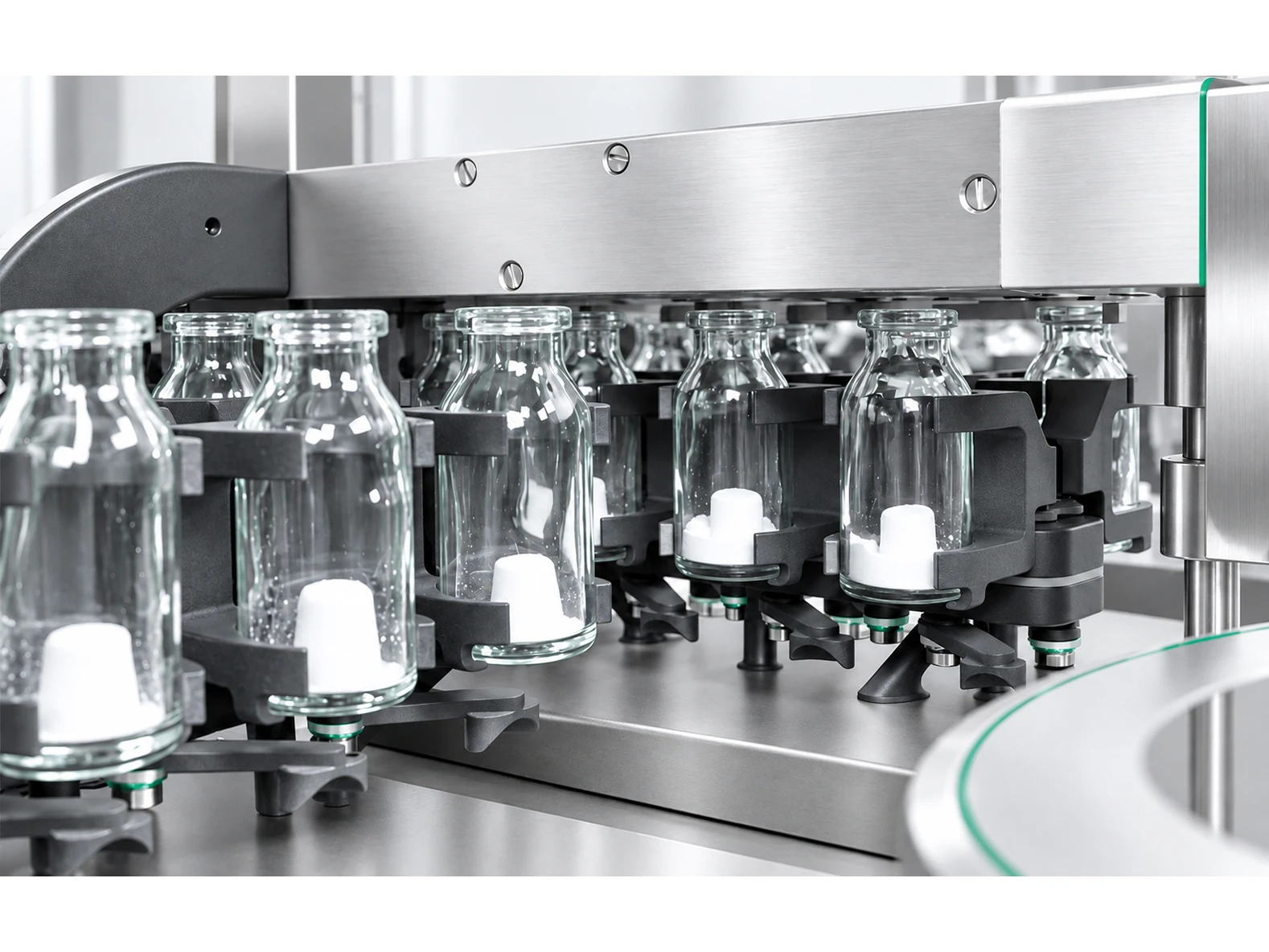
Glass vials presented below the powder dispensing heads
Dosing principle illustration · configuration depends on the application.
Technology 1 of 1

Process challenges

Sticky, fine-grained or fluffy powders do not dose consistently — static, cohesive products bridge and fluctuate in the dosing chamber.

Read details

Sticky, fine-grained or fluffy powders do not dose consistently — static, cohesive products bridge and fluctuate in the dosing chamber. The slide-gate dosing station with optimized technology fills powders, granules and pellets accurately, including sticky, abrasive, fibrous and special products

Filling accuracy drifts without 100% weight control — statistical sampling finds bad capsules too late. Integrated capsule checkweighing inspects every single capsule at full line speed and rejects weight-faulty capsules — 100% quality assurance without performance loss

Product changeover between dosing technologies takes hours — switching from powder to pellets to tablets traditionally means lengthy reconfiguration. The modular plug-in station allows a dosing module change in less than five minutes — simple and failsafe, with efficient product changeover as a design focus

Potent or toxic products must be filled under containment — operator exposure must be controlled to OEL levels. The CF-60 is available as ProTect (dedicated R&D laminar-flow principle) and HiProTect (closed-door concept with glove port access and RTP option); production machines are convertible into containment with negative-pressure monitoring inside the production chamber

Capsules are damaged or misoriented during handling — separation, orientation and closure must be gentle. Processed segment technology guides capsules through separation, filling and locking with controlled motion — gentle handling from in-feed to ejection, with defective capsules rejected before filling

Liquids and semi-solids with critical properties are hard to dose — products with narrow melting ranges or high viscosity clog conventional pumps. Servo-driven liquid dosing pump technology fills a wide range of products — critical melting point ranges, high or low viscosity, and product combinations

Micro-tablets and multi-tablet fills damage fragile tablets — coated or uncoated tablets crack during dosing. The tablet dosing station guides tablets from the integrated hopper, sorts them into the dosing bores of the rotating disk and transfers a predefined number gently into the capsule body — low stress for large oblong and micro-tablets alike

Inspect powder escape at the dosing station, discharge and shell changeover. Define local extraction or containment according to the formulation and handling task.

Scale-up from R&D to production changes filling behavior — different machines, different results. One technology platform with consistent dosing principles transfers formulations reliably from the CF-60 through the production series

Technical data & features

Powders, pellets and mini-tablets require different dosing and feed behaviour. Shell size and product flow guide the choice.

Circular capsule tooling inside the filling station
Technical data & features · Model comparison
Model CF-60 CF-70 CF-140 CF-250 CF-300 CF-600
Output (caps/h) up to 3,600 3,000–43,500 84,000 150,000 175,000 360,000
Segment bores — 5 10 18 21 48
Machine cycles — — max. 140/min max. 140/min — —
Application R\&D / clinical R\&D → small batch Production Production High-batch production Blockbuster production
Capsule sizes all standard all standard 000–5 000–5 000–5 000–5

Dosing Technologies

Powder station — optimized slide-gate technology for powders, granules and pellets; precise dosing of sticky, fine-grained, fluffy, abrasive and fibrous products

Pellet station — gentle, precise and compact volumetric dosing of pellets with different characteristics

Tablet station — single and multiple tablets dosed gently and precisely into capsules, from large oblong to micro-tablets; tablets sorted into the dosing bores of a rotating disk and transferred in a predefined number

Liquid station — servo-driven liquid dosing pumps for products with critical melting point ranges, high or low viscosity, and product combinations

Combination fills (powder + pellets, powder + tablet, powder + liquid) on one machine

Core Features

100% capsule checkweighing — every capsule inspected at full line speed; weight-faulty capsules rejected automatically; throughput up to 232,200 capsules/h on the checkweigher range

Modular plug-in station — dosing module changed in less than five minutes; simple, failsafe exchange

Defective capsule rejection — capsules failing orientation or separation checks are rejected before filling

Containment options — CF-60 ProTect (dedicated R&D laminar-flow principle) and HiProTect (closed-door concept with glove port access and RTP option); production machines convertible into containment with negative-pressure monitoring, glove ports and RTP

Dust-control and cleaning access at capsule filling and discharge

Fast, efficient product changeover as a design focus; HPMC and gelatin capsules supported

Nutraceutical and pharmaceutical applications: herbs, vitamins, powder, pellets, granules, special products

How it works

How-To — Solving the Industry's Hardest Capsule Filling Problems

How to dose sticky, fine-grained or fluffy powders accurately?

Cohesive products bridge and dose unevenly. The optimized slide-gate dosing station controls powder flow precisely — from typical nutraceutical herbs and vitamins to pharmaceutical powders, pellets, granules and special products with sticky, abrasive or fibrous properties

How is capsule fill weight checked while the line runs?

Statistical sampling leaves gaps. Integrated capsule checkweighing inspects every capsule at full line speed and rejects weight-faulty capsules — complete quality assurance with zero performance loss

How to switch from powder to pellets to tablets in minutes?

Conventional changeovers cost hours. The modular plug-in station exchanges the dosing module in under five minutes — simple and failsafe, designed for efficient product changeover

How to fill potent products under containment?

High-activity formulations must not reach operators. The CF-60 HiProTect closed-door concept with glove ports and RTP, or production machines converted into containment with negative-pressure monitoring, keep OEL compliance without compromising output

How to fill liquids with critical melting ranges or high viscosity?

Conventional pumps fail on difficult products. Servo-driven liquid dosing pumps handle critical melting points, high and low viscosity, and product combinations — flexible and safe

How to dose micro-tablets and multi-tablet fills without damaging tablets?

Fragile tablets crack during handling. The tablet station sorts tablets into the rotating disk and transfers the predefined number gently into the capsule body — low stress for coated, uncoated, large oblong and micro-tablets

How to avoid dust in the cleanroom?

Use a representative powder to examine where dust collects during filling, shell changeover and cleaning. Agree how the site will assess the containment boundary.

How to scale from R&D to blockbuster production?

Different machines break the process. One technology platform from CF-60 to CF-600 with consistent dosing principles transfers formulations reliably — from clinical trials to 360,000 capsules/h

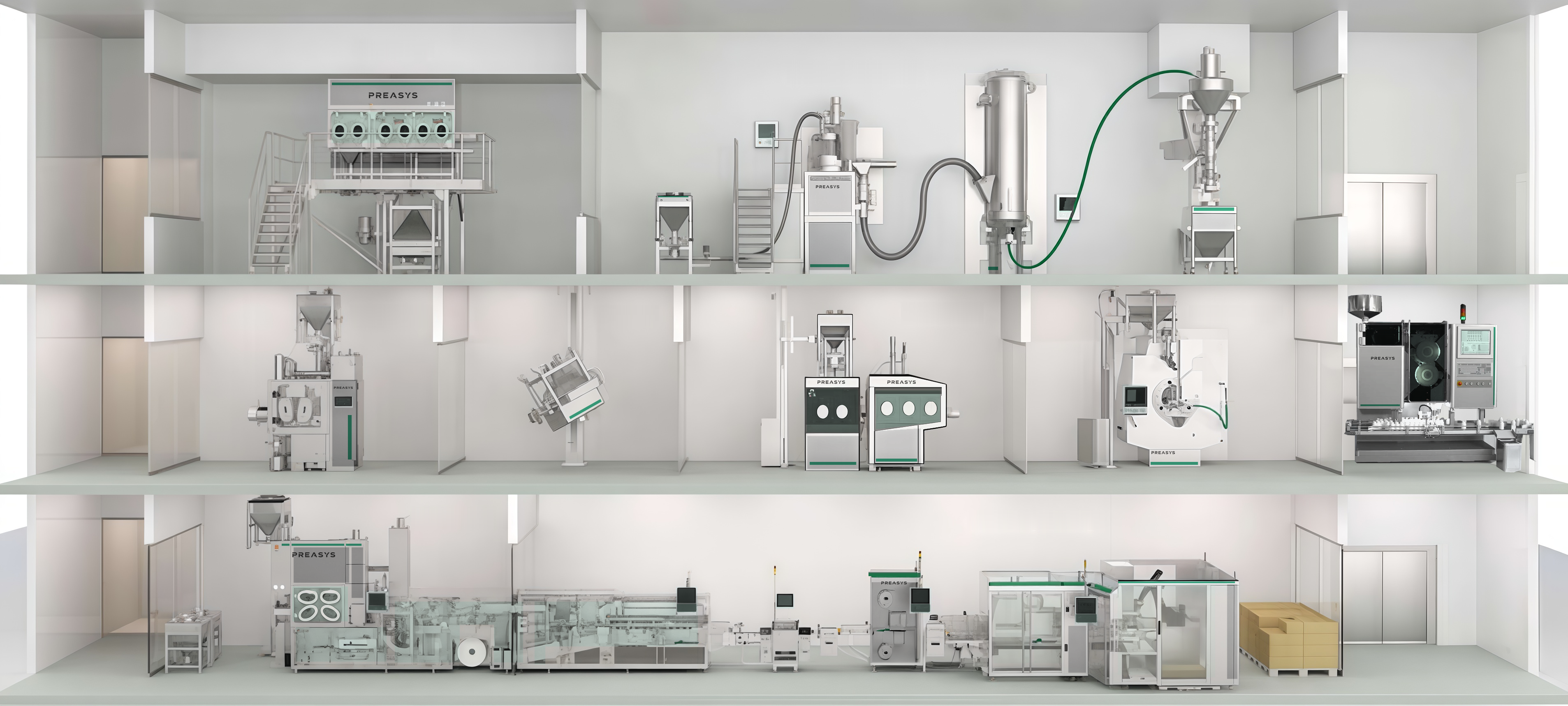
PREASYS three-level solid dosage process concept: preparation above; tablet pressing, encapsulation, coating, inspection and bottle filling in the middle; primary and secondary packaging below

Oral solid dosage · Integrated production

From powder to
packaged product

Discover the equipment behind your solid dosage process.

Skip tour
Production concept 17 equipment areas · Scroll to explore

Route selection. Wet and dry granulation are alternatives. Select tablet compression or capsule filling for the dosage form; include coating when required.

Illustrated equipment and packaging options show process relationships. The facility layout and equipment configuration are defined for each project.

Line integration

Granules / Pellets / Micro-tablets / Powders (Preasys RC, VG/FBD, coating line) + Empty capsules

↓

Preasys CF Series:

Capsule in-feed & orientation → Separation (body / cap) → [Defective capsule rejection]

→ Dosing (powder slide-gate · pellet volumetric · tablet station · liquid pump · combinations)

→ 100% checkweighing → Closure (cap locking) → Ejection

↓

Filled capsules → Dedusting / polishing → Visual inspection → Blister / Bottle Packaging

Read more

Filled capsules → Dedusting / polishing → Visual inspection → Blister / Bottle Packaging

Upstream: empty capsules (gelatin/HPMC, sizes 000–5) from capsule sorters or direct feeding; product from the solid-dosage train

Downstream: filled capsules go to dedusting/polishing, inspection, and blister or bottle packaging lines

Containment: CF-60 ProTect/HiProTect for R&D; production containment conversion with negative-pressure monitoring, glove ports and RTP — for OEL-class products

Link the capsule-filling recipe and checkweigher result to the batch. Define the fields and timing of any transfer to the site system.

Support throughout your project and production

Define the equipment scope

Powders, pellets and mini-tablets require different dosing and feed behaviour. Shell size and product flow guide the choice.

Learn more

Agree the acceptance test

Check fill weight, closure and shell damage before handing capsules to polishing or inspection.

Learn more

Prepare for operation

Identify the contact parts and format tooling for Capsule Filling. Agree access for cleaning, the spares to hold and the operating records the site will need.

Learn more

Knowledge hub

2 resources

Frequently asked questions

What output range does the CF series cover?

From 3,600 capsules/h on the CF-60 (R&D) and 3,000–43,500/h on the CF-70 (scale-up), through 84,000 (CF-140), 150,000 (CF-250) and 175,000 (CF-300) up to 360,000 capsules/h on the CF-600.

Which products can be filled?

Powders, granules, pellets, micro-tablets, tablets and liquids — plus combinations (e.g. powder + pellet, powder + tablet, powder + liquid) on one machine, in gelatin or HPMC hard capsules.

How is filling accuracy ensured?

Two ways: precision dosing technology (slide-gate powder, volumetric pellets, tablet disk, servo liquid pumps) and integrated 100% capsule checkweighing — every capsule is weighed at full line speed and weight-faulty capsules are rejected.

How fast is a product changeover?

The modular plug-in station allows a dosing module change in less than five minutes — simple and failsafe, with efficient product changeover as a central design principle.

Can potent products be handled?

Yes. The CF-60 is available as ProTect (laminar-flow R&D execution) and HiProTect (closed-door concept with glove port access and RTP option). Production machines can be converted into containment with negative-pressure monitoring inside the production chamber.

Are micro-tablets filled gently?

Yes. The tablet dosing station sorts tablets into the dosing bores of a rotating disk and transfers the predefined number into the capsule body — very gentle handling, low tablet stress, suitable for uncoated and coated tablets from large oblong to micro-tablets.

Can liquids be filled into capsules?

Yes. Servo-driven liquid dosing pump technology fills products with critical melting point ranges, high or low viscosity, and product combinations.

Which capsule sizes are supported?

All standard sizes from 000 to 5, depending on the model; special formats on request.

What containment and cleaning details should we specify?

Describe the powder exposure limit, charging method and changeover task. Review enclosure, extraction, cleaning access and the relevant test documentation for that configuration.

How do I scale from R&D to production?

One technology platform from the CF-60 to the CF-600 with consistent dosing principles — the formulation and process transfer reliably from clinical trials to full commercial output.

Contact

Tell us your product (dose form — powder, pellets, micro-tablets, tablets, liquid or combination, fill weight, capsule size and material, output requirement, OEL/containment class) and your solid-dosage line configuration. Preasys returns the CF model selection, dosing station specification, checkweighing and containment concept, and integration plan for your granulation-to-packaging line.

Discuss your project →
Circular capsule tooling inside the filling station