Read details

Coating-liquid utilisation depends on where sprayed material is deposited and how losses are measured. Bed exposure, nozzle position and air conditions influence that balance; a universal yield percentage is not assumed.
Total batch time includes charging, conditioning, spraying, any finishing stage and discharge. The coating formulation and endpoint determine the useful cycle rather than a fixed one-hour promise.
A low charge changes the bed presented to the nozzle and mixing tools. The usable loading range must preserve suitable movement and exposure with the actual tablet geometry.
Charging and circulation subject cores to mechanical contact. Fragile tablets may chip or abrade, so handling and bed movement should be evaluated with the intended core condition.
Potent coating requires exposure control at liquid preparation, charging, sampling, discharge and cleaning. The containment target and evidence apply to the complete configured process.
Discharge design affects how the batch is emptied and where residual tablets may remain. The operating and cleaning sequence should prevent unintended carryover between batches.
Airflow supports evaporation and influences the spray zone. Its effect must be interpreted together with nozzle position, tablet circulation and product temperature.
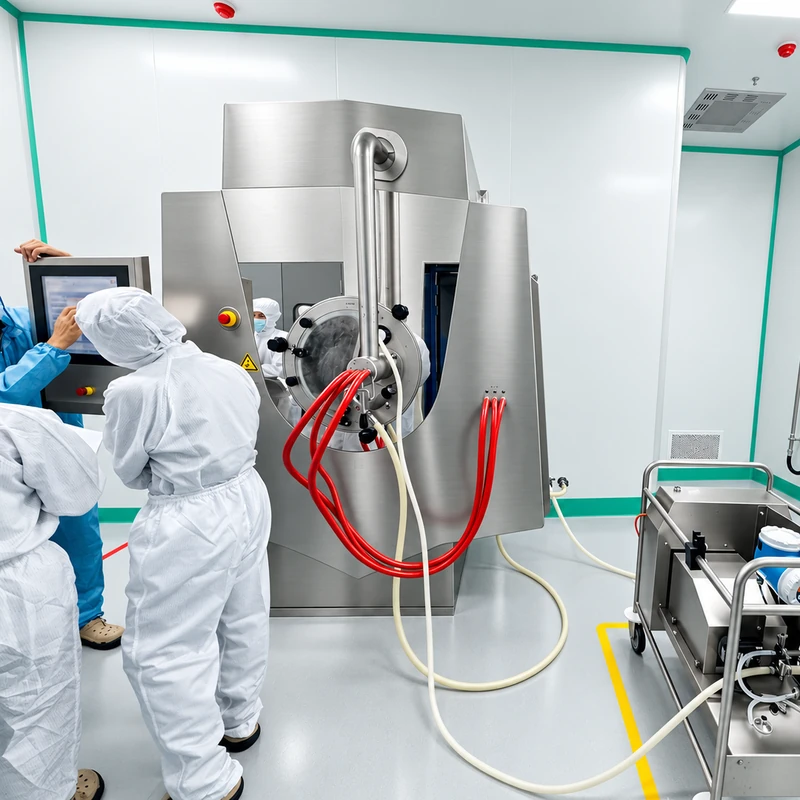
The drum, spray path, seals and exhaust-side product deposits require accessible cleaning. A cleaning claim must be supported by the actual equipment arrangement and residue checks.
Changeover time depends on product, tooling, cleaning and re-establishment of settings. Separate these activities when assessing a proposed batch schedule.