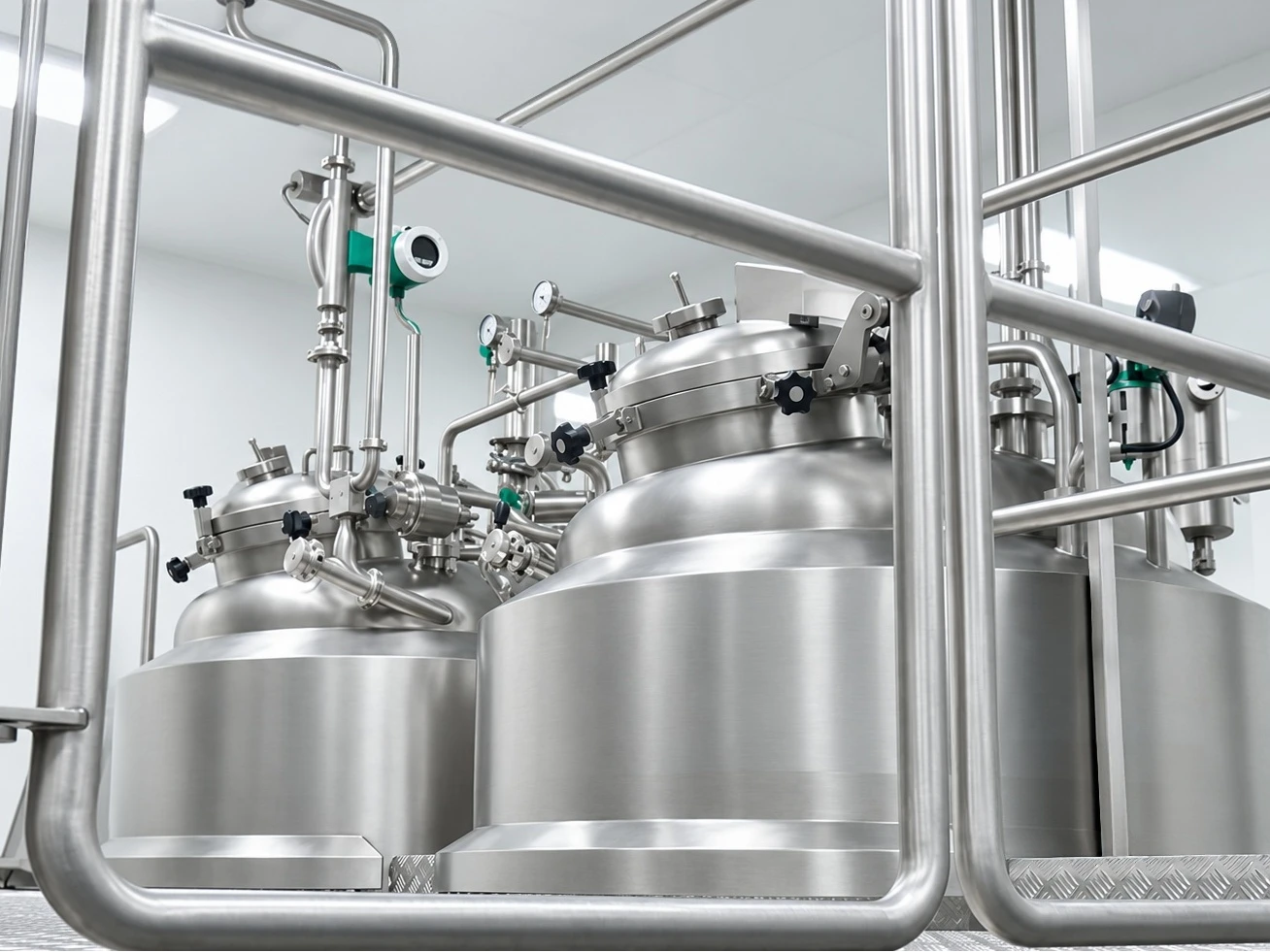
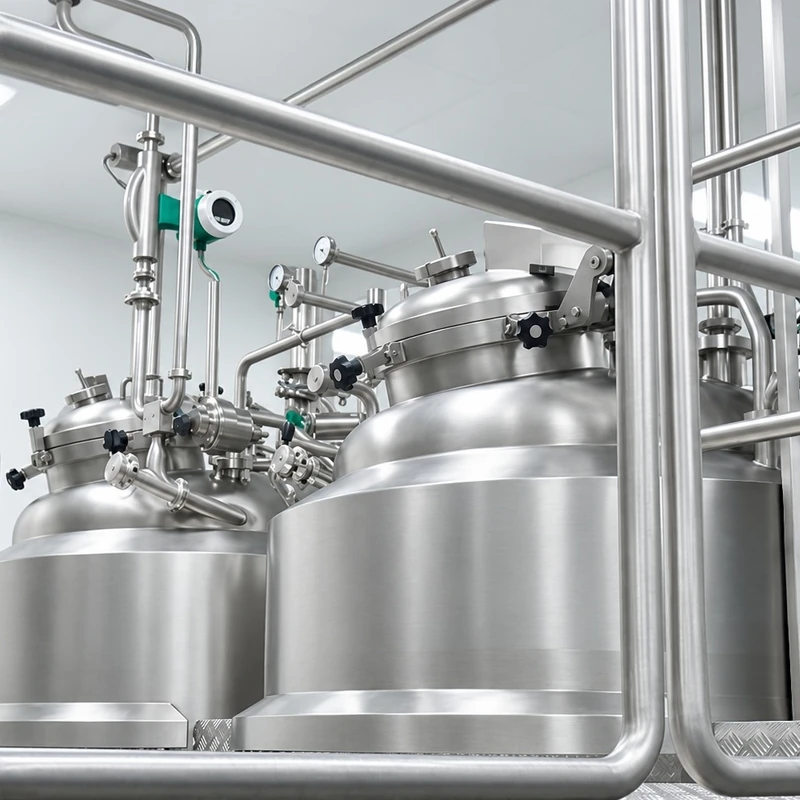
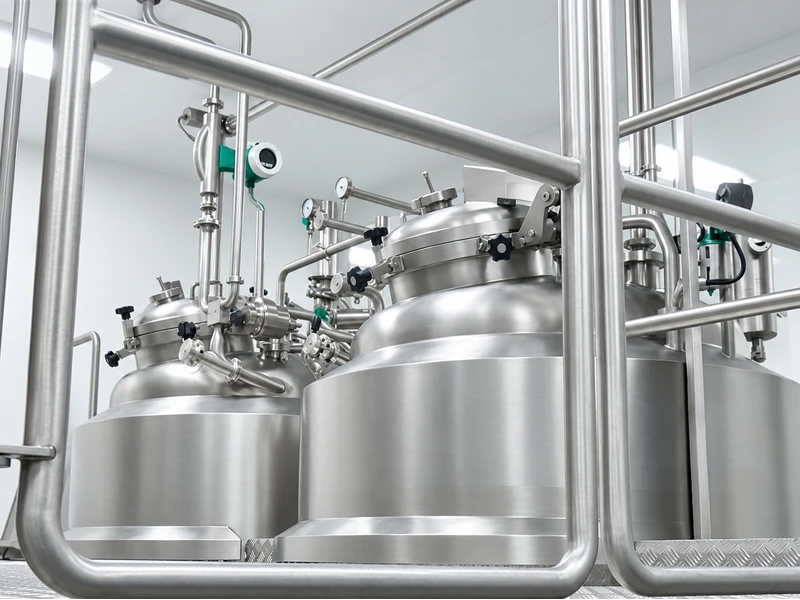
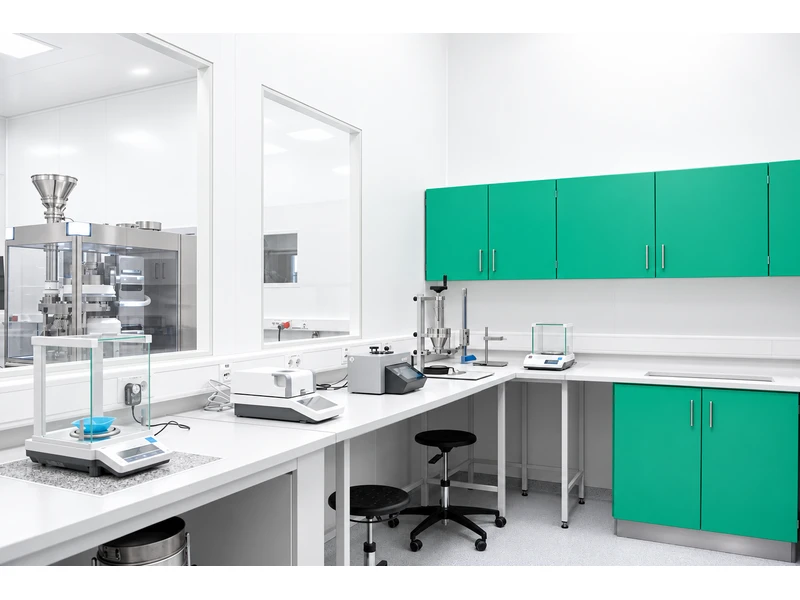
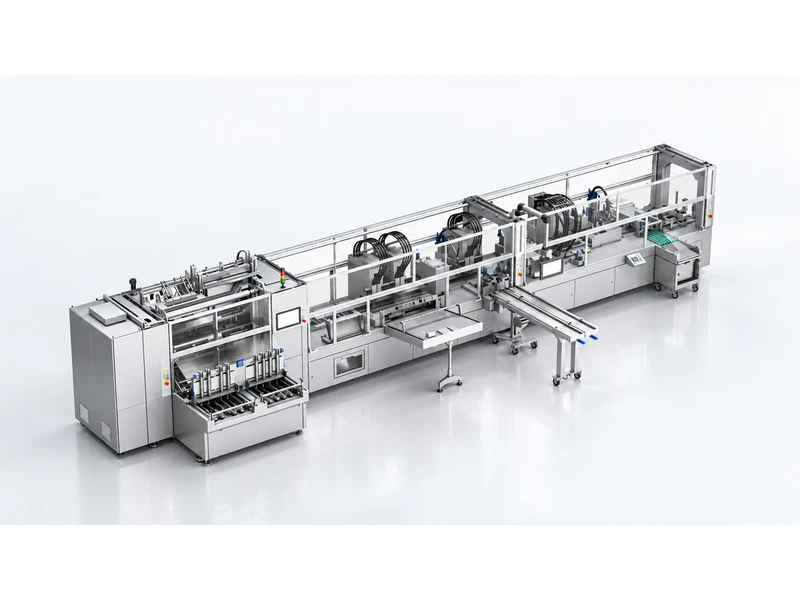
Process context · Stainless steel mixing vessels and transfer pipework
01 /
Gel Bottle Filling
Gel viscosity can change with temperature, shear history and resting time. The dosing system acts on the material delivered to it, so tank conditioning, transfer pressure and entrained air influence the bottle fill before the nozzle opens.
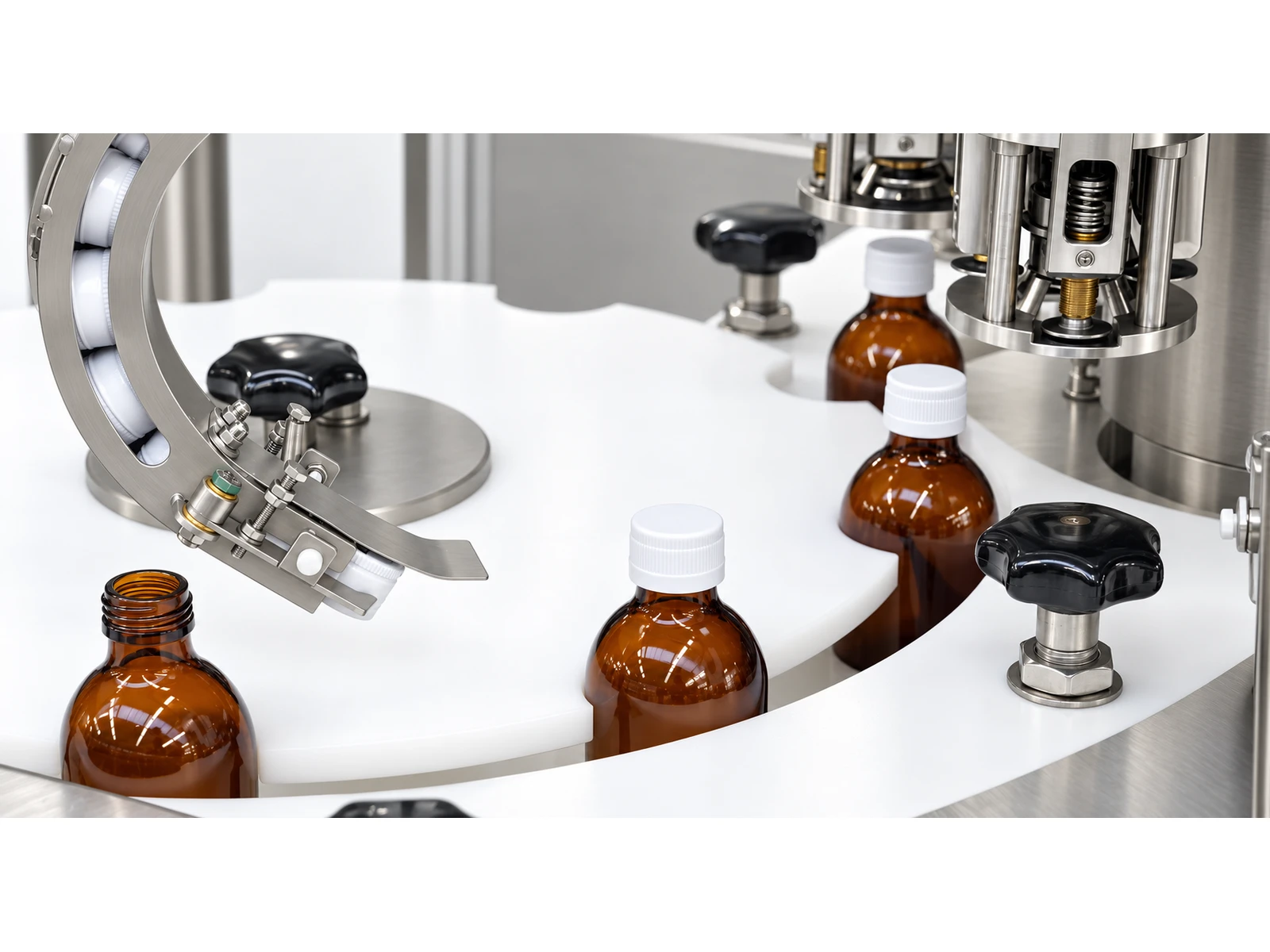
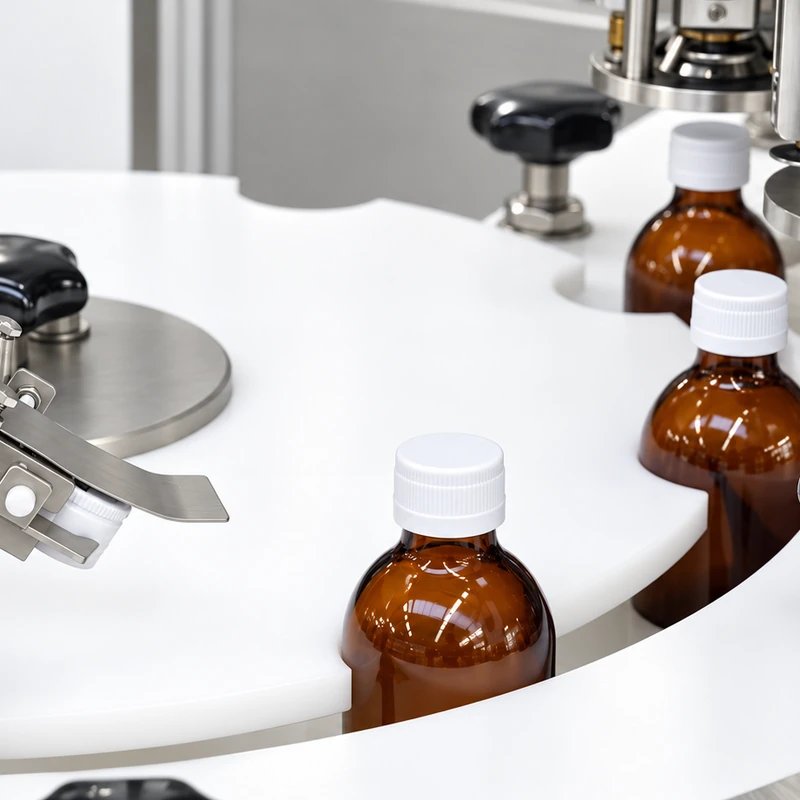
Process context · Star wheel guiding individual amber bottles around the transfer station
Process at a glance
Bottle fill is assessed at the actual product condition, including the end of the dose and the transfer to capping.
Supply
Deliver gel at the defined processing condition
Dose
Meter the product through the selected contact path
Close
Keep the bottle neck suitable for the closure
—
Process options
Filling technologies
Filling technology
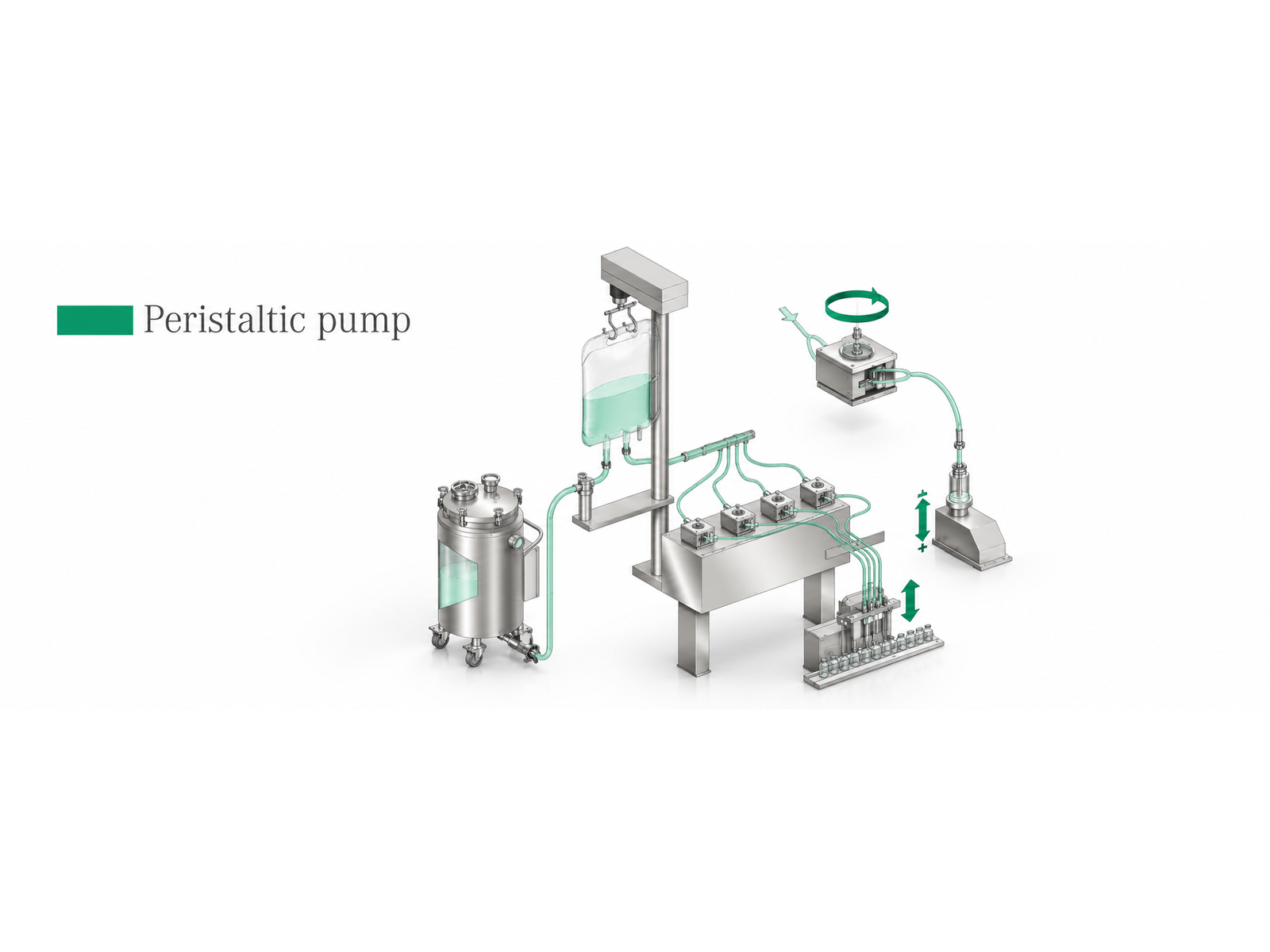
Peristaltic pump
A flexible tube carries the liquid while rotating rollers control dosing. The product contacts the tube rather than the pump mechanism. This principle is used when a disposable product path and gentle handling are priorities. Tubing selection, product compatibility and the changeover procedure should be reviewed for each application.
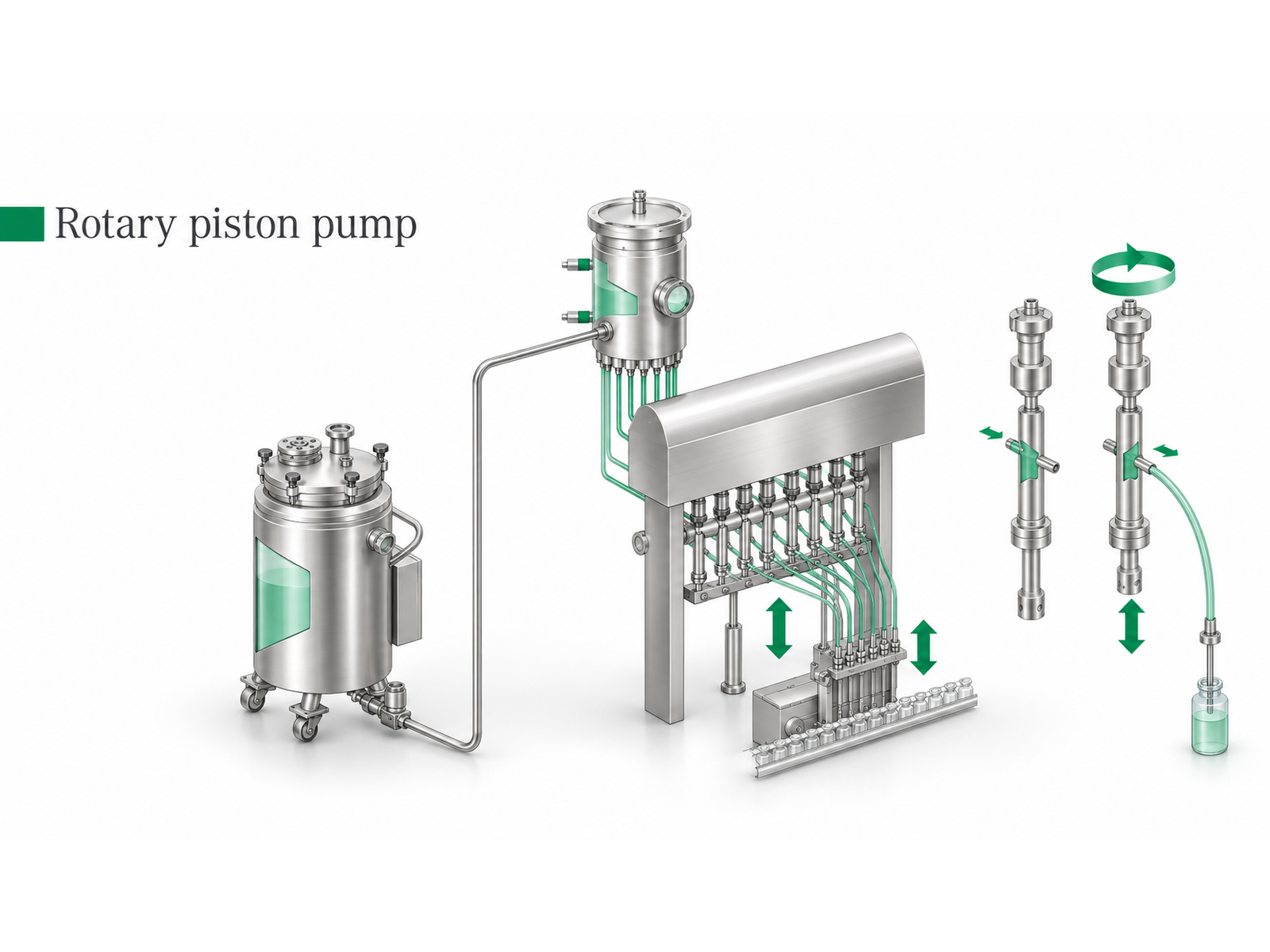
A piston draws liquid into a cylinder and then dispenses a measured volume through the outlet. The selected piston, valve and product-contact materials determine the application range. Review viscosity, cleaning requirements and the required filling volume together with the product and container format.
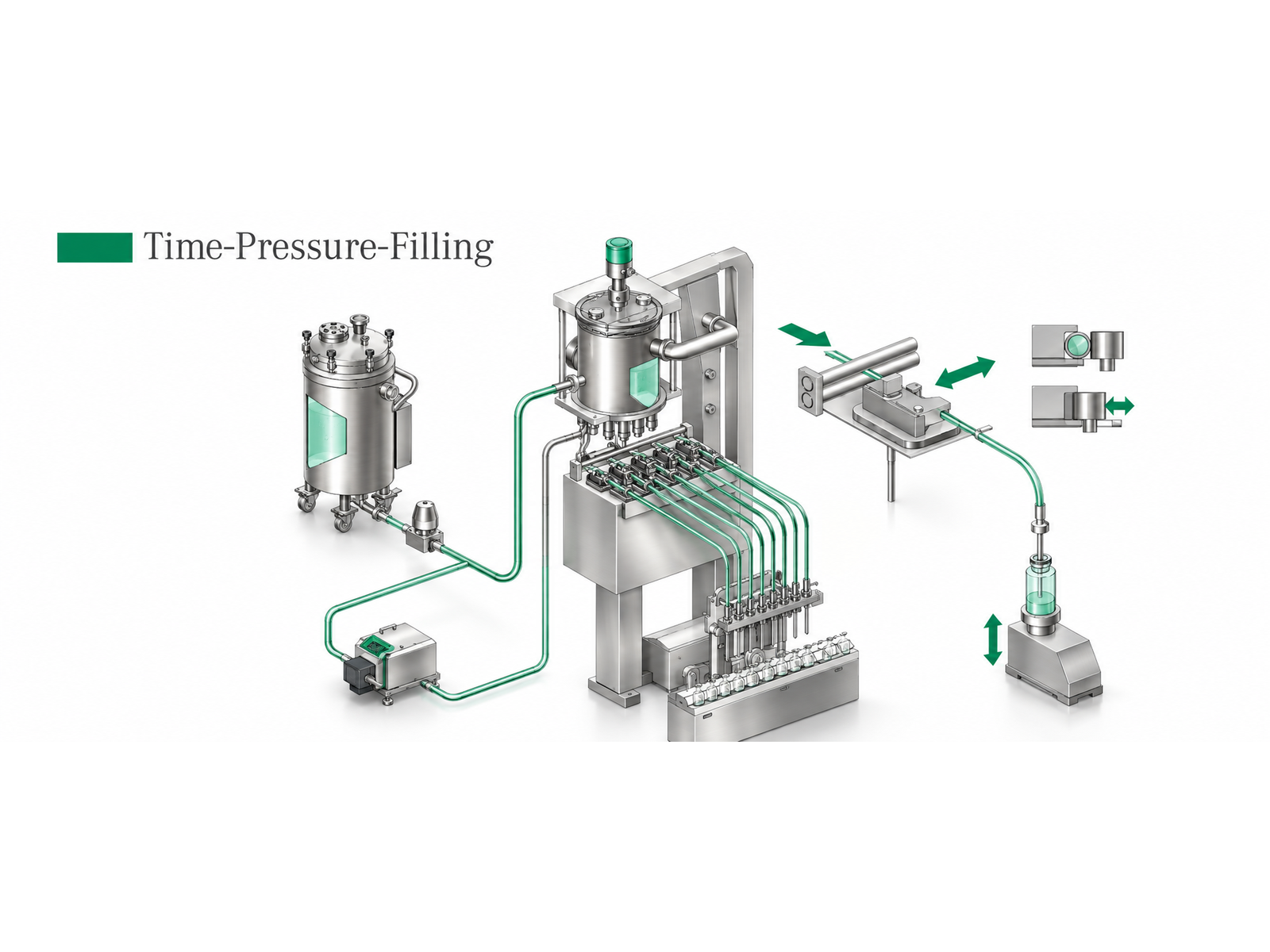
Controlled pressure moves liquid through a filling valve. The opening time and supply conditions determine the dispensed quantity. Product properties, pressure stability and the valve configuration are evaluated together when setting up the filling process.
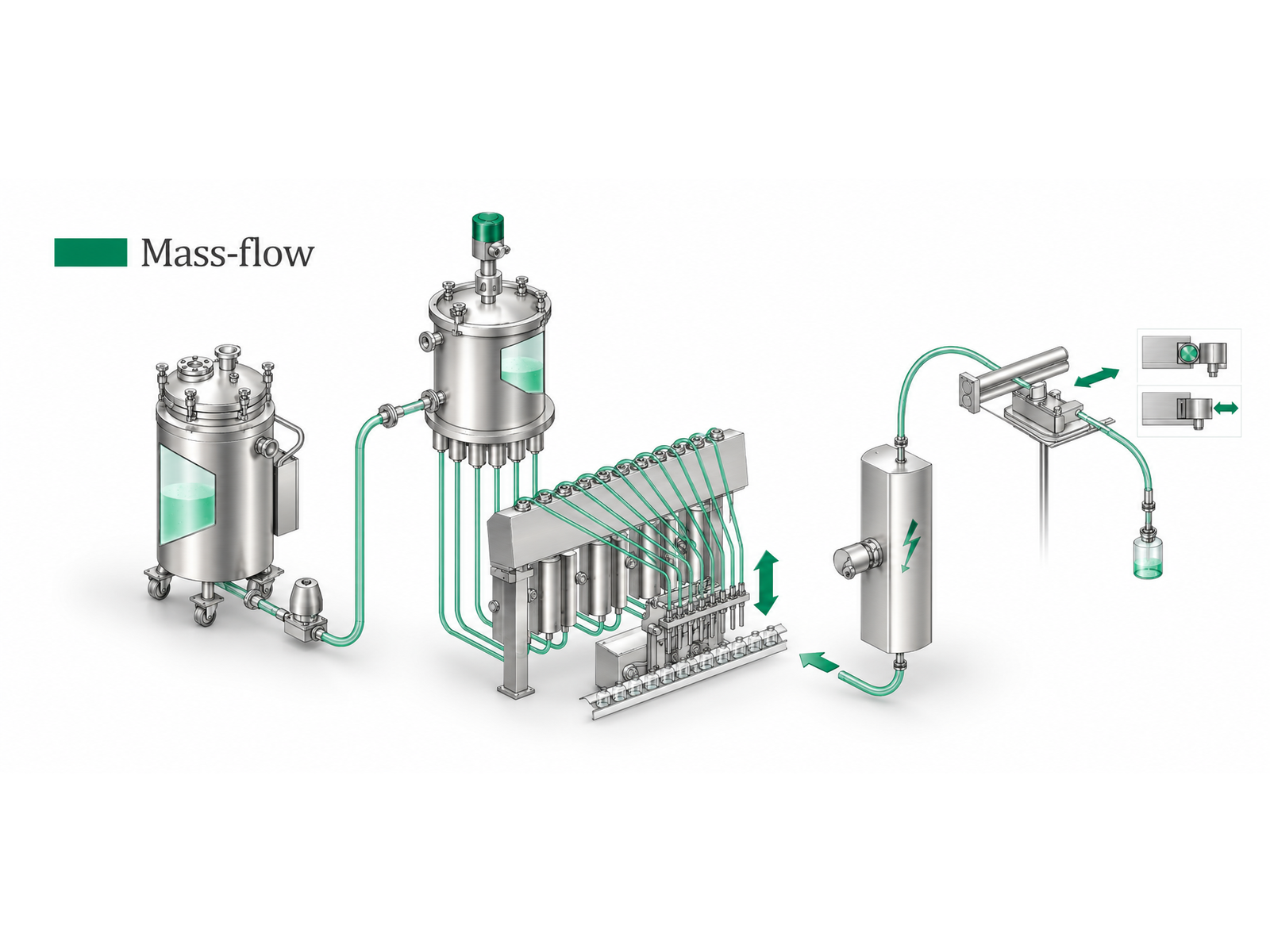
A flow sensor measures the product passing through the filling path and provides feedback to the dosing valve. The process is evaluated around the required fill mass, product behaviour and cleaning strategy. Sensor selection and the control sequence depend on the application.
A consistent delivered mass and a clean closure area are separate outcomes. Nozzle position, withdrawal and cutoff determine where retained gel goes at the end of each dose.
03 /
Technology & features
A positive-displacement metering assembly moves a defined portion of gel through its product path. The actual delivered quantity also depends on complete charging, gas pockets and material retained at the outlet. A rising nozzle or cutoff feature may suit a particular product, but it needs assessment with that formulation.
Stringing can carry product onto the neck after dosing stops. The path between the filler and capper must allow the bottle to remain stable while the product settles. Cleaning access includes the metering chamber, valve, nozzle and any recirculation connection; reassembly can change cutoff and must be checked.
Process context · Star wheel guiding individual amber bottles around the transfer station
Selection relates the gel at its actual filling condition to the metering path and package. These variables describe the trial boundary rather than a universal viscosity range.
Selection inputs for Gel Bottle Filling
Variable
Effect on dosing and closing
Temperature and shear
Change flow behaviour between the preparation tank and nozzle.
Bottle opening
Sets nozzle clearance and the available path for displaced air.
Dose and charging
Connect metering capacity with material supply and gas content.
Cutoff and withdrawal
Determine strings, drips and residual gel near the closure.
How it works
How do we investigate gel stringing?
Observe the end of the dose and nozzle withdrawal with identified bottles. Compare temperature, outlet geometry and cutoff settings, then inspect the neck rather than judging only the filled mass.
How are air effects distinguished from a metering error?
Compare product density and visible air before and after transfer at the same condition. Relate those observations to dose mass and metering-cycle behaviour.
How should restart be assessed?
Include a defined hold and restart in the trial. Compare the first fills with steady operation, because gel temperature and structure may change while the system is stopped.
Line integration
Check the filled bottle and closure
The preparation vessel or buffer supplies gel at an agreed temperature and pressure. Bottle infeed establishes support beneath the nozzle; the downstream closer receives a stable pack with the specified headspace and neck condition.
Identify the contact parts and format tooling for Gel Bottle Filling. Agree access for cleaning, the spares to hold and the operating records the site will need.
No. The measurement temperature and method matter, as do shear dependence, entrained air and recovery after rest. A representative dosing trial shows how those properties affect the selected path.
Does a pump suitable for a thin liquid also suit a gel?
Not necessarily. Charging, valve passage, shear and cutoff differ with the formulation. The metering assembly is chosen around those conditions.
Is gel bottle filling inherently aseptic?
No. Aseptic use depends on the product-contact path, prepared containers, exposure during filling and closing, and the qualified contamination-control arrangement.
08 /
Contact
For a configuration review, include gel temperature and viscosity, neck opening, fill volume, cutoff behaviour.