Read details

Safe filter maintenance
Process expertise. Chinese manufacturing. Global perspective.

Equipment & technology
An aseptic containment isolator must protect the exposed product while controlling hazardous material at the operator and facility boundary. Transfer, pressure zones, filtration, cleaning and waste handling are designed together around the actual process and exposure-control target.
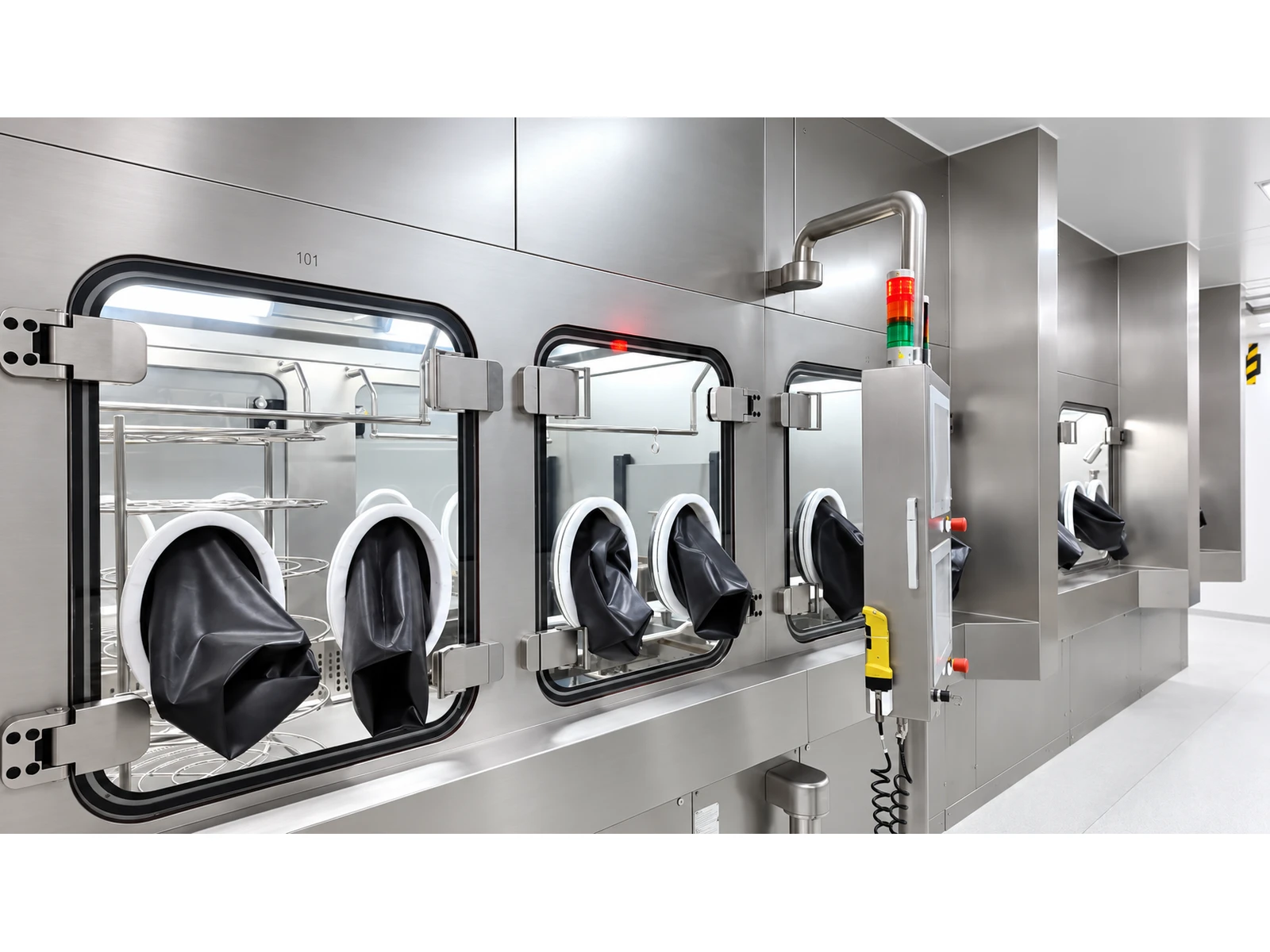
Product protection and exposure control across the same process
A pressure difference directs air movement, but it does not by itself establish either sterility or containment. Negative-pressure arrangements may support hazardous-material containment, while product protection depends on controlled incoming air, barrier integrity and the operating strategy. The pressure zoning must be engineered for the hazards and exposed operations; one positive filling chamber with fixed upstream and downstream pressures is not a universal solution.
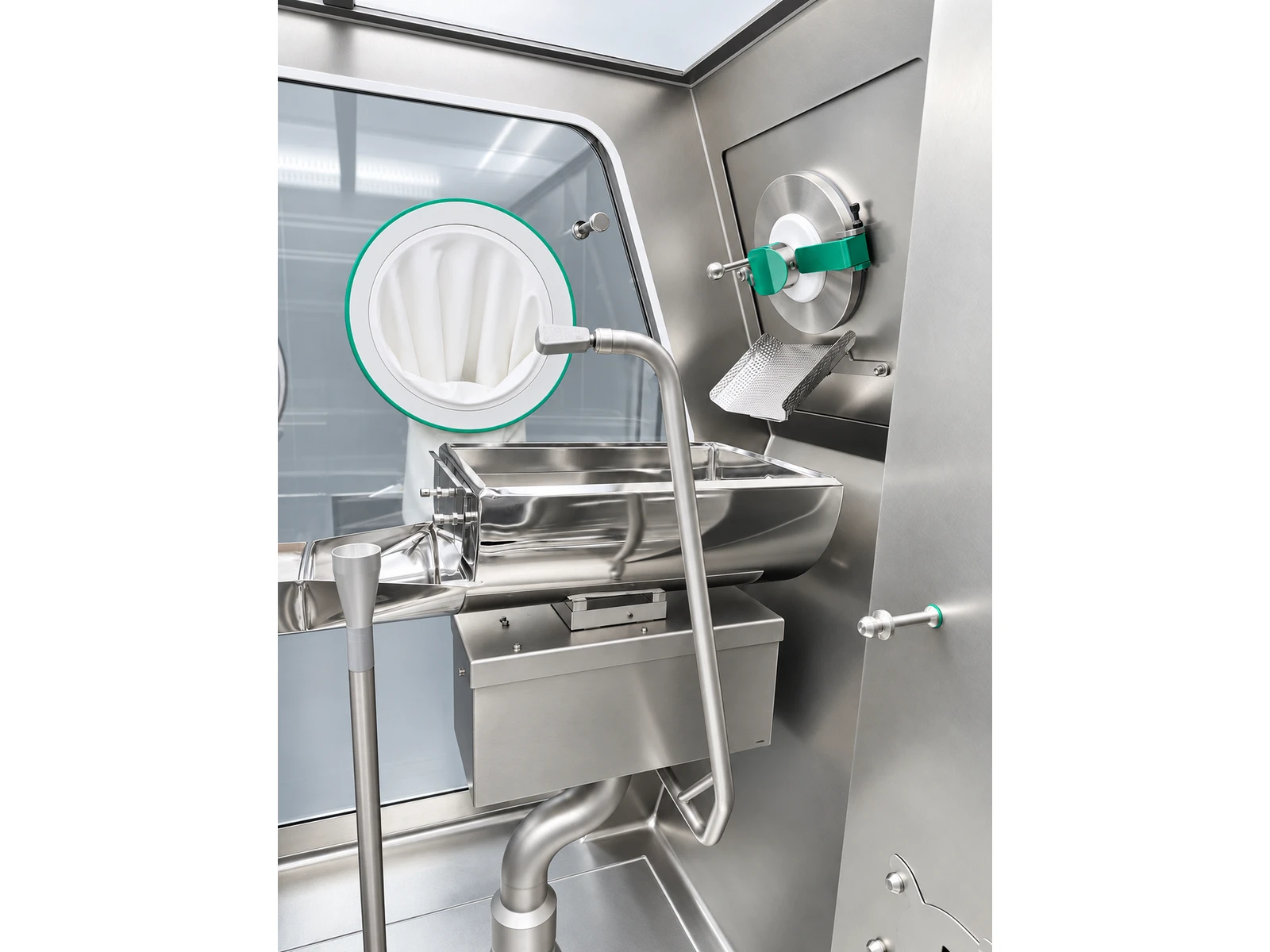
A combined protection boundary
Evaluate normal operation, transfers, cleaning and maintenance against the defined exposure target.
Containment
Product protection and hazardous-material control assessed together
—
Operating range
—
Product formats
—
Process options
Safe filter maintenance
Demonstrated decontamination distribution and material compatibility
Cross-contamination: evaluate product release at charging, filling, interventions, transfer and cleaning, including surfaces that leave the enclosure.
Pressure disturbances: glove movement, transfer openings and fan faults can change the boundary. Assess the direction of air movement and the required response.
Combined protection: the airflow and transfer strategy must address product contamination and occupational exposure together. Neither a positive nor a negative setpoint substitutes for system verification.
The material hazard assessment and process boundary determine transfer methods, enclosure arrangement and decontamination strategy.
| Boundary element | Project-specific design basis |
|---|---|
| Critical process chamber | Coordinate exposed-product protection with the assessed containment strategy. |
| Incoming transfer zone | Control material entry and air movement during the actual transfer sequence. |
| Outgoing transfer zone | Control contaminated surfaces and air movement as product or materials leave. |
| Aseptic working conditions | Verify the airflow and environmental conditions around exposed operations. |
| Background facility | Justify the room and HVAC interfaces for the process and barrier design. |
| Supply filtration | Select filtration and integrity verification for the required product protection. |
| Exhaust filtration | Address hazardous material, pressure monitoring and safe maintenance. |
| Containment target | Use the assessed exposure limit and a representative performance-test method. |
| Decontamination and cleaning | Distinguish microbial reduction from hazardous-residue removal or inactivation. |
| Pressure monitoring | Define alarms, interlocks and responses to foreseeable disturbances. |
| Gloves and access | Assess integrity, interventions, change procedures and maintenance exposure. |
| External container cleaning | Evaluate need and method from surface-contamination risk and downstream handling. |
Start with the exposed product, material hazard and every transfer interface. Evaluate airflow direction during normal and disturbed conditions, then define pressure zones and responses that support both protection objectives.
Use a representative test plan covering the relevant operations, locations and exposure routes. The challenge material, analytical method and acceptance criteria must represent the claimed system boundary.
Hazardous residue can remain in ducts, filters, gloves or transfer components. Access for cleaning, filter replacement and waste removal must control exposure after the production cycle has ended.
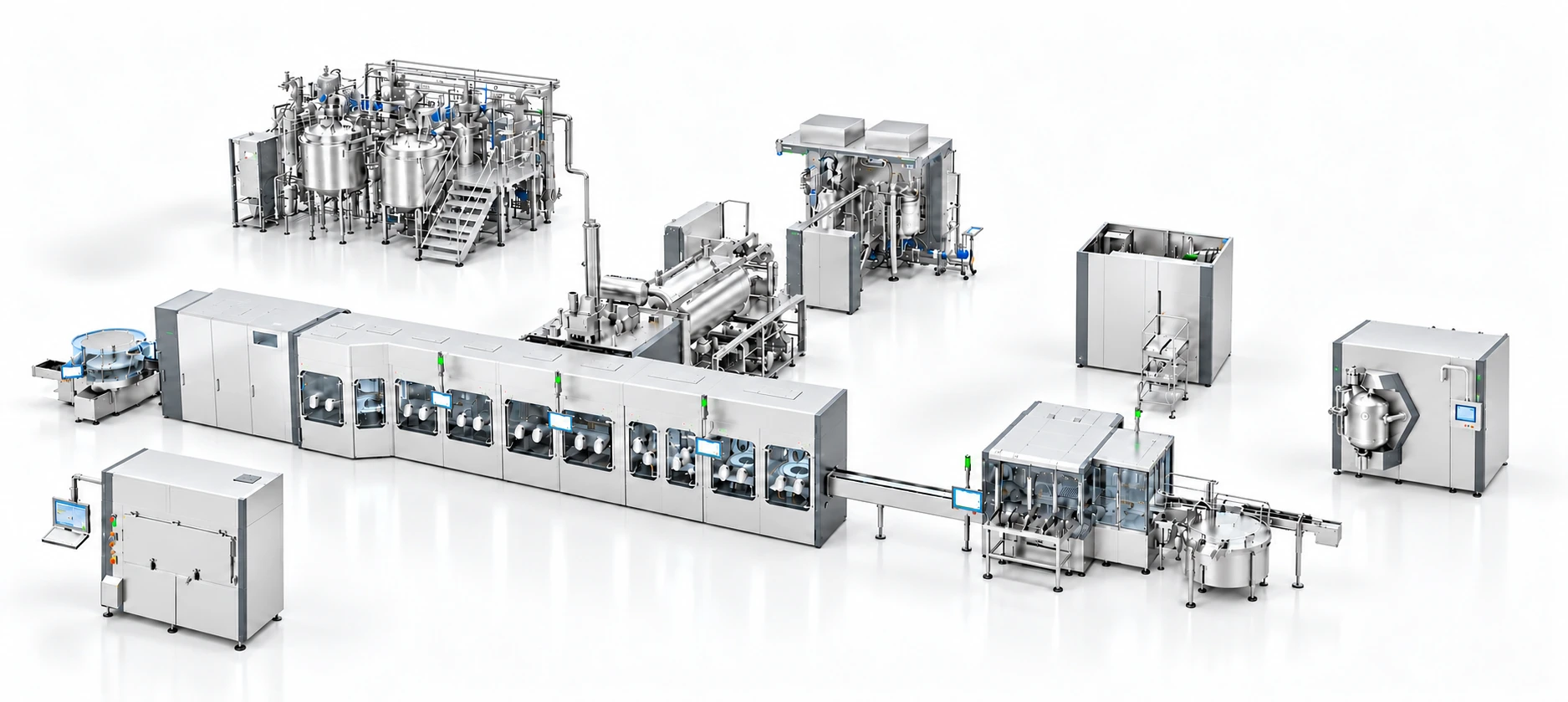
Production line · Equipment context
Explore the process areas on the production line associated with this equipment.
Explore vial preparation, filling, dryer transfer and freeze drying, with closing and parallel support equipment.
Related production lines: Antibody-Drug Conjugate Manufacturing & Fill-Finish
Upstream: evaluate the prepared-product connection and container or component transfer against both contamination and exposure risks.
Downstream: assess container exterior contamination, closure status and any required external cleaning before transfer to inspection or packaging.
The material hazard assessment and process boundary determine transfer methods, enclosure arrangement and decontamination strategy.
Learn moreDefine how components, waste and cleaning equipment cross each interface during normal operation and intervention.
Learn moreIdentify the contact parts and format tooling for Aseptic Toxic Isolator. Agree access for cleaning, the spares to hold and the operating records the site will need.
Learn moreShare product and containment requirements, process boundary and material-transfer arrangement.
Request product information
2 resources
No universal arrangement is appropriate. The pressure and airflow strategy must reconcile aseptic product protection with the hazard assessment and transfer behaviour of the complete system.
No. An occupational exposure band is a risk classification, not a measured performance result. Define the exposure target, system boundary and representative verification method.
It should not be assumed. Microbial reduction and hazardous chemical residue removal or inactivation are different objectives requiring suitable methods and evidence.
No. Chemical containment and ionizing-radiation shielding address different hazards. A process involving both needs both boundaries assessed explicitly.
For a configuration review, include container drawing, product-contact materials, intended dose, closure format, batch size.
Discuss your project