Skip to content

Process expertise. Chinese manufacturing. Global perspective.

PREASYS

Explore our solutions

CCIT

Container closure integrity testing assesses the barrier of a finished package through a measurable physical signal. The product, container and closure determine which test principle is suitable.

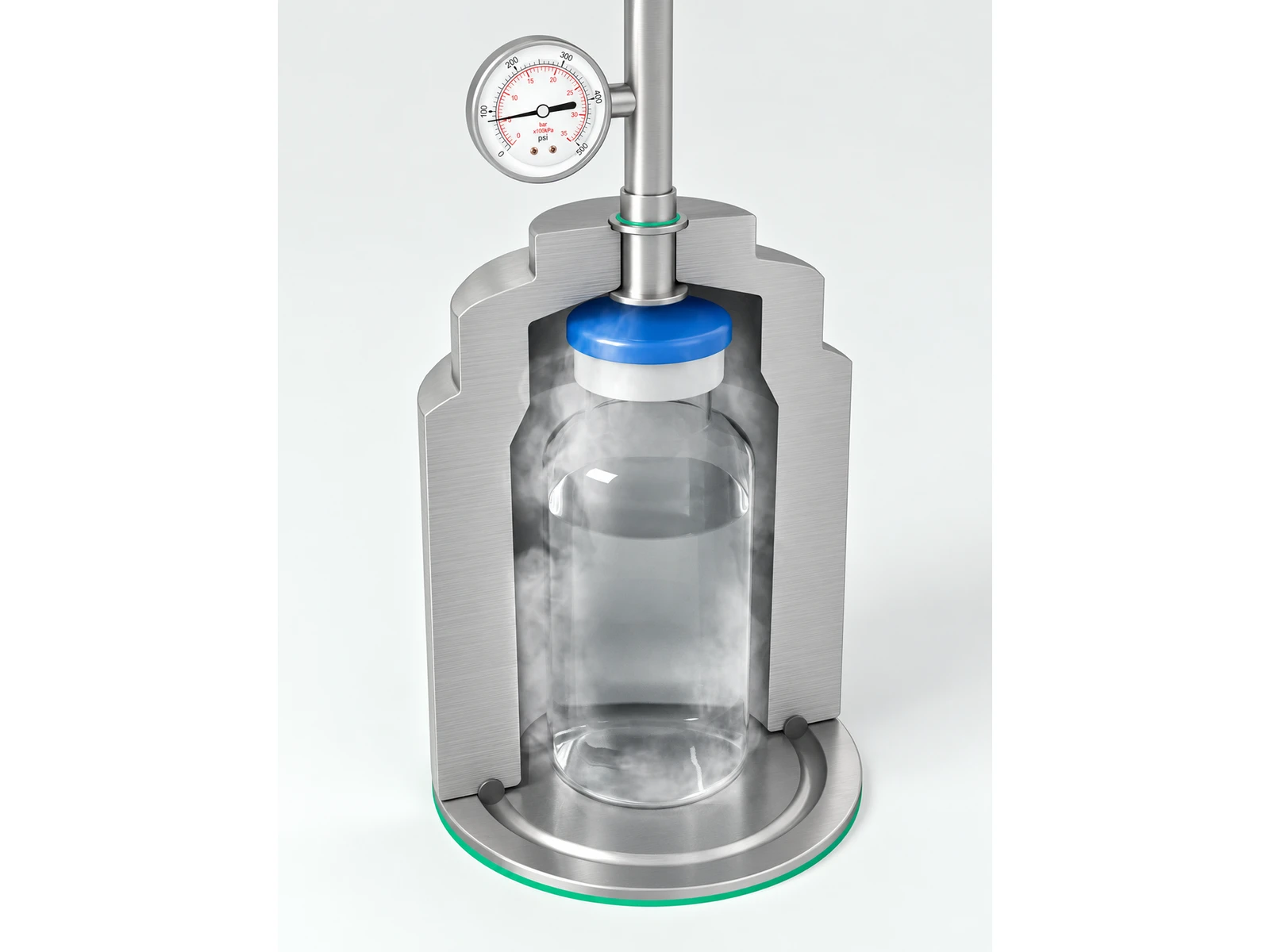
Container in a transparent test chamber with a pressure gauge

Your process, your benefits

A leak can affect electrical response, pressure behavior or the gas inside a package. Each method depends on conditions that make its signal meaningful; the same defect may behave differently with another fill, headspace or package material.

Compare methods for a closed pack

Begin with the container, closure and product. The three method pages describe different signals. Establish suitability using representative packs and reference samples.

CCIT

CCI is the objective of the test, rather than a single measurement technology. Electrical, pressure-based and headspace methods interrogate different package properties and require their own suitability assessment.

Define the package and acceptance criteria

Container material, closure construction, product conductivity and available headspace influence the observable signal. Representative intact packs and defined challenge samples relate that signal to the package defect of interest.

Connect testing with the production line

The test station receives a closed pack at a defined temperature and orientation. Tracking must connect the measurement with the correct unit, rejection route and result record, including stops or interrupted transport.

Connected equipment and process steps

Discuss your requirements →

Line integration

01

From closure to test and rejection

Closure formation precedes the test, but the time between them can matter: package temperature, pressure equilibration or gas exchange may change the signal. Accepted units, rejects and test samples follow separately defined destinations.

How it works

How are candidate methods compared?

Start from the package materials and the physical conditions available to each method. Test representative intact and challenged packs under controlled conditions, then compare response, variability and compatibility with the intended production timing.

How is a reference check interpreted?

A known sample tests the measurement chain under its specified conditions. Record sample identity, condition and response; an unexplained change needs investigation before results are treated as comparable.

How is online rejection connected to the measurement?

Track an identified challenged pack from measurement to its physical outlet. Include transport interruptions and close spacing to evaluate whether the decision remains associated with the correct unit.

Support throughout your project and production

Define the equipment scope

Review the container drawing, fill and closure with the team selecting the method.

Learn more

Agree the acceptance test

Agree intact and challenge samples, the measurement conditions and how the results will be assessed.

Learn more

Prepare for operation

Define reference checks, fixture changeover, maintenance and reject reconciliation for the installed tester.

Learn more

Knowledge hub

2 resources

Frequently asked questions

Can one CCI method test every pharmaceutical package?

No. Product conductivity, headspace, container material and deformation behavior can favor or limit different principles. Suitability is demonstrated for the particular package and defect question.

Is inspecting every container the same as detecting every defect?

No. Inspection coverage describes which units are tested. Detection capability depends on the method, defect, product and measurement conditions.

Does an integrity result prove product sterility?

No. Integrity testing assesses the package barrier within its validated scope. It does not replace the controls and evidence required for the manufacturing and sterility-assurance process.

Can visual inspection replace CCI testing?

Visual inspection assesses observable appearance. Some integrity failures have no visible feature, so the barrier question requires an appropriate physical test.