Define the equipment scope
Review coating material, artwork size and product orientation to establish whether the intended contrast is achievable.
Learn moreProcess expertise. Chinese manufacturing. Global perspective.

Equipment & technology
Laser marking creates identification on the dosage-form surface through the interaction of a focused beam with the coating or substrate. The product material, artwork and presentation determine the resulting contrast and the effect on the surface; the process uses no printing ink.
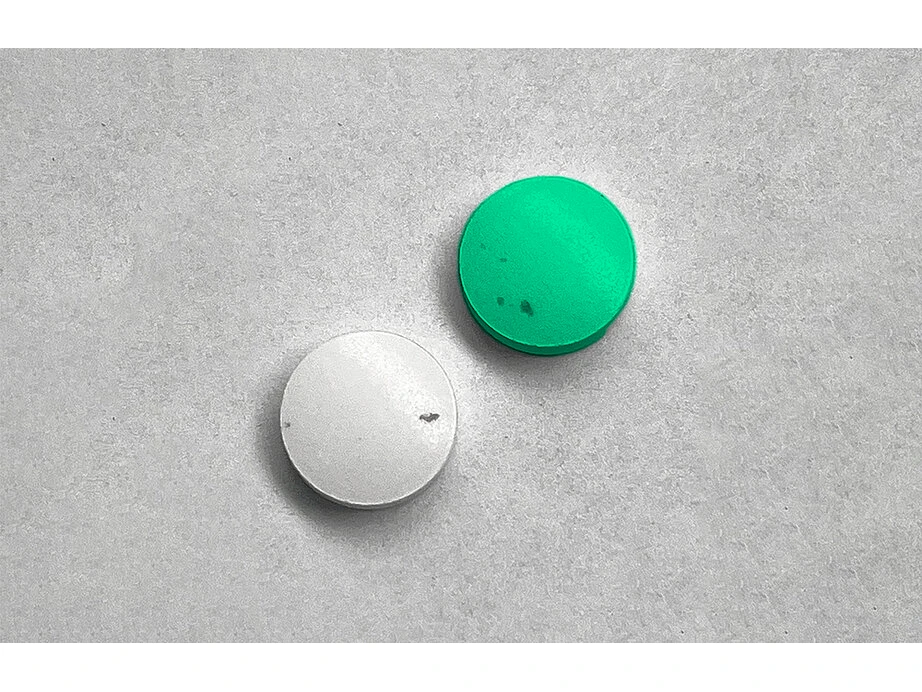
CO₂ and UV are alternative laser choices for surface marking. Their interaction with a coating or capsule shell differs, so the proposed wavelength, exposure, focus and carrier must be assessed using representative products and the intended artwork. Compare legibility and unwanted surface changes after downstream handling; suitability demonstrated with one laser type does not establish suitability with the other.
| Evaluation point | CO₂ option | UV option |
|---|---|---|
| Material interaction | Assess absorption and mark formation on the actual coating or shell. | Assess the response at the proposed UV wavelength; do not transfer a CO₂ result without evaluation. |
| Marking result | Evaluate contrast, edge definition and any change to the product surface. | Evaluate contrast and surface condition using the same artwork and finished-product criteria. |
| Handling and protection | Match carrier, focus, extraction and guarding to the supplied configuration. | Match carrier and beam delivery to the product; verify guarding and extraction for this configuration. |

Example project input
Compare candidate laser settings on representative coatings or shells with the same artwork and orientation. These sample combinations are trial inputs, not machine output ratings.
3
Coating samples
4
Candidate laser settings per coating
12
Marking combinations to compare
—
Process options
Review coating material, artwork size and product orientation to establish whether the intended contrast is achievable.
Inkless identification avoids ink transfer and drying at the marking station. It still requires compatible product handling, guarded laser operation and management of material generated by the marking process; it does not eliminate all consumables or maintenance.
Carrier geometry and the marking face are selected for the actual product. Candidate tablet, capsule and softgel formats require separate sample evaluation. Assess the coating or shell composition, including any TiO₂-containing material, with the selected laser.

Use representative coated units and the intended artwork. Compare the supported laser settings for contrast, edge definition and surface condition, keeping the product orientation and assessment method consistent.
Inspect marked units after the proposed transfers and packing steps. Review both readability and coating condition; a visible mark at the station is not enough to demonstrate the required finished-product result.
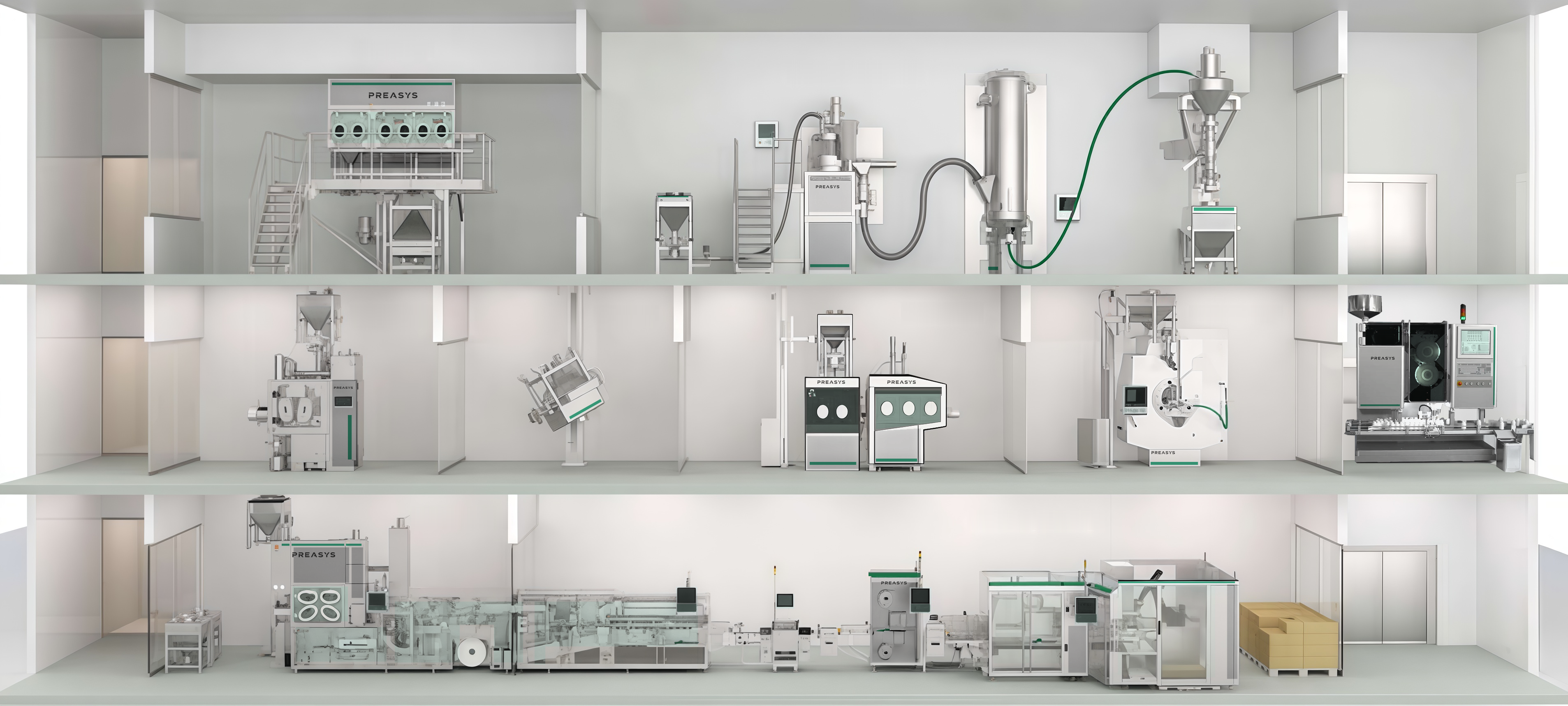
Oral solid dosage · Integrated production
Discover the equipment behind your solid dosage process.
Route selection. Wet and dry granulation are alternatives. Select tablet compression or capsule filling for the dosage form; include coating when required.
Illustrated equipment and packaging options show process relationships. The facility layout and equipment configuration are defined for each project.
Inspect representative samples for legibility and unwanted surface changes through the expected range of product appearance.

Review coating material, artwork size and product orientation to establish whether the intended contrast is achievable.
Learn moreInspect representative samples for legibility and unwanted surface changes through the expected range of product appearance.
Learn moreReview carrier tooling, optical access, extraction and cleaning for the selected laser and product. Keep the approved marking setup and inspection criteria available for subsequent format changes.
Learn moreShare substrate and coating, artwork and marking position.
Request product information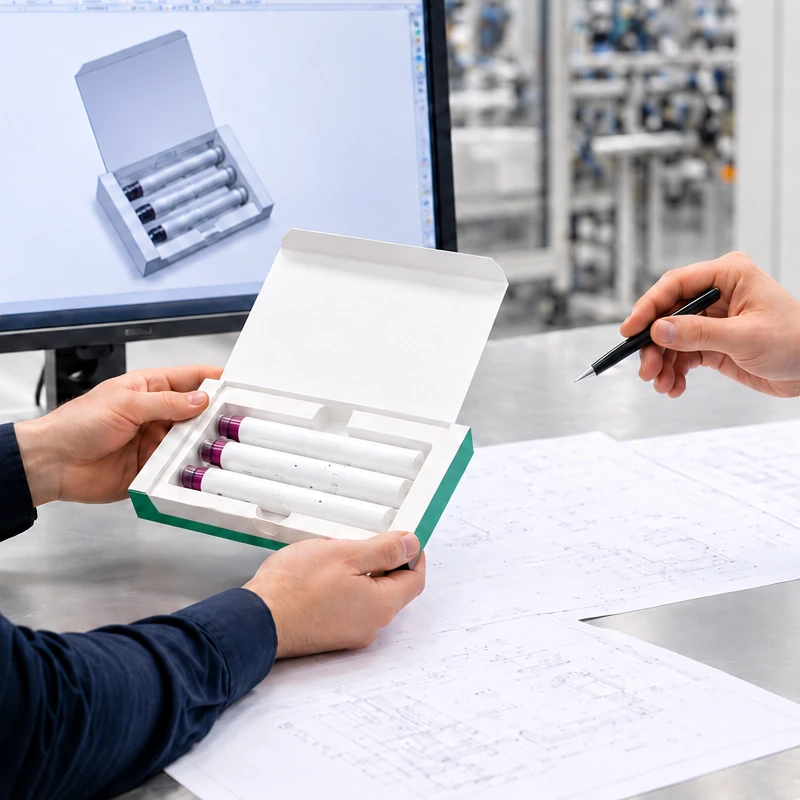
Brochure
Tablet and Capsule Laser Marking
Available by enquiry
Request product information2 resources
No. They are different laser choices with different interactions with the product material. A coating or capsule shell that gives an acceptable result with one choice may not do so with the other.
No. The mark uses no printing ink, but product handling, optics, extraction and cleaning still require an appropriate maintenance and consumables plan.
No. Surface marking provides identification. Functional laser drilling creates a specified opening in the coating and requires a separate process and verification strategy.
No universal compatibility is assumed. Evaluate representative materials, colours and geometries with the intended artwork, then inspect the mark and surface after downstream handling.