Skip to content

Process expertise. Chinese manufacturing. Global perspective.

PREASYS

Equipment & technology

Transdermal Patch (TTS) Manufacturing Equipment

Transdermal patch production combines coating, drying and lamination before cutting and pouch sealing.

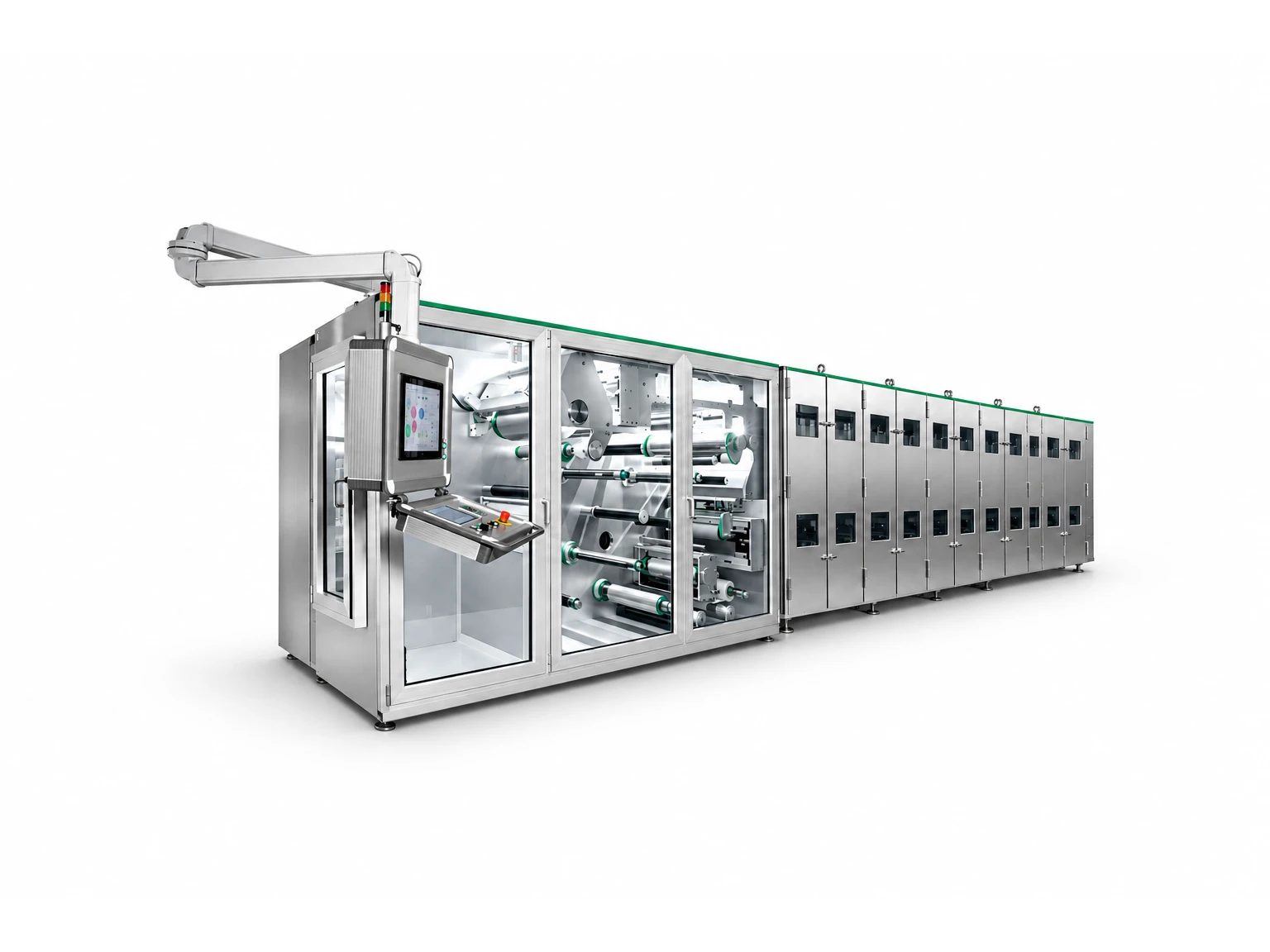
Enclosed film processing and drying equipment
The guarded web line carries material through successive processing stations. Define the web layers, drying requirements and cutting pattern for the patch.

Transdermal Therapeutic Systems

Preasys TTS Series — Transdermal Therapeutic Systems: Coating, Drying, Converting and Packaging

Transdermal patches deliver drugs through the skin in a controlled manner — but the path from drug-loaded adhesive to finished patch is exacting: a highly viscous, solvent-borne adhesive must be coated in ultra-thin uniform layers, dried to defined residual solvent, laminated into multi-layer structures, converted into precisely dimensioned patches and sealed into protective sachets — every step under full control. The Preasys TTS covers the complete web-processing chain — film coater, dryer, slitting & die-cutting, and sachet packaging — engineered for drug-in-adhesive, matrix and multi-layer patch systems, with ultra-precise coating thickness measurement and closed-loop control, and identical base processes from laboratory (PoP, stability, clinical samples) to high-output production. The platform handles TTS patches, multi-layer laminates and diagnostic test strips — three products, one web-processing foundation.

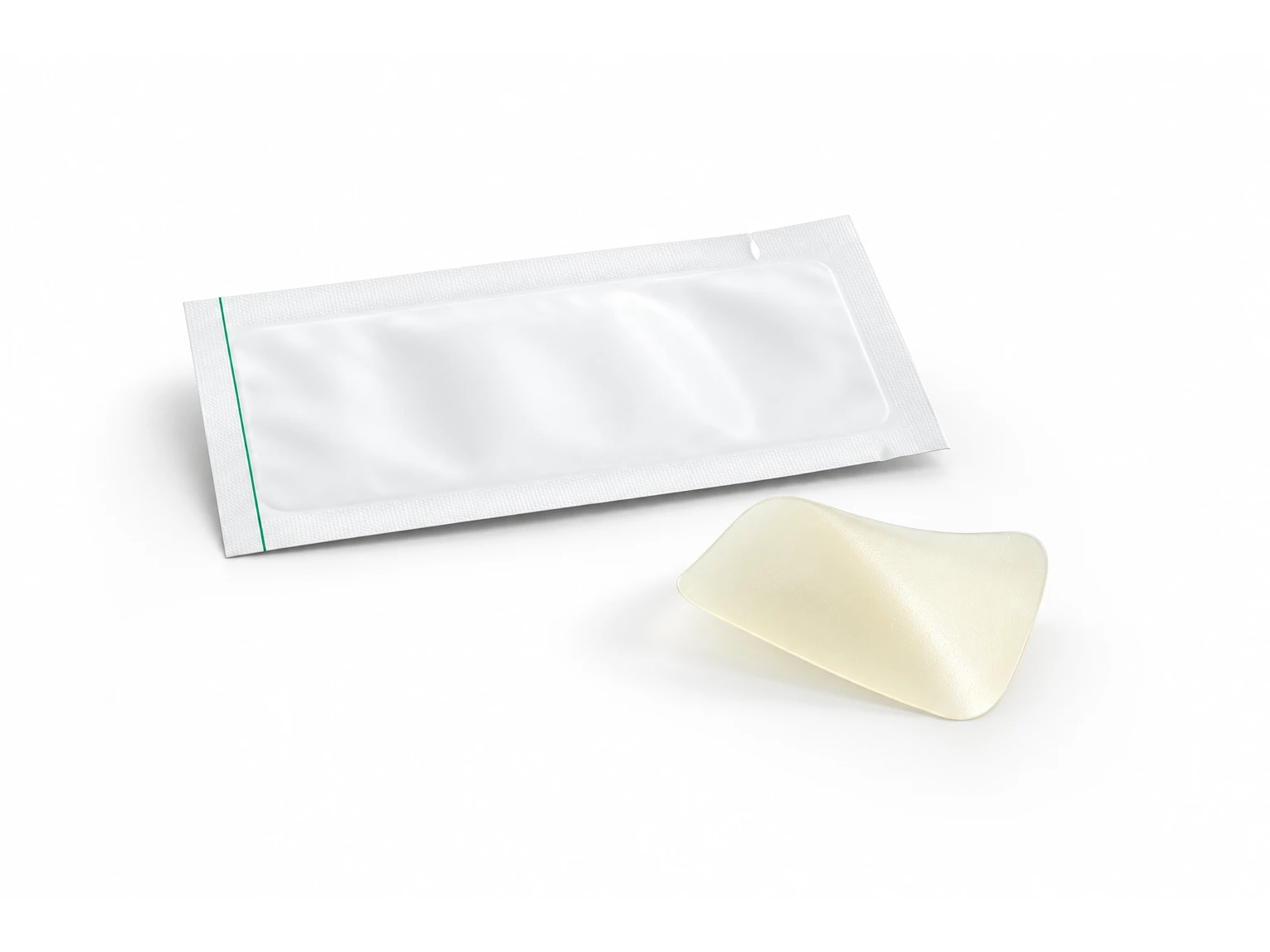
Individual film or patch beside its opened pouch

Example project input

The area ratio assumes a matching rectangular cut layout. Exclude edge trim, registration gaps and rejected material; this does not determine drug content.

600 cm²

Usable coated laminate

20 cm²

Cut area per patch

30

Theoretical patches

Process challenges

Coating thickness variation changes the dose rate — the drug-in-adhesive layer must be exact.

Read details

Coating thickness variation changes the dose rate — the drug-in-adhesive layer must be exact. Ultra-precise coating thickness measurement with closed-loop control keeps the active layer uniform across the web

Residual solvent is a safety risk — incompletely dried patches fail release and safety limits. The dryer is engineered for defined drying curves and reproducible residual solvent levels

Die-cutting inaccuracy wastes expensive laminated web — off-spec patches and web scrap cost money. Precision converting and die-cutting maximize patch yield from the web

Release liner handling damages patches — liner separation must be clean. Precision liner application and delamination protect the patch structure

Sachet seals fail and expose the patch — moisture and oxygen degrade actives. Hot-seal technology delivers hermetic, reproducible seals

Counting and stacking of converted patches jams — delicate patches stick and misalign. Engineered counting and stacking handle patches reliably

Inspection gaps let defective patches through — dimensional, coating and seal defects reach the patient. Inline inspection verifies patches before cartoning

Lab and production processes diverge — scale-up risk kills projects. Lab machines use the same base processes as production — converting and packaging included

Technical data & features

The drug layer, adhesive, liner and backing must travel through the web process without losing registration.

Individual film or patch beside its opened pouch
Film Coater Dryer (TTD) Converting & Packaging (TTP)

Core Features

Ultra-precise coating thickness measurement — online measurement with closed-loop control: constant, reproducible coating weight

High-precision coating methods — slot die, comma bar and knife-over-roll for a range of viscosities

Controlled drying — defined drying curves and reproducible residual solvent levels

Precision converting — slitting, die-cutting and liner handling that maximize patch yield from expensive laminated web

Sachet packaging with hot-seal — hermetic, reproducible seals protecting the patch until use

Inline inspection — dimensional, coating and seal checks before cartoning

Three products, one platform — TTS patches, multi-layer laminates and diagnostic test strips

Lab to production — identical base processes from PoP and clinical samples to high-output lines, converting included

Contact materials, cleaning access and qualification records for the selected equipment

Feature TTC
Coating methods slot die, comma bar, knife over roll
Thickness control ultra-precise online measurement, closed-loop
Systems drug-in-adhesive, matrix, multi-layer laminate
Web handling precision transport down to tenths of a millimeter
Viscosity range thin to highly viscous adhesives
Feature TTD
Drying method selected for formulation
Residual solvent reproducible, defined levels
Zone control segmented temperature and airflow control
Feature TTP
Slitting web slit into patch-width strips
Die-cutting patches cut to shape (round, square, custom)
Liner handling release liner application and delamination
Counting & stacking reliable patch handling without jamming
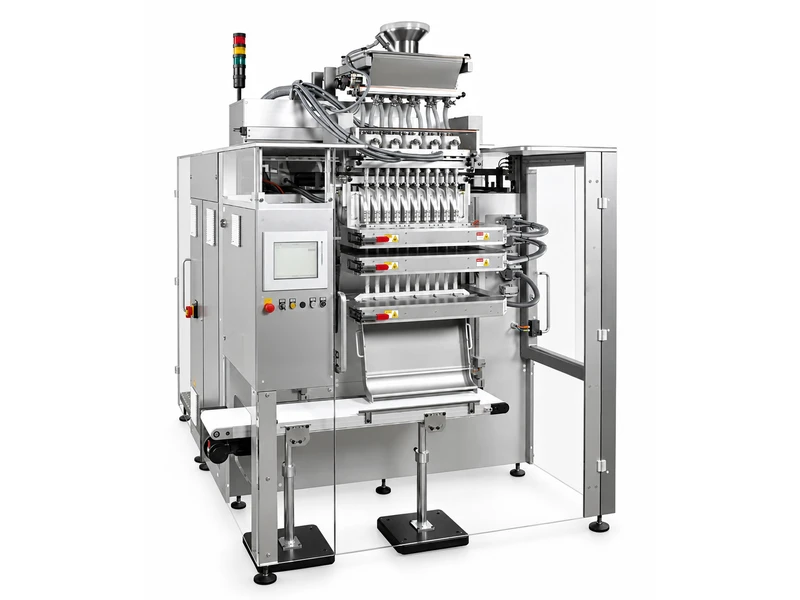
Sachet packaging forming, filling, hot-sealing, single-sachet cutting
Inspection inline dimensional, coating and seal checks
Cartoning sachets into cartons

How it works

How-To — Solving the Industry's Hardest TTS Problems

How to coat a highly viscous drug-in-adhesive uniformly?

Viscosity makes uniformity hard. Slot die, comma bar and knife-over-roll methods are selected for the formulation — thin to highly viscous adhesives coated with high precision

How to keep the dose rate constant across the patch and the batch?

Thickness drift changes delivery. Ultra-precise online coating thickness measurement with closed-loop control keeps the active layer exact

How to dry solvent-borne adhesives safely and reproducibly?

Residual solvent is a safety risk. The dryer delivers defined drying curves and reproducible residual solvent levels with segmented control

How to convert the laminated web into patches without waste?

Off-spec patches cost money. Precision slitting and die-cutting maximize patch yield from the expensive web

How to handle the release liner without damaging the patch?

Liner separation must be clean. Precision liner application and delamination protect the patch structure

How to seal patches hermetically in sachets?

Moisture and oxygen degrade actives. Hot-seal technology delivers hermetic, reproducible seals

How to inspect patches before cartoning?

Defects must not reach the patient. Inline inspection verifies dimensions, coating and seals

How to move from PoP to production without process changes?

Scale-up risk kills projects. Lab machines use the same base processes as the production line — converting and packaging included

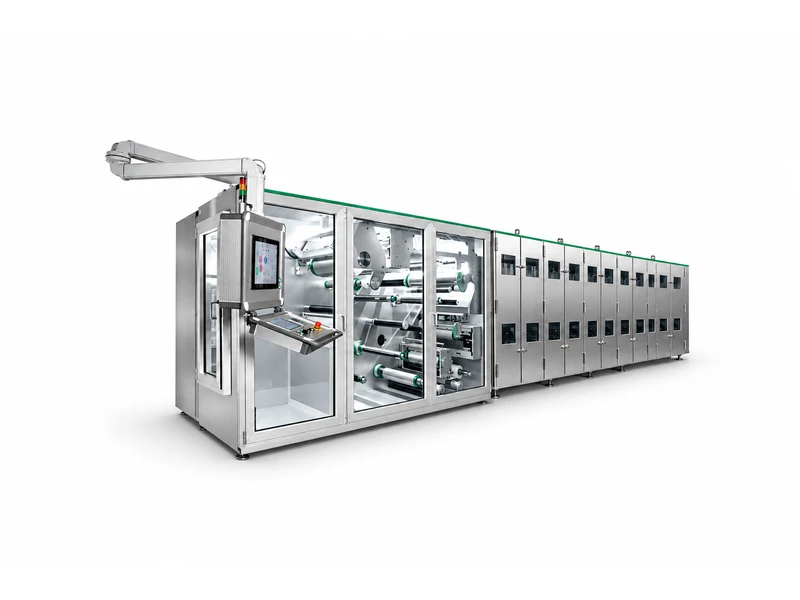
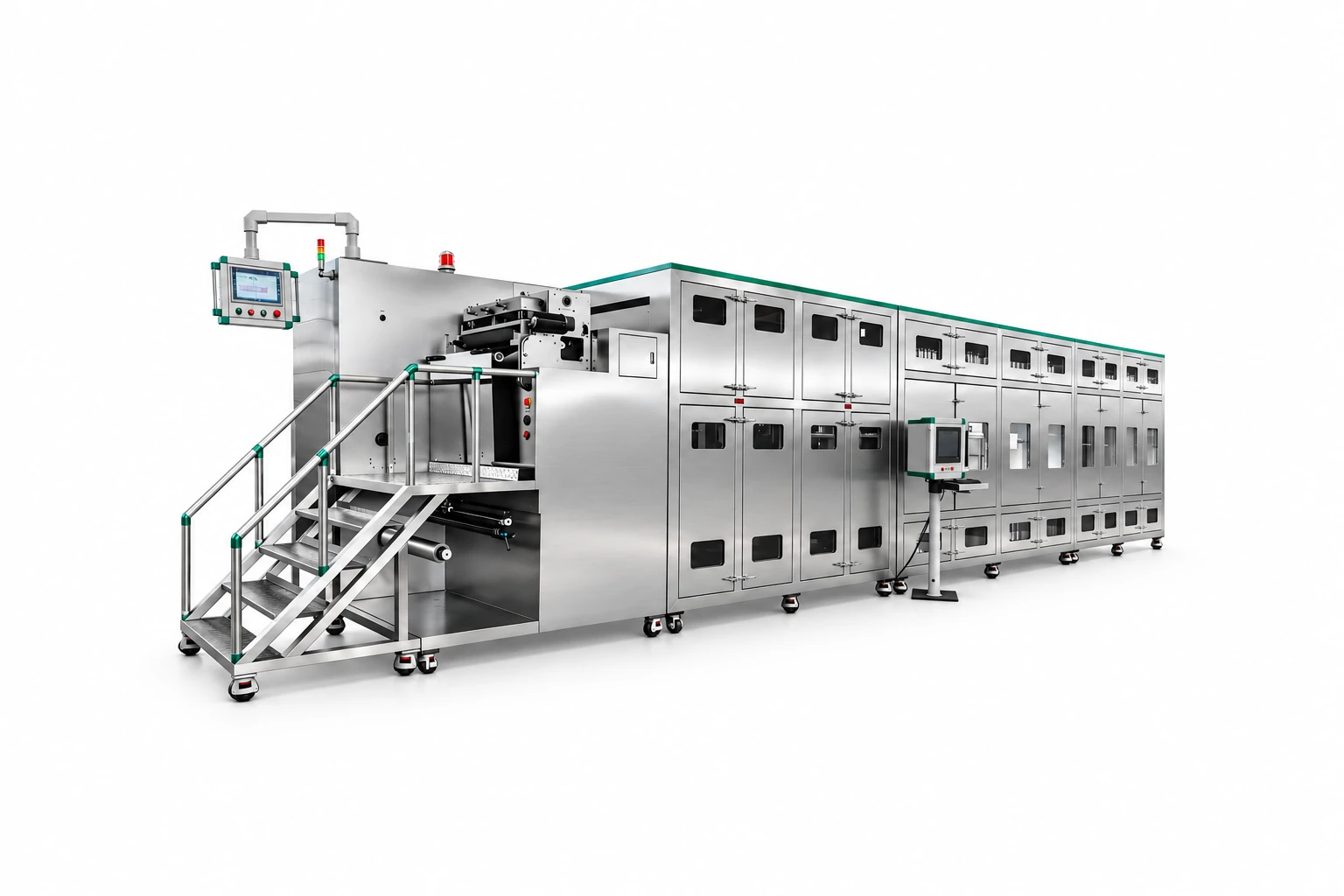
Transdermal coating and drying line. This view follows the coated substrate through the dryer. Patch cutting and pouch packing are downstream of this image.

Production line · Equipment context

Transdermal coating and drying line

Explore the process areas on the production line associated with this equipment.

Skip tour
Production layout 4 equipment areas · Scroll to explore

This view follows the coated substrate through the dryer. Patch cutting and pouch packing are downstream of this image.

Related production lines: Transdermal Patch Manufacturing Lines

Line integration

Formulation (drug-in-adhesive / matrix, solvents)

↓

Preasys TTS Series:

Film Coater TTC: Coating (slot die / comma bar / knife over roll) → Ultra-precise thickness control (closed-loop)

→ Dryer TTD: Segmented drying (defined curves, residual solvent control)

→ Lamination (multi-layer) / Delamination → Converting TTP: Slitting → Die-cutting → Liner handling

→ Counting & stacking → Sachet packaging (hot-seal) → Inline inspection → Cartoning ↓

Finished TTS patches → Case packing

Upstream: formulation developed together with the process — drug-in-adhesive, matrix or multi-layer system

Downstream: converting (slitting, die-cutting, liner handling), sachet sealing, inspection and cartoning as one integrated section

Link coating thickness, drying conditions and converting or sealing settings to the source roll and pouch position.

Compliance: GMP design, DQ/IQ/OQ/PQ documentation

Support throughout your project and production

Define the equipment scope

The drug layer, adhesive, liner and backing must travel through the web process without losing registration.

Learn more

Agree the acceptance test

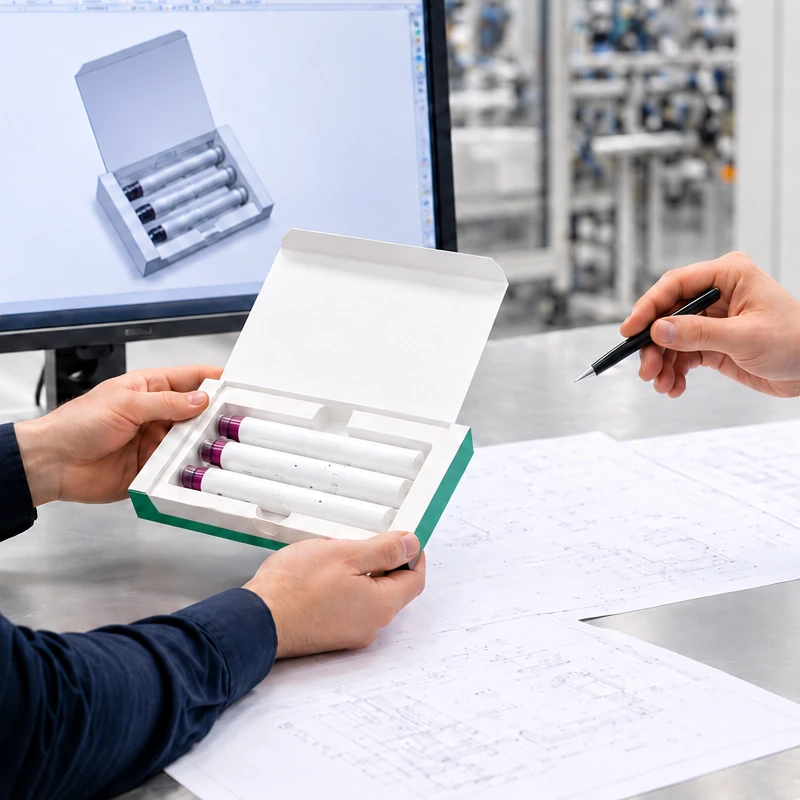
Test the cut patch, liner removal and sealed pouch with representative production materials.

Learn more

Prepare for operation

Identify the contact parts and format tooling for Transdermal Therapeutic Systems. Agree access for cleaning, the spares to hold and the operating records the site will need.

Learn more

Knowledge hub

2 resources

Frequently asked questions

What is the difference between drug-in-adhesive, matrix and reservoir patches?

Drug-in-adhesive disperses the active in the adhesive; matrix patches carry the drug in a polymer matrix; reservoir patches hold a drug solution behind a rate-controlling membrane. The Preasys TTS is configured for all three structures.

Which coating methods are available?

Slot die, comma bar and knife-over-roll — covering a range of viscosities and materials with high precision.

How is coating thickness controlled?

Ultra-precise online coating thickness measurement with closed-loop control keeps the active layer uniform and reproducible across the web and over time.

How is the laminated web converted into patches?

The web is slit into patch-width strips, die-cut to shape (round, square or custom), handled with precision release-liner application, then counted and stacked without jamming.

How is the patch packaged?

Patches are sealed into sachets with hot-seal technology, inspected inline and cartoned — protecting the patch hermetically until use.

Can multi-layer patches be produced?

Yes. Precision lamination builds multi-layer structures with exact layer registration, then converts them in the same line.

Which products can be made on this platform?

TTS patches, multi-layer laminates and diagnostic test strips — three products on the same web-processing foundation.

Which equipment records should be reviewed during qualification?

Review the equipment documentation list, product-contact boundaries and sample records. Agree who owns the applicable qualification activities on site.

Contact

ell us your product (patch type — drug-in-adhesive, matrix or multi-layer; active and dose; coating viscosity; residual solvent target; patch shape and sachet format; output requirement; lab, clinical or production scale). Preasys returns the TTS configuration — coating method, thickness control, drying, converting and packaging modules — with lab-to-production scale-up plan.

Discuss your project →
Individual film or patch beside its opened pouch