Skip to content

Process expertise. Chinese manufacturing. Global perspective.

PREASYS

Equipment & technology

Tablet Hardness Tester

A tablet hardness tester measures the force at fracture as a tablet is loaded between opposing surfaces. Consistent orientation and loading conditions make the result useful for comparing compacts and investigating changes in compression or handling.

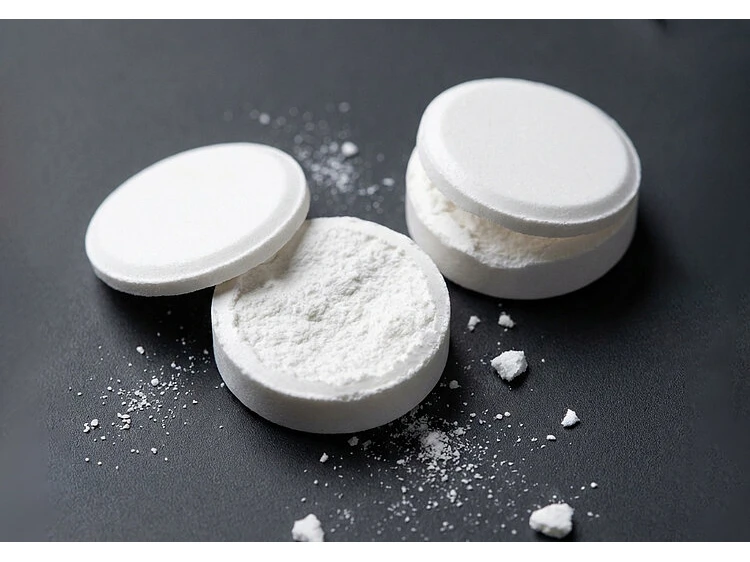
Broken tablet showing its interior and loose fragments
Process context · Broken tablet showing its interior and loose fragments

Tablet Hardness Tester

Tablet breaking force under controlled loading

Measure fracture force with a defined tablet orientation

Breaking force is commonly called tablet hardness, but it is a force measurement rather than a material hardness scale. Shape, dimensions, score lines, orientation and loading rate influence the result. Comparing force alone across different tablet geometries can be misleading. Mechanical strength should be interpreted alongside the product requirements for handling, disintegration and release.

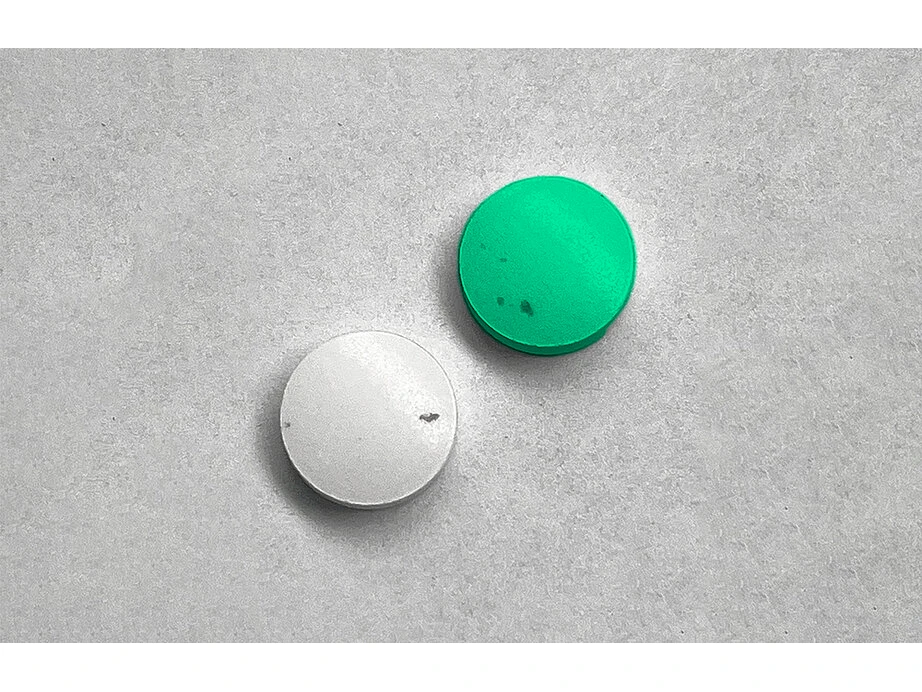
Two round tablets with different surface finishes
Process context · Two round tablets with different surface finishes

Define the mechanical test

Geometry, loading and force measurement must remain consistent for useful comparisons.

Orientation

Place the tablet in a defined loading direction

Loading

Use the recorded mode and rate

Fracture

Report force with the observed failure condition

Process challenges

Handling strength: breaking force can reveal changes in compact integrity, while abrasion and impact require their own observations or tests.

Read details

Handling strength: breaking force can reveal changes in compact integrity, while abrasion and impact require their own observations or tests.

Release performance: a strength change may accompany a formulation or compression change, but dissolution cannot be inferred from force alone.

Positioning: consistent placement and orientation reduce a major source of avoidable test variation.

Sampling workload: feed and alignment arrangements should suit the tablet shape without altering or damaging the test specimen.

Traceability: retain individual results and sample history as well as summary statistics.

Product changes: establish the orientation, loading mode and applicable force range for each geometry and formulation.

Technical data & features

Define which axis to load for each shape and keep orientation consistent between trials.

Two round tablets with different surface finishes

Force measurement and sample presentation

The measuring chain records force as the tablet is loaded until fracture; verify it with suitable reference equipment.

Loading mode and rate affect the test response. Retain the settings used when comparing batches.

Repeatability depends on the sample, placement and apparatus condition as well as the sensor.

Statistics describe the tested sample; individual values and unusual fracture observations should remain available.

The installation should provide stable support and access for removing fragments from the test area.

Review the apparatus and procedure against the selected product method rather than assuming all tablets share one setup.

Link the result to the sample, orientation, method revision and instrument record.

Measurement element Technical consideration
Principle Controlled loading of a tablet until fracture.
Force range Select for the expected fracture forces and the required measurement performance.
Readout resolution Distinguish display increments from demonstrated measurement accuracy.
Verification Assess the force measurement using an appropriate reference and procedure.
Loading conditions Record loading mode, rate and any relevant approach sequence.
Tablet width Provide the actual geometry and intended loading orientation.
Tablet thickness Consider support and contact geometry; thickness measurement is a separate function.
Test scope Breaking force under the defined loading procedure.
Reported quantity Force at fracture, with stated units and any excluded results.
Statistics Retain individual values alongside sample summary statistics.
Cleaning Remove fragments without damaging the contact or measuring surfaces.
Method basis Use the product-specific procedure and instrument verification records.

How it works

How-To

How should a scored or oblong tablet be positioned?

Define the loading direction relative to the shape and score line in the test procedure. Keep that orientation consistent and record unusual or multiple fracture events.

How can a shift in breaking force be investigated?

Review tablet dimensions, conditioning and loading settings alongside the compression history. Examine individual values and physical observations before attributing the shift to one process variable.

What maintenance matters between samples?

Remove fragments and inspect the contact surfaces. After cleaning or adjustment, verify that the tablet is supported correctly and that the measuring chain is functioning as required.

Line integration

Tablets from compression / coating process ↓ In-process sampling / finished-product sampling

↓

Tablet breaking-force sequence:

Sample identification → Defined orientation and loading settings → Controlled compression to fracture → Individual force and fracture observations → Sample statistics → Comparison with the applicable product criterion and related test results ↓

Reviewed test record and investigation evidence

Support throughout your project and production

Define the equipment scope

Define which axis to load for each shape and keep orientation consistent between trials.

Learn more

Agree the acceptance test

Record the force and fracture pattern alongside batch identity for comparison with the compression process.

Learn more

Prepare for operation

Identify the contact parts and format tooling for Tablet Hardness Tester. Agree access for cleaning, the spares to hold and the operating records the site will need.

Learn more

Knowledge hub

2 resources

Frequently asked questions

Does hardness mean the same thing as breaking force?

In tablet testing, hardness commonly refers to the force at fracture. State the method and units so it is not confused with a material indentation-hardness measurement.

Can force results be compared across different tablet shapes?

Only with appropriate interpretation. Geometry and loading direction affect force at fracture; raw force is not automatically a geometry-independent strength value.

Does a stronger tablet always perform better?

No. It must withstand the intended handling while meeting the product requirements for disintegration and release. Those attributes need their own assessment.

Are tablet weight and thickness measured automatically?

Only if the selected configuration includes those functions. They are distinct measurements and should be identified in the instrument and data workflow.

Contact

Share tablet dimensions, shape and score lines, expected fracture behaviour and the required loading method. Identify whether additional weight or dimensional measurements are part of the intended workflow.

Discuss your project →
Two round tablets with different surface finishes