Read details

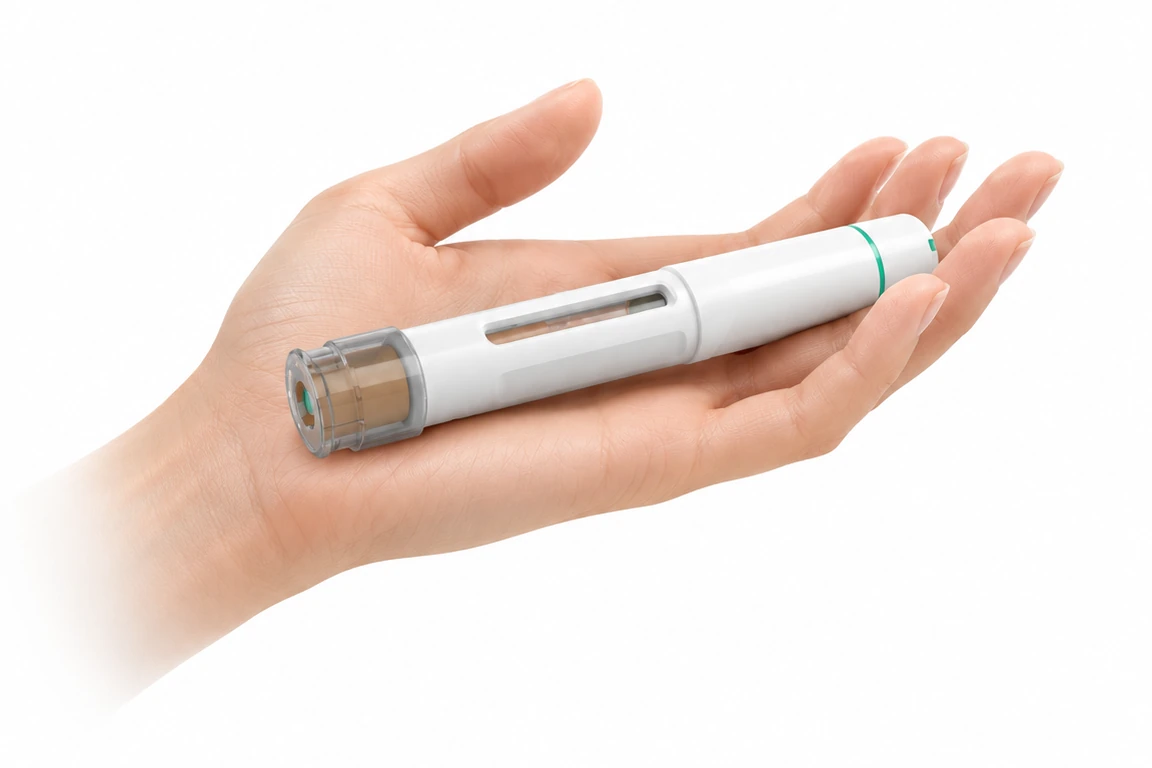
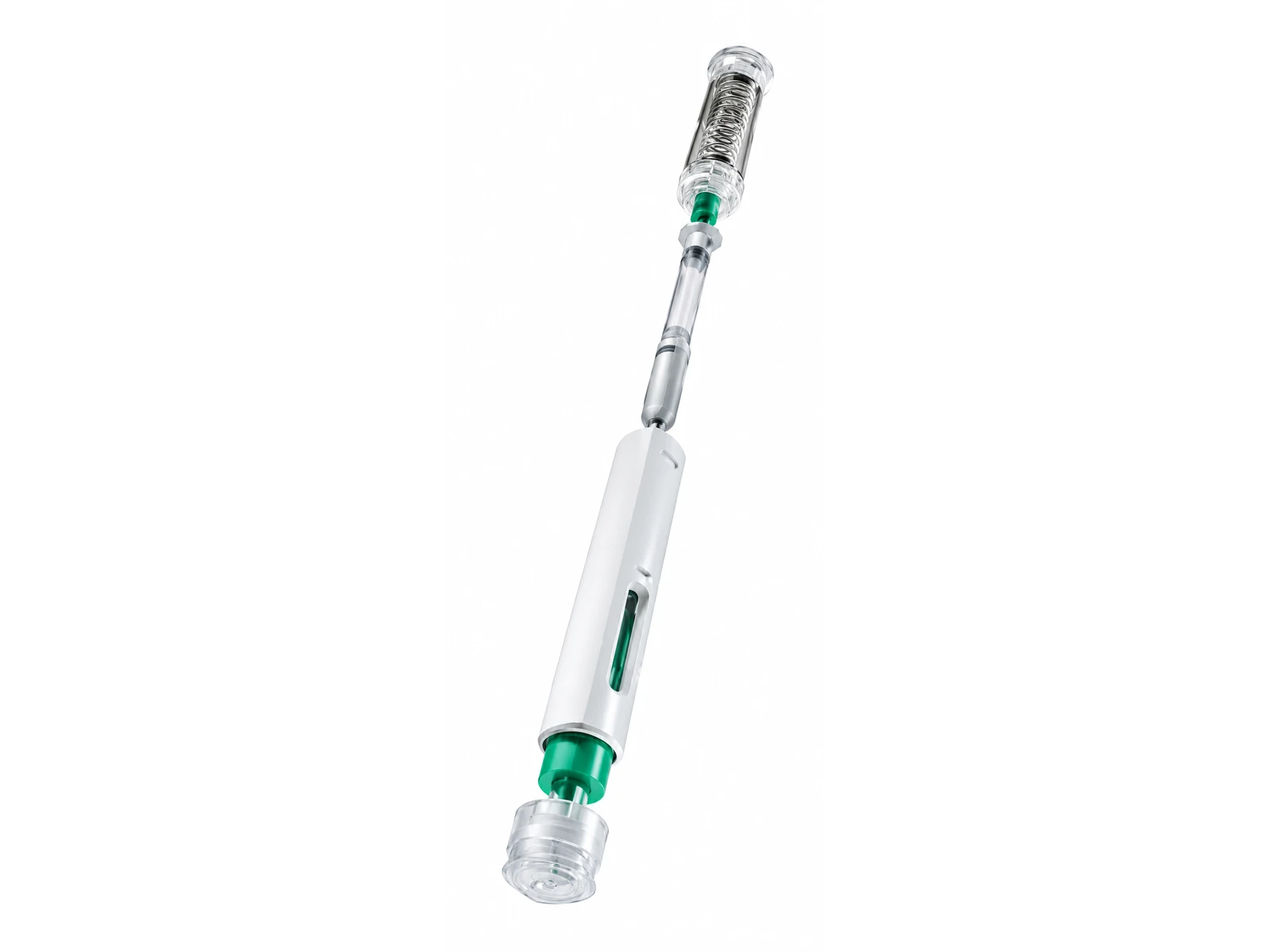
Non-cylindrical device bodies cause label wrinkles and edge lifting — pen bodies are often oval or square in section. Linear labelling with dedicated wrapping units applies the label under controlled tension across the full contour, avoiding trapped air and curled edges
Label position drifts between machines and changeovers — multi-zone labelling (wrap + front/back + top/bottom) needs each applicator to hold the same reference. A modular linear platform with digital, reproducible adjustments keeps 1:1 label-to-device alignment at ±0.2 mm across all zones
Variable data goes onto the device unverified — batch, expiry, serial or UDI printed without control reaches the patient. Integrated laser or thermal transfer coding is followed by 100% vision verification of print, and label print/device alignment
Prefilled devices leave the labeller with fluid defects undetected — a filled pen carries a filled syringe inside. The same vision station checks label print and, in the pen configuration, the fluid level of the primary container
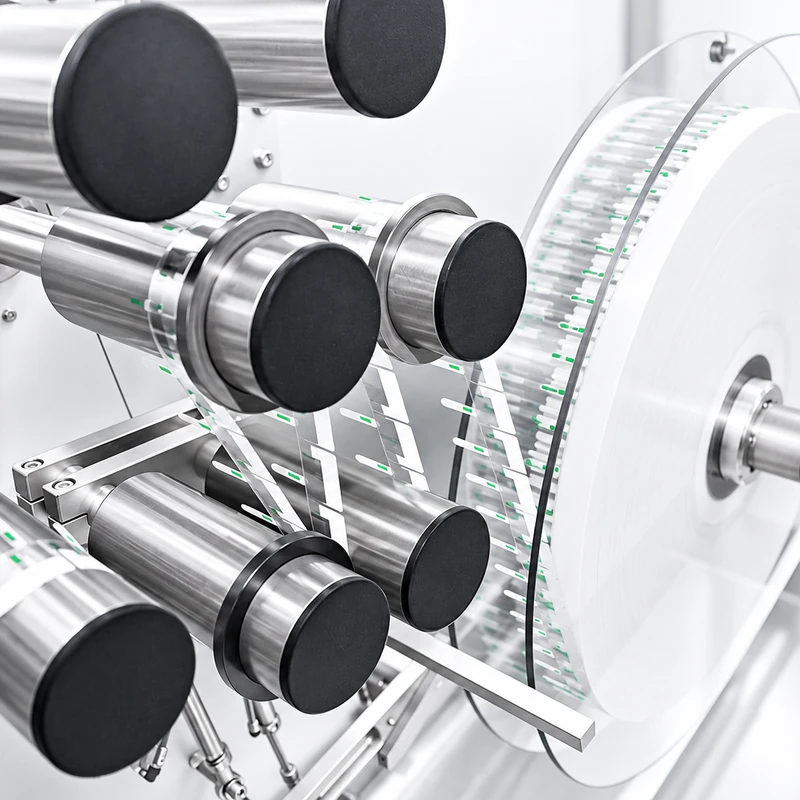
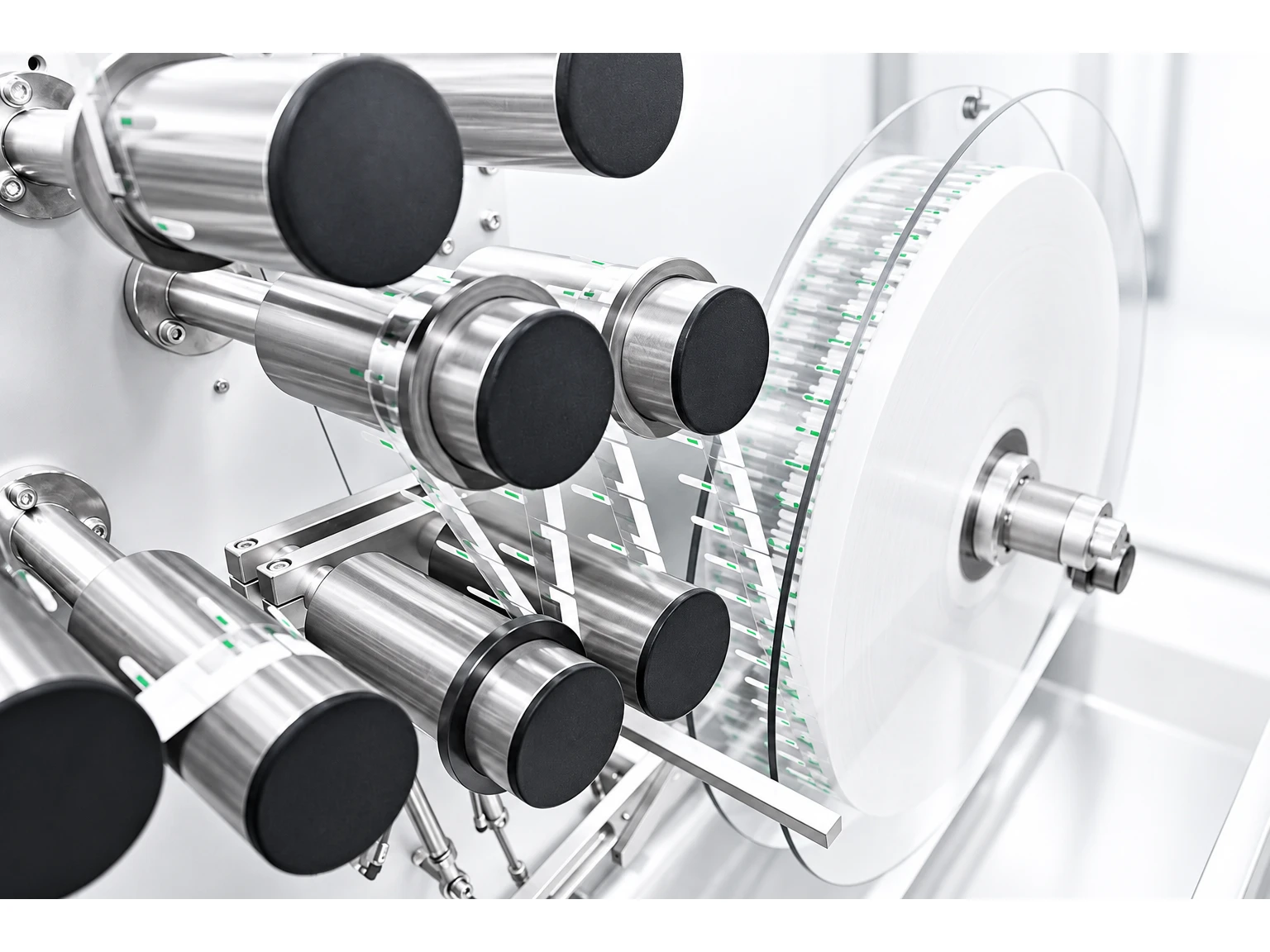
Missing labels cause double labelling — a gap in the web shifts every following label. The reference-run dispenser control stores the exact label length and dispenses position-accurately even when labels are missing — double labelling is excluded
Transparent labels are invisible to standard sensors — the ultrasonic sensor processes clear film without control marks reliably
Needle guard and safety device assembly are a separate line — assembling guards and back-stops outside the labelling machine doubles handling and rejects. Integrated modules assemble cylindrical or square needle guards and back-stops in the same continuous flow
Changeover of pen formats takes too long — label size, wrap length and coding content change per device. Stepless digital adjustments, stored recipes and one-button reference runs cut changeover to minutes