
Skip to content

Process expertise. Chinese manufacturing. Global perspective.

PREASYS

Equipment & technology

High-Speed Pharmaceutical Blister Packaging Machine

Package tablets or capsules in individual formed pockets sealed with a lidding web. A pharmaceutical blister packaging machine brings together web forming, product feeding, sealing and cutting; product geometry and the selected barrier materials determine the working format and feeding method.

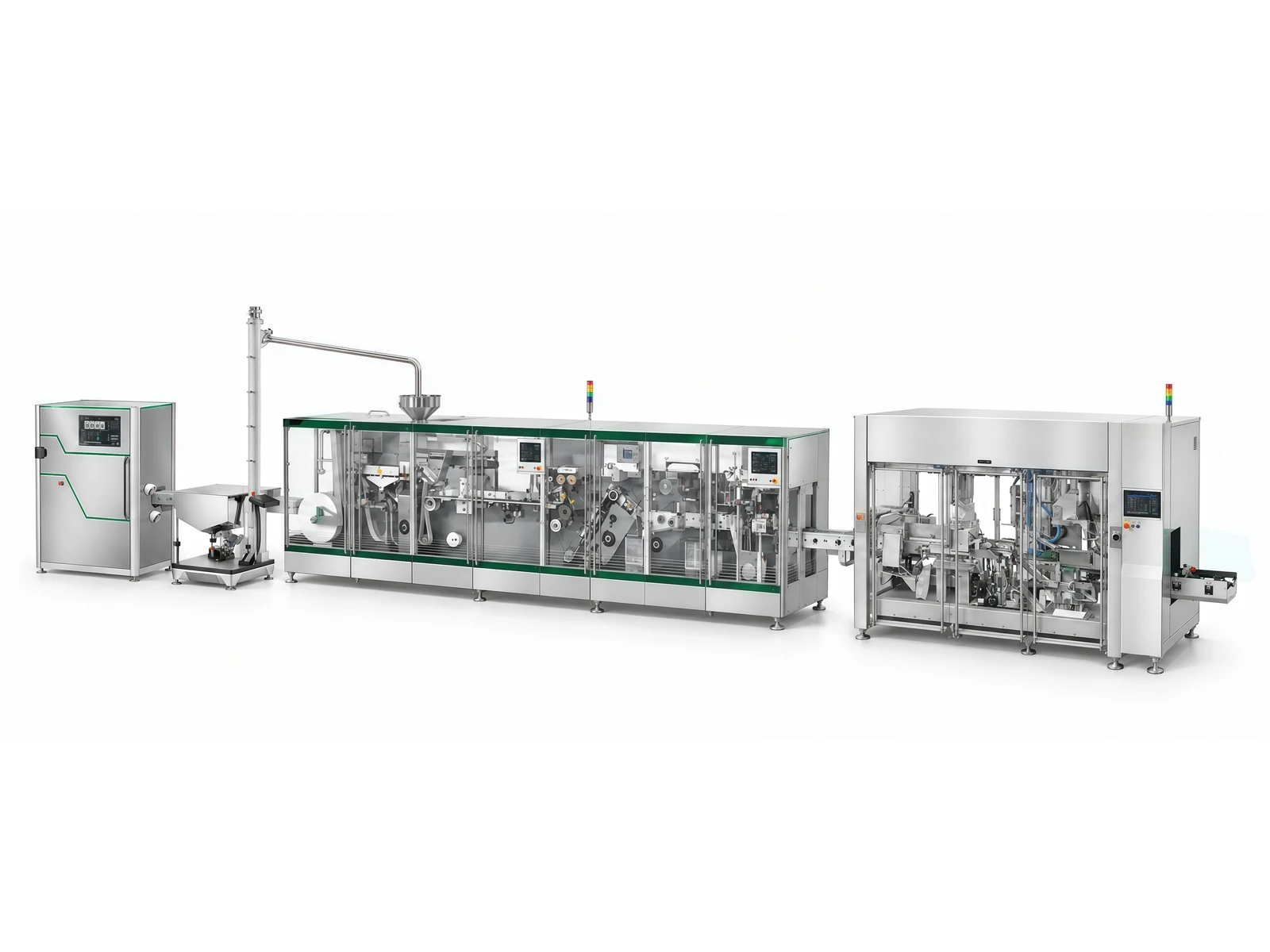
Blister packaging and cartoning sections connected in a single equipment train

Solid Blister Line

From loose solid doses to sealed blister cards

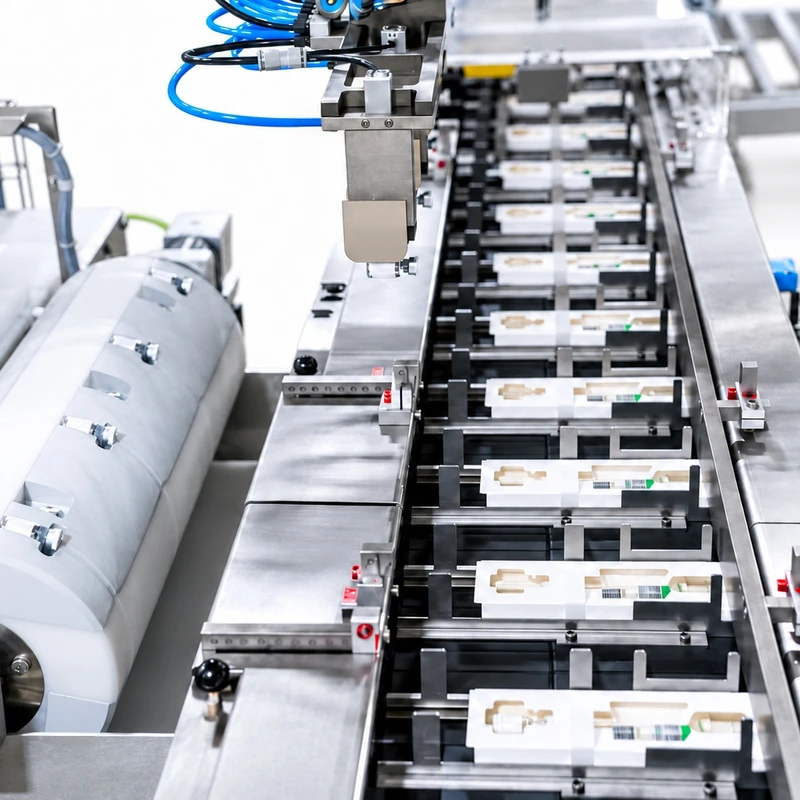
Each cavity holds its assigned dose while the surrounding web provides a sealing surface. The feeder must place the product below that surface: a correctly counted tablet can still damage the seal if it stands proud, overlaps another unit or leaves fragments in the sealing area.

The forming web advances through pocket forming and product loading, then meets the lidding material at sealing. Inspection decisions follow the web position until the affected card is cut and rejected. Thermal forming and cold forming use different material behaviour and tooling, while platen and roller sealing create different contact conditions. The selected combination is developed around the pack specification rather than a universal machine setting.

Blister strips and tablets beside an open folding carton

Process at a glance

Pocket geometry, feeding and web sealing work together; the chosen materials determine the forming and sealing process.

Form

Create the selected cavities in the forming web

Feed

Present tablets or capsules to the open pockets

Seal

Apply the lidding material before separation

Process challenges

The required batch mix influences setup losses, web replenishment and the appropriate equipment format.

Read details

The required batch mix influences setup losses, web replenishment and the appropriate equipment format.

A blister format involves feeding, forming, sealing, cutting and inspection settings. Changeover covers their combined clearance and verification.

A product can miss a cavity, overlap another dose or sit in the seal area. Feeding and inspection address those distinct cases.

Forming behaviour differs between materials. The chosen barrier web and pocket design determine tooling and process conditions.

Seal formation depends on the actual material pair and contact conditions. The finished package is assessed with its specified seal or integrity test.

Film, product and code checks observe different features and must retain the correct web position through rejection.

Coding and aggregation are defined at the required packaging levels, with clear ownership of exceptions and data exchange.

An integrated blister-and-cartoner layout still needs service access, buffers and material replenishment space.

Industry problem Solid-dose blister design considerations
Batch size volatility Compare usable output, setup losses and tooling for the intended batch mix; one platform need not cover every batch or format.
Slow format changeover Establish a format procedure covering web, feeder, forming, sealing, cutting and inspection settings, with clearance and first-pack checks.
Feeding jams and double-dosing Trial the actual dose geometry and condition through the selected feeder, observing missing, double and damaged products.
Hard-to-form tropical/aluminum blisters Match the barrier web to its forming method and pocket design; confirm the proposed material and depth rather than applying one limit to all webs.
Sealing defects Develop and verify the seal process with the actual forming and lidding materials and the agreed test method.
Unverified content Define the defect set, viewing conditions and reject tracking for film, code and product checks.
Serialization complexity Agree code application and event handling at each packaging level; integration does not establish market compliance by itself.
Floor-space waste Assess the installed blister-and-cartoner layout including access, buffering and material replenishment.

Technical data & features

Identify which pack sizes share tooling and how the blister count or artwork changes between presentations.

Blister strips and tablets beside an open folding carton

Output is a result of cycle rate, lanes and cards per index as well as feeding and sealing limits. Accepted blister cards per minute and downstream cartons per minute describe different quantities.

Pocket dimensions and web layout set the cavity spacing, usable forming area and dose presentation. A deeper pocket changes the forming requirement and product clearance; material type determines which forming process is appropriate.

Batch and format requirements

A small-batch format places more emphasis on setup losses, product recovery and repeatable tooling changes. Long runs place greater demand on continuous product supply and web replenishment. Both require accessible forming, feeding and sealing areas.

Feeding relies on the tablet or capsule moving predictably into an available cavity. Shape, friction, friability and tendency to bridge affect the choice of brush, vibration or guided placement. Representative product trials establish the suitable method and its adjustment range.

An integrated cartoner takes cut cards in the specified stack count and orientation. Buffering and stop logic keep web operation, rejection and carton loading aligned when either machine pauses.

Blister-to-carton transfer

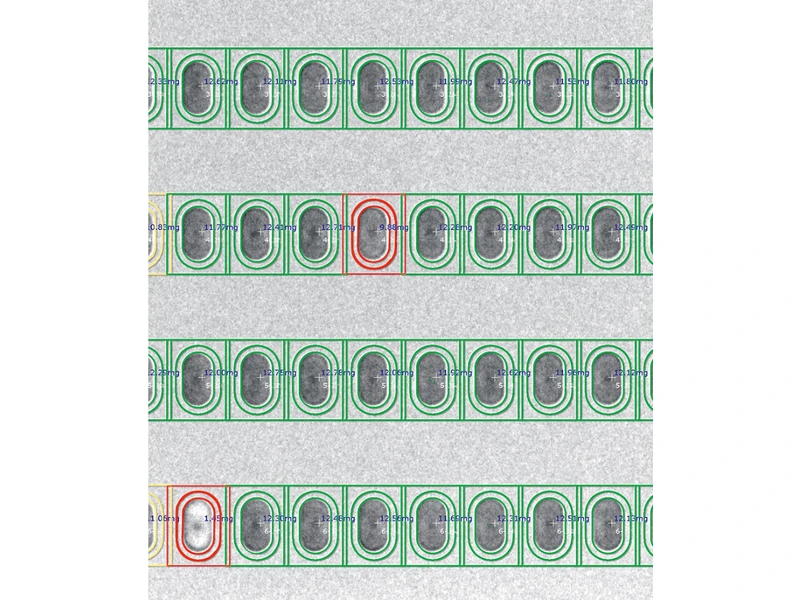
Content inspection can check the visible product and pocket condition at its assigned position before sealing. Code and film checks have separate targets. The reject system must associate each failed result with the correct finished card after cutting.

Code handling and packaging records

Define film-lot and batch records, printed-code checks and any carton serialization separately. Maintenance access should cover feeders, web guides and forming, sealing and cutting tools. Cleaning or tool replacement is followed by registration, dose-placement and seal checks before production resumes.

How it works

How are loose solid doses fed into cavities?

Observe the feeder as cavities pass beneath it. Products should settle in their assigned pockets without overlapping or protruding into the seal area. Test the agreed product range and inspect residual product and fragments at the end of a run; feeding performance depends on the real dose, not only its nominal dimensions.

How should the accepted web transfer to cutting or cartoning?

Challenge a known failed cavity or printed code and follow its web position through sealing and cutting. Confirm that the correct card leaves the accepted stream, including after a stop or splice. Then verify the accepted stack count and orientation supplied to the cartoner.

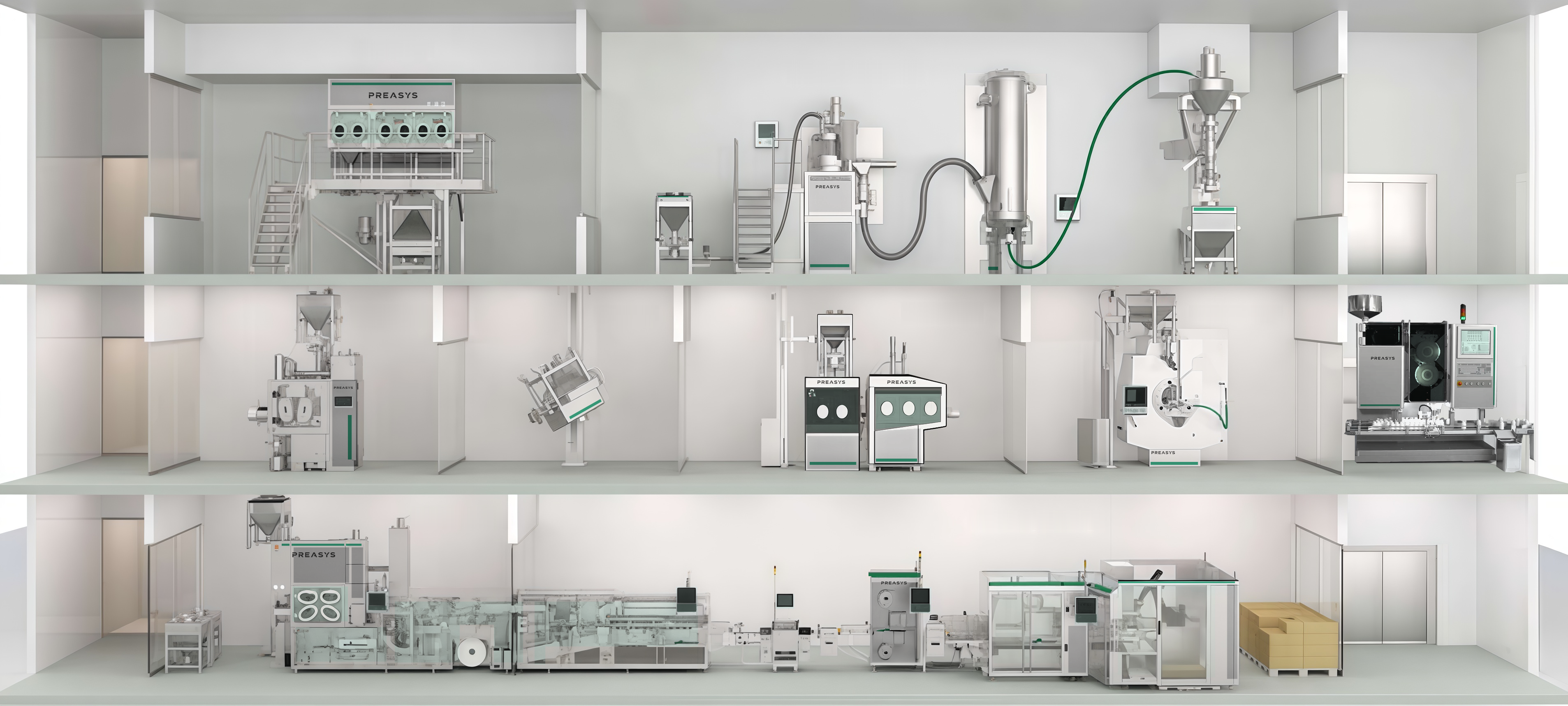
PREASYS three-level solid dosage process concept: preparation above; tablet pressing, encapsulation, coating, inspection and bottle filling in the middle; primary and secondary packaging below

Oral solid dosage · Integrated production

From powder to
packaged product

Discover the equipment behind your solid dosage process.

Skip tour
Production concept 17 equipment areas · Scroll to explore

Route selection. Wet and dry granulation are alternatives. Select tablet compression or capsule filling for the dosage form; include coating when required.

Illustrated equipment and packaging options show process relationships. The facility layout and equipment configuration are defined for each project.

Line integration

Line Integration Accepted solid doses enter through the defined storage and feeding route

Present each dose to its formed pocket

Web guidance maintains registration through forming, filling and sealing. Tooling supports the pocket while the seal area receives the specified contact conditions. Cutting then separates the accepted or rejected cards according to their tracked position.

Keep inspection results attached to the correct card

Accepted blister cards pass to collation and cartoning at the agreed count. The closed carton can then move to case packing and palletizing; those operations do not replace blister-level dose and seal checks.

The downstream line may include a cartoner, code equipment and case or pallet handling. Its scope depends on the finished pack and distribution unit rather than requiring every optional stage.

Support throughout your project and production

Define the equipment scope

Identify which pack sizes share tooling and how the blister count or artwork changes between presentations.

Learn more

Agree the acceptance test

Confirm that inspection and rejection remain linked to the correct blister after web indexing and cutting.

Learn more

Prepare for operation

Identify the contact parts and format tooling for Solid Blister Line. Agree access for cleaning, the spares to hold and the operating records the site will need.

Learn more

Knowledge hub

2 resources

Frequently asked questions

Can Alu-PVC and Alu-Alu packs use the same process settings?

No common settings should be assumed. The forming materials use different forming behaviour and may require different tools, pocket geometry and sealing conditions. Assess each complete forming-and-lidding combination.

How do we choose the tablet or capsule feeder?

Use representative products to evaluate flow, shape, surface friction and fragility. The trial should assess placement, missing or double doses, damage and recovery of residual product at the intended web format.

What does the quoted blister output count?

It should identify complete blister cards, together with cavities per card, lanes, index layout and material. Cycle rate alone is not the accepted pack output and does not determine the cartoner rate without the cards-per-carton count.

Can a content camera establish blister seal integrity?

A camera can assess specified visible features but does not by itself prove barrier or seal integrity. Define the separate seal or package-integrity method appropriate to the materials and product.

Contact

Tell us the dosage form, batch sizes, materials and blister drawings for a solid-dose packing review.

Discuss your project →
Blister strips and tablets beside an open folding carton