Keep the full bed moving
Bed movement carries material through the spray and drying regions. The charge, particle properties and distributor determine whether the full batch participates or whether poorly moving zones develop.
Process expertise. Chinese manufacturing. Global perspective.

Equipment & technology
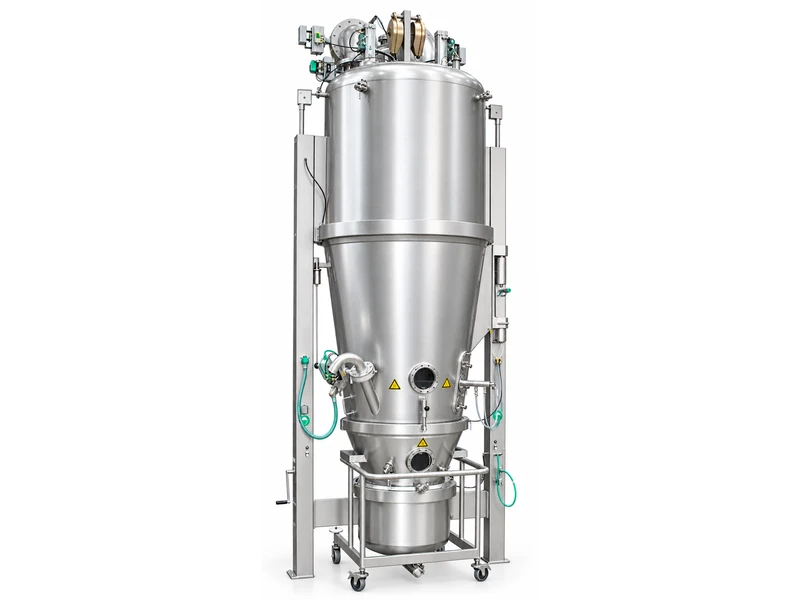
A top-spray fluid-bed granulator adds binder from above to a moving powder bed. Wetting and particle collisions build agglomerates while process air removes moisture, so granule growth depends on the balance between liquid addition, bed movement and drying.
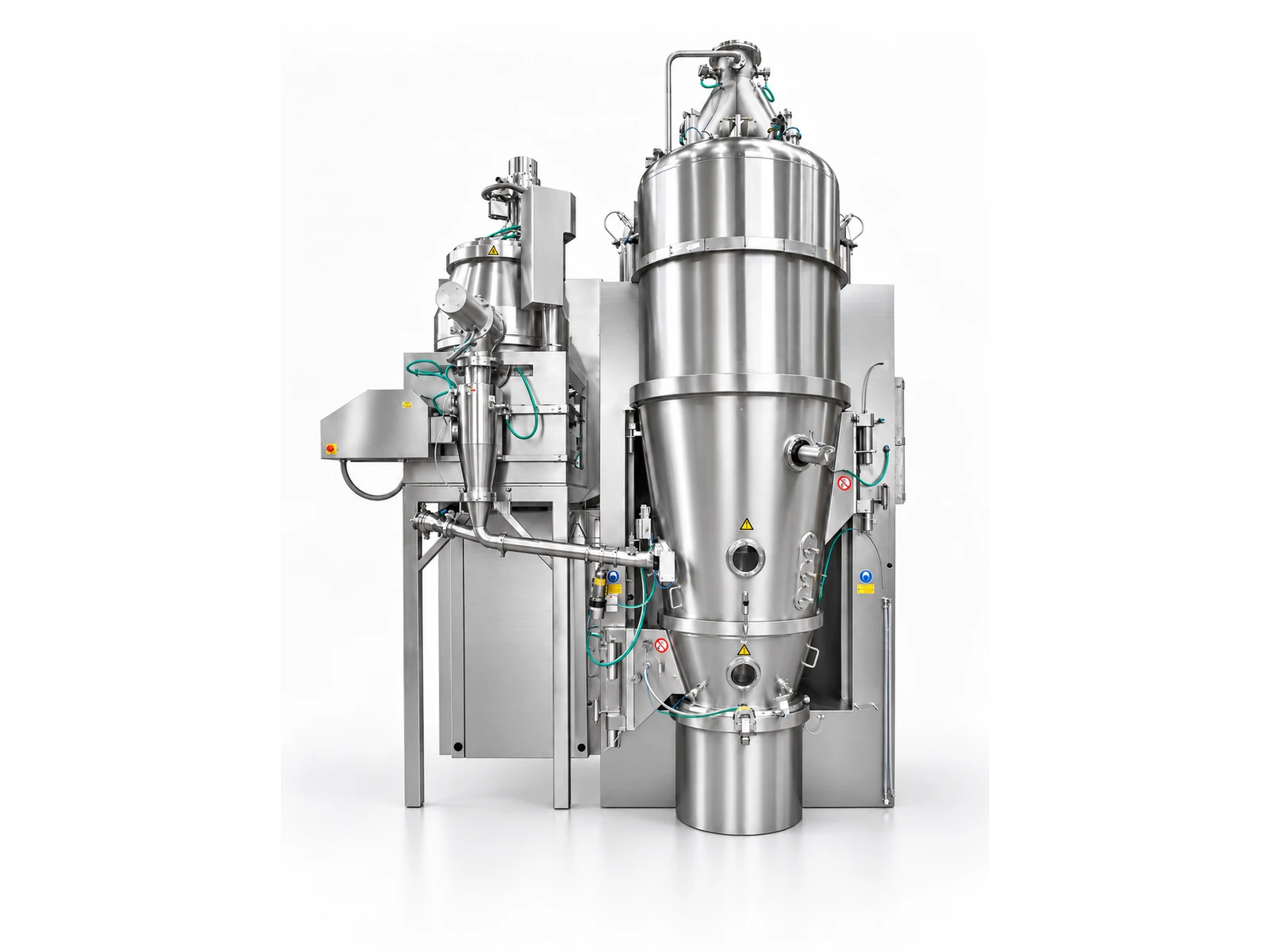
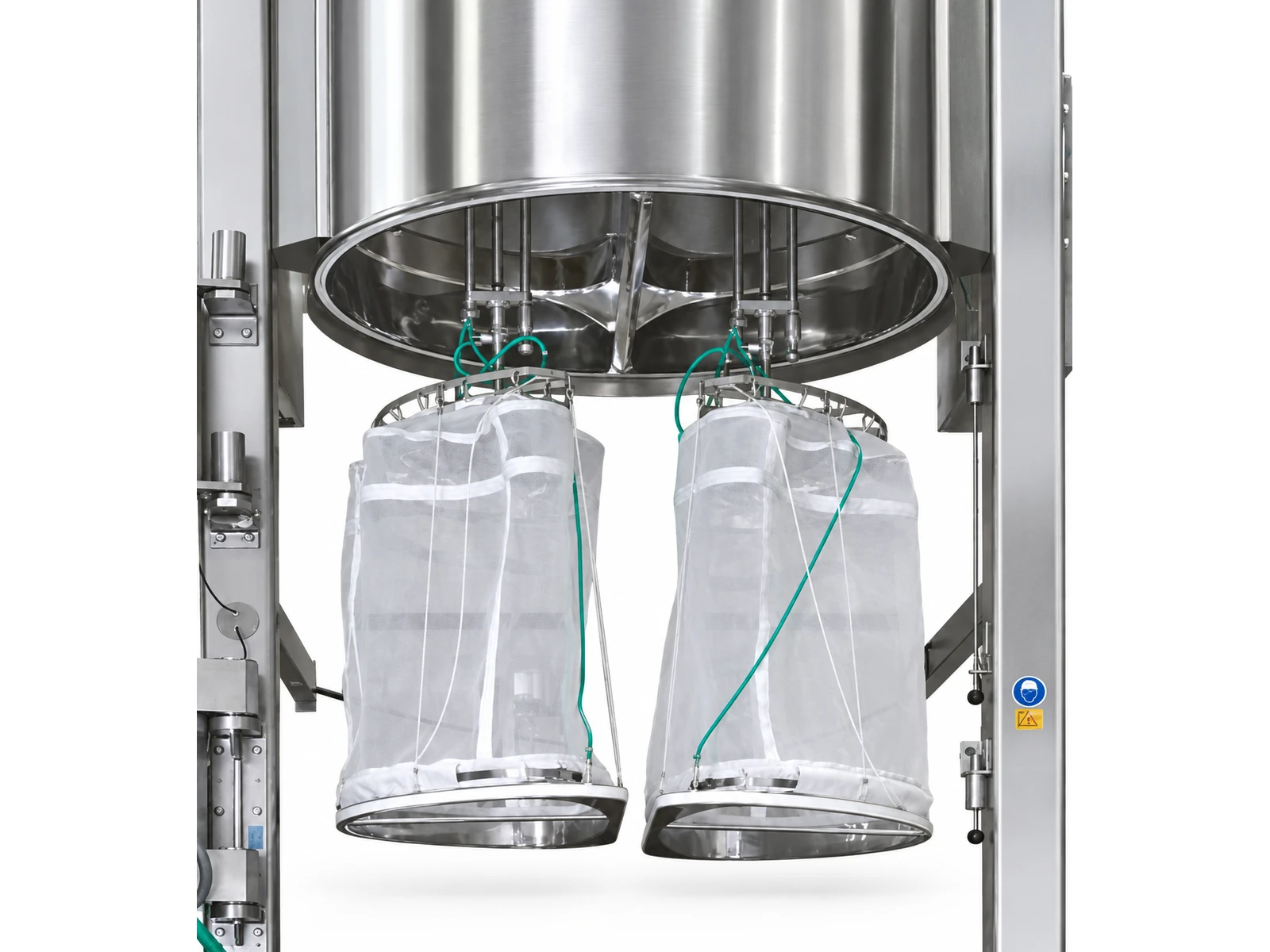
Dry powder enters the selected vessel and is fluidized by process air. Binder droplets contact particles in the spray zone, forming wet bridges that develop into granules as particles meet and moisture is removed. Too much local wetting can produce oversized agglomerates; insufficient effective wetting can leave a large fine fraction.
Top-spray granulation
Droplets wet the fluidized powder while process air removes moisture; their balance determines whether particles grow or remain fines.
Wetting
Distribute binder onto the moving powder
Growth
Form and consolidate liquid-bound agglomerates
Drying
Bring the granules to the intended residual moisture
—
Process options
Bed movement carries material through the spray and drying regions. The charge, particle properties and distributor determine whether the full batch participates or whether poorly moving zones develop.
Binder solids, atomization and delivery rate affect how liquid reaches the powder. Their influence must be considered with product temperature and the air system; an increased spray rate alone is not a reliable route to faster acceptable granulation.
Fines may enter the filter and return during cleaning pulses. That return affects the material population in the bed, while deposits around the nozzle can alter the spray. Both belong in the process record and cleaning assessment.
| Selection input | What to verify |
|---|---|
| Working charge | Report wet and dry mass, bulk density and the bed condition at the smallest and largest proposed charges. |
| Air and drying duty | Record inlet air conditions, product temperature, endpoint method and sampling locations for the trial. |
| Top-spray granulation | Define binder properties, nozzle arrangement and the accepted granule size fraction after drying. |
| Granule quality | Define the accepted particle-size fraction, moisture endpoint and relevant density or content-distribution measurements after the granulation cycle. |
| Filter and containment | Agree the filter material, recovery of fines and how the insert and filter are changed or cleaned. |
| Equipment rating | Supply the selected vessel and insert drawings with the manufacturer's working load, air duty and applicable protection documentation. |

Record binder addition and product response against the batch history. Compare agreed samples for granule size and wetting condition, including fines and oversized material, before selecting the next adjustment.
The process must establish both the required granule properties and the final moisture condition. Use the defined analytical methods rather than treating a fixed spray or drying time as proof of either result.
Inspect the nozzle and any deposits, restore the supported liquid and air settings and observe bed behaviour on restart. Keep the interruption in the batch record because it changes local wetting and drying history.
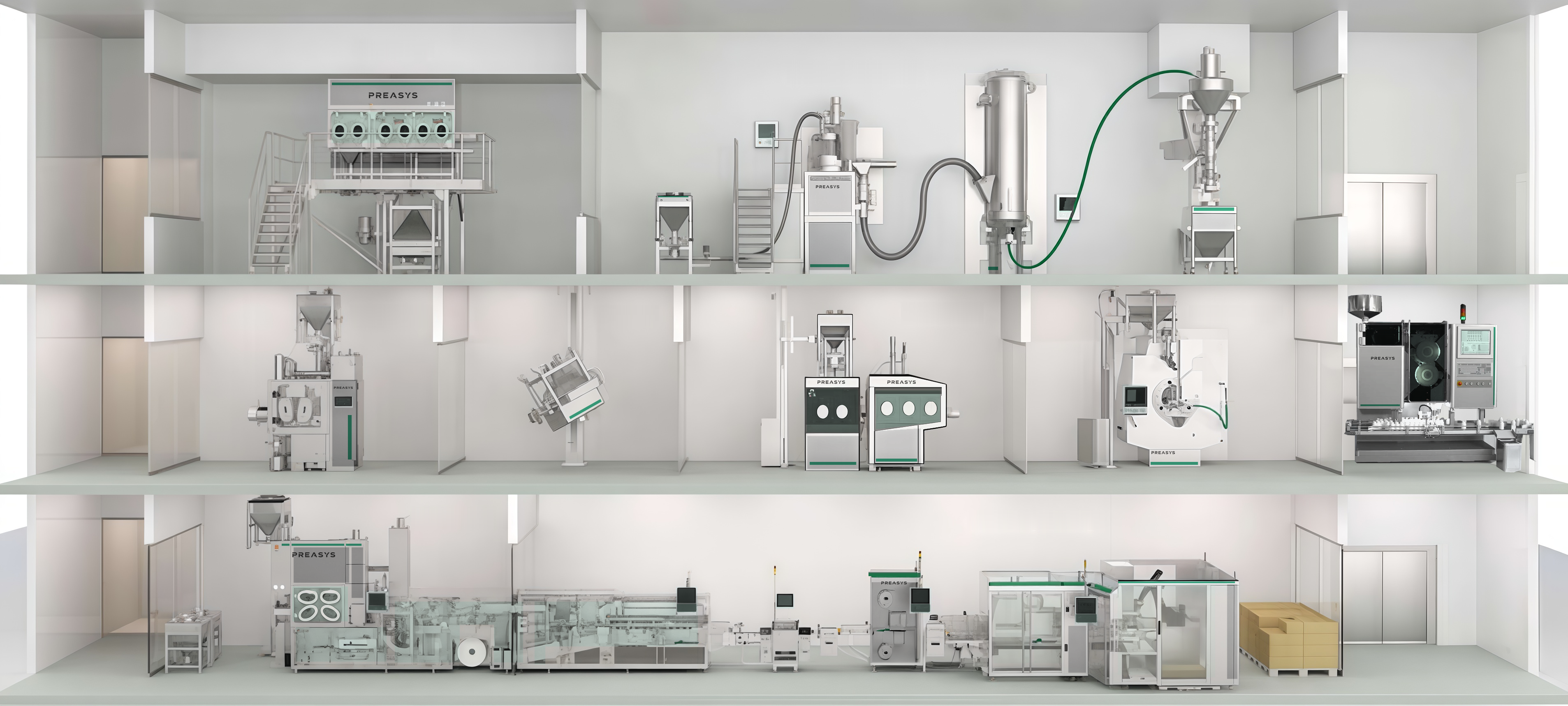
Oral solid dosage · Integrated production
Discover the equipment behind your solid dosage process.
Route selection. Wet and dry granulation are alternatives. Select tablet compression or capsule filling for the dosage form; include coating when required.
Illustrated equipment and packaging options show process relationships. The facility layout and equipment configuration are defined for each project.
Blend preparation and binder preparation supply two distinct inputs. This granulation route starts with powder and adds binder in the fluid bed; it is not simply the drying of wet mass received from a high-shear granulator.
After the granulation and drying endpoint, the material passes to the selected sizing, final-blending and dosage-form operation. Granule size, moisture and handling properties define the discharge condition required by that next step.
Bed behaviour depends on load, particle size, airflow and the liquid addition rate.
Learn moreAssess drying uniformity and filter handling with representative material before fixing the discharge arrangement.
Learn moreIdentify the contact parts and format tooling for Fluid Bed (Top Spray). Agree access for cleaning, the spares to hold and the operating records the site will need.
Learn moreShare starting material, spray or drying objective and working batch.
Request product information
2 resources
No. Top spraying agglomerates a powder bed; a selected bottom-spray process applies material to existing cores. Inserts, nozzle arrangement and product criteria differ.
Only a configuration with the appropriate spray system, controls and process arrangement can be evaluated for granulation. The dryer name alone does not establish that capability.
The material properties, vessel, distributor, filter and spray arrangement together. Nominal vessel size or a family-wide capacity is not a qualified working range for a particular powder.
Send the material description, wet and dry batch masses, process mode, available air conditions and the measured endpoint. Include the upstream feed and the condition needed by the next operation.
Discuss your project →