Define the equipment scope
Compare a fluid bed route with the available conditioned air, product temperature limits and the cleaning changeover.
Learn moreProcess expertise. Chinese manufacturing. Global perspective.

Equipment & technology
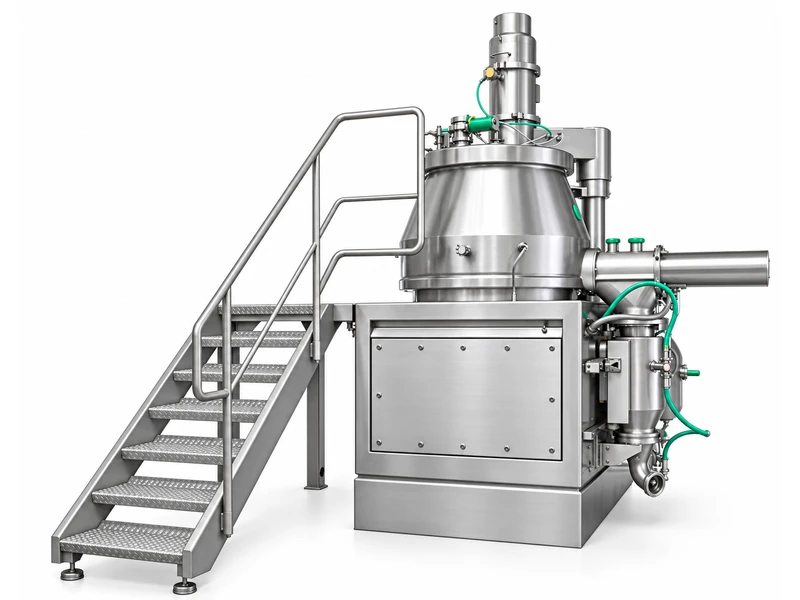
A fluid-bed dryer brings conditioned air into contact with wet granules to remove moisture while keeping the particles mobile. Product temperature, air conditions and bed behaviour determine how the drying operation progresses toward the specified moisture endpoint.
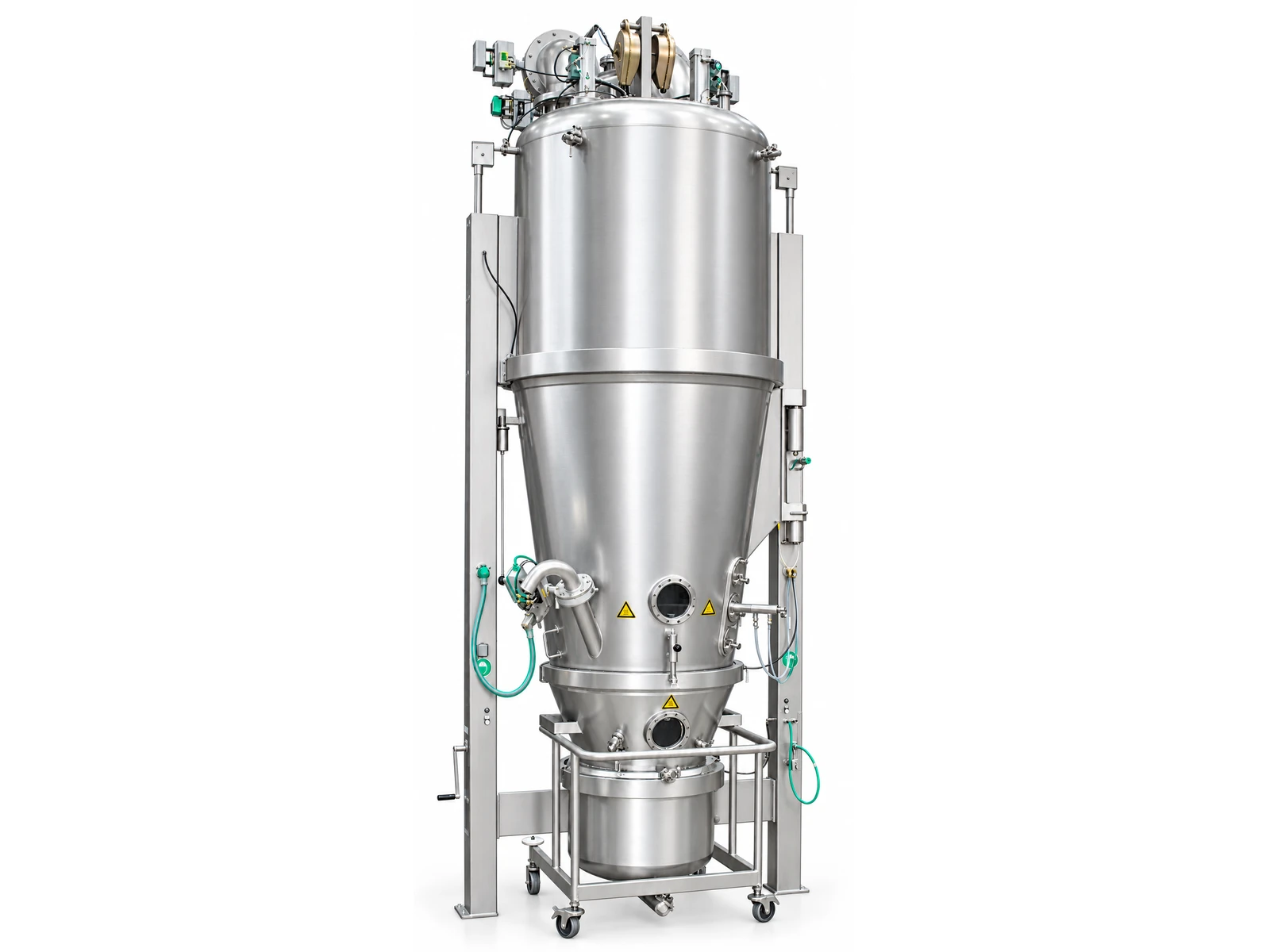
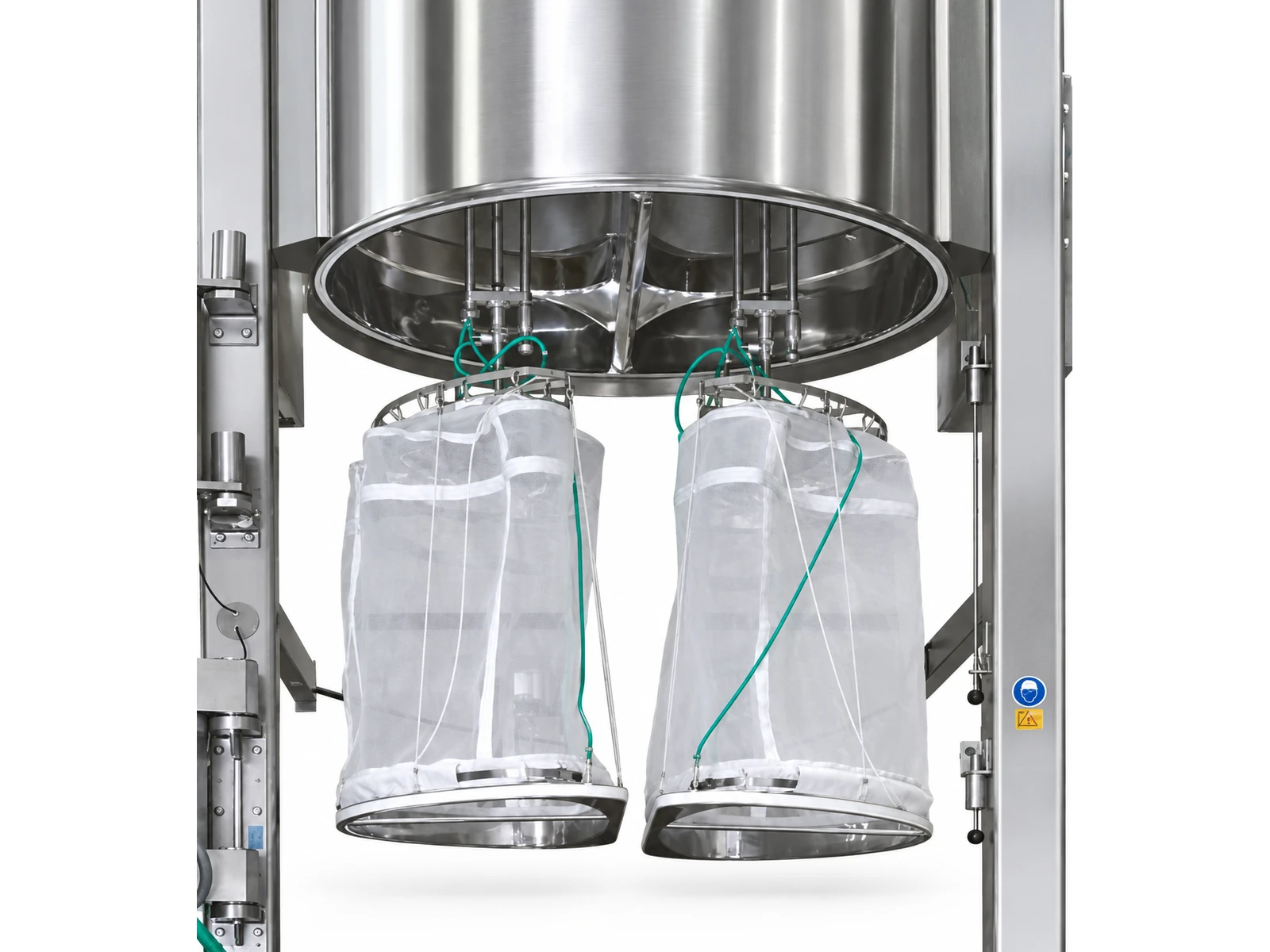
Air passes through a distributor into the product bed and carries evaporated moisture toward the exhaust system. Stable particle movement exposes material to the drying air; a poorly moving region can remain wetter while other material receives longer treatment. The filter and air path are therefore part of the process, not just accessories to the vessel.
Example project input
Both inputs are water mass, not percentages. Use measured moisture results and a consistent wet- or dry-basis calculation before estimating the drying duty.
12 kg
Water in the incoming batch
2 kg
Water remaining at the endpoint
10 kg
Water to remove
—
Process options
The incoming wet mass sets the evaporation duty, but the endpoint concerns the granules leaving the dryer. Initial moisture, particle size and batch load affect the response. More inlet heat does not by itself establish a faster acceptable cycle when the product has a temperature limit or the bed does not fluidize uniformly.
Use these inputs to define the proposed configuration. Confirm operating values against the selected model and trial conditions.
| Project input | What to record and why |
|---|---|
| Wet batch mass | Give the mass entering the dryer, including added liquid. This establishes the trial load and the water removal duty to compare. |
| Initial and final moisture | Specify both endpoints, units, sampling points and test method; a percentage on a wet basis is not interchangeable with one on a dry basis. |
| Temperature limit | State whether the limit applies to the product, inlet air or another measured point. Locate the corresponding sensor on the trial arrangement. |
| Sampling location | Identify where a sample can be taken without disturbing the process and how it represents the whole lot. |

Record the available air and product measurements against the batch history. Observe bed and filter behaviour and retain moisture samples at the agreed points. Note interruptions that change airflow or particle movement.
Use a specified moisture method, basis and representative sampling procedure. Compare the measured result with the release target rather than using cycle time alone; record the state of the discharged material as well.
Oral solid dosage · Integrated production
Discover the equipment behind your solid dosage process.
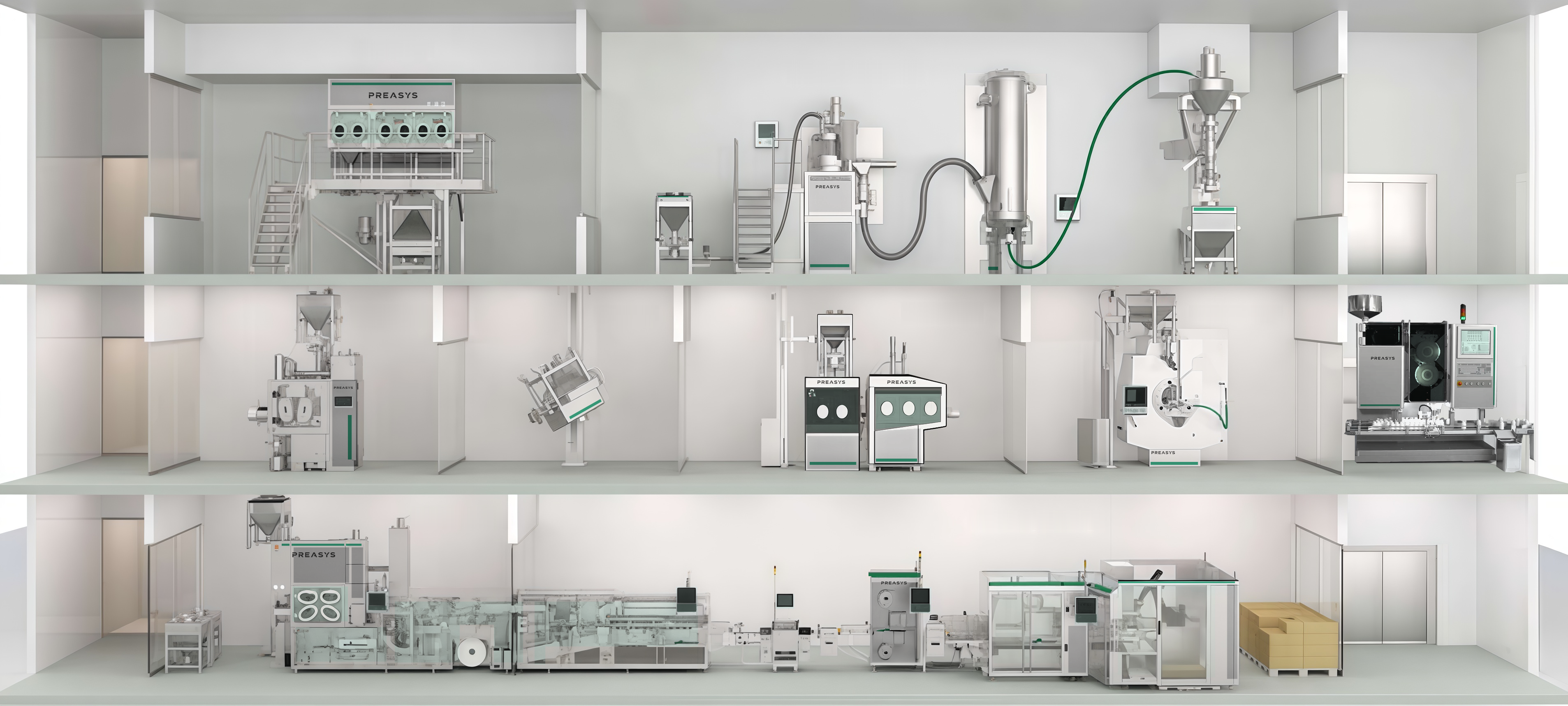
Route selection. Wet and dry granulation are alternatives. Select tablet compression or capsule filling for the dosage form; include coating when required.
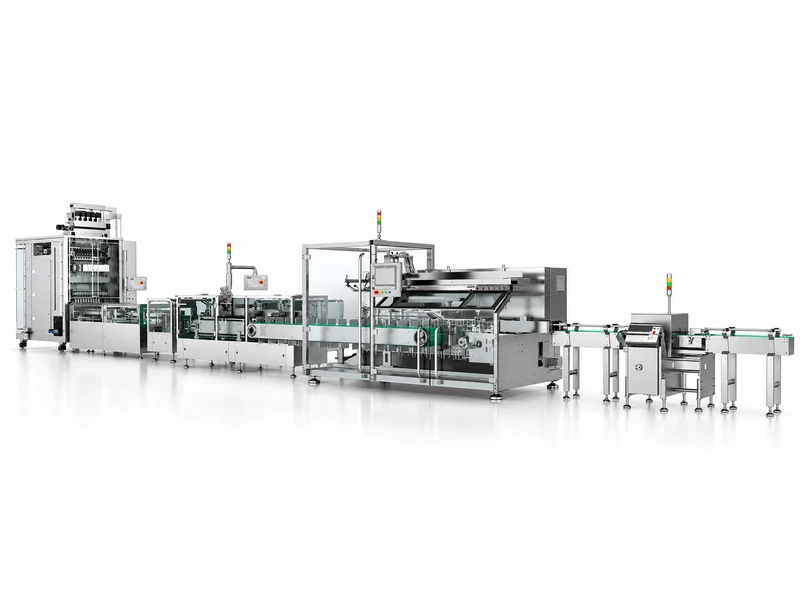
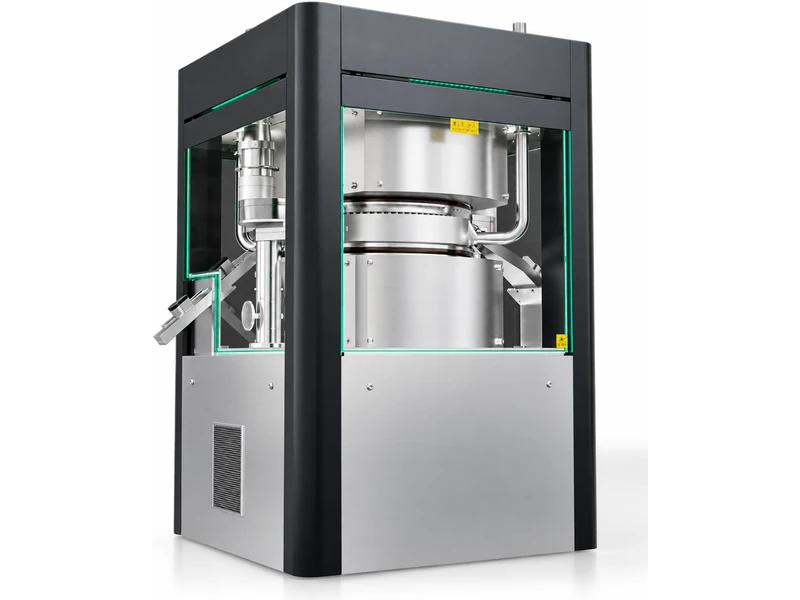
Illustrated equipment and packaging options show process relationships. The facility layout and equipment configuration are defined for each project.
Wet granules arrive from the selected granulation operation in a defined moisture and size condition. Transfer and loading must preserve the batch and provide the dryer with a workable bed rather than compacted masses or uncontrolled lumps.
After the agreed drying endpoint and any required cooling, the batch passes to sizing, blending or another selected operation. Sampling and discharge records connect the moisture result to the material released downstream.
Compare a fluid bed route with the available conditioned air, product temperature limits and the cleaning changeover.
Learn moreConfirm how wet mass arrives from granulation and how the dried granules are sampled and discharged for sizing.
Learn moreIdentify the contact parts and format tooling for Fluid Bed Technology. Agree access for cleaning, the spares to hold and the operating records the site will need.
Learn moreShare wet batch mass, initial and final moisture and temperature limit.
Request product information
2 resources
No. Its primary duty is moisture removal from incoming material. Binder spraying and particle agglomeration are covered by the separate top-spray granulation page.
The denominator differs, so equal percentages can describe different water quantities. The initial and final results must use a consistent basis when estimating the drying duty.
Inspect and clean the distributor, product bowl, filters and accessible air-path components according to the selected design. Restore the sampling and measurement arrangement used for the approved process.
For a configuration review, include wet batch mass, initial and final moisture, temperature limit, sampling location.
Discuss your project