Skip to content

Process expertise. Chinese manufacturing. Global perspective.

PREASYS

Equipment & technology

pharmaceutical high-containment powder transfer system (PTS)

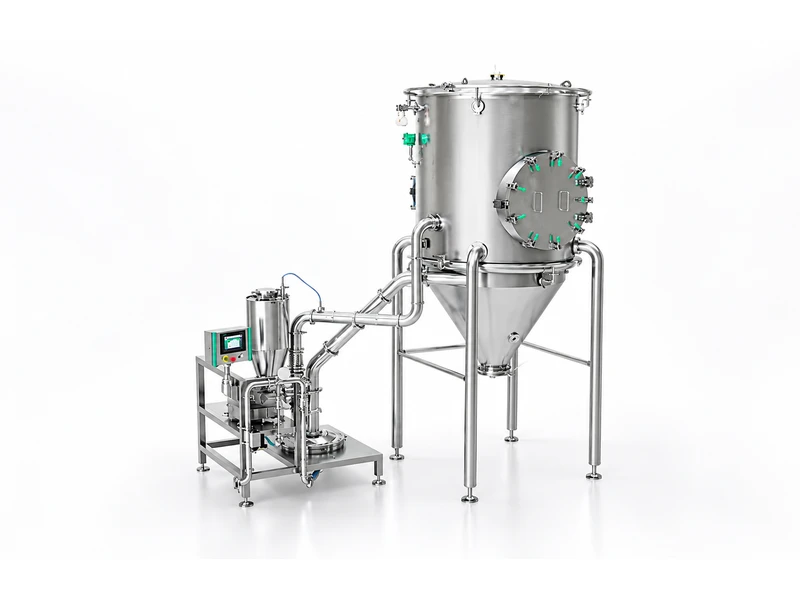
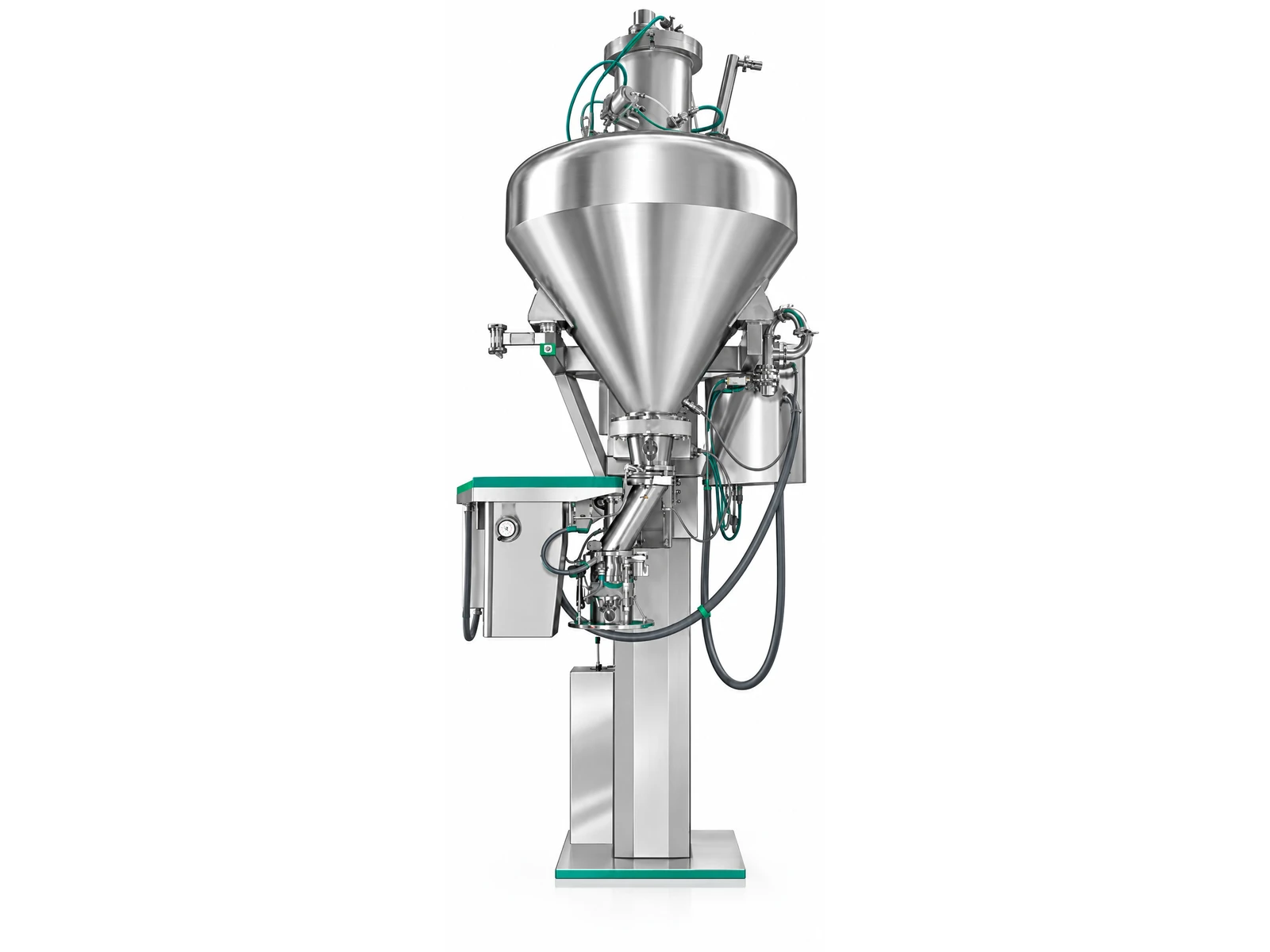
A contained powder transfer system moves material between source and receiving equipment through a closed conveying path. The feed connection, transfer line, receiver and discharge valve form one process whose behaviour depends on powder properties, route geometry and the selected pressure cycle.

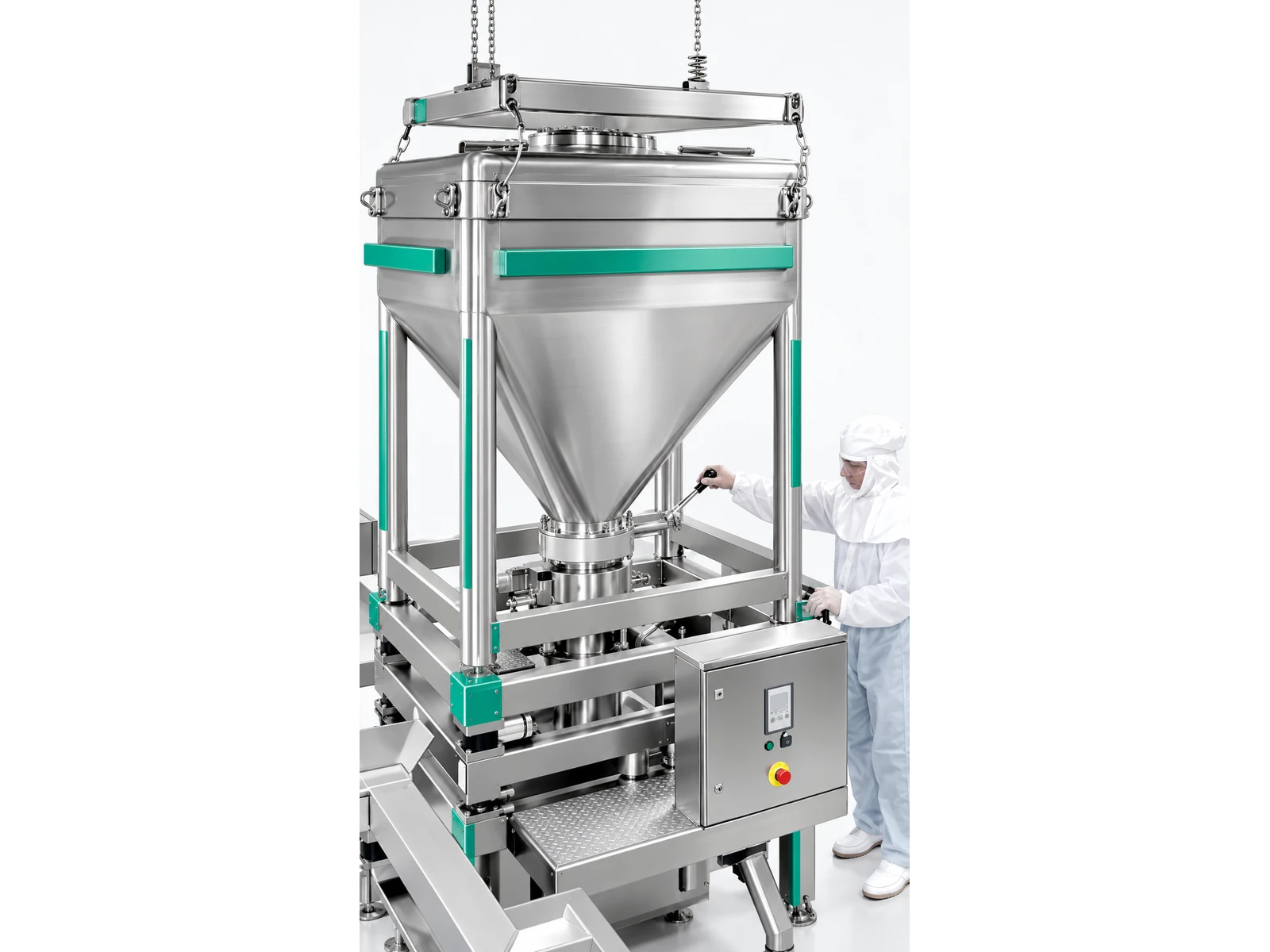
Powder transfer hopper and discharge connection on a mobile frame

Contained Powder Transfer System

PTS

Contained Powder Transfer and Optional Pneumatic Blending

Vacuum and pressure transfer through a defined source-to-receiver path

In the described vacuum-and-pressure concept, powder enters a receiver through the transfer line and is discharged into the next vessel in a controlled sequence. Receiver filtration separates conveying gas from the powder. Cycle timing, filter response and discharge behaviour determine both the usable transfer rate and the material left in the system.

Powder container seated above a discharge station

Connect the transfer route

Powder properties, line geometry and the receiving system determine the workable conveying conditions.

Source to receiver

Assess transfer, filtration and discharge as one path

Process challenges

Conveying conditions influence particle stress and segregation. Dense-phase transfer can be considered where lower gas velocity is useful, but product preservation must be demonstrated with feed and discharge samples.

Read details

Conveying conditions influence particle stress and segregation. Dense-phase transfer can be considered where lower gas velocity is useful, but product preservation must be demonstrated with feed and discharge samples.

A closed transfer path reduces the need for open tipping and can connect equipment without relying only on gravity. The achievable distance and lift depend on the route, powder and supplied system.

A cohesive powder can blind the receiver filter. Compare pressure drop and discharge recovery before and after a cleaning pulse with the proposed membrane.

Low conveying velocity does not eliminate ignition risk or establish a containment limit. Combustibility, electrostatic behaviour, exposure targets and site classification must inform the complete system design and test plan.

Solvent-wet powder introduces gas and vapour considerations in addition to dust. Any inerting strategy requires defined control and measurement; it must not be inferred from the presence of vacuum transfer.

Cleaning reaches the receiver, filter, valves and line only through the arrangement actually supplied. Drainage, residue removal and drying need verification; CIP or SIP is a separately specified function.

Pneumatic blending is a separate process scope from transfer. Recirculation may redistribute components, but blend uniformity and particle changes must be evaluated using a defined sampling method.

For a low-dose blend, define how each powder enters the receiver and where samples are taken. Compare blend uniformity before and after discharge using the site's sampling plan.

Technical data & features

Bulk density, flowability, transfer distance and dust characteristics govern the conveying and receiving arrangement.

Powder container seated above a discharge station
Process configuration and verification
Transfer element Function Material variable Interface Verification
Pickup Introduce powder to the route. Flow, aeration and agglomerates. Source vessel and intake. Assess stable pickup and retained material.
Conveying line Carry the powder to the receiver. Particle strength and segregation tendency. Length, bends and elevation. Evaluate transfer quality on the actual route.
Gas source Create the conveying pressure difference. Gas sensitivity and dust hazard. Supply, vacuum or pressure arrangement. Verify the chosen operating conditions.
Receiver Separate material from conveying gas. Bulk behaviour and fill response. Vessel, separator and level detection. Check collection and overfill response.
Filter Retain powder while gas leaves. Fine fraction and filter loading. Filter housing and cleaning arrangement. Evaluate pressure loss and carryover.
Discharge Feed the receiving process. Bridging and compactability. Valve, buffer and next-stage demand. Check dosing continuity and remaining material.
Cleaning Control cross-product residue. Adhesion and cleaning compatibility. Access, seals and contact path. Verify cleaning against the product requirement.
Protection Address exposure and process hazards. Toxicity, flammability and static behaviour. Selected containment and protective measures. Use the defined hazard and exposure assessment.

Vessel materials, surface finish, pressure rating and connections must match the powder, cleaning method and connected process.

Surface filter with reverse-pulse cleaning: confirm pore rating and compatibility for the proposed powder.

Dilute and dense-phase conveying use different solids loadings and flow behaviour. The route length, bends, vertical lift and receiver determine the workable pressure and gas conditions.

Dense-phase transfer can reduce gas demand and product velocity, but its effect on attrition and segregation must be measured for the powder and route.

Cohesive, fine, moist or non-free-flowing powders can bridge, form plugs or blind filters. These behaviours need a representative transfer trial.

Potency, flammability and oxygen sensitivity require separate protection measures. Low velocity does not by itself establish safe handling of a hazardous powder.

Define the cleaning, drainage and drying sequence for the specified product-contact path.

Define the containment boundary and inspect residual material at the receiver, valves and transfer connections.

Options can include alternative contact materials, filtered receivers, metering and cleaning access. Hazardous-area or sterile execution must be specified and assessed separately.

Select hopper and lance geometry, filter access, docking, sampling and metering options for the actual powder and source container.

A transfer trial should measure delivered mass, cycle time, filter loading, retained material and any change in particle-size distribution.

Optional pneumatic recirculation for blending
Process configuration and verification
Batch consideration Charging Receiver Filter Discharge Level Cleaning Containment
Configuration basis Source quantity and charging mode. Working volume and powder behaviour. Fine loading and gas separation. Next-operation demand. Fill detection and overfill response. Access and acceptable residue. Product hazard and exposure verification.

A recirculating powder loop can redistribute components through repeated transfer. Mixing performance depends on vessel geometry, circulation pattern and the blend properties.

Specify the minor component fraction, working charge and containment boundary. Confirm blend distribution and exposure with representative test material.

An inert gas supply changes the atmosphere, but oxygen control and safe operating limits require monitoring and an assessed system.

Repeated circulation can either improve distribution or promote separation. Samples must be taken at meaningful locations and after the intended discharge sequence.

Particle attrition and coating damage should be evaluated after the full number of transfer cycles.

Sampling, additive dosing and analytical probes are separate interfaces; their locations must not bias the blend or introduce uncontrolled hold-up.

Confirm vessel design pressure, contact materials and the proposed cleaning or sterilization equipment. Review hazardous-area documents for the actual site classification.

Cleaning a pneumatic loop requires access to filters, valves, bends and vessel surfaces. Drying must remove residual liquid before a moisture-sensitive powder is introduced.

Load cells, discharge aids and supplementary mixing devices change the system boundary and should be considered against the actual mixing and transfer problem.

For a blend trial, record starting proportions, material properties and recirculation count. Agree sample locations and compare measured concentrations to the target.

How it works

How-To — Solving the Industry's Hardest Powder Handling Problems

How is a transfer route evaluated?

Use representative powder through the proposed distance, lift and connection arrangement. Record cycle behaviour, useful transferred mass and residual powder, then compare feed and discharge properties.

How is filter behaviour followed?

Observe the receiver pressure response and discharge over repeated cycles. Inspect retained material and the filter after the supported cleaning sequence to identify blinding or incomplete emptying.

How is containment assessed at a changeover?

Include docking, disconnection, filter handling and cleaning within the assessment boundary. A closed line during steady transfer does not establish exposure performance during those tasks.

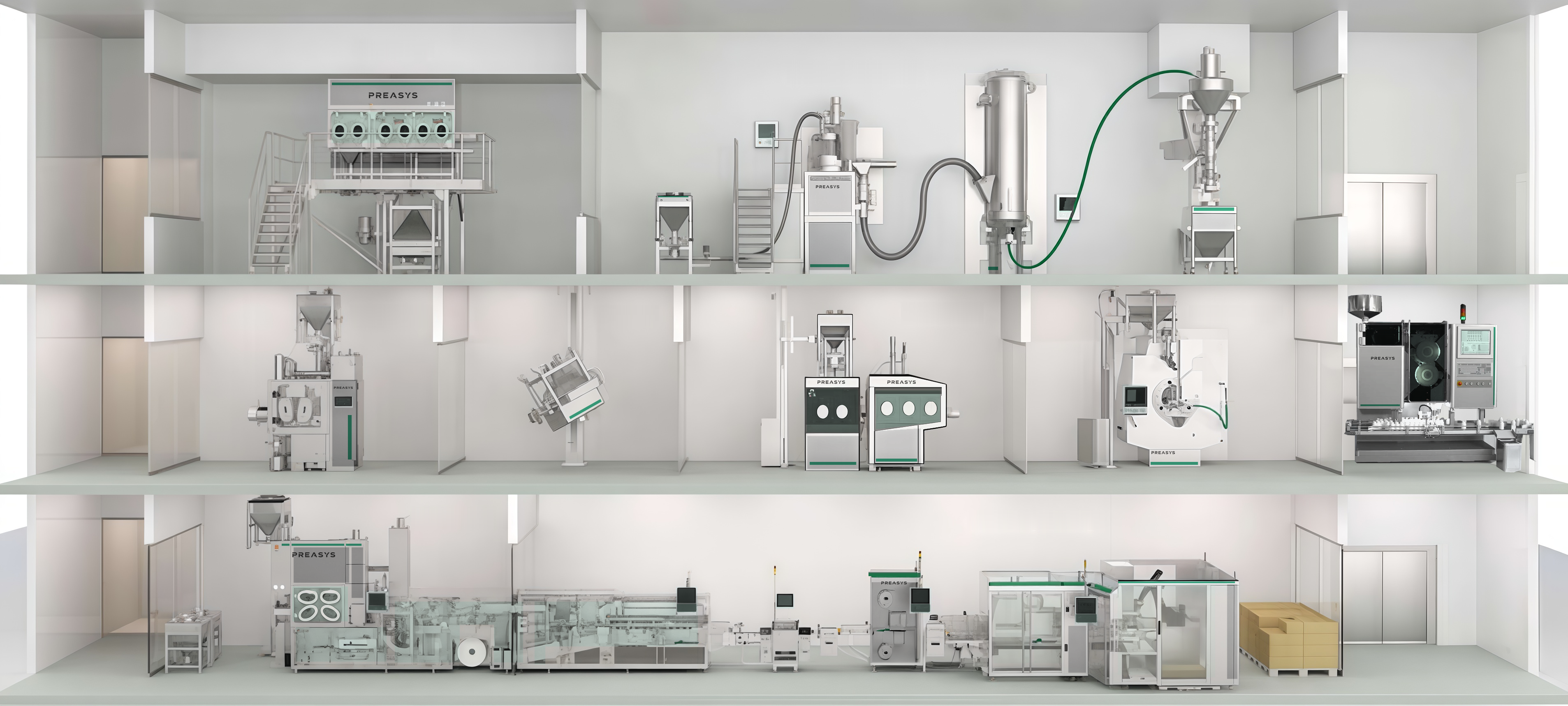
PREASYS three-level solid dosage process concept: preparation above; tablet pressing, encapsulation, coating, inspection and bottle filling in the middle; primary and secondary packaging below

Oral solid dosage · Integrated production

From powder to
packaged product

Discover the equipment behind your solid dosage process.

Skip tour
Production concept 17 equipment areas · Scroll to explore

Route selection. Wet and dry granulation are alternatives. Select tablet compression or capsule filling for the dosage form; include coating when required.

Illustrated equipment and packaging options show process relationships. The facility layout and equipment configuration are defined for each project.

Line integration

Sources: Big-bags, bags, drums, IBCs, dryers, centrifuges, granulators, jet mills, filter dryers

↓

Powder transfer sequence:

Source docking → Controlled powder withdrawal → Conveying line Optional downstream interfaces include blending, metering, milling, sieving, sampling and weighing. ↓ Destinations: Reactors, dryers, mixers, tablet presses, extruders,

Selected receiving vessel or pack-off system with an appropriate vent and containment boundary

Assess the complete API transfer route, including source docking, discharge and cleaning, against the required exposure target.

Read more

API handling may connect dispensing, processing and pack-off. Exposure control must cover each connection and cleaning activity, not only the transfer pipe.

An aseptic transfer route additionally requires a defined sterilization and contamination-control strategy for every component in the path.

Feeding a tablet press requires a stable buffer above the feed system. Transfer cycles must not repeatedly starve or overfill that buffer.

Reactive, combustible or solvent-wet powders need a process-specific hazard assessment. Conveying speed alone does not prevent an exothermic reaction.

Support throughout your project and production

Define the equipment scope

Bulk density, flowability, transfer distance and dust characteristics govern the conveying and receiving arrangement.

Learn more

Agree the acceptance test

Define both docking points and how residual powder is cleared when a batch or product changes.

Learn more

Prepare for operation

Identify the contact parts and format tooling for Contained Powder Transfer System. Agree access for cleaning, the spares to hold and the operating records the site will need.

Learn more

Knowledge hub

2 resources

Frequently asked questions

Does dense-phase transfer guarantee no particle damage or segregation?

No. Those outcomes depend on the material and operating arrangement. Feed and discharge comparisons are needed for the intended route.

Can low velocity make an explosive powder safe by itself?

No. The material hazards and installation require a specific assessment and protection strategy. No universal ignition-prevention claim is made.

Is a powder transfer system also a blender?

Not automatically. A blending loop and its sampling and discharge strategy must be separately specified and demonstrated for the formulation.

Contact

Provide powder properties, source and receiver, route geometry, useful transfer rate and hazard or exposure requirements for a contained-transfer review.

Discuss your project →
Powder container seated above a discharge station