Skip to content

Process expertise. Chinese manufacturing. Global perspective.

PREASYS

Equipment & technology

Wet Granulator

Study how a small powder blend responds to binder addition and high-shear mixing. A laboratory wet granulator should help identify a reproducible wet-mass endpoint and the granule properties obtained after the selected drying and sizing steps.

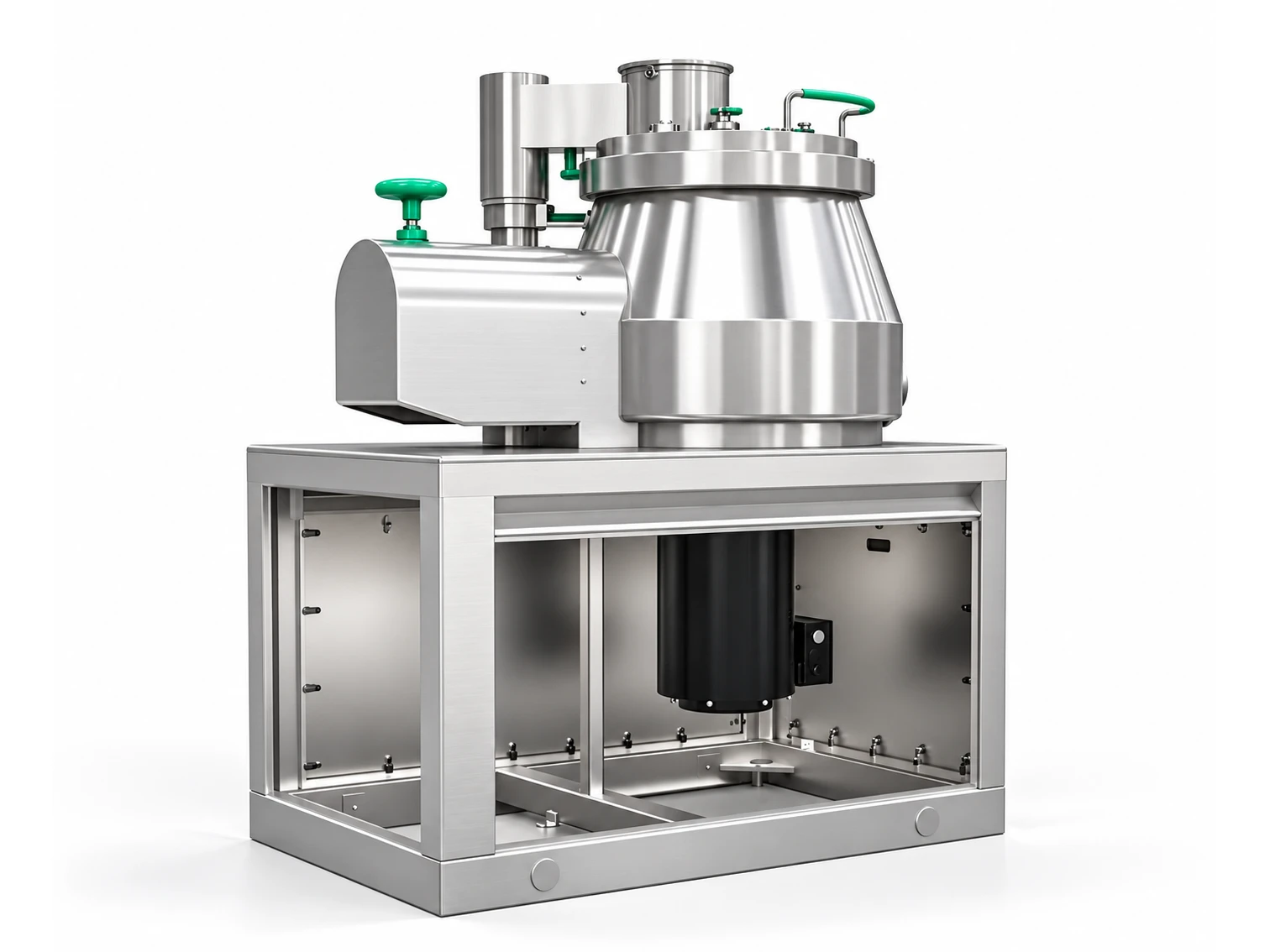
Compact granulation vessel mounted above a benchtop drive enclosure

Wet Granulator

Laboratory high-shear granulation

Select the working bowl from measured powder density and the usable trial charge. Define the impeller and chopper arrangement, binder delivery method and sampling access before comparing formulations.

The mixer distributes liquid through the moving powder and develops a wet mass. More mixing or liquid is not automatically better: examine agglomeration, sticking and temperature, then evaluate the dried granules with a consistent downstream method.

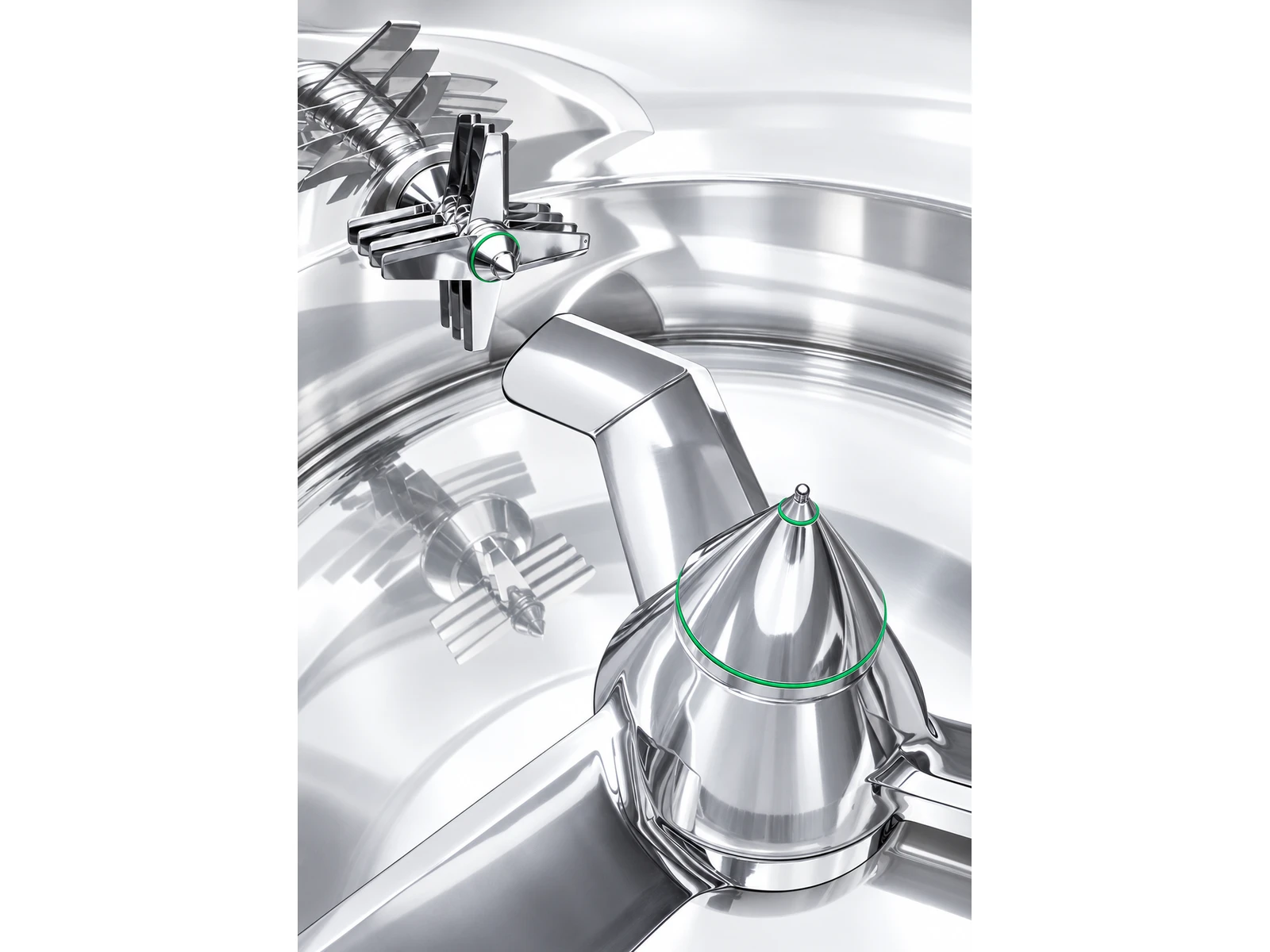
Polished mixing blades inside a wet granulator bowl

Wet-mass development

Impeller mixing and binder addition change the wet mass; the useful endpoint is linked to the intended downstream process.

Wet mass

Connect mixing, liquid addition and granulation endpoint

Process challenges

Testing with minimal API — production granulators waste precious material in early development.

Read details

Testing with minimal API — production granulators waste precious material in early development.

Over-wetting and lumps — uncontrolled binder addition ruins the granule size distribution.

Long process times — slow mixing and massing extend batch cycles.

Temperature-sensitive binders — process heat varies without vessel control.

Clean-up and validation burden — hard-to-clean vessels slow changeover.

Compare laboratory and production mixing, liquid distribution and quality results before setting transferred conditions.

Industry problem What to establish in the trial
Wasting API in development Agree a useful working charge after setup and sampling allowances.
Lumps / over-wetting Record liquid amount, delivery pattern and wet-mass condition.
Long cycles Measure the time required for the defined endpoint with the formulation.
Temperature-sensitive binders Monitor product response and confirm the supplied temperature-management arrangement.
Cleaning & validation burden Inspect product-contact access and define a cleaning procedure for the selected bowl.
Scale-up risk Compare mechanisms and quality results before setting production conditions.

Technical data & features

Set the working fill and addition method before comparing end points across batches.

Polished mixing blades inside a wet granulator bowl

Working charge: confirm the selected bowl and minimum useful fill with the actual powder. Nominal bowl volume and processed product volume are different quantities.

Bowl and temperature-management arrangement

Binder addition: specify preparation, viscosity and the intended spray or addition method. Record both total liquid and how it is introduced to the moving powder.

Review bowl, seal, impeller and chopper access for cleaning. Identify the process measurements available and the operator actions that must be recorded during a trial.

Plan setup and sample recovery at the bench

Review solvent use as a separate configuration requirement

Production transfer requires comparison of bowl geometry, mixing and liquid-distribution behaviour. Do not assume equal operating settings reproduce the same wet mass on a larger unit.

Define the endpoint using the observations and measurements supported by the trial machine, then correlate it with dried granule and downstream dosage-form results.

How it works

How can binder addition be compared fairly?

Keep powder preparation and working fill consistent. Record binder composition, total addition and delivery sequence with the impeller and chopper settings. Note sticking or large agglomerates as they develop.

How is a trial endpoint judged?

Use the agreed observable or measured endpoint, retain a wet-mass sample and process the rest through a defined drying and sizing method. Compare dried granule distribution and downstream behaviour before selecting a preferred condition.

Line integration

Line Integration

Upstream: dry powder charging → pre-mixing (impeller + chopper)

Core: add the binder by the specified method, develop the wet mass and use wet sizing if required by the selected process.

Downstream: fluid-bed drying → dry milling → blending → tableting / capsule filling

Records: define the available measurements, recipe controls and trial records for the selected unit.

Support throughout your project and production

Define the equipment scope

Set the working fill and addition method before comparing end points across batches.

Learn more

Agree the acceptance test

Record the wet mass condition, dried particle distribution and retained material for scale-up.

Learn more

Prepare for operation

Identify the contact parts and format tooling for Wet Granulator. Agree access for cleaning, the spares to hold and the operating records the site will need.

Learn more

Knowledge hub

2 resources

Frequently asked questions

Is the quoted bowl volume the usable batch volume?

Not necessarily. Useful fill depends on the bowl and powder behaviour and changes during liquid addition. Confirm the actual operating charge with the proposed configuration.

Can a laboratory bowl be used with organic solvents?

Only after the supplied equipment, utilities and safety provisions have been assessed for the specific solvent process. A generic laboratory designation does not establish suitability.

Why evaluate the granules after drying?

Wet-mass appearance alone does not show the final particle distribution or downstream performance. Use a consistent drying and sizing procedure so granulation conditions can be compared meaningfully.

Contact

Share the formulation, available trial quantity and granule targets for a laboratory wet-granulation review.

Discuss your project →
Polished mixing blades inside a wet granulator bowl