Skip to content

Process expertise. Chinese manufacturing. Global perspective.

PREASYS

Explore our solutions

Filling

A pharmaceutical filling system combines dose delivery with container presentation and closing. Product behavior, container supply and the required process environment shape that combination.

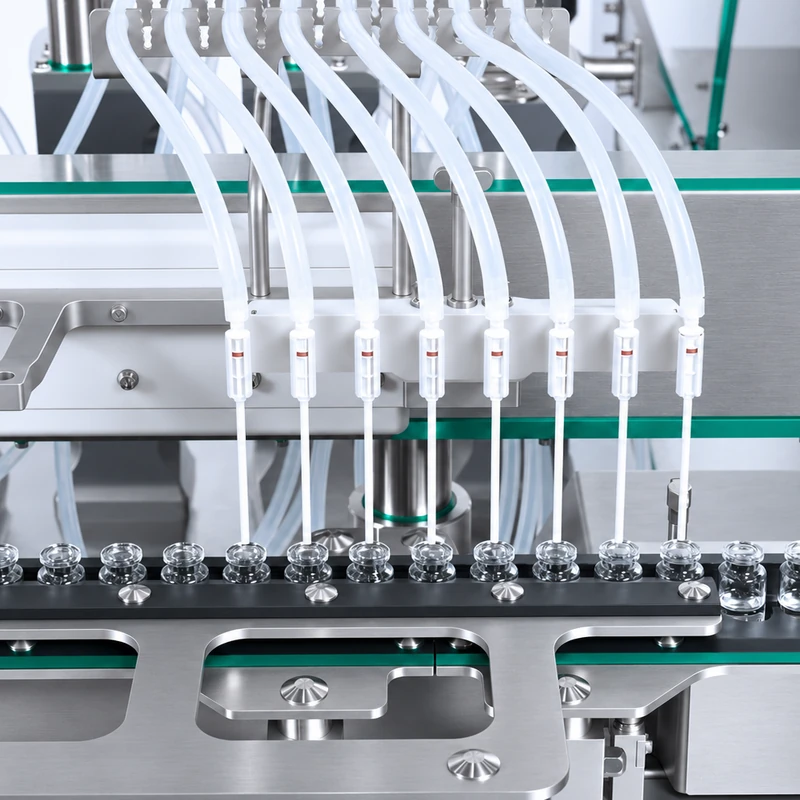
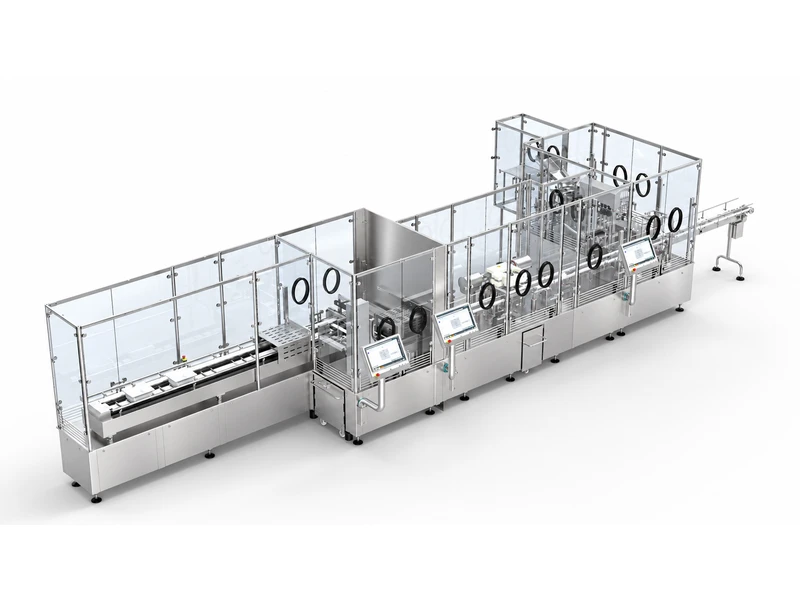
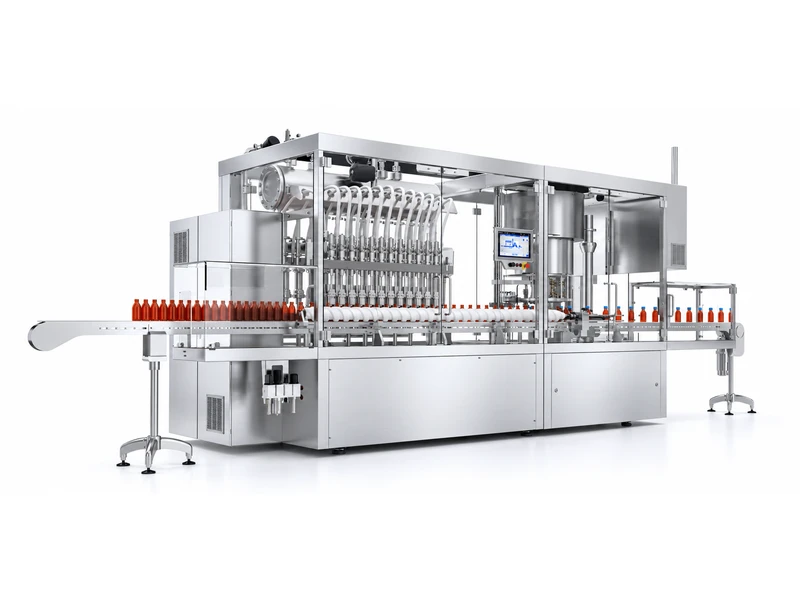
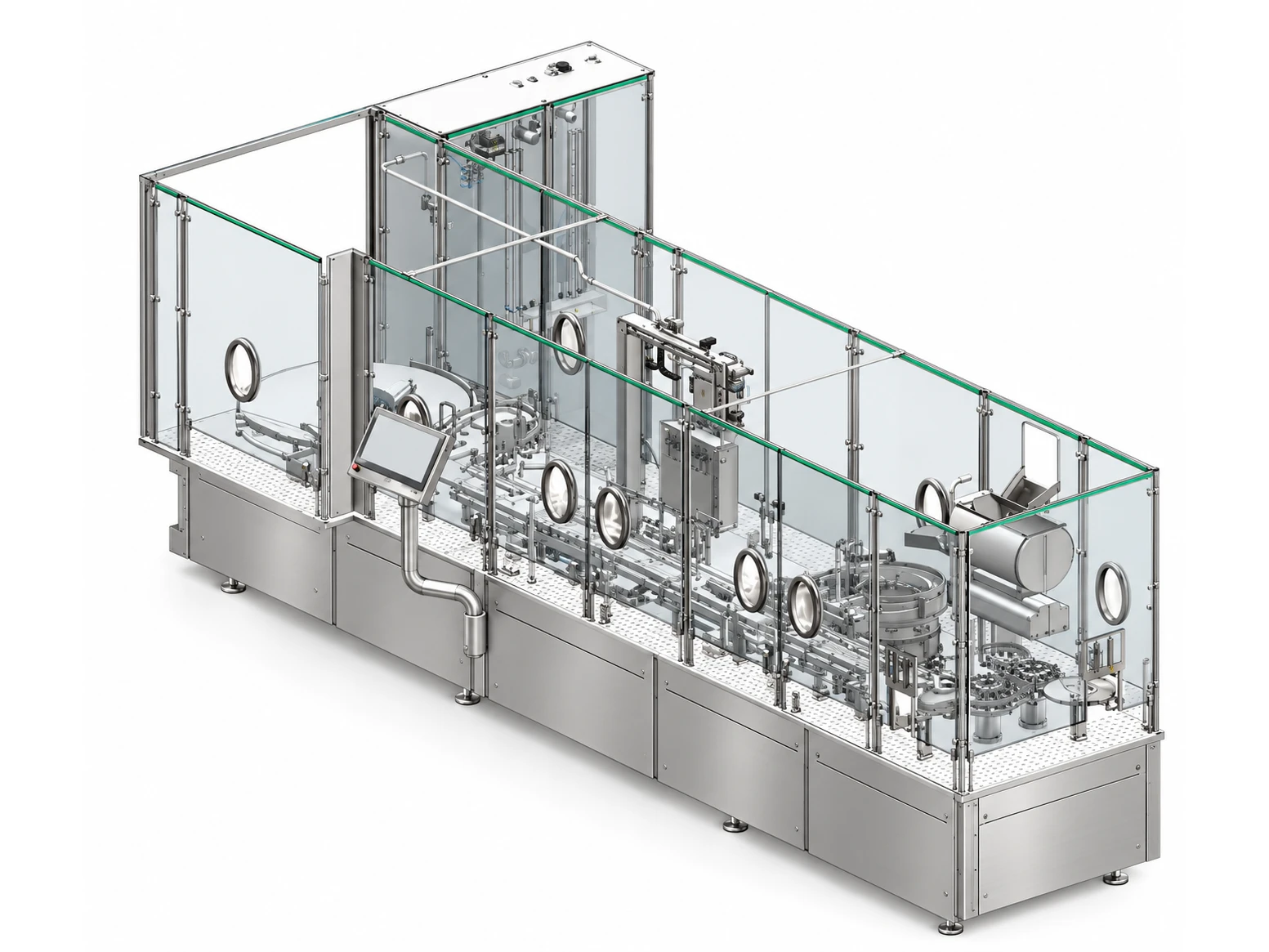
Enclosed vial filling line with a guarded transfer path

Choose a filling route

Use the physical state of the product and the supplied container to select a dosing and handling combination.

4

Liquid fill formats

View pages : Liquid fill formats

2

Other primary filling routes

View pages : Other primary filling routes

3

RTU and metering interfaces

View pages : RTU and metering interfaces

Your process, your benefits

Metering establishes the quantity delivered, while container handling places the opening at the nozzle or powder feed. Closing then protects the filled product. Instability at any one of these interfaces can change the accepted output of the whole system.

Filling

A filling system links the product feed, metering device, container transport and closing sequence. The product must reach the meter in a suitable condition, and the package must remain positioned through dosing and closure.

Liquid viscosity, entrained air, suspended solids and powder flow lead to different metering choices. Aseptic suitability additionally depends on product-path preparation, container state, exposure control and the closing boundary.

Initial discussion inputs

  • Product properties and presentation.
  • Package drawing, fill target and closure.
  • Sterile/non-sterile route and hazards.
  • Output, batch/changeover and facility constraints.
  • Documentation, controls and acceptance work.

Line integration

01

Metering and protected transfer

The upstream vessel delivers product at a defined temperature, pressure and homogeneity. The infeed presents the selected package, and the discharge transfers a specified closed or partly closed state—for example, semi-stoppered vials proceeding to freeze drying.

Filling technologies

Filling technology

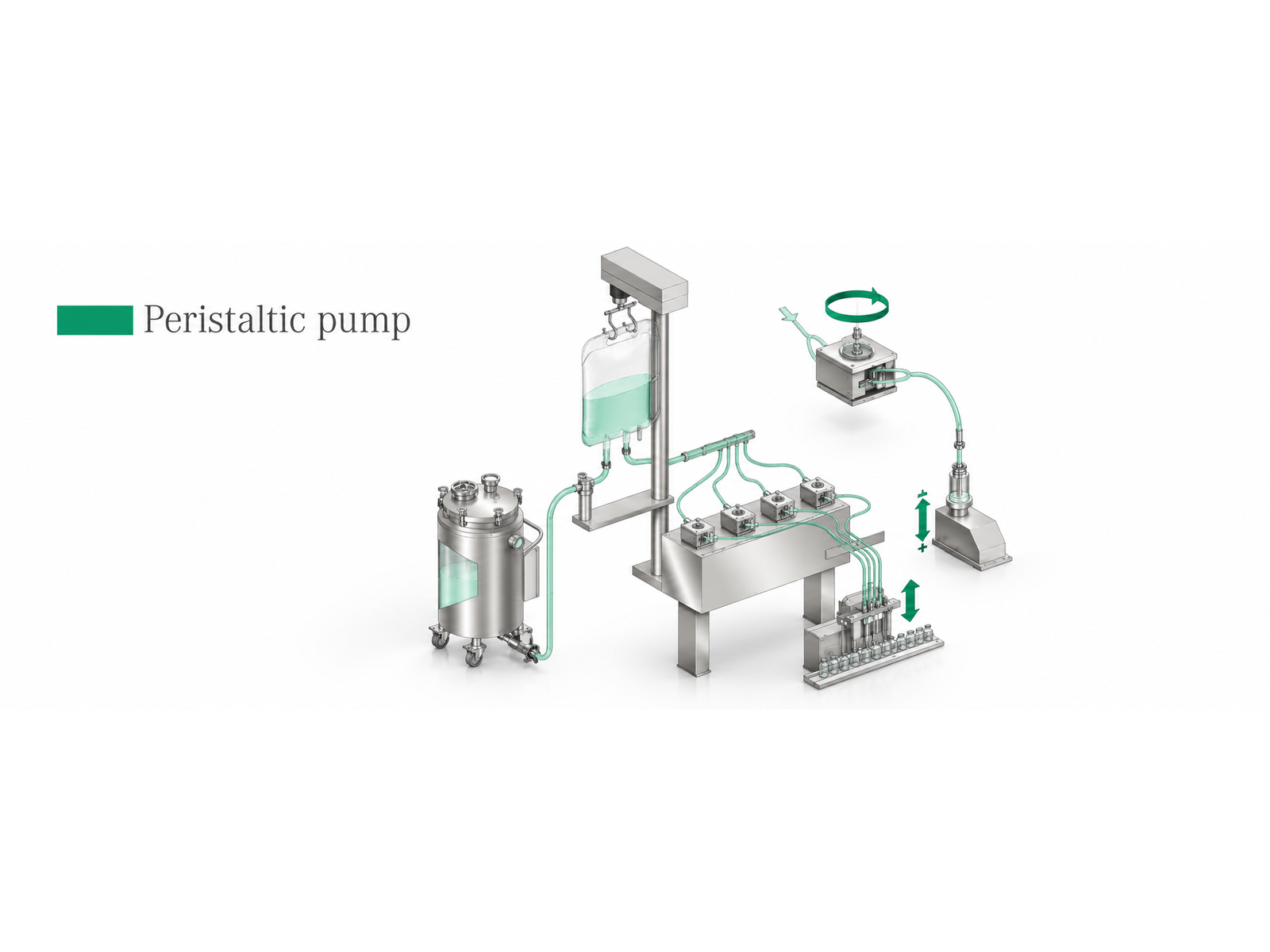
Peristaltic pump

A flexible tube carries the liquid while rotating rollers control dosing. The product contacts the tube rather than the pump mechanism. This principle is used when a disposable product path and gentle handling are priorities. Tubing selection, product compatibility and the changeover procedure should be reviewed for each application.

Explore technology
Diagram connecting a peristaltic pump to the product filling path

Filling technology

Piston pump

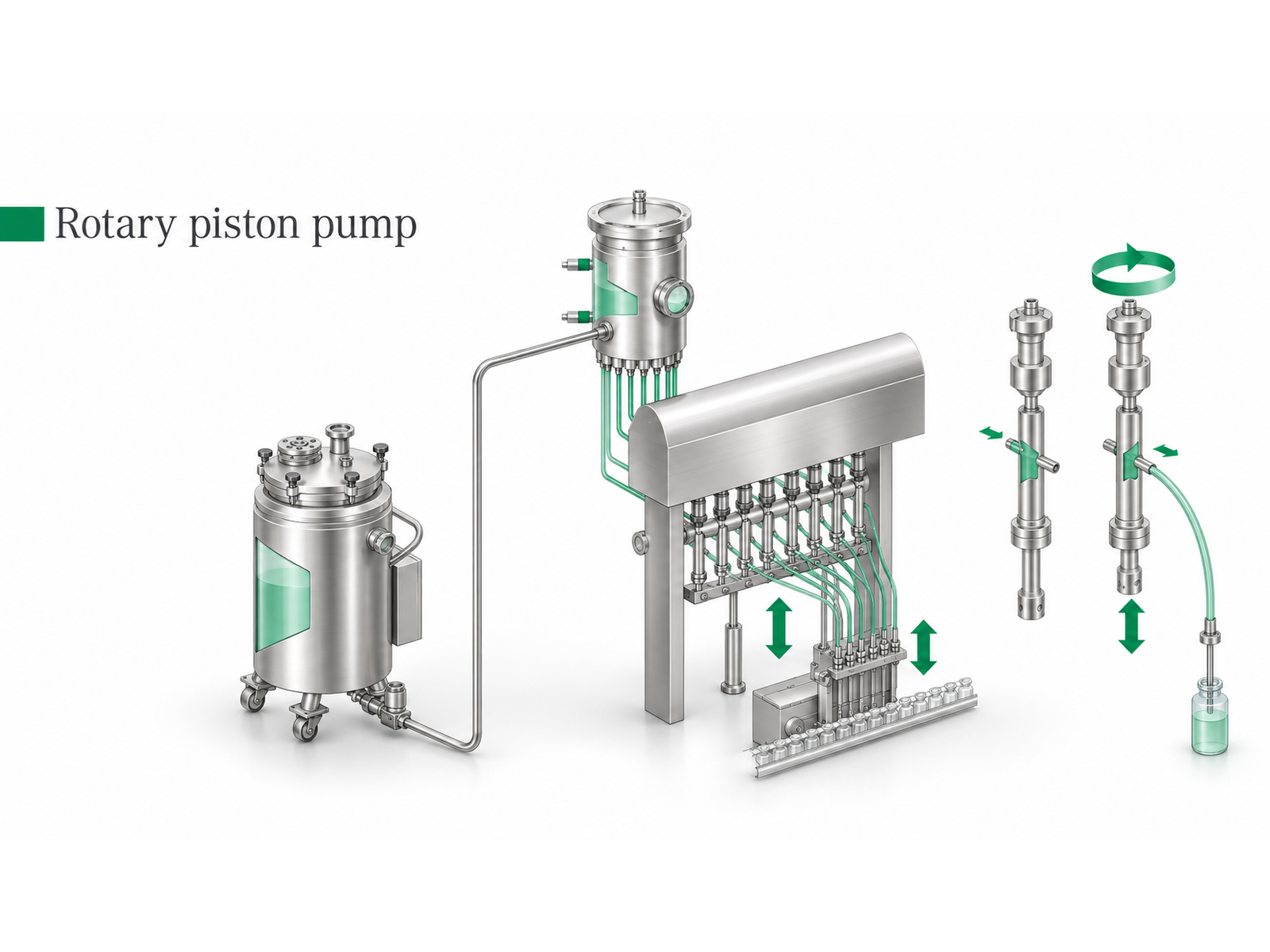
A piston draws liquid into a cylinder and then dispenses a measured volume through the outlet. The selected piston, valve and product-contact materials determine the application range. Review viscosity, cleaning requirements and the required filling volume together with the product and container format.

Explore technology
Rotary piston metering equipment connected to a set of filling heads

Filling technology

Time pressure

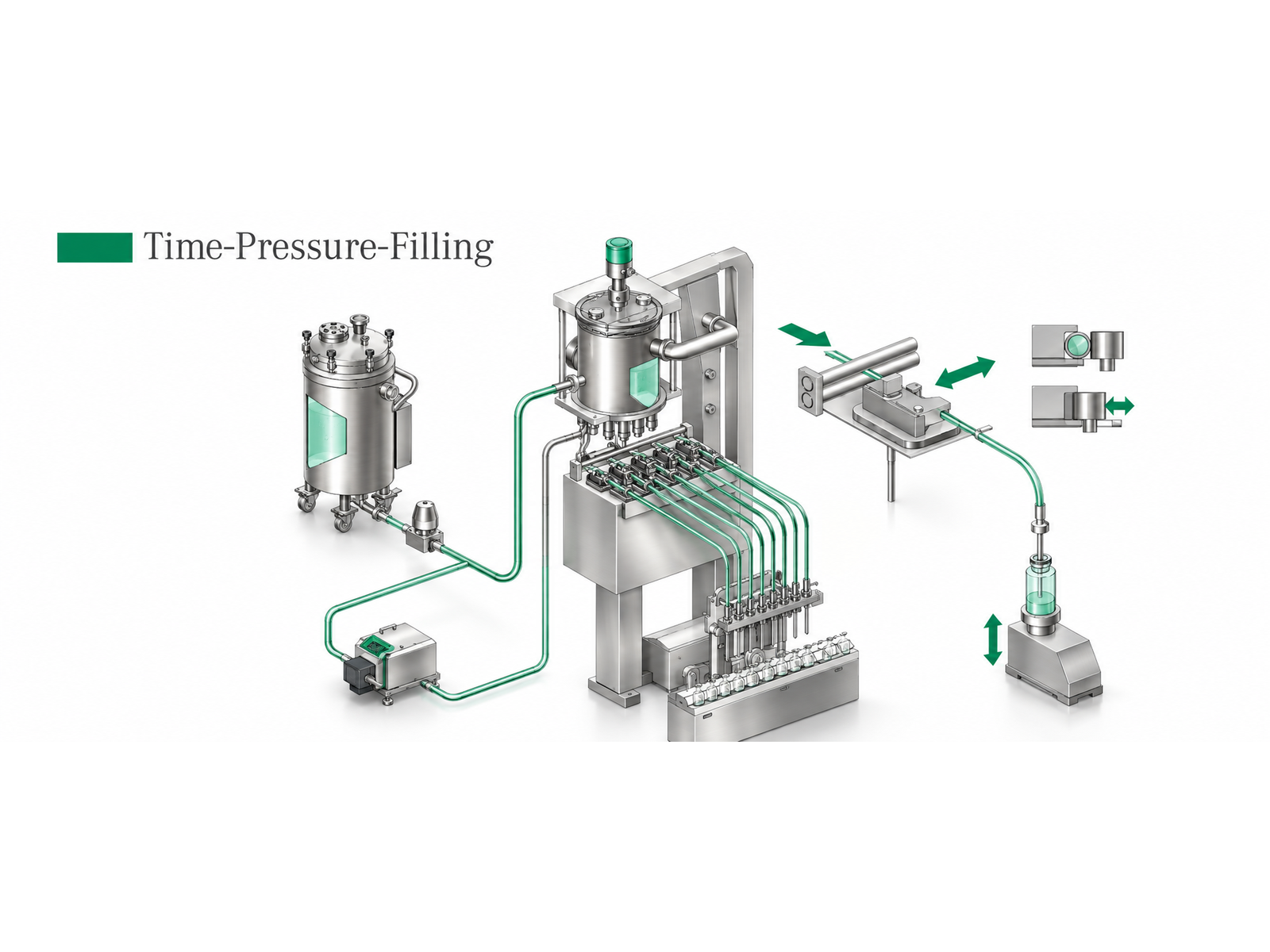
Controlled pressure moves liquid through a filling valve. The opening time and supply conditions determine the dispensed quantity. Product properties, pressure stability and the valve configuration are evaluated together when setting up the filling process.

Explore technology
Diagram of a time-pressure dosing vessel and filling heads

Filling technology

Mass flow

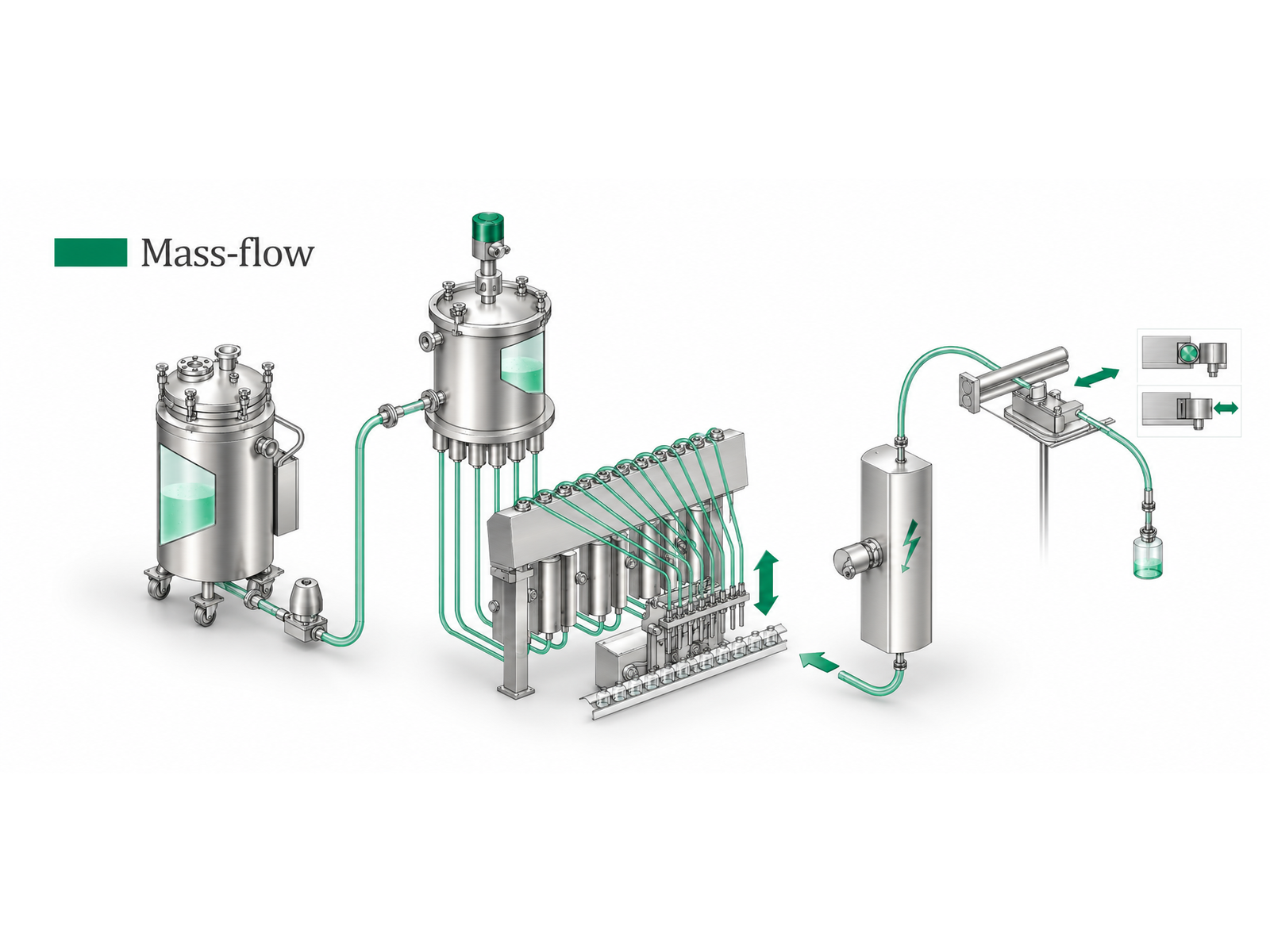
A flow sensor measures the product passing through the filling path and provides feedback to the dosing valve. The process is evaluated around the required fill mass, product behaviour and cleaning strategy. Sensor selection and the control sequence depend on the application.

Explore technology
Product flow path with a mass flow meter and dispensing points
Technology 1 of 4

How it works

How is the metering principle evaluated?

Compare delivered quantity and cutoff using representative product under the intended feed conditions. Relate variation to charging, temperature, air and particles before selecting the pump or powder-feed arrangement.

How is container movement coordinated with dosing?

The opening must remain correctly positioned during delivery and withdrawal. Observe nozzle clearance, product strings or splashes and the handoff to closure at the selected motion profile.

How is the complete filling sequence trialled?

Follow identified containers from infeed through dosing and closing. Assess the fill, package handling and closure separately, including start-up, stopping and the end of a batch.

Support throughout your project and production

Define the equipment scope

Define container format, incoming feed and accepted closed output together.

Learn more

Agree the acceptance test

Trial dosing, cutoff and closure seating on representative containers at the agreed conditions.

Learn more

Prepare for operation

List product-contact parts and format tooling, cleaning requirements and checks after reassembly.

Learn more

Knowledge hub

2 resources

Frequently asked questions

Does selecting a filling pump define the whole machine?

No. The pump defines part of the liquid path. Container handling, nozzle motion, closing, controls and the required environment must also be matched to the application.

Can bulk and ready-to-use containers use the same infeed?

They arrive in different states. Bulk containers can require washing and treatment; RTU formats require compatible tub, nest or tray opening and transfer. A shared filler still needs the appropriate handling interface.

Is a liquid filler suitable for powders?

A powder dose normally requires a different feed and metering mechanism. Flow, bulk density, adhesion and containment become central variables rather than liquid charging and cutoff.

Does a closed filling enclosure make the process aseptic?

No. The enclosure is one part of the boundary. Product preparation, container treatment, interventions and closing also belong to the defined and qualified aseptic process.