Skip to content

Process expertise. Chinese manufacturing. Global perspective.

PREASYS

Equipment & technology

Palletizer

Build a defined pallet pattern from closed cases or other approved transport packs. Select the palletizing method around pack strength, grip surfaces, load mass and the warehouse handoff, with clear arrangements for empty-pallet supply and completed-load removal.

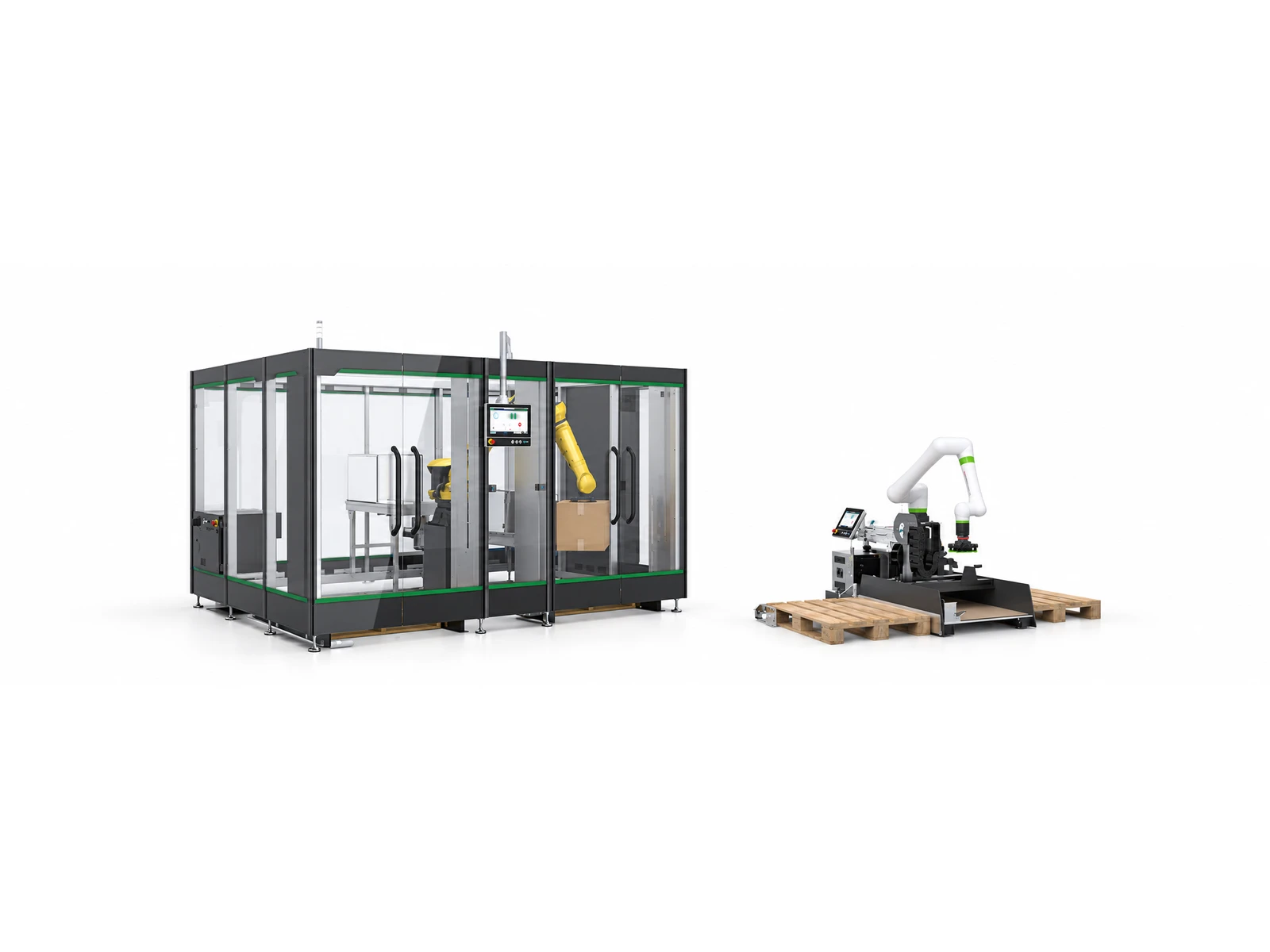
End-of-line pallet handling cell with an adjacent pallet position

Palletizer

Build the load from the actual shipping case

A palletizer receives cases or preformed layers and places them in the chosen load pattern. The handling unit, case mass and gripping surfaces determine how each move is made.

Case orientation and layer formation prepare the load before placement. Empty-pallet supply, interlayers and full-pallet removal are separate automation choices. The resulting stack is evaluated with its restraint and intended transport conditions.

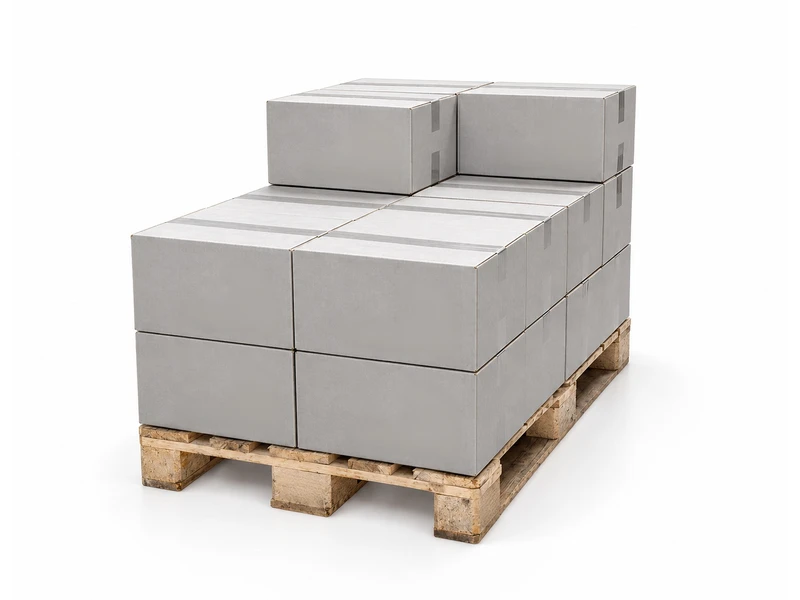
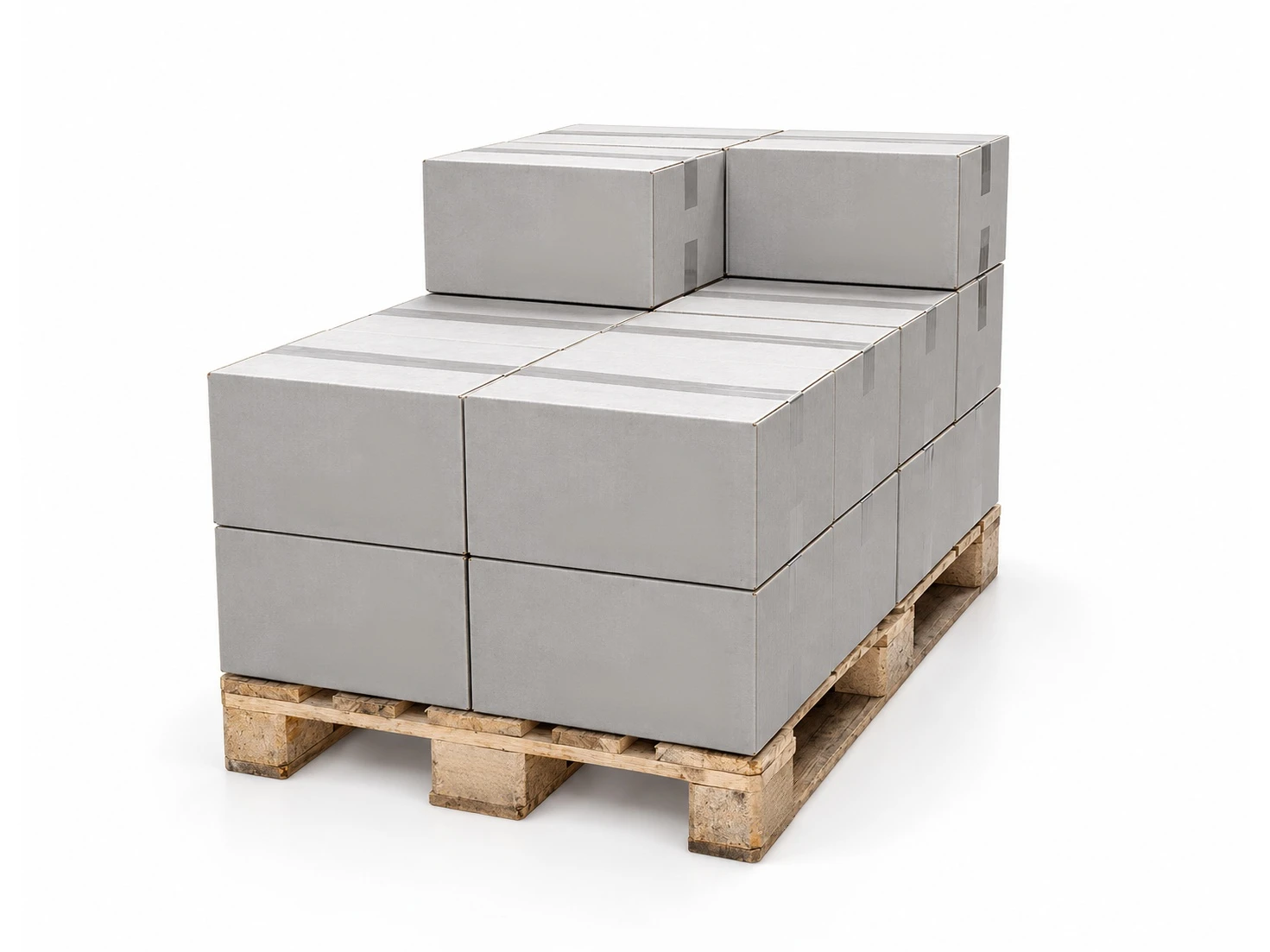
Shipping cases stacked in layers on a pallet

Process at a glance

Case mass, gripping surfaces and pattern stability determine the load-handling arrangement.

Stack

Place cases or layers in the approved pallet pattern

Process challenges

Case mass and handling frequency influence the palletizing arrangement and remaining operator tasks.

Read details

Case mass and handling frequency influence the palletizing arrangement and remaining operator tasks.

Layer geometry, case strength and load stabilization affect a finished pallet. Stability at pickup does not establish transport performance.

Empty-pallet supply and full-pallet removal need defined replenishment and recovery arrangements.

Cleaning access and guarded intervention depend on the installation environment and handling equipment.

The pallet record must follow the cases actually loaded and removed. Physical placement and data aggregation are separate connected functions.

Industry problem Palletizing design considerations
Manual bottleneck & ergonomics Choose the handling arrangement from case mass, pickup frequency and operator tasks; verify the required throughput with the actual pattern.
Unstable loads Assess the layer pattern, load mass and any interlayers or stabilization with representative full cases and the planned distribution conditions.
Pallet supply downtime Define magazine capacity and replenishment and removal tasks for the proposed empty- and full-pallet handling scope.
GMP contamination Review cleanability and access for the intended packaging environment without treating palletizing as an aseptic process.
Pallet-level traceability Define case-to-pallet associations and the verification and rework steps required by the site serialization system.

Technical data & features

Case strength, centre of gravity, pallet dimensions and the permitted stack height determine the arrangement.

Shipping cases stacked in layers on a pallet
Throughput defined by cases, layers and completed pallets Pallet dimensions and construction to confirm

Stack height and mass for the selected load

Stack height changes reach and the load centre of gravity. Case compression, interlayer friction and pattern overlap affect stability alongside total mass.

Pallet magazines, interlayer dispensers and discharge conveyors connect the cell to the wider packing line. Replenishment and recovery access remain part of that interface.

Controls and warehouse handoff

Guarding, access and equipment care

Review the guarded cell, access interlocks and recovery tasks with the site team. Inspect grippers, vacuum or clamping components where fitted, pallet stops and sensors. After maintenance, verify pickup, placement and the safe stop/restart sequence with the approved load.

How it works

How does the case pattern build into a pallet load?

Follow the case through orientation and pickup, then observe its placement within the programmed layer. Check grip security, carton deformation and position at the pallet edges. Repeat the alternating layers and test a stop with a partial layer or partially built load.

What should be checked on the finished stack?

Check the complete load envelope, height, mass and label visibility against the warehouse requirements. Evaluate the intended removal and stabilization operation with representative filled cases. Confirm recovery from an unavailable pallet or interrupted discharge without losing track of loaded cases.

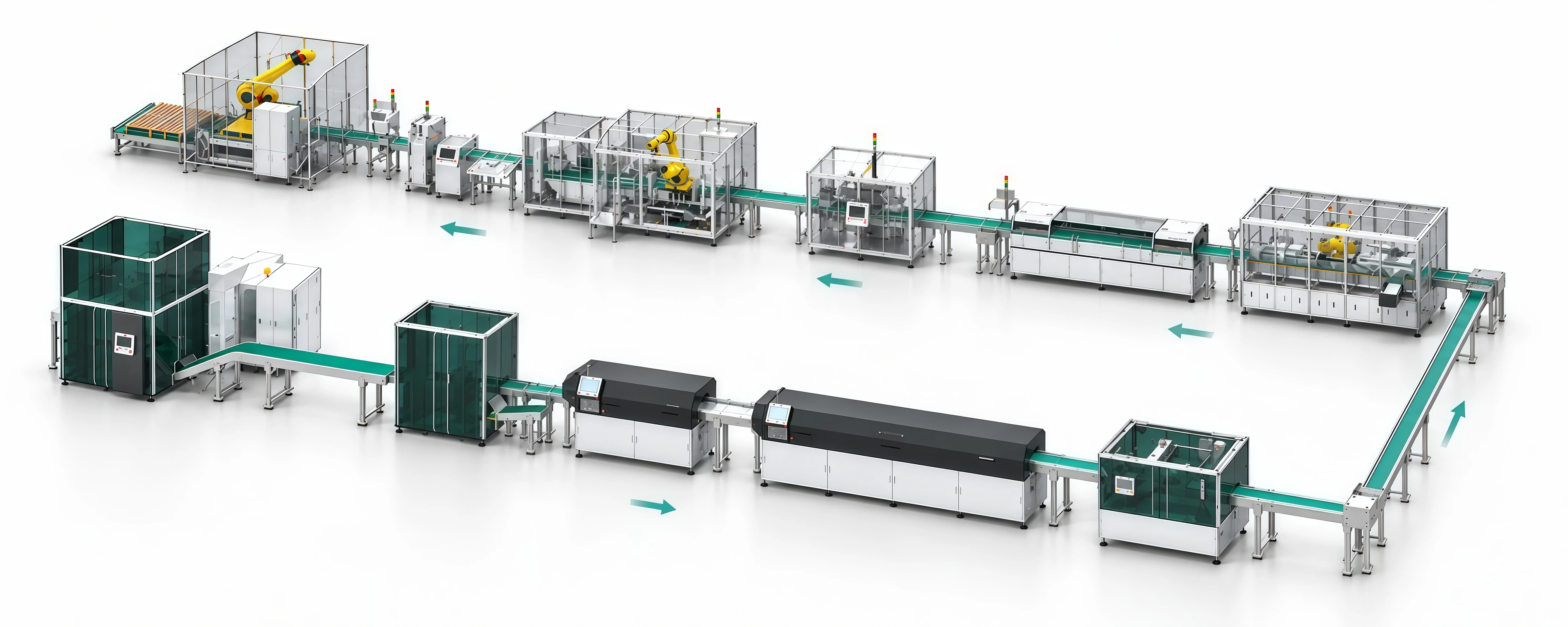
Unit-dose inhalation line. This is the BFS route for unit-dose liquid inhalation products. Soft-mist devices use a different filling and assembly route.

Production line · Equipment context

BFS product route: palletizing context

Explore the process areas on the production line associated with this equipment.

Skip tour
Production layout 6 equipment areas · Scroll to explore

The BFS illustration gives one example of a downstream load-handling context. Palletizing acts on selected completed transport packs; it is separate from container forming, filling and device assembly.

Related production lines: Liquid Inhalation Production Lines · Antibody-Drug Conjugate Manufacturing & Fill-Finish · Plasma-Derived Product Preparation & Fill-Finish · Vaccine Formulation & Fill-Finish Equipment · Blow-Fill-Seal Pharmaceutical Production Lines · Pharmaceutical Aerosol Production Lines · Prefilled Syringe Filling & Packaging Lines · Pharmaceutical Cartridge Filling Lines · Oral Film Manufacturing Lines · Dry Powder Inhalation Manufacturing Lines

Line integration

Keep case orientation consistent at pickup

Agree the case-packer discharge orientation, spacing, conveyor height and accumulation. Confirm how the palletizer identifies and handles an incomplete or interrupted layer, and define any separate wrapping or strapping step.

Where pallet aggregation is required, link the actual loaded cases to the pallet identifier and define the correction procedure for removal or replacement. Physical placement alone does not create a valid data association.

Release a complete load to the warehouse

Confirm the removal method, pallet-label visibility, load envelope and conveyor or vehicle interface. Release the finished load only after the specified completion and identification checks; agree responsibility for stabilization and transport qualification.

Support throughout your project and production

Define the equipment scope

Case strength, centre of gravity, pallet dimensions and the permitted stack height determine the arrangement.

Learn more

Agree the acceptance test

Check load stability at the discharge and storage interfaces with representative cases.

Learn more

Prepare for operation

Identify the contact parts and format tooling for Palletizer. Agree access for cleaning, the spares to hold and the operating records the site will need.

Learn more

Knowledge hub

2 resources

Frequently asked questions

Is a palletizing cycle one case?

Not necessarily. A cycle may place one case, a group or a layer. State the cases per cycle, layer pattern and completed-pallet target when evaluating throughput.

Can the system handle more than one pallet type?

Provide dimensions, construction, entry openings and condition limits for each pallet. Review magazine, locating and discharge arrangements as well as the handling reach and load pattern.

Does automatic pallet supply mean unattended operation?

It automates a defined task. Establish replenishment intervals, full-pallet removal, fault recovery and safe access before defining the actual operator attendance requirement.

Where does load stabilization belong?

Wrapping, strapping or another stabilization method may be a separate downstream operation. Define its position and responsibility, and assess the completed load for the intended storage and transport route.

Contact

Share case dimensions, filled mass, pallet pattern and the required output for a palletizing review.

Discuss your project →
Shipping cases stacked in layers on a pallet