Read details

A damaged or incorrectly seated gasket can change chamber conditions. Seal checks and door interlocks belong to the equipment test, and gasket compatibility must cover repeated thermal and pressure cycling.
The pressure inside a closed container changes as its contents heat and cool. Where a pack needs supporting pressure, the selected process must coordinate chamber pressure and product temperature. Steam treatment is unsuitable for some products and closures.
Chamber temperature and load temperature can diverge during heating and cooling. Measurement locations should represent the load conditions that are hardest to reach; pressure readings alone do not demonstrate the exposure of every item.
A repeatable cycle depends on the recipe, loading pattern and control configuration being identifiable. Changes to a probe, recipe or software version need to be reflected in the applicable tests and operating record.
Metal parts, wrapped porous goods and liquid containers have different air-removal, heat-transfer and discharge needs. Cycle development must address the actual load family; a recipe for one family is not evidence for another.
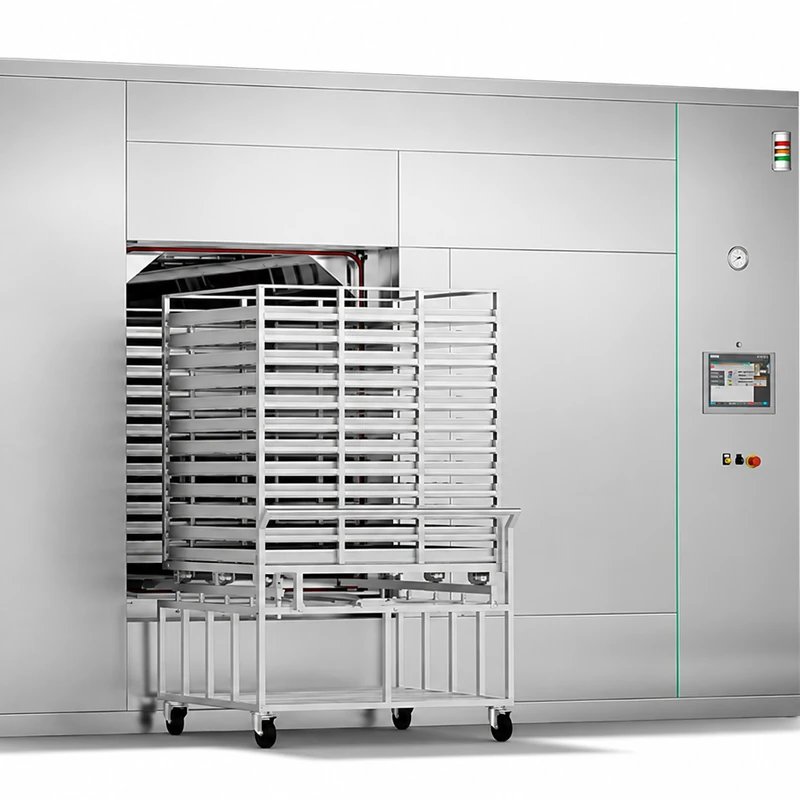
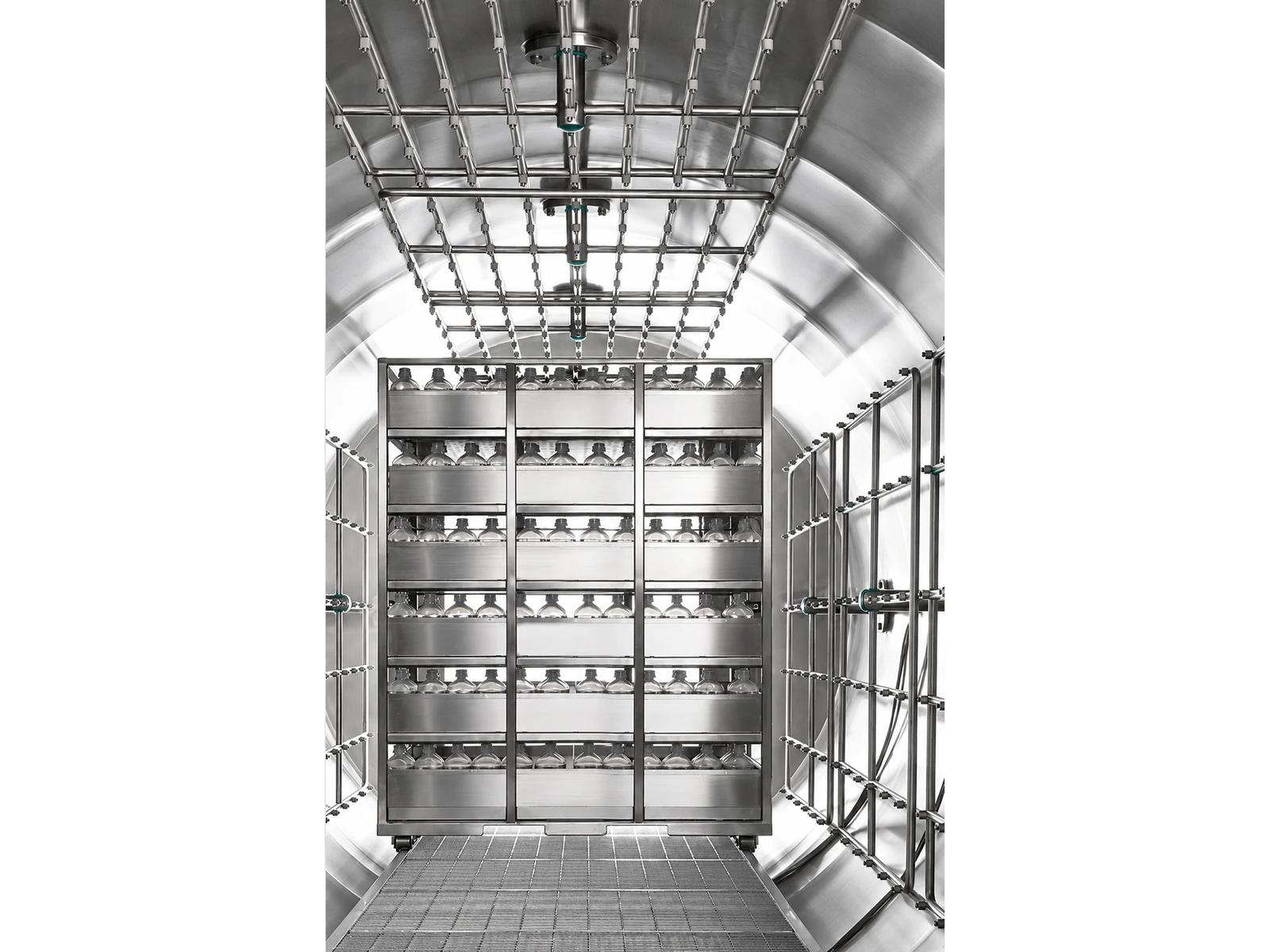
Usable capacity depends on the rack envelope, item spacing and access for steam, drainage and measurement. A chamber-volume figure does not establish the quantity of parts or liquid containers that can be processed in a qualified load.
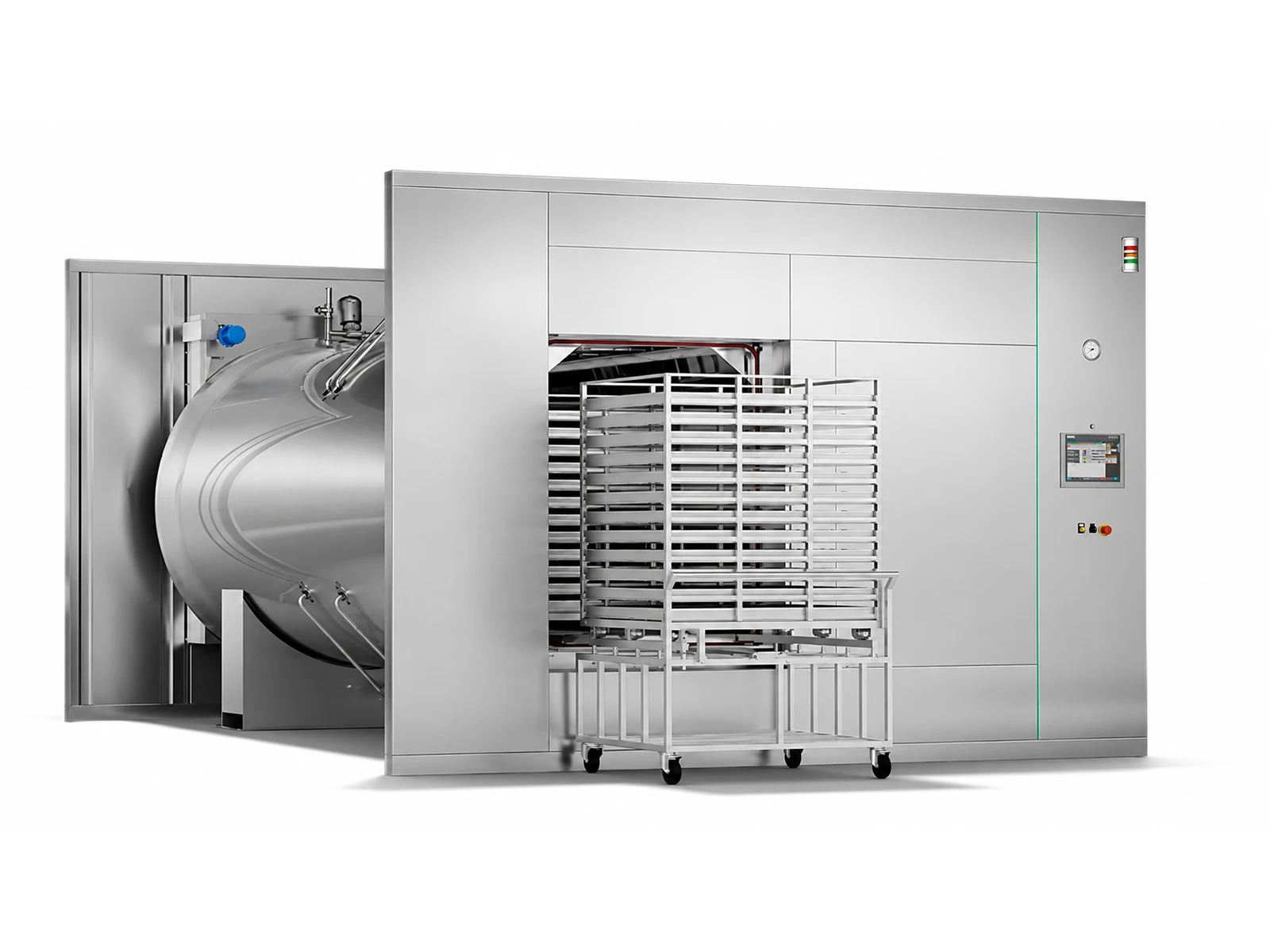
A pass-through arrangement can separate loading and unloading areas when the facility needs that boundary. Door sequence, seals and protected transfer must work with the room layout; the presence of two doors is not itself proof of segregation.
The record links load identity to the selected recipe and measured cycle history. Access rules and the handling of alarms or interrupted cycles determine how the site reviews a load before further use.