Skip to content

Process expertise. Chinese manufacturing. Global perspective.

PREASYS

Equipment & technology

Automated Radiopharmaceutical Synthesizer & Labeling Module

A radiosynthesizer coordinates the transfers, reaction stages and product collection of a defined radiochemical process. The selected chemistry determines the fluid path, reaction control and purification equipment. Here, radiolabelling means incorporating the radionuclide into the intended compound, not applying a printed container label.

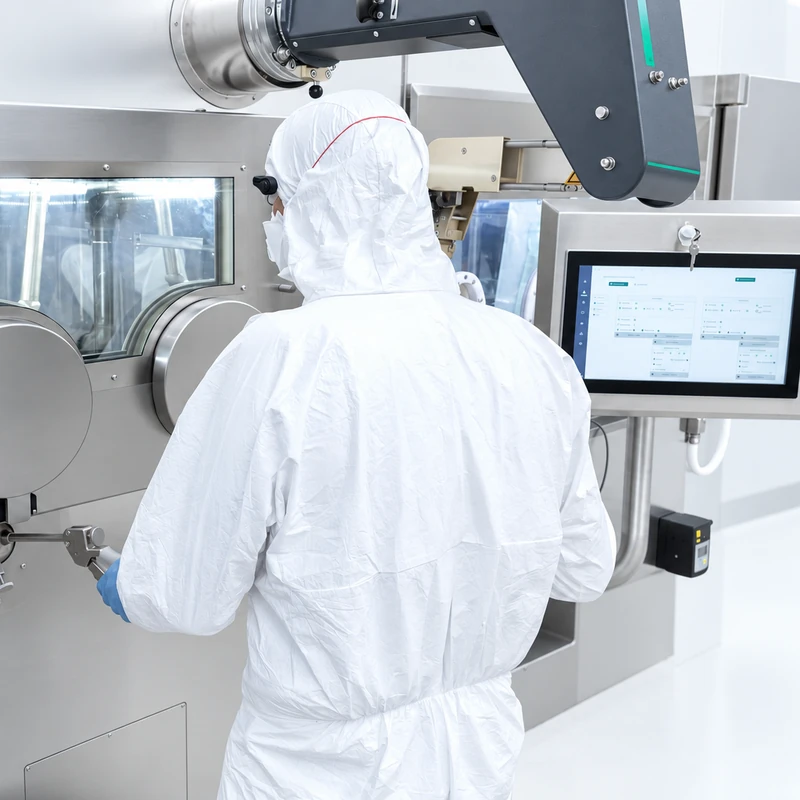
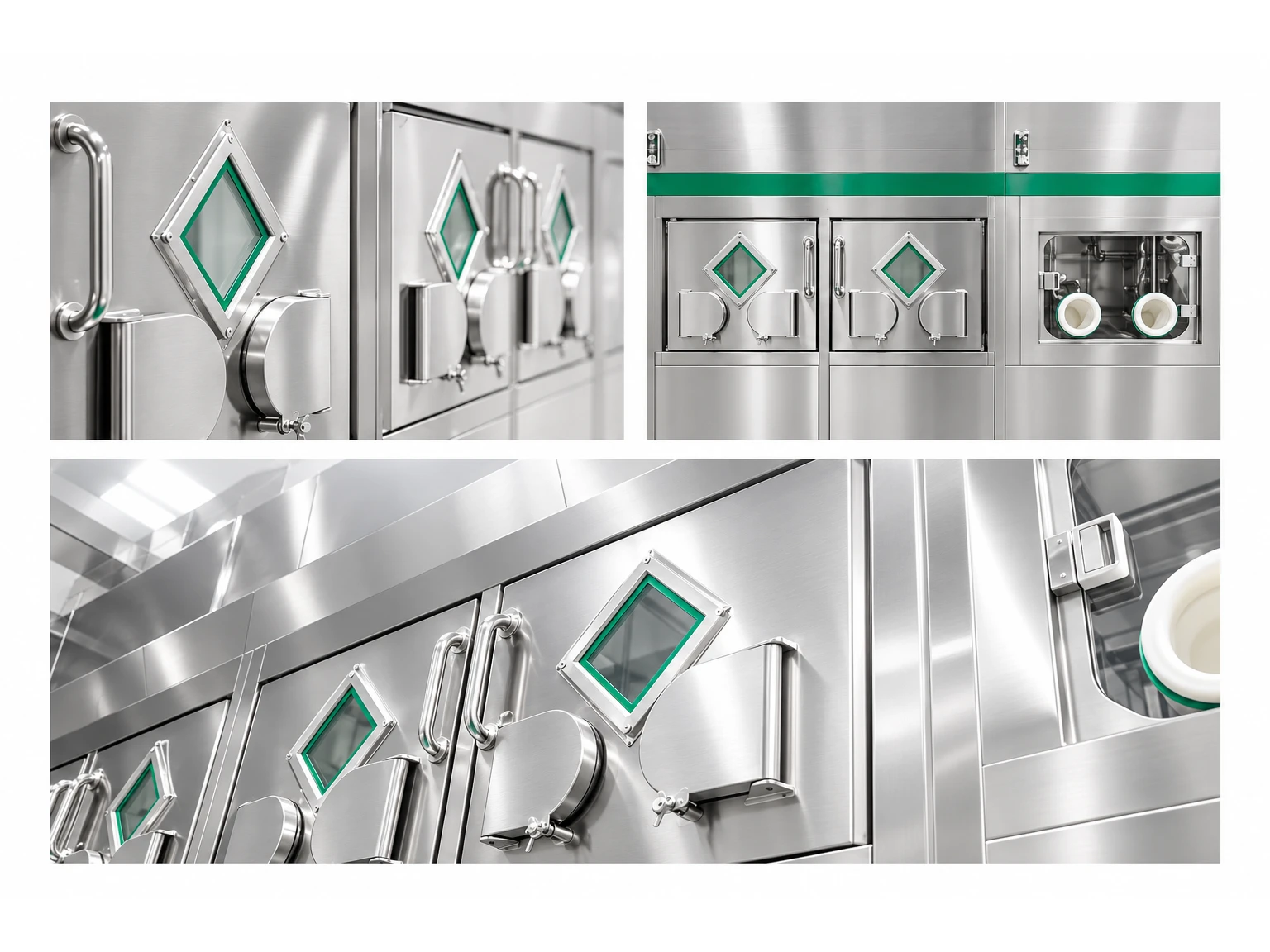
Shielded processing cells with viewing windows, access ports and controls
Process context · Shielded processing cells with viewing windows, access ports and controls

Radiosynthesizer

Radiosynthesis around the selected chemistry

Controlled process transfers connect reaction, purification and collection.

The module routes source material and reagents through the operations required by the chosen chemistry. Valves and fluid paths establish the sequence, while reaction conditions and purification determine the collected product. A cassette arrangement and a reusable path have different preparation and changeover requirements. Neither the number of vessels nor a familiar tracer name by itself establishes the number of supported batches.

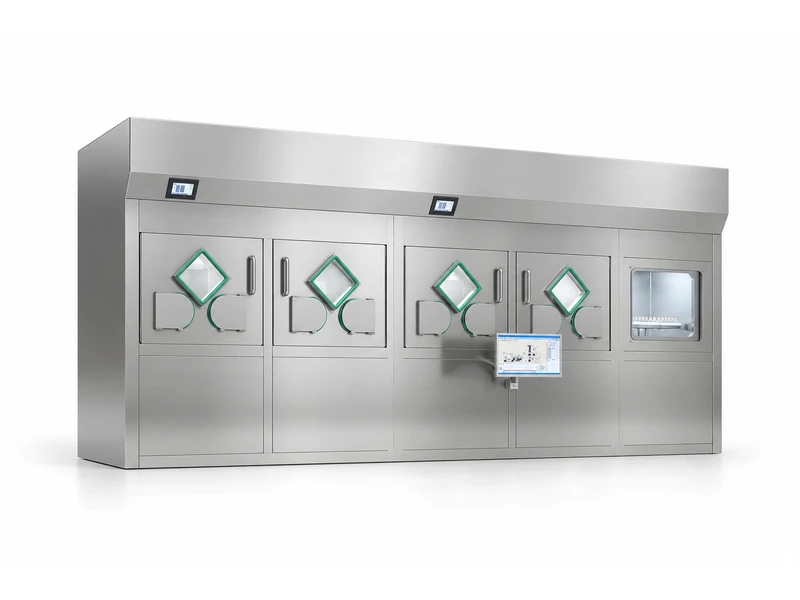
Shielded access doors and windows on a bank of hot cells
Process context · Shielded access doors and windows on a bank of hot cells

A process-specific synthesis route

The intended chemistry determines the reaction functions, contact path and purification equipment. Instrument size and supported batches follow the selected configuration; neither can be inferred from the product-family name.

Chemistry

Reaction, separation and collection for the selected route

Process challenges

Chemistry, transfer losses and the activity reference basis shape the synthesis result.

Read details

Time-dependent activity — Activity changes during production and transfer. Recorded reference times are therefore essential when comparing inputs, recovered product and later measurements.

Batch sequence — Setup, synthesis, purification, collection and preparation for another run all contribute to the production schedule. Multiple vessels do not automatically establish independent or simultaneous batches.

Yield basis — Recovered activity must be related to the specified input and reference time. Decay-corrected and uncorrected values answer different questions and cannot be compared without their stated basis.

Chemistry change — A different tracer can require different reagents, contact materials, temperatures or purification. Changing a program name alone does not establish a supported synthesis route.

Process access — Setup, reagent connection and recovery require reachable positions inside the shielding arrangement. Automation of the run does not remove those operating tasks.

Purification — Separation removes selected unwanted components from the reaction mixture. The chosen method and product path affect recovery, carry-over and the downstream formulation step.

Batch record — A useful record associates the route, material identity, process conditions and collection result. Analytical quality and release decisions require their own defined evidence.

Process consideration Equipment and interface implications
Time-dependent activity The run record connects source and collected activity with their reference times. Reaction, purification and transfer contribute differently to elapsed time.
Yield comparison A defined input, output and correction basis makes recovery results comparable. A result for one tracer does not establish a guaranteed yield for another.
Changing tracer chemistry Materials, reagents and fluid paths must match the selected route. A disposable path can simplify replacement without eliminating all contamination or compatibility risks.
Purification interface Separation method, collection and reformulation influence recovery and carry-over. The required equipment follows the chemistry.
Setup and recovery The shielded installation must allow reagent connection, consumable replacement and defined fault recovery as well as normal automated operation.
Process records The supplied controls and measurement points determine what can be recorded. Batch data support review but do not replace analytical testing or the release decision.

Technical data & features

Reaction sequence, reagent set, purification method and disposable or cleanable paths determine the module layout.

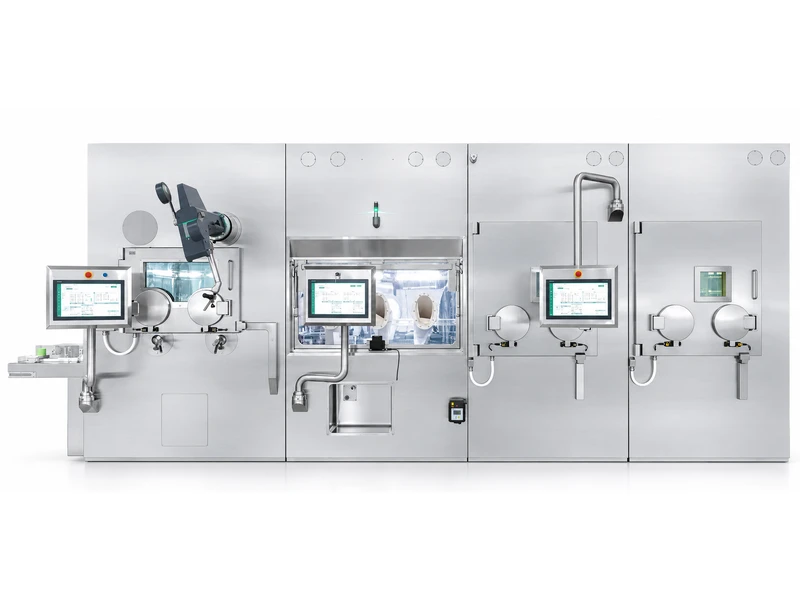
Shielded access doors and windows on a bank of hot cells
Reaction arrangement matched to the process sequence Reaction and purification times evaluated for the selected chemistry Recorded input, recovery points and activity reference times Fluid-path materials and separation equipment matched to the tracer

Instrument and service envelope within the selected hot cell

A single-use cassette places designated product-contact elements in a replaceable assembly. Its materials, connections and route still have to suit the chemistry; reusable elements retain their own cleaning and carry-over controls.

The control sequence coordinates the supplied valves, transfers and reaction functions. Process measurements and records are defined for those functions; their availability and acceptance criteria follow the selected module.

How it works

How does the module connect reaction and purification?

A defined fluid path transfers material through the selected reaction stages, then into the separation and collection operations required by that chemistry. Valve arrangement, contact materials and collection vessels determine the interfaces. The sequence is specific to the process rather than a universal route for every tracer.

How should synthesis results be compared?

Record the starting material and input point, the collected product and its measurement point, and the associated activity reference times. State whether yield is decay-corrected and keep analytical purity separate from recovered activity. These distinctions prevent a favourable number from concealing a different measurement basis.

Line integration

Line Integration

Source material enters through the transfer arrangement appropriate to the selected radionuclide supply and chemistry. The input state and activity reference are recorded before the material enters the synthesis sequence.

Reaction is followed by the purification and formulation steps required by the route. Solid-phase or chromatographic separation are process-dependent choices rather than mandatory stages of every synthesis.

Collected product passes to the defined formulation or dispensing interface and the applicable QC process. Sampling and release remain separate quality activities; completing an automated sequence is not a product-release decision.

Support throughout your project and production

Define the equipment scope

Reaction sequence, reagent set, purification method and disposable or cleanable paths determine the module layout.

Learn more

Agree the acceptance test

Define the boundary to formulation and filling and how batch records follow the product.

Learn more

Prepare for operation

Identify the contact parts and format tooling for Radiosynthesizer. Agree access for cleaning, the spares to hold and the operating records the site will need.

Learn more

Knowledge hub

2 resources

Frequently asked questions

Does the labeling module print labels for vials?

In this context, radiolabelling is a chemical operation that incorporates a radionuclide into the intended compound. Container identification and printed-label application are separate downstream equipment functions.

Can one synthesis program be used for every tracer?

Tracer chemistry determines reagents, contact materials, reaction conditions and purification. A supported route needs a corresponding module configuration and process evidence; a generic software recipe is insufficient.

Do two reaction vessels guarantee two batches per setup?

No. Batch capability depends on how the fluid paths, reaction functions, purification and collection are arranged and operated. The actual sequence must define whether batches are separate, sequential or otherwise supported.

Does a single-use cassette eliminate carry-over risk?

It replaces the designated disposable contact path. Any reusable components, connections and surrounding handling retain their own controls. The cassette materials and assembly also need to be suitable for the chosen chemistry.

Is recovered activity the same as product purity?

Recovered activity describes the amount measured at the defined output and reference time. Purity is established by the relevant analytical method. A yield or recovery figure alone does not establish the chemical or radiochemical quality of the product.

Contact

Describe the intended chemistry, product-collection route and required batch sequence for the synthesis-module assessment.

Discuss your project →
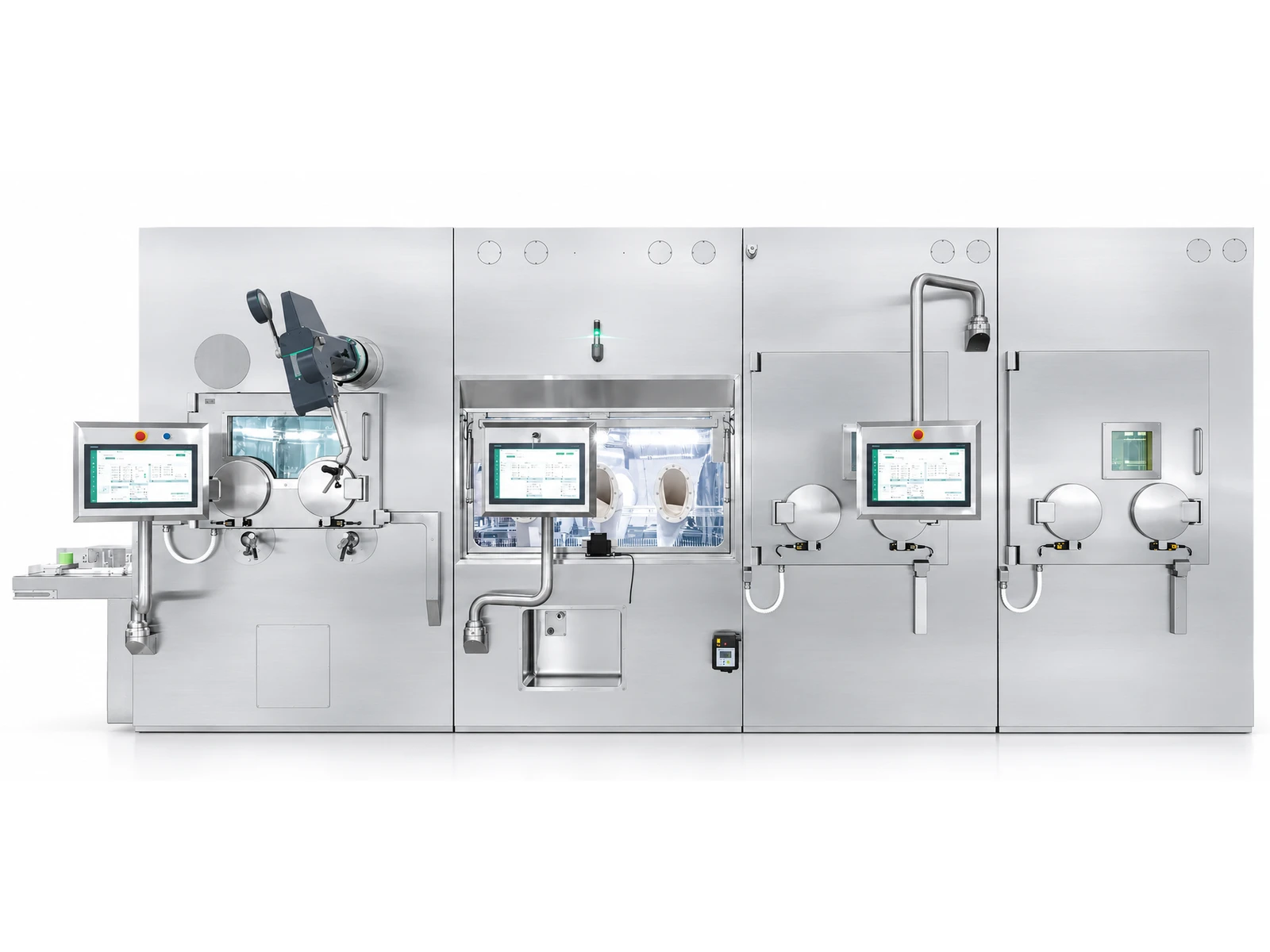
Shielded access doors and windows on a bank of hot cells