Skip to content

Process expertise. Chinese manufacturing. Global perspective.

PREASYS

Equipment & technology

Capping

The capper presents a cap to a stoppered container, seats it and forms the closure around the neck finish.

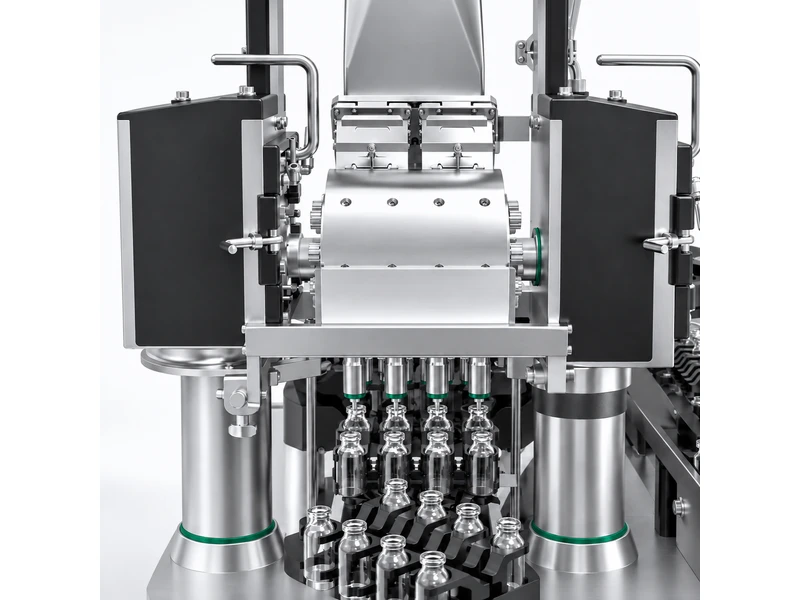
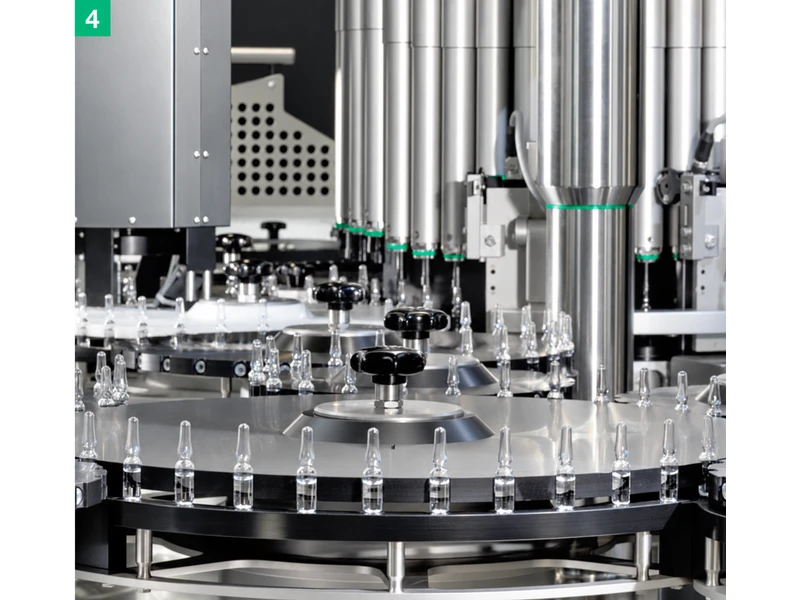
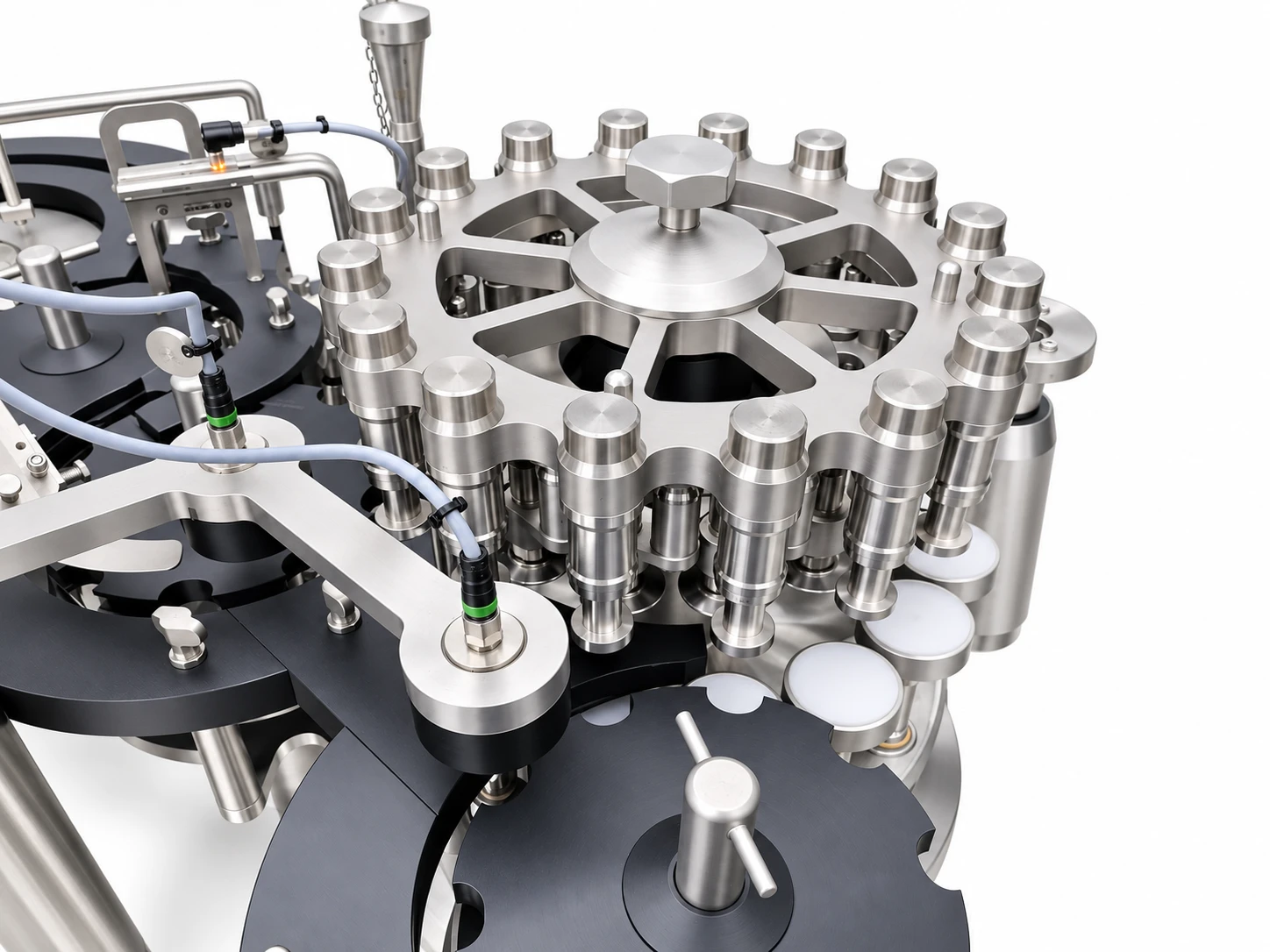
Rotary turret with container pockets and closing heads

Capping

Vial Capping & Crimping Machine

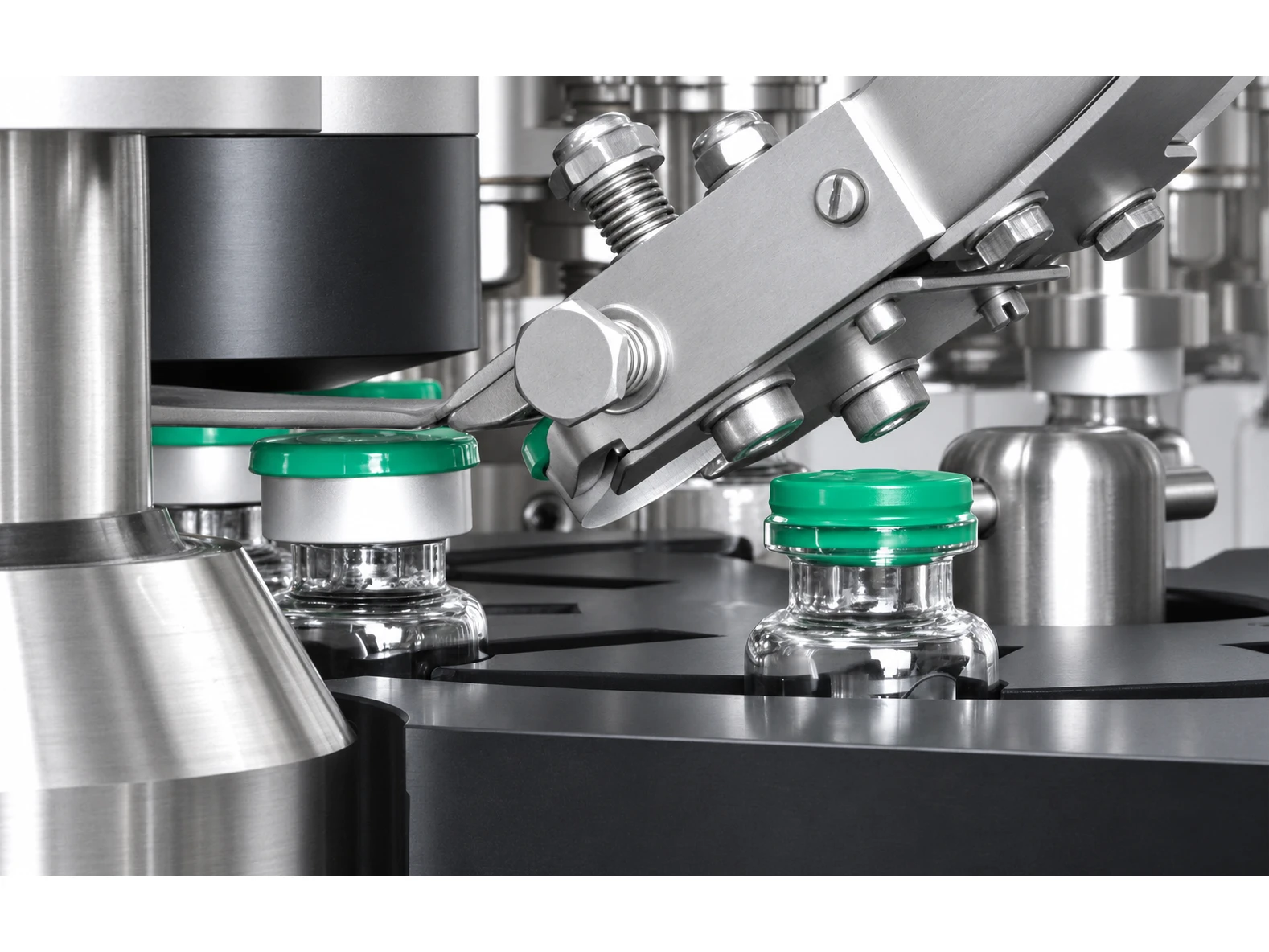
The Preasys capping station applies aluminium flip-off caps to rubber-stoppered vials immediately after stoppering. Caps are fed from a vibratory bowl or rotary sorter, picked individually, and aligned precisely over the vial neck. A servo-controlled crimping head then descends and rolls the aluminium skirt evenly around the vial lip — sealing the stopper in place without over-compressing it.

Crimping speed is independently adjustable from the main filler output, so the station can handle varying vial formats and cap types without rebalancing the line. All settings — crimp pressure, dwell time, head rotation — are entered and stored on the HMI as part of the product recipe. A reject chute folds down for easy access, and the continuous rotary motion ensures gentle, consistent cap formation at line speeds up to 600 vials per minute.

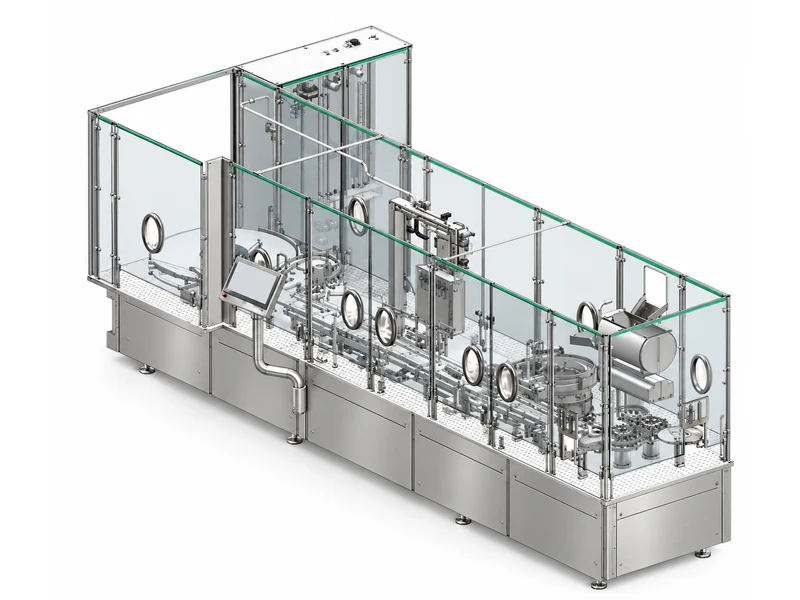
The machine is built entirely in 316L stainless steel with a polished exterior, integrates directly with the filler and visual inspection system, and supports RABS or isolator containment for sterile operation.

Cap held beneath the closing head of a vial capper

Configuration data

RVB capping configurations. Rates refer to the individual configurations and depend on container and cap format.

12,000–18,000 containers/h

RVB 4080 listed output

24,000–36,000 containers/h

RVB 4090 listed output

Process challenges

- Crimp quality inconsistency — Too loose causes leaks; too tight cracks the vial or deforms the cap.

Read details

- Crimp quality inconsistency — Too loose causes leaks; too tight cracks the vial or deforms the cap. The root cause is usually cap material variation or wear on the crimping jaws, which requires frequent manual adjustment.

- Cap jams and feeding misalignment — Aluminium caps are thin and sensitive to mechnical force; a single mis-fed cap can jam the track and stop the whole line, wasting production time and requiring operator intervention.

- Dust and particle generation — The aluminium crimping action itself can shed metal particles, which must be controlled through extraction airflow and regular jaw inspection — a particular concern under Annex 1 Grade A requirements.

Technical data & features

Match cap, stopper and vial finish as a set. Variations in one component can affect the crimp geometry.

Cap held beneath the closing head of a vial capper

Vial Capping Machine — Specifications (Based on RVB Series)

The Preasys RVB series is a high-performance, continuous-motion capping machine for pharmaceutical vials. Stable cylindrical containers are closed gently and reliably with standard crimp caps or special designs such as Flip Off, Flip Top, and Flip Tear Up.

Models

Key Features

- Continuous rotary motion — containers are held and rotated during crimping, ensuring a uniform seal at maximum speed

- Low-particle cap feeding — supply hopper → vibratory sorting bowl → linear track, ensuring optimal cap quantity in the sorter at all times

- Optoelectronic stopper check — verifies stopper presence at the infeed before capping begins

- Quick format changeover — complete set parts exchange for diameter/cap changes; container height adjusts motor-driven via HMI

- In-line or stand-alone — designed for integration into fully automatic filling lines, or configurable as a standalone machine

Inspect contact surfaces, verify the materials of the closing tools and review access for cleaning and changeover.

Available Options - Reject ejection at infeed and/or discharge - Integration as closing module on a combined filling and closing machine - Cap printing - Camera vision inspection of crimp quality - Double tray loading - SCADA data acquisition

- IQ / OQ qualification support

RVB 4080 RVB 4090
Crimping stations 8 16
Output 12,000 – 18,000 containers/h 24,000 – 36,000 containers/h
Container diameter Ø 14 – 100 mm Ø 14 – 53 mm
Container height 30 – 240 mm 30 – 145 mm
Cap diameter Ø 12 – 40 mm Ø 12 – 24 mm
Cap height 6 – 18 mm 6 – 18 mm
Electrical supply 230 / 400 V, 50 Hz, 3.5 kW 230 / 400 V, 50 Hz, 3.5 kW
Machine weight ~950 – 1,000 kg ~700 – 750 kg
Footprint (W × D × H) ~2,850 × 1,650 × 2,000 mm ~2,550 × 1,550 × 2,000 mm

How it works

Easily set up the machine during change over?

Minimize the particle generation

How is stopper position checked before capping?

Check the height and seating of the stopper before the cap is applied. Define the response to a raised or missing stopper and verify rejection with representative units.

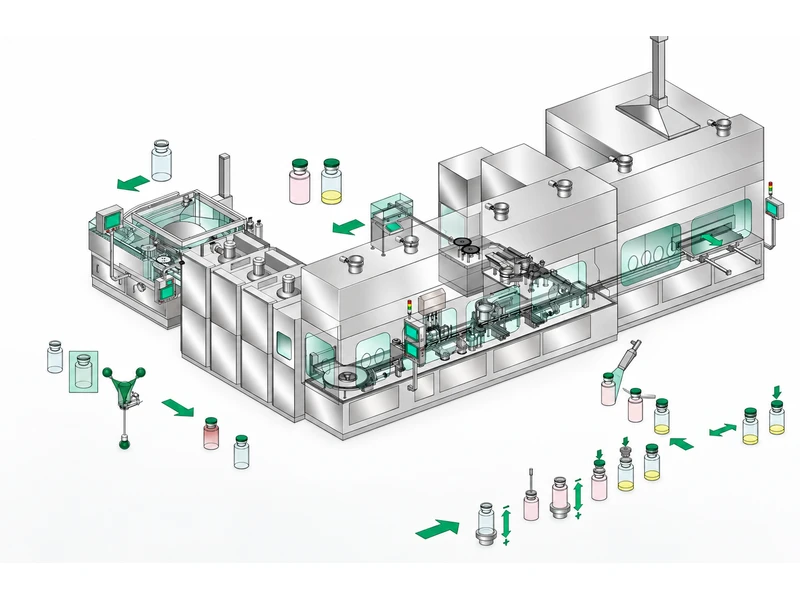
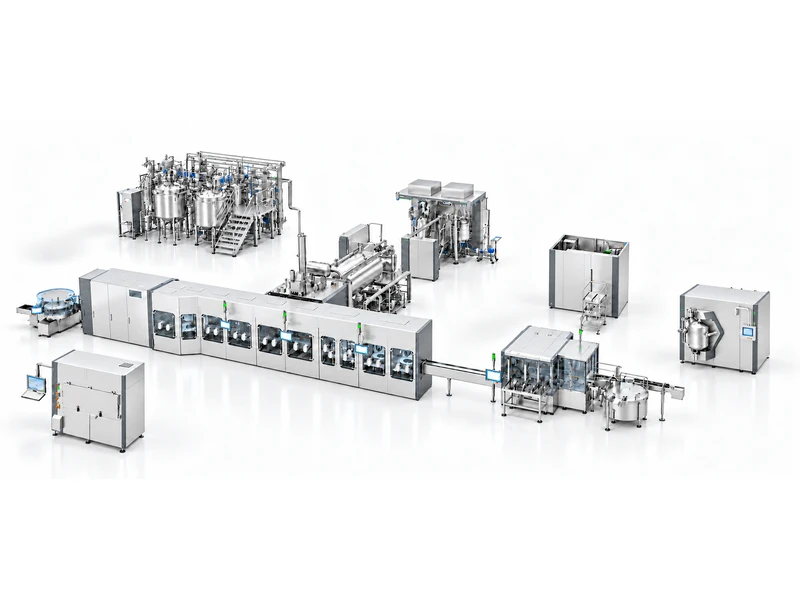
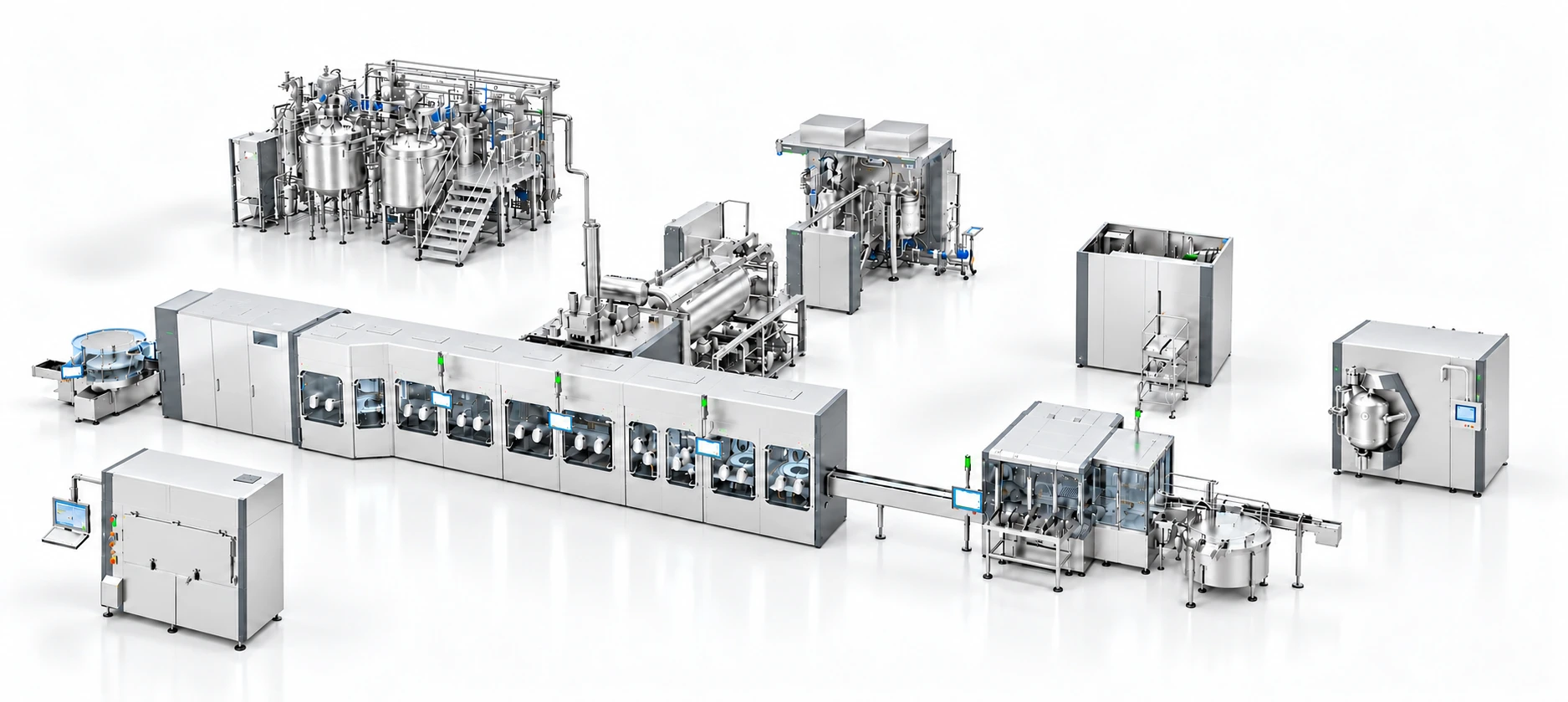
Liquid vial preparation and filling. Follow the preparation, washing, tunnel and vial filling stations. The separate drying equipment serves lyophilized presentations. The line provides process context; the individual product is not identified as a separate station in this view.

Production line · Equipment context

Liquid vial preparation and filling

Explore the process areas on the production line associated with this equipment.

Skip tour
Selected process route 8 equipment areas · Scroll to explore

Follow the preparation, washing, tunnel and vial filling stations. The separate drying equipment serves lyophilized presentations. The line provides process context; the individual product is not identified as a separate station in this view.

Related production lines: Liquid Vial Filling & Packaging Lines · Lyophilized Vial Production Lines · Antibody-Drug Conjugate Manufacturing & Fill-Finish · Plasma-Derived Product Preparation & Fill-Finish · Vaccine Formulation & Fill-Finish Equipment

Line integration

Stopper processing

Filling machine

Inspection

Support throughout your project and production

Define the equipment scope

Match cap, stopper and vial finish as a set. Variations in one component can affect the crimp geometry.

Learn more

Agree the acceptance test

Inspect the completed closure and transfer the vial without loading the newly formed crimp.

Learn more

Prepare for operation

Identify the contact parts and format tooling for Capping. Agree access for cleaning, the spares to hold and the operating records the site will need.

Learn more

Knowledge hub

2 resources

Frequently asked questions

What cap types can the machine handle?

Standard crimp caps, Flip Off, Flip Top, and Flip Tear Up designs. Cap diameters from 12 to 40 mm (RVB 4080) or 12 to 24 mm (RVB 4090), with cap heights from 6 to 18 mm.

What is the maximum output?

The RVB 4080 handles up to 18,000 containers per hour with 8 crimping stations. The RVB 4090 handles up to 36,000 per hour with 16 stations.

Can it run as a standalone machine?

Yes. It is designed for in-line integration but can be configured as a standalone machine with its own infeed conveyor and discharge table.

How long does a format change take?

Diameter and cap changes require swapping complete format part sets (star wheels, crimp heads, feed track). Container height is adjusted motor-driven through the HMI — no manual mechanical adjustment.

What construction and cleaning details apply to the capping station?

Identify the parts that contact the container or closure, request material declarations and inspect access to the closing head during cleaning and changeover.

What infeed options are available?

Two options: (1) conveyor belt with infeed star wheel spacing; (2) rotary table mounted on the machine with infeed star wheel or suction wheel for container spacing.

How are caps fed to the crimping station?

A supply hopper feeds caps into a vibratory sorting bowl. Sorted caps then travel along a linear track to the pickup point, where the container automatically takes the cap as it enters the processing area. This multi-stage system keeps the bowl optimized at all times.

Can defective vials be rejected?

Yes. The machine can eject defective containers at both the infeed and discharge. The infeed optoelectronic sensor checks stopper presence before capping begins.

Is SCADA integration supported?

Specify the capping parameters and rejects that the PLC records. Agree how the central system receives them and how changes or missing records are reviewed.

What inspection options are available?

Camera vision systems for crimp quality, cap printing, and double tray loading are all available as factory-fitted options.

Contact

For a configuration review, include container drawing, product-contact materials, intended dose, closure format, batch size.

Discuss your project
Cap held beneath the closing head of a vial capper