Skip to content

Process expertise. Chinese manufacturing. Global perspective.

PREASYS

Equipment & technology

Automated Nasal Spray Filling, Capping & Crimping Machine

Fill the nasal spray bottle and assemble its specified metering pump and closure. The liquid dose placed in the bottle, the pump delivered dose and the spray characteristics are separate parts of the product: the filling and closing process must preserve the interfaces between them.

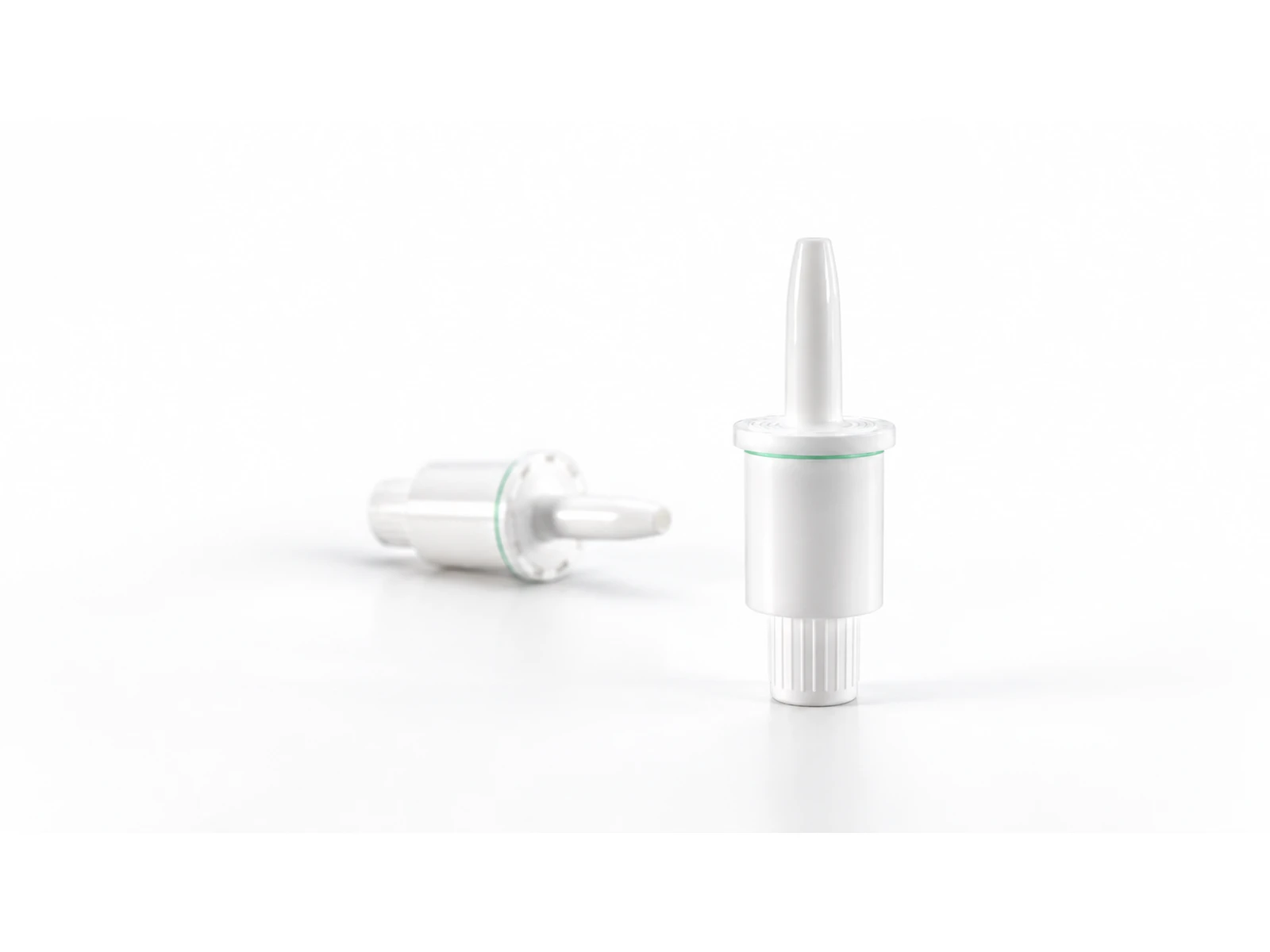
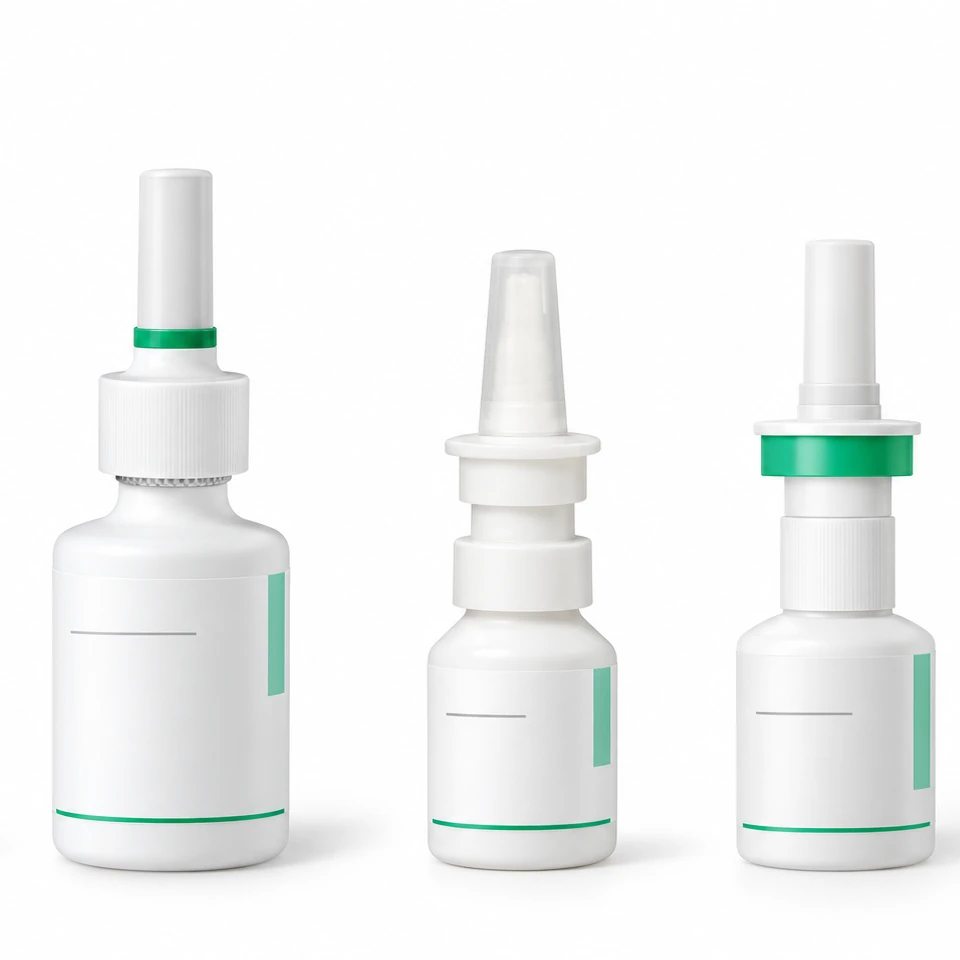
Small nasal spray container and separate white applicator components
The nasal applicator and its matching container define the finished presentation. Check the closure fit alongside the dose and fill path.

Nasal Spray Filler

Liquid filling with pump placement and closing

The bottle receives a measured liquid quantity before the metering pump is inserted and secured. Bottle neck, dip tube, pump geometry and fill level affect insertion clearance and the completed pack. Formulation viscosity, foaming and nozzle shutoff shape the dosing process, while the selected screw or crimp closure determines the closing station. The assembled spray requires its own closure and device-performance assessment; bottle fill accuracy alone does not establish delivered spray dose or plume behaviour.

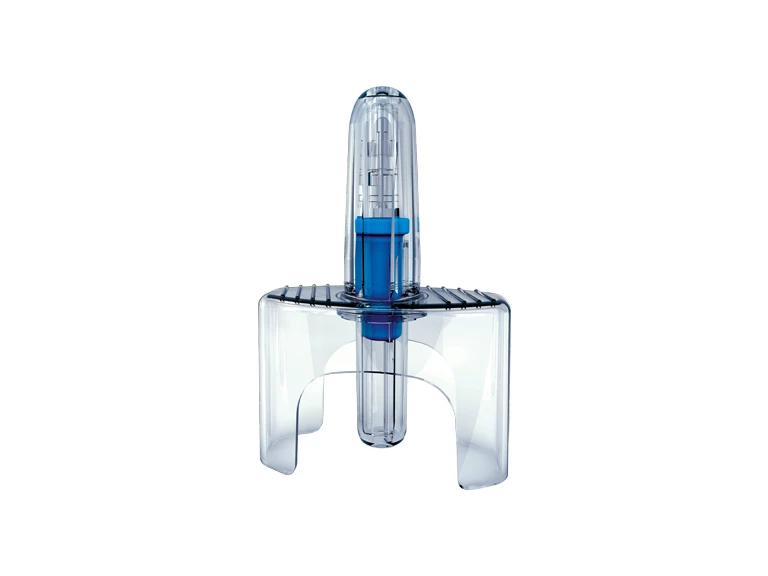
Section view of a nasal spray actuator and its internal pump
Process function Selection input
Container and pump Approved bottle, dip tube, metering pump and closure drawing.
Dosing method Selected from formulation behaviour, dose and product-contact requirements.
Fill quantity Amount placed in the bottle; distinct from dose delivered by the pump.
Gas step Included only where the product and package require a defined gas condition.
In-process checks Specified mass, volume or assembly checks with defined response and rejection.
Cleaning and preparation Product-path and component strategy for the selected process.
Equipment evidence Materials, drawings, cleaning access and relevant acceptance records.
Operation and records Recipes, access and exception records according to the agreed control scope.
Process function Selection input Boundary
Bottle supply Matched to the prepared container presentation. Stable orientation and support through filling.
Dosing station Selected product path and nozzle arrangement. Consistent liquid delivery with defined startup and stop treatment.
Pump insertion Tooling and motion matched to the pump and dip tube. Preserves orientation, seating and protected components.
Closing station Screw, crimp or other specified closure method. Assembled geometry and closure checks for the actual pack.
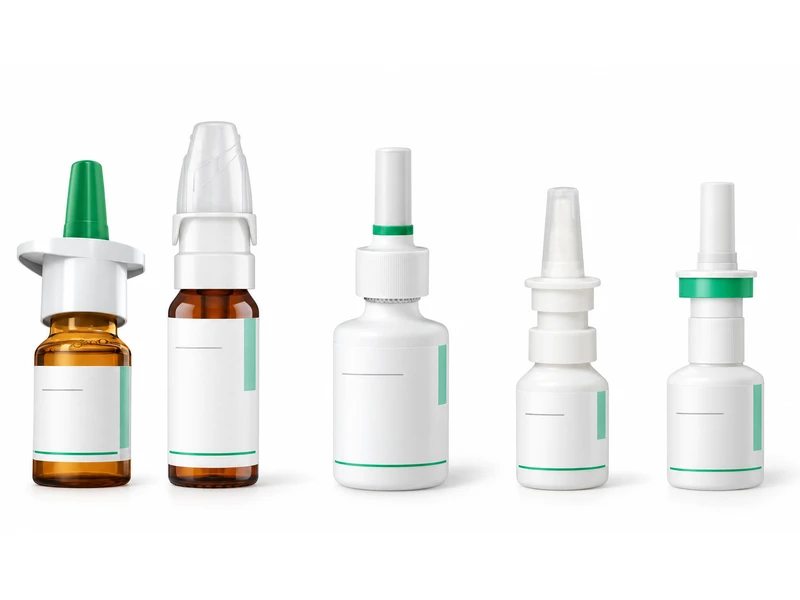
Unit- or bi-dose device Separate device-specific filling and assembly assessment. Not assumed interchangeable with a multidose bottle-and-pump format.

Process at a glance

The bottle fill supplies the pump. Pump actuation dose is evaluated separately on the assembled package.

Fill

Meter liquid into the selected bottle

Fit

Insert the pump with the correct dip-tube presentation

Close

Apply the specified screw or crimp closure

Filling technologies

Filling technology

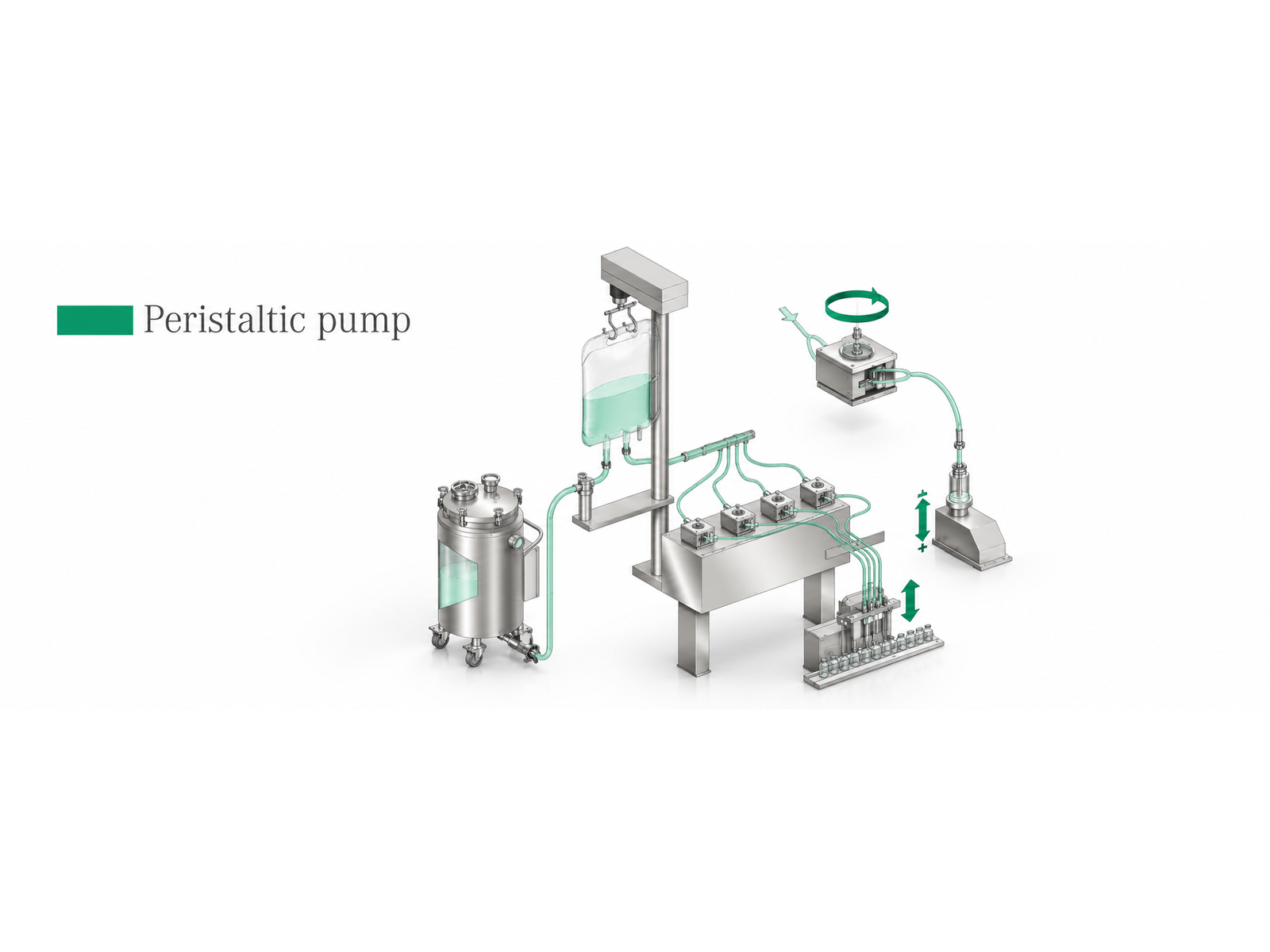
Peristaltic pump

A flexible tube carries the liquid while rotating rollers control dosing. The product contacts the tube rather than the pump mechanism. This principle is used when a disposable product path and gentle handling are priorities. Tubing selection, product compatibility and the changeover procedure should be reviewed for each application.

Explore technology
Diagram connecting a peristaltic pump to the product filling path

Filling technology

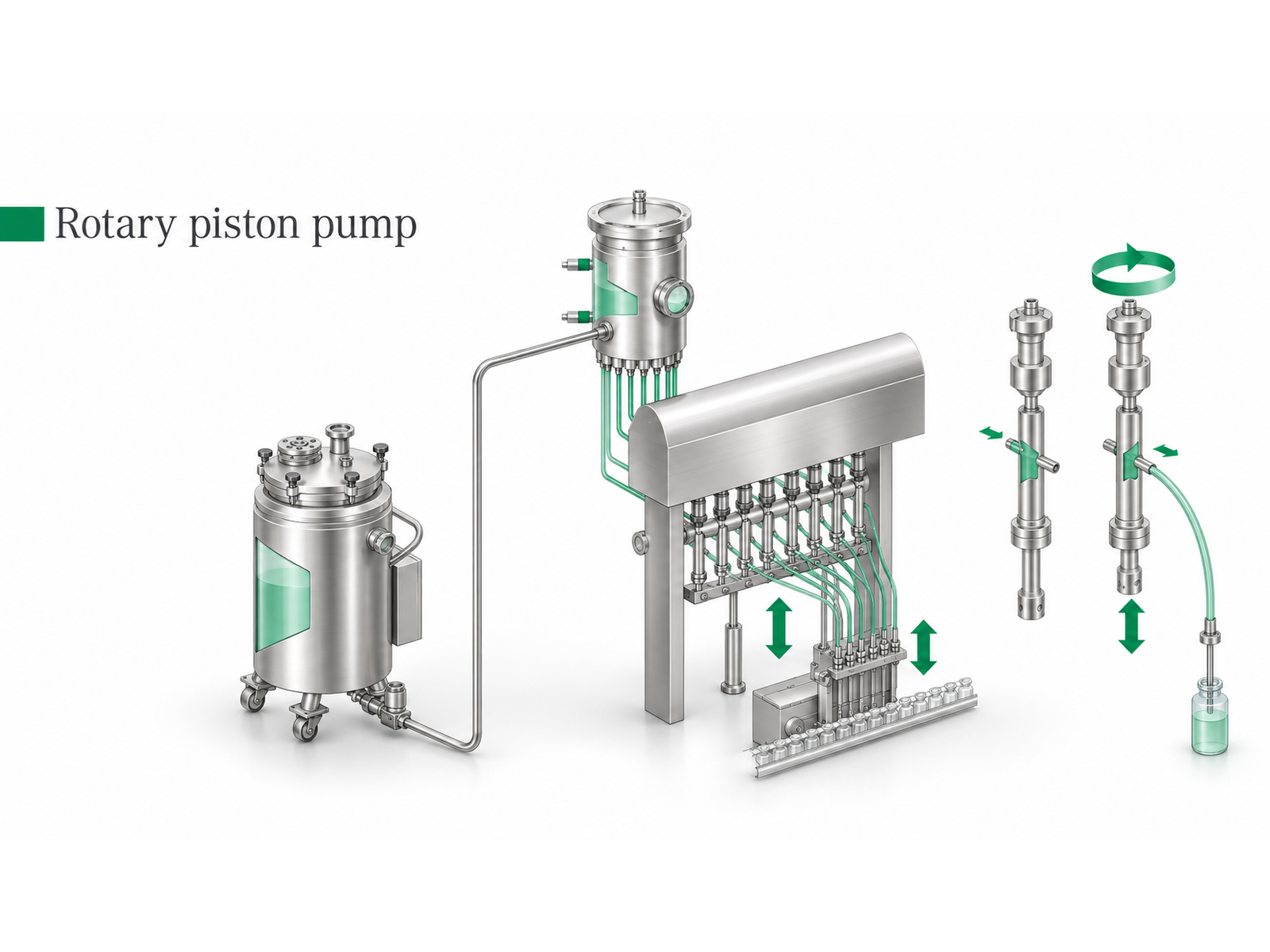
Piston pump

A piston draws liquid into a cylinder and then dispenses a measured volume through the outlet. The selected piston, valve and product-contact materials determine the application range. Review viscosity, cleaning requirements and the required filling volume together with the product and container format.

Explore technology
Rotary piston metering equipment connected to a set of filling heads

Filling technology

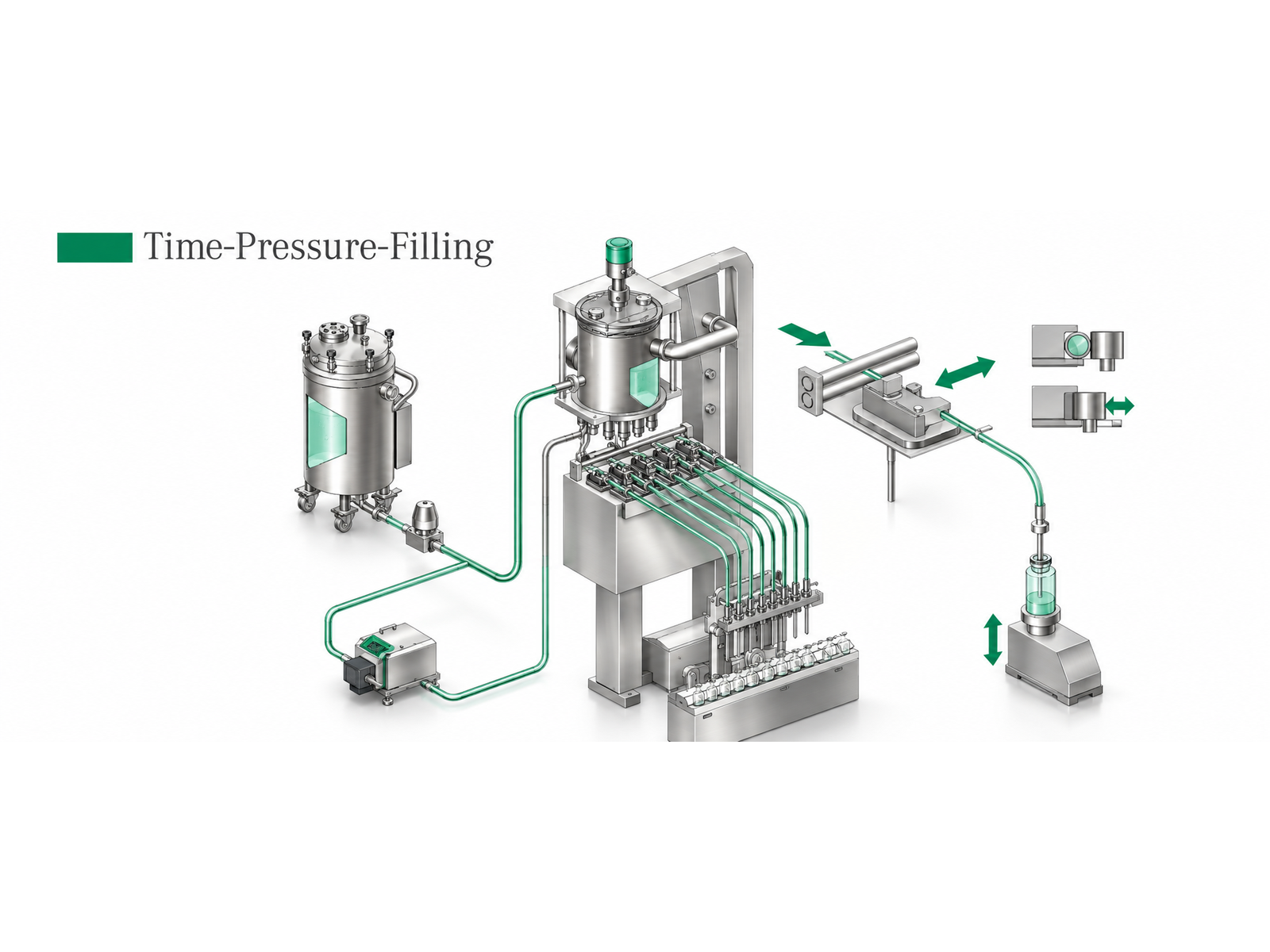
Time pressure

Controlled pressure moves liquid through a filling valve. The opening time and supply conditions determine the dispensed quantity. Product properties, pressure stability and the valve configuration are evaluated together when setting up the filling process.

Explore technology
Diagram of a time-pressure dosing vessel and filling heads

Filling technology

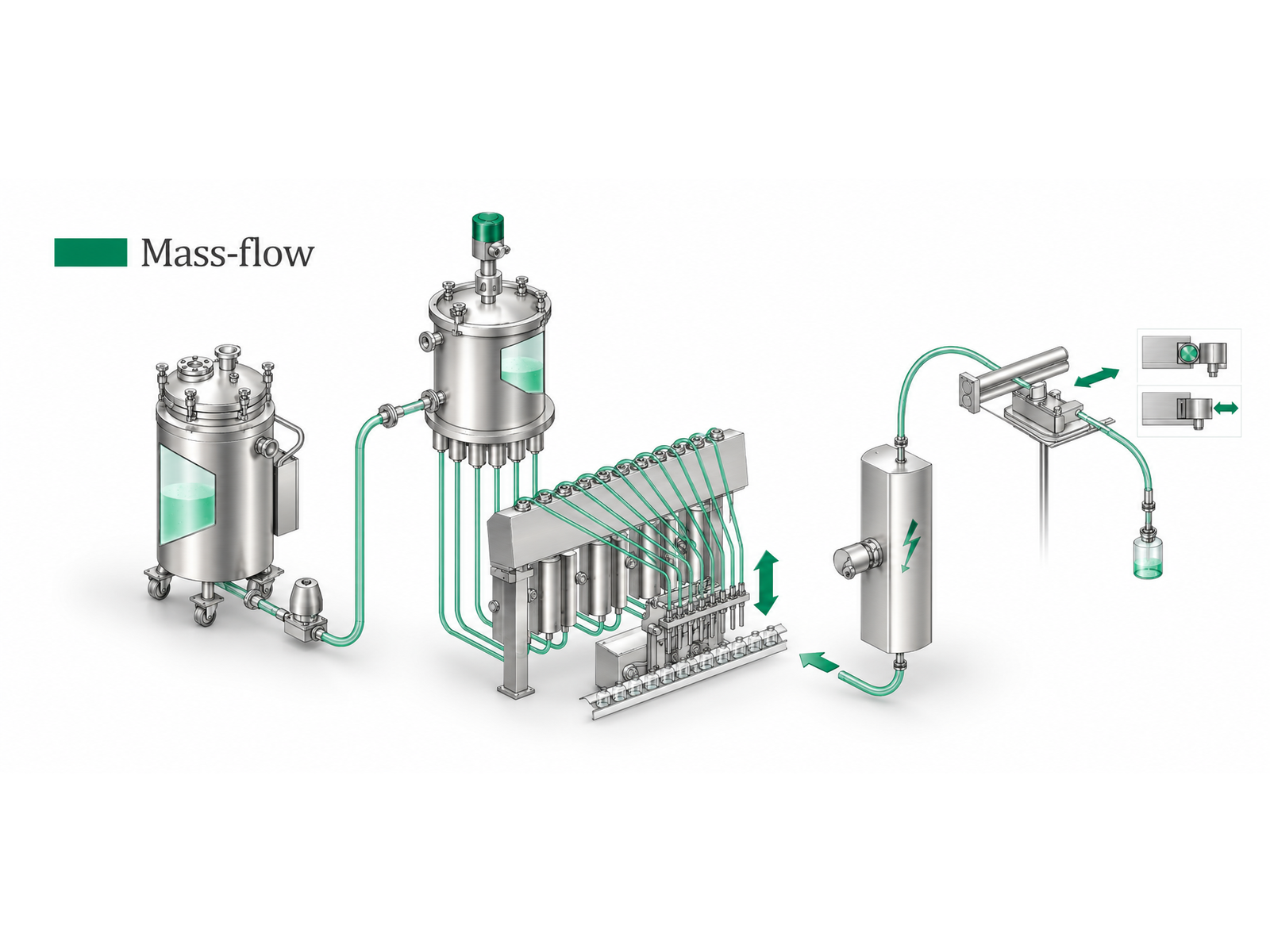
Mass flow

A flow sensor measures the product passing through the filling path and provides feedback to the dosing valve. The process is evaluated around the required fill mass, product behaviour and cleaning strategy. Sensor selection and the control sequence depend on the application.

Explore technology
Product flow path with a mass flow meter and dispensing points
Technology 1 of 4

Process challenges

The quantity placed in a nasal spray bottle is distinct from the dose later metered by its pump.

Read details

The quantity placed in a nasal spray bottle is distinct from the dose later metered by its pump.

Gas handling is driven by the formulation and package requirement, with an achieved condition established by the selected test.

Pump choice changes the product-contact path and mechanical exposure. Suitability for a sensitive formulation is demonstrated rather than inferred from a pump name.

Nozzle shutoff and liquid properties influence drips and residue. These behaviours matter during both normal filling and interruptions.

An aseptic presentation needs a defined preparation, product-contact and exposure strategy through pump placement and closing.

The bottle and pump interfaces affect seating, dip-tube insertion and closure. Their actual components are assessed together.

A new format may require different guides, feeding and closing tools as well as a different recipe.

Startup fills follow the agreed priming and acceptance procedure. Any adjustment logic operates within defined limits and does not make every first bottle acceptable.

How it works

How do filling and pump insertion interact?

The fill leaves the intended headspace and the pump enters the bottle along its defined path. Dip-tube length, curvature and bottle-neck clearance affect insertion, while any displaced liquid or trapped gas affects the assembled pack. Observe the complete sequence rather than dosing alone.

How is the assembled spray evaluated?

Check closure fit and the specified bottle, pump and device functions with the actual formulation. Maintenance of filling nozzles and closure tooling is followed by dosing and assembly verification; the product tests assess delivered dose and spray behaviour separately.

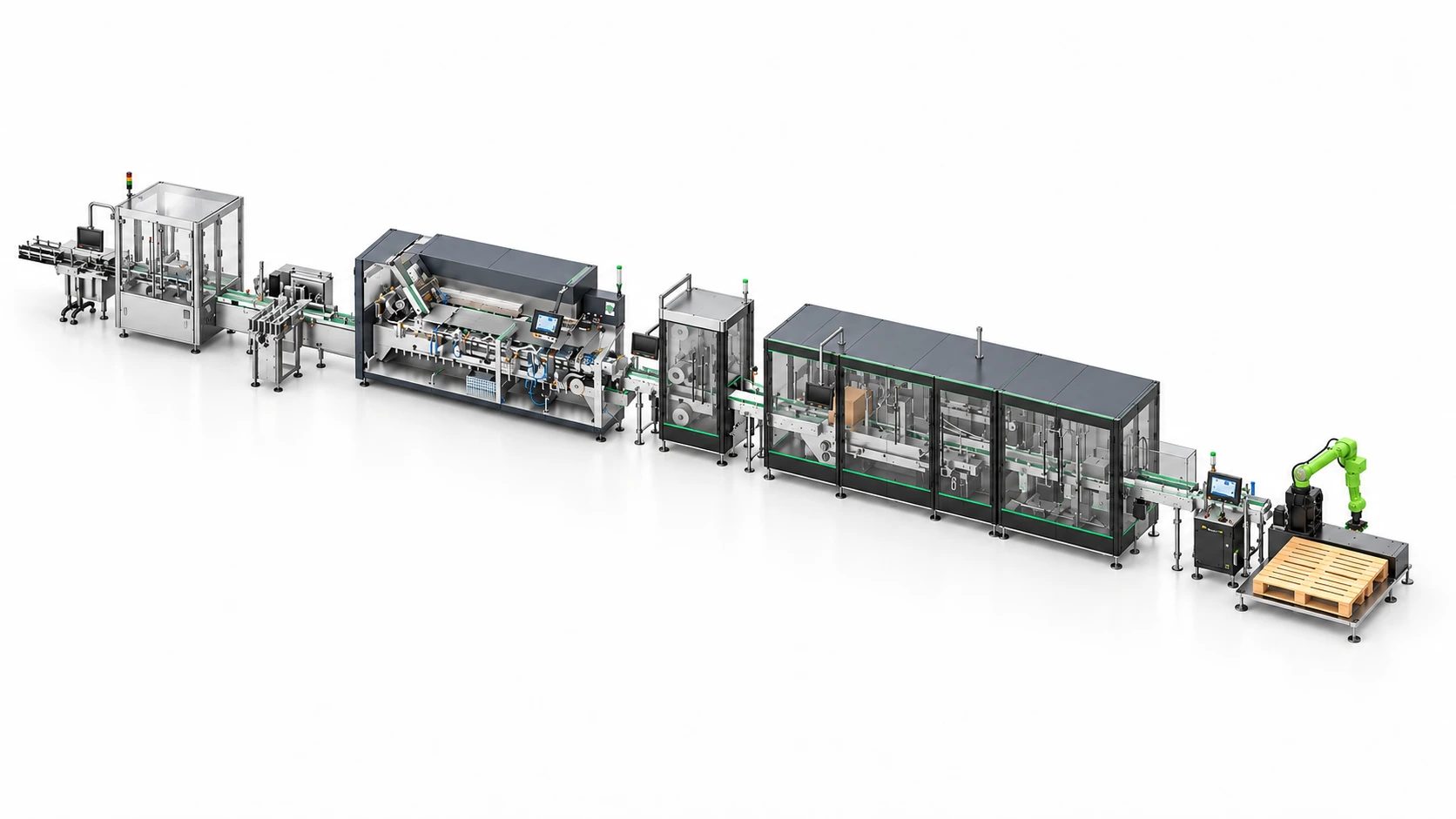
Nasal spray · secondary packaging. Follow closed spray packs through transfer, cartoning, case packing and palletizing after the pump and cap have been fitted. The line provides process context; the individual product is not identified as a separate station in this view.

Production line · Equipment context

Nasal spray · secondary packaging

Explore the process areas on the production line associated with this equipment.

Skip tour
Production layout 5 equipment areas · Scroll to explore

Follow closed spray packs through transfer, cartoning, case packing and palletizing after the pump and cap have been fitted. The line provides process context; the individual product is not identified as a separate station in this view.

Related production lines: Nasal Spray Filling & Assembly Lines

Line integration

Test the bottle, pump and formulation together

Prepared bottles enter dosing in a stable orientation. After filling, the pump is presented and inserted without unintended loading of the dip tube or dispensing components, then secured by the selected closing method. Accepted closed packs pass to the required inspection and packaging stations; a pressurized aerosol charging operation is a different process.

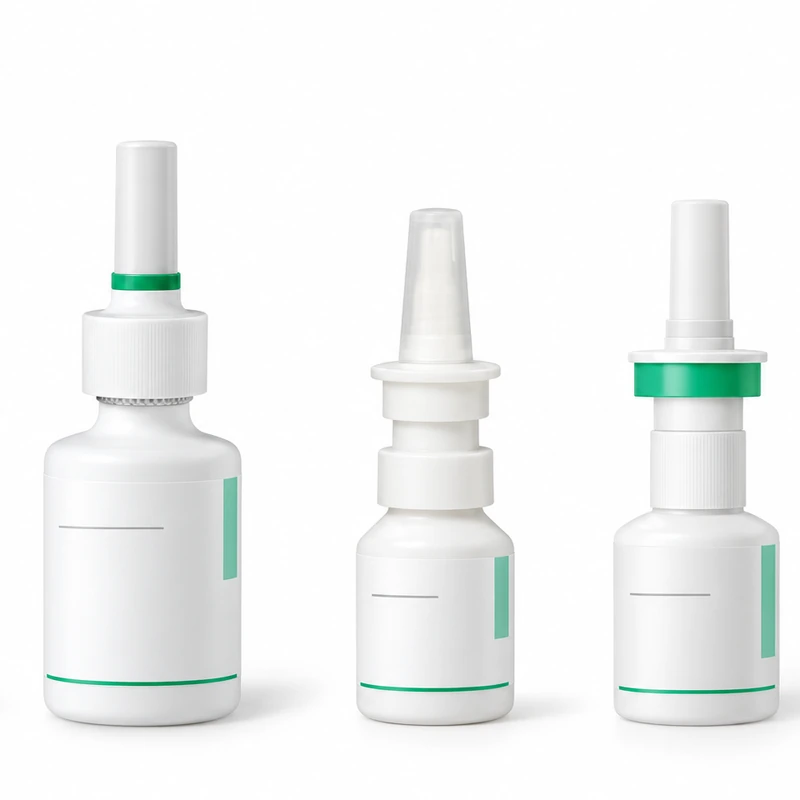
Three nasal-spray bottles with different pump forms

Support throughout your project and production

Define the equipment scope

Bottle neck, pump fit, dip tube and fill level must be considered together when specifying insertion and closing.

Learn more

Agree the acceptance test

Test assembled packs for closure and device performance using the actual bottle, pump and formulation.

Learn more

Prepare for operation

Identify the contact parts and format tooling for Nasal Spray Filler. Agree access for cleaning, the spares to hold and the operating records the site will need.

Learn more

Knowledge hub

2 resources

Frequently asked questions

Does a nasal spray bottle require propellant charging?

A pump-operated nasal spray uses its specified pump mechanism. Pressurized aerosol filling is a separate process; the product design determines which technology applies.

Does the amount filled equal one delivered spray dose?

No. The filler places the specified quantity in the bottle, while the pump meters the delivered spray. Pump priming, delivered dose and spray characteristics need device and formulation evaluation.

Can screw and crimp pumps use the same closing station?

Their closing mechanics differ. Review the approved pump and bottle finish to identify the required tooling, control and verification for each closure type.

What should a pump-format change include?

Review bottle guides, nozzle location, pump presentation, dip-tube insertion and closing tooling. Verify the assembled pack and restart checks, not only the nominal recipe name.

Section view of a nasal spray actuator and its internal pump