Skip to content

Process expertise. Chinese manufacturing. Global perspective.

PREASYS

Equipment & technology

Pharmaceutical Aerosol & MDI Filling Machine

Combine the formulation, container and valve in the specified aerosol process. Aerosol filling equipment coordinates product dosing, valve placement, crimping and the selected pressure-charging operation; their order depends on the container, valve and whether the product uses a conventional or bag-on-valve system.

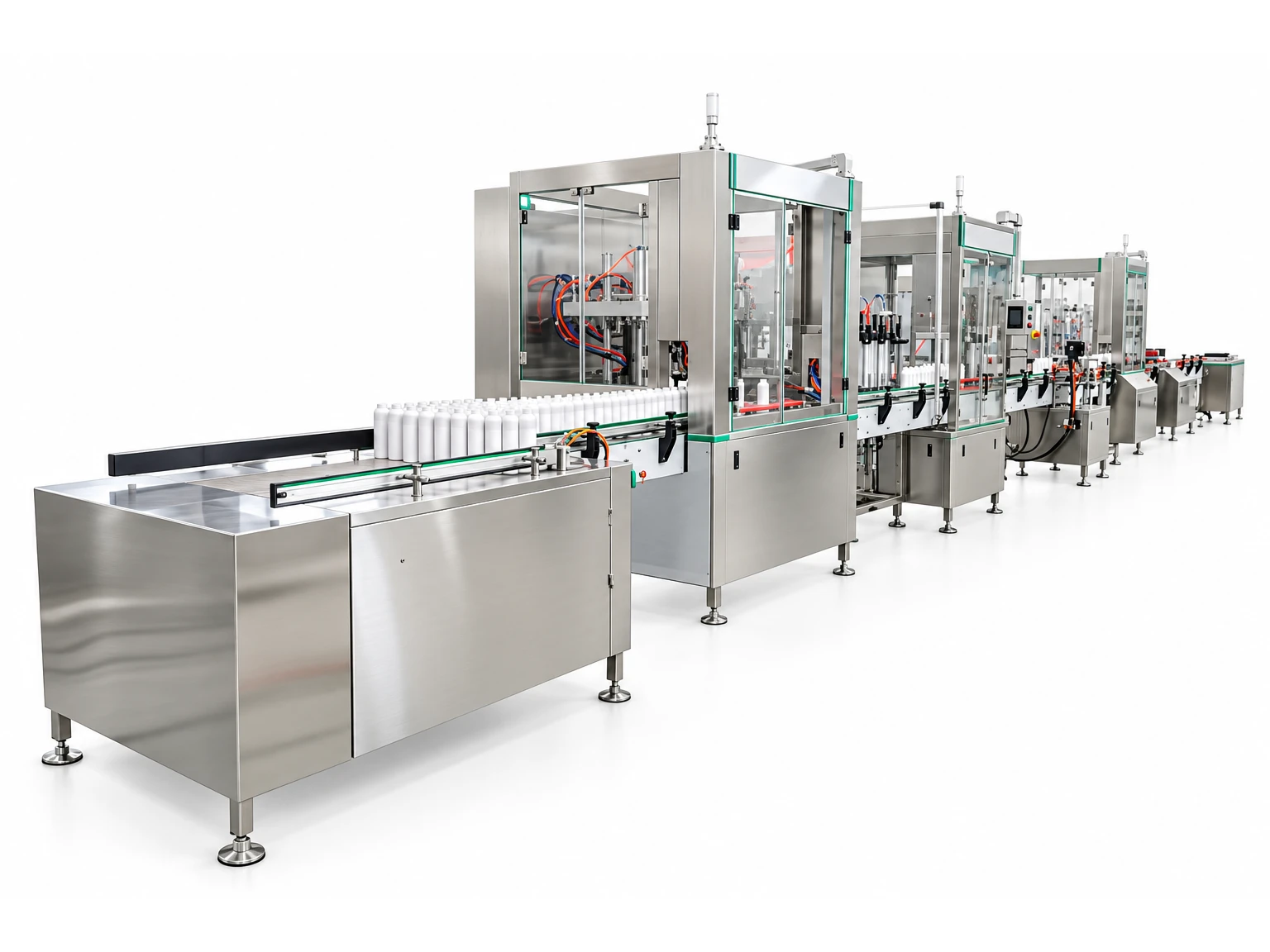
Guarded aerosol filling and assembly stations linked by conveyor

Aerosol Spray System

Product dosing, valve sealing and pressure charging

An aerosol pack is a pressure-containing assembly

The can, valve cup, gasket and crimp form the closure, while the formulation and charging medium determine the filled contents and operating pressure. Product dosing and pressure charging are separate tasks, even when a line combines them. A conventional aerosol and a bag-on-valve pack can require different filling sequences and tooling. The approved pack design determines the route, followed by its specified checks before secondary packing.

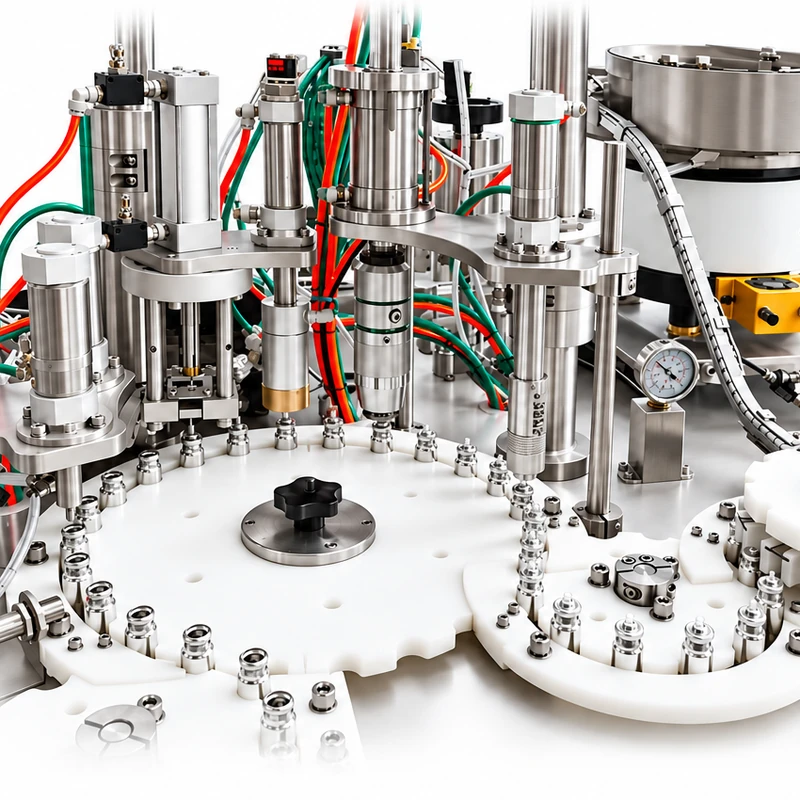
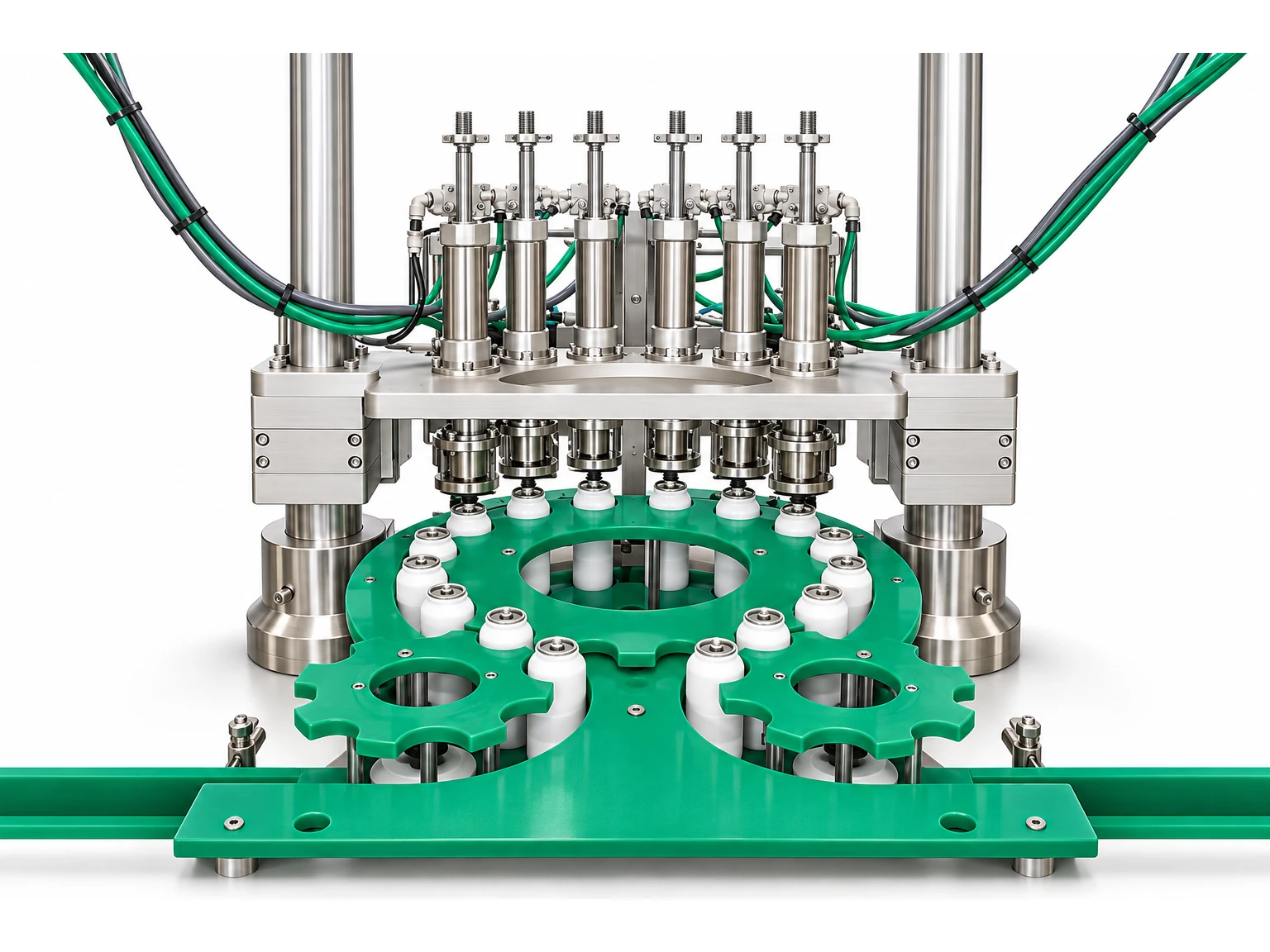
Rotary index table beneath a bank of aerosol processing heads

Process at a glance

Product filling, propellant charging and valve joining are distinct operations. Their sequence follows the aerosol and valve design.

Fill

Meter the product into the selected aerosol container

Close

Fit the valve and execute the specified closure sequence

Process challenges

The valve cup, gasket and container finish create the pressure-containing closure. Crimp geometry and component tolerances affect its condition.

Read details

The valve cup, gasket and container finish create the pressure-containing closure. Crimp geometry and component tolerances affect its condition.

The formulation contacts the selected dosing path. Cleaning and preparation concern that complete path; a pump material alone does not establish contamination control.

Product quantity and charging quantity have different functions and limits. Their combined result is assessed in the completed aerosol pack.

A leak-test result applies to its method, conditions and detection threshold. Inspecting every pack does not mean detecting every possible leak.

Bag-on-valve construction changes the product path and pressure arrangement. Its approved design determines the filling and charging order.

Dosing, closing, testing and packing operate at different points in the sequence. Interrupted packs retain a defined state until released or removed.

The required pack or position identity connects process results with physical rejection and batch reconciliation.

Technical data & features

The formulation, valve system and container pressure requirements determine the process sequence and equipment specification.

Rotary index table beneath a bank of aerosol processing heads

The variables that shape the filling sequence

Product-fill behaviour depends on viscosity, foaming and the dose, while charging depends on the medium and pressure system. The container must remain correctly supported and identified as it moves between these operations.

Product-contact path and cleaning method

Valve geometry and the crimped closure

Crimping changes the valve cup geometry around the container finish to hold the gasket and closure in their intended state. Crimp dimensions, valve seating and the actual container tolerances affect closure quality; one tooling setting does not suit every valve.

Leak testing evaluates the filled package under a selected test condition. The test method, acceptance threshold and challenge standard determine what the result establishes. Testing every pack is different from detecting every possible leak.

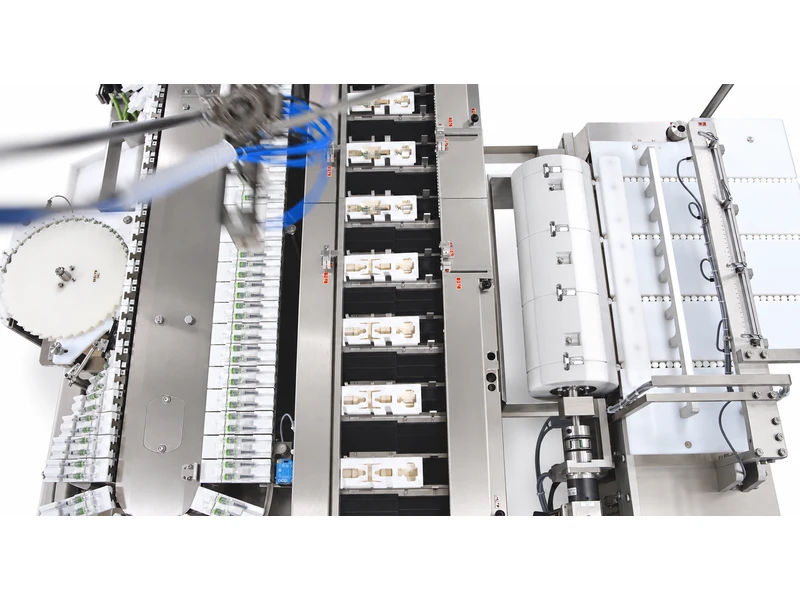
Metered-dose inhaler configuration where specified Accepted aerosol packs pass to the selected cartoning operation

Records tied to the physical pack

Maintenance focuses on the dosing path, valve tooling and test system. Wear, residue or misalignment can alter dosing or the crimp. After cleaning, tooling adjustment or replacement, repeat the specified fill, closure and test challenges before restarting the line.

Module Function
Product filling Meters the formulation into the selected container or pack path.
Valve handling Presents the specified valve at the correct stage and orientation.
Crimping Forms the closure to the container and valve drawing.
Pack testing Applies the selected test method and acceptance criteria to the filled pack.
Cartoning Handles released closed packs with the specified leaflet and code operations.
Parameter Process specification
Accepted output Established for the selected container, fill sequence and test cycle.
Metered-dose inhaler scope Requires a device- and valve-specific process configuration.
Valve presentation Defined by valve geometry, feeding method and required rate.
Fill acceptance Product and charging quantities have separate limits and verification methods.
Leak-test conditions Method, test condition and qualified challenge are defined for the actual pack.
Bag-on-valve route Separate assessment of bag, valve, filling path and pressure-charging sequence.
Project documentation Equipment records and site qualification responsibilities agreed for the selected scope.

How it works

Operating sequence and process decisions

How does the product-contact path affect filling?

Residue, entrained gas or an unsuitable shutoff can affect the delivered dose. Follow the formulation through the supply and dosing components, using the intended cleaning and restart procedure to evaluate that path.

How is the crimp evaluated?

Measure the closure features specified by the container and valve design and assess the completed pack with the selected leak or functional test. Appearance alone cannot establish how the gasket is held inside the crimp.

How are product and charging quantities distinguished?

Record the product amount and the charging amount separately. Each operation has its own dosing behaviour and acceptance limits, and the completed pack must be assessed in the intended configuration.

How is the leak-test result interpreted?

Use the selected test condition and agreed challenge pack to establish detection performance. A passing result applies to that method and threshold; no finite test establishes the absence of every possible leak.

How does a bag-on-valve route differ?

The bag and valve create a different product path and pressure arrangement from a conventional aerosol. The approved assembly determines which operation fills the product and which supplies pressure, so the sequence and tooling are assessed separately.

How do the stations cope with a stop?

Define how pack status is retained between dosing, crimping and testing. The restart and rejection strategy must distinguish completed packs from interrupted ones, with challenges confirming that incomplete or untested packs are segregated.

Which information follows the pack?

Retain the fields required to identify its fill, closure and test status. Where individual identifiers are absent, tracked position and batch reconciliation still need a defined relationship to physical rejection and removal.

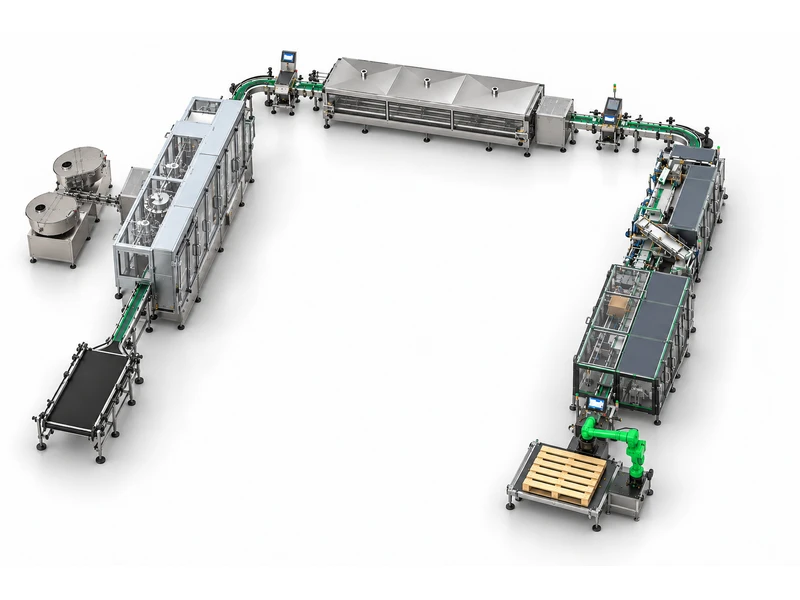
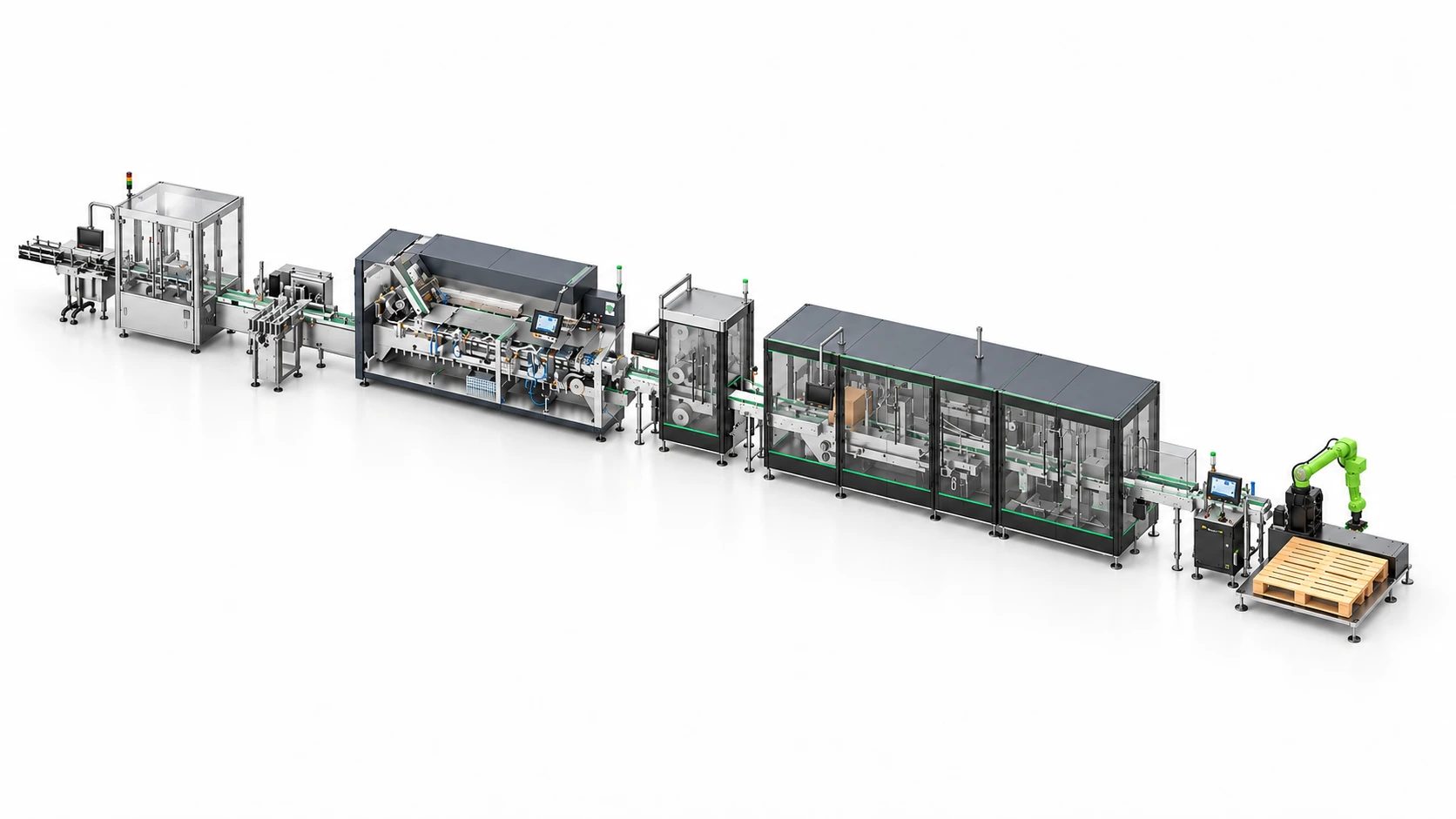
Aerosols · secondary packaging. This shared packing line shows the downstream route for closed packs: transfer, cartoning, case packing and palletizing. The line provides process context; the individual product is not identified as a separate station in this view.

Production line · Equipment context

Aerosols · secondary packaging

Explore the process areas on the production line associated with this equipment.

Skip tour
Production layout 5 equipment areas · Scroll to explore

This shared packing line shows the downstream route for closed packs: transfer, cartoning, case packing and palletizing. The line provides process context; the individual product is not identified as a separate station in this view.

Related production lines: Pharmaceutical Aerosol Production Lines

Line integration

Empty cans + Valves + Liquid product + Propellant

↓

A process sequence built around the selected aerosol pack

Container presentation → formulation dosing → valve handling at the specified stage Valve crimping and charging in the order required by the pack design Specified filled-pack tests → any required drying → secondary packaging ↓ Finished aerosol spray products → Case packing / palletizing Upstream: empty cans, valves, liquid product and propellant from dosing/compounding

Downstream: finished cans to case packing and palletizing

The pack identifier or tracked position links fill, closure and test decisions to the correct unit. Rejection and recovery must preserve that association when a station stops or a pack is removed.

The formulation and charging medium determine the facility and equipment risk assessment. Agree the applicable pressure, ventilation and hazardous-area requirements with the responsible specialists, along with the qualification and acceptance scope.

Support throughout your project and production

Define the equipment scope

The formulation, valve system and container pressure requirements determine the process sequence and equipment specification.

Learn more

Agree the acceptance test

Check filled unit mass, closure and the agreed functional spray tests before downstream packing.

Learn more

Prepare for operation

Identify the contact parts and format tooling for Aerosol Spray System. Agree access for cleaning, the spares to hold and the operating records the site will need.

Learn more

Knowledge hub

2 resources

Frequently asked questions

Can one line handle both conventional aerosols and bag-on-valve packs?

Only where the selected equipment and tooling support both routes. The product path, valve assembly and charging sequence differ, so both pack designs need their own process assessment.

Does a valve diameter define the crimp setup?

Diameter alone is insufficient. The valve cup, gasket, container finish and their tolerances define the required closure geometry and tooling. Supply the approved component drawings and representative samples.

Is water-bath testing required for every aerosol product?

The applicable test strategy depends on the pack, contents and project requirements. Select and qualify the appropriate method with the responsible technical and regulatory teams rather than assume one test suits every aerosol.

Does aerosol filling make the product sterile?

No. The filling and pressure-charging functions do not establish sterility. Any sterile-process requirement needs a separately defined product, component, environment and contamination-control strategy.

Contact

Share the aerosol formulation, can and valve drawings, product and charging quantities, and the required downstream package. These inputs establish the filling sequence, closure interface and appropriate test scope.

Discuss your project →
Rotary index table beneath a bank of aerosol processing heads