Define the equipment scope
Tooling geometry, feed behaviour and the force profile affect weight consistency and mechanical strength.
Learn moreProcess expertise. Chinese manufacturing. Global perspective.

Equipment & technology
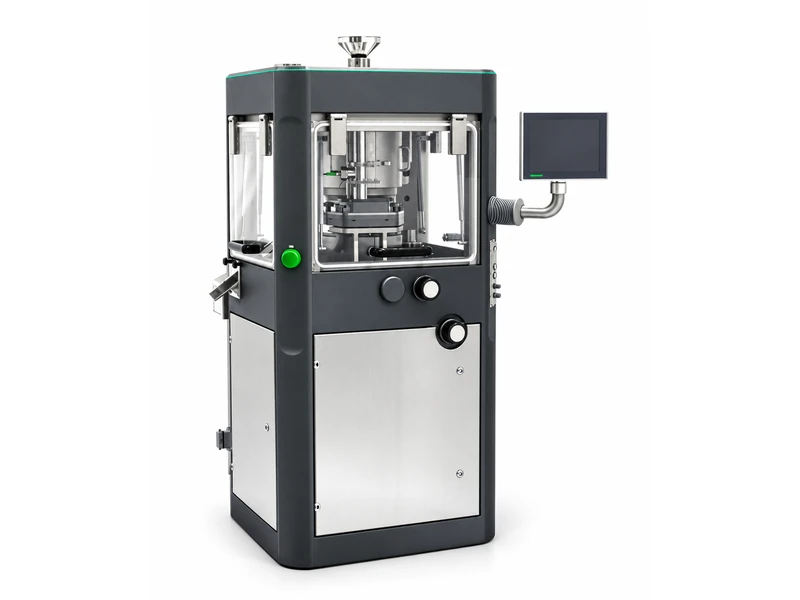
A single-layer rotary tablet press carries dies through powder filling, metering, compression and ejection. One formulation feed supplies each tablet, while the tooling and force history turn that measured charge into a compact that must withstand downstream handling.
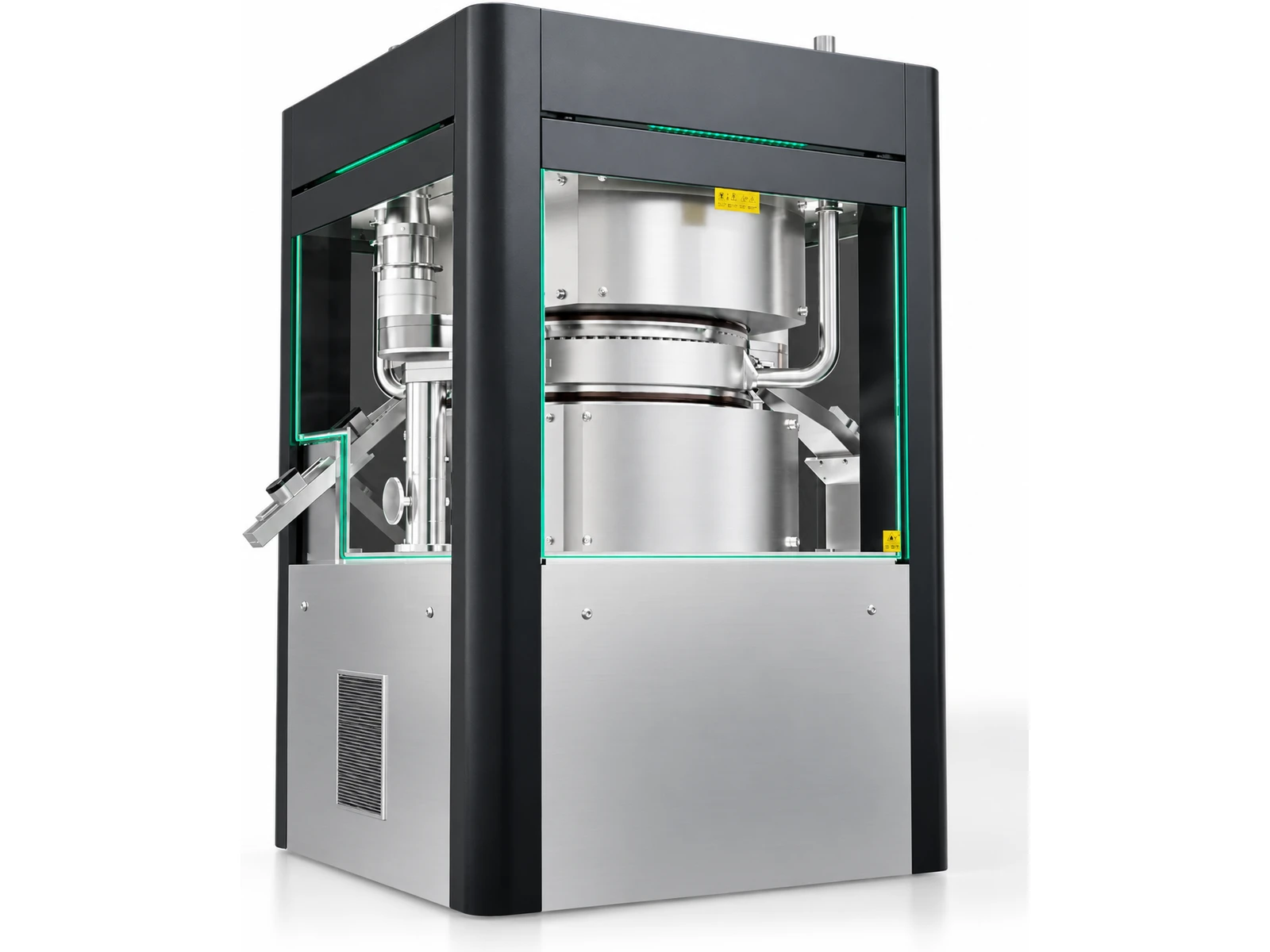
The feeder presents powder to moving dies, the metering arrangement establishes the charge and punches compress it before ejection. At higher operating rates the time available for filling and compaction changes. The usable speed therefore depends on blend flow and compaction response, not station count alone.
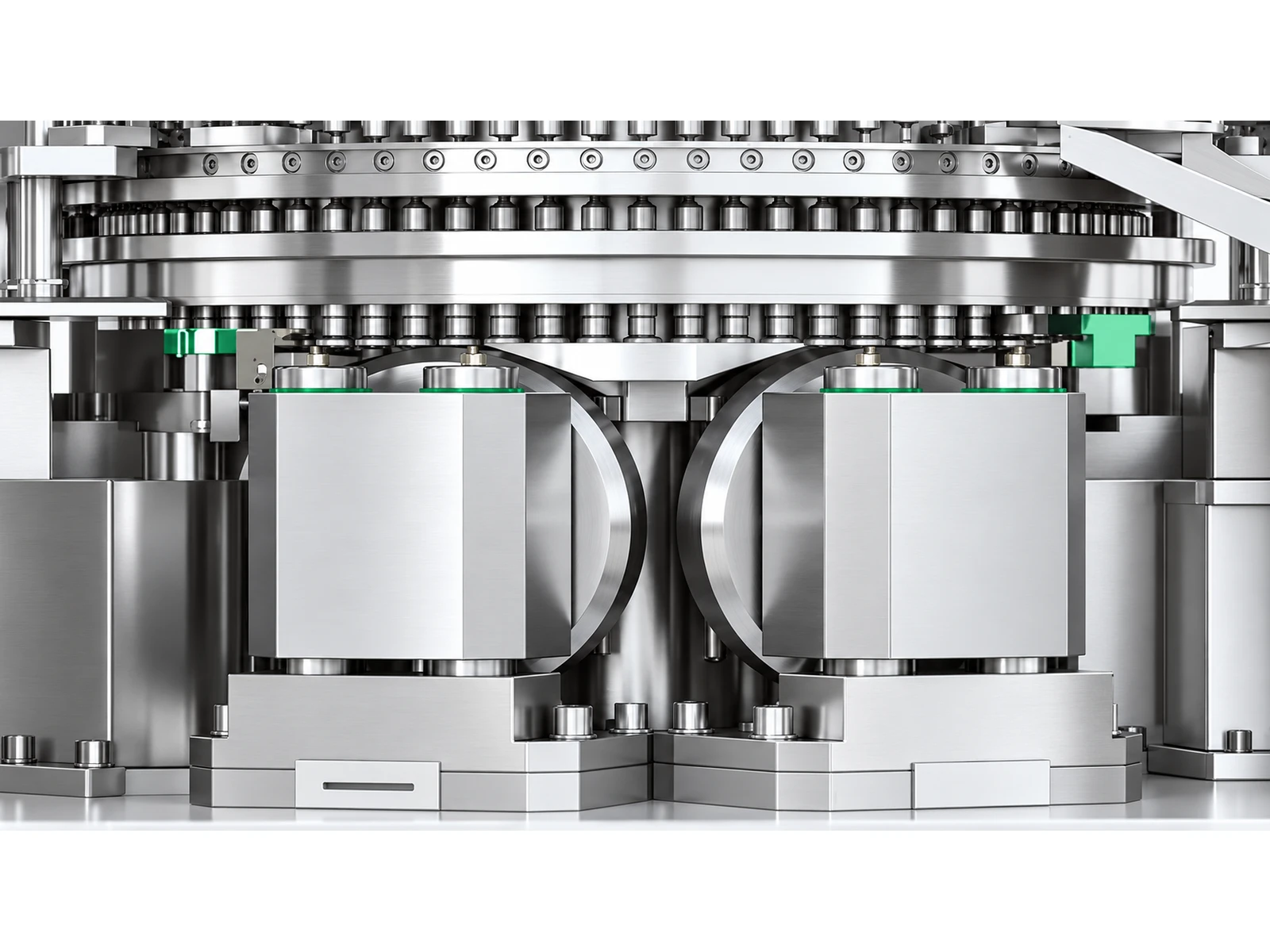
Follow the compression cycle
Tablet mass, compact strength and ejection behaviour arise at different stages of a rotary press.
Filling
Deliver a repeatable charge into each die
Compression
Apply the required force and dwell profile
Ejection
Release and transfer the compact without damage
—
Process options
Weight variation and mechanical defects have different causes. Intermittent die filling can change the charge, while unsuitable loading, tooling condition or ejection can affect the tablet even when its mass is correct. Evaluating both helps identify where an adjustment belongs.
Punch and die geometry establishes the tablet profile, embossing and available fill space. The selected feeder, precompression and main-compression arrangement shape the material history; press readings need to be interpreted with the physical tablet measurements.
Ejection and discharge transfer the compact out of the die. Sticking, edge damage and dust can emerge at this stage or in dedusting. Cleaning of feed and contact parts, tooling inspection and restoration of setup references help keep changeovers repeatable.
Use these inputs to define the proposed configuration. Confirm operating values against the selected model and trial conditions.
| Project input | What to record and why |
|---|---|
| Tooling drawing | Supply punch and die geometry, dimensions and embossing. Use the revision approved for the proposed test material. |
| Target tablet weight | State the nominal weight and acceptance range alongside the tooling and formulation. Select a fill condition that can be verified by weighing. |
| Blend flow | Describe how the powder feeds after transfer, including segregation or intermittent flow. Record the observed behaviour in the trial hopper. |
| Compression profile | Define the sequence of fill, precompression, main compression and ejection. Keep the measured force record with the finished tablet sample. |

Compare tablet mass with the feed and metering behaviour, then review dimensions and mechanical properties against the loading conditions. Do not use one force value as a substitute for observing the actual tablet.
Evaluate the intended blend and tooling across the proposed range. Observe filling consistency, compression and ejection along with accepted tablet quality, including the effects of dedusting and transfer.
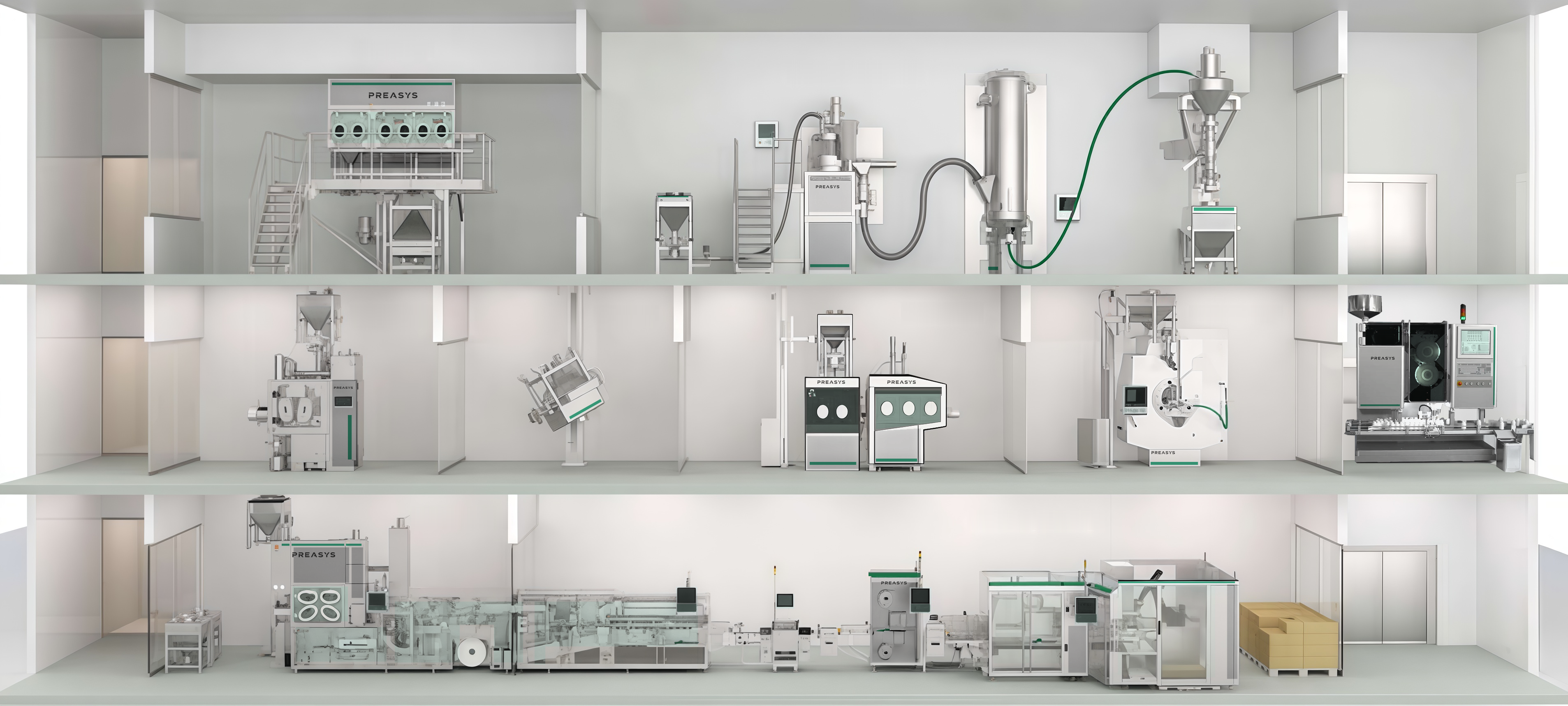
Oral solid dosage · Integrated production
Discover the equipment behind your solid dosage process.
Route selection. Wet and dry granulation are alternatives. Select tablet compression or capsule filling for the dosage form; include coating when required.
Illustrated equipment and packaging options show process relationships. The facility layout and equipment configuration are defined for each project.
Prepared blend enters from the selected direct-processing or granulation route. Tablets leave for dedusting, the required quality checks and any specified coating or packaging operation. Transfer trials should show whether the tablet retains its intended condition beyond the press outlet.
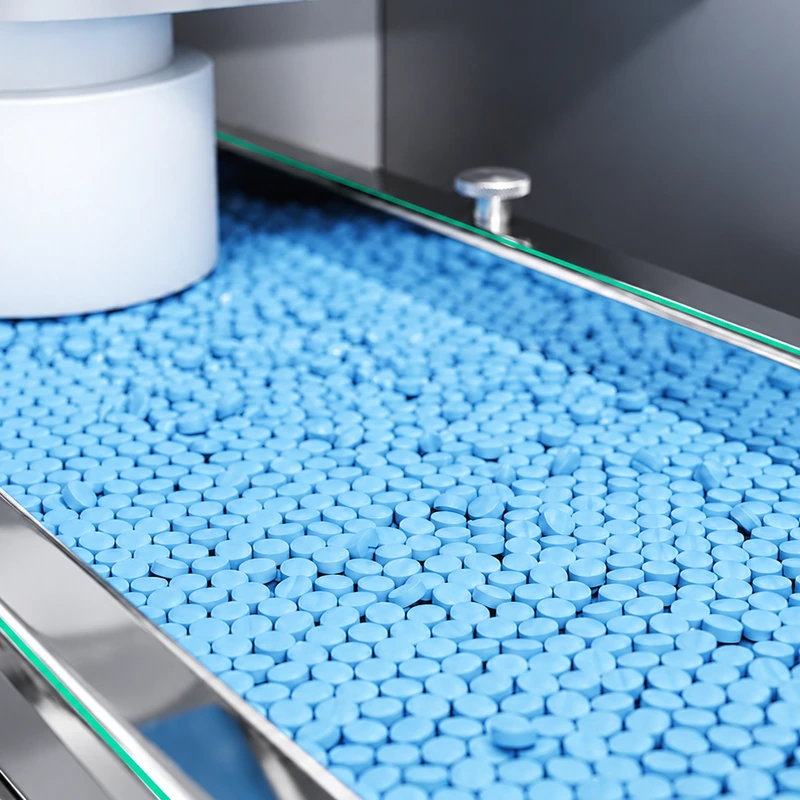
Tooling geometry, feed behaviour and the force profile affect weight consistency and mechanical strength.
Learn morePass trial tablets through dedusting and downstream inspection and examine edge damage and dust carryover.
Learn moreIdentify the contact parts and format tooling for Single Layer Tablet Press. Agree access for cleaning, the spares to hold and the operating records the site will need.
Learn moreShare tooling drawing, target tablet weight and blend flow.
Request product information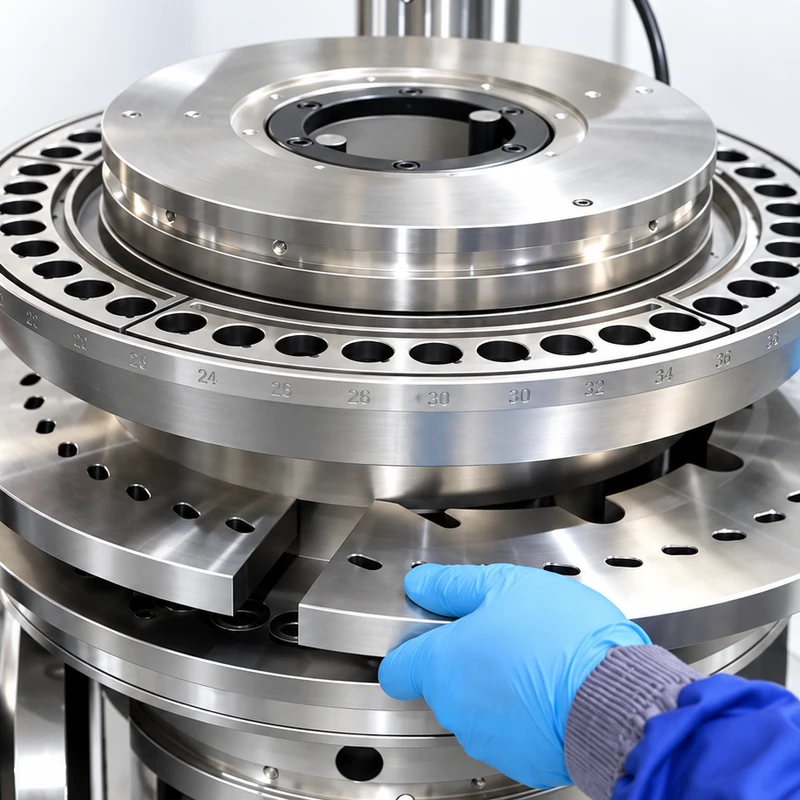
Brochure
Single Layer Tablet Press
Available by enquiry
Request product information2 resources
No. Filling time, material response, tooling geometry and the quality criteria constrain the useful rate of the selected configuration.
That requires the appropriate separate feeds and compression arrangement. It is covered by the multilayer product scope rather than assumed for this page.
Not always. Direct compression may be suitable when the formulation meets the feeding and tablet requirements. Material testing determines the preparation route.
For a configuration review, include tooling drawing, target tablet weight, blend flow, compression profile.
Discuss your project