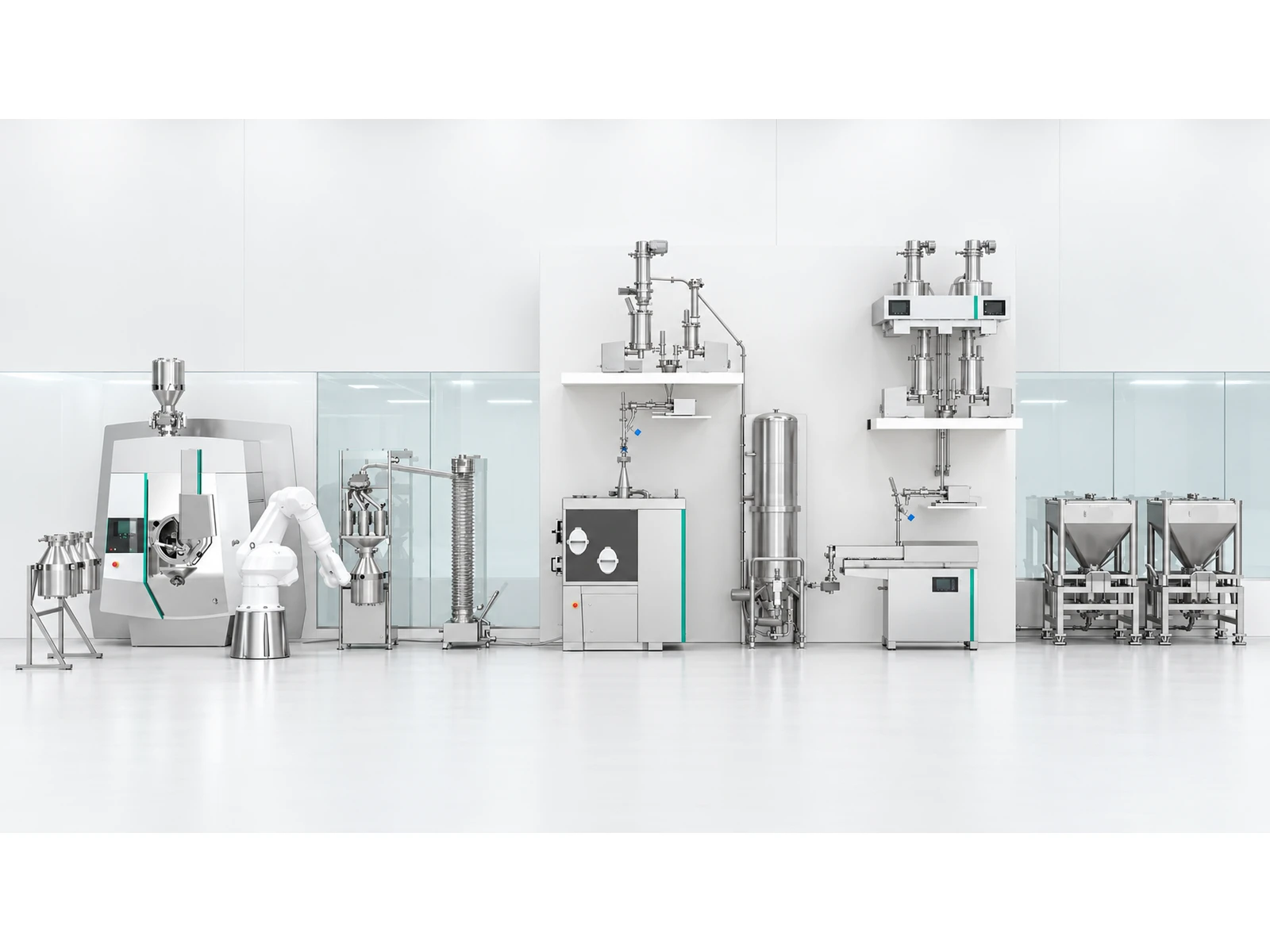
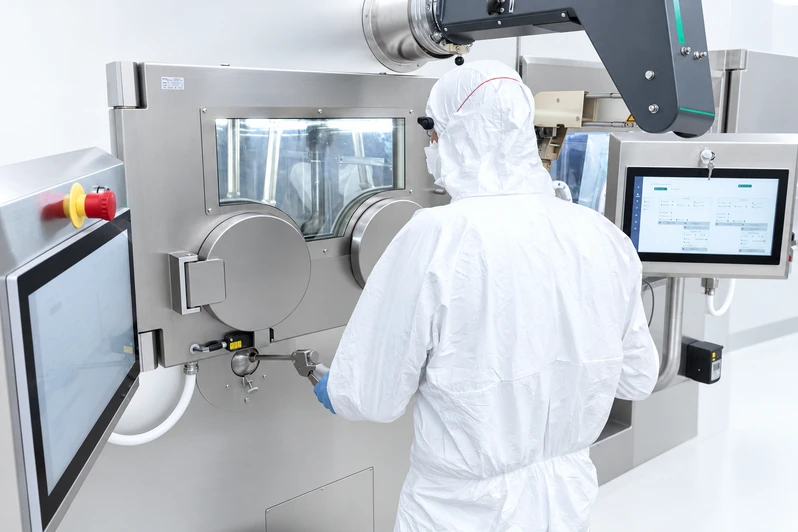
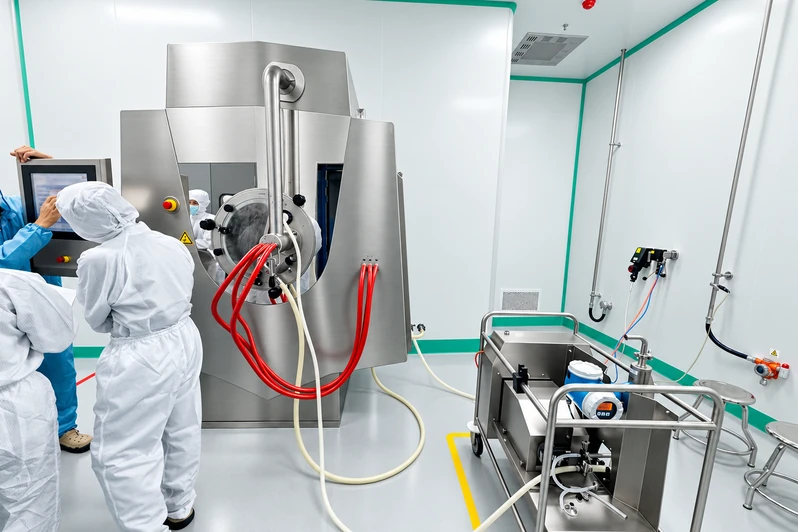
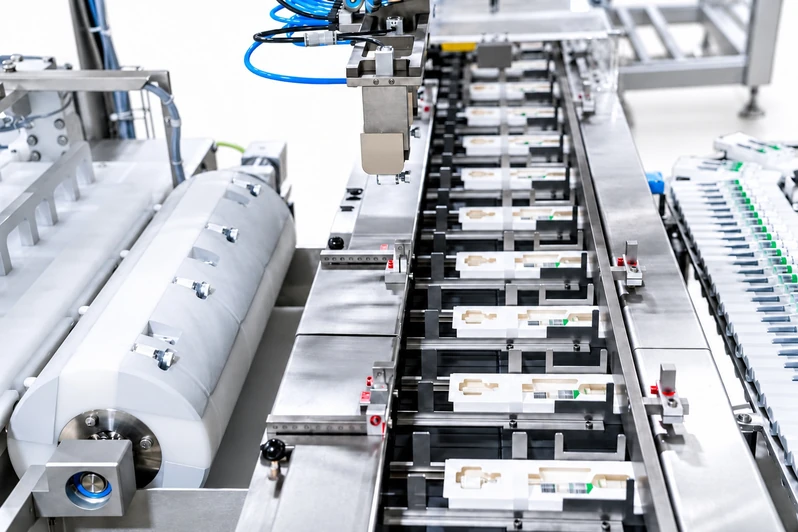
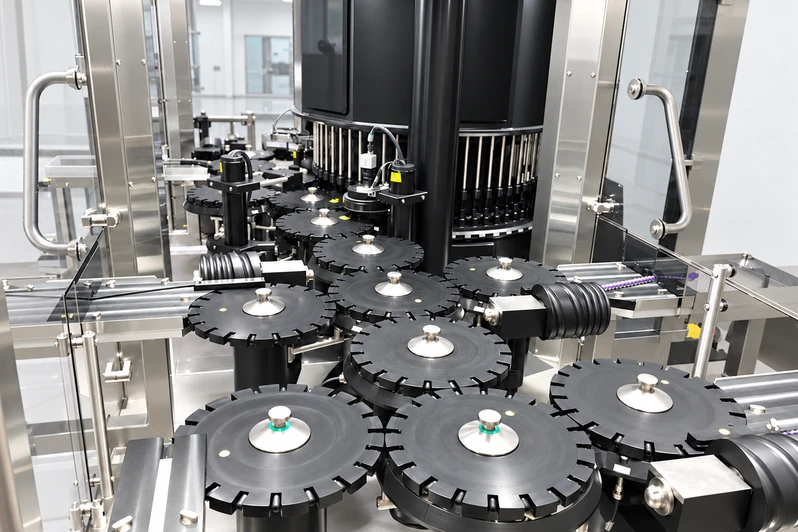
Explore pharmaceutical equipment by the operation it performs: preparing material, forming or filling a dosage unit, inspecting a product, or packing the finished presentation. Processing equipment, laboratory systems and plant utilities serve different roles, and the catalogue keeps these choices visible.
The material or container received by a machine is the starting point for equipment selection. A powder feeder, liquid filler and finished-container inspector each solve a different task even when they serve the same dosage form. Compare the operation, handling format and resulting output before comparing configurations.
Equipment families by project role
Start with the part of the factory you are specifying. Each link opens the equipment catalogue for that family.
Browse the equipment families below. Production equipment changes or packages the product, inspection systems assess specified characteristics, and utility systems supply supporting media. Some machines appear through more than one relevant entrance; their actual process role determines which page to use.
Cleaning & Sterilization
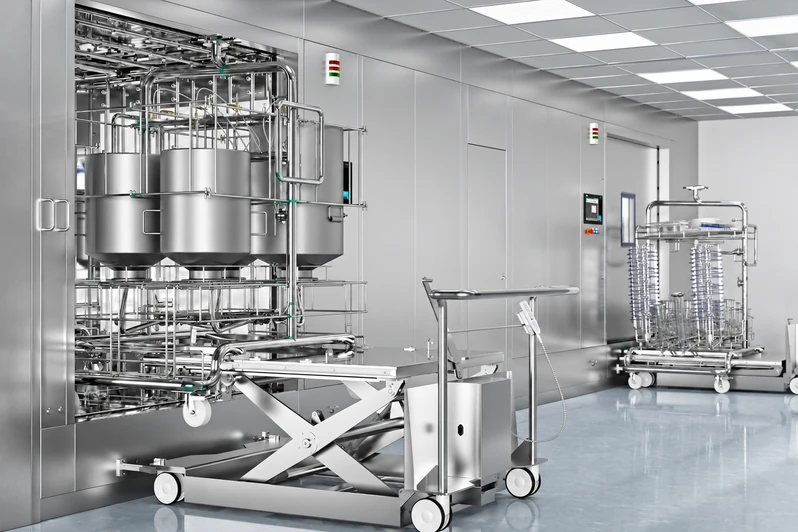
Product-contact parts and equipment loads require defined cleaning or sterilization steps. Explore washers and steam-sterilization systems with attention to load access, drainage, media supply and the condition required after the cycle.
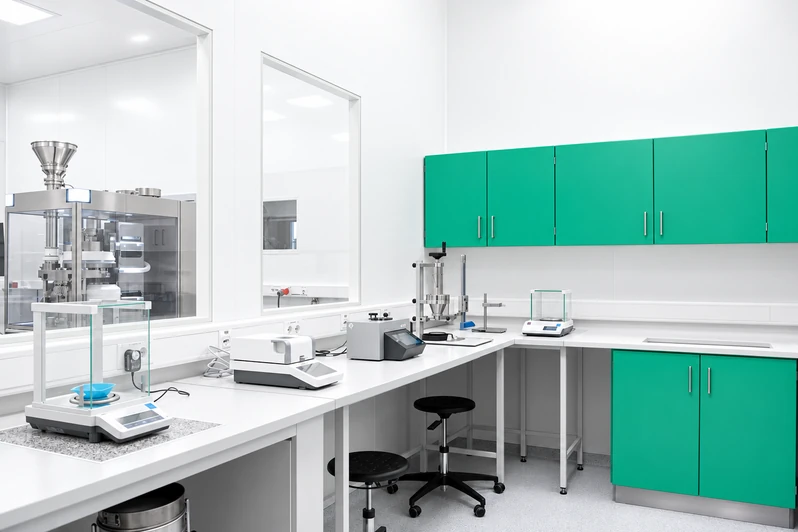
Development equipment supports material trials and the study of individual operations. Explore granulation, compaction, coating, capsule and packaging work at laboratory or pilot scope, with results interpreted in relation to the tested formulation and scale.
Material movement connects storage locations, transport equipment and production demand. Explore physical handling and warehouse-system functions separately, including load identification, routing and the information exchanged with production.
Radiopharmaceutical processing links synthesis, dispensing and inspection with shielding and containment. Explore equipment by its task and material state, keeping activity handling distinct from aseptic processing and finished-dose testing.
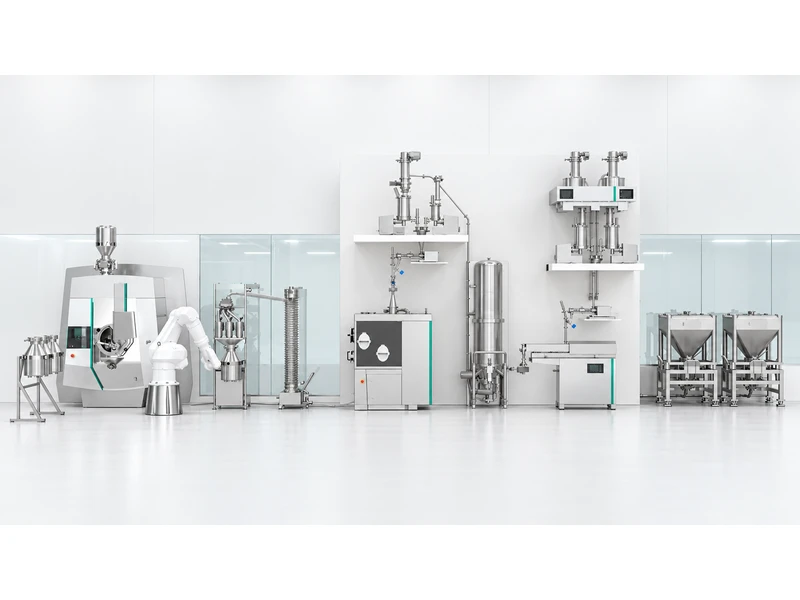
Powder properties influence blending, granulation, drying and the subsequent tablet or capsule operation. Explore each unit operation and its material-transfer requirements, with coating treated as a product-dependent step.
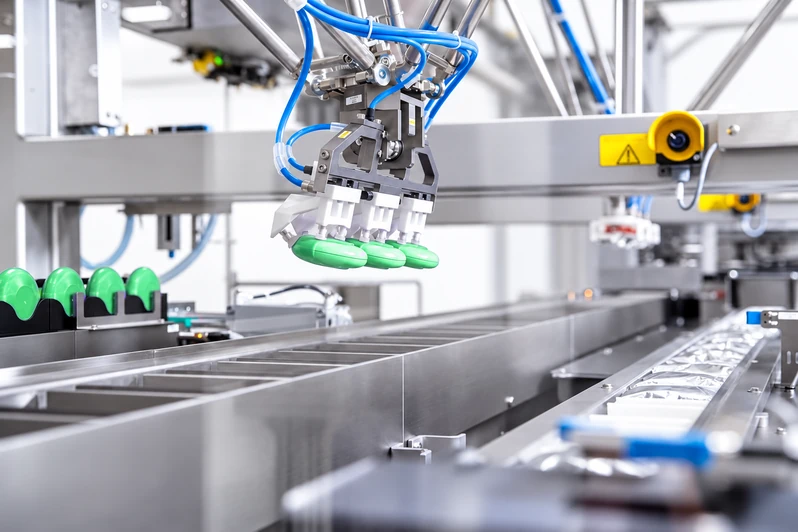
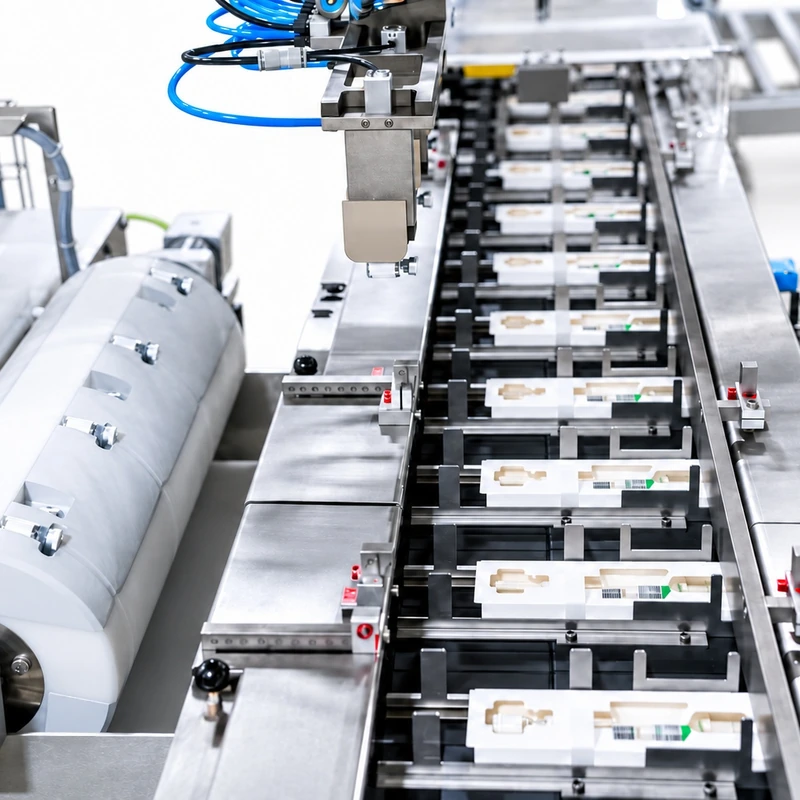
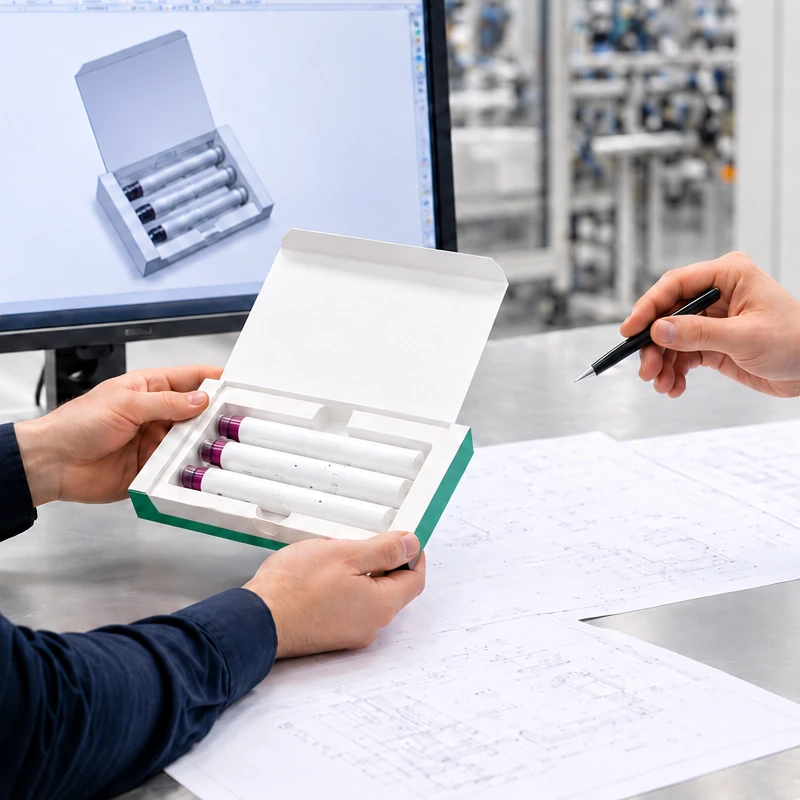
Primary packaging contains or directly protects the product; secondary packaging groups and identifies the finished presentation. Explore blister and bottle routes, device assembly, cartoning and end-of-line operations with their respective handoffs.
Quality-control instruments and production inspection systems assess different objects under different sampling and handling conditions. Explore material characterization, dosage-unit testing and container inspection by the property being assessed.
Mixing, emulsification, deaeration and filling depend on viscosity, temperature and product structure. Explore preparation and packing equipment for the intended semi-solid or related formed presentation, including its transfer and cleaning requirements.
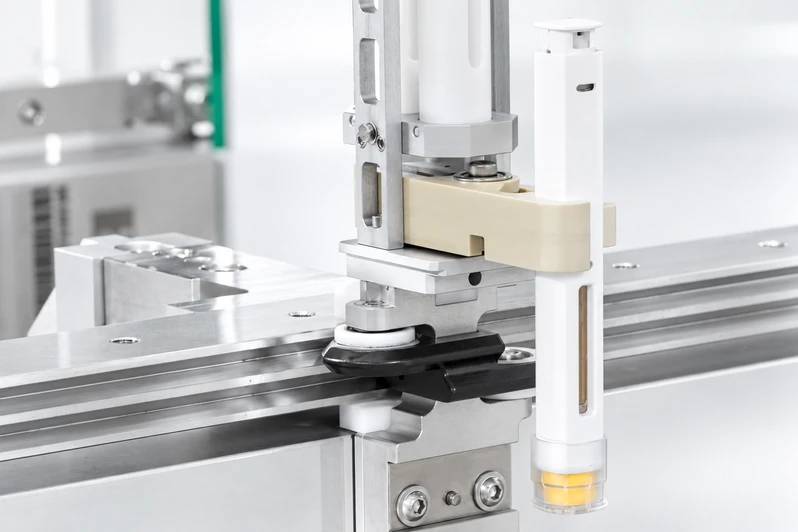
Inhalers, pens, autoinjectors, films, patches and spray presentations combine product processing with specific delivery formats. Explore the relevant forming, filling or assembly operation rather than treating the delivery-device name as one universal machine.
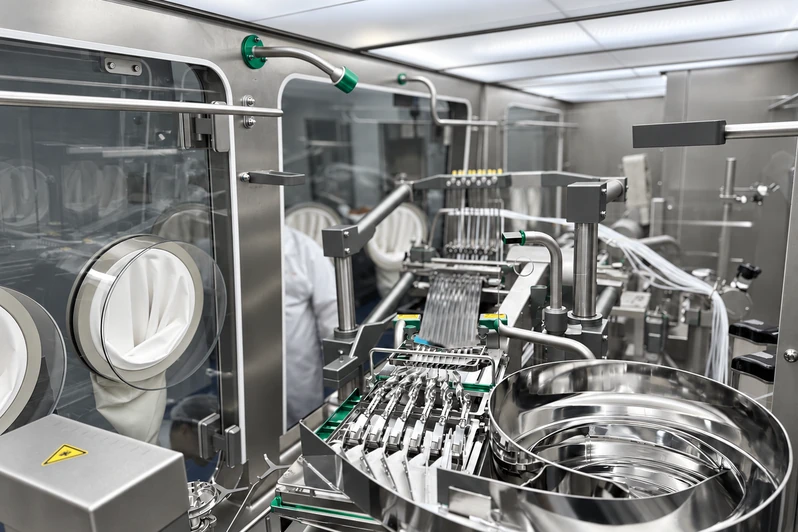
Container preparation, filling, closure and inspection perform distinct jobs in a sterile-product route. Explore equipment for the actual container and product state, including barrier and transfer interfaces where required by the selected process.
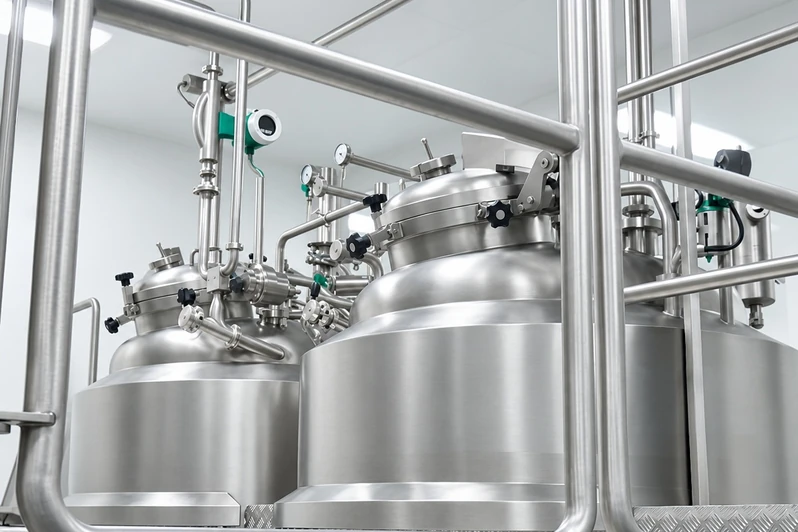
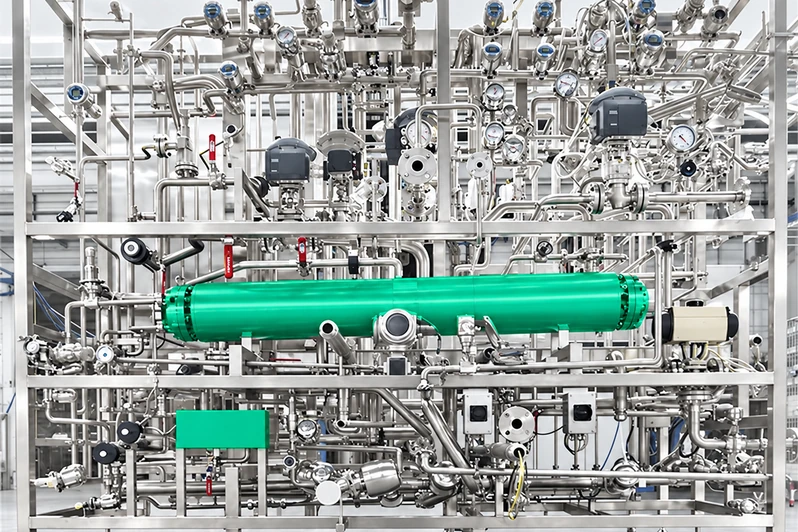
Purified water, water for injection and pure steam serve different process duties. Explore generation, storage and distribution together with the quality and demand required at each point of use.
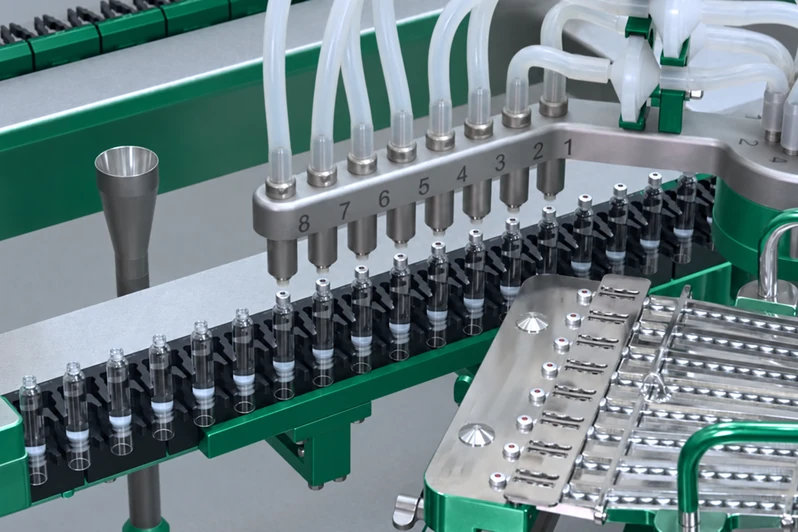
Compare filling operations for vials, cartridges, syringes and other selected presentations. Liquid dosing, powder dosing and container forming require different product paths and should be assessed against the actual formulation and pack.
A machine handoff includes more than nominal throughput. Container orientation, bulk-product behaviour, support format and the accepted incoming condition determine whether adjacent operations connect. Product-contact transfers and utility connections are described separately so that equipment interfaces remain traceable through the line.
How does the unit operation narrow an equipment choice?
Identify what changes across the machine: powder becomes granules, an empty container receives a dose, or an inspected pack receives an accept/reject decision. That transformation identifies the relevant family. Material properties, container geometry and the required outgoing state then distinguish configurations within it.
How is production equipment different from a laboratory or QC instrument?
Production equipment acts on the manufacturing stream. A laboratory system studies a process or material, while a QC instrument evaluates the defined sample and characteristic. They may address related questions but have different handling, scale and data requirements; a similar product name does not make them interchangeable.
Support throughout your project and production
Define the equipment scope
Define the selected machine function and the incoming and outgoing states it must handle. Connect these requirements to tooling, product-contact materials and the interfaces retained elsewhere in the line.
Use representative material, containers or test samples to assess the selected operation. Acceptance criteria distinguish a mechanical handling result from a product-quality or measurement result.
Coordinate operating instructions, cleaning access, change parts and maintenance with the supplied configuration. Handover information should reflect the machine installed and its connection to adjacent equipment.
Should I select a family by dosage form or by the task I need to perform?
Use the task when the process is already defined, such as wet granulation, vial filling or container inspection. Use a dosage-form line page when the sequence and its alternatives still need to be understood.
Can production inspection and quality-control testing share one equipment specification?
Only when their actual tasks and configuration are the same. A production inspector handles the manufacturing stream, while a QC instrument may test selected samples for a different property. The inspection object, method and handling arrangement must be distinguished.
Are utility and cleaning systems part of the product-flow sequence?
They support operations through process media, cleaning or sterilization. Their load and point-of-use interfaces matter to the line, but they are not necessarily consecutive stations through which every finished unit passes.
Does an equipment-family listing define the full supply scope?
The family identifies a process capability to investigate. The selected configuration and agreed scope define the supplied machine, accessories, interfaces and services; the catalogue does not make every option standard.