Skip to content

Process expertise. Chinese manufacturing. Global perspective.

PREASYS

Equipment & technology

Lyophilization

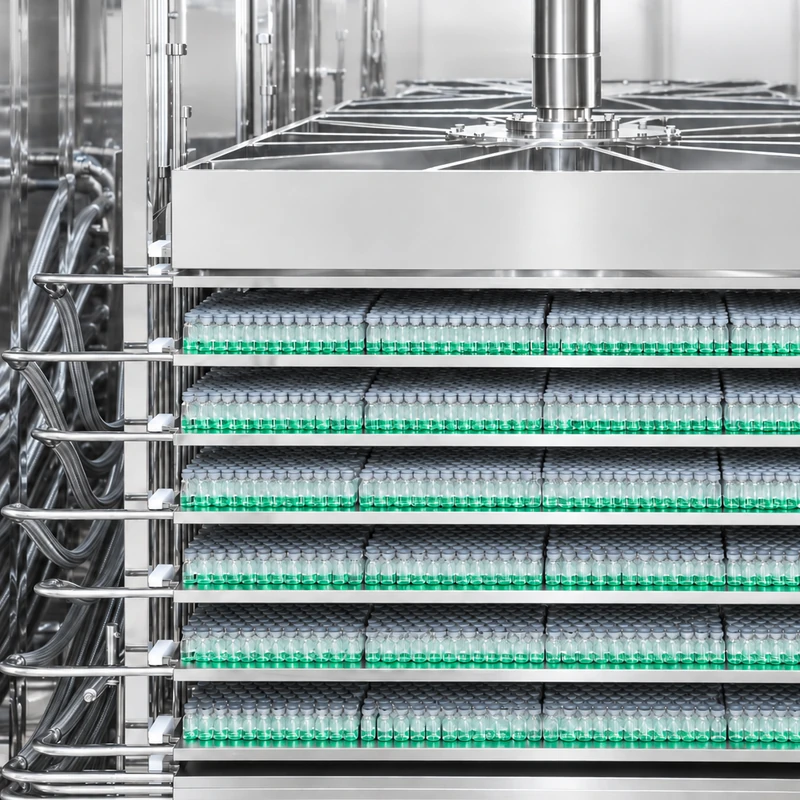
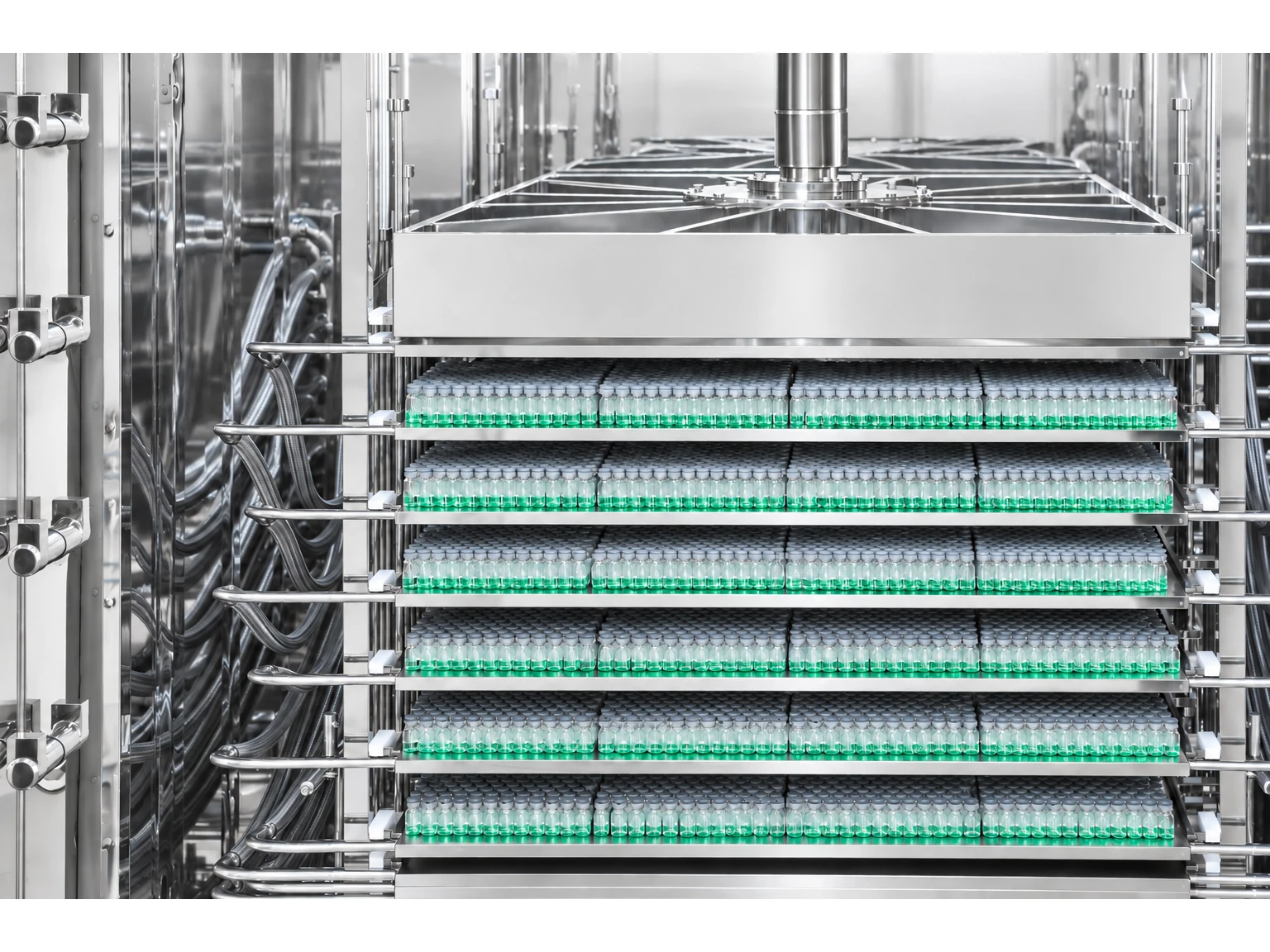
Filled vials pass through a drying cycle on temperature-controlled shelves before final closure.

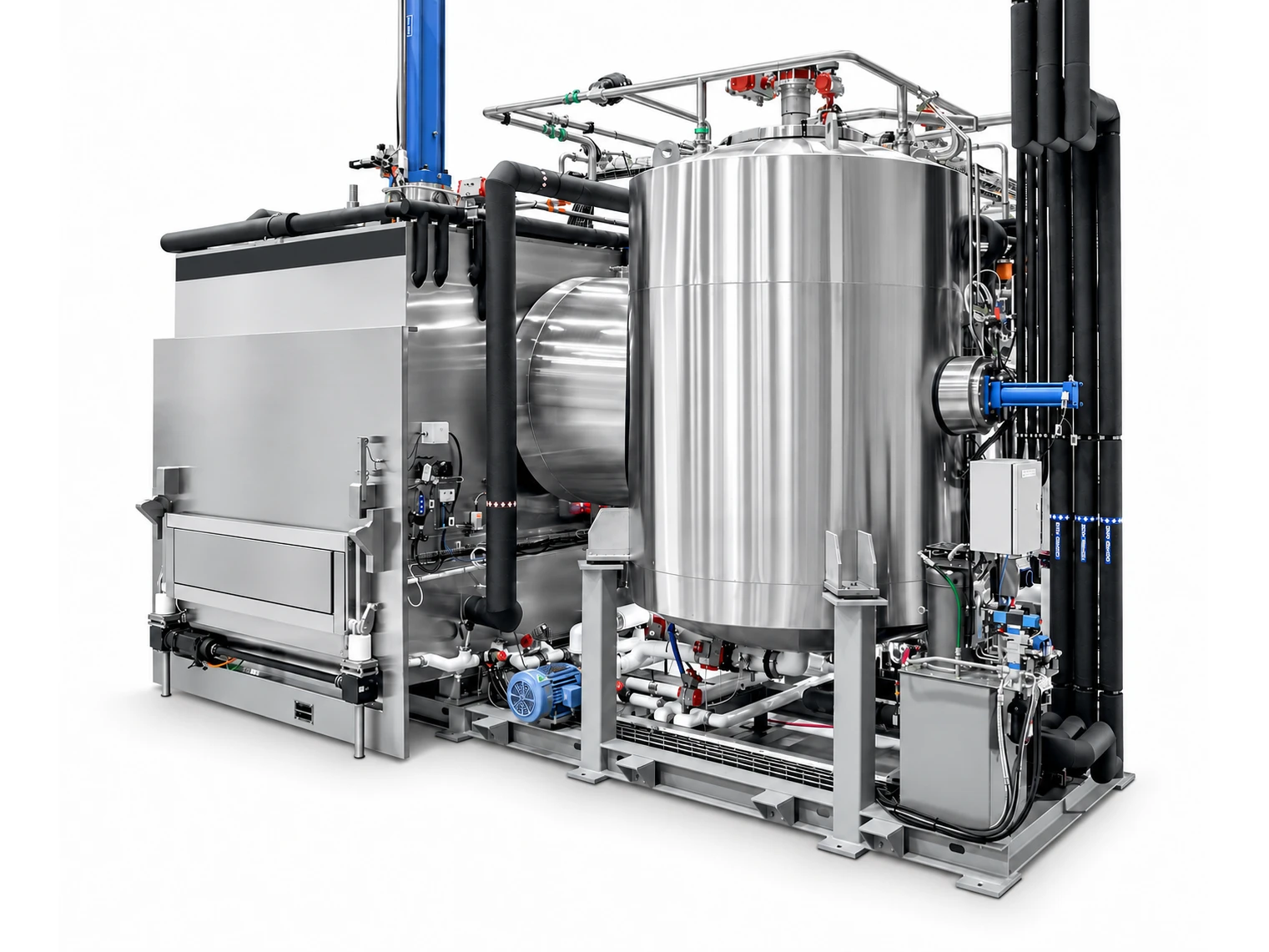
Freeze-drying chamber with service piping on its rear frame

Lyophilization

Preasys Lyophilizer (Freeze Dryer)

Preasys Lyophilizer Systems — Controlled Freeze-Drying for Sensitive Sterile Products

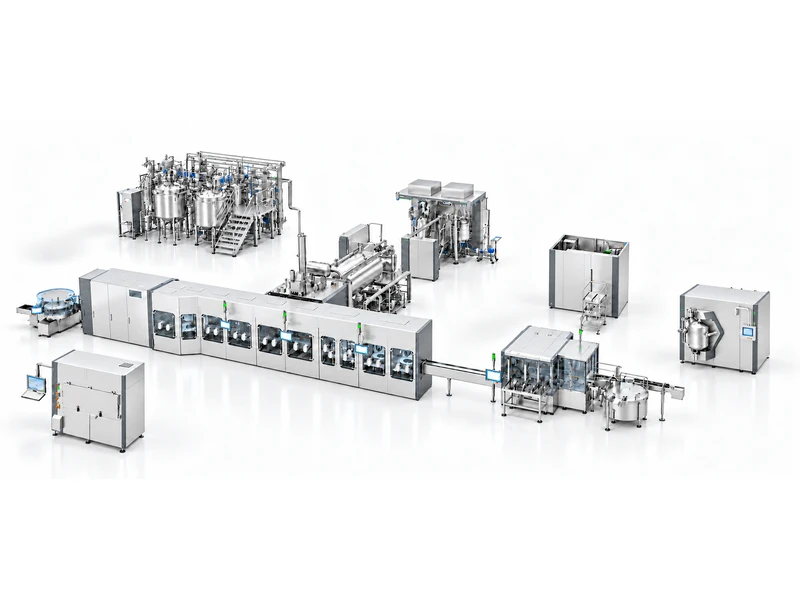
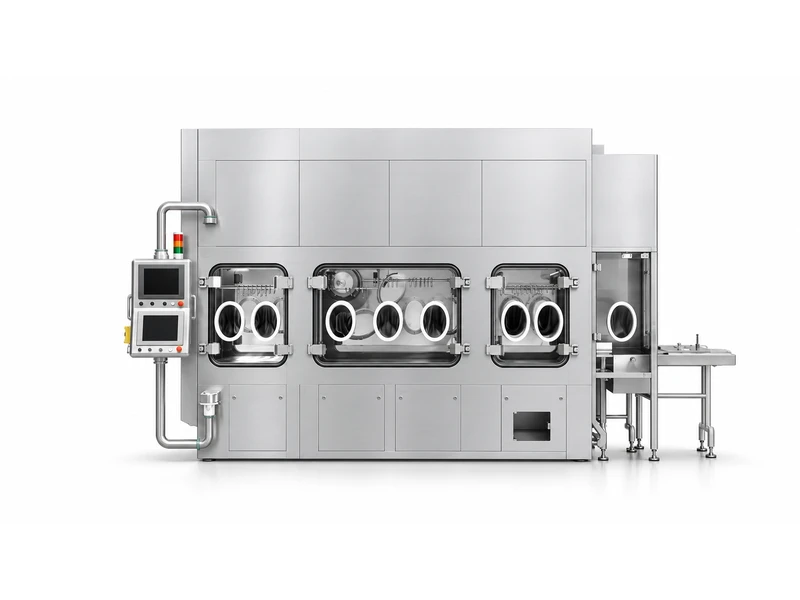
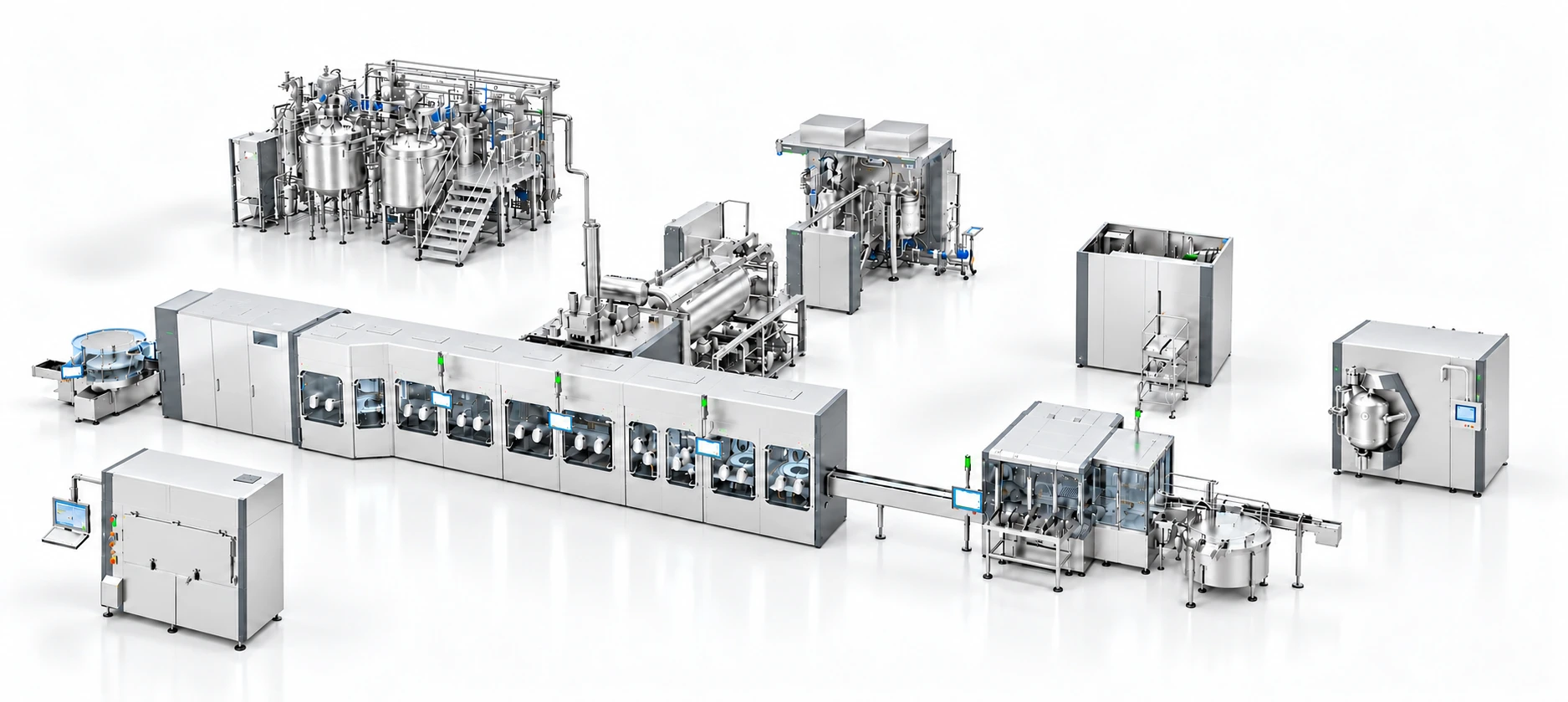
Preasys freeze dryers are delivered as part of a complete aseptic lyo line: washer, depyrogenation tunnel, isolator filling, ALUS loading, dryer, restoppering, crimping, and visual inspection — all commissioned by one team. You do not interface with three vendors and a gap between the filler and the dryer. One engineering scope, one FAT, one SAT, one responsibility from start-up to validation.

Vials arranged on multiple shelves inside a freeze dryer

Configuration data

Freeze-dryer configurations. The shelf area spans pilot and production sizes. The quoted temperature range applies to the standard shelf system.

0.5–40 m²

Shelf area across the family

−55 to +60 °C

Standard shelf temperature range

Process challenges

Three vendors, three project schedules — filler vendor delivers, dryer vendor delivers, isolator vendor delivers.

Read details

Three vendors, three project schedules — filler vendor delivers, dryer vendor delivers, isolator vendor delivers. The interfaces between them are where delay happens

- Uneven shelf temperature drives batch-to-batch variability — shelves at different distances from the coolant supply run at different temperatures, producing vial-to-vial moisture spread within the same load

- CIP misses hard-to-reach surfaces — shelf undersides, condenser coils, and door seals are the most common cleaning validation failures

- Cycle development is trial and error — without PAT tools, engineers run full batches to test one shelf temperature step, consuming product and cleanroom time

- Partial stoppering inconsistency — shelves do not descend uniformly, leaving some vials under-stoppered and others crushed

Technical data & features

Vial base, fill depth, batch size and product temperature limits inform cycle development and shelf loading.

Vials arranged on multiple shelves inside a freeze dryer

- Shelf area: 0.5 m² (pilot) to 40 m² (production); multi-door / pass-through configurations

- Shelf temperature range: -55°C to +60°C standard; down to -80°C for cryogenic applications

- Shelf temperature uniformity: ±1.0°C across the loaded shelf surface

- Condenser capacity: 25 kg to >1,000 kg per cycle; chamber can be separated from condenser by a valve

- Minimum vacuum: 0.01 mbar

- CIP: spray ball coverage validated on all wetted surfaces; SIP at 121°C saturated steam

- Partial stoppering: hydraulic shelf compression with position feedback and load monitoring

- Single-floor, multi-floor, and pass-through installation options

Review the freeze-dryer controller's audit history, signature functions and batch record for the proposed software release.

- Option: wireless product temperature sensors (no wire feedthrough), NIR residual moisture measurement

How it works

How-To

How to size a freeze dryer for your product?

1. Calculate shelf area from vial diameter × batch size, adding 10–15% margin for loading density

2. Size condenser capacity to 1.2× the maximum ice load per cycle

3. Select shelf temperature range based on T' (glass transition) or eutectic temperature of your formulation

4. Decide single-door (loading/unloading same side) vs. pass-through (opposite sides, continuous flow)

5. Match vacuum pump capacity to chamber volume and water vapor load

6. Add CIP/SIP if multi-product; skip if fully dedicated line

How to develop a robust primary drying cycle?

1. Determine T' by DSC (differential scanning calorimetry)

2. Set shelf temperature below T' minus 5°C safety margin

3. Apply vacuum; monitor product temperature at coldest, warmest, and center positions

4. End primary drying when product temperature equals shelf temperature for a defined hold

5. Ramp shelf temperature upward for secondary drying; hold until residual moisture target is met

6. Use MTM (Manometric Temperature Measurement) or comparative pressure method to confirm endpoint without consuming product

How Preasys integrates the dryer into your line — not just ships it?

1. We take the filler layout, isolator window dimension, and dryer flange as one engineering package

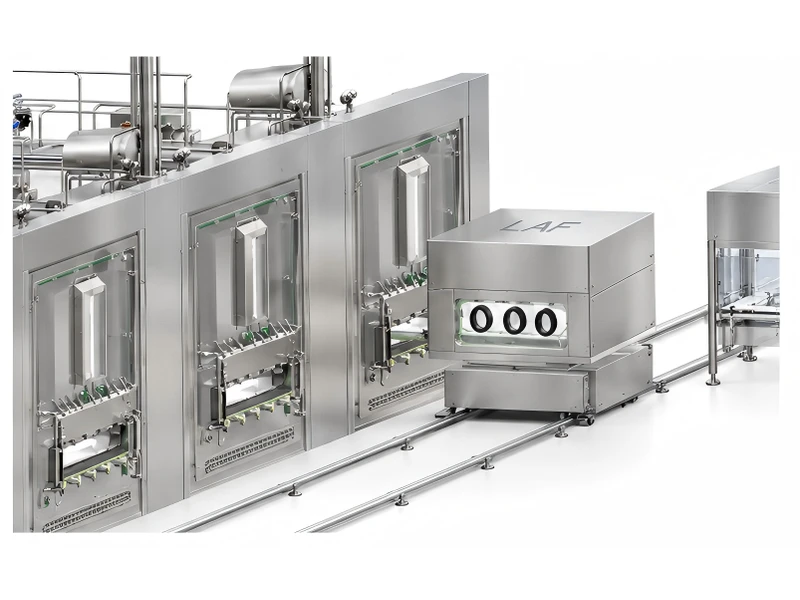
How do we review the transfer from filler to freeze dryer?

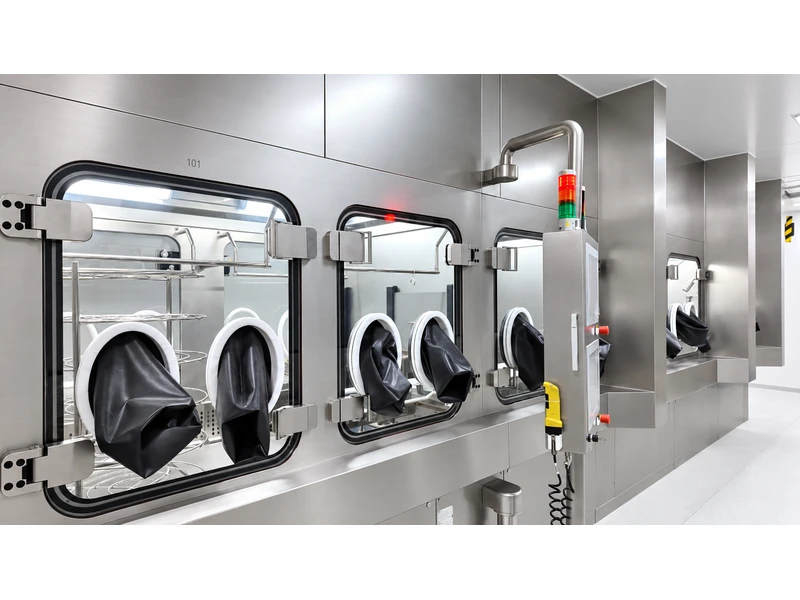
Trace the route through the loading door, chamber and unloading interface. Agree how door sequences, airflow and pressure states are tested before open containers cross the boundary.

Lyophilized vial line. Explore vial preparation, filling, dryer transfer and freeze drying, with closing and parallel support equipment.

Production line · Equipment context

Lyophilized vial line

Explore the process areas on the production line associated with this equipment.

Skip tour
Production layout 10 equipment areas · Scroll to explore

Explore vial preparation, filling, dryer transfer and freeze drying, with closing and parallel support equipment.

Related production lines: Lyophilized Vial Production Lines · Antibody-Drug Conjugate Manufacturing & Fill-Finish · Plasma-Derived Product Preparation & Fill-Finish · Vaccine Formulation & Fill-Finish Equipment · Liquid Vial Filling & Packaging Lines

Line integration

Vials fillingline

Stopper processing system

Vials isnpection machine

Support throughout your project and production

Define the equipment scope

Vial base, fill depth, batch size and product temperature limits inform cycle development and shelf loading.

Learn more

Agree the acceptance test

Match loading pitch and shelf elevation to the transfer mechanism and protect partially stoppered vials.

Learn more

Prepare for operation

Identify the contact parts and format tooling for Lyophilization. Agree access for cleaning, the spares to hold and the operating records the site will need.

Learn more

Knowledge hub

2 resources

Frequently asked questions

What shelf size do I need?

Calculate from vial diameter × number of vials per batch. Add 10–15% margin for shelf spacing and loading density.

How long does a typical cycle take?

Primary drying: 24–72 hours depending on product and fill volume. Secondary drying: 4–12 hours. Total cycle: 2–4 days for typical monoclonal antibody formulations.

Can I run my cycle in a lab freeze dryer and scale directly?

Yes — if shelf area, vial spacing, and thermal mass ratio match. Otherwise, scale-up based on heat flux, not time.

CIP or manual cleaning?

CIP is required for multi-product campaigns. Manual cleaning is acceptable only for dedicated single-product lines.

Do you offer pilot-scale units?

Yes — 0.5 m² to 2 m² shelf area for process development and clinical batches.

Contact

For a configuration review, include container drawing, product-contact materials, intended dose, closure format, batch size.

Discuss your project
Vials arranged on multiple shelves inside a freeze dryer