Skip to content

Process expertise. Chinese manufacturing. Global perspective.

PREASYS

Equipment & technology

Pharmaceutical High-Shear Mixer Granulator (Wet Granulation)

Binder addition changes how a powder bed mixes and agglomerates.

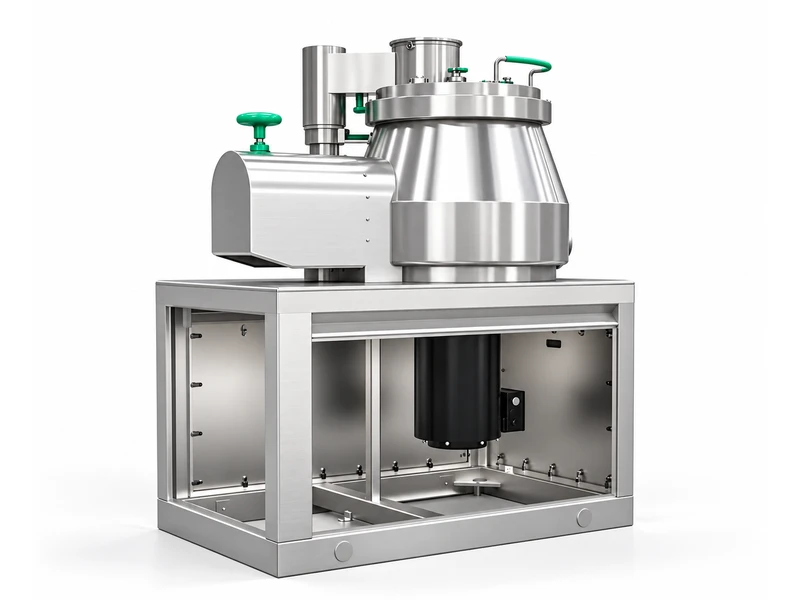
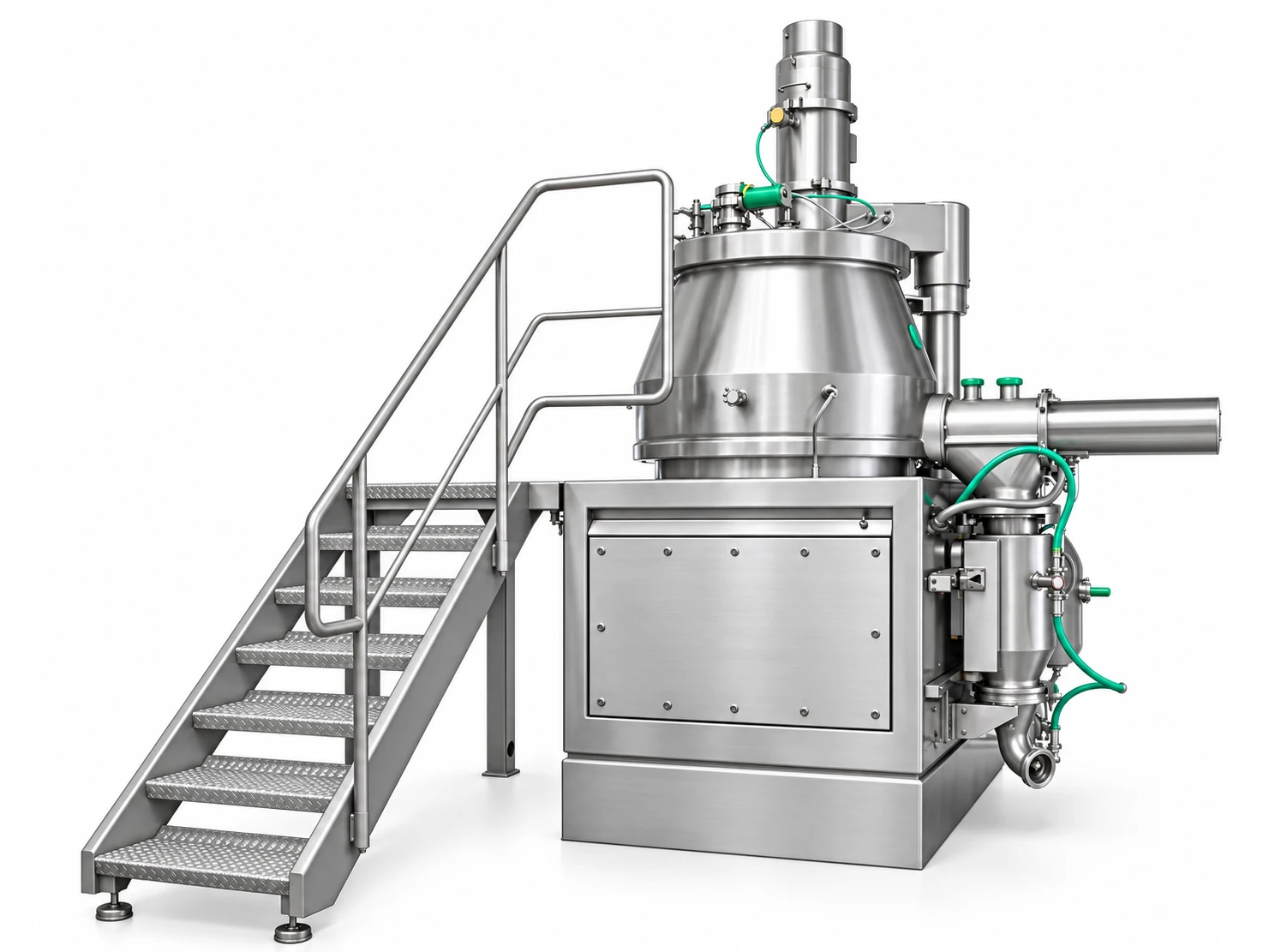
High-shear granulator with a raised working platform beside the vessel

High-Shear Granulator (Wet Granulation)

Wet granulator

Preasys VG / TDG Series — High-Shear Wet Granulation & Single Pot Processing

Preasys VG Series — Vertical High-Shear Granulators from 0.1 L Lab Batches to 2,000 L Production

Wet granulation is the standard route to dense, free-flowing granules for tableting. The Preasys VG is the vertical high-shear granulator built around the Z-Rotor — a bottom-driven tool whose geometry delivers maximum granulation efficiency at minimum power, with the rotor-to-vessel-bottom gap minimized by precision manufacturing for maximum product yield. The chopper with straight blades sits in the lower third of the vessel, so it stays effective even at minimum filling volumes. The series spans the VG 15/05 and VG 65/10 for small batches (with adapter modules down to 1.0 L laboratory scale), the pilot VG 100/10 with interchangeable vessels from 10 to 100 L, and production units up to the VG 2000 — every model available in PRO design. The top-driven Preasys TDG completes the range, installed through the wall to save cleanroom space, and the Single Pot mode performs mixing, granulation and final drying in one machine with vacuum-assisted gentle drying and solvent recovery.

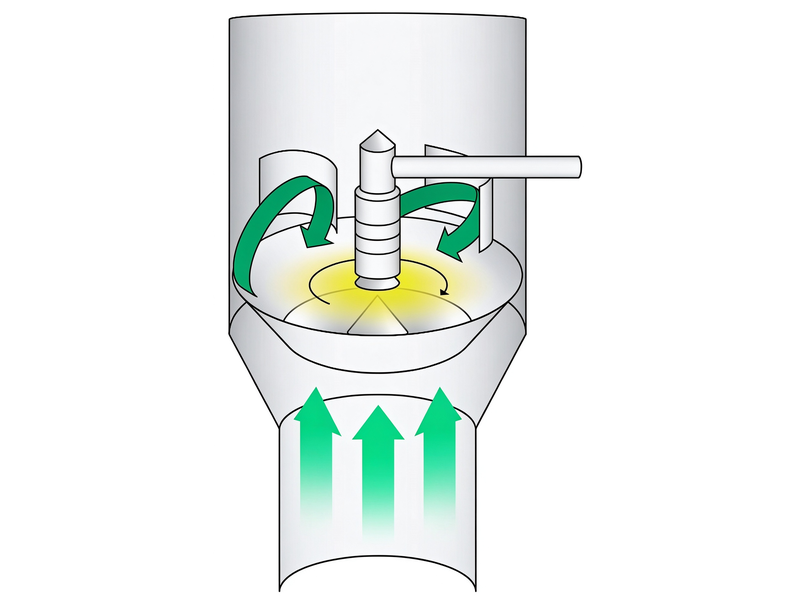
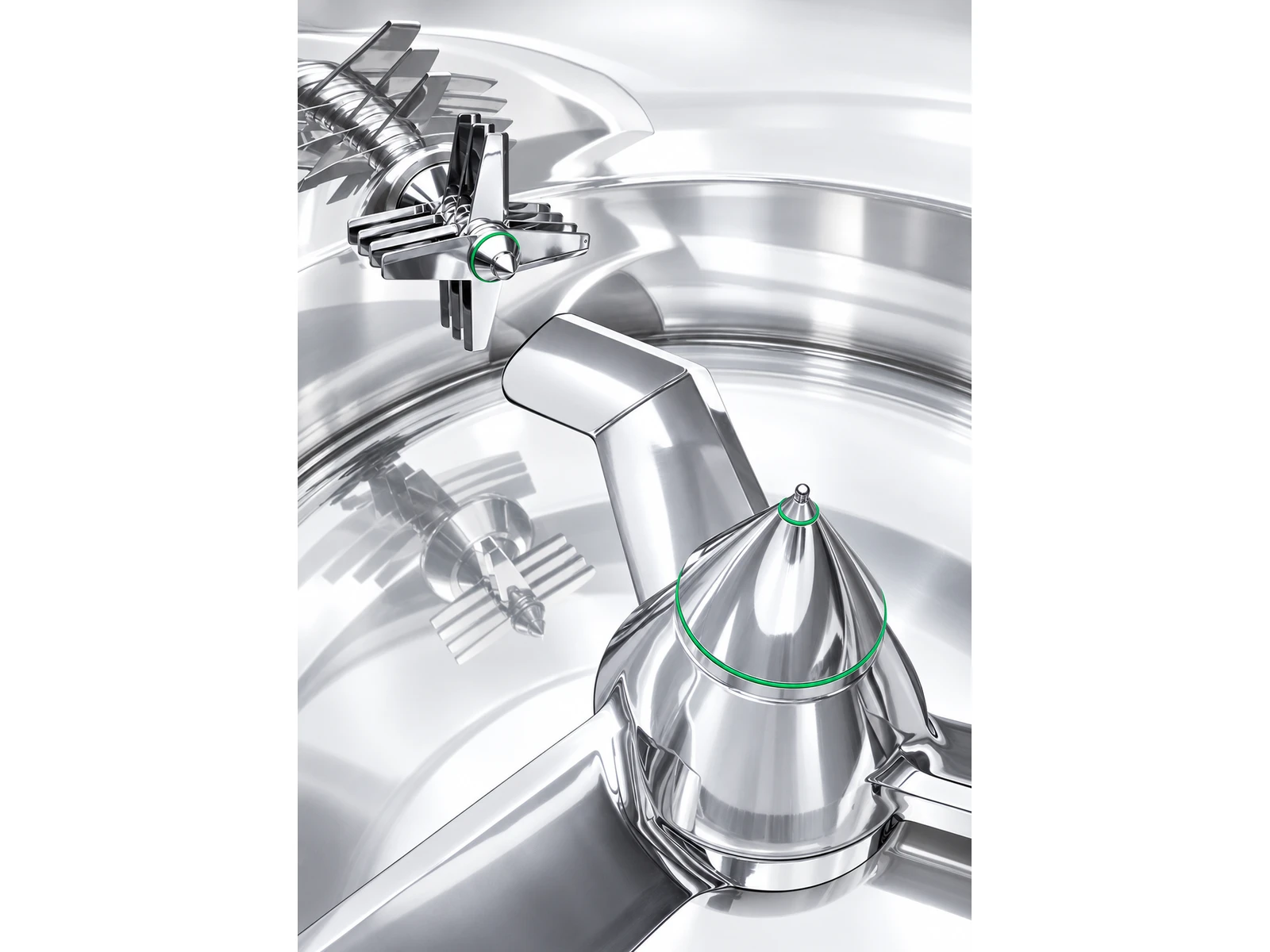
Polished mixing blades inside a wet granulator bowl

Configuration data

Values below refer to the indicated configurations in the technical comparison on this page.

10 / 25 / 65 L

Vessel volumes · VG 65/10

from 1.0 L (adapter)

Product volume · VG 15/05

Process challenges

Two-machine granulation trains lose product between steps — classic wet granulation transfers wet mass from the high-shear granulator to a fluid bed dryer; each transfer risks product loss and exposes more surfaces.

Read details

Two-machine granulation trains lose product between steps — classic wet granulation transfers wet mass from the high-shear granulator to a fluid bed dryer; each transfer risks product loss and exposes more surfaces. Single Pot mode carries out mixing, granulation and final drying in one unit — no wet product transfer, fewer product-contact surfaces, higher yield

High-activity APIs escape during transfer and drying — moving potent wet mass between machines exposes operators and risks cross-contamination. Single Pot is a closed process with high containment and reduced cleaning surface — less risk of operator exposure, fewer changeover steps

Specify the solvent properties, process conditions and protection requirements before choosing the equipment execution. Confirm the protection concept and operating limits for the selected configuration.

Granulation end point is judged by operator experience — power-consumption measurement is distorted by drive losses and mechanical wear. A contactless, calibrated torque measurement directly on the rotor delivers the absolute rotor torque — the granulation end point becomes a reproducible process value

Drying with heat degrades sensitive products — conventional drying uses temperature. Vacuum drying reduces the internal vessel pressure and lowers the evaporation temperature — gentle drying, especially for organic solvents, with solvent recovery through condensers

Small batches suffer high product loss and poor yield — lab-scale granulation on production equipment loses precious API. Interchangeable vessels from 0.5 L (TMG) and adapter modules down to 0.1 L product volume let the smallest batches run under the same process control

Use a representative batch to look for material left at the bowl wall or base. Check discharge and cleaning access as well as the granulation end point.

Cleaning and inspection of the rotor takes hours — disassembling a bottom-driven rotor for cleaning validation is slow. The automatic rotor-lifting device lifts the rotor up to 100 mm for inspection and cleaning validation without any disassembly; pivoted filter housings give effortless access to filter elements for WIP and CIP

Frequent product changeover costs cleanroom time — the more surfaces and the harder the cleaning, the longer the changeover. Modular vessels, tool-free exchange and the Single Pot's reduced cleaning surface cut changeover time significantly

Technical data & features

Select a transfer route to a separate dryer or evaluate a single-pot process where the formulation and solvent handling requirements justify it.

Polished mixing blades inside a wet granulator bowl
Technical data & features · Model comparison
Model VG 15/05 VG 65/10 VG 100/10 VG 600 VG 2000
Application Lab / small Lab / pilot Pilot Production Production
Vessel volumes — 10 / 25 / 65 L 10–100 L — up to 2,000 L
Product volume from 1.0 L (adapter) 2.5–50 L (0.1 L with TMG adapter) 10–100 L — —
PRO version ✓ ✓ ✓ ✓ ✓

Z-Rotor — bottom-driven rotor with unique geometry: maximum efficiency at minimum power; minimized rotor-to-bottom gap maximizes product yield; automatic rotor-lifting device (up to 100 mm) enables inspection and cleaning validation without disassembly

Chopper — straight blades positioned in the lower third of the vessel; highly effective even at minimum filling volumes for optimum granular structure

Working vessel cover — swivels horizontally or opens vertically by drive mechanism for production units

Outlet air filter — textile or stainless steel filter elements, sequentially cleanable; pivoted filter housings for easy element access; meets the most stringent demands for powder suction, granulation and Single Pot drying

Exchangeable, temperature-controlled vessels — 10 / 25 / 65 L on the VG 65/10, 10–100 L on the VG 100/10; tool-free exchange; tilting or swivelling lids with inflatable seals

Preasys TDG — Top-Drive Granulator Series

Top-driven anchor rotor completes the range from lab scale to the TDG 1500 production unit

Through-the-wall installation — saves cleanroom space, minimizes components in the production area

Curved cylindrical dished bottom — no "dead" corners, optimum product movement; vibration-free drive shaft for best rotor-to-bottom gap

Chopper in the vessel lid — usable in different stroke positions; illuminated camera in the cover transmits process images to the HMI

CIP design as standard with stainless steel outlet-air filter elements; automatically lowerable product bowl for inspection after cleaning

Closed loading and discharge (gravity or pneumatic transport); optional rotor mill after the discharge port to homogenize the granulate via swivel mechanism — suitable for containment and complete granulation lines

Single Pot Mode (VG or TDG + vacuum system)

Mixing, granulation and final drying in one unit — ideal for high-activity substances, limited floor space, frequent product changes, or high transfer losses

Vacuum pump system with solvent separators (condensers) — first condenser protects and boosts the pump, second removes solvents from exhaust air; condensate recovered or drained

Gentle drying at low temperatures; gas-assisted vacuum drying with heated stripping gas improves moisture transport at the end of drying

Drying parameters: jacket wall heating/cooling of vessel, lid and filters; heated gas stripping; evacuation of the working vessel; agitator speed and rotation pauses

Drying time scales linearly with bowl size (e.g. VG 25 Ø390 mm vs VG 400 Ø980 mm → 2.5× drying time)

PRO Design (VG PRO / TDG PRO)

PRO source configuration: 12 bar pressure-shock resistance

Specify the solvent properties, process conditions and protection requirements before choosing the equipment execution. Confirm the protection concept and operating limits for the selected configuration.

Optimized for trouble-free integration in closed PRO granulation lines (wet granulator + wet sieve + fluid bed dryer)

End Point Determination

Contactless, calibrated torque measurement directly on the rotor — absolute rotor torque used to determine the granulation end point, independent of power-converter losses and mechanical wear

Optional direct agitator-motor power measurement

Cleaning & Control

CIP (fully automatic, reproducible cleaning with defined result) and WIP (thorough pre-cleaning + manual cleaning) formats, both validatable; cleaning racks included

Define control and data requirements for the selected configuration, including recipe permissions, batch records, audit-trail review and interfaces to site systems. Confirm each supplied function during the equipment review.

Define recipe access, batch records and signatures with the controls team. Specify the installation area and required protection documentation separately.

How it works

How-To — Solving the Industry's Hardest Wet Granulation Problems

How to reach high granule density in the shortest time?

Fluid bed granulation builds density slowly. The Z-Rotor's geometry transfers energy with maximum efficiency at minimum power, and the chopper in the lower third of the vessel works effectively even at minimum fill — dense granules in a short granulation time

How to determine the granulation end point reproducibly instead of by feel?

Power-consumption readings are distorted by drive losses and wear. The contactless, calibrated torque sensor on the rotor measures absolute rotor torque — the end point is defined, recorded and repeatable batch after batch

How should solvent granulation and drying be specified?

Specify the solvent properties, process conditions and protection requirements before choosing the equipment execution. Confirm the protection concept and operating limits for the selected configuration.

How to contain high-activity APIs across the whole granulation process?

Every transfer between granulator and dryer is an exposure risk. Single Pot mode keeps mixing, granulation and drying in one closed machine — fewer contact surfaces, higher yield, less operator exposure and reduced cleaning for faster changeover

How to dry heat- or solvent-sensitive products gently?

High-temperature drying stresses the product. Vacuum drying lowers the vessel pressure and with it the evaporation temperature; heated gas stripping at the end accelerates moisture transport without overheating

How to run micro batches and pilot batches on the same control platform?

Lab-scale products are lost on production equipment. The TMG vessels from 0.5 L and the TMG adapter on the VG 65/10 (down to 0.1 L) run on the same control system as pilot and production — scale-up with identical process logic

How to clean, validate and change over fast?

Rotor disassembly for cleaning validation is the bottleneck. The automatic rotor-lifting device lifts the rotor up to 100 mm for inspection without disassembly; pivoted filter housings and tool-free vessel exchange make WIP/CIP and product changeover fast

How to fit granulation into limited cleanroom space?

A granulator plus a fluid bed dryer needs a large footprint. Single Pot eliminates the dryer, and the TDG's through-the-wall installation keeps the production room clear — less space, fewer components, lower cleanroom cost

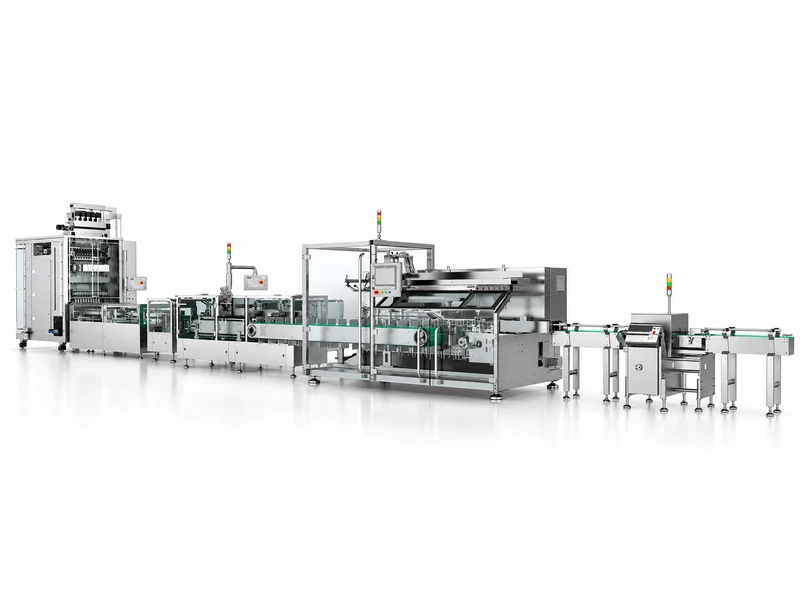
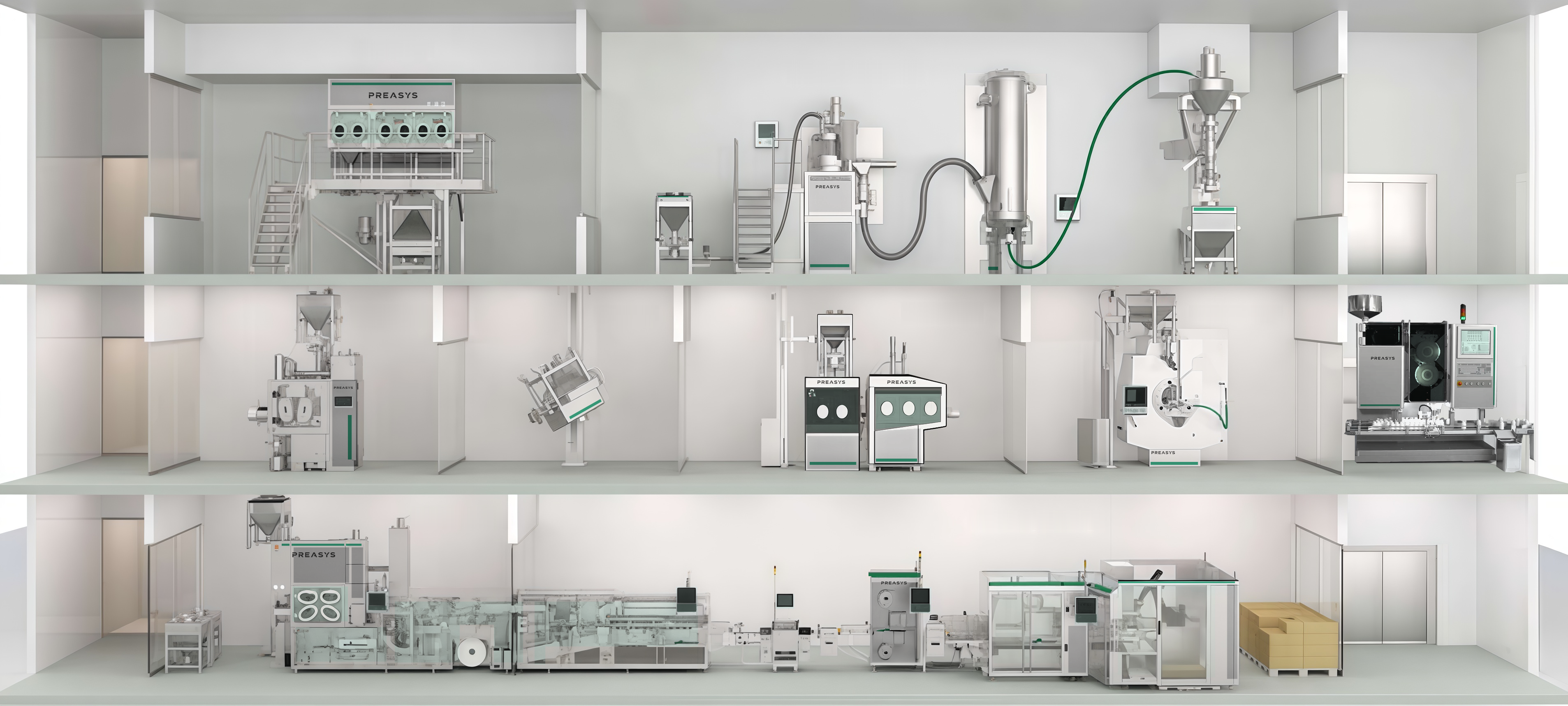
PREASYS three-level solid dosage process concept: preparation above; tablet pressing, encapsulation, coating, inspection and bottle filling in the middle; primary and secondary packaging below

Oral solid dosage · Integrated production

From powder to
packaged product

Discover the equipment behind your solid dosage process.

Skip tour
Production concept 17 equipment areas · Scroll to explore

Route selection. Wet and dry granulation are alternatives. Select tablet compression or capsule filling for the dosage form; include coating when required.

Illustrated equipment and packaging options show process relationships. The facility layout and equipment configuration are defined for each project.

Line integration

Define powder and binder inputs, discharge and drying, containment, and control requirements for the selected configuration.

Read more

Powder and binder inputs. Define the powder-charging route, working batch and binder-delivery profile. Coordinate the feed connections with the selected granulator configuration.

Discharge and drying. Agree the discharge route and whether wet sizing is required before transfer to a separate dryer. Treat any combined granulation-and-drying arrangement as a configuration choice.

Containment and cleaning interfaces. Specify the product-handling, cleaning and room-interface requirements for the intended material and process. Review the selected containment and installation arrangement against those requirements.

Control and data requirements. Define recipe permissions, batch records, audit-trail review and required interfaces to site systems. Confirm the control functions included in the selected equipment configuration.

Support throughout your project and production

Define the equipment scope

Select a transfer route to a separate dryer or evaluate a single-pot process where the formulation and solvent handling requirements justify it.

Learn more

Agree the acceptance test

Record the binder addition profile and the chosen end-point signal in a representative batch, then compare the dried granule characteristics.

Learn more

Prepare for operation

Identify the contact parts and format tooling for High-Shear Granulator (Wet Granulation). Agree access for cleaning, the spares to hold and the operating records the site will need.

Learn more

Knowledge hub

2 resources

Frequently asked questions

Why high-shear granulation instead of fluid bed granulation?

High-shear granulation is the first choice when the process needs high granulate density and rapid granulation. It requires relatively little space, is simple to operate and — with the Z-Rotor design — is easy to clean.

What batch sizes does the series cover?

From 0.1 L product volume on the TMG adapter through 0.1–4.5 L (TMG), 2.5–50 L (VG 65/10), 10–100 L (VG 100/10) up to the VG 2000 production unit.

What is the Z-Rotor and why does it matter?

The Z-Rotor is the bottom-driven granulation tool of the VG. Its unique geometry ensures maximum efficiency while minimizing required power, and precision manufacturing keeps the rotor-to-bottom gap minimal to maximize product yield.

What is the Single Pot process?

Mixing, granulation and final drying are carried out in one unit. A vacuum pump system (with optional solvent separators) reduces the internal vessel pressure, lowering the evaporation temperature for gentle drying, supported by jacket heating and heated carrier gas.

What must be confirmed for the solvent-protection concept?

Specify the solvent properties, process conditions and protection requirements before choosing the equipment execution. Confirm the protection concept and operating limits for the selected configuration.

How is the granulation end point determined?

A contactless, calibrated torque measurement directly on the rotor provides the absolute rotor torque — a reproducible, recorded value for the end point, free of the distortion of power-converter losses and mechanical wear.

Can organic solvents be granulated and recovered?

Specify the solvent properties, process conditions and protection requirements before choosing the equipment execution. Confirm the protection concept and operating limits for the selected configuration. Define the solvent-recovery route and condenser requirements separately.

How is cleaning handled?

CIP is a fully automatic, reproducible cleaning process with a defined cleaning result; WIP comprises thorough pre-cleaning followed by manual cleaning. Both are validatable, with cleaning racks included. The automatic rotor-lifting device allows inspection and cleaning validation without disassembling the rotor.

Does the control system meet regulatory requirements?

Review how the proposed controls record batch conditions and recipe changes. Confirm user access and signature options against the specified granulation workflow.

Contact

Share the product, binder system, working batch, target granule characteristics and required interfaces. Review the proposed granulator, drying route and control scope against those requirements.

Discuss your project →
Polished mixing blades inside a wet granulator bowl