02 /
Process challenges
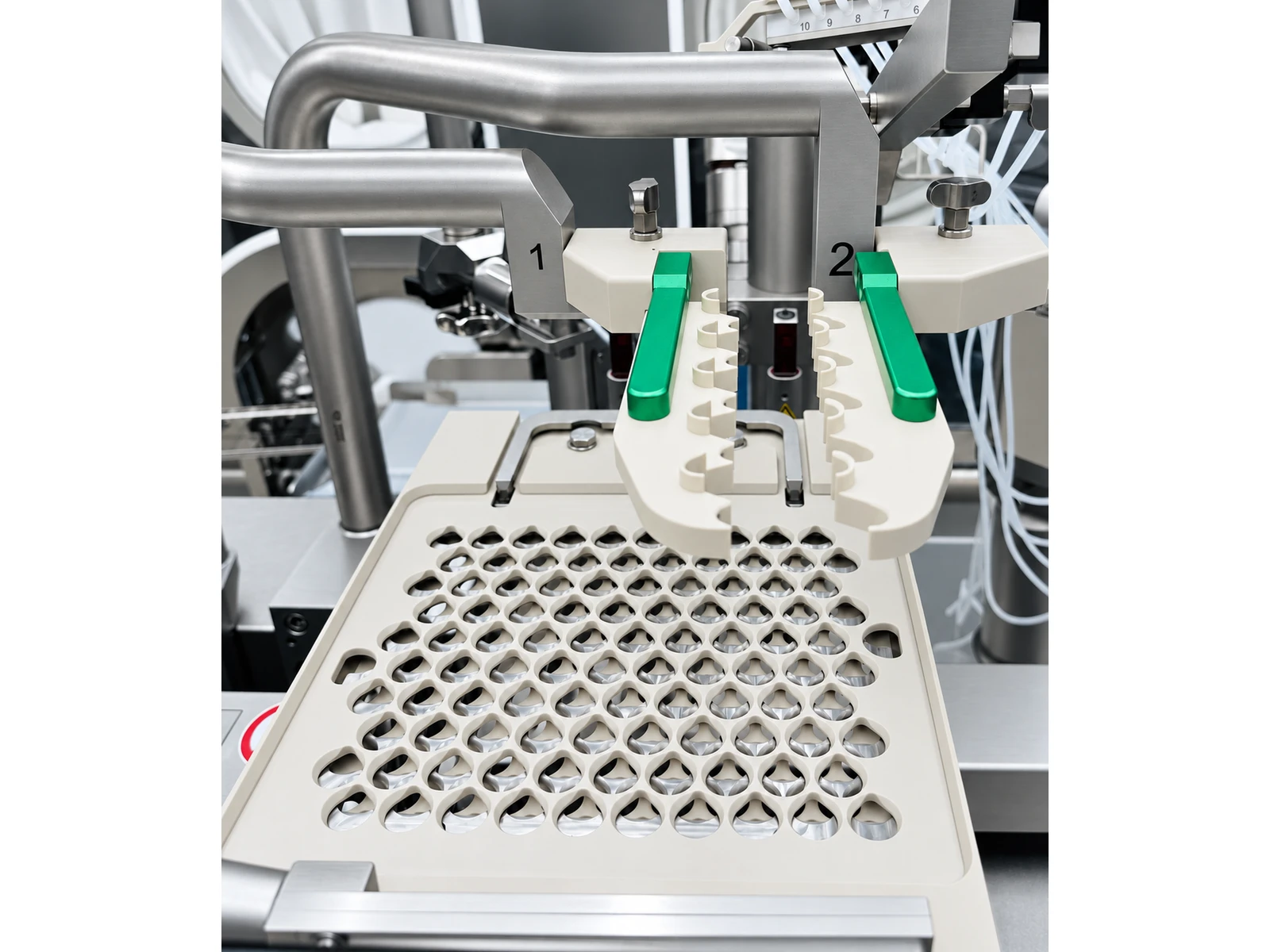
A nest controls spacing but does not eliminate container tolerances. Needle alignment, support at closure insertion and access for weighing depend on the pitch, height and contact surfaces of the selected format. Syringe plunger placement, vial stoppering and cartridge closure handling also impose different motions and tooling. These differences determine whether a format change is a recipe change, a tooling change or a different machine configuration.
03 /
Technical data & features
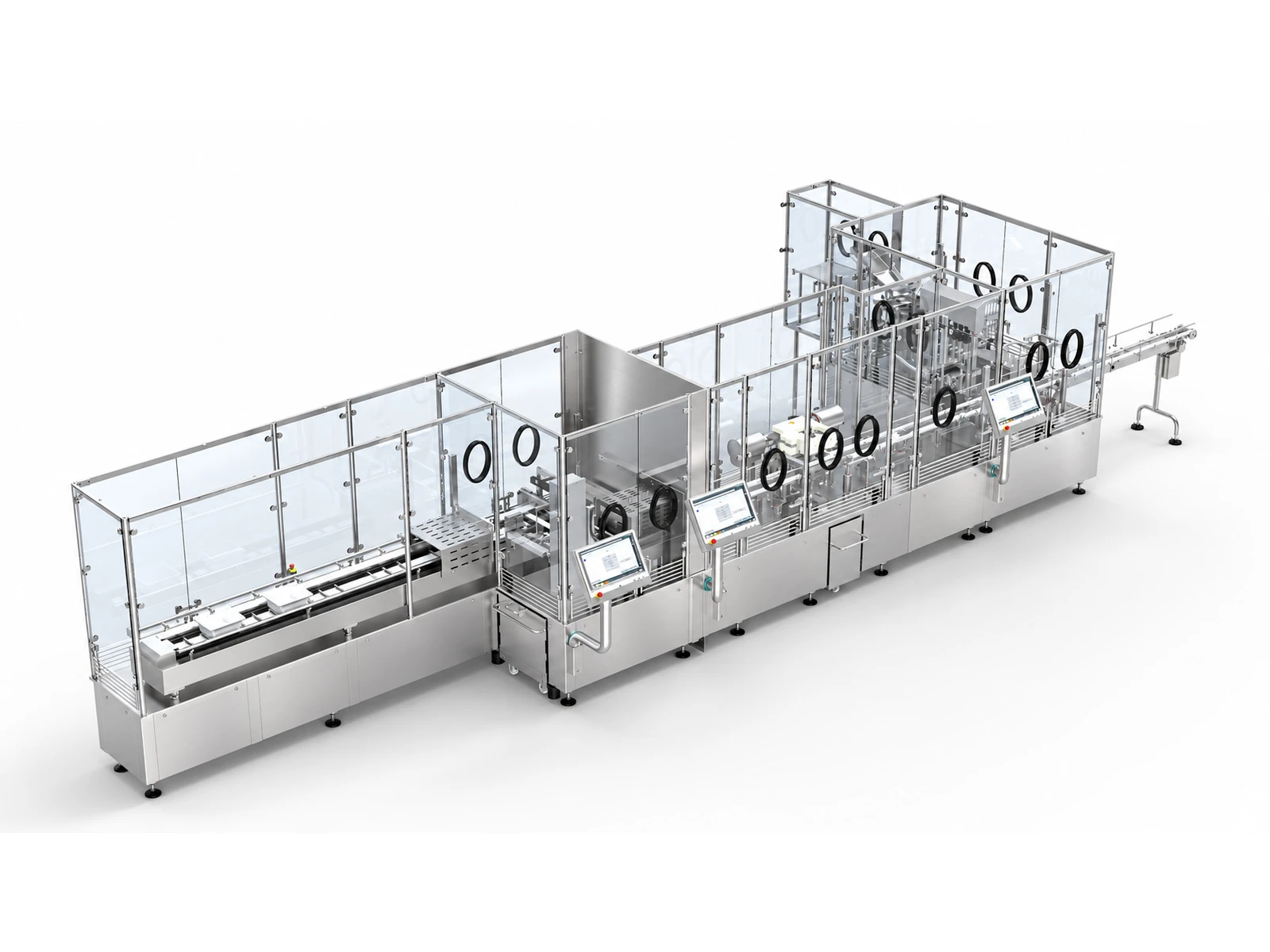
The RTU format connects three systems: incoming packaging, the dosing station and closure handling. Their mechanical datums and cycle times must be compatible. The inputs below define that interface rather than a universal machine specification.
Selection inputs for RTU | Project input | What to record and why |
| Tub and nest formats | Tub and nest dimensions establish engagement surfaces, container pitch and the filling datum. In-nest processing preserves this support; de-nesting introduces another pickup and positioning operation. Use matched tub, nest and container drawings to specify the intended route. |
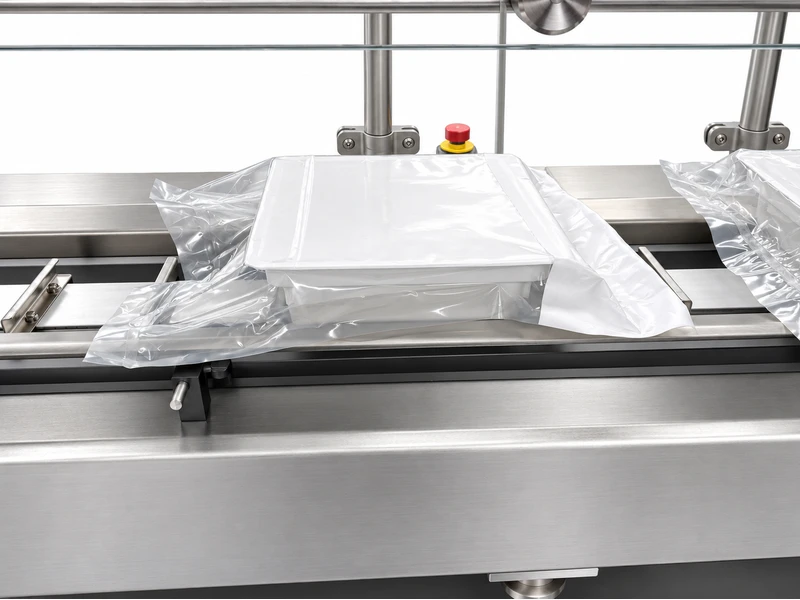
| Incoming wrap | Single or multiple outer wraps create different removal steps before the tub lid is opened. The retained layers and transfer boundary follow the incoming packaging state and the selected contamination-control approach. |
| Container height | Container height and tolerance determine needle-entry clearance and the vertical travel for filling and closure. The same tub footprint can contain containers with different heights and support requirements. |
| Closure supply | Closure presentation must match the dosing sequence: syringe plungers, vial stoppers and cartridge closures have different handling and insertion requirements. Prepared closure supply, orientation and replenishment are therefore part of the format definition. |
06 /
Frequently asked questions
Can syringes, vials and cartridges use one RTU filling machine? 
A multi-format platform needs defined handling and closure configurations for each container family. Shared tub dimensions alone are insufficient: nest pitch, container height, flange support and closure insertion can require different tooling or stations. The supported formats belong in the agreed machine scope.
What is the difference between in-nest filling and de-nesting?
In-nest filling uses the nest to retain the containers during processing. De-nesting removes them for individual handling before or between operations. The choice changes pickup motions, support, weighing access and the way containers are returned to a nest or passed downstream.
Does RTU supply remove the need for an upstream washer and tunnel?
Prepared RTU containers can follow a different route from bulk glassware that is washed and thermally treated on site. The decision depends on the documented incoming container state and the process. RTU supply does not remove the need to establish protective-pack removal, transfer and handling conditions.
Is the tub throughput equal to the filling-line output?
Tub throughput describes the handling of packages. Container output also depends on containers per tub, dosing and closure cycles, weighing strategy and interruptions. Multiplying tubs per hour by containers per tub gives nominal presented containers per hour, not a demonstrated sustained filling rate.