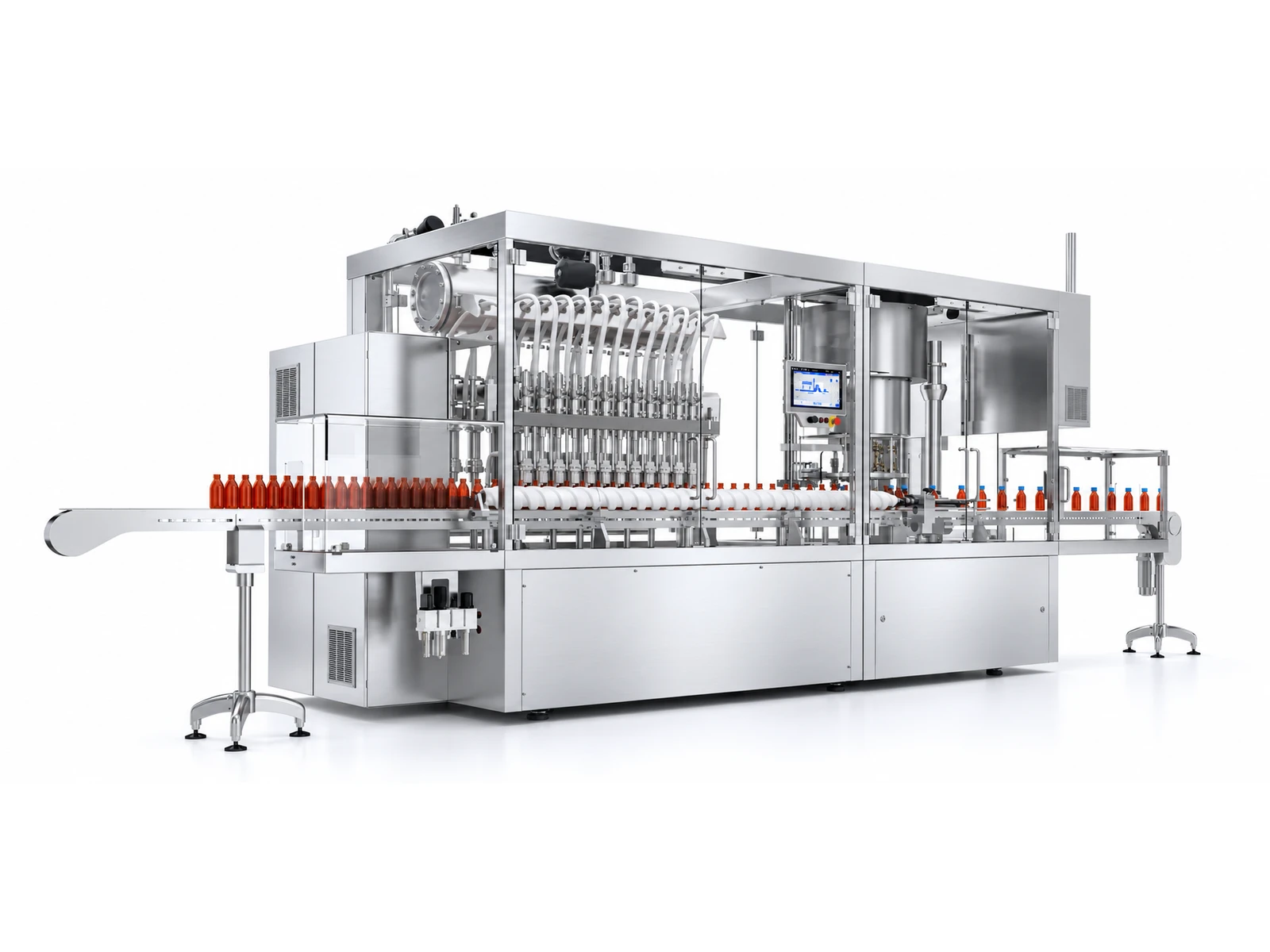
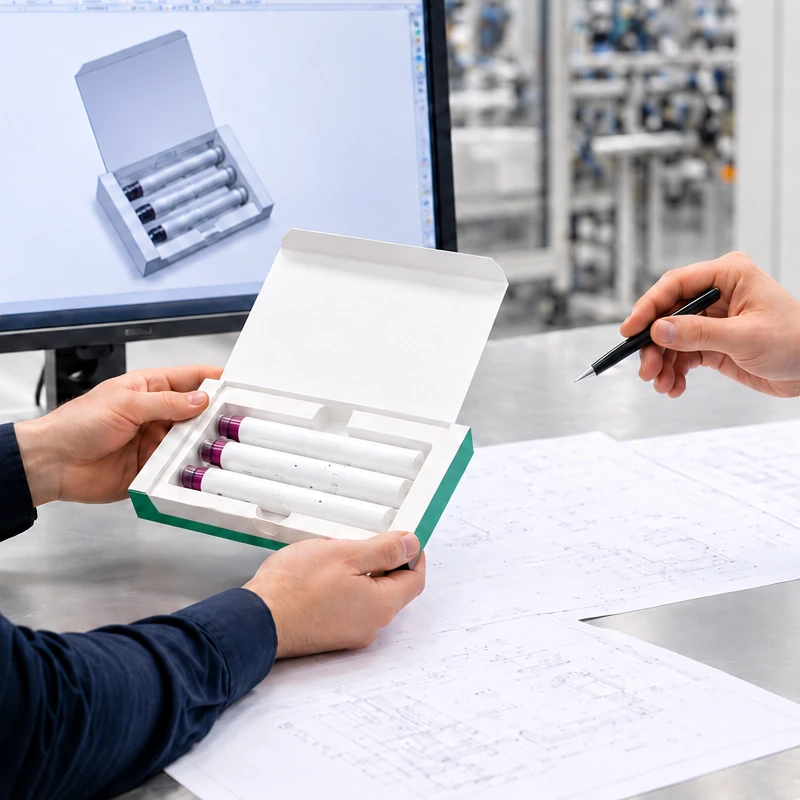
Oral-liquid filling meters product into bottles and connects the filled presentation with its cap. Free-flowing solutions, viscous liquids and suspensions behave differently during feed and nozzle cutoff. The filling path, bottle opening and closure arrangement are selected around those properties rather than borrowed from an injectable process.
Product flows from preparation or holding through the selected metering path to the bottle. The nozzle delivers the dose, withdraws or closes as required, and the bottle passes to cap application. Viscosity and foam affect the transfer, while a suspension can change if solids settle during holding. These upstream behaviours appear at the filling head as changes in dose, cutoff or product condition.
Example project input
Provide additional liquid for priming, cutoff adjustment and foam settling. Confirm that the intended cap can be applied without wetting the closure area.
120
Bottles in the closing trial
100 mL
Nominal oral liquid per bottle
12 L
Liquid delivered to filled bottles
—
Process options
Filling technologies
Filling technology
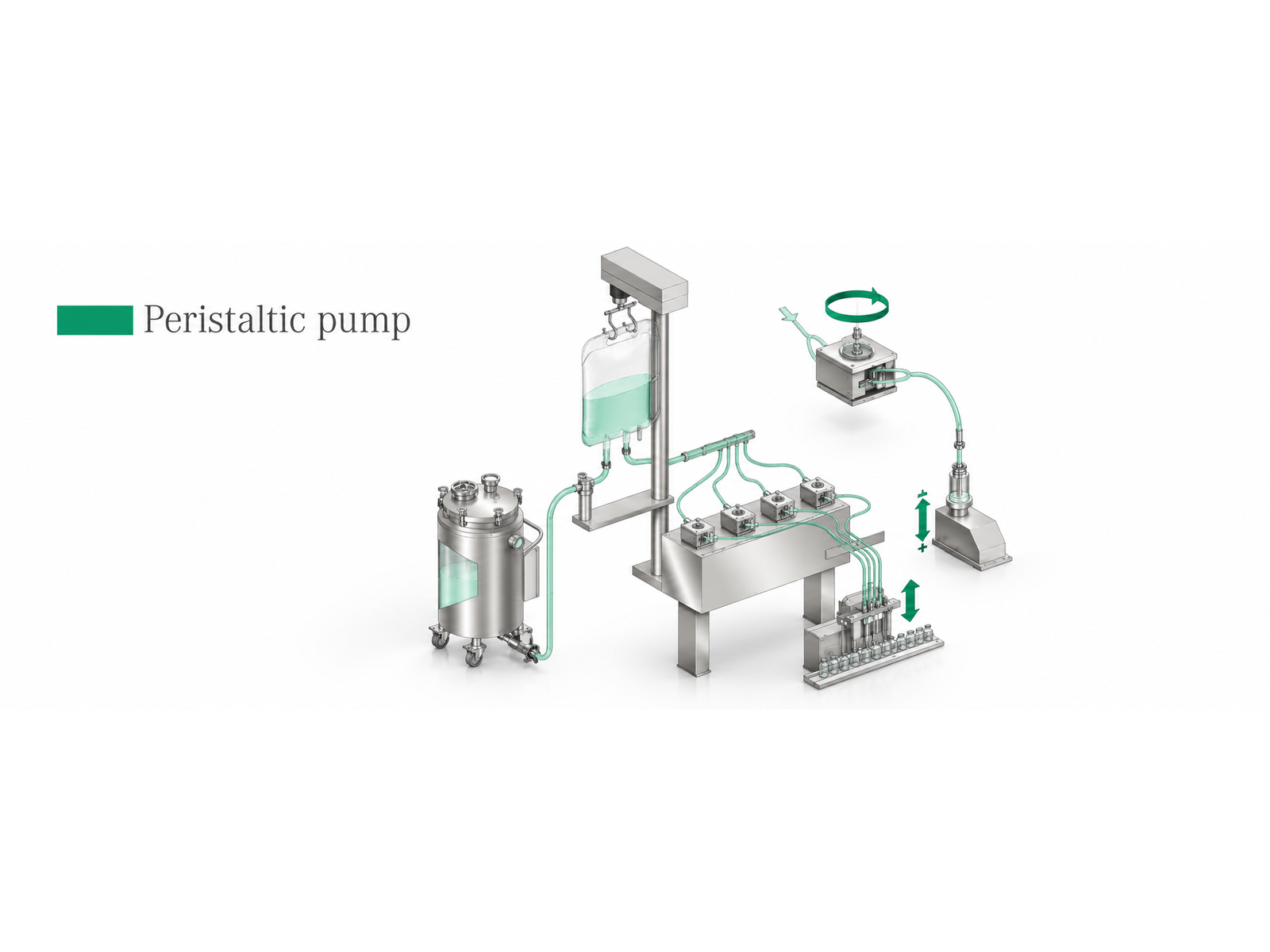
Peristaltic pump
A flexible tube carries the liquid while rotating rollers control dosing. The product contacts the tube rather than the pump mechanism. This principle is used when a disposable product path and gentle handling are priorities. Tubing selection, product compatibility and the changeover procedure should be reviewed for each application.
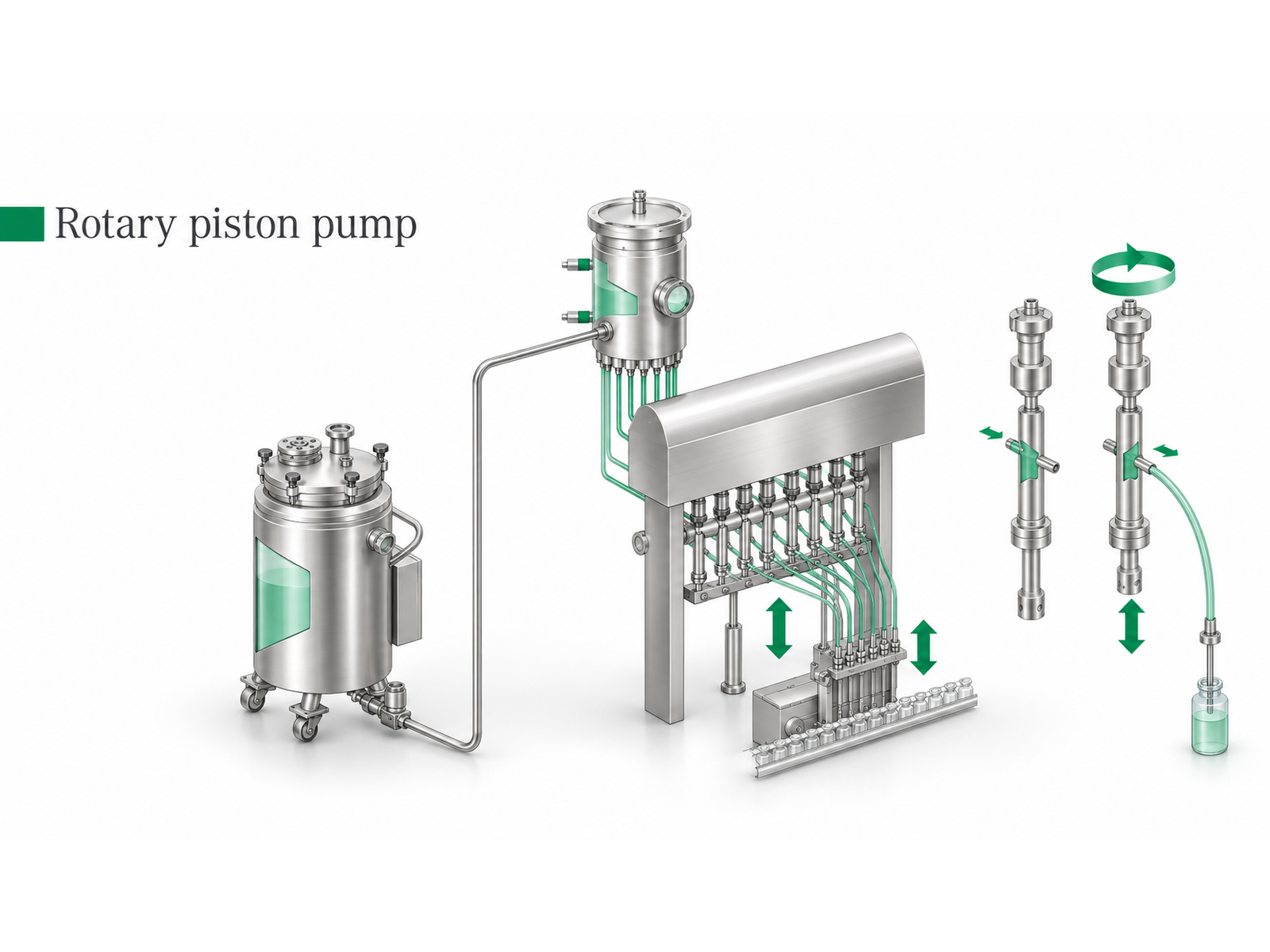
A piston draws liquid into a cylinder and then dispenses a measured volume through the outlet. The selected piston, valve and product-contact materials determine the application range. Review viscosity, cleaning requirements and the required filling volume together with the product and container format.
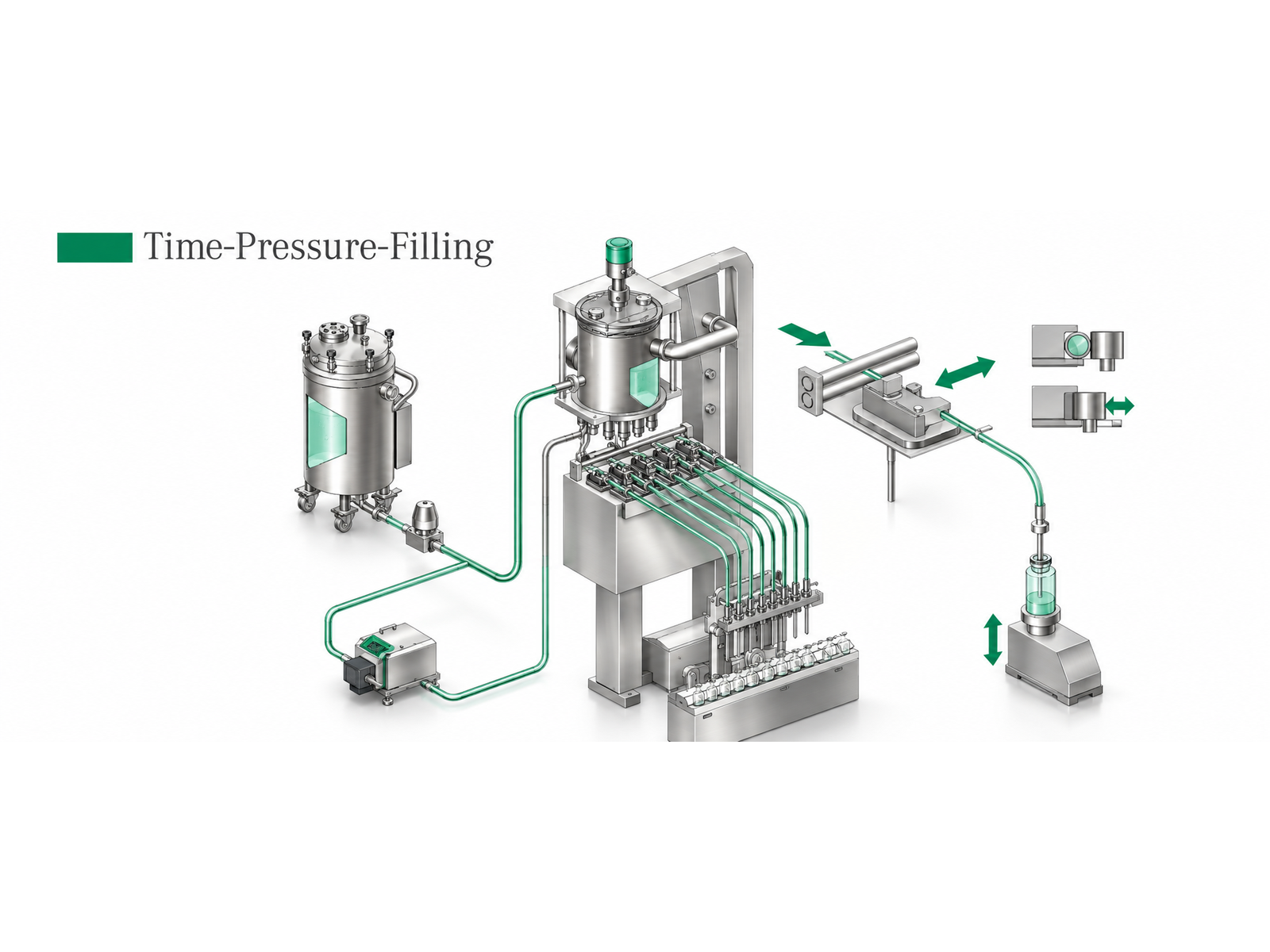
Controlled pressure moves liquid through a filling valve. The opening time and supply conditions determine the dispensed quantity. Product properties, pressure stability and the valve configuration are evaluated together when setting up the filling process.
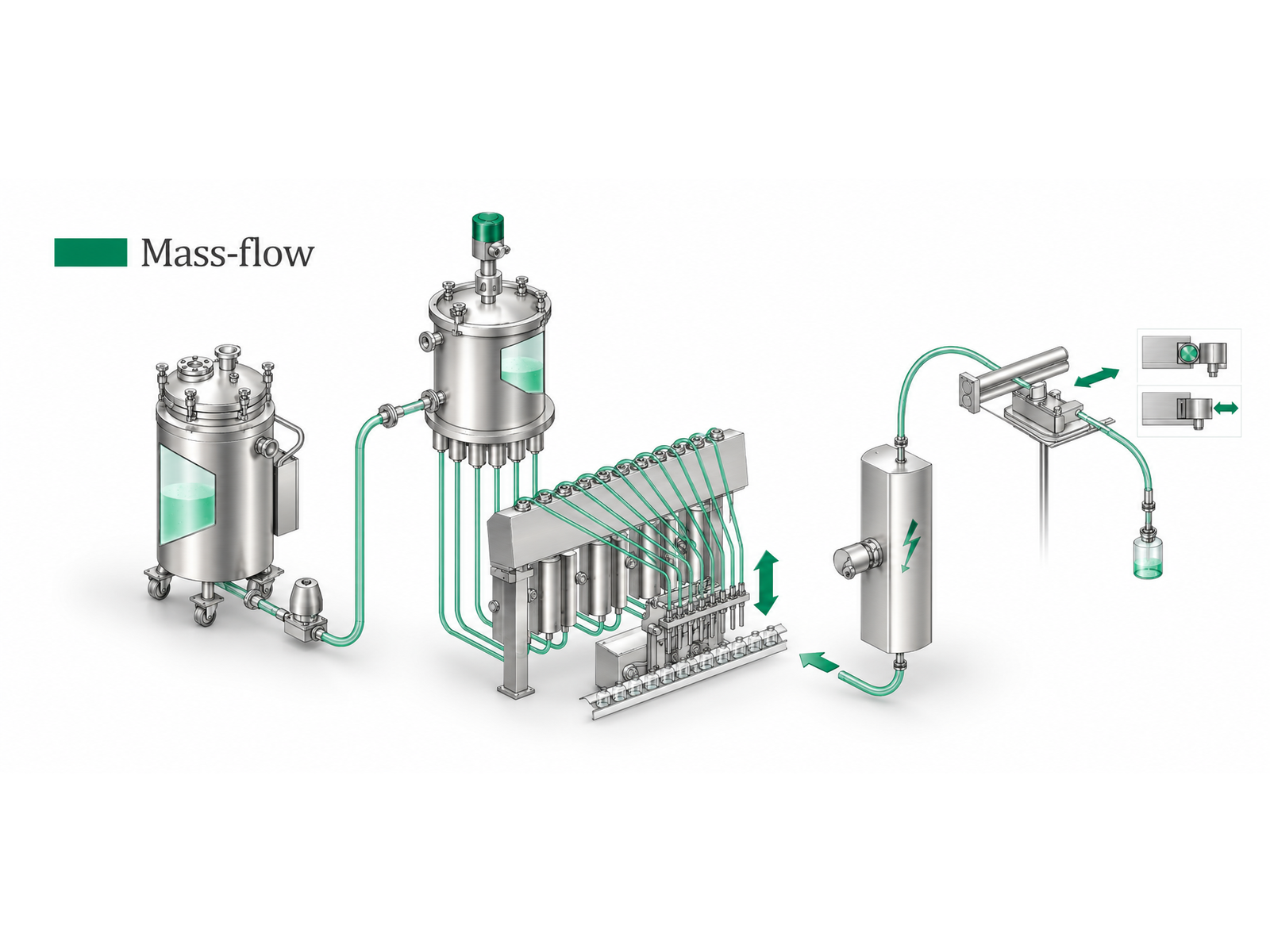
A flow sensor measures the product passing through the filling path and provides feedback to the dosing valve. The process is evaluated around the required fill mass, product behaviour and cleaning strategy. Sensor selection and the control sequence depend on the application.
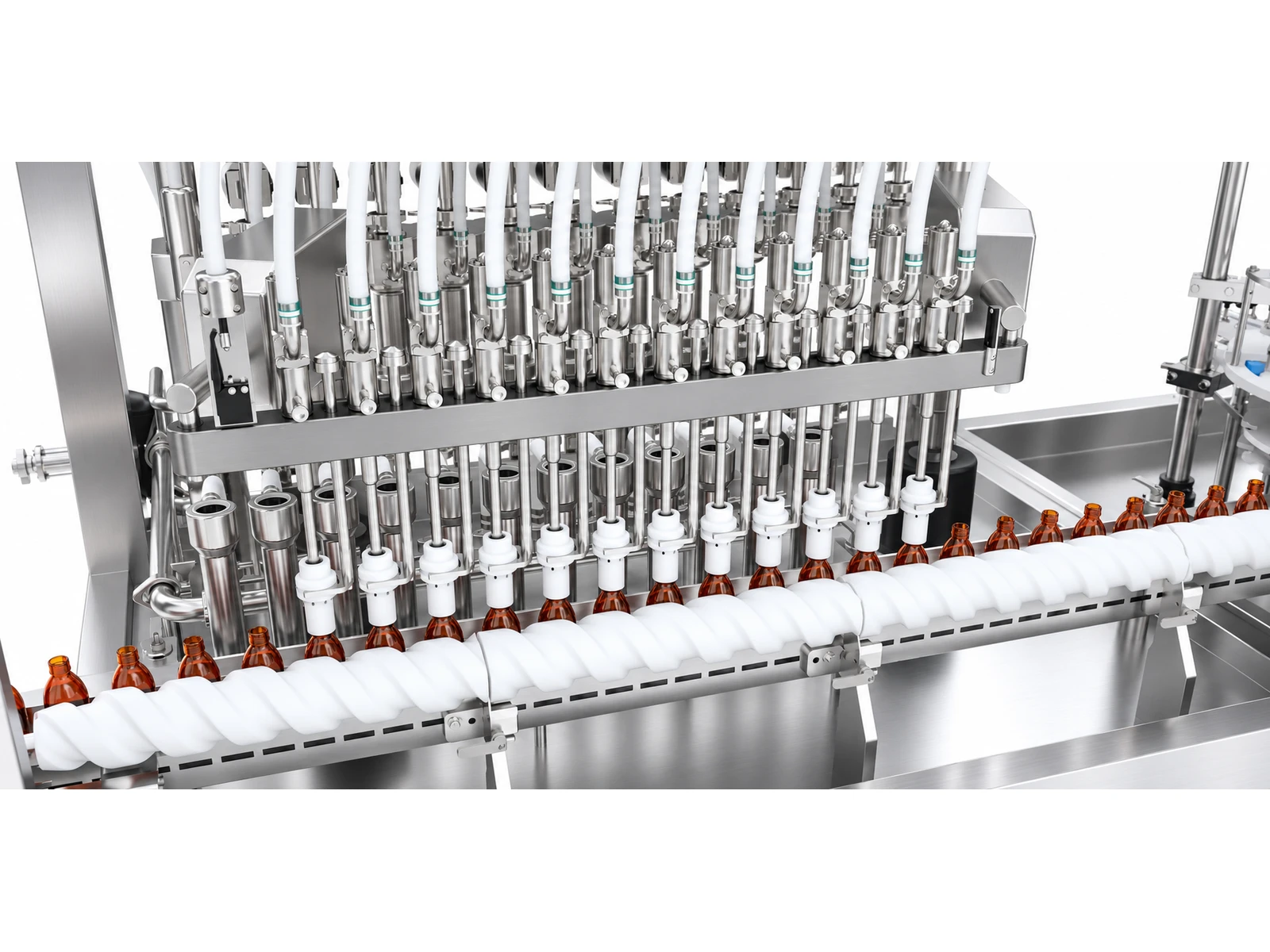
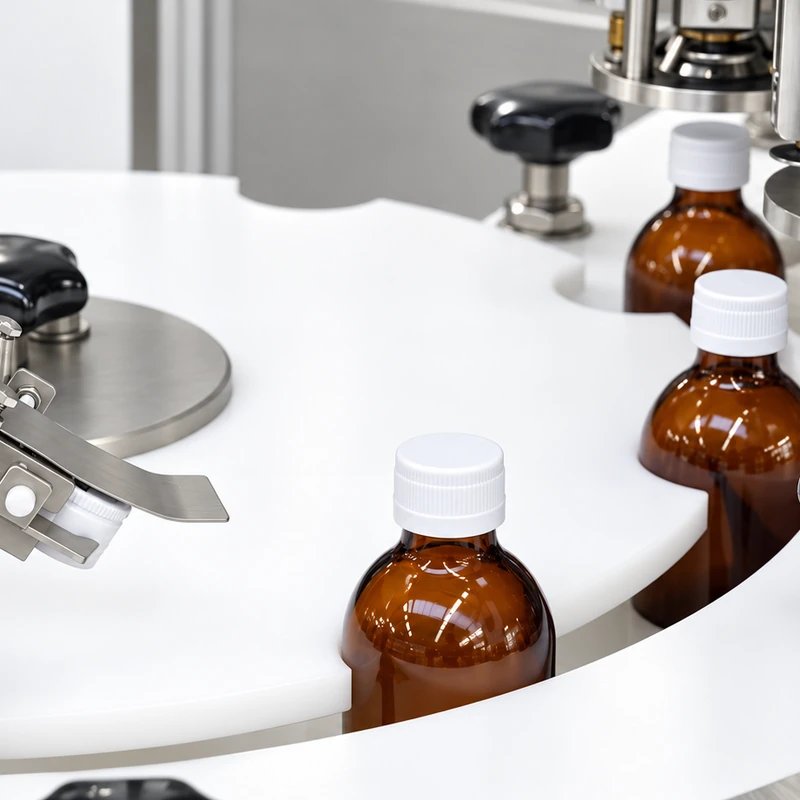
Matching nozzle movement to the neck and liquid behaviour helps control splash and product remaining on the bottle finish. A suitable closure feed then presents the cap for consistent application. The bottle, cap and filled product form one packaging interface: a clean fill does not compensate for a mismatched finish or an unsuitable capping setup.
03 /
Technology & features
The metering principle and contact path depend on dose, viscosity at operating temperature and any suspended material. Feed conditions influence what reaches the metering device. Where product homogeneity requires agitation or another holding strategy, that function is coordinated upstream instead of expecting the filler to correct an already separated feed.
At the nozzle, end-of-fill behaviour can include droplets, strings or foam. Needle geometry and motion are selected with neck clearance and the liquid properties. Capping then depends on the bottle finish, cap presentation and application method; torque is relevant only where it describes the selected closure operation.
04 /
Applications
Oral solutions, syrups and suspensions can require different feed, metering and cleaning arrangements. Product stability and microbiological requirements define the relevant hygiene controls. An oral-liquid route should not automatically inherit the environment or filtration assumptions of an injectable filling line.
05 /
Technical data
Bottle geometry and liquid behaviour define dosing access; the closure defines the next operation. Use the intended temperature, holding condition and bottle/cap combination when establishing the configuration.
Selection inputs for Oral Liquid Filling
Project input
What to record and why
Bottle neck opening
The usable neck diameter and its tolerance establish nozzle clearance during motion. The support arrangement must hold the bottle at that position throughout dosing.
Viscosity range
Viscosity at the intended filling temperature affects flow, pressure and nozzle cutoff. Suspended solids or foam introduce additional behaviour that a single viscosity value cannot describe.
Fill volume
Nominal fill and its acceptance basis determine metering and measurement requirements. Product density and temperature matter when a measured mass is used to assess a stated volume.
Closure and torque requirements
Bottle finish, cap geometry and application method define the capping setup. Where torque is applicable, the specified range and measurement procedure must refer to the intended closure combination.
How it works
How do feed conditions influence bottle filling?
The metering device receives product in the condition supplied by the holding and transfer system. Temperature, entrained air or settling can change that condition during a batch. The feed arrangement therefore has to maintain the product state required by the selected dosing method rather than relying on the recipe volume alone.
How are nozzle cutoff and capping assessed together?
The filling trial observes the delivered quantity and what remains around the neck after the nozzle stops. The same bottles then pass through the selected cap application and closure checks. This reveals whether splash or stringing affects the bottle finish, closure seating or the next handling station.
Production line · Equipment context
Liquid product packaging line
Explore the process areas on the production line associated with this equipment.
Production layout5 equipment areas · Scroll to explore
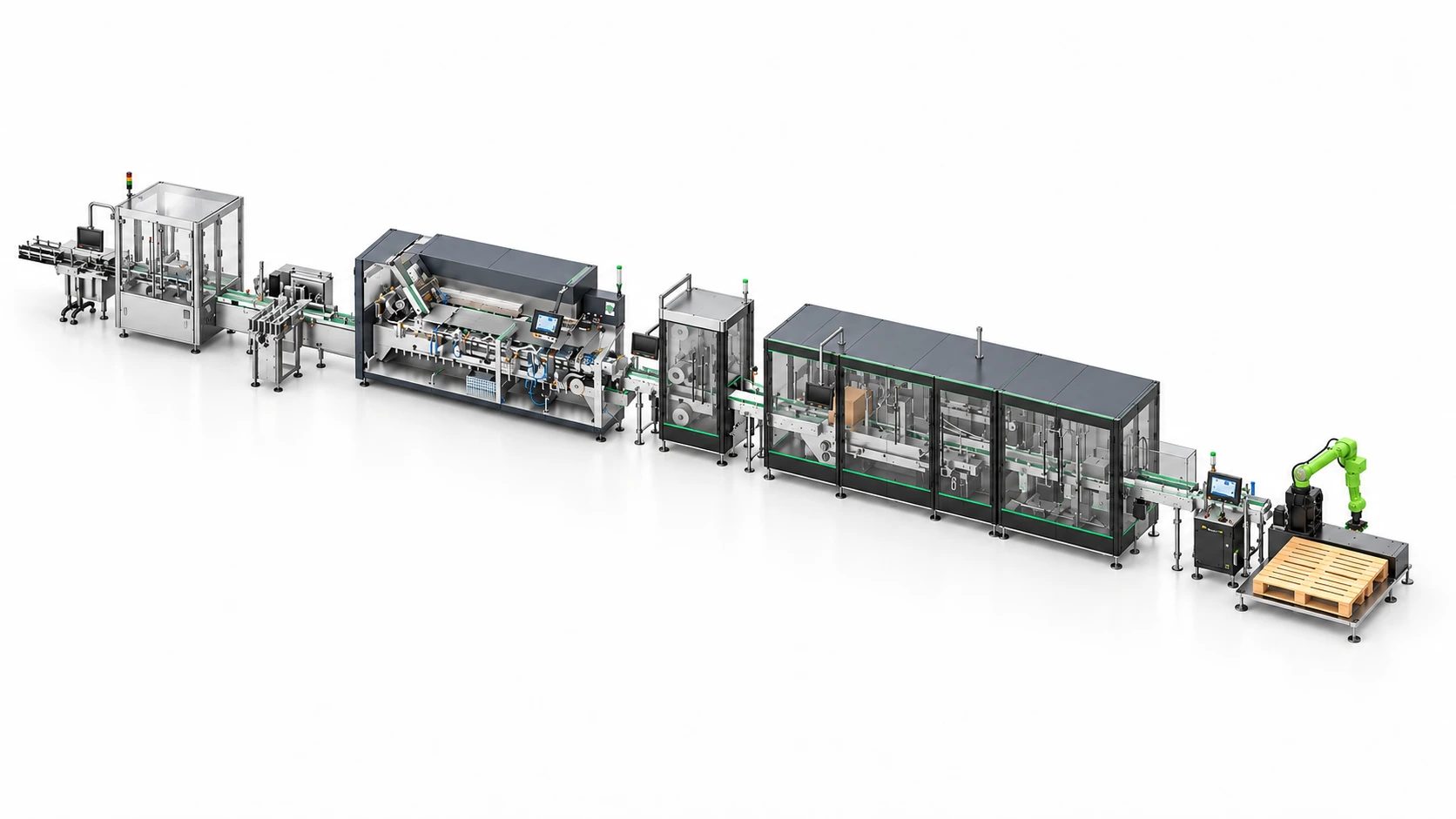
This shared secondary packaging line receives closed oral-liquid bottles after filling and capping. Follow pack transfer, cartoning, case packing and palletizing.
Check the bottle and cap through filling and labeling
Preparation and holding supply product in the required filling condition. The filler and capper connect dosing with closure, followed by the selected fill/closure checks, labelling and cartoning. Bottle orientation, cap supply and accumulation are defined at the handoffs; injectable container preparation is not assumed to be part of this oral-liquid route.
06 /
Services
Define the equipment scope
Define feed and holding behaviour, contact materials, nozzle motion and the bottle/cap combination. Product hygiene and cleaning requirements shape the scope alongside metering.
Run representative liquid at its intended temperature through filling and capping. Assess quantity, splash, foam or strings, closure condition and transfer to the next machine.
Prepare cleaning and product-change procedures for the feed path, dosing components and nozzles. Maintain bottle supports and closure tooling according to the selected configuration.
Does oral-liquid filling require the same environment as injectable filling?
The relevant hygiene and microbiological controls follow the product and process requirements. An injectable environment or filtration route should not be assumed for every oral product.
Why should a suspension be assessed differently from a clear solution?
Settling or segregation can change the feed presented to the metering device. Holding and transfer must preserve the required product condition, while the dosing path must suit the material being delivered.
Can one nozzle setting handle all viscosity conditions?
Flow and cutoff can change with temperature, viscosity and product behaviour. The operating range needs to be assessed with representative material and the intended bottle geometry.
Is fill quantity the only result to check before capping?
No. Splash, foam and product on the finish can affect closure seating and downstream handling. The bottle and cap should be assessed together with the filled presentation.
08 /
Contact
For a configuration review, include bottle neck opening, viscosity range, fill volume, closure and torque requirements.