Solid Blister Line
Form pockets, place tablets or capsules, and seal and cut the web into cards. Feeding geometry, barrier materials and seal quality define this solid-dose primary-pack route.
Process expertise. Chinese manufacturing. Global perspective.

Explore our solutions
Choose packaging equipment by what enters the station and what must leave it: loose doses in a sealed primary pack, filled containers in a protective presentation, assembled delivery devices, or cartons grouped for shipment. These are connected operations with different product, handling and verification requirements.
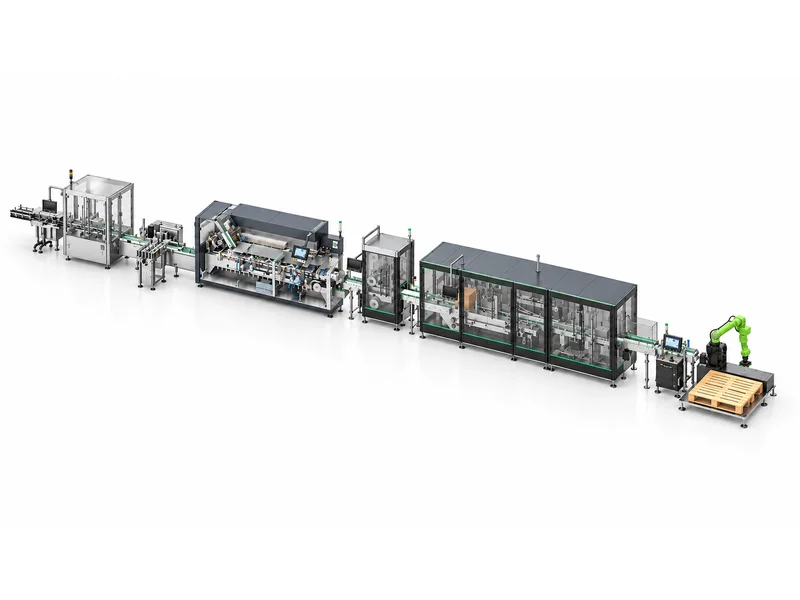
Primary packaging creates the package in direct contact with the dose. Secondary packing handles an already closed container or pack, while cartoning, case packing and palletizing change its presentation and grouping. Device assembly adds a different task: joining a filled container with the components that deliver its dose. Keeping those boundaries clear makes the right equipment path easier to choose.
Choose the pack and its handoff
Separate primary product contact from cartoning, shipping and tracking. Each group opens the relevant equipment pages.
4
Product and container packing
3
Cartoning and grouping
3
Case, pallet and identification
—
Process options
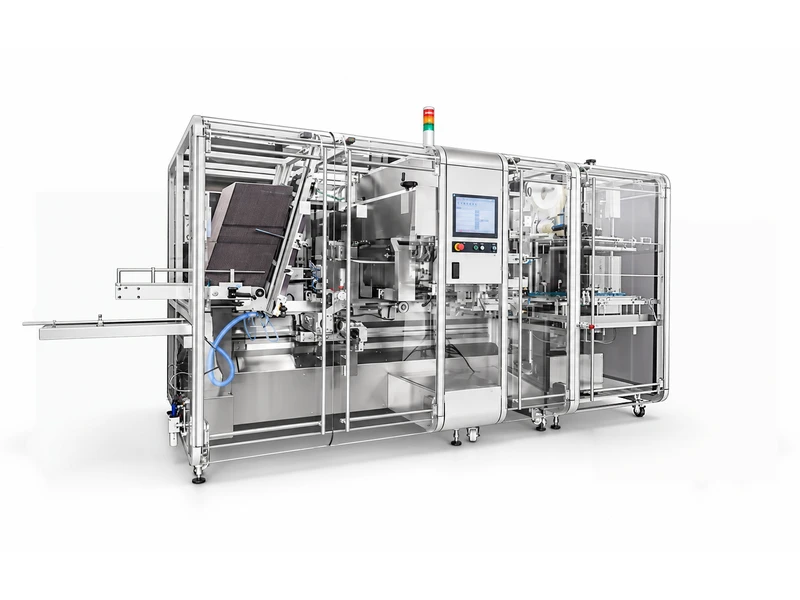
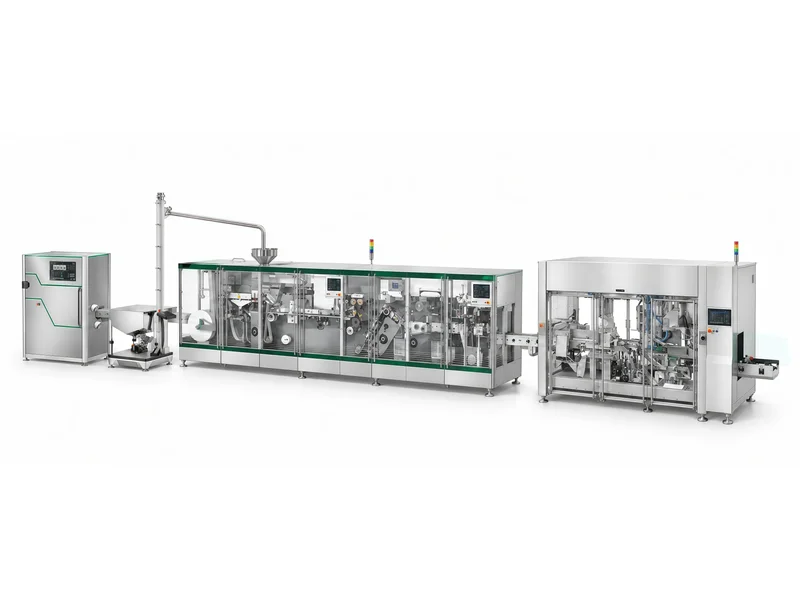
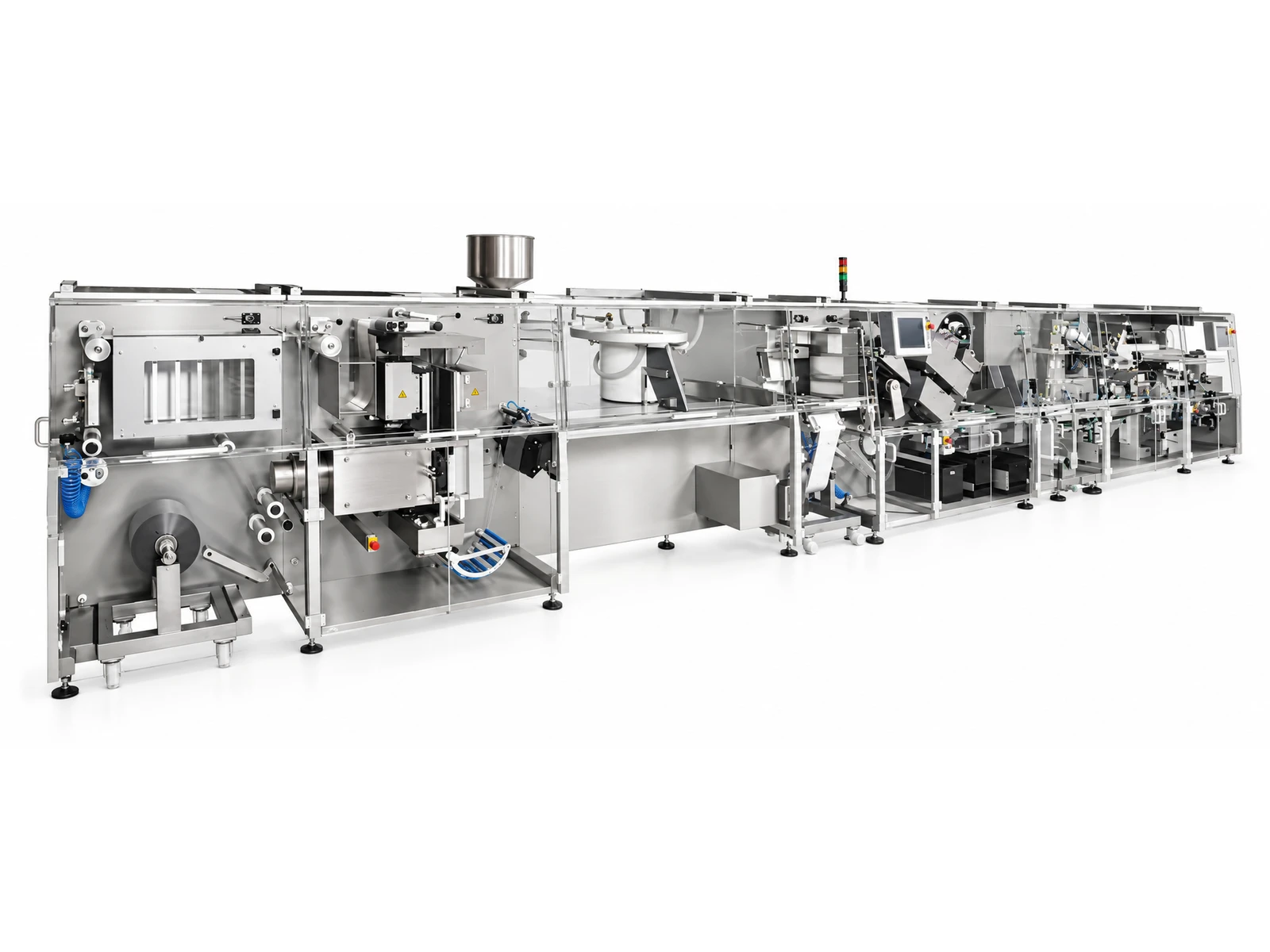
Form pockets, place tablets or capsules, and seal and cut the web into cards. Feeding geometry, barrier materials and seal quality define this solid-dose primary-pack route.
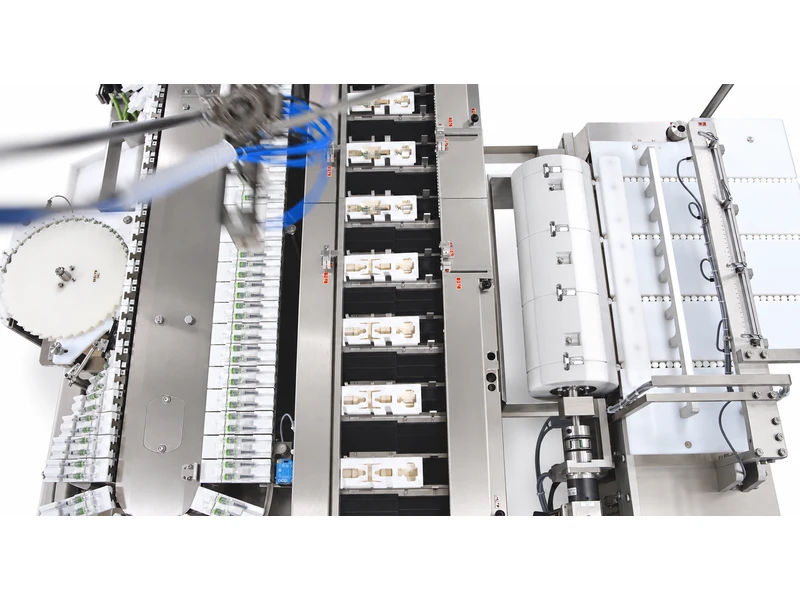
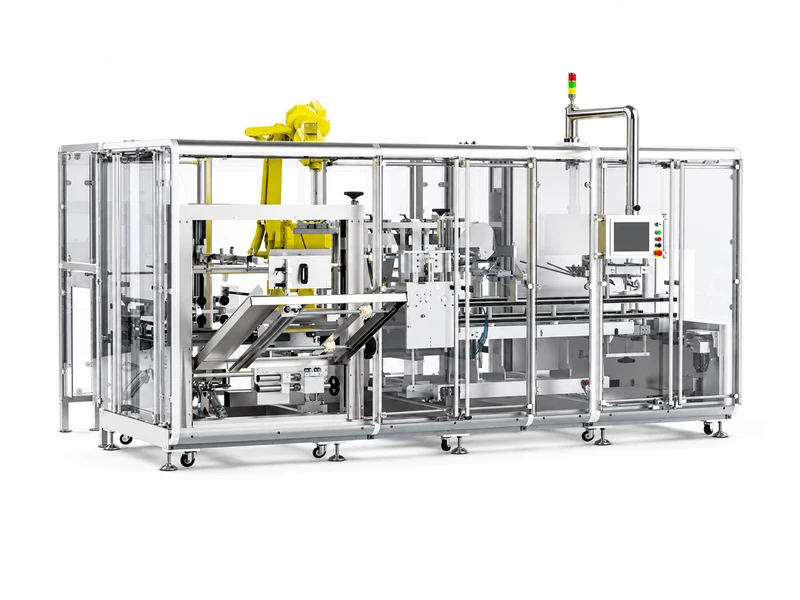
Place already filled and closed syringes, vials or devices in protective blisters or trays. The line handles the primary container rather than dosing liquid into the blister pocket.
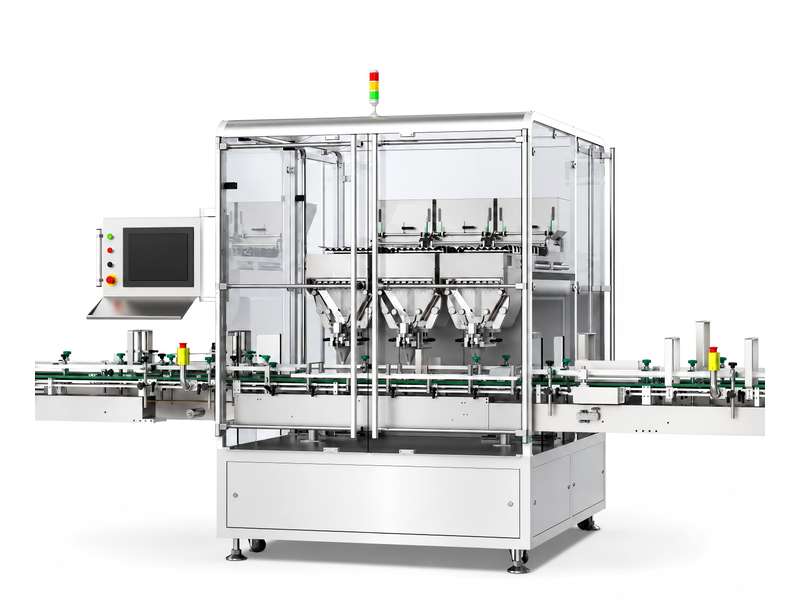
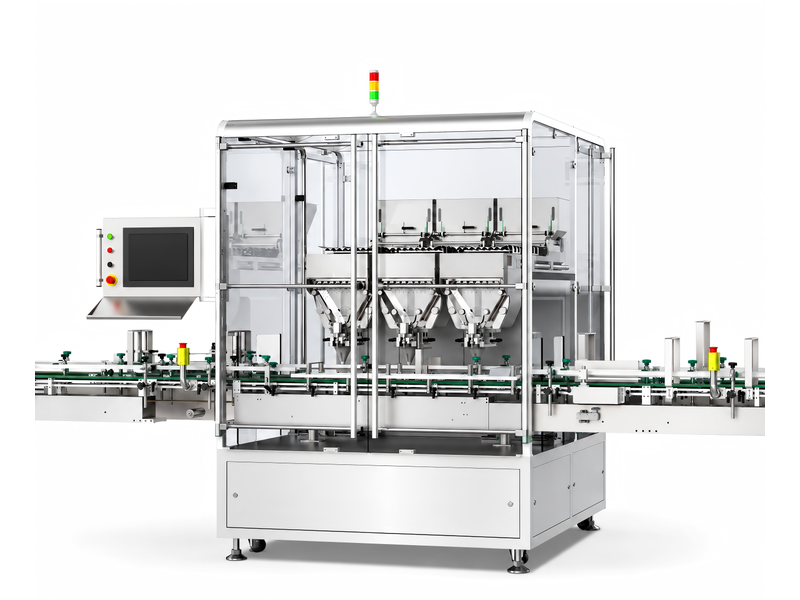
Present solid doses for inspection and counting, then discharge the accepted quantity into a bottle. Bottle closure and any moisture-protection component follow the required pack specification.
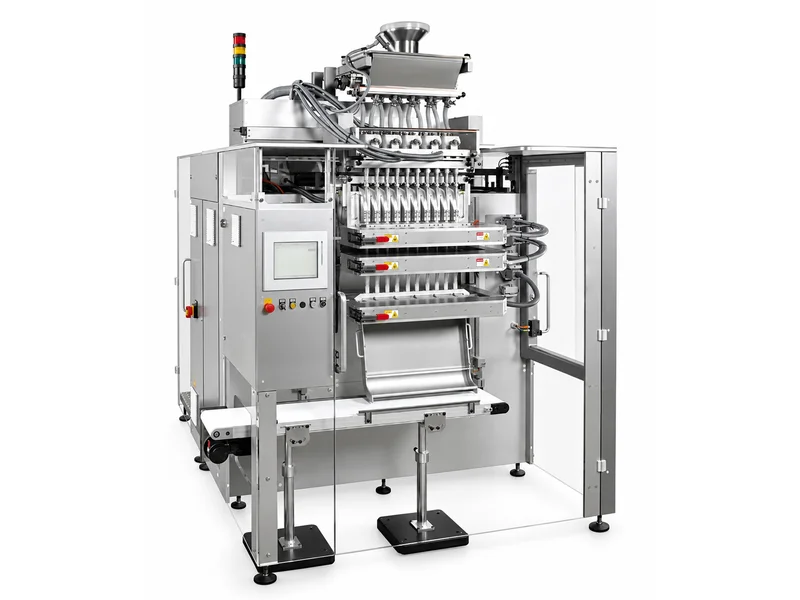
Meter product into web-formed sachets or stick packs. Powder flow or liquid behaviour determines the dosing method, while clean seal areas and registration determine the finished pack quality.
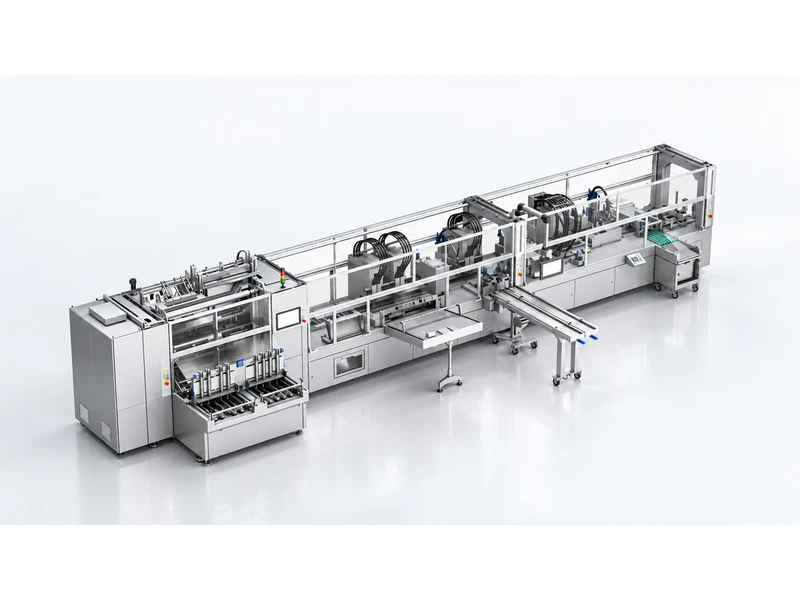
Insert a product or collated group through the open end of a carton. Product support, usable opening and leaflet thickness shape the side-loading sequence.
Load products and accessories into an open carton from above. Inserts, partitions and placement checks establish the contents of a fragile-container or device kit.
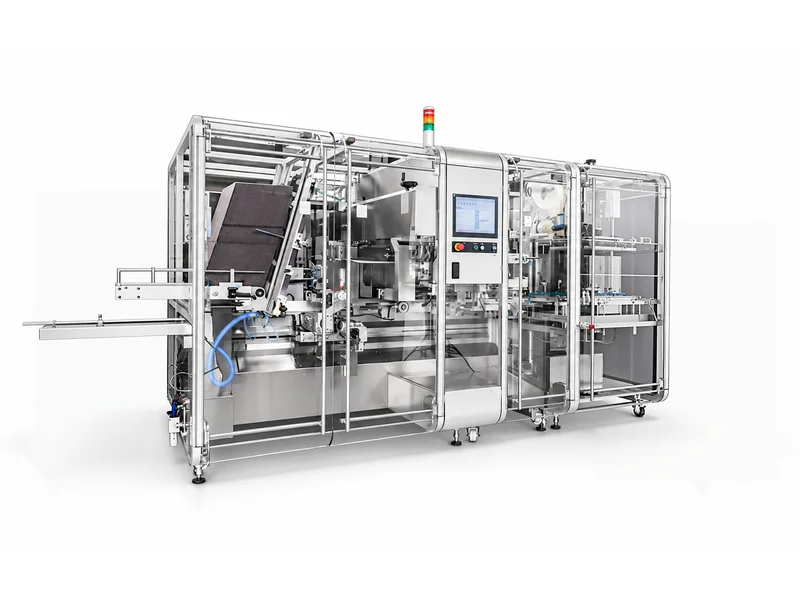
Collate finished packs and retain them with the specified film band or wrap. Group geometry and pack stiffness govern stable transfer into the next operation.
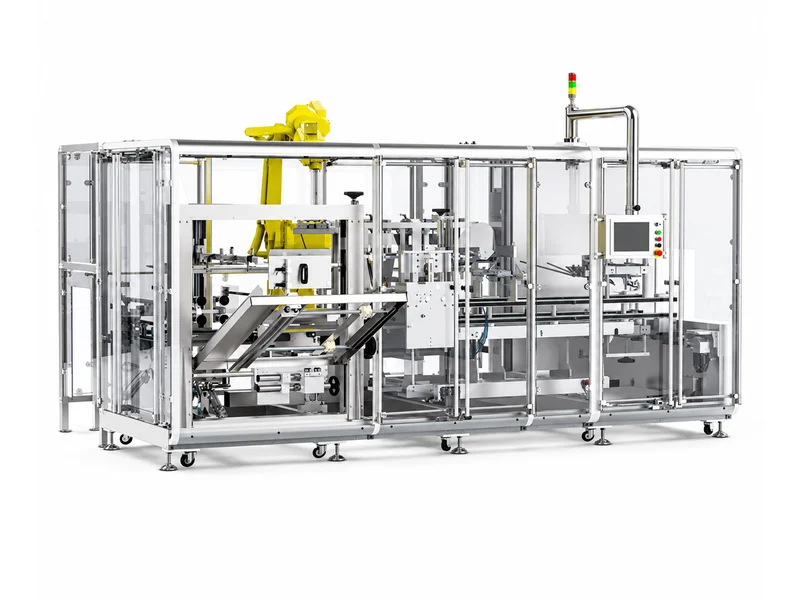
Erect and load a shipping case with a defined count and layer pattern. The case opening, pack support and closure method determine how the collation is handled.
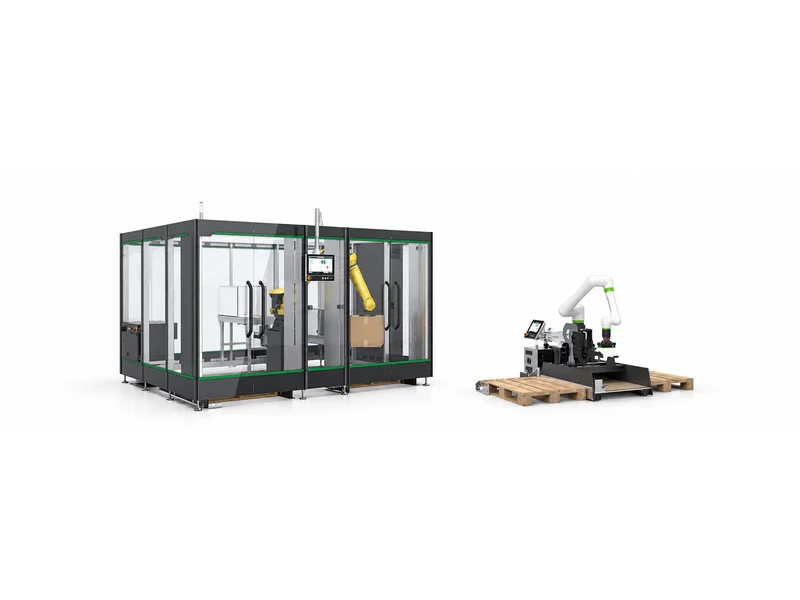
Place closed cases or approved transport packs into the required pallet pattern. Grip, case mass, load stability and warehouse transfer set the handling arrangement.
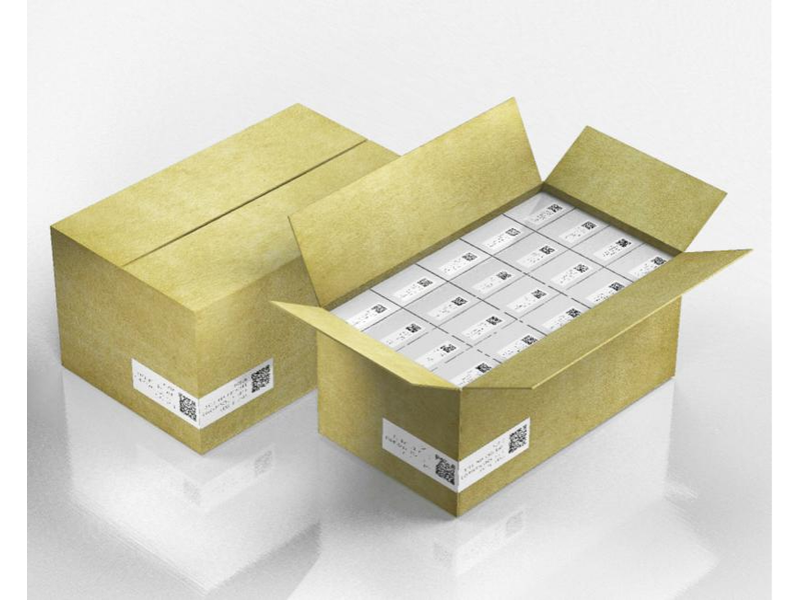
Connect printed identity with verification and packing events. Correct aggregation depends on the recorded child packs matching the physical contents after loading and rework.
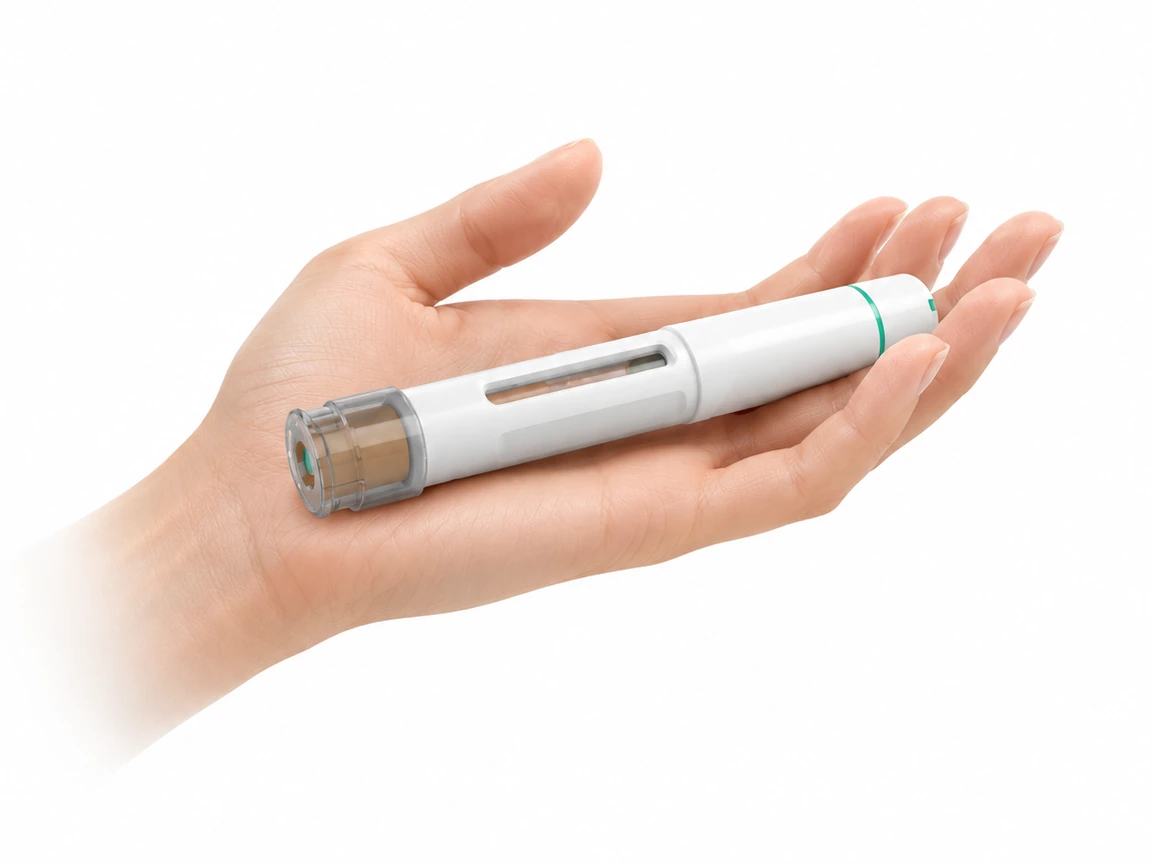
Join the specified pen components around the accepted primary container. Component orientation, fit and functional checks follow the approved device design.
Assemble the container and mechanism of the selected autoinjector. Controlled joining and device-specific checks precede secondary kit packing.
A handoff carries both a physical pack and a defined status. Orientation and pitch let the receiving machine handle it; accepted count and identity let the line distinguish a complete pack from a rejected or interrupted one. Buffers can absorb short stops, but each machine must retain responsibility for the packs between its checking and discharge points.
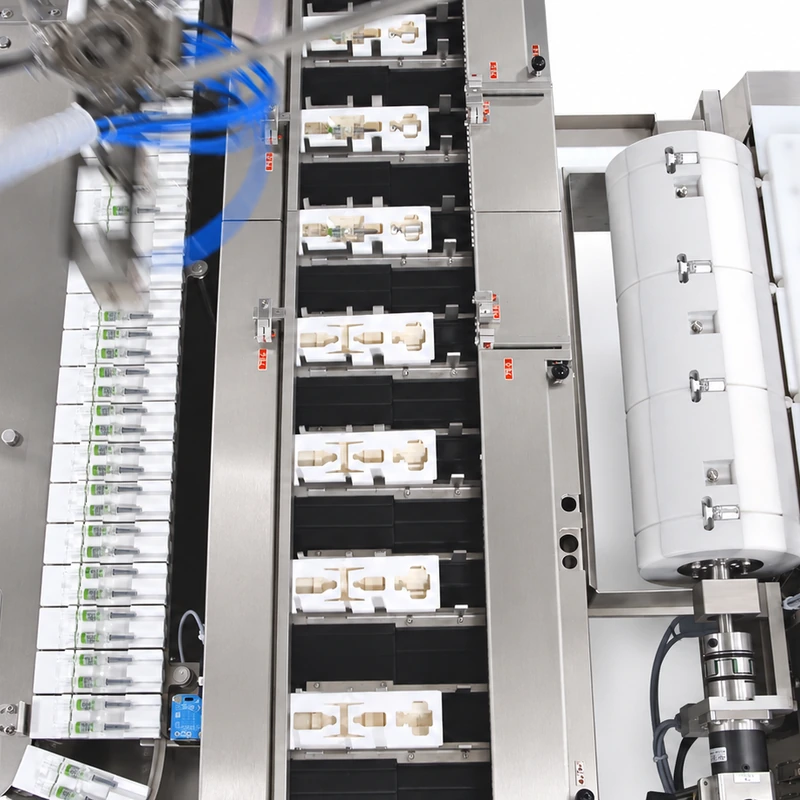

Start with the dosage unit. A tablet entering a blister pocket or a powder entering a sachet meets its primary package there. A closed vial placed in a tray is already inside its primary container, so that tray operation is secondary packing. The distinction determines the product-contact parts, cleaning scope and package tests.
At the transfer, follow a complete accepted pack and an interrupted one. Observe the receiving orientation, group count and stop response. Verification covers the actual interface: a nominal upstream speed does not establish stable feeding into the next machine.
Confirm which operations touch the product and which handle only closed packs, cartons or shippers.
Learn moreCheck pack protection and unit tracking whenever the line changes count, orientation or packaging level.
Learn moreIdentify the contact parts and format tooling for Packaging & Assembly. Agree access for cleaning, the spares to hold and the operating records the site will need.
Learn moreShare product and pack drawings, packaging material and unit count.
Request product information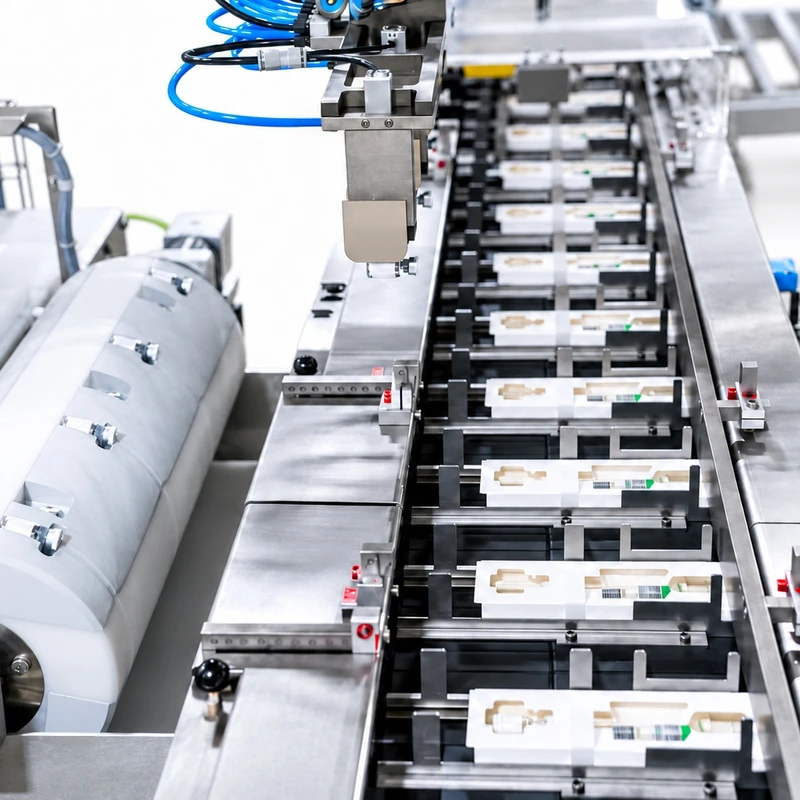
2 resources
For a loose solid dose they are normally alternative primary-pack routes. A selected product presentation may use either a sealed blister card or a counted bottle; both can subsequently enter cartoning or shipping-case operations.
The liquid-product blister line in this catalogue places already closed containers into a secondary pack. Primary liquid filling and direct liquid dosing into a cavity are separate equipment scopes.
Assembly joins the approved device components and primary container before the completed device is packed. It has its own joining and functional checks and is not replaced by placing the device in a carton.
The physical interface includes pack geometry, orientation, pitch and buffering. Controls must also agree accepted status, count, stop and restart behaviour and, where required, identity. Testing covers both the normal transfer and its interruptions.