Skip to content

Process expertise. Chinese manufacturing. Global perspective.

PREASYS

Equipment & technology

Radiopharmaceutical Hot Cells & Lead-Shielded Aseptic Isolators

A radiopharmaceutical hot cell combines a shielded working volume with controlled handling and ventilation. The enclosure supports the intended synthesis, dispensing or transfer operation. Radiation shielding, containment and aseptic product protection are separate design functions whose interfaces must fit the selected process.

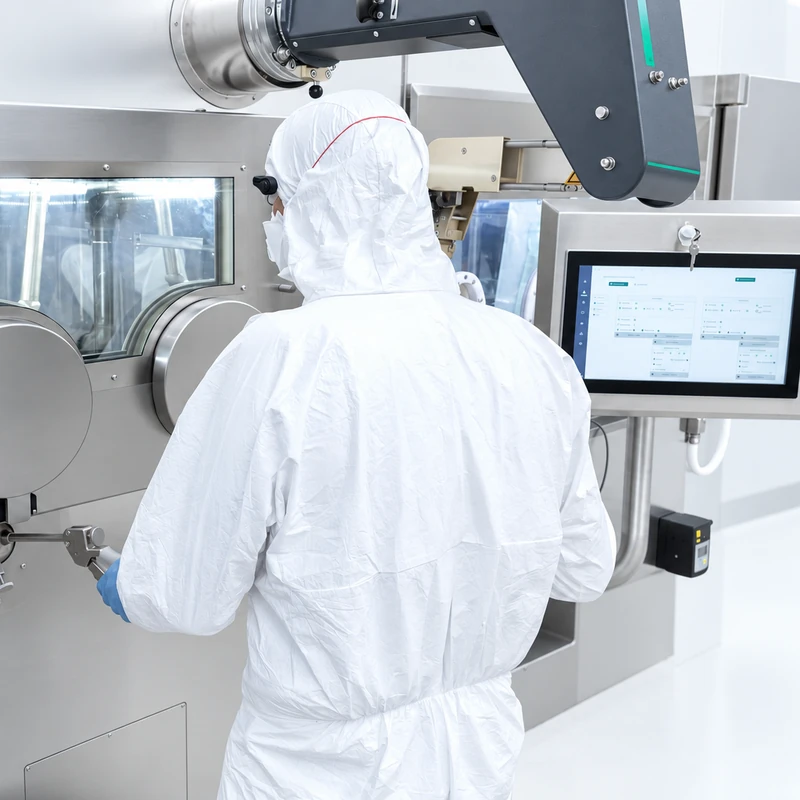
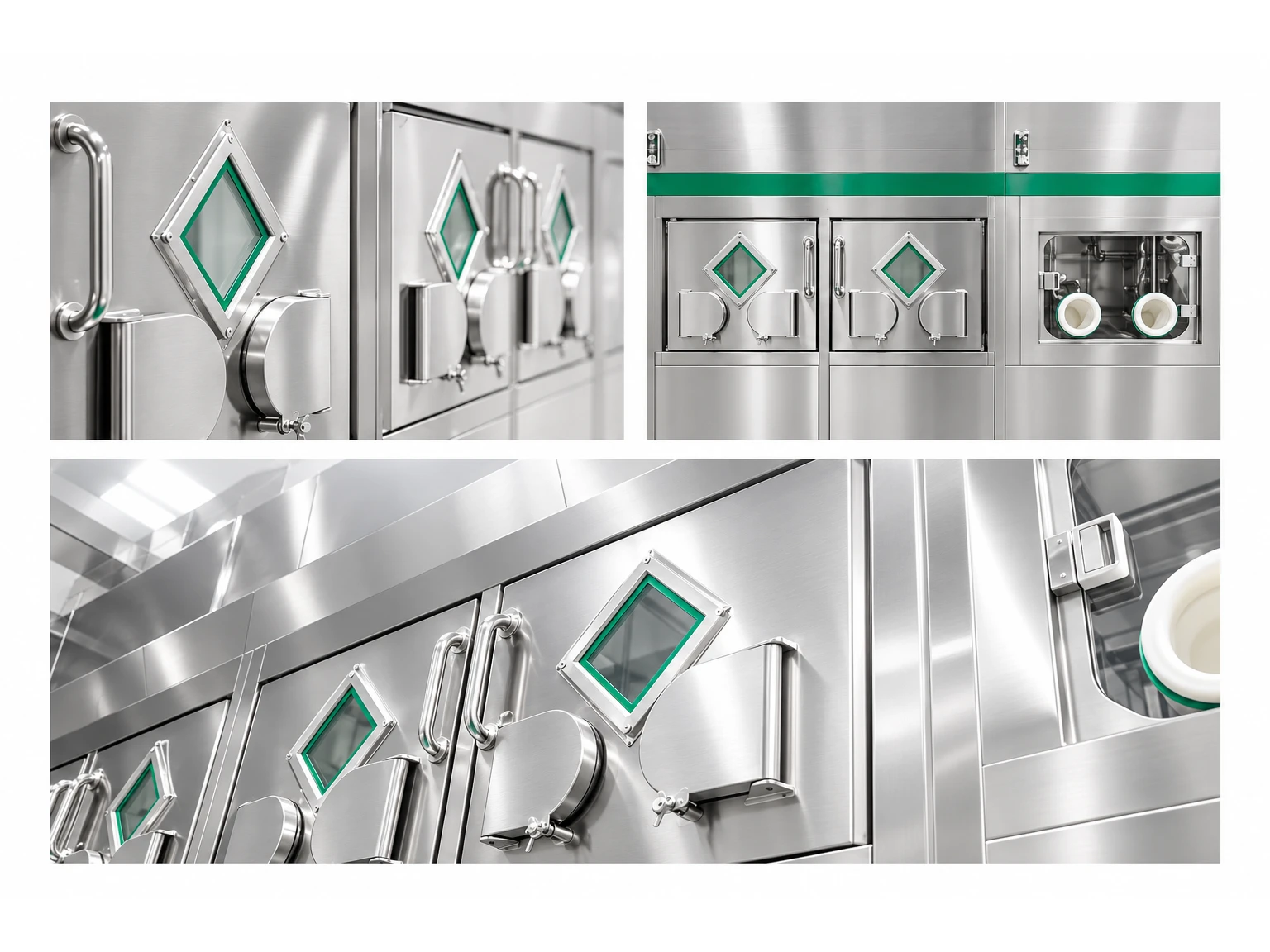
Row of shielded hot cells with front viewing windows

Hot Cell / Shielded Isolator

Hot cells and shielded working enclosures

Arrange the enclosure around the operation

Shielding, controlled ventilation and reachable process equipment form the working envelope.

The process inside the cell determines its layout. Shielding surrounds the operation, while doors, transfer openings, windows and handling devices provide access through that boundary. The instrument may fit geometrically yet remain difficult to load or maintain if these access paths are omitted. For exposed sterile product, the product-protection design is considered separately alongside radiation containment.

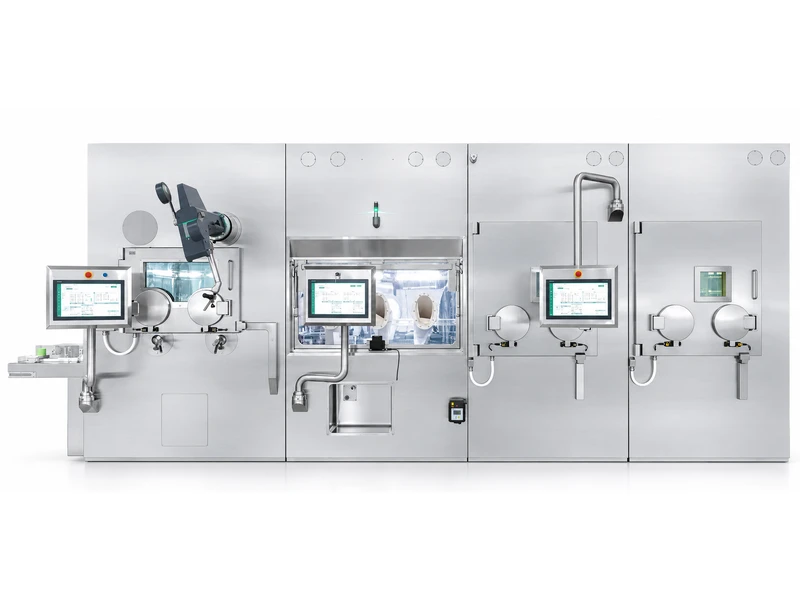
Shielded access doors and windows on a bank of hot cells

Example project input

A cold mock-up can reveal where tools are out of reach or the viewing window is obstructed. These observations do not size shielding; that requires the facility's isotope and activity assessment.

4

Mock transfer tasks

3

Glove-port reach positions per task

12

Reach checks to record

Process challenges

Shielding, air movement and reachable handling must fit the same working space.

Read details

Access and protection — Shielding occupies space around the process, while viewing and handling require openings or transmission paths. Their positions determine whether an operation can be performed without unnecessary movement across the boundary.

Radiation-protection basis — Radionuclide, activity, source geometry and occupancy affect the shielding assessment. One material thickness cannot be treated as suitable for every isotope or operation.

Containment boundary — Seals, penetrations and transfer devices contribute to enclosure tightness. Leakage assessment therefore concerns the assembled system and its defined test condition, not the wall material alone.

Ventilation — Supply, extraction, filtration and the intended pressure relationship control movement of air through the enclosure. Their arrangement must address both normal operation and defined access states.

Cleaning and biodecontamination — These functions require accessible surfaces and a compatible process. A biodecontamination cycle and radioactive contamination management solve different problems; one cannot stand in for the other.

Process changes — A different radionuclide or chemistry can change shielding, materials, ventilation and waste requirements. Flexibility comes from a defined design envelope rather than a generic multi-isotope label.

Monitoring — Environmental and radiological measurements have different purposes. Their sampling locations, access and records must correspond to the conditions the project needs to assess.

Ergonomics — Manipulator reach, viewing angle and tool movement determine whether setup and recovery are practical. A layout trial can expose blocked views or unreachable connections before the enclosure is built.

Process consideration Equipment and interface implications
Handling and exposure Remote handling can reduce repeated direct access, but source geometry and operator tasks still govern the protection assessment.
Containment and product protection The enclosure design coordinates air movement, transfer states and exposed-product needs. A general grade or tightness claim is insufficient without the defined configuration and tests.
Cleaning and biodecontamination Surface access and material compatibility determine the practical method. The cycle and acceptance evidence are specific to the enclosure and intended load.
Monitoring access Locations for environmental or radiological measurements must represent the operation while remaining accessible for use and service.
Changing process requirements Shielding, ventilation and materials are assessed against the intended radionuclides and operations. No universal thickness is specified for all projects.
Qualification boundaries The agreed supply scope separates subsystem records, factory tests and site qualification responsibilities. These records describe the installed configuration rather than a blanket compliance status.

Technical data & features

The activity, isotope, manipulation sequence and service access are design inputs for the qualified project team.

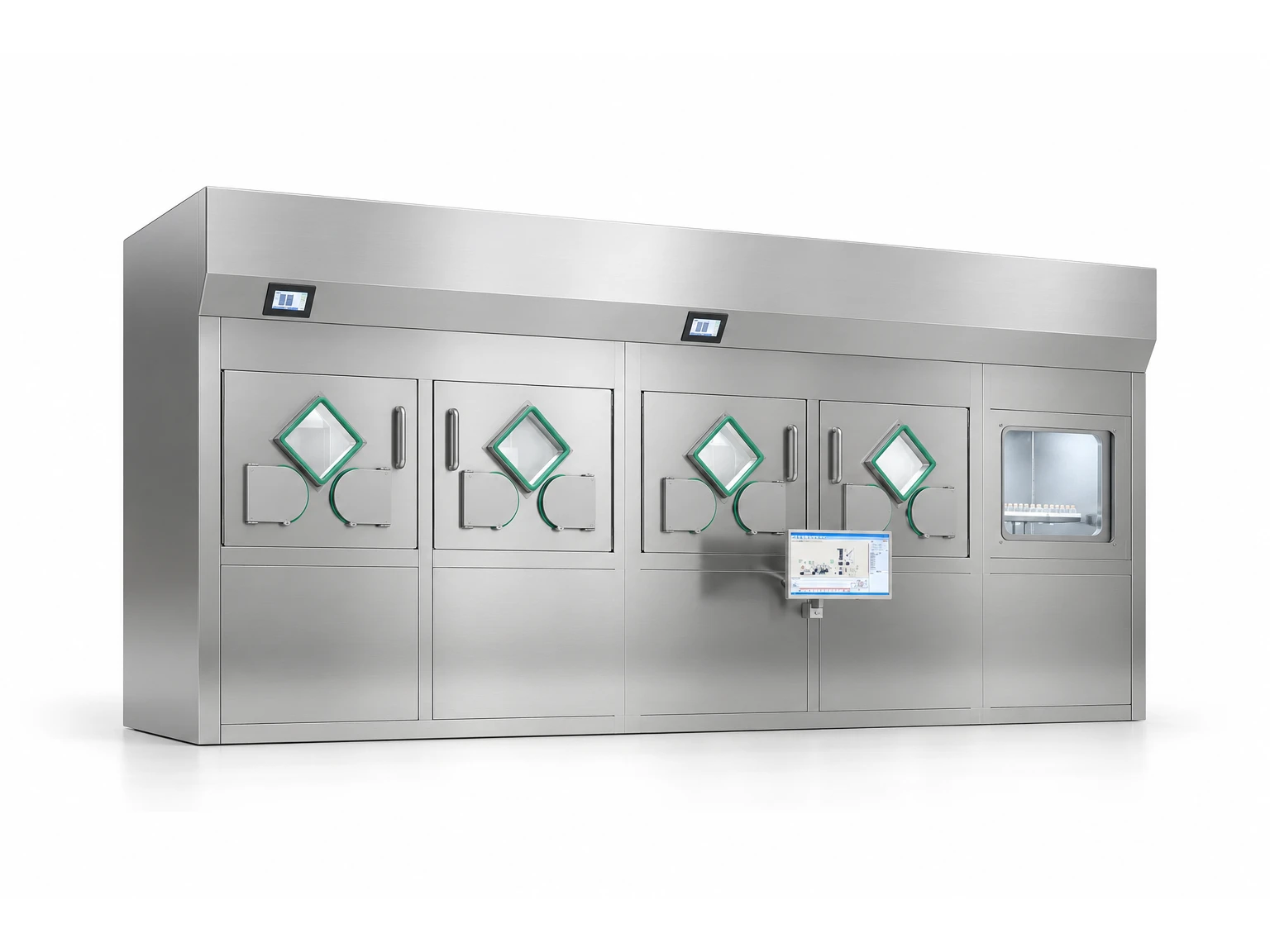
Shielded access doors and windows on a bank of hot cells

Dispensing workspace — Container support, source connections, measurement equipment and handling devices share the working volume. Their location determines the liquid-transfer and recovery paths.

Synthesis workspace — The cell surrounds the selected synthesis module with its connection, disposable-change and maintenance envelope. Process exhaust and waste remain separately identified interfaces.

Shielding design — Material, geometry and openings are selected from the project radiation-protection assessment. Windows, doors and penetrations belong to that assessment alongside the enclosure walls.

Ventilation and product protection — Containment pressure relationships and protection of exposed product must be coordinated for the specified operation. Neither a fixed pressure sign nor a room-grade label defines the entire design.

Handling and testing — Remote manipulators, robotic handling, glove interfaces and enclosure test access are configuration choices. The selected combination determines operating reach and intervention procedures.

Transfer and waste interfaces — Incoming components, outgoing product, consumables and waste need distinct, accessible routes. Shielded doors and transfer devices are arranged around those movements.

Service envelope — Filter access, instrument removal and maintenance tooling need space beyond the normal processing position. The enclosure drawing must represent these movements as well as the installed equipment.

How it works

How do product and materials cross the cell boundary?

Transfer devices connect the outside material route with the internal working position. Their geometry and operating states affect shielding, containment and access, so they are designed as part of the enclosure. Incoming components, finished containers and waste may require different routes rather than a single shared opening.

What does a layout mock-up establish?

A mock-up allows the planned tools and containers to move through loading, processing and recovery positions. It reveals whether the operator or remote handling device can reach connections and see the task. This is an ergonomic and access assessment; it does not replace radiation calculations, enclosure tests or process qualification.

Line integration

Line Integration

Incoming material, process equipment and outgoing containers use defined transfer boundaries.

Read more

Upstream material arrives through the transfer arrangement appropriate to the selected source and process. Receipt, identity and the receiving container state are defined at this interface; not every project starts with the same source equipment.

The synthesis module occupies a defined working and service envelope. Its process connections, exhaust and waste paths are coordinated with the cell; the enclosure does not carry out the synthesis chemistry.

Dispensing connects prepared product to the selected vial or syringe presentation. The cell provides the surrounding access and protection functions while the dispenser controls its own transfer sequence.

Sampling and container checks may take place in or alongside the cell according to the selected equipment. Visual inspection, integrity testing, activity measurement and analytical QC remain separate functions.

The outgoing presentation and shielded transport connection determine the dispatch handoff. Product-release and clinical administration decisions remain outside the enclosure equipment scope.

Support throughout your project and production

Define the equipment scope

The activity, isotope, manipulation sequence and service access are design inputs for the qualified project team.

Learn more

Agree the acceptance test

Map transfers of incoming components, product, consumables and waste before finalising the cell layout.

Learn more

Prepare for operation

Identify the contact parts and format tooling for Hot Cell / Shielded Isolator. Agree access for cleaning, the spares to hold and the operating records the site will need.

Learn more

Knowledge hub

2 resources

Frequently asked questions

Does a hot cell automatically provide aseptic processing conditions?

No. Shielding and containment address radiation and material-control requirements. Aseptic product protection requires its own airflow, transfer, cleaning and monitoring design for the intended operation.

Can shielding be selected from radionuclide name alone?

The design basis also includes activity, source geometry, locations, occupancy and operating tasks. Walls, windows, doors and penetrations are considered together by the qualified project team.

Should every hot cell operate at the same pressure relationship?

The ventilation arrangement depends on containment, product protection and the surrounding facility. A fixed positive or negative pressure statement cannot describe all operating and transfer conditions.

Which space is needed beyond the instrument footprint?

Allow for process connections, container transfers, consumable replacement, manipulators and instrument removal. Maintenance or filter access can require space that is not visible in the normal operating position.

Does biodecontamination remove radioactive contamination?

Biodecontamination addresses biological contamination under a defined method. Radioactive contamination management has separate materials, monitoring and waste requirements. The two functions must not be treated as interchangeable.

Contact

Share the intended operation, equipment layout, source and activity basis, and material-transfer requirements for the cell design review.

Discuss your project →
Shielded access doors and windows on a bank of hot cells