Skip to content

Process expertise. Chinese manufacturing. Global perspective.

PREASYS

Equipment & technology

Shielded Automated Radiopharmaceutical Vial Inspection System

Radiopharmaceutical vial inspection uses controlled presentation, lighting and imaging within a shielded handling arrangement. Camera-assisted remote viewing and automatic defect classification are different configurations. The visual result addresses the specified observable defects; activity, closure integrity and analytical quality require their own methods.

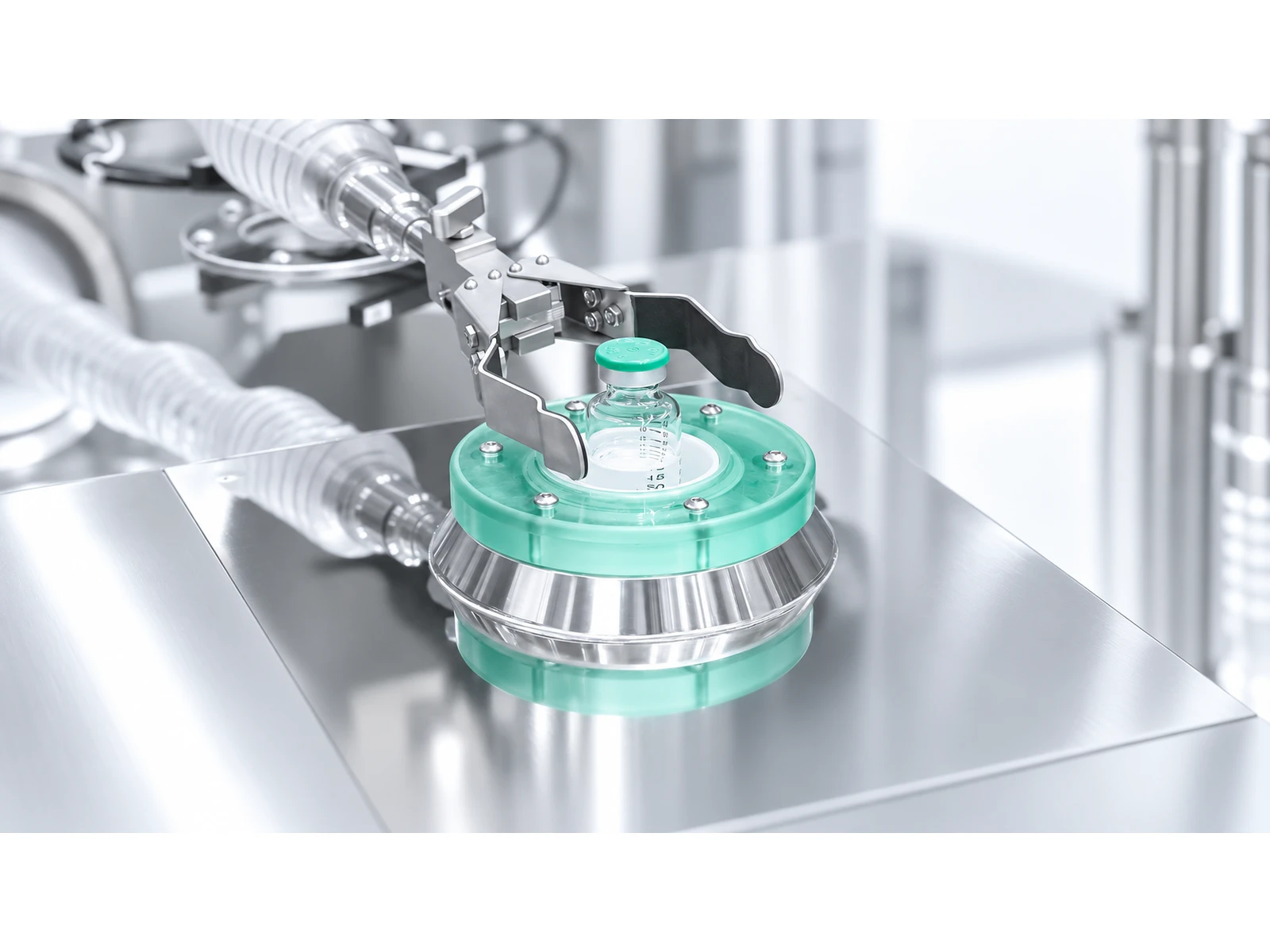
Gripper holding a vial transport fixture inside a shielded cell
Process context · Gripper holding a vial transport fixture inside a shielded cell

Radiopharmaceutical Inspection System

Visual inspection within shielded handling

Controlled vial presentation and image acquisition for the selected visual checks.

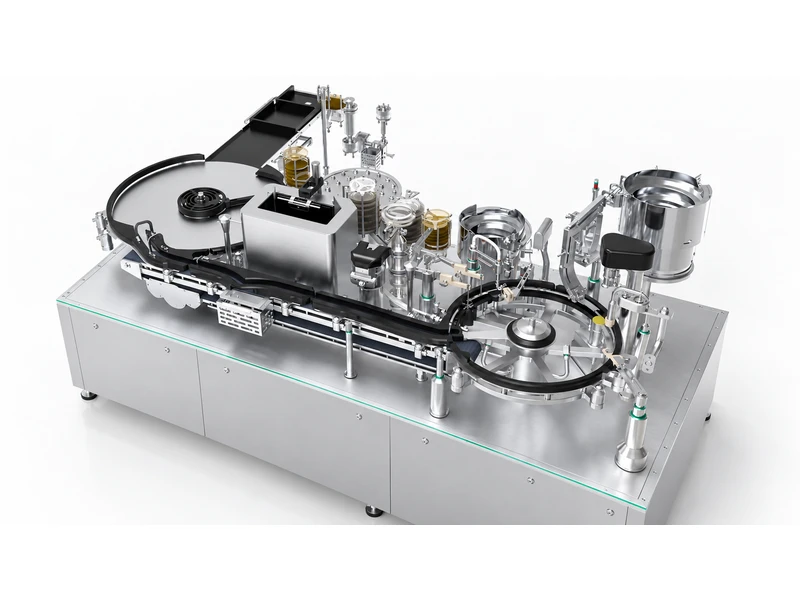
The inspection arrangement holds and moves the vial so illumination and viewing geometry can reveal the selected characteristics. Liquid motion can help distinguish moving particles from fixed marks, but bubbles and reflections also affect the image. A remote operator may assess the displayed view, or a separately defined automatic system may classify it. Container handling, image acquisition and the decision method therefore need separate descriptions.

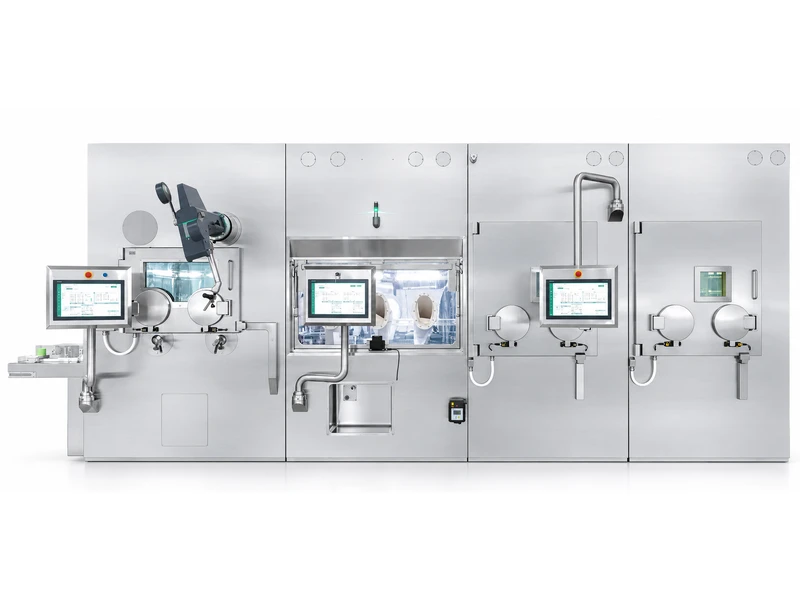
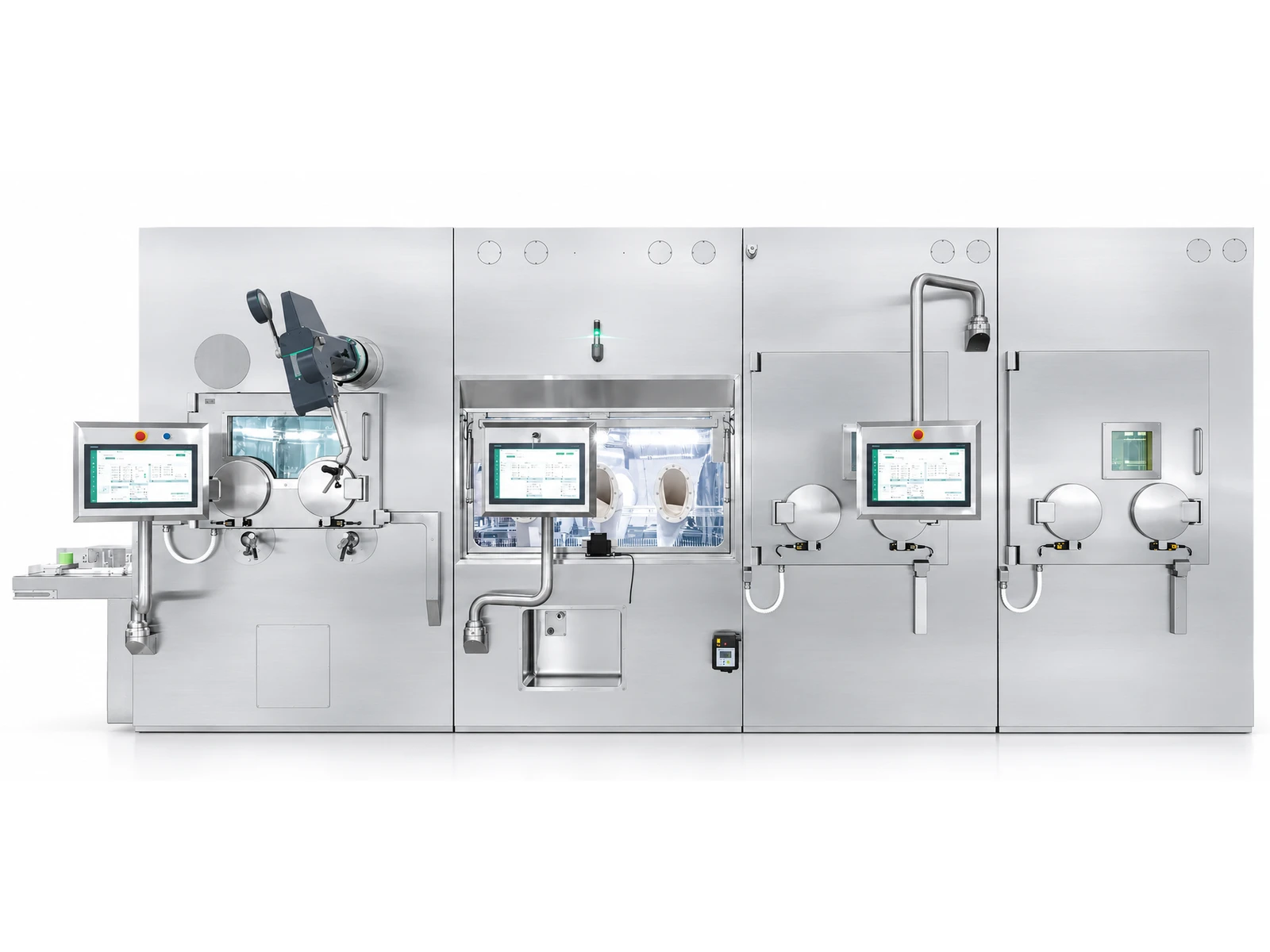
Shielded processing cells with viewing windows, access ports and controls
Process context · Shielded processing cells with viewing windows, access ports and controls

Visual inspection scope

Image acquisition and the inspection decision are separate functions. Controlled presentation supports the selected viewing method; automatic classification requires its own defined system and evaluation.

Visual

Controlled viewing of the selected container and defect types

Process challenges

Viewing conditions and the decision method determine what visual inspection can assess.

Read details

Viewing geometry — Shielding and enclosure windows constrain the viewing path. Camera position, magnification and lighting establish what part of the vial and liquid can actually be observed.

Integrity versus appearance — A visually acceptable vial can still require a separate closure-integrity test. The absence of a visible defect does not establish a leak-test result.

Associated results — Images and decisions need to remain linked to the inspected container or batch. Activity readings and other test results have their own identity and time references.

Container identification — Moving a vial into or out of a shielded carrier creates an identity handoff. Labelling and verification, when included, must preserve that association.

Handling access — Inspection can be performed on closed containers, but loading, removal and fault recovery still require a suitable access and shielding arrangement.

Inspection sequence — Vial rotation, settling, lighting and the number of views determine the inspection sequence. Transfer and other quality tests add operations beyond the visual station itself.

Process consideration Equipment and interface implications
Viewing through shielding A defined camera and illumination geometry provides a repeatable observation condition. The useful view depends on the container and the selected defect types.
Closure integrity A separate integrity method is selected for the container and product. Visual appearance alone cannot demonstrate leak tightness.
Result identity The container or batch identifier links the visual decision to its record. Other measurements retain their own method and time reference.
Carrier and label association Transfer between a vial and a shielded carrier creates an identity interface. Any label application and verification must preserve that association.
Operator interaction Remote observation can reduce the need for direct viewing at the cell, while loading, retrieval and recovery still have defined handling requirements.
Cycle-time assessment Presentation, motion, settling and views determine the visual cycle. Transport, integrity testing and labelling must be counted separately when assessing an integrated route.

Technical data & features

Determine the required views, sampling strategy and access envelope using the actual container and activity workflow.

Shielded processing cells with viewing windows, access ports and controls

Inspection scope — Visual inspection evaluates the defined visible characteristics. Closure-integrity testing, activity measurement and labelling may interface with it, but they are separate functions rather than an assumed standard four-in-one module.

Result association — Container or batch identity connects the image and decision to the rest of the production record. The selected data interface defines how identities and results are captured, transferred and recovered after an interruption.

Image formation — Vial support, controlled rotation or settling, illumination and background create the viewing condition. The useful combination depends on container geometry, liquid appearance and the reference defects used to develop the method.

Decision method — Remote viewing lets an operator assess the displayed image; automatic classification uses a separately configured and evaluated decision system. Automating vial movement alone does not automate defect recognition.

Installation boundary — Camera, drive, holder and service access must fit the shielded workspace. Materials and components require assessment for their operating environment and any proposed cleaning or decontamination process.

How it works

How does vial movement help visual inspection?

Controlled movement changes the position of the liquid and any suspended objects relative to the container. Lighting and background then make selected characteristics visible to the camera or observer. Bubbles, reflections and container marks can resemble defects, so the movement and viewing sequence is developed against representative good and defective samples.

How are inspection decisions connected to outgoing vials?

A defined identity follows the vial from presentation through the decision and the outgoing route. Accepted, rejected and undecided states need distinct handling. An interruption must preserve or re-establish the relationship between the physical container and its result rather than assuming the last displayed image belongs to the next vial.

Line integration

Connected inspection operations Infeed: identified closed vial and its shielded carrier Separate interface: closure-integrity testing where required Visual step: controlled movement, illumination and assessment

Separate interface: activity measurement and its reference record

Where labelling is included, the vial identity remains associated with its carrier and outgoing presentation. The labelling equipment and verification method form their own specified scope.

Accepted, rejected or held containers leave through defined handling routes. Inspection records support the quality process; they do not by themselves authorise product release or clinical administration.

Support throughout your project and production

Define the equipment scope

Determine the required views, sampling strategy and access envelope using the actual container and activity workflow.

Learn more

Agree the acceptance test

Agree the route for accepted and rejected units and how results are associated with each batch.

Learn more

Prepare for operation

Identify the contact parts and format tooling for Radiopharmaceutical Inspection System. Agree access for cleaning, the spares to hold and the operating records the site will need.

Learn more

Knowledge hub

2 resources

Frequently asked questions

Does automated vial rotation mean defects are detected automatically?

No. Automated presentation can support operator assessment on a remote display. Automatic classification requires a separate decision system and method evaluation; the supplied inspection configuration must state which approach is used.

Can visual inspection establish activity or radiochemical purity?

No. Visual inspection addresses observable characteristics such as specified particles or container defects. Activity measurement and analytical tests assess different properties and require their own instruments and methods.

Is closure-integrity testing part of every inspection system?

It is included only where separately specified and technically suitable for the container and product. A visual inspection station should not be described as performing a leak test merely because it is installed near a CCIT module.

Can the equipment fit any existing hot cell?

The actual cell must accommodate the holder, camera view, lighting, transfer motions, shielding and maintenance access. Environmental compatibility and replacement procedures also need a defined configuration.

How should inspection performance be evaluated?

Use the intended vial and product presentation with representative good samples and reference defects. The evaluation covers the method, decision criteria, false rejects and relevant defect detection; inspecting every vial does not imply detection of every possible defect.

Contact

Describe the vial, liquid appearance, required defect checks and shielded handling arrangement for the inspection scope.

Discuss your project →

Radiopharmaceutical Inspection System

Connect visual inspection with the surrounding radiopharmaceutical route

Synthesis, dispensing and inspection use different equipment and acceptance criteria. The container handoff and result identity connect them without treating a visual check as proof of all product-quality attributes.

Shielded processing cells with viewing windows, access ports and controls
Process context · Shielded processing cells with viewing windows, access ports and controls
Shielded processing cells with viewing windows, access ports and controls