Skip to content

Process expertise. Chinese manufacturing. Global perspective.

PREASYS

Production line

Vial Powder Filling & Packaging Lines

A vial powder filling line brings prepared dry powder and suitable vials together at the dosing station, then coordinates stoppering, capping and the selected checks. Powder flow, fill mass and the vial closure determine the equipment interfaces. Product protection, dust containment and any aseptic-processing requirements are specified for the actual product.

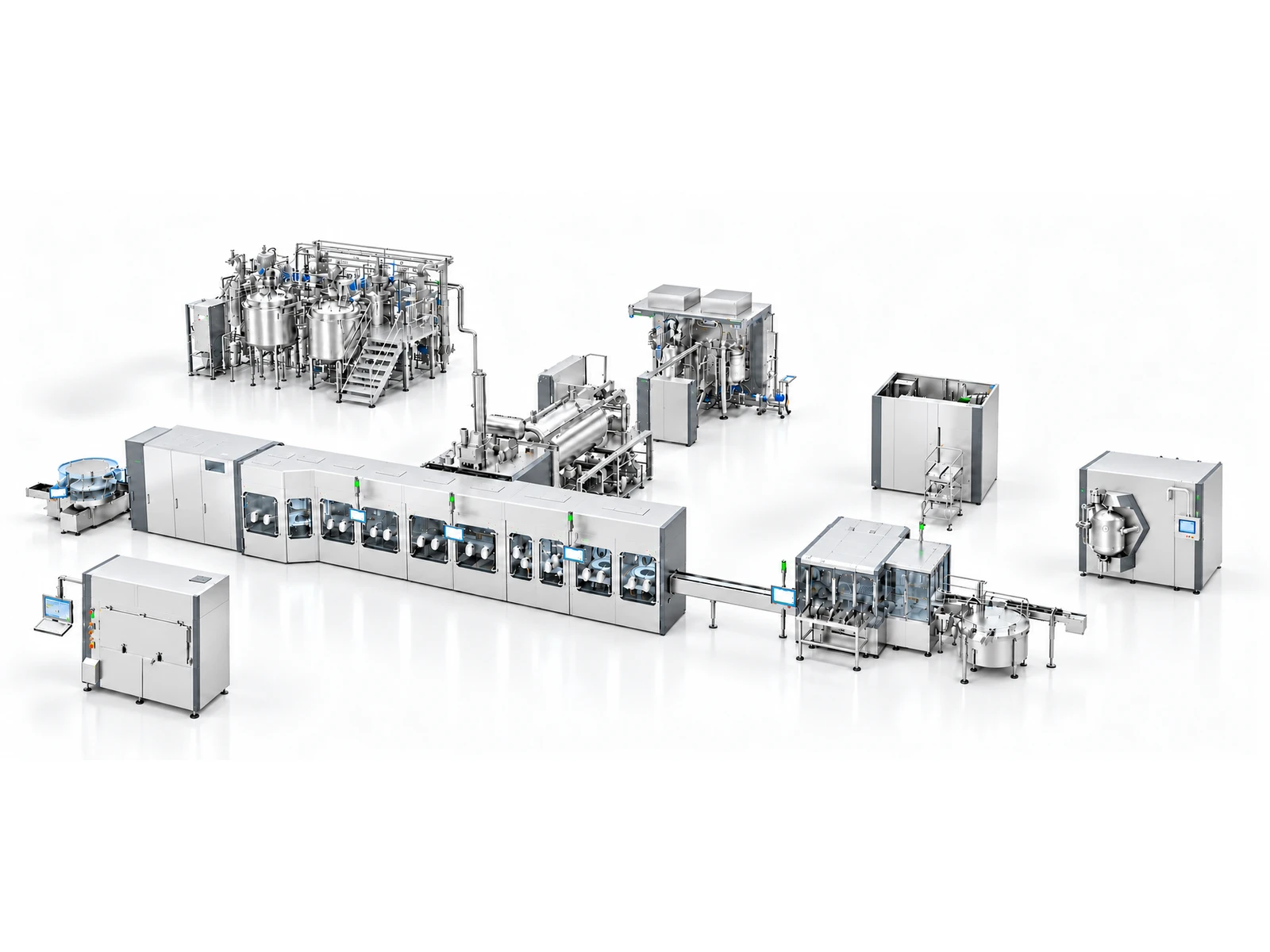
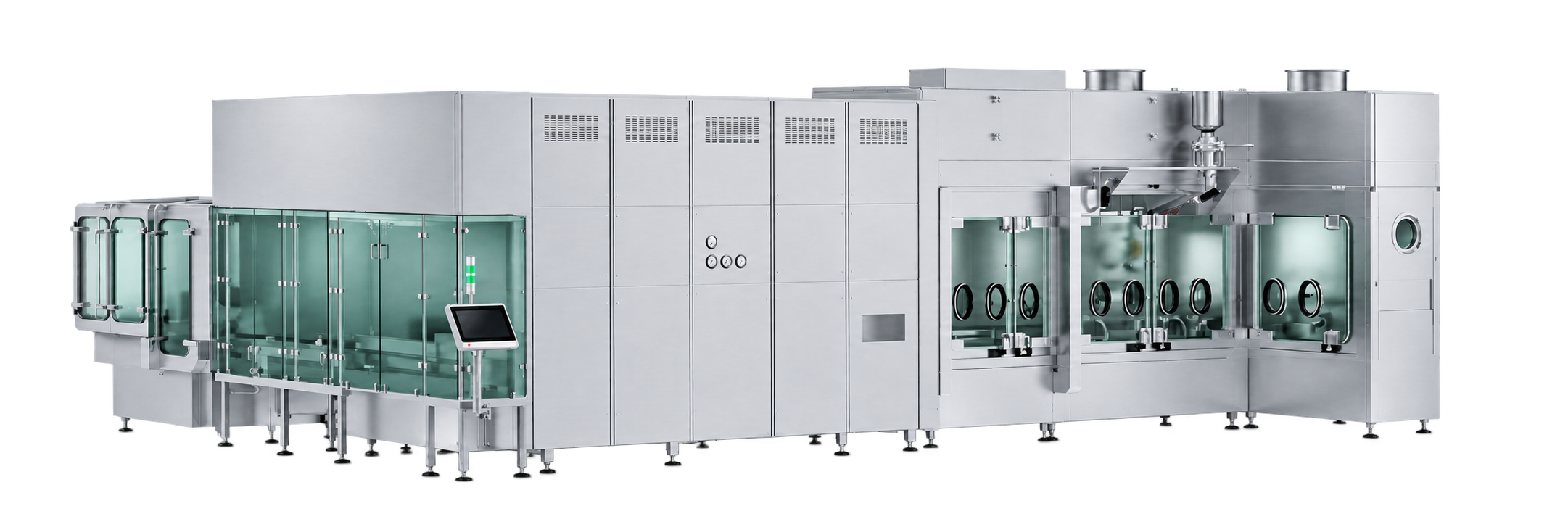
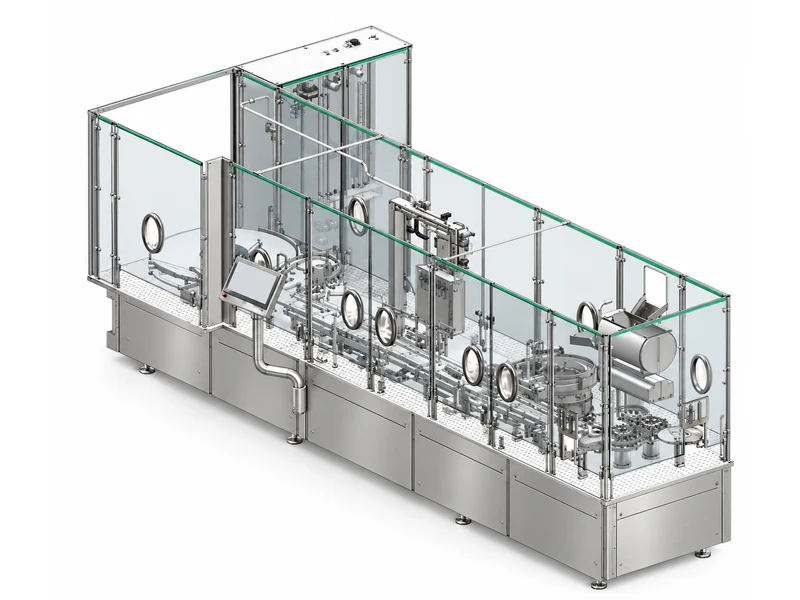
Vial filling layout showing processing enclosures, freeze-drying equipment and downstream stations

Overview

The product reaches this line as a prepared powder. A controlled feed supplies the metering unit; the vial receives the measured portion before its neck is closed with the specified stopper and cap. Changes in powder condition during refill or at batch end can alter delivery, so dose assessment belongs beside the feed and closure design. Making a dry product by filling liquid and freeze-drying it is a separate process.

Powder filling interfaces

These process summaries describe the line scope. Dosing range, output and accuracy require an agreed powder, vial and equipment configuration.

Powder

Prepared material at the dosing inlet

Dose

Mass assessment for the selected metering method

Closure

Matched vial, stopper and cap

Production sequence

Prepared powder enters the dosing path while vials, stoppers and caps arrive through their respective preparation routes. These streams meet at filling and closing. Inspection and the accepted/rejected discharge then establish the handoff to labeling and the selected secondary pack.

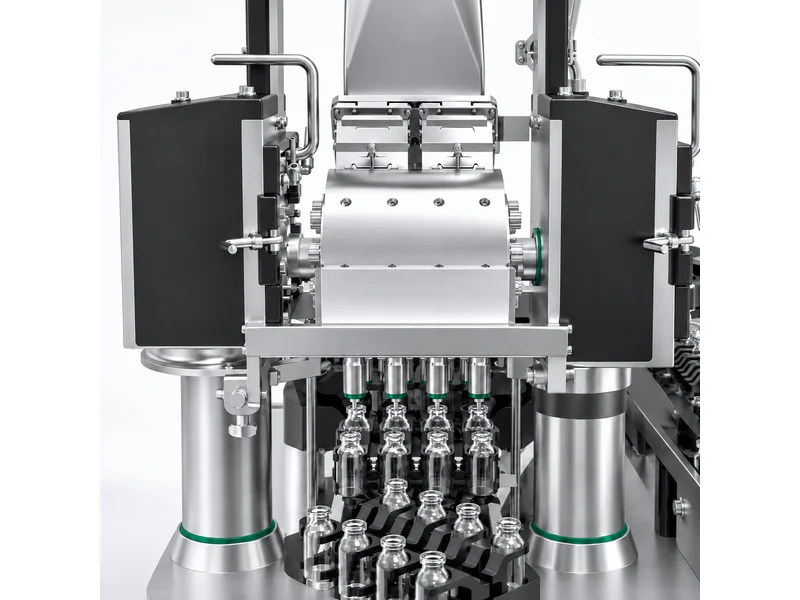
Powder metering unit positioned over a row of containers
01 · Material and vial supply

Prepared powder and components

The bulk powder container supplies a defined material to the hopper. Vials and closure components arrive in the condition required by the product process. Bulk washing and thermal treatment, or an assessed RTU supply route, are configuration choices rather than consecutive steps for every line.

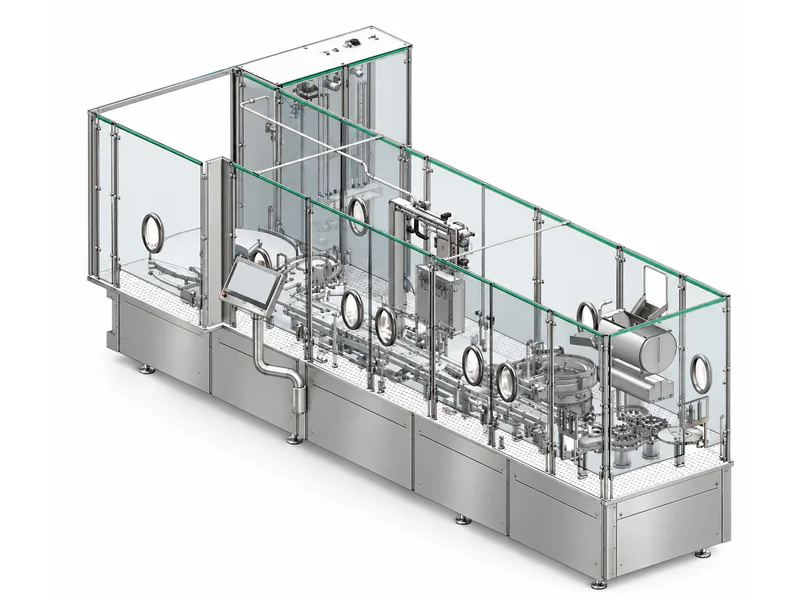
Enclosed vial filling line with a guarded transfer path
02 · Meter and close

Powder dosing and stoppering

A metering action transfers powder into the supported vial. The fill-mass assessment needs an appropriate tare basis; a gross vial weight alone is not a net powder result. Powder at the neck and stopper seating are separate observations before cap application.

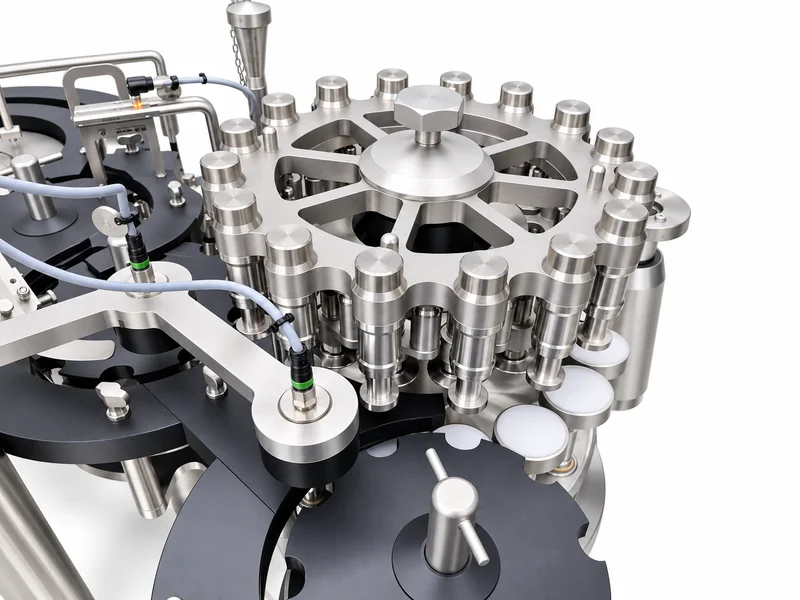
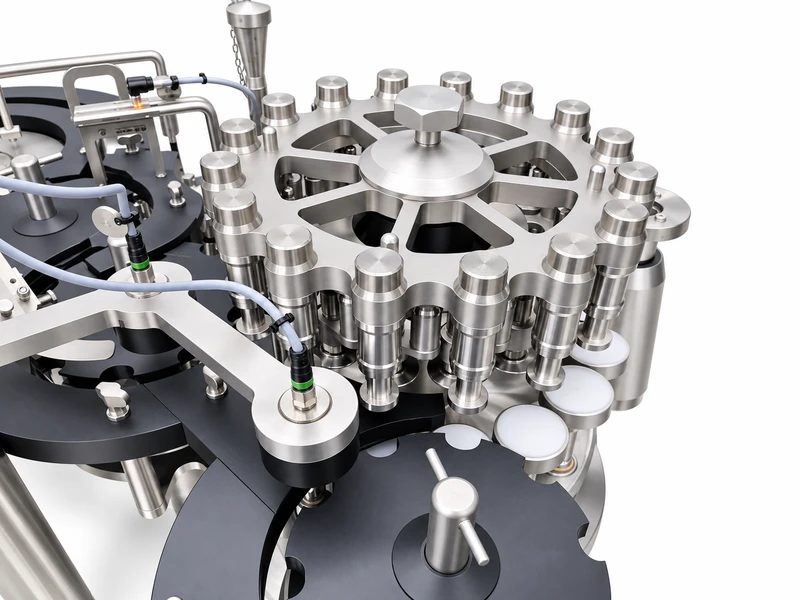
Rotary turret with container pockets and closing heads
03 · Check and transfer

Closed-vial inspection and packing

The inspection scope addresses the specified vial, powder presentation and closure defects. A justified integrity method assesses the actual closed container. Accepted and rejected units follow distinct paths before labeling or secondary packing; a visual result alone does not establish closure integrity.

Additional equipment for the project

Explore the powder filling line

Equipment examples for selected process stages; the final arrangement depends on the vial, powder and packaging requirements.

Process requirements and equipment options

Review the main filling and closing operations, with container preparation and support equipment selected for the project.

The six process subjects below describe the required interfaces. Dose checking is associated with dosing; container preparation and supporting systems are selected separately.

01 / Prepared vials and powder

Confirm the incoming powder, vial and component condition before dosing. The vial supply route may use prepared bulk containers or an assessed ready-to-use system.

02 / Powder feeding and filling

Feed prepared powder to the selected dosing system and transfer the dose through the vial mouth. Evaluate powder flow, refill conditions, the target mass and deposits near the closure surface.

Shown equipment example

Powder-filling equipment example; preparation, checks and closure interfaces are defined for the project.

03 / Dose checks and rejection

Define the measurement coverage and track each checked vial to its acceptance or reject destination. A net-mass result needs an appropriate tare basis; gross vial mass alone is insufficient.

Measurement placement

A paired tare/gross method checks before and after filling; sampled checks may be off-line. Do not draw this card as a compulsory standalone machine between filling and closure.

04 / Stoppering and capping

Seat the specified stopper after powder delivery, then secure the selected cap. Check stopper seating, cap condition and powder contamination at the sealing interface.

Closure interface

Full stoppering for the assessed direct-fill presentation; partial stoppering for a lyophilizer is not the default.

05 / Closed-vial inspection

Define the visible vial, closure and product defects that matter for the filled presentation. Assess closure-integrity testing separately for the actual powder, container and closure.

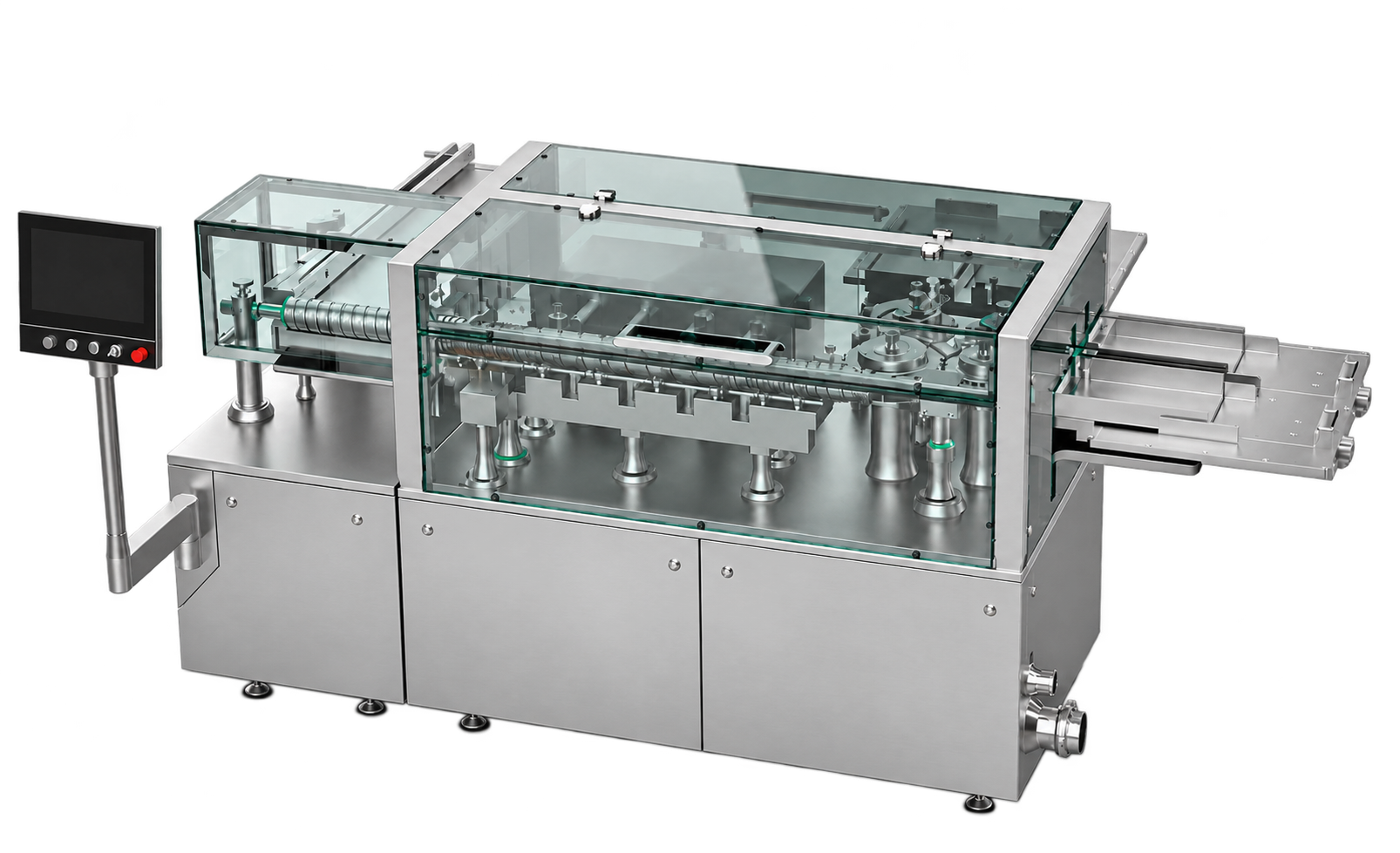
Shown equipment example

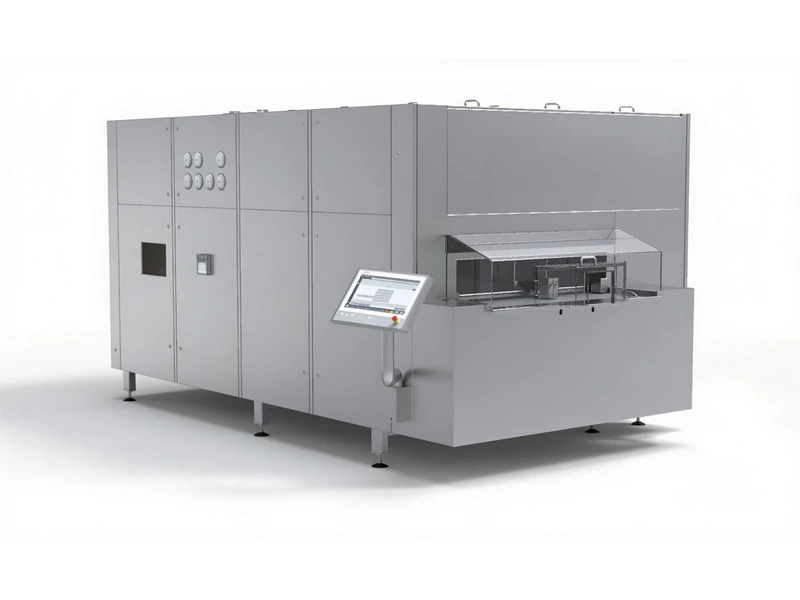
Inspection equipment example; configuration depends on the closed-vial presentation and selected checks.

06 / Labelling and secondary packaging

Transfer accepted closed vials to the selected labelling and secondary-packaging operations, maintaining identification and the defined reject separation.

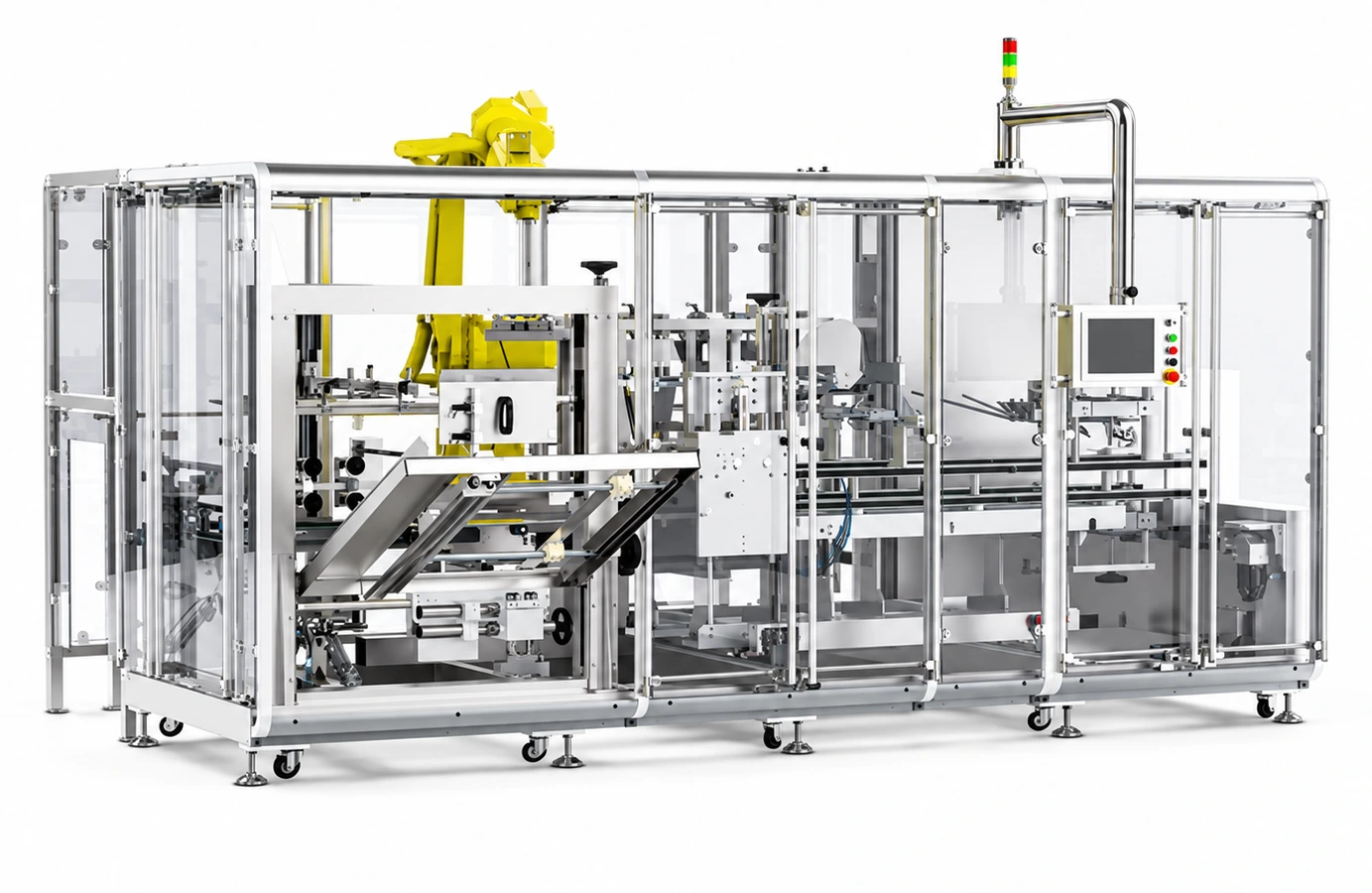
Shown equipment example

Optional. Secondary case-packing equipment example, selected for the finished pack format.

Supply alternatives and supporting systems

Select these interfaces for the project; they are alternatives or supporting requirements, not additional serial filling stations.

Bulk-vial preparation

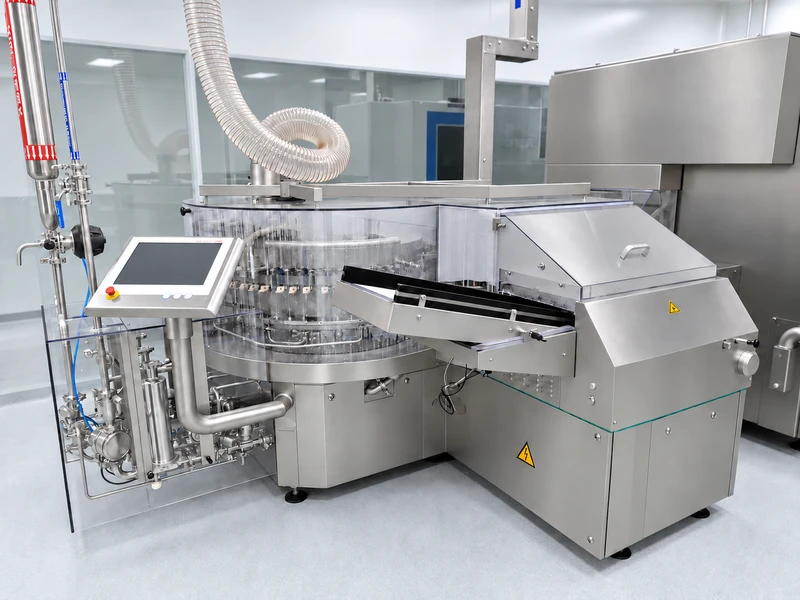
For the selected bulk-vial route, define washing and any required thermal treatment before transfer to filling. The treatment and qualification depend on the product and component specification.

Ready-to-use vial supply

Where a compatible ready-to-use container supply is selected, assess package opening and transfer to the filling boundary. This route is an alternative to an assumed in-line wash/tunnel train.

Stopper and component preparation

Prepare stoppers and product-contact components using the selected cleaning and, where required, sterilization processes. Their transfer and holding conditions are part of the project scope.

Product protection and powder containment

Select the environment, barrier and transfer arrangements for the product. Aseptic protection and powder-exposure control are separate design duties and may both apply.

Prepared-powder supply

The line receives powder with an identified formulation and preparation status. Any powder manufacturing or sterilization step is separately scoped.

Product-dependent operating conditions

Assess humidity, inert-gas use, hold time and cleaning requirements using the actual powder and process.

Powder filling technologies

Technology

Powder metering

Auger dosing moves powder with a screw; vacuum/pressure systems form and release a powder portion in a cavity. Delivered mass depends on powder condition as well as the mechanism. Representative trials establish suitability, including refill, low-hopper level and batch-end behavior.

Explore equipment
Powder metering unit positioned over a row of containers

Technology

Feed and exposure control

The connection between the bulk container and hopper influences powder condition and operator exposure. Bridging, compaction, segregation or moisture uptake may change the material reaching the dosing point. The selected enclosure and transfer system must address the actual powder hazard and product-protection requirement.

Explore equipment
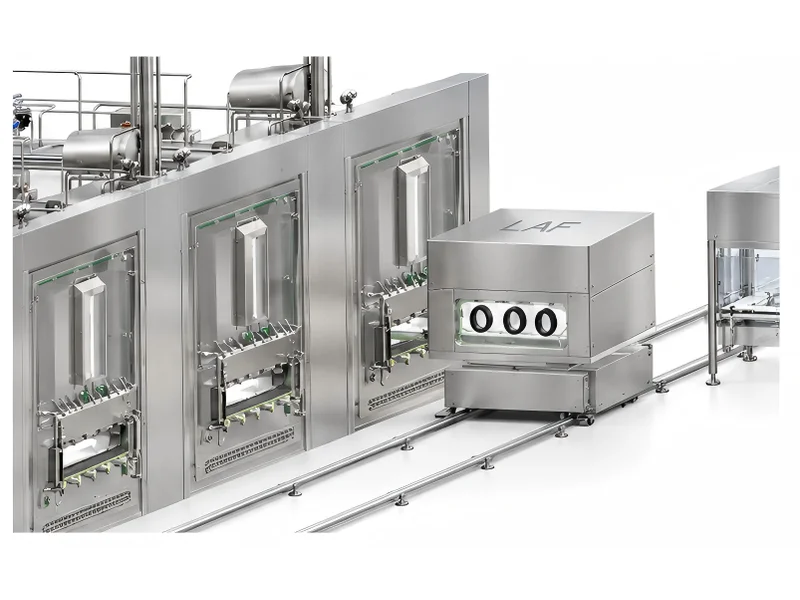
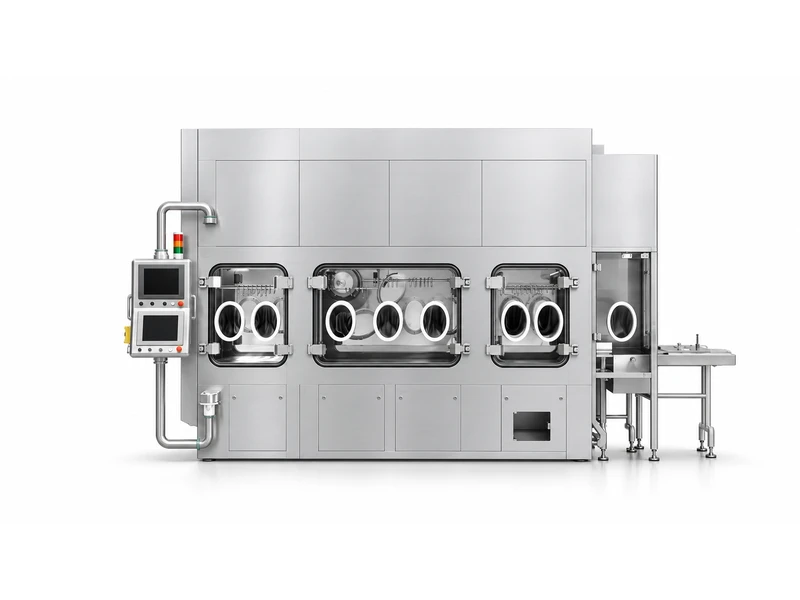
Enclosed vial filling line with a guarded transfer path

Technology

Closing a powder-filled vial

Powder on the neck or sealing surface can affect stopper seating even when fill mass is correct. The vial, stopper and cap are a matched system. Observe seating and cap application, then assess closure integrity using a method justified for the dry-filled presentation.

Explore equipment
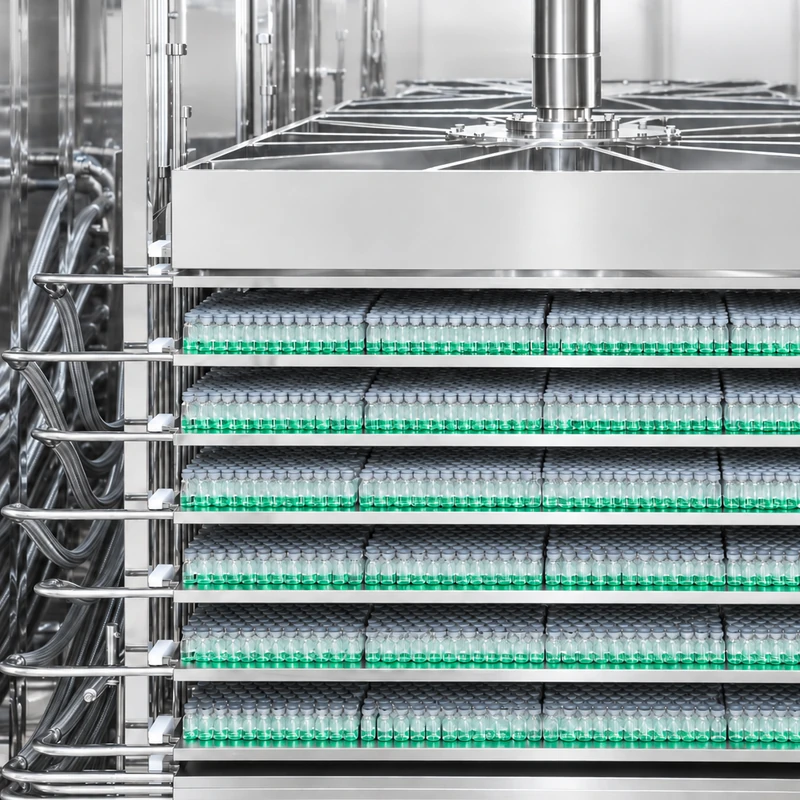
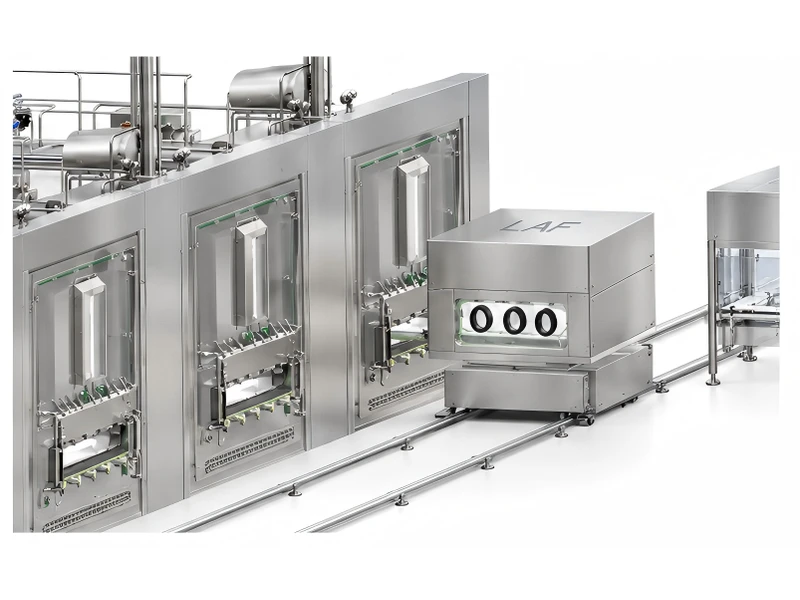
Shelf loading equipment aligned with the freeze dryer doors
Technology 1 of 3

Your process, your benefits

Dose consistency starts before the nozzle: hopper condition and replenishment determine what reaches the metering device. Closing then protects a different boundary—the vial neck and stopper interface. Keeping dose, closure and reject results traceable to the same units helps distinguish a feed problem from a closing or downstream handling problem.

How it works

How is a powder-metering trial assessed?

Use representative powder and the intended vial. Observe steady operation, refill, low hopper level, starts and stops. Compare delivered mass using the agreed measurement and tare method, and examine retention in the feed path and powder at the vial neck. Weight measures mass; it does not by itself establish active content or blend homogeneity.

How are dosing and closure problems separated?

Record dose results before assessing stopper presence, seating and cap condition on identifiable samples. Examine whether powder reaches the sealing surface and challenge the reject path with known faults. The product-specific integrity assessment is a separate step from visual closure inspection.

Line integration

The illustrated powder line shows a bulk-vial preparation route and parallel component-support systems. These are not a requirement to purchase every pictured machine. Aseptic processing, containment and RTU handling need their own defined boundaries where applicable.

01

Prepared powder and components

The inlet specification covers powder condition and status, the bulk container connection, vial presentation and the preparation status of stoppers and caps. Powder manufacture, sterilization where required, and formulation development remain separately defined upstream scopes.

02

Metering and closure

The feed, dosing head and vial neck form one transfer interface. Dose measurement, stopper insertion and cap tooling require coordinated timing and traceable reject handling. Product-protection and exposure controls include refill, intervention and batch-end removal.

03

Accepted closed vials

Inspection receives the actual powder-filled presentation and agreed defect set. Labeling and secondary packaging receive accepted, closed vials in a defined orientation and grouping. Define whether the project ends at the vial discharge, carton or shipping case.

Support throughout your project and production

Connect the process interfaces

Define powder receipt and refill, component preparation, dosing and the closed-vial discharge as explicit equipment responsibilities. Aseptic and hazardous-powder requirements are assessed separately and coordinated where both apply.

Learn more

Test the selected configuration

Trials address representative powder behavior, delivered mass, closure seating and the challenge/reject sequence. Agree the sampling, measuring method and acceptance criteria before interpreting results as evidence for the proposed configuration.

Learn more

Prepare for cleaning and operation

Identify powder-contact parts, dismantling and cleaning access, residue checks and protected reassembly. Include the actual powder hazard, waste handling, operator tasks and maintenance spares; cleaning and sterilization are distinct duties where sterile processing is required.

Learn more

Knowledge hub

2 resources

Frequently asked questions

Is powder vial filling the same as freeze drying?

No. This line receives powder that has already been prepared and doses it into vials. Freeze drying normally starts with a different presentation, such as a liquid-filled vial that enters a controlled drying cycle. A lyophilizer and its loading system are not the default downstream machines for direct powder filling.

How is the powder-dosing method selected?

Compare the target mass, powder flow and density range, cohesion, moisture sensitivity and the vial opening with the proposed mechanism. Auger and vacuum/pressure dosing have different powder-handling actions. Trials with representative material, including refill and batch-end conditions, establish whether a configuration is suitable; neither principle carries a universal accuracy claim.

Does weighing the vial prove that the powder dose is correct?

The result depends on what is measured. Gross vial weight includes the container; a net powder result needs the appropriate tare or a justified sampling method. Weighing does not establish active-ingredient content or blend homogeneity. Those questions require the specified product tests.

Does every powder filling line need an isolator?

The product and process determine the enclosure and transfer controls. Sterile-product protection and hazardous-powder containment are separate requirements that can both apply. The assessment includes material receipt, refill, interventions, cleaning and waste handling; an enclosure name alone does not prove sterility or a containment rating.

Can the same closure-integrity method be used for every powder vial?

No. Suitability depends on the vial, stopper, cap, powder and test conditions. Visual closure checks do not prove microscopic integrity, and methods such as headspace, pressure-based or electrical testing are not interchangeable defaults. Select and justify the method for the actual presentation.

What is outside the powder filling line by default?

Powder manufacture, formulation development, any upstream sterilization and product-release testing require separately agreed scope. The line can end at accepted closed vials or extend to labeling and secondary packaging. That boundary defines which interfaces, documentation and equipment are included.