

Define the equipment scope
Choose powder, granule or liquid dosing according to the formulation and keep product away from the seal area.
Learn moreProcess expertise. Chinese manufacturing. Global perspective.

Production line
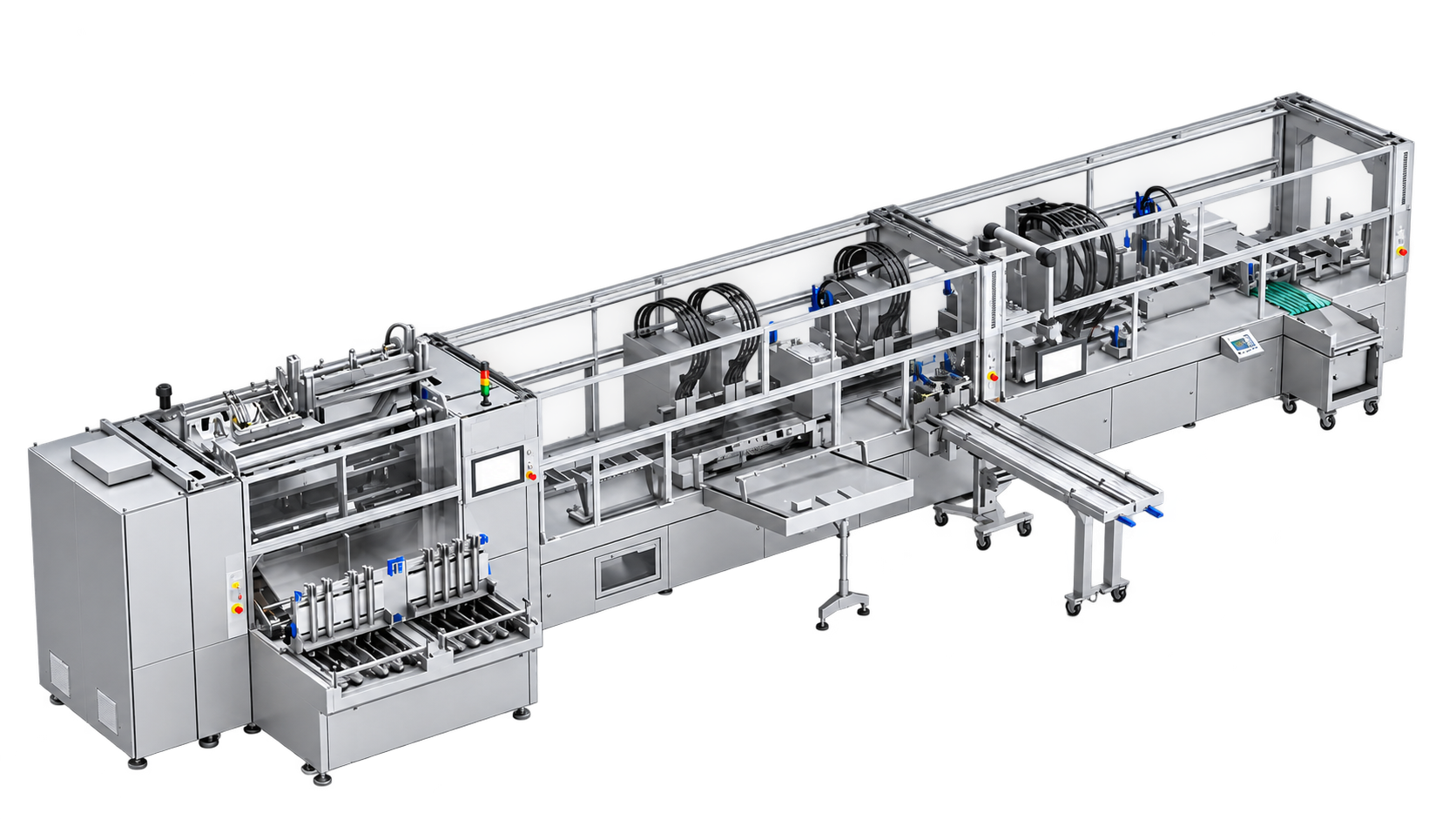
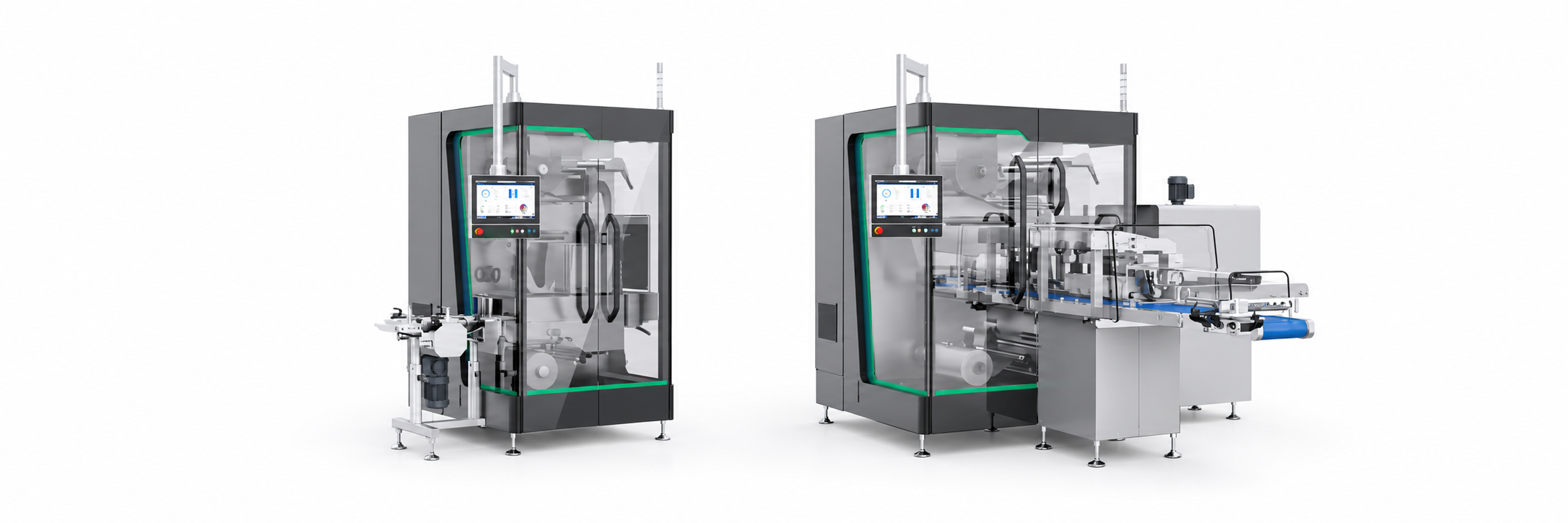
A pharmaceutical sachet or stick pack line forms the flexible pack, meters the prepared product and seals each unit before cutting, checking and collation. The filled pack then becomes the input to cartoning and shipping-case handling. Product behaviour and pack geometry determine the filling and transfer configuration.
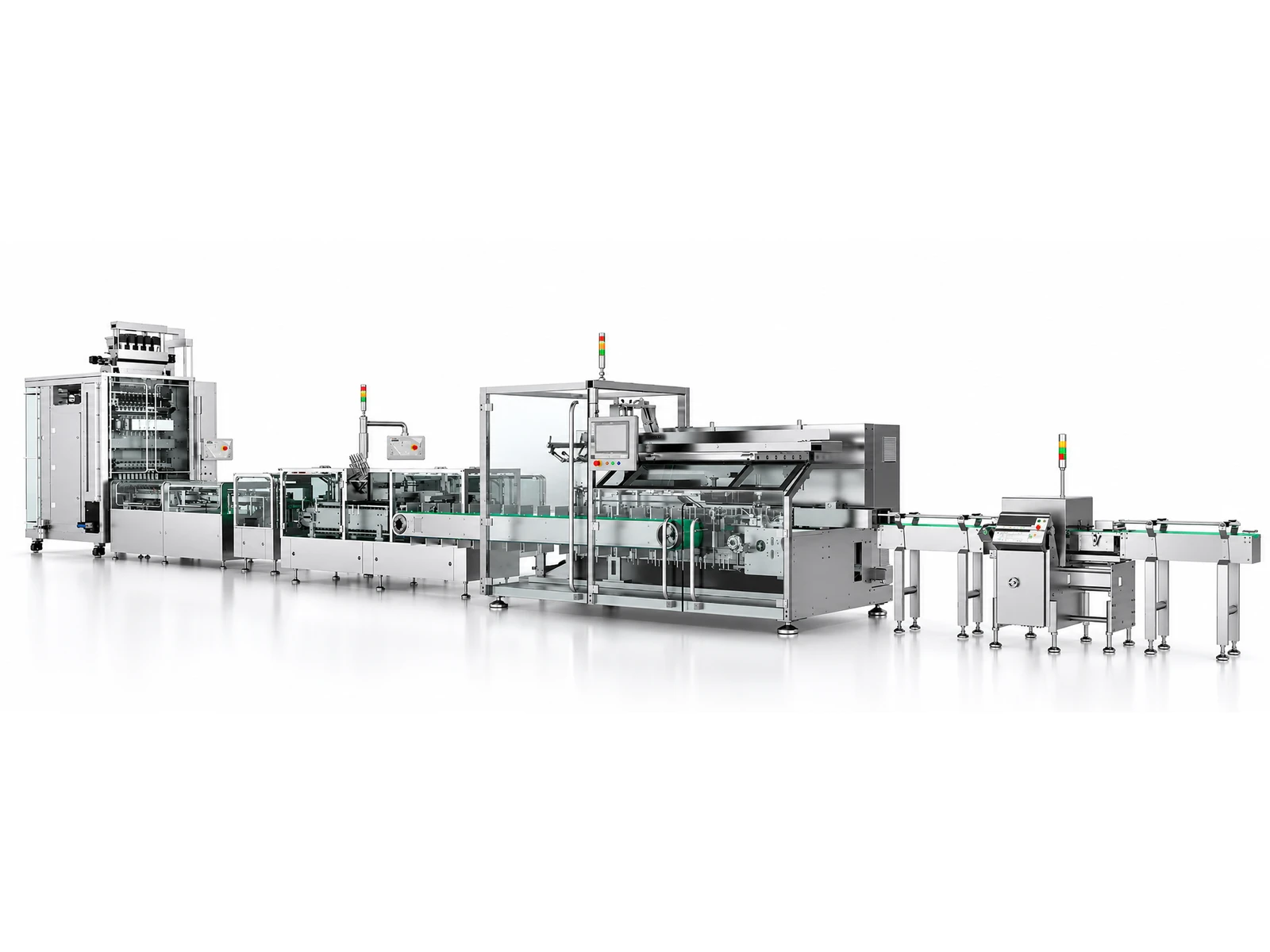
The forming web becomes a primary pack around a measured quantity of product. Dosing and web movement must leave the sealing area clear before the pack closes. Cutting and discharge then turn the continuous packaging process into individual units for counting and collation.
Powder flow, granule characteristics or liquid behaviour change the feed and dosing requirements. Pack width, filled thickness and seal flanges change how the accepted unit moves downstream. Sachets and stick packs can therefore require different handling even when their nominal contents are similar.
Example project input
This balance assumes a powder sachet. Add feeder hold-up, startup and rejected seals separately. A liquid sachet needs its own metering trial.
2,400
Sachets in the example order
3 g
Powder per sachet
7.2 kg
Powder delivered into finished sachets
—
Process options
Product and primary pack
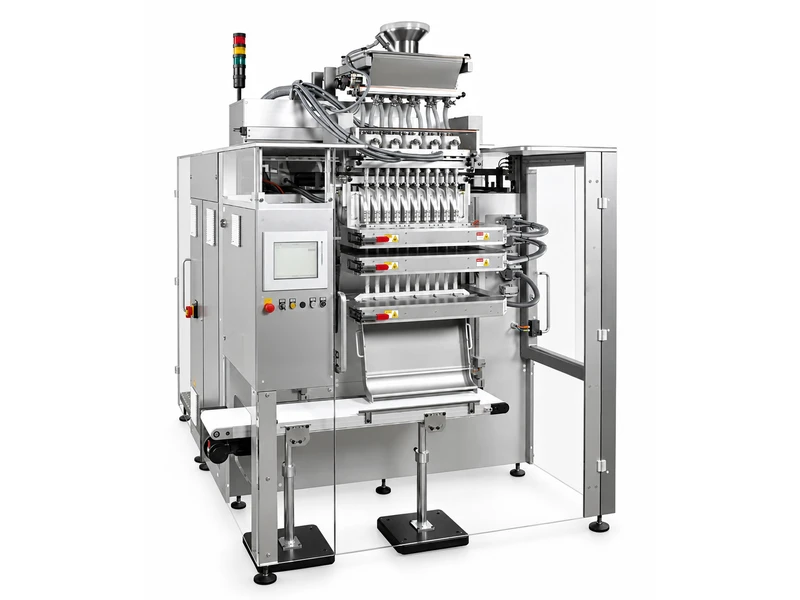
For powders and granules, review flow, bulk density, particle size and the target fill mass. For liquids, review viscosity and the metering path. Confirm the dosing choice with the intended product.
Agree pack dimensions, film construction and print registration. Evaluate seal temperature, pressure and dwell time with the actual material, keeping product clear of the sealing area.
Define fill-quantity, seal and code checks for the selected format. Establish where a rejected pack is removed before accepted packs reach collation.
The same web index connects dosing, seal condition and the resulting cut pack. That relationship helps distinguish material in the seal from web-tracking or timing faults. After cutting, accepted-pack count and orientation become the link between the filling machine’s output and the cartoner’s demand.

Record the web position and inspect the seal area immediately after dosing. Change one feed or timing setting at a time and retain the corresponding sealed packs.
Count accepted packs at the cut and collation points. Run the thickest filled pack through the intended grouping orientation and check the carton opening.
Equipment interfaces
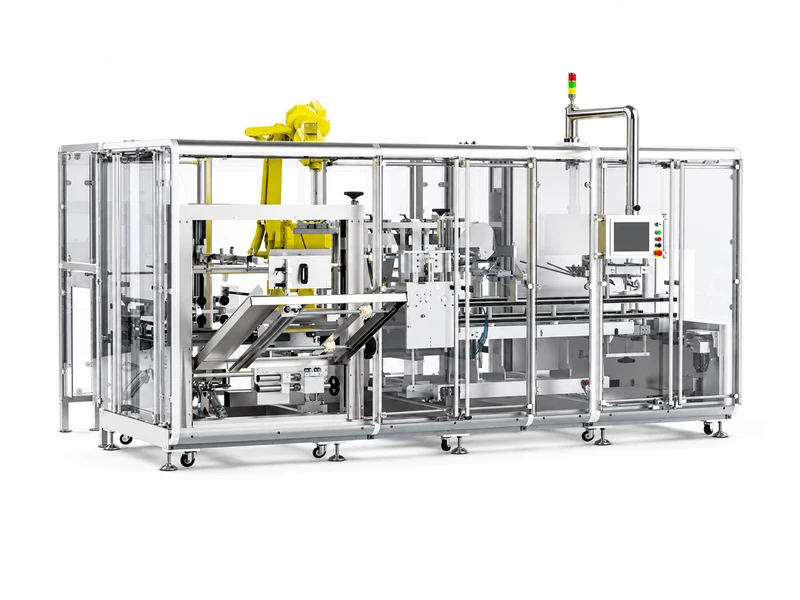
A filled pack is flexible and has a product-dependent thickness, so collation is more than a nominal width match. The transfer must present the required number of accepted sachets or stick packs in the orientation that the carton-loading method receives. Buffering and line signals manage interruptions between these different operating cycles.
Agree discharge orientation, sachets per carton and leaflet handling. Test the infeed with actual filled packs, including their thickness and seal flanges, before choosing a top-loading or side-loading arrangement.
Match accepted sachets per minute to carton demand. Agree accumulation, stop/start signals and fault recovery so a downstream interruption does not leave the transfer unmanaged.
Discuss line engineeringChoose the print location and inspection point on the agreed pack. Specify serialization or aggregation when required by the product and destination market.
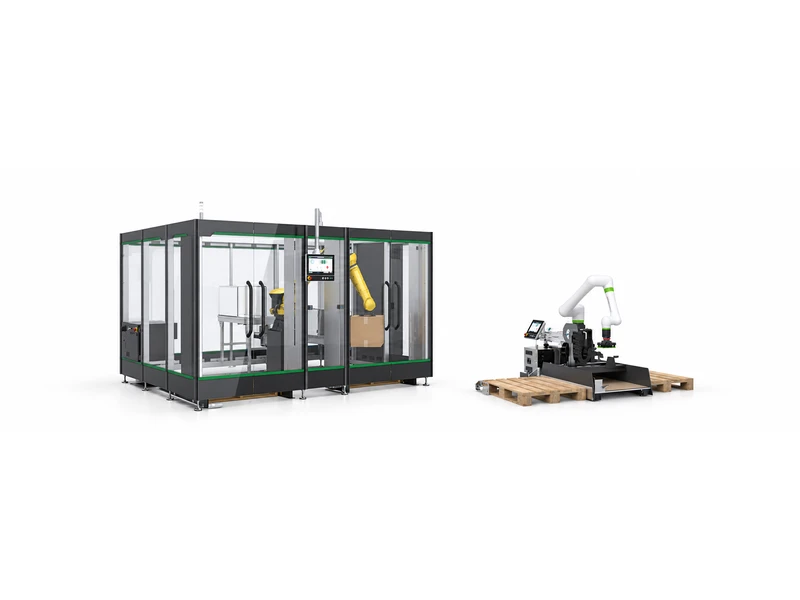
Explore track and traceDefine case counts and the loading pattern. Bundling is an option when the sales or shipping format needs it; palletizing depends on the required level of automation. The equipment views above link to each machine.
The line receives a product prepared to its agreed specification. Granulation and drying belong to upstream formulation processing when needed; they are not default steps in every sachet packaging line.
Review your process requirementsChoose powder, granule or liquid dosing according to the formulation and keep product away from the seal area.
Learn moreMatch the number of lanes and timing of cut packs to collation and cartoning.
Learn moreIdentify the contact parts and format tooling for Pharmaceutical Sachet Production Lines. Agree access for cleaning, the spares to hold and the operating records the site will need.
Learn moreShare dosage form, starting material and finished presentation.
Request product information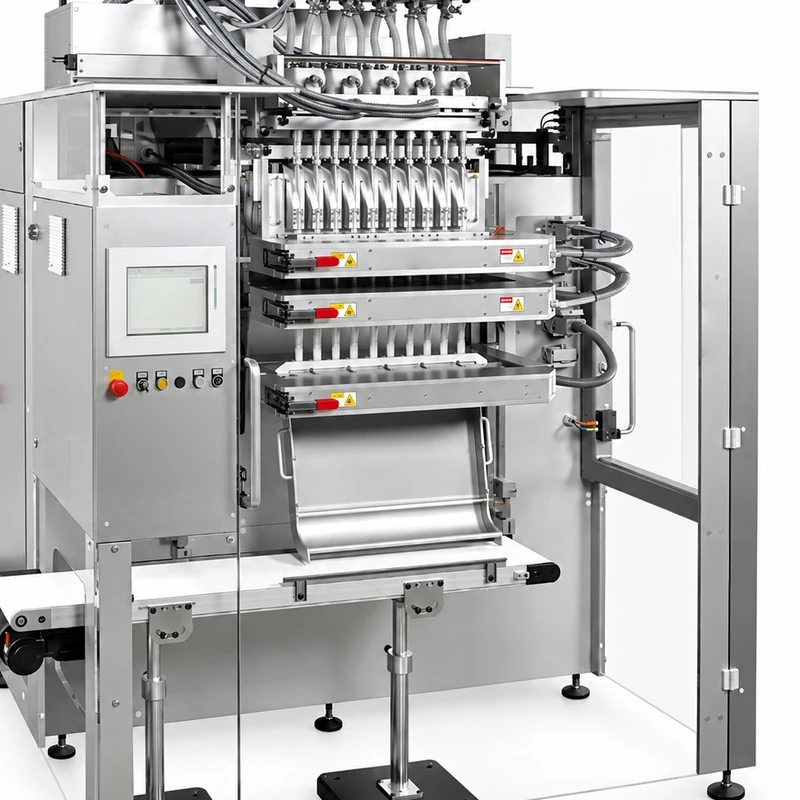
Brochure
Pharmaceutical Sachet Production Lines
Available by enquiry
Request product informationCase
Pharmaceutical Sachet Production Lines
Available by enquiry
Discuss project references2 resources
No. The packaging line receives product prepared to its agreed specification. Granulation or drying belongs to upstream formulation processing when needed. State whether those operations are included separately rather than inserting them into every sachet route.
Powders, granules and liquids require different feed and dosing arrangements. Confirm the product properties, dose, pack material and cleaning needs for the selected machine. A shared pack shape does not establish interchangeable product handling.
Compare the actual filled dimensions, stiffness, seal flanges, count and discharge pattern. The collation and infeed must hold the accepted packs in the intended loading orientation. A trial with empty film alone does not represent the filled pack.
State accepted primary packs per minute and packs per carton, then relate that to carton and case demand. Include rejects, accumulation and restart behaviour in the operating assumptions. A primary-pack machine rate is not automatically the output of the complete packaging line.


