Prepare cans and components
Confirm the can finish, valve, seals and incoming component condition. Define the product and propellant supply interfaces.
Process expertise. Chinese manufacturing. Global perspective.

Production line
A pharmaceutical aerosol filling line connects product dosing, valve closing, the selected propellant-charging method and finished-pack checks. For a pressurized metered-dose inhaler (pMDI), the can, metering valve and actuator must be assessed as one presentation before the filling and assembly sequence is fixed.
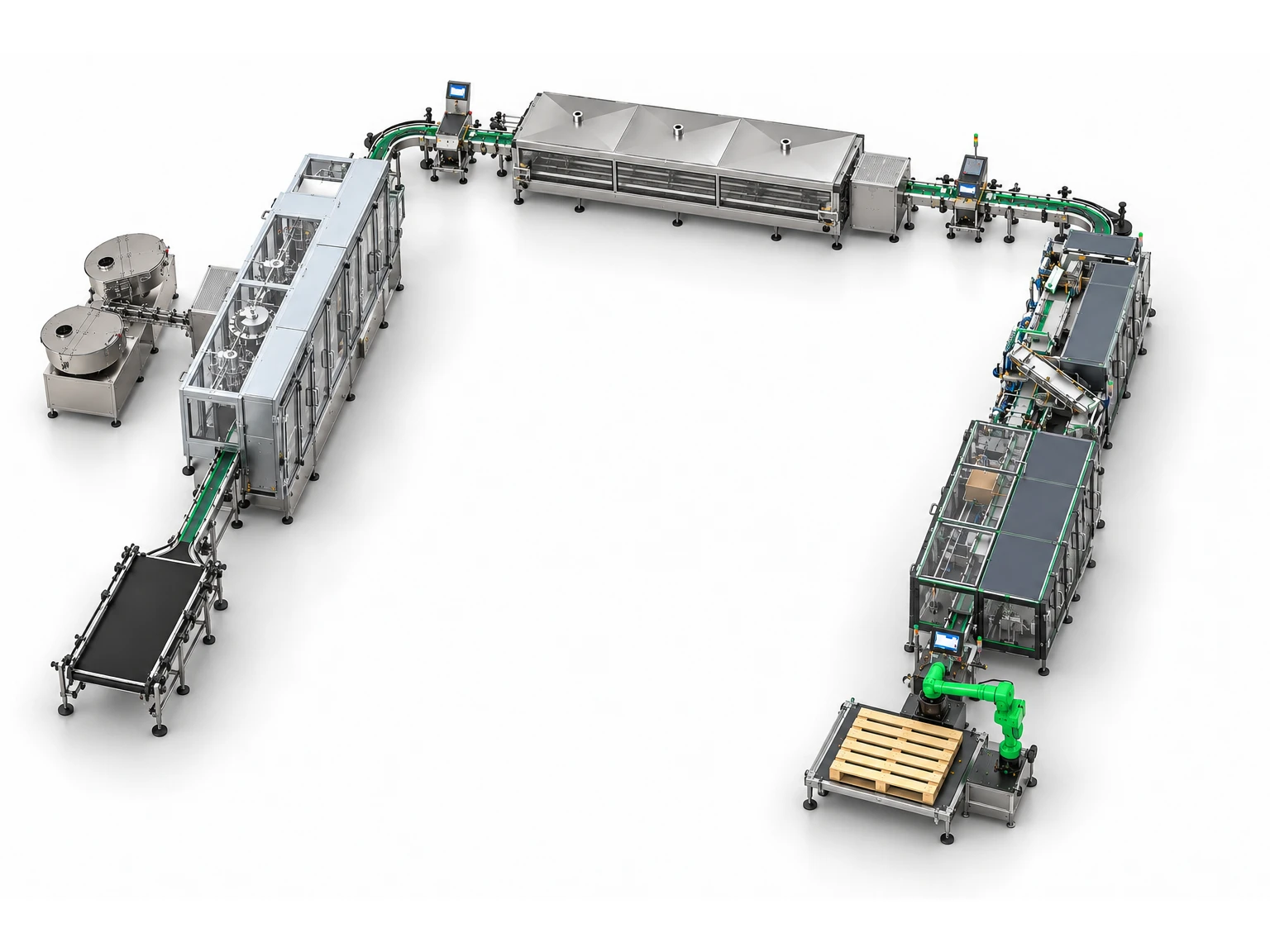
The can, metering valve and actuator form the aerosol presentation. Liquid dosing supplies the formulation; valve closing creates the pressure-containing pack; propellant charging follows the selected method. The illustrated through-valve sequence is one arrangement. Bag-on-valve and other charging routes use different component and pressure interfaces, so the finished presentation determines the equipment sequence.
Example project input
Each can receives one valve at one setting. Add separate samples for leak and spray testing. Propellant handling depends on the specified pack.
24
Valve assemblies in a setup trial
3
Crimp settings to compare
72
Cans and valves to set aside
—
Process options
Connect the selected filling, valve and test arrangement with downstream packaging. Define the aerosol system before choosing its charging sequence.
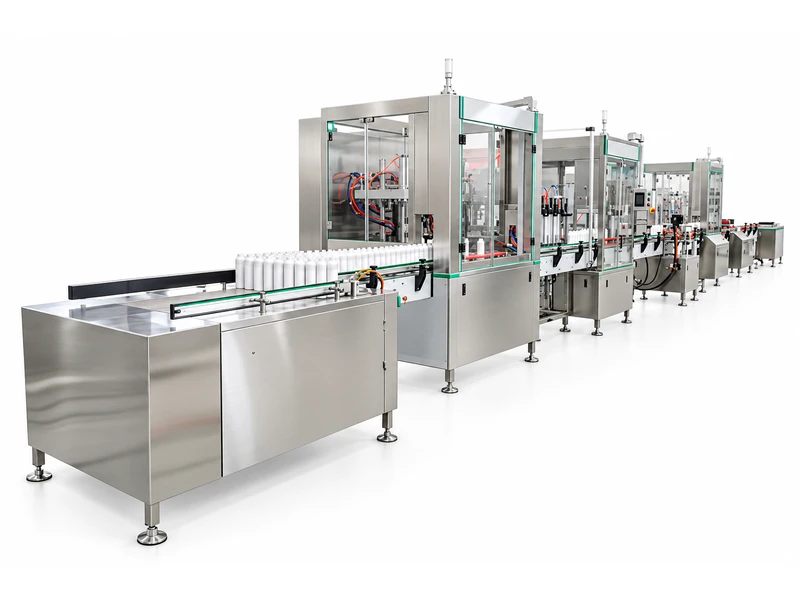
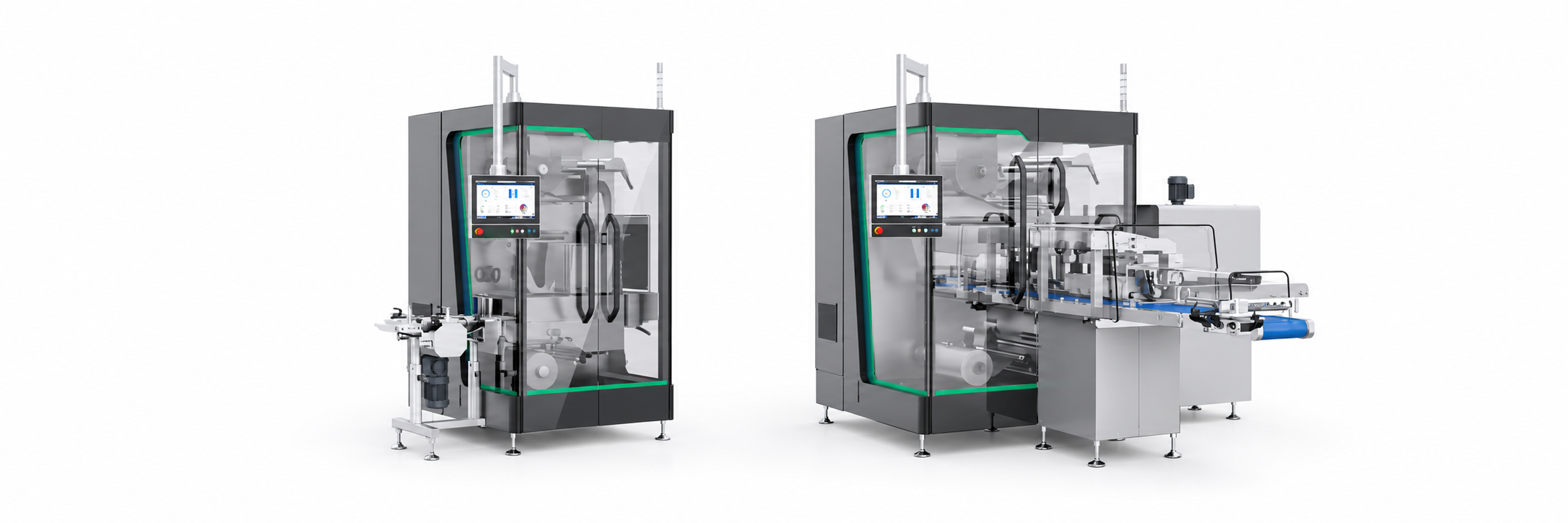
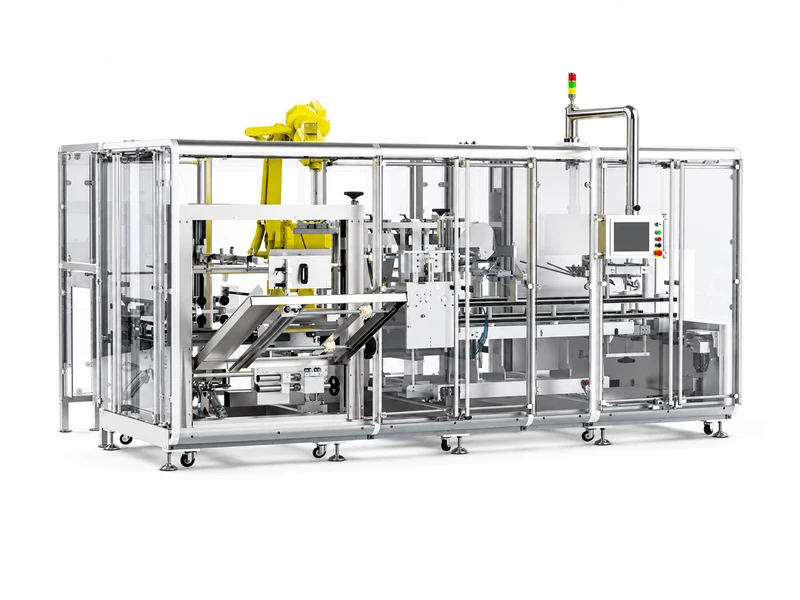
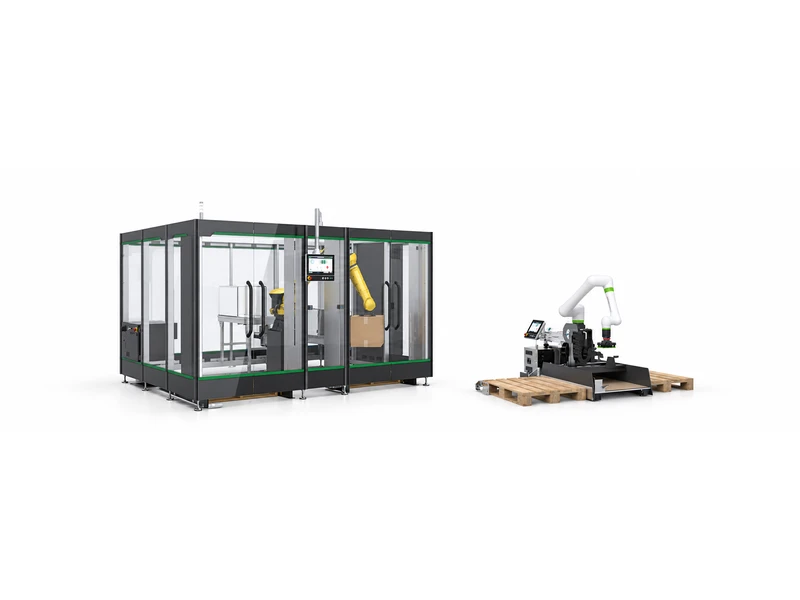
Equipment options are shown in process order. Cartoning format, coding and verification are selected for the pack; bundling and palletizing are optional. The final configuration is defined around the product and project scope. The filling image is a configuration illustration.
Product, can, valve and propellant define the charging route. The sequence below illustrates a conventional through-valve charging route; BOV and other filling methods require a different arrangement.
Confirm the can finish, valve, seals and incoming component condition. Define the product and propellant supply interfaces.
Establish the product fill quantity and compatible filling path for the selected formulation.
Match the valve and can finish. Establish the closing settings and the crimp checks for the selected components.
For the illustrated route, charge through the closed valve. The charging method, gas handling and installation provisions must match the product and propellant.
Agree fill-weight and leakage checks, rejection and any drying requirement. Select the test method for the product and container.
Fit the specified actuator and protective cap after the applicable checks, then transfer the accepted can to packaging.
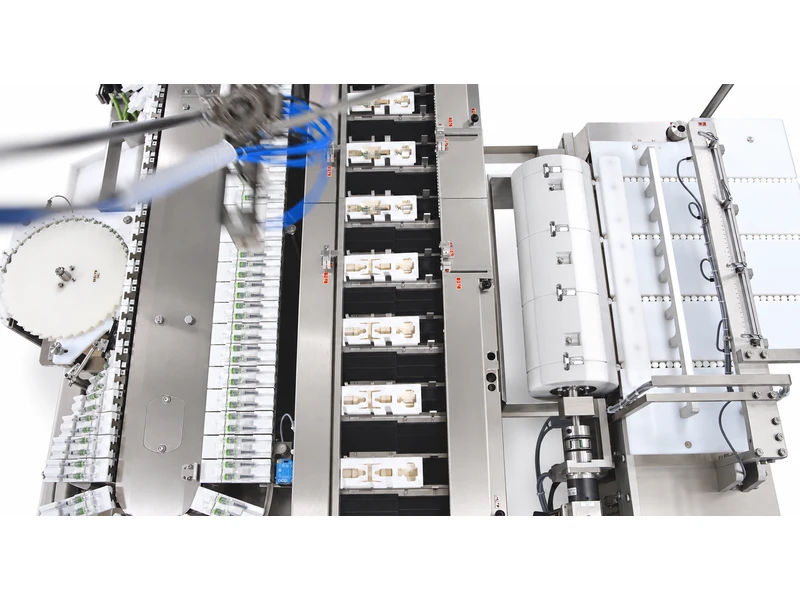
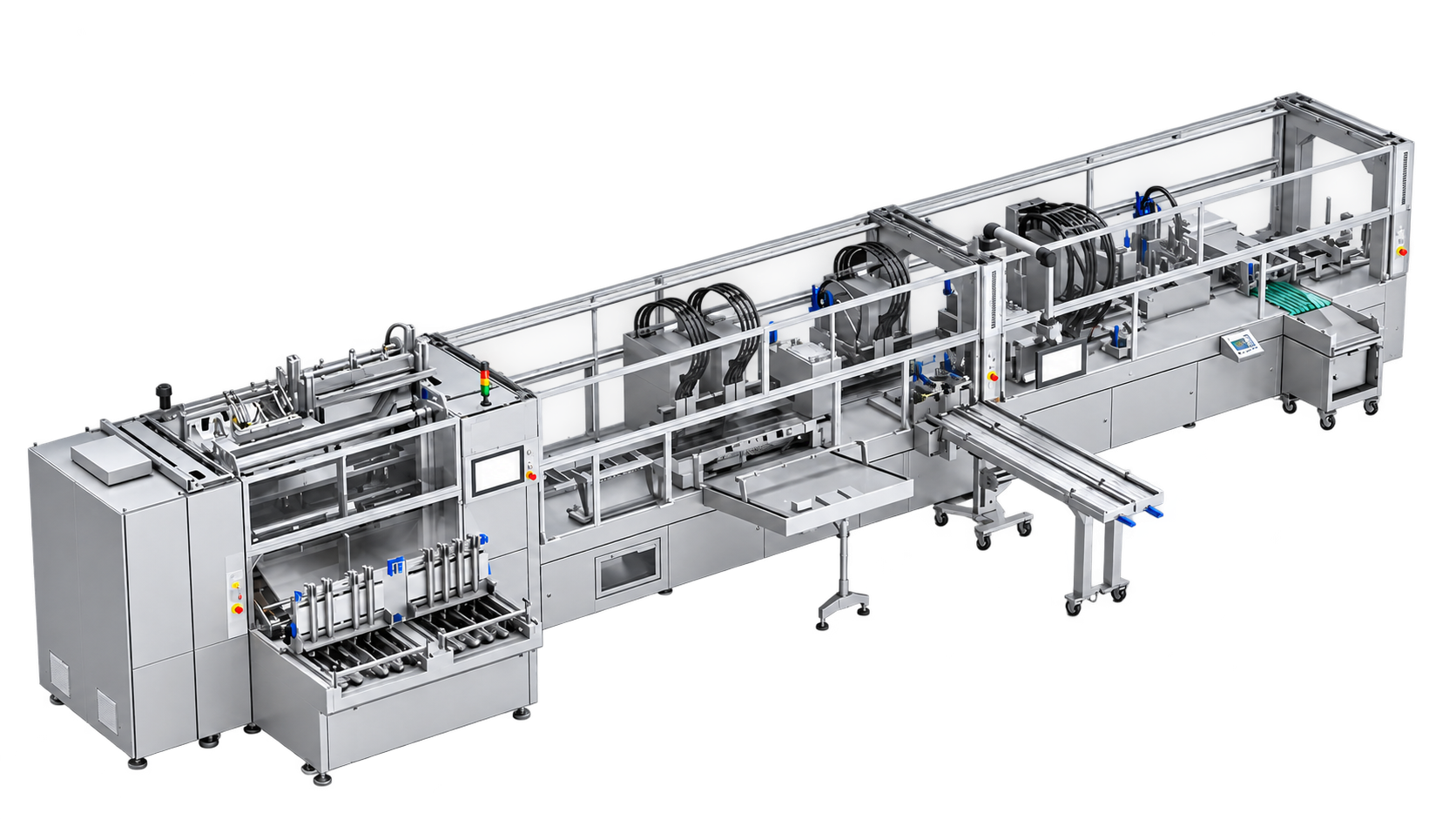
Match the accepted primary pack, leaflet and carton to the infeed and loading method.
Confirm pack orientation, count, carton size and leaflet handling with filled samples.
Agree the print location, readable code and verification method for the destination market.
Specify batch coding and, when required, serialization and aggregation. The print and inspection positions depend on the pack.
Add a bundle only when the selected sales or shipping pack needs one.
Choose the bundle count and wrapping material. A route without bundling can pass accepted cartons directly to case packing.
Transfer cartons or bundles into the agreed shipping-case pattern.
Confirm the product arrangement, case construction and the handoff to sealing and pallet handling.
Connect accepted cases to the selected pallet pattern and dispatch interface.
Agree case orientation, layer pattern, pallet dimensions and the transfer to warehouse or dispatch.
The following principles concern liquid-product metering only. Suitability depends on the formulation and selected contact path; these cards do not describe propellant charging or establish that every principle is included in a supplied aerosol line.
Filling technology
A flexible tube carries the liquid while rotating rollers control dosing. The product contacts the tube rather than the pump mechanism. This principle is used when a disposable product path and gentle handling are priorities. Tubing selection, product compatibility and the changeover procedure should be reviewed for each application.
Explore technology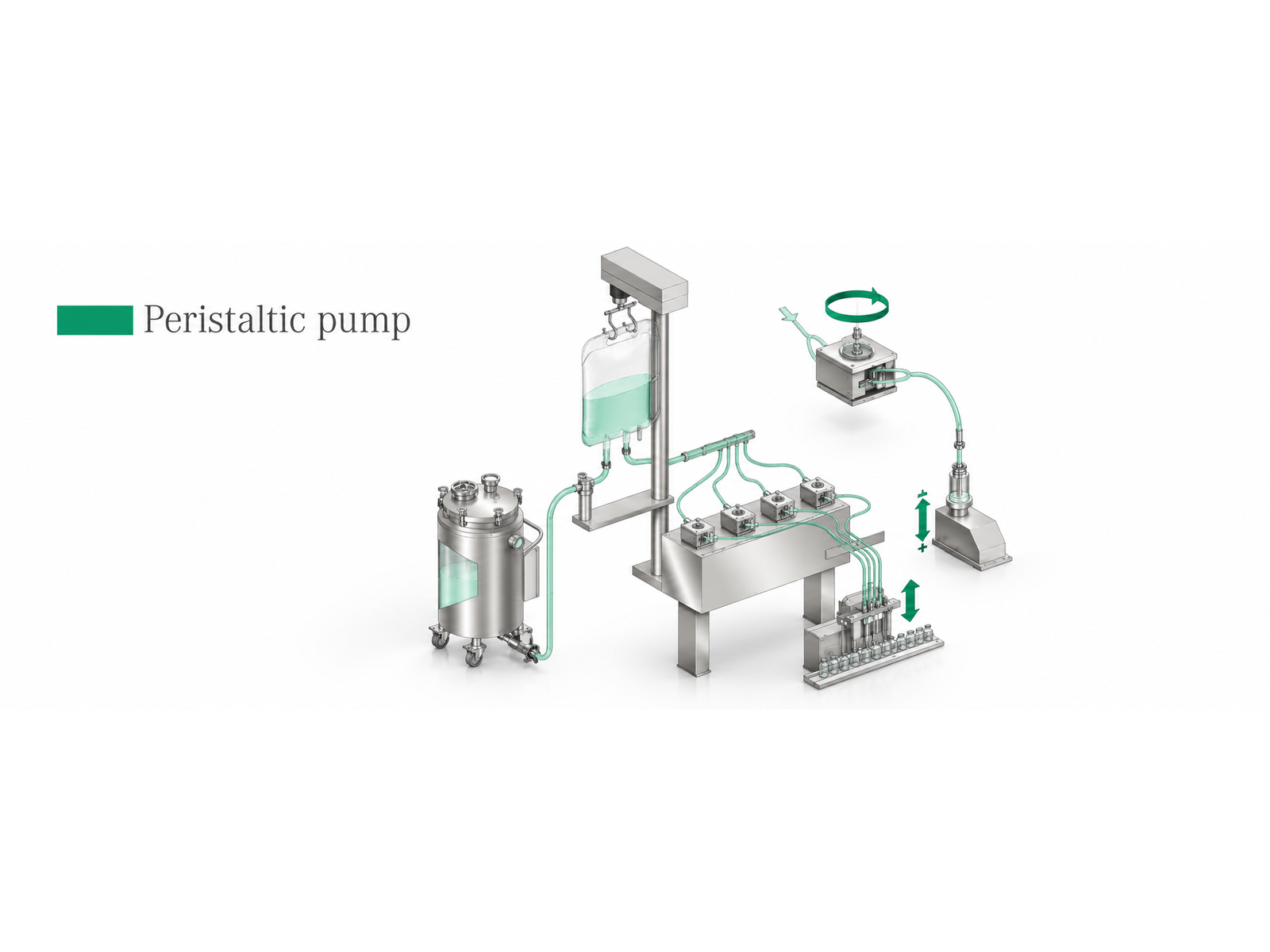
Filling technology
A piston draws liquid into a cylinder and then dispenses a measured volume through the outlet. The selected piston, valve and product-contact materials determine the application range. Review viscosity, cleaning requirements and the required filling volume together with the product and container format.
Explore technology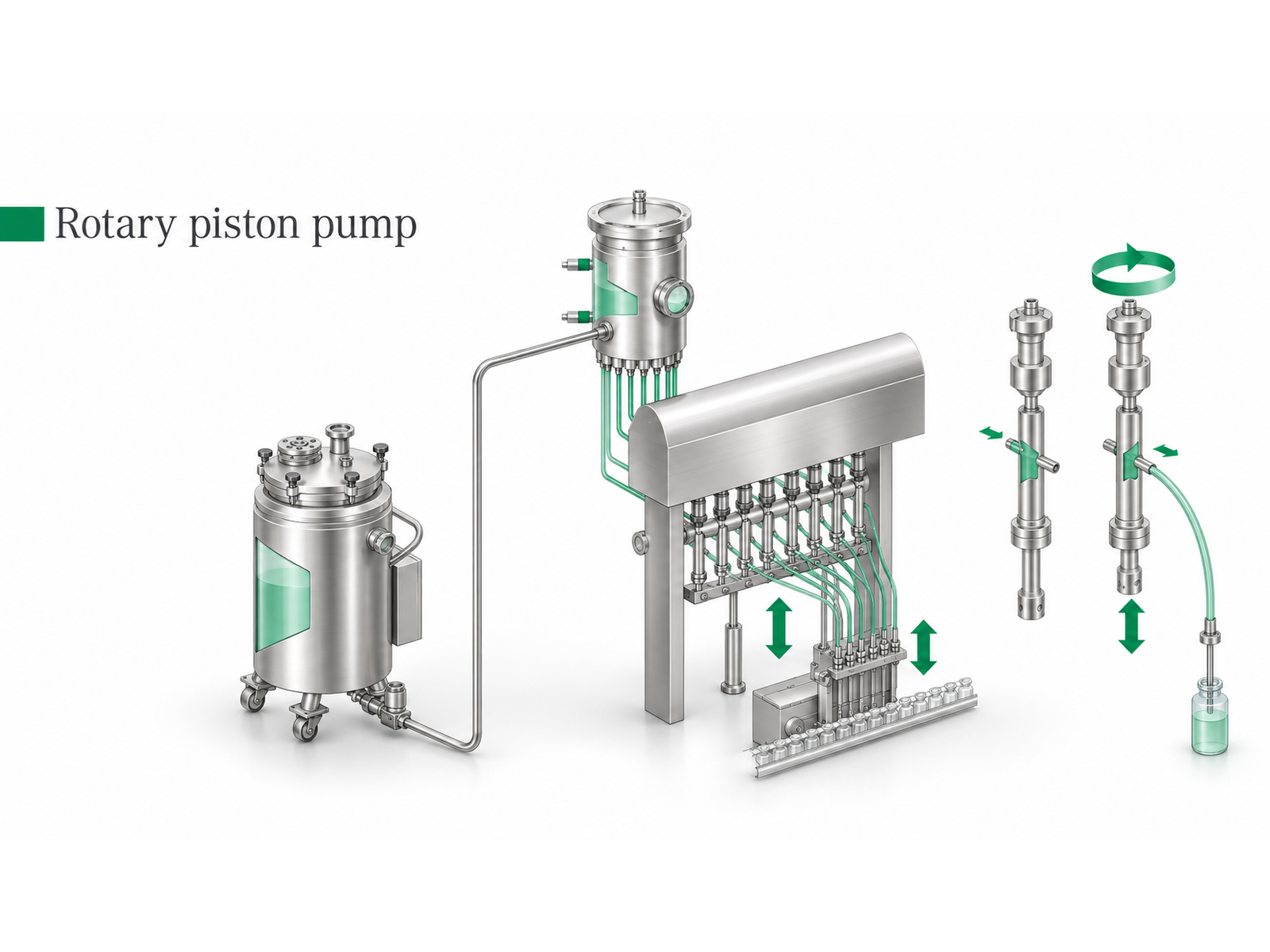
Filling technology
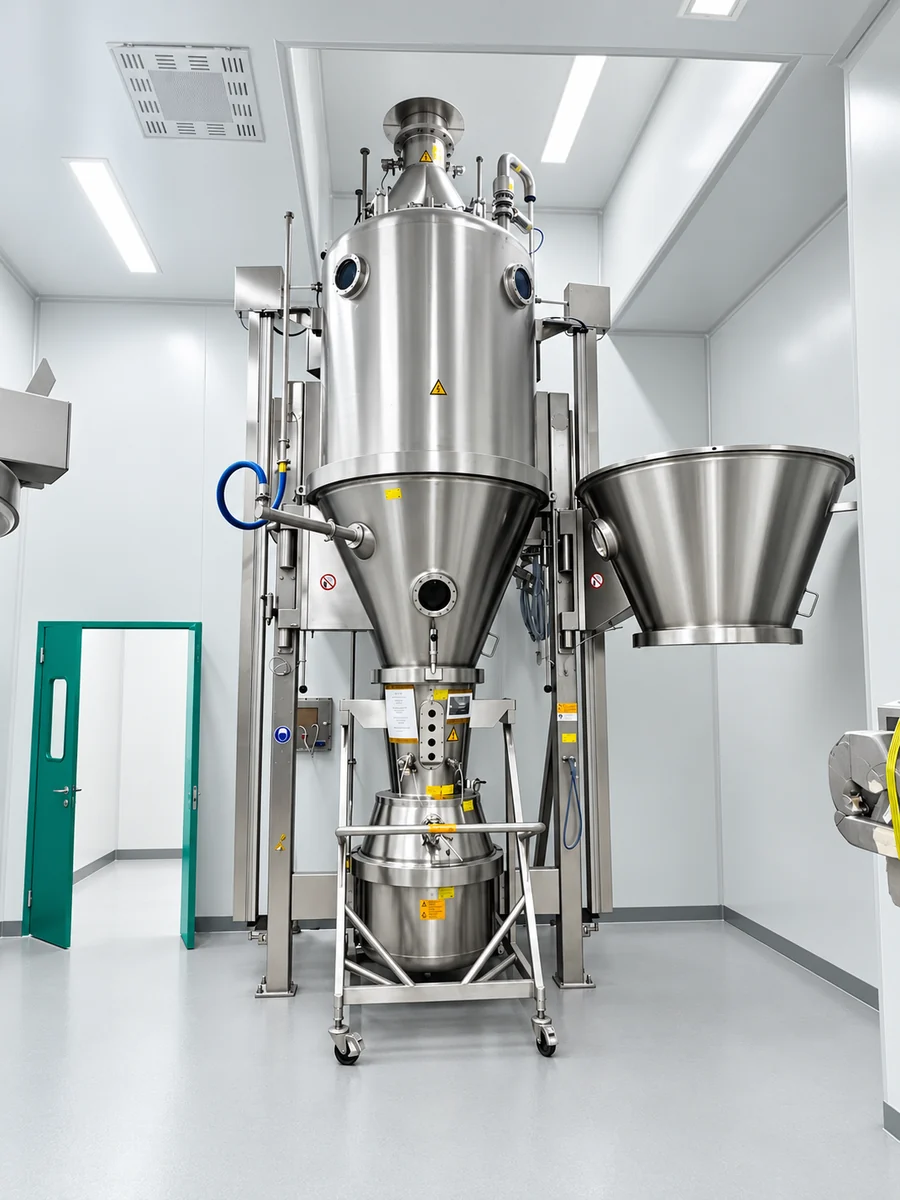
Controlled pressure moves liquid through a filling valve. The opening time and supply conditions determine the dispensed quantity. Product properties, pressure stability and the valve configuration are evaluated together when setting up the filling process.
Explore technology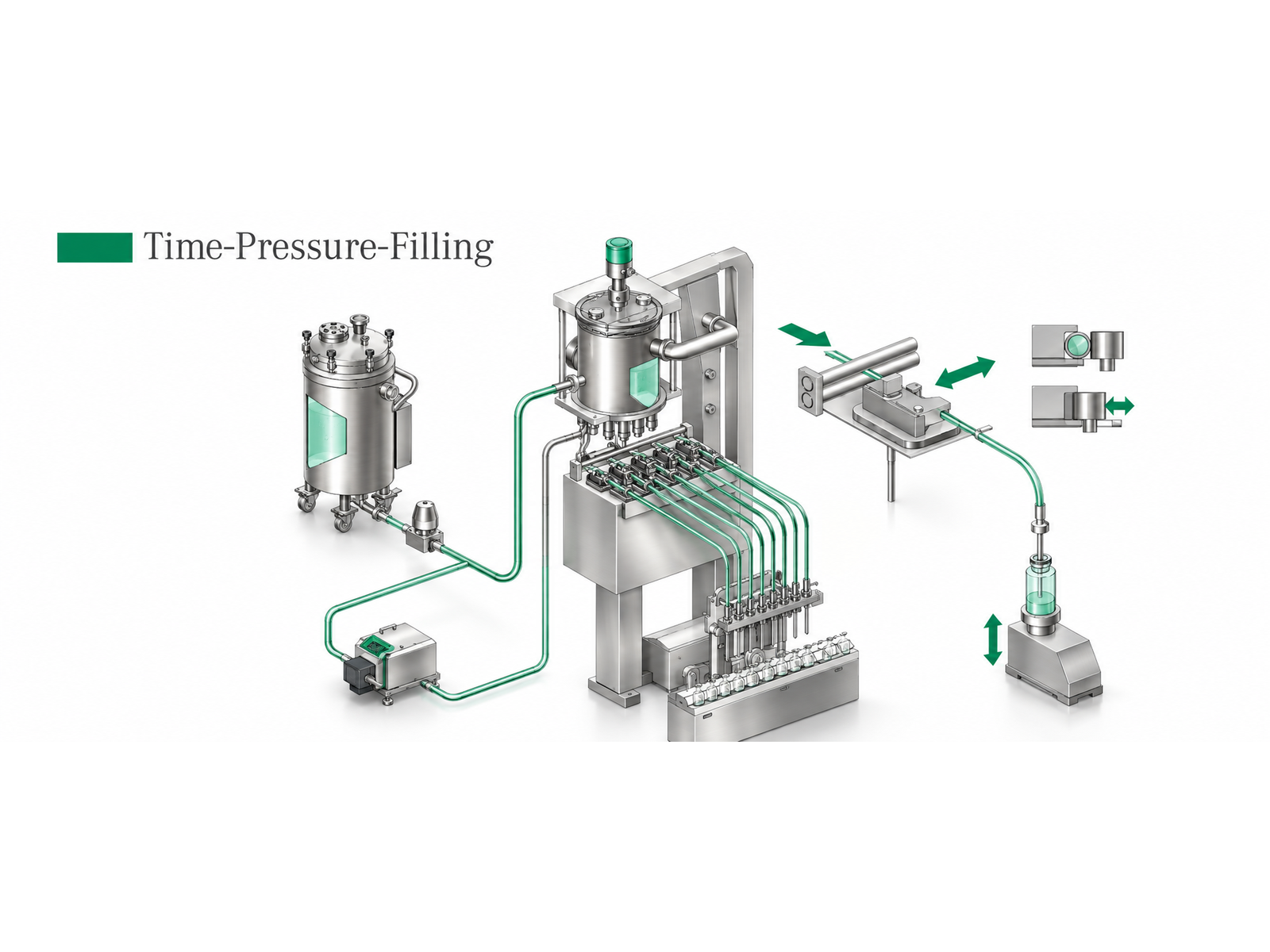
Filling technology
A flow sensor measures the product passing through the filling path and provides feedback to the dosing valve. The process is evaluated around the required fill mass, product behaviour and cleaning strategy. Sensor selection and the control sequence depend on the application.
Explore technology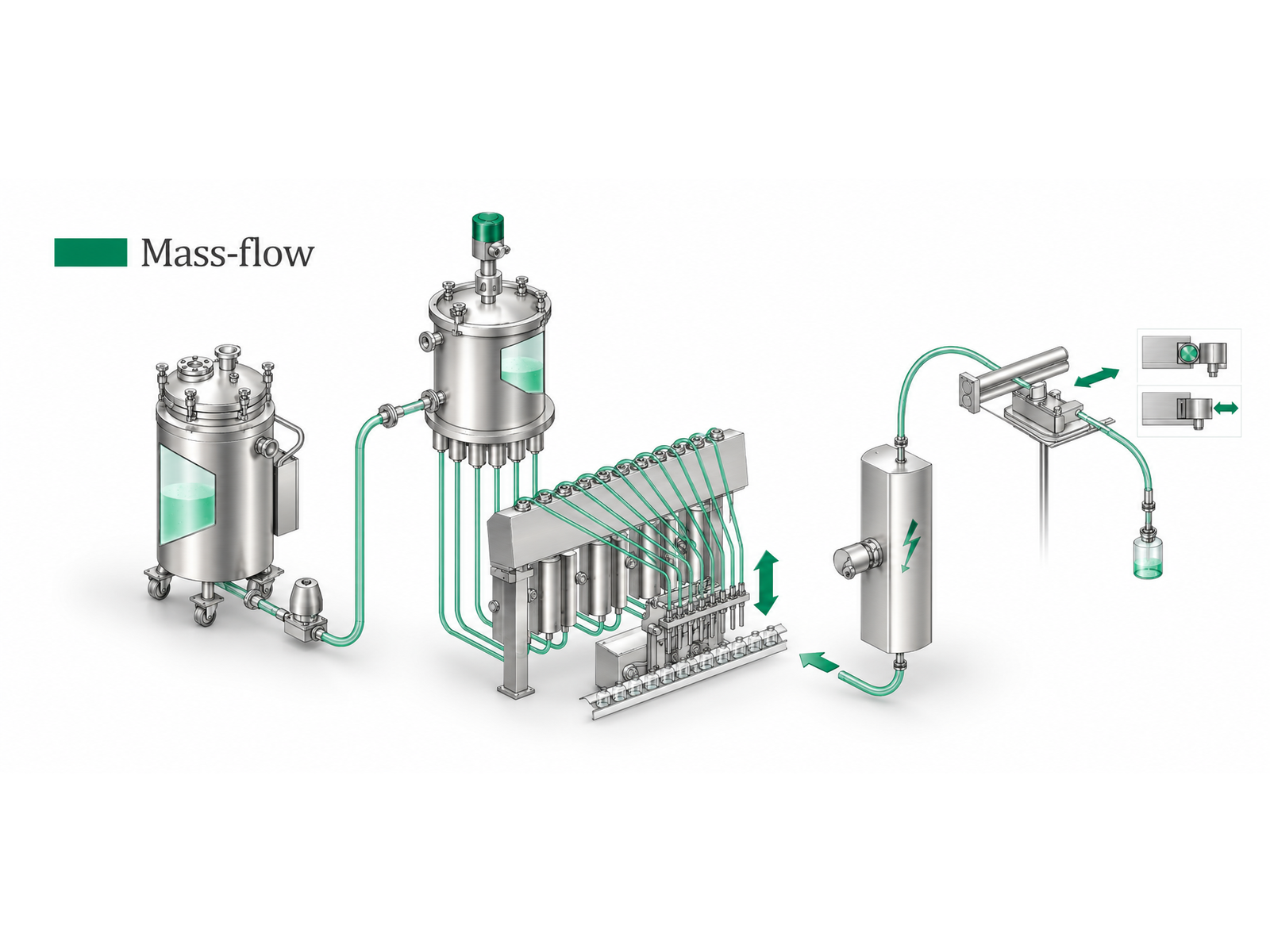
A leak result is more useful when it remains linked to the can and valve lot, crimp setting and charging conditions. This trace separates component variation from a closing or charging issue. Weight and leakage checks address different properties of the pack, while spray or delivered-dose tests evaluate the assembled presentation under their own test conditions.

Keep can and valve lots fixed, identify each trial setting and retain the finished samples. Compare crimp measurements and the agreed leak-test result before changing another setting.
Run the finished can with its actuator and cap fitted. Observe tipping, actuator contact and how the reject path separates a failed can from accepted packs.
Agree the aerosol presentation before connecting the machines: product dosing, valve closing and propellant charging are not interchangeable steps. Define utilities and installation requirements for the selected propellant, then match accepted cans to actuator assembly and packing.
Choose the can, valve and actuator together. The valve geometry sets the handling and crimp tooling.
Agree where filling, valve placement and crimping occur, then identify the station that verifies the closed pack.
Release accepted cans to actuator fitting and cartoning. Define how rejects leave the pressurised pack flow.
Valve design and the selected propellant system determine which charging and checking stations are required.
Learn moreProve the transfer from closure to leak and functional checks with the intended can and valve.
Learn moreIdentify the contact parts and format tooling for Pharmaceutical Aerosol Production Lines. Agree access for cleaning, the spares to hold and the operating records the site will need.
Learn moreShare dosage form, starting material and finished presentation.
Request product information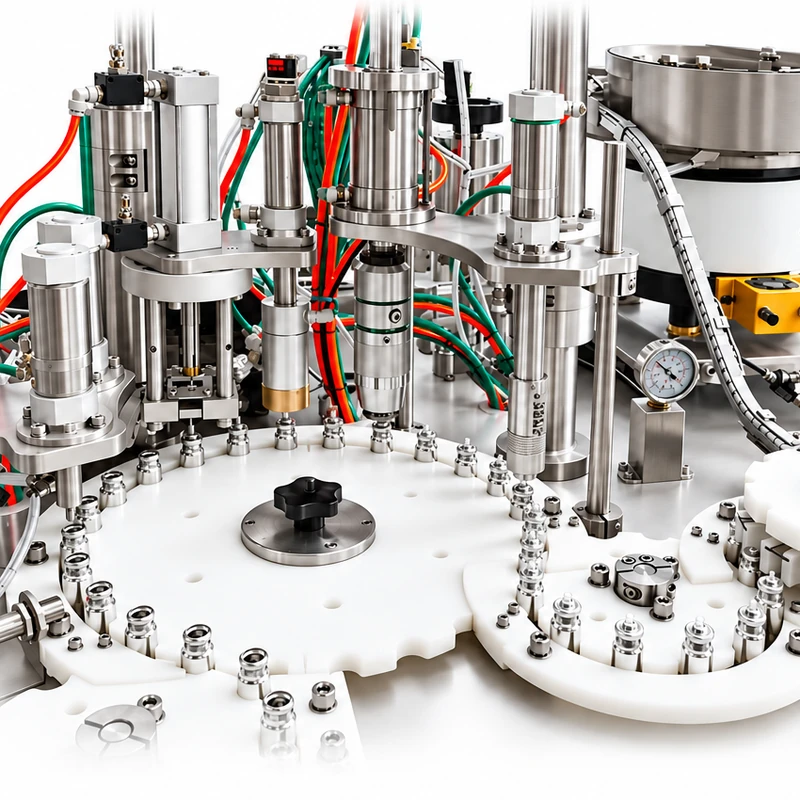
Brochure
Pharmaceutical Aerosol Production Lines
Available by enquiry
Request product informationCase
Pharmaceutical Aerosol Production Lines
Available by enquiry
Discuss project references2 resources
No. A pMDI uses a pressurized pack and a metering valve. A nonpressurized nasal spray or soft mist inhaler has a different liquid path, closure and device assembly sequence. Select the route using the finished device specification rather than the word spray alone.
Provide the formulation, propellant specification, can and valve drawings, required fill quantities and the intended charging method. Review compatibility, handling provisions and the installation boundary with the equipment and site teams. A through-valve route should not be assumed for every aerosol system.
Fill weight checks the material placed in the pack. Metering-valve operation and delivered spray or dose performance require their own agreed tests using the intended formulation, actuator and operating method. Define which checks are inline and which are laboratory or sampled tests.
Agree the state of the can after testing, actuator and cap fitment, orientation, reject handling and any quarantine requirement. Trial the accepted finished pack in the carton infeed so guides do not damage the valve or accidentally actuate the device.