Read details

- False rejects from bubbles — small bubbles are mistaken for particles; high-speed rotation gathers bubbles to the center, reducing FRR to 2–3 %
Process expertise. Chinese manufacturing. Global perspective.

Equipment & technology
Vials are presented to optical stations to examine the product, glass and closure from defined views.
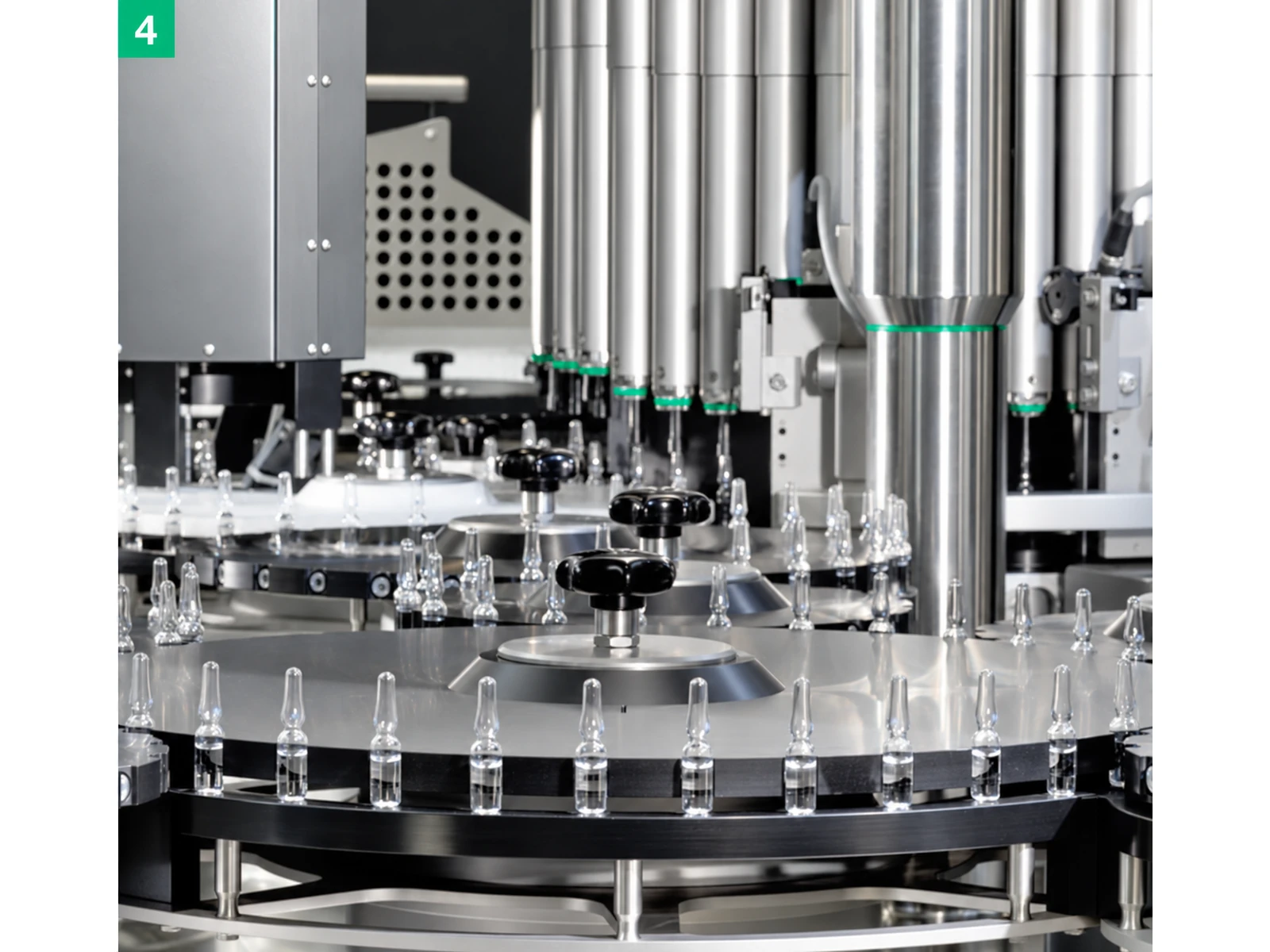
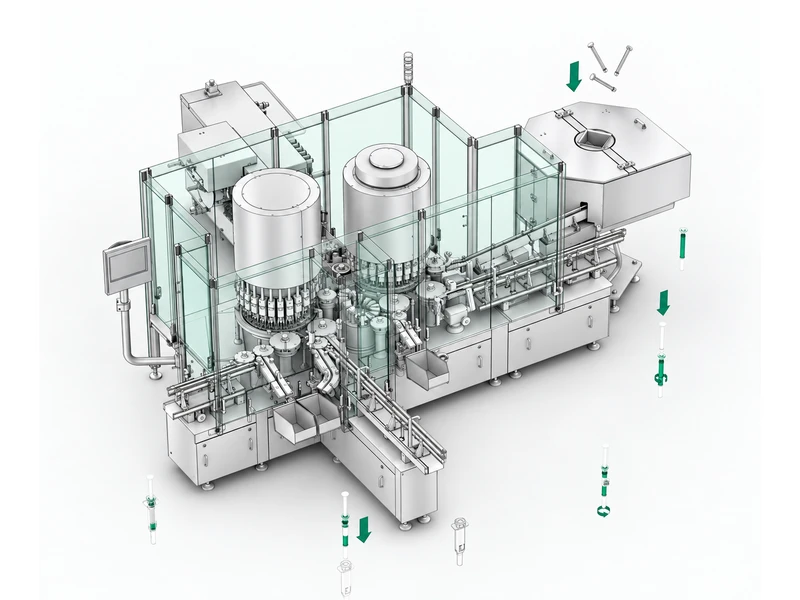
The Preasys vial visual inspection platform combines matrix and line-scan cameras, HVLD (High Voltage Leak Detection), and polarized-light illumination to inspect every vial — from fill level and particulates to closure integrity and cosmetic defects. Available from benchtop to 800 pcs/min production speed, the system covers water-like solutions, suspensions, viscous gels, and lyophilized products.
Configuration data
Values below refer to the indicated configurations in the technical comparison on this page.
Up to 800 pcs/min 
Speed range
Ø 6–52 mm, H 30–130 mm
Vial range
< 15 minutes, no special tools
Format changeover
—
Process options
- False rejects from bubbles — small bubbles are mistaken for particles; high-speed rotation gathers bubbles to the center, reducing FRR to 2–3 %
A speck on the outside wall looks identical to a speck inside the liquid. Standard cameras flag both — causing 1–3% false rejects from external dust and scratches. When operators loosen the threshold to reduce rejections, real internal particles slip through and reach the patient.
- Lyo cake inspection — freeze-dried products require multiple stations with dedicated lighting to inspect the cake, bottom, and vial surface without disturbing the product
- Bottom contamination — glass delamination, rubber fragments, and dirty marks on the vial base are easy to miss in standard side-view inspection
| Industry problem | How the Preasys VVM solves it |
|---|---|
| Three inspection stations disagree → good vials rejected | Full-auto re-inspection loop re-checks rejected vials before final rejection; FRR reduced to 2–3% |
| Air bubbles formed in transport are counted as particles | Fast rotation + line-scan offsetting segregates micro-bubbles on-axis; off-axis scan inspects the rest |
| Dirt on the outside wall rejected as internal contamination | Trajectory analysis measures defect speed distribution — inside vs outside move differently; external dirt is not rejected |
| Bubbles in suspension/foaming products | High-frequency rotation (2,500 rpm tested) without bubble generation + bubble-centering optics |
| Glass and metal fragments on top of stopper | Oblique-angle stopper-top inspection locks glass shards and metal particles, FRR 2–3% |
| Cake defects in lyo products | 60–120 rotation images, colour camera for top, line-scan 360° for lateral cake, mirrored bottom station |
| Milky / turbid liquids | Line-scan + matrix composite multi-station inspection optimized for absorbing contaminants |
| Flange / cap defects | Ring-light illumination with matrix camera on dedicated flange station |
| Vial breakage during infeed | Sprung side guides + minimal holder distance in infeed star wheel; vacuum flying transport avoids side guides entirely |
| Leak not detected until days after crimping | Integrated HVLD / HSA tests every container on-line, 100% non-destructive integrity |
Clear and amber glass, liquid and dried products require different lighting and reference samples.
| Parameter | Specification |
|---|---|
| Speed range | Up to 800 pcs/min  |
| Camera technology | Matrix cameras (overview, morphology) + Line-scan cameras (high resolution, contrast) |
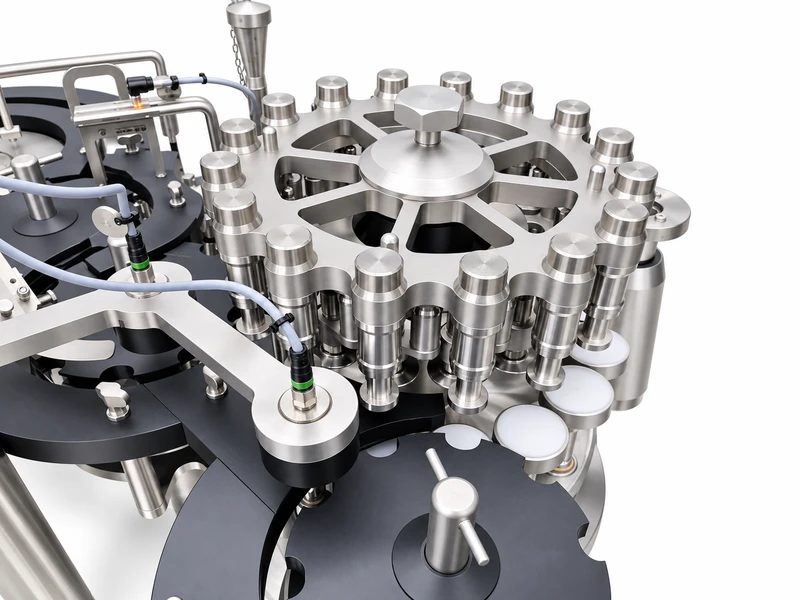
| Rotating spindles | 60 independent brushless motors, 6,000–8,000 RPM, adjustable — suitable for suspensions |
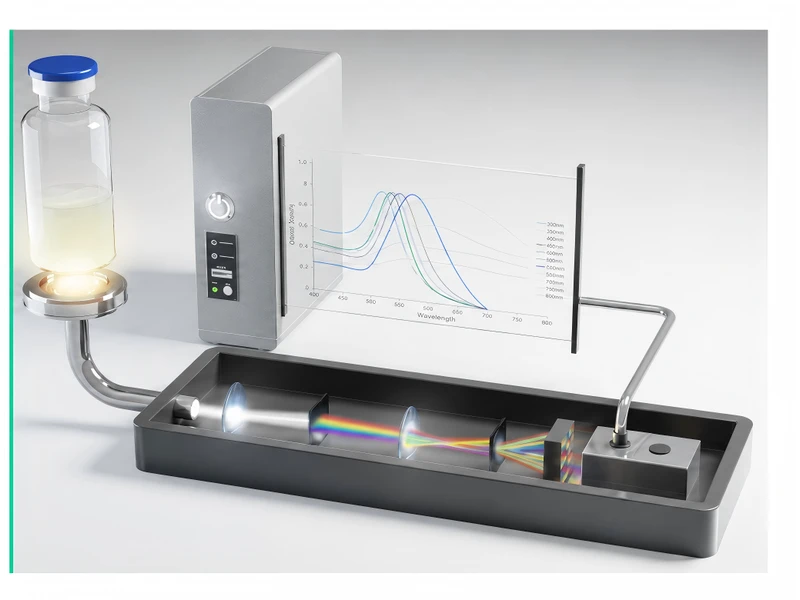
| Lighting | Backlight (absorbing particles), lateral light (reflecting particles/fibers), polarized light (fibers), suspension-mode light |
| HVLD | High Voltage Leak Detection for closure integrity |
| Re-circulation | Automatic re-inspection loop — reduces false rejects to 2–3 % |
| Inspections per vial | >120 images from back + lateral lighting simultaneously |
| Vial range | Ø 6–52 mm, H 30–130 mm |
| Format changeover | < 15 minutes, no special tools |
| AI | Integrated AI algorithm to "zero" false rejects and optimize OEE |
| HMI | Recipe-driven inspection with operator access and a batch record to review |
| Design | Stainless-steel construction and cable routing for maintenance and cleaning access |
Inspection coverage:
Heavy particles (glass shards, metal fragments) settle to the vial base. But the base is sitting on the transport spindle — a solid metal surface that blocks any camera from seeing it from below. Standard bottom-view cameras photograph the spindle, not the glass.
Preasys Vial-AVI uses a hollow (open-center) spindle at the bottom inspection station. A line-scan camera positioned below the vial looks upward through the hollow spindle, directly imaging the vial base. Heavy particles settled on the bottom are clearly visible.
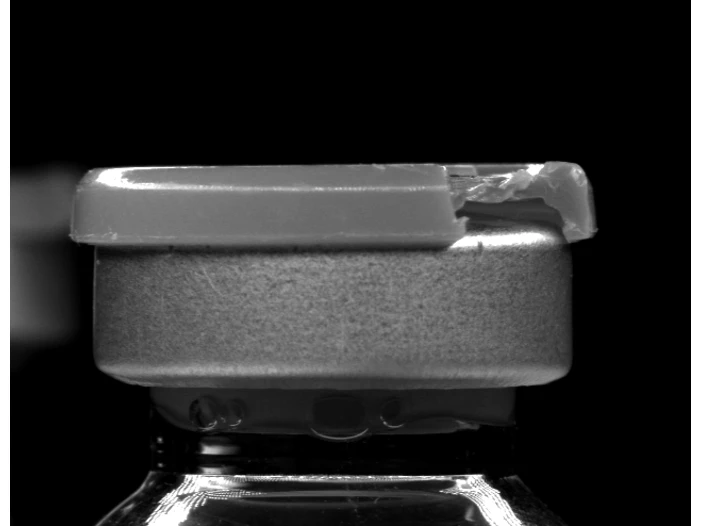
Particles and glass shavings lodge at the stopper-to-rim interface, beneath the aluminum cap. In the normal upright position, the cap sits on top and shadows the stopper edge. A top-down camera sees the aluminum, not the stopper underneath.
Preasys Vial-AVI inverts the vial before the stopper-area inspection station. The inverted orientation brings the stopper rim into direct view — any foreign object trapped between stopper and glass is caught.
Vial glass has natural thickness variation at the base heel (where the bottom curves up) and the neck (where the body narrows to the flange). Standard backlight produces uneven shadow — thicker glass looks dark, thinner glass looks bright — masking real cracks and chips.
Preasys Vial-AVI uses annular (ring) lighting at both the heel and neck stations. The ring light uniformly illuminates the entire circumference from all angles, eliminating thickness-induced shadow. Cracks, chips, and airlines in the glass stand out clearly.
Glass dust from manufacturing and handling settles on the outer vial wall. These are not product defects — but standard vision systems cannot tell whether a particle is inside the liquid or outside on the glass. Every outside particle triggers a false reject; loosening thresholds misses real inside defects.
Preasys Vial-AVI uses line-scan camera with rotation geometry analysis. As the vial rotates, an outside-wall particle appears at the outer circumference speed; an inside-wall particle appears at the inner circumference speed. The system compares the re-appearance interval of each detected feature against the calculated inner and outer circumferences — "inside" rejected, "outside" ignored.
Air bubbles in vial solution are normal (entrained during filling) but look like particles under standard inspection. They cluster in the center column. Simply ignoring the center risks missing real particles there.
Preasys Vial-AVI uses high-speed rotation + line-scan camera. Centrifugal force pushes all bubbles to the center axis. The line-scan camera then inspects the annulus — the outer ring where real particles travel — and ignores the central zone where bubbles collect.
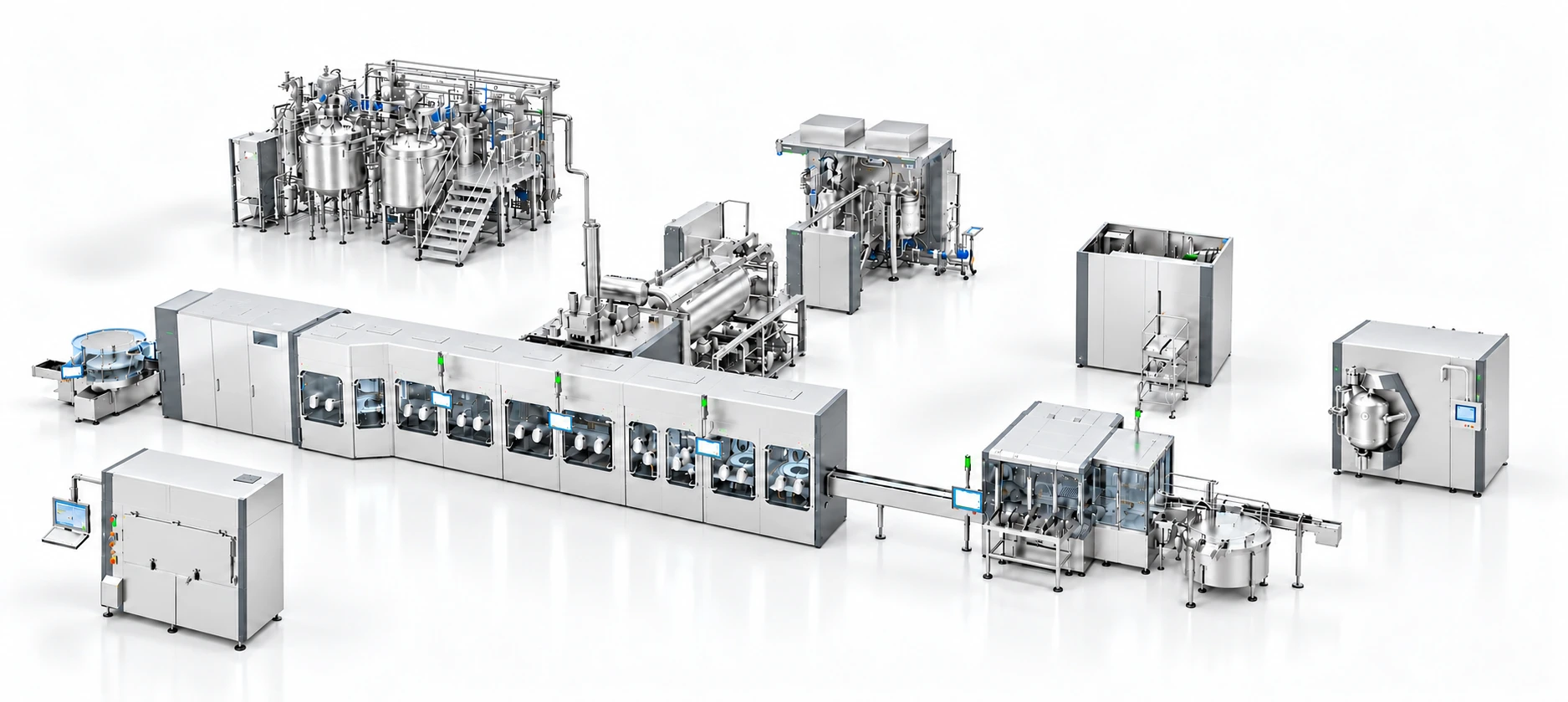
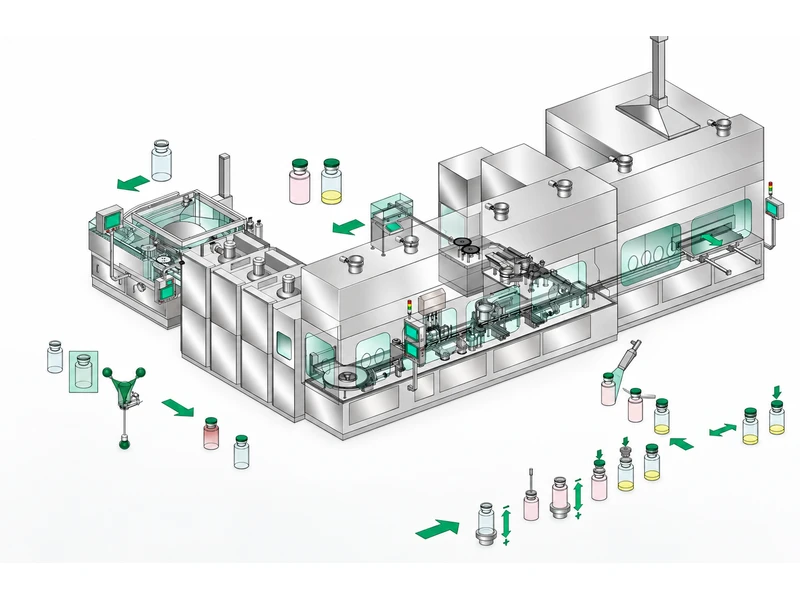
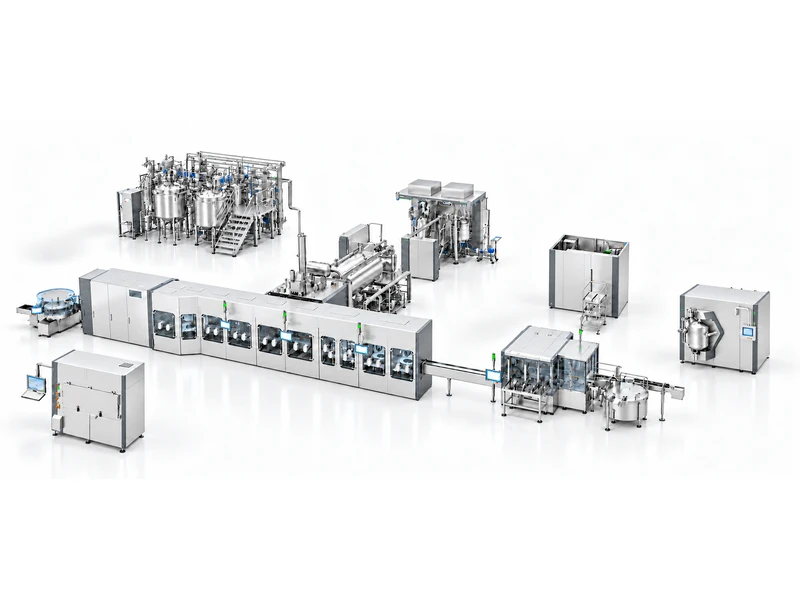
Production line · Equipment context
Explore the process areas on the production line associated with this equipment.
Follow the preparation, washing, tunnel and vial filling stations. The separate drying equipment serves lyophilized presentations. The line provides process context; the individual product is not identified as a separate station in this view.
Related production lines: Liquid Vial Filling & Packaging Lines · Lyophilized Vial Production Lines · Antibody-Drug Conjugate Manufacturing & Fill-Finish · Plasma-Derived Product Preparation & Fill-Finish · Vaccine Formulation & Fill-Finish Equipment · Advanced Therapy Manufacturing Equipment
- Downstream: Accept vials flow to labeling/packaging; rejects diverted to dedicated bins
Clear and amber glass, liquid and dried products require different lighting and reference samples.
Learn moreChallenge the application with known defects and representative acceptable units and examine false rejects.
Learn moreIdentify the contact parts and format tooling for Vial Visual Inspection. Agree access for cleaning, the spares to hold and the operating records the site will need.
Learn moreShare vial and closure format, reference defects and inspection and reject interfaces.
Request product information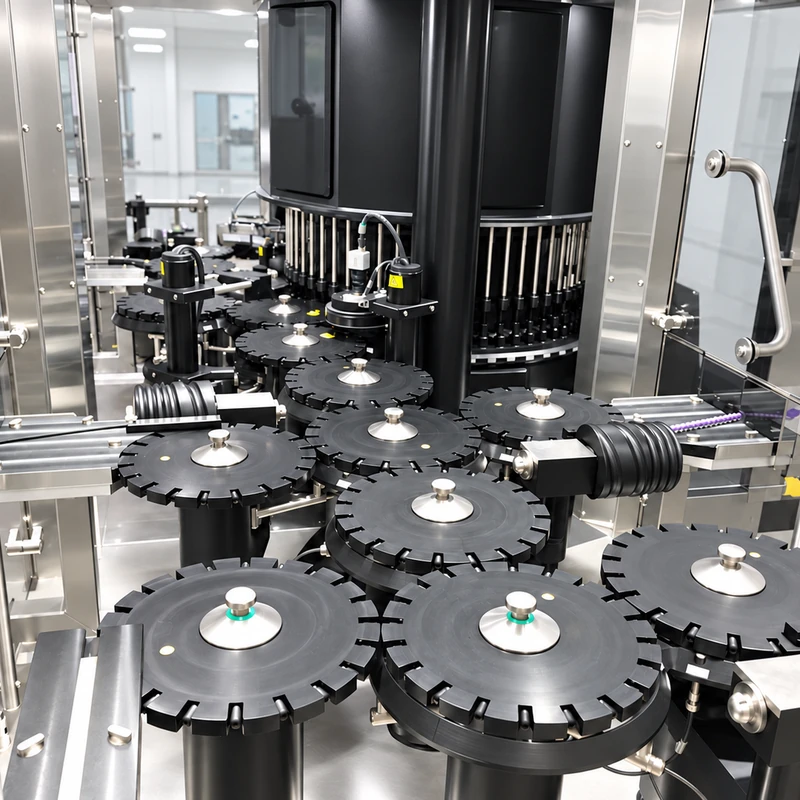
2 resources
Yes. The lyo configuration adds dedicated stations for cake appearance, cake contraction, vial bottom C&C, and upper C&C — using matrix and line-scan cameras with specialized lighting to avoid disturbing the cake.
The automatic re-circulation loop + AI optimization brings false rejects down to 2–3 %, significantly lower than single-pass inspection systems.
Under 15 minutes with 2 operators. All format parts are quick-release, no special tools needed.
Yes. The same platform handles liquid vials, powder-filled vials, and lyophilized vials — just select the recipe and adjust the spindle speed.
For a configuration review, include container drawing, product-contact materials, intended dose, closure format, batch size.
Discuss your project