Skip to content

Process expertise. Chinese manufacturing. Global perspective.

PREASYS

Equipment & technology

Vial Labelling

Vial labeling holds the closed container at a defined application position, applies the selected label and verifies the specified identity before packing.

Rotary labelling equipment with product infeed and discharge

Vial Labelling

Position the vial and control the label path

The vial body, closure and base determine how it can be spaced and supported at labeling. The applicator releases the label in time with that presentation, while any printing and reading stations associate their results with the same container. The useful operating condition depends on vial stability, label stock and the checks included.

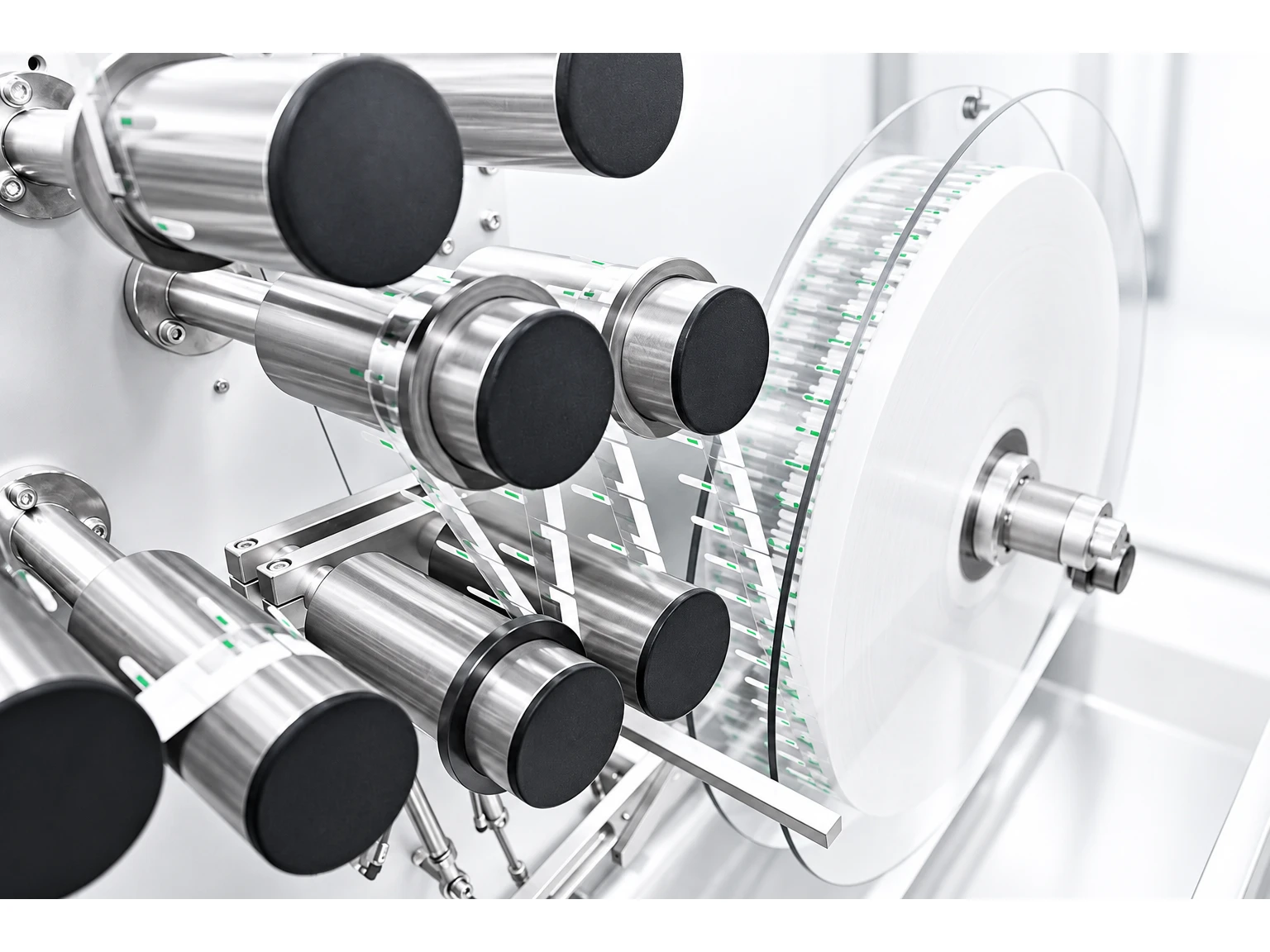
Label web passing around a set of guide rollers

Process at a glance

Label placement and code readability are different checks. Their results remain linked to the vial through rejection and discharge.

Present

Support the vial at the label application point

Apply

Release the selected label in time with the container

Verify

Associate the required check with its physical vial

Process challenges

A missing label or carrier gap changes the dispensing sequence. Detection and recovery must prevent an uncertain application from being released as accepted.

Read details

A missing label or carrier gap changes the dispensing sequence. Detection and recovery must prevent an uncertain application from being released as accepted.

Small vials provide limited wrap and handling space. Their stability and reference surfaces determine the transport and application setup.

Transparent label stock changes the sensing task. The selected method is evaluated with the actual film and carrier.

Reel replenishment or splicing introduces a controlled transition in the web. Its effect on application and identification requires a defined procedure.

Variable data needs an approved source and a check matched to the required fields. Printing alone does not establish correctness.

Wrinkles and trapped air can arise during transfer or wrapping. Applicator contact and label properties affect their appearance.

The infeed must control container contact and stability. Sensitive or narrow containers may require dedicated spacing and support.

Technical data & features

Label length, vial diameter and variable data requirements determine the application and inspection layout.

Label web passing around a set of guide rollers
Accepted output assessed with the vial, label and selected checks Container geometry determines the infeed and transport tooling Artwork and label dimensions follow the usable vial surface Reel, carrier and label pitch establish the dispenser setup Selected infeed spacing → Supported presentation → Controlled discharge

Coordinate dispensing with the vial position

The carrier pitch and label sensor determine the release sequence. Gaps or splices can change that sequence, so restart behaviour is assessed with the next physical vial.

Detection selected for opaque or transparent label stock Recipe, approved print data and result tracking within the agreed controls

Setup and recovery at the operator interface

The vial guides and label path require access for clearance and wear inspection. Adhesive residue, damaged rollers or carrier tension can affect application after a changeover.

Standalone supply or linked upstream/downstream transport, as specified Utilities defined by the selected transport, printer and applicator Installation envelope includes replenishment, reject handling and service access Factory and site acceptance tasks defined for the configuration Selected identification and checking functions Code reading or other identification checks for the approved pack

Printing matched to artwork and variable data

Printing may add variable fields to a preprinted label or create the specified artwork before application. Job ownership, data transfer and print verification are defined together.

Print-check position in the label path Inspection of specified data and appearance against the approved reference Faulty-label removal where fitted, with its own count and recovery logic Applied-label presence assessed with the selected stock and method Reel change and splicing assessed for the required operating sequence Container rejection linked to the relevant label or inspection failure Transport handoff matched to adjacent equipment

Batch reconciliation and line-state signals

How it works

How is first-off label placement checked?

Use the approved vial and artwork references to measure application height, leading edge and wrap position. Inspect adhesion and readability separately from dimensional position.

How are gaps and splices challenged?

Run identified web interruptions through the selected detection and recovery sequence. Compare the next labeled vial, its code result and its physical disposition.

How is a print-and-check sequence evaluated?

Use controlled job data, including deliberate incorrect or unreadable samples. Confirm which station detects the fault and that the result reaches the intended reject action.

How is the outfeed assessed?

Observe labeled vials through the actual transfer and accumulation conditions. Check stability, scuffing and label-edge lifting after the handoff.

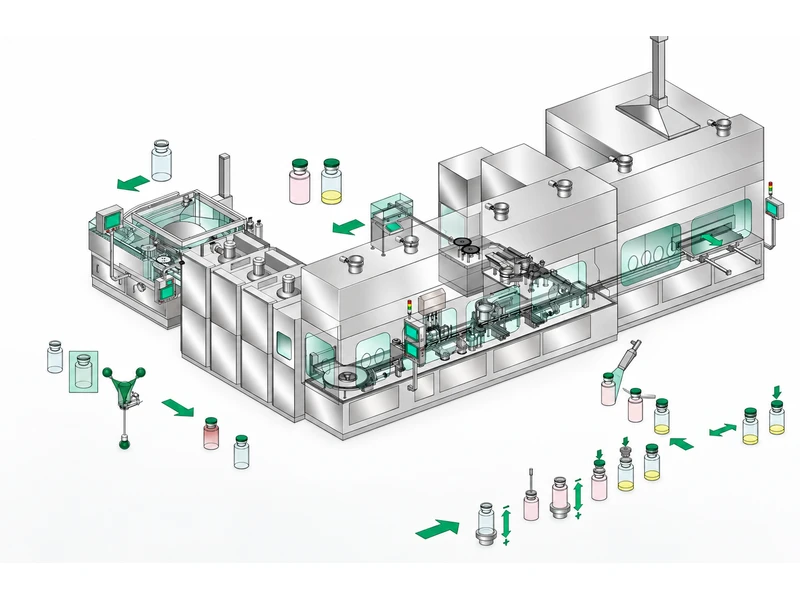
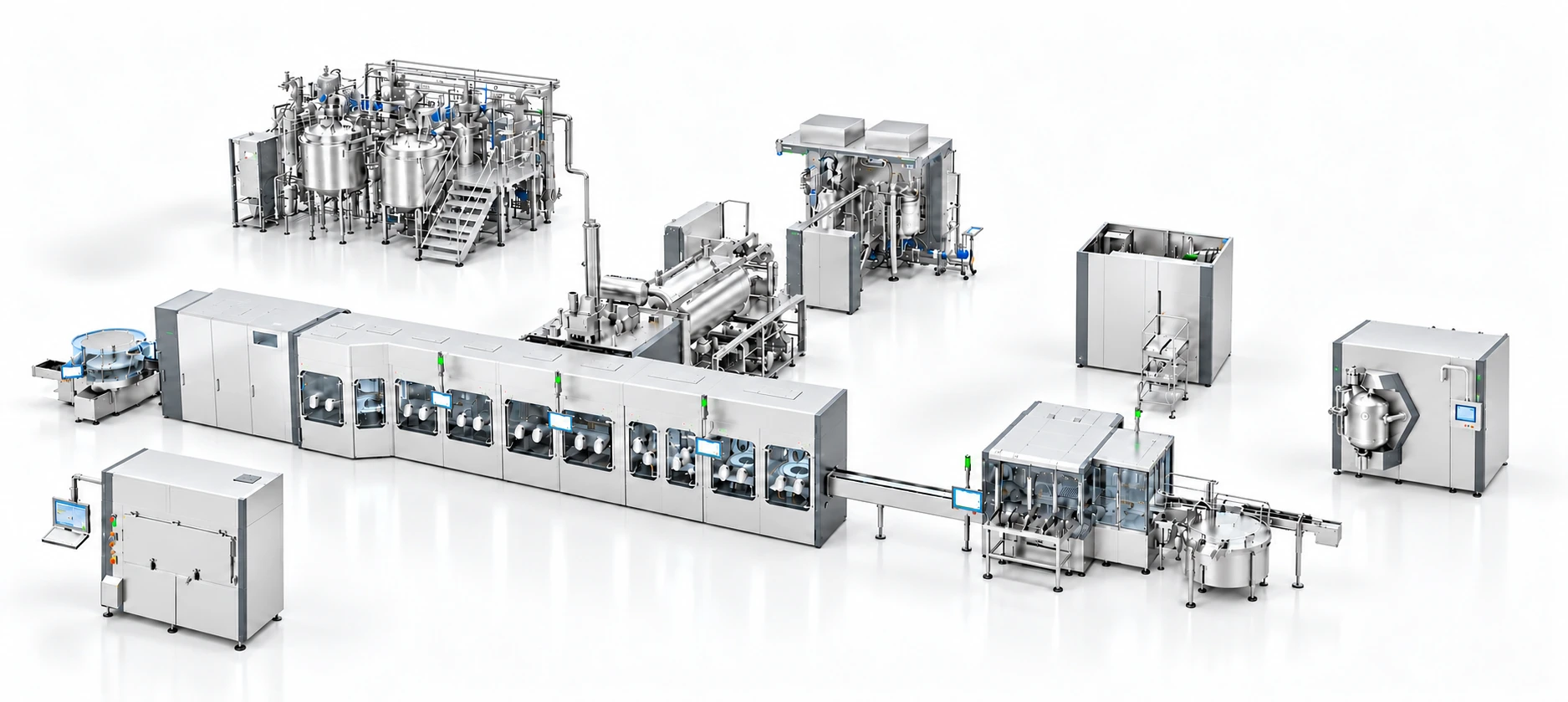
Liquid vial preparation and filling. Follow the preparation, washing, tunnel and vial filling stations. The separate drying equipment serves lyophilized presentations. The line provides process context; the individual product is not identified as a separate station in this view.

Production line · Equipment context

Liquid vial preparation and filling

Explore the process areas on the production line associated with this equipment.

Skip tour
Selected process route 8 equipment areas · Scroll to explore

Follow the preparation, washing, tunnel and vial filling stations. The separate drying equipment serves lyophilized presentations. The line provides process context; the individual product is not identified as a separate station in this view.

Related production lines: Liquid Vial Filling & Packaging Lines · Antibody-Drug Conjugate Manufacturing & Fill-Finish · Plasma-Derived Product Preparation & Fill-Finish · Vaccine Formulation & Fill-Finish Equipment · Advanced Therapy Manufacturing Equipment

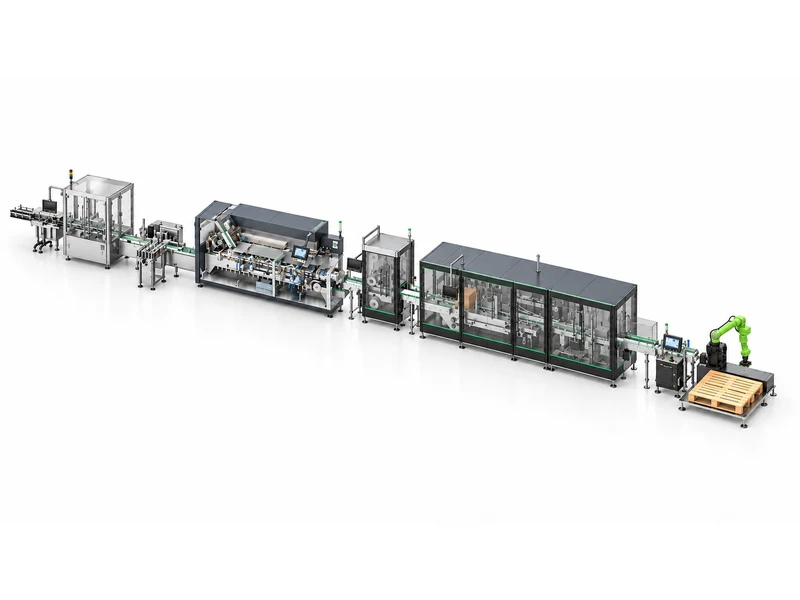
Line integration

Closed vial with its required upstream acceptance status

↓

Defined spacing and support

↓

Vial labeling and selected verification

↓

Supported discharge to the next operation

↓

Secondary Packaging (cartoner) or tray collection

Support throughout your project and production

Define the equipment scope

Label length, vial diameter and variable data requirements determine the application and inspection layout.

Learn more

Agree the acceptance test

Check orientation and code readability at discharge with production labels and filled containers.

Learn more

Prepare for operation

Identify the contact parts and format tooling for Vial Labelling. Agree access for cleaning, the spares to hold and the operating records the site will need.

Learn more

Knowledge hub

2 resources

Frequently asked questions

Can the label cover the whole vial body?

Only if the package design and subsequent inspection needs allow it. The usable label zone must leave required features and views accessible.

Does a transparent label require a different sensor?

It may require a different sensing principle or setup from opaque paper. The actual label and carrier determine what can be detected reliably.

Is serialization part of every vial labeler?

No. Code assignment, verification and external data exchange are configured for the product requirements. Applying a code alone does not complete serialization.

How is the operating rate established?

It is assessed with the selected vial, artwork, printing and inspection functions. Container stability and accepted-package criteria belong to that assessment.

Contact

For a configuration review, include container drawing, product-contact materials, intended dose, closure format, batch size.

Discuss your project
Label web passing around a set of guide rollers