Skip to content

Process expertise. Chinese manufacturing. Global perspective.

PREASYS

Equipment & technology

Automatic Aseptic Liquid Vial Filling, Stoppering & Capping Machine

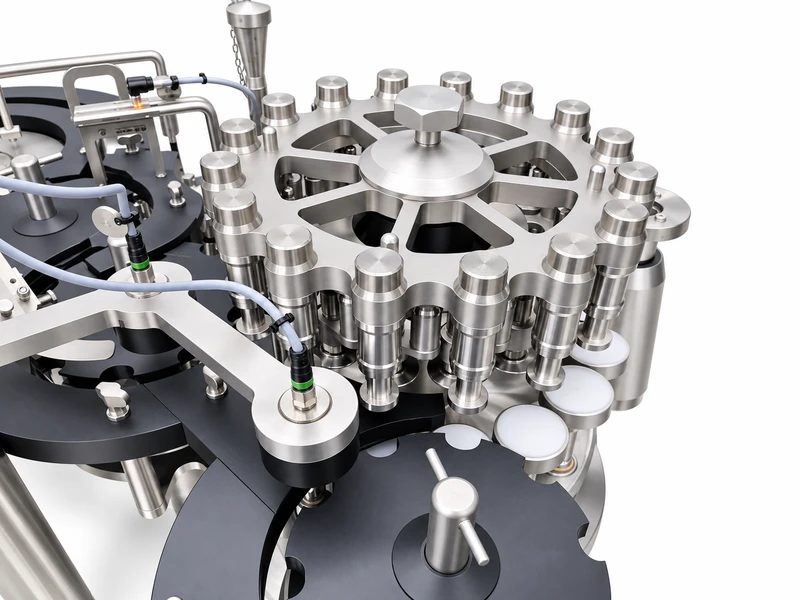
Vials must reach the needles in a repeatable position and remain controlled until the stoppers are seated.

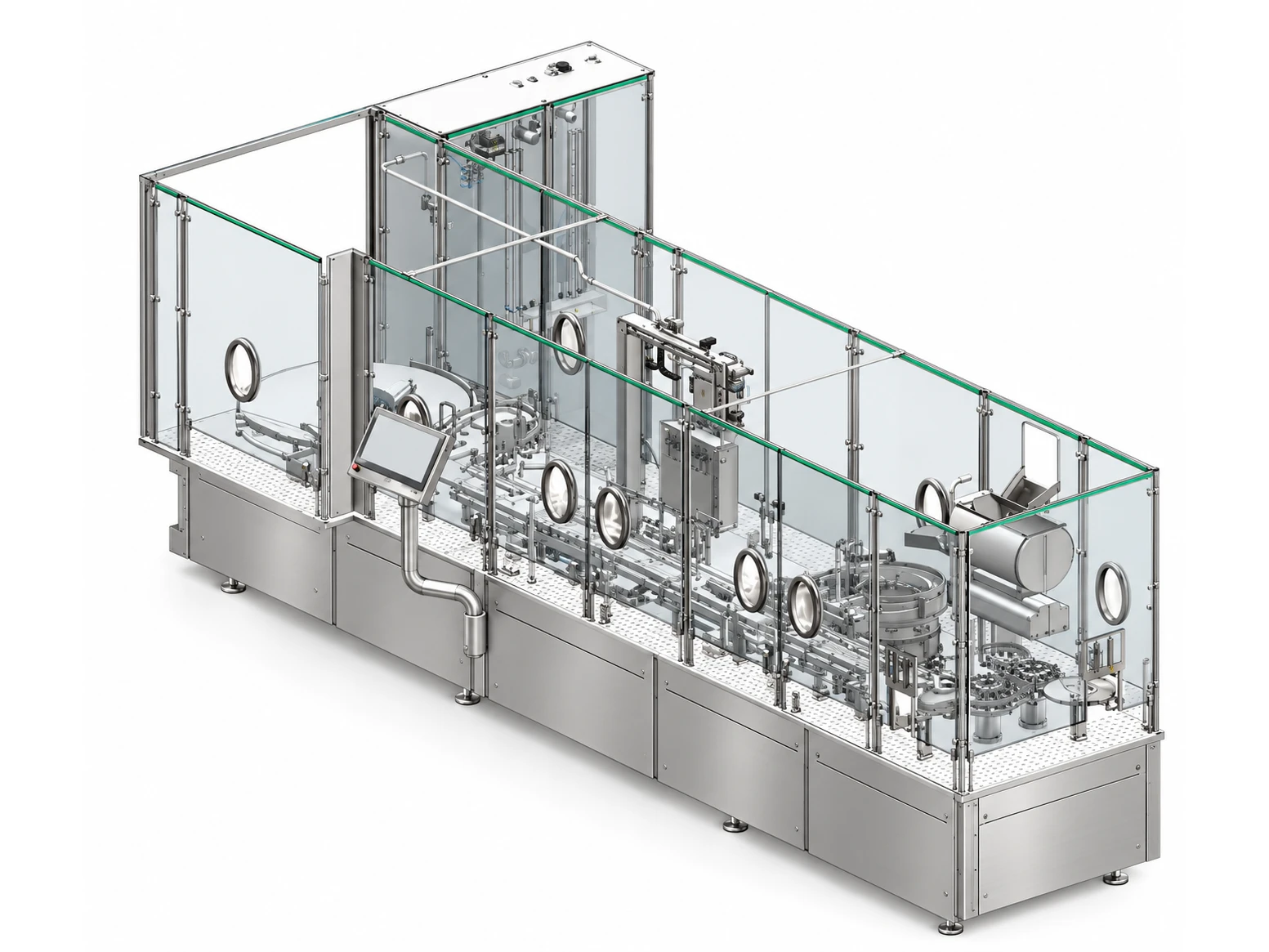
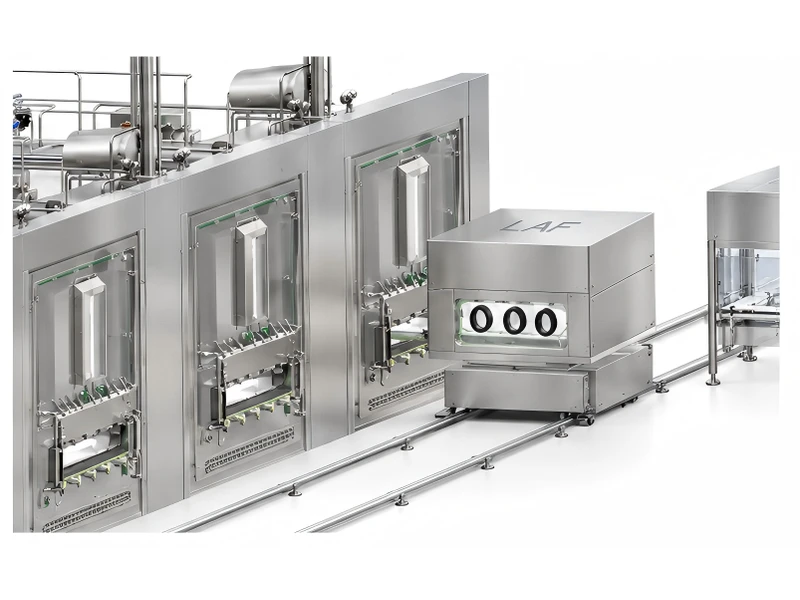
Enclosed vial filling line with a guarded transfer path

Liquid Vial Filling

Vial filling machine for aseptic fill-finish — 24,000 vials per hour, no product wasted

Fills and closes up to 24,000 vials per hour and puts two signature technologies at the centre of the process: PRECISE FILL for maximum product yield, and PRECISE FLUSH to hold residual oxygen in the vial at ≤ 0.5%. Three dosing technologies, optional 100% in-process control, and format changes that behave like a recipe.

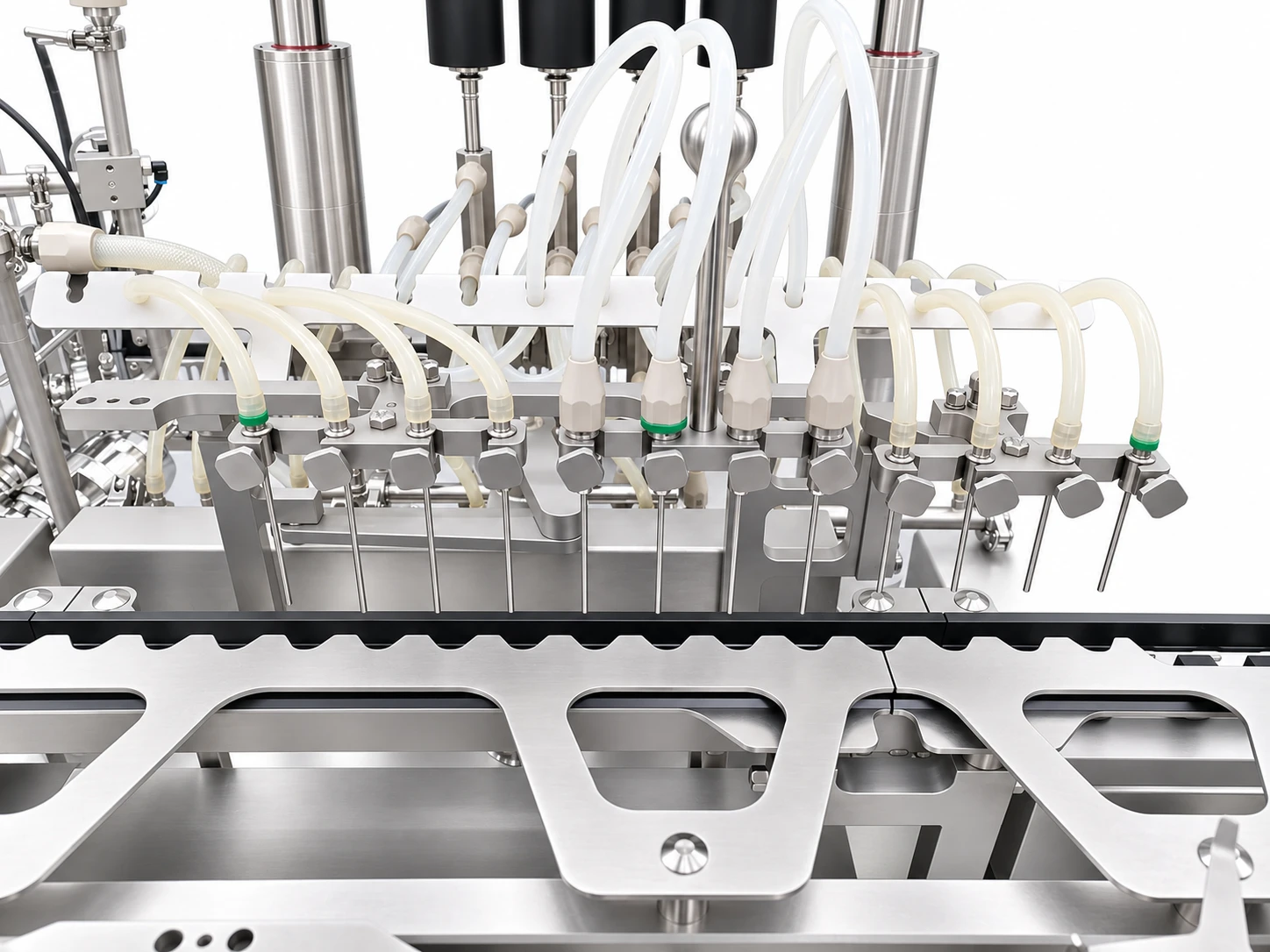
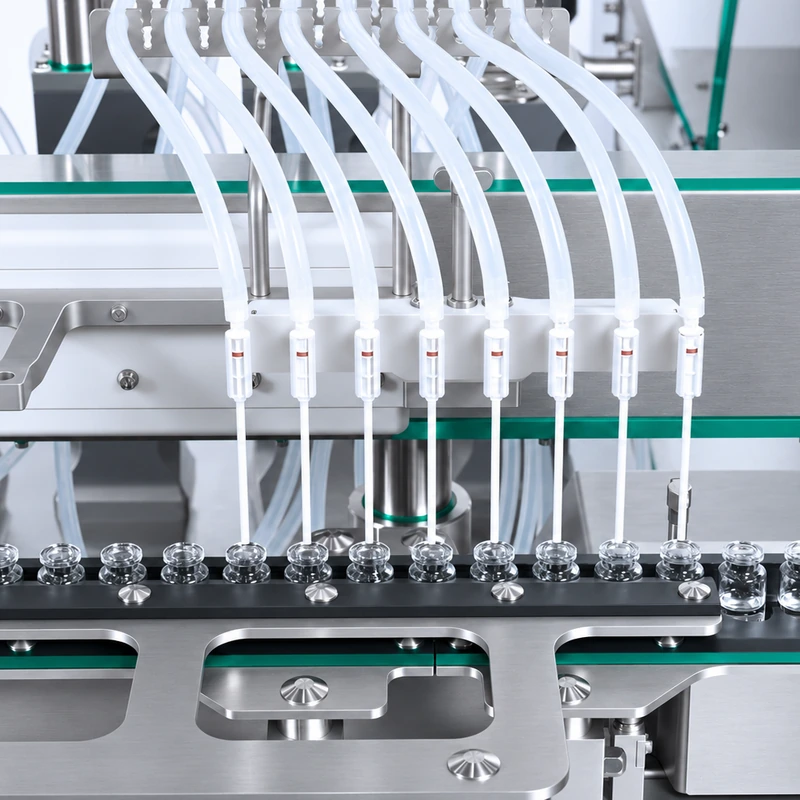
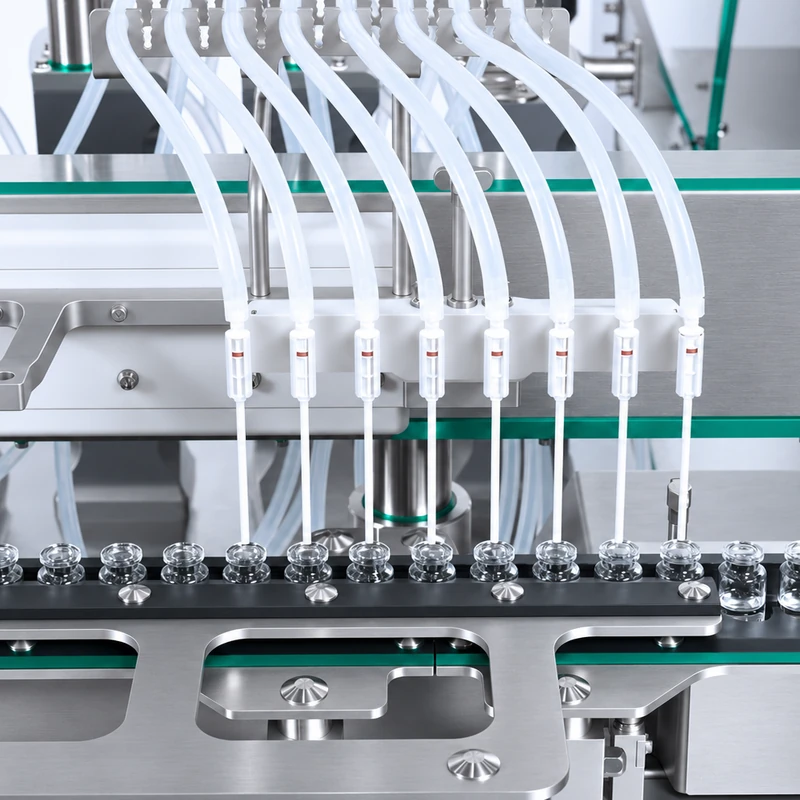
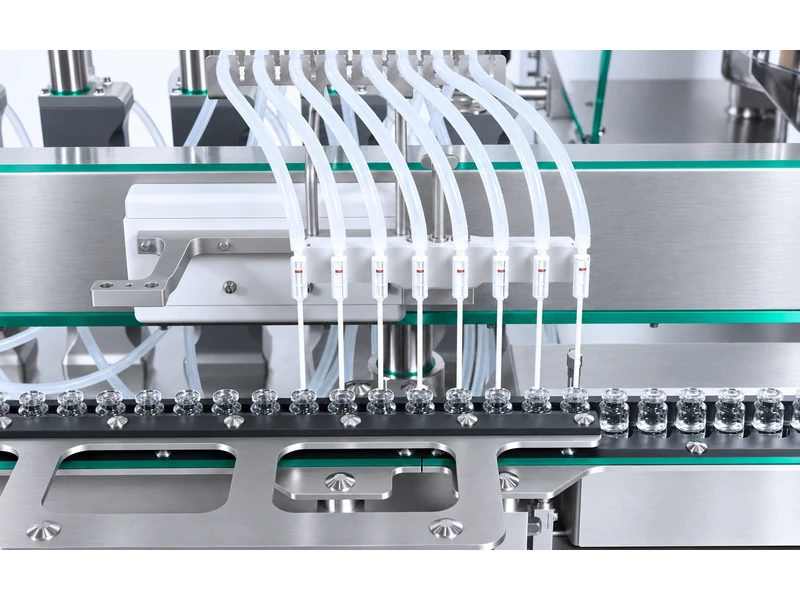
Tube-fed dosing heads above the vial transport

Configuration data

VF series. Output and dosing range depend on the container, product and selected filling configuration.

Up to 24,000 vials/h

Output

Low-loss

Product yield

PRECISE Fill

≤ 0.5%

Residual oxygen

PRECISE FLUSH

0.15 – 65 ml per pump

Dosing range

100% IPC available

Fill verification

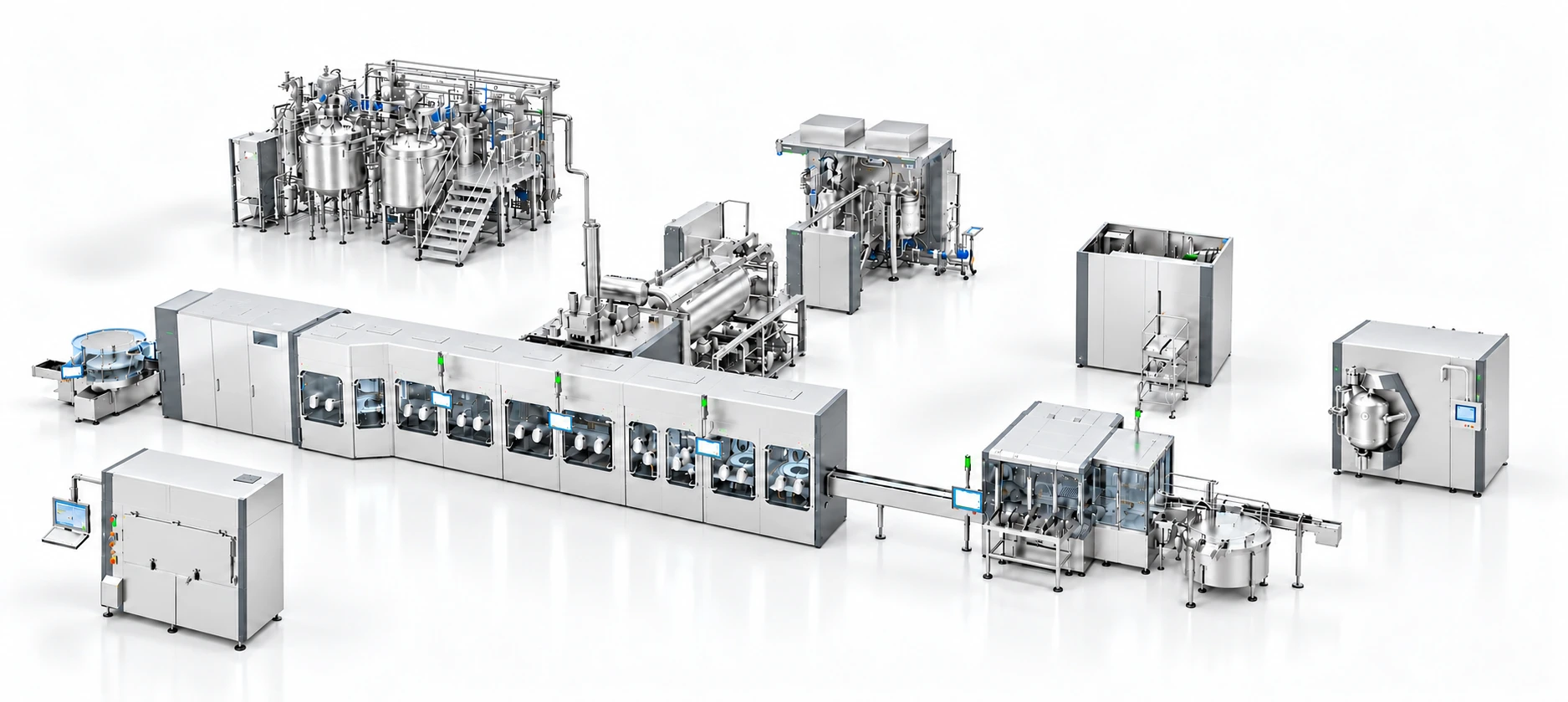
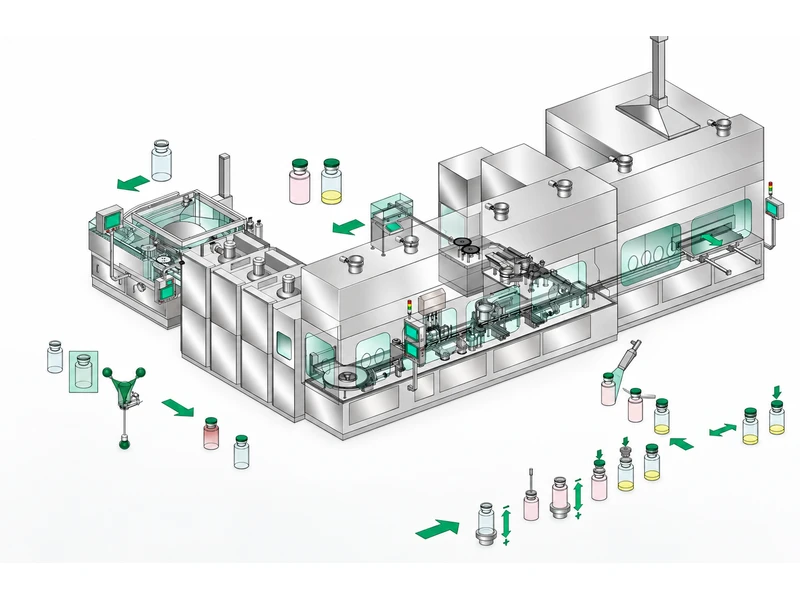
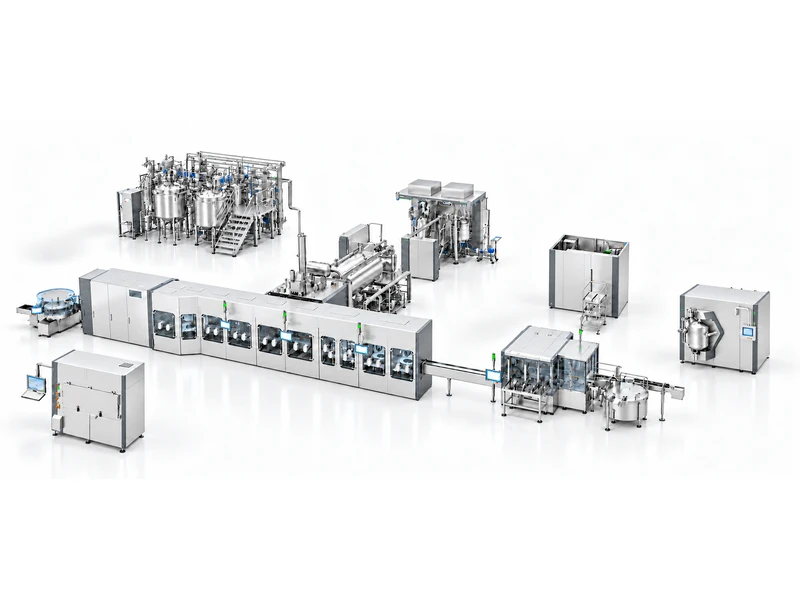
Liquid vial preparation and filling. Follow the preparation, washing, tunnel and vial filling stations. The separate drying equipment serves lyophilized presentations.

Production line · Equipment context

Liquid vial preparation and filling

Explore the process areas on the production line associated with this equipment.

Skip tour
Selected process route 8 equipment areas · Scroll to explore

Follow the preparation, washing, tunnel and vial filling stations. The separate drying equipment serves lyophilized presentations.

Related production lines: Liquid Vial Filling & Packaging Lines · Antibody-Drug Conjugate Manufacturing & Fill-Finish · Lyophilized Vial Production Lines · Plasma-Derived Product Preparation & Fill-Finish · Vaccine Formulation & Fill-Finish Equipment

Filling technologies

Filling technology

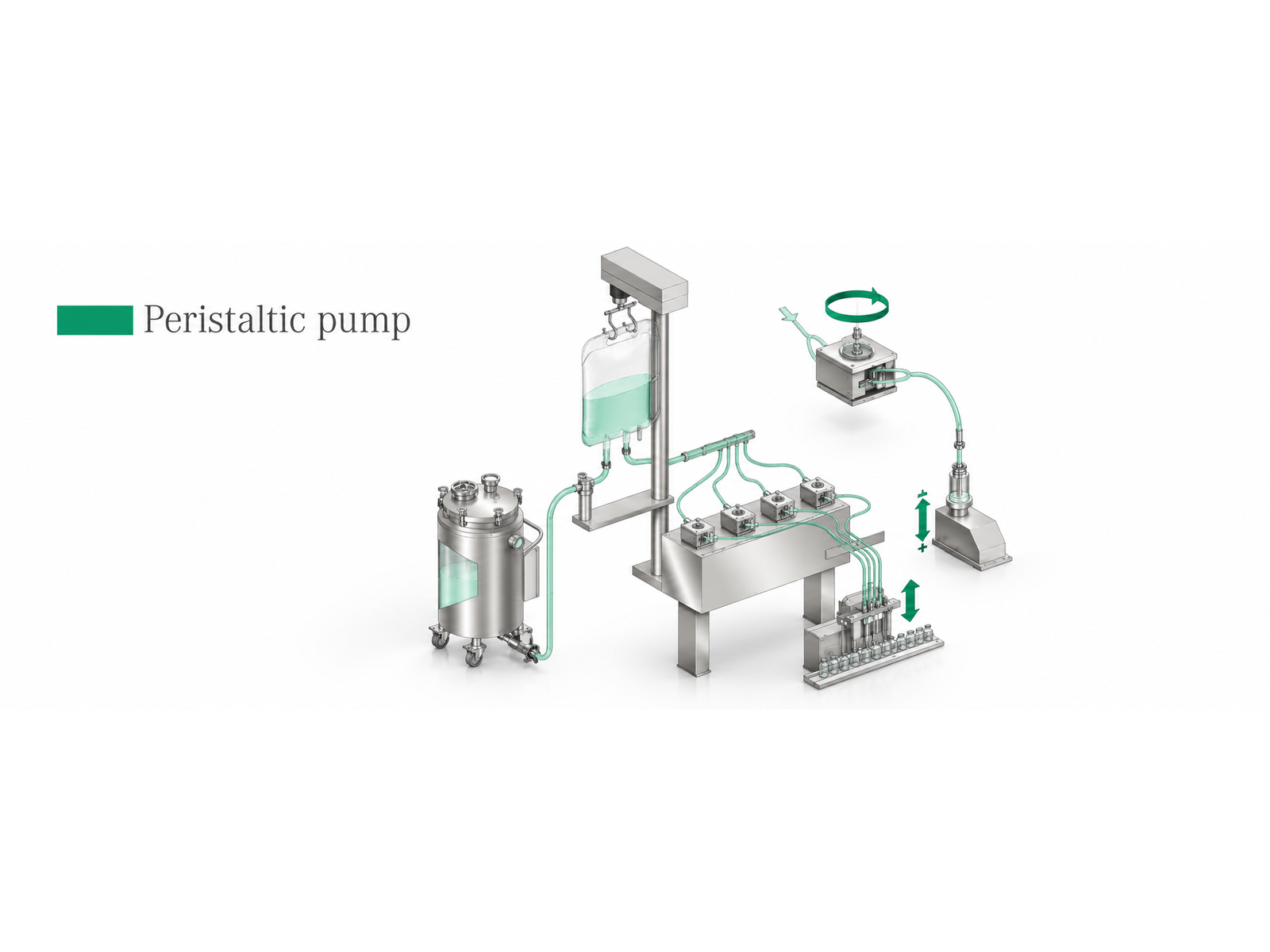
Peristaltic pump

A flexible tube carries the liquid while rotating rollers control dosing. The product contacts the tube rather than the pump mechanism. This principle is used when a disposable product path and gentle handling are priorities. Tubing selection, product compatibility and the changeover procedure should be reviewed for each application.

Explore technology
Diagram connecting a peristaltic pump to the product filling path

Filling technology

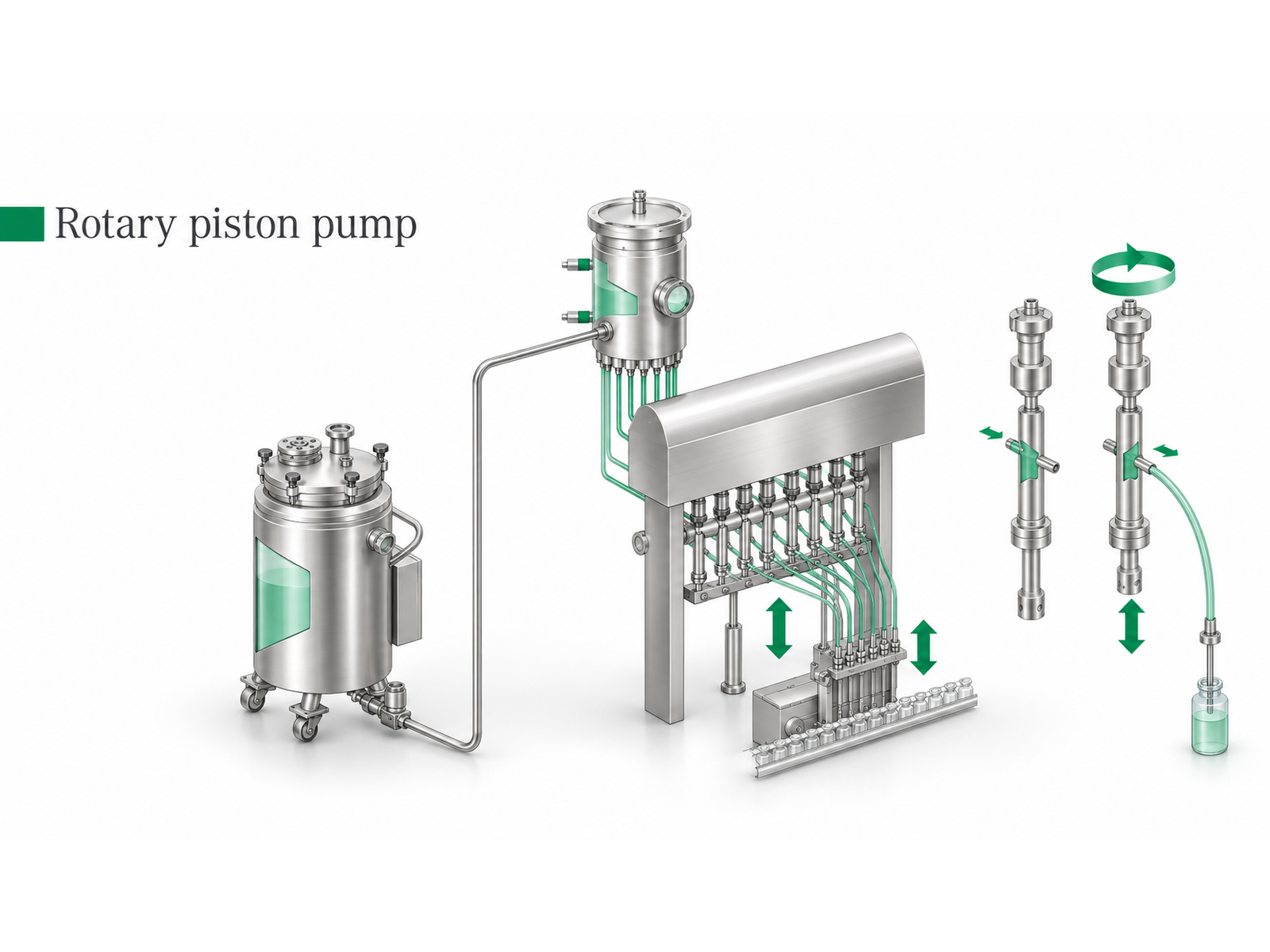
Piston pump

A piston draws liquid into a cylinder and then dispenses a measured volume through the outlet. The selected piston, valve and product-contact materials determine the application range. Review viscosity, cleaning requirements and the required filling volume together with the product and container format.

Explore technology
Rotary piston metering equipment connected to a set of filling heads

Filling technology

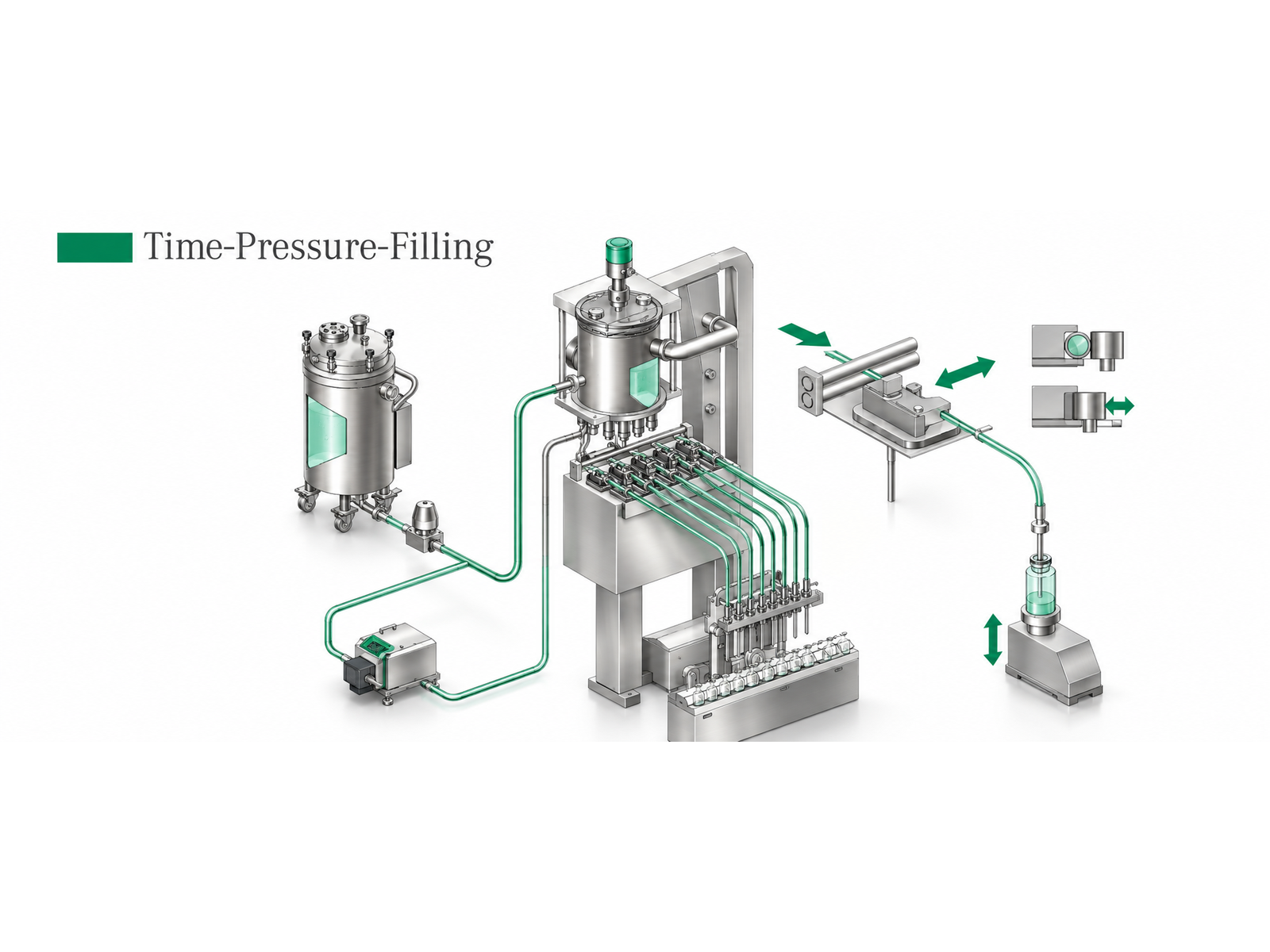
Time pressure

Controlled pressure moves liquid through a filling valve. The opening time and supply conditions determine the dispensed quantity. Product properties, pressure stability and the valve configuration are evaluated together when setting up the filling process.

Explore technology
Diagram of a time-pressure dosing vessel and filling heads

Filling technology

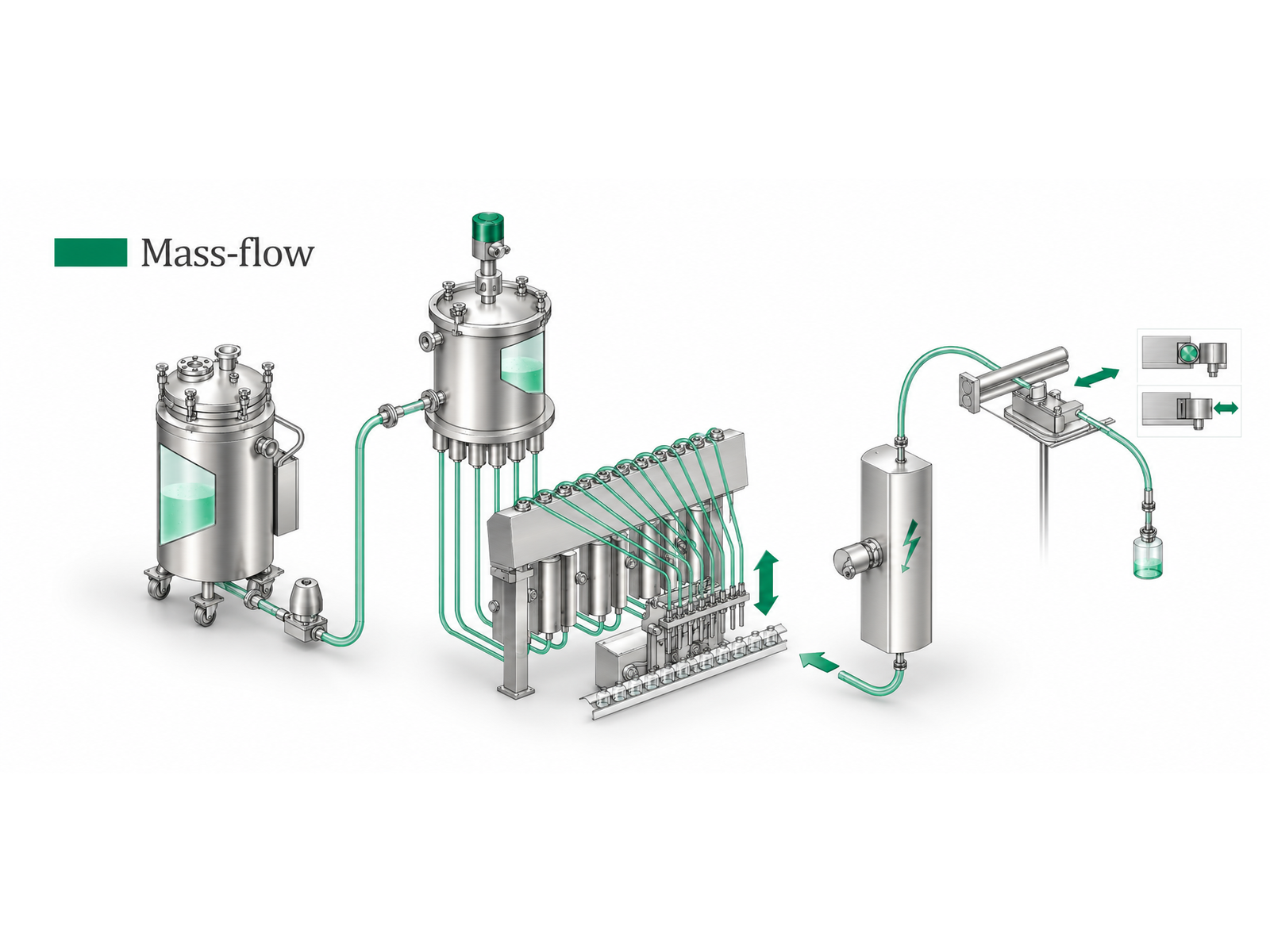
Mass flow

A flow sensor measures the product passing through the filling path and provides feedback to the dosing valve. The process is evaluated around the required fill mass, product behaviour and cleaning strategy. Sensor selection and the control sequence depend on the application.

Explore technology
Product flow path with a mass flow meter and dispensing points
Technology 1 of 4

Preasys-Fill and Preasys Flush

Two technologies that decide your batch economics

Product loss and oxidation are the two most expensive problems in aseptic filling. Both are solved inside the filling process — not downstream of it.

Tube-fed dosing heads above the vial transport

Maximum Product Yield

PRECISE FILL

More product in the container. Less in the waste.

Saves from the first container to the last.

Scales positioned directly below the filling position combine with an intelligent filling algorithm that reacts immediately — so fill weight is controlled directly, not inferred from pump displacement.

Loss-free start-up — no discarding the first containers

Loss-free production — weight held under control throughout

Low-loss emptying — less product left at batch end

Tube-fed dosing heads above the vial transport

Maximum Protection Against Oxidation

PRECISE FLUSH

≤ 0.5% residual oxygen in the vial

Instead of extensive downstream checks.

For an oxygen-sensitive liquid, evaluate a gas-flush needle at the closing point. Measure residual headspace oxygen on representative vials and record the fill, flow and stoppering conditions.

Sheath flow — sheaths the main flow from ambient air

Main flow — gases the headspace, displacing oxygen

Check headspace oxygen and accepted vial rate together. For a retrofit, review the available space, enclosure and connections on the existing line.

Process challenges

Seven things that cost vial lines money

Each one answered with a capability — and the commercial consequence of having it.

01 PRECISE YIELD

Product loss you cannot see in the batch record

Product loss is rarely one dramatic event.

Read details

Product loss is rarely one dramatic event. It accumulates quietly — at start-up before the line stabilises, in the millilitres left in hoses at batch end, in rejects that need not have been rejected. With biologics, vaccines, ATMPs and highly potent actives, even a small loss has a significant cost, and it also raises demand for the active ingredient and increases disposal spend. PRECISE YIELD controls fill weight directly from scales under the filling position, so you save from the first container to the last.

02 PRECISE GUARD

Oxidation risk in oxygen-sensitive products

For some products, even a small amount of oxygen compromises stability, efficacy and shelf life — and puts the quality of an entire batch at risk.

Read details

For some products, even a small amount of oxygen compromises stability, efficacy and shelf life — and puts the quality of an entire batch at risk. The usual answer is extensive downstream checks, which cost time and do not protect the product. PRECISE GUARD reduces oxygen at the point of closing to ≤ 0.5% residual, with no output reduction.

03

Fill-weight spread you have to overfill to cover

If fill weight varies, the only safe answer is to overfill — and every milligram of overfill is product you never sell.

Read details

If fill weight varies, the only safe answer is to overfill — and every milligram of overfill is product you never sell. Worse, you usually discover the spread after the batch, in the lab. Optional 100% in-process control measures every container during production, and PRECISE YIELD controls fill weight directly — so deviation is found in process, not in a retrospective sample.

04

Changeovers that swallow your capacity

Every vial format you add brings its own setup — and hand-set values drift, so the errors surface later as rejects.

Read details

Every vial format you add brings its own setup — and hand-set values drift, so the errors surface later as rejects. Size-dependent settings are entered once and recalled per format, closing height adjusts by servo, and pumps change without tools. Changeover becomes a call-up, not a rebuild.

05

Interventions in the aseptic zone

Most contamination events do not come from the machine — they come from the person who has to reach into it.

Read details

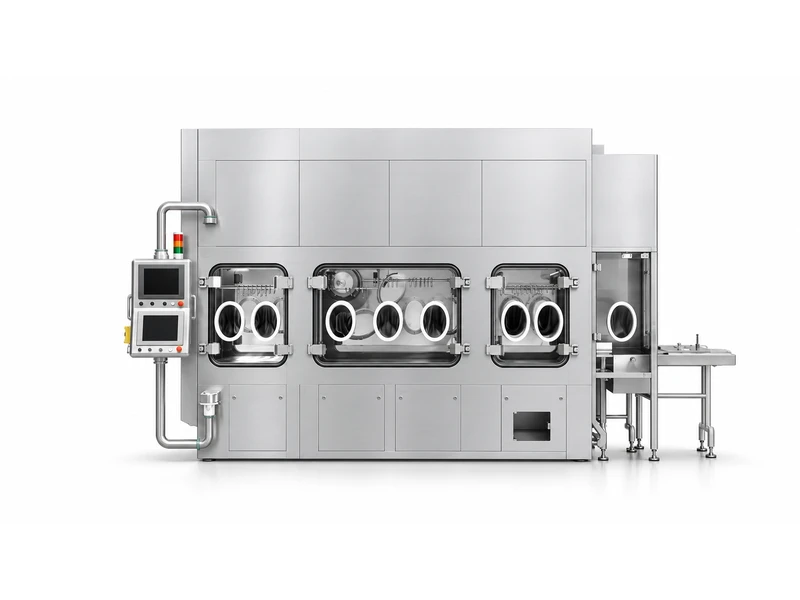
Most contamination events do not come from the machine — they come from the person who has to reach into it. An enclosed base, a smooth stainless product path and cleanable surfaces keep interventions to a minimum, and the platform supports RABS and isolator concepts.

06

Shear-sensitive and foaming formulations

Proteins, suspensions and surfactant-containing products do not tolerate aggressive pumping, and foam in the vial means an inaccurate fill.

Read details

Proteins, suspensions and surfactant-containing products do not tolerate aggressive pumping, and foam in the vial means an inaccurate fill. The platform supports gentle dosing across three technologies, and the fill can be set above the level — a practical answer to foaming products.

07

Downtime, fault recovery and documentation

A single jammed vial should not cost half an hour.

Read details

A single jammed vial should not cost half an hour. Fault clearance is designed to release containers quickly so production restarts fast. Encrypted remote diagnostics bring support to your machine, and documentation packages are available so the machine arrives ready to be qualified.

Signature technologies, and everything built around them

PRECISE FILL — maximum product yield

Brings more of your valuable product to where it belongs: into the final container.

Read details

Brings more of your valuable product to where it belongs: into the final container. Scales located directly below the filling position combine with an intelligent filling algorithm that reacts immediately, giving precise fill weights under direct control.

Higher yield from every batch Less residual product, lower disposal costs Saves across start-up, production and emptying

PRECISE FLUSH — maximum protection against oxidation

Protects oxygen-sensitive products where it matters: the closing step.

Read details

Protects oxygen-sensitive products where it matters: the closing step. Oxygen is displaced specifically to reach ≤ 0.5% residual oxygen in the vial, instead of relying on extensive downstream checks.

Sheath flow shields the process from ambient air Main flow gases the headspace and displaces oxygen Retrofit review: clearance, gas supply and output at the tested vial format

One platform, three dosing technologies

Rotary piston pumps for precise volumetric dosing.

Read details

Rotary piston pumps for precise volumetric dosing. Time/pressure dosing where a disposable product path and easy cleaning matter more. Peristaltic pumps for the gentlest handling of shear-sensitive biologics, and for very large volumes.

Both signature technologies can be combined with a range of dosing technologies — so the yield and oxidation strategy does not dictate the pump.

Fill verification, not fill assumption

Optional fully automatic in-process control checks the actual metered quantity of every container — 100% control — without loss of production and without reducing capacity.

Read details

Optional fully automatic in-process control checks the actual metered quantity of every container — 100% control — without loss of production and without reducing capacity. The weighing range can be switched to match your fill size.

Format change as a recipe

Capacity, dosing volume, needle stroke, closing height and sorting unit output are entered at the operating terminal and memorised separately for each size.

Read details

Capacity, dosing volume, needle stroke, closing height and sorting unit output are entered at the operating terminal and memorised separately for each size. Servo adjustment handles the mechanical side. Repeatable setup across shifts and operators — not tribal knowledge.

Designed for aseptic production and high availability

Stainless steel product contact surfaces, an enclosed machine base and an aseptic-friendly layout.

Read details

Stainless steel product contact surfaces, an enclosed machine base and an aseptic-friendly layout. Supports RABS and isolator concepts and designed for GMP environments. A TÜV-certified, encrypted remote service connection means most issues are diagnosed without a site visit.

PRECISE FILL

PRECISE FLUSH

100% in-process control (IPC)

CIP/SIP dosing components

Oxide ceramic pumps

Gas flushing before / during / after filling /During stoperring

Closure checking station

Reject station

RABS and isolator integration

Qualification packages

How it works

How do we select the dosing path for a vial trial?

Compare the available filling principles against dose range, product contact materials, sensitivity and changeover. Trial the selected path with the intended container.

How do we verify a vial fill independently of the pump setting?

Measure a representative sample using the agreed check method. Compare actual results with the target and examine drift after priming, stoppage and restart.

What should we verify after switching vial formats?

Confirm the recipe, dosing parts, guides and stopper presentation. Check the first filled and stoppered vials against the approved format criteria.

How do we trace the exposed product path?

Follow product from preparation to the needle, open vial and stopper. Identify exposure and intervention points and agree how to evaluate them during the trial.

How do we prepare the vial filler for the next product?

Identify all product-contact parts and retained volumes. Review the required cleaning or replacement steps, reassembly checks and evidence required for release.

Which vial-filling trial records should accompany the handover?

Link each agreed test to the vial format, dosing setup, acceptance criterion and result. Carry unresolved items forward with a named action and retest condition.

Line integration

Compare startup and steady-state dosing

Compare dosing repeatability at startup and steady operation using the intended vial and stopper.

Filling needles above a row of glass vials

Support throughout your project and production

Define the equipment scope

A sensitive formulation may favour a short disposable path. Other products may need metering or cleaning arrangements specific to their viscosity and batch size.

Learn more

Agree the acceptance test

Compare dosing repeatability at startup and steady operation using the intended vial and stopper.

Learn more

Prepare for operation

Identify the contact parts and format tooling for Liquid Vial Filling. Agree access for cleaning, the spares to hold and the operating records the site will need.

Learn more

Knowledge hub

2 resources

Frequently asked questions

VF Series — Complete FAQ (Vial Filling & Stoppering)

1. Which containers can the VF Series process?

Stable cylindrical vials in glass, plastic or metal: Ø 14.25–86 mm, height 30–180 mm, across four performance tiers (VF 7200 / 12000 / 18000 / 24000) from clinical to commercial output up to 24,000 vials/h.

2. Which dosing systems are available?

Rotary piston pump, peristaltic pump, time/pressure dosing, powder dosing, and a modular multi-dosing platform — selected to match viscosity, foaming behavior and sensitivity of the product. Vacuum-assisted filling and vacuum-assisted closing are available as options.

3. What is PRECISE Fill?

A zero-loss dosing feature (PRECISE Fill): every container in the batch is filled to the optimal level, so at most only the last container may need to be rejected. During start-up and running empty, product is dosed directly into containers positioned on scales via a freely positionable needle holder; dose quantity is monitored and setpoint deviations are corrected in situ — no manual intervention in the dosing area, available from batch size 1, ideal for high-value biologics, HPAPI and ADC.

4. What is O₂PRECISE Flush?

Headspace gassing (e.g. nitrogen) before stoppering that reduces residual oxygen to ≤0.5% — protecting oxygen-sensitive and toxic products from oxidation (PRECISE FLUSH).

5. How does the machine prevent vial breakage?

Walking-beam transport with no glass-to-metal contact and toothed transport/centering plates; mechanical pick-and-place stoppering (no vacuum stress); optional in-line inspection of empty vials for cracks, scratches and splinters before filling; servo-controlled needle strokes and segment discharge starwheels avoid shock at full speed.

6. How does the machine prevent protein aggregation caused by shearing force?

For shear-sensitive biologics, the answer is the single-tube peristaltic pump — the gentlest dosing path PRECISE offers, and the default recommendation for high-value protein formulations.

What causes shear damage in other pumps: rotating piston pumps draw fluid through narrow metallic clearances and sliding surfaces; every revolution creates high local shear stress, cavitation and turbulent micro-jets that can partially unfold proteins and trigger aggregation — especially for mAbs, GLP-1 peptides, vaccines and highly concentrated formulations.

How the single-tube peristaltic pump eliminates it:

Shear stress source Preasys single-tube peristaltic design
Metal sliding contacts in the fluid path No valves, no pistons, no metallic surfaces touch the liquid — the product travels exclusively inside one smooth silicone tube
High shear from narrow pump clearances Fluid is moved by gentle, continuous tube compression — low, distributed shear, no narrow gaps, no metal-to-product contact
Cavitation and turbulent jets Constant, controlled tube squeeze at adjustable squeeze depth and speed; flow is laminar and unidirectional
Recirculation through the pump chamber Single-pass dosing: product enters, doses, exits — never re-circulated through a chamber
Interface stress (air–liquid boundary) Smooth tube bore (Ra-finished interior), no foaming surfaces; optional low-pulse operation for consistent dose streams

How PRECISE configures it per product:

- Same flow rate at lower speed + larger tube bore = further shear reduction for fragile molecules

- Adjustable roller compression — tube squeeze tuned to the formulation, extending tube life while keeping shear minimal

- Alternative dosing (rotary piston, time/pressure) remains available for shear-tolerant products; the single-tube pump is selected when protein integrity is the priority

- CIP/SIP-compatible pump head; tube replacement in minutes (no tool changeover) preserves both sterility and GMP documentation

Result: protein formulations experience minimal mechanical stress from pump to needle — aggregation from shearing force is prevented at the source, not detected after the fact. This is the same wetted-path philosophy as our silicone-oil-free design: nothing in the product path can harm the molecule.

7. Is 100% in-process control possible at full output?

Yes — all critical parameters (dose weight, stopper position, closure integrity) are monitored in real time and fully documented at full capacity; statistical IPC automatically readjusts the dose if under- or over-dosing is detected.

8. How is contamination controlled?

(Annex 1)

Select the stopper feed and RABS or isolator interface for the vial and closure. Review loading, interventions and transfer to capping using the final container drawing.

9. Can small and micro batches be economical?

Yes —Precsie Fill is available from batch size 1, and the machine handles clinical and commercial runs on the same platform; modular changeovers shorten setup.

10. How fast is changeover?

Short setup time with centralized operation; format change and cleaning are designed for quick turnaround; optional automatic size adjustment and qualification (IQ/OQ) support validation.

11. Is CIP/SIP possible?

Yes — SIP/CIP-compatible dosing components; the platform supports cleaning between batches with documented protocols.

12. What comes upstream and downstream?

Upstream: sterilizing tunnel for direct infeed. Downstream: closing machines (up to 36,000 items/h), tray-loading units (3,600 transfers/h), or sample discharge; barrier configurations integrate into a full RABS/isolator line with continuous microbial monitoring.

Contact

Find out how much yield is hidden in your process

Send us your vial formats, dosing volumes, yield and oxidation requirements and output target — we will come back with a recommended configuration and a layout drawing. No obligation.

What to include in your enquiry

Vial diameters and heights (or a format list)

Dosing volumes and product type

Oxygen sensitivity and required residual oxygen level

Target output per shift

Closure type

Containment concept and line integration requirements

Discuss your project →
Tube-fed dosing heads above the vial transport