Skip to content

Process expertise. Chinese manufacturing. Global perspective.

PREASYS

Equipment & technology

Pressure & Vacuum Decay CCIT

Pressure and vacuum decay methods assess container integrity through a controlled pressure response over time. The package, fixture and test chamber form one measurement system, with stabilization and sample condition often as important as sensor resolution.

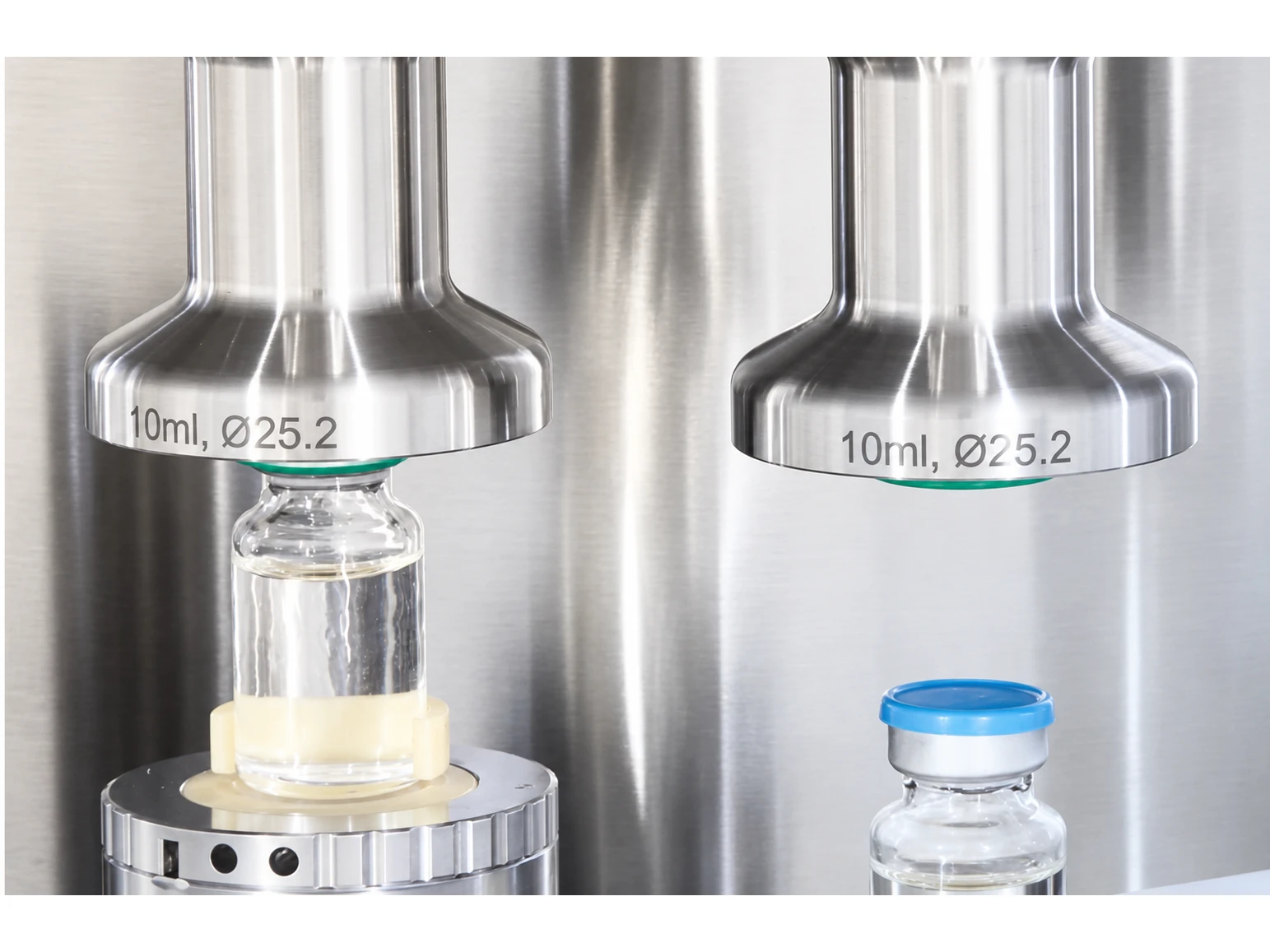
Two sealed containers held under leak-testing heads

Pressure & Vacuum Decay CCIT

Package-specific pressure-response testing

A controlled test applies a pressure difference, allows the system to stabilize and observes the response during a defined measurement period. In a vacuum chamber, leakage from a package can cause chamber pressure to rise; a pressurized test volume may instead lose pressure. Temperature change, fixture leakage, flexible-wall movement, outgassing or liquid in a defect can also affect the curve. The relevant signal must be distinguished using intact controls and characterized challenges.

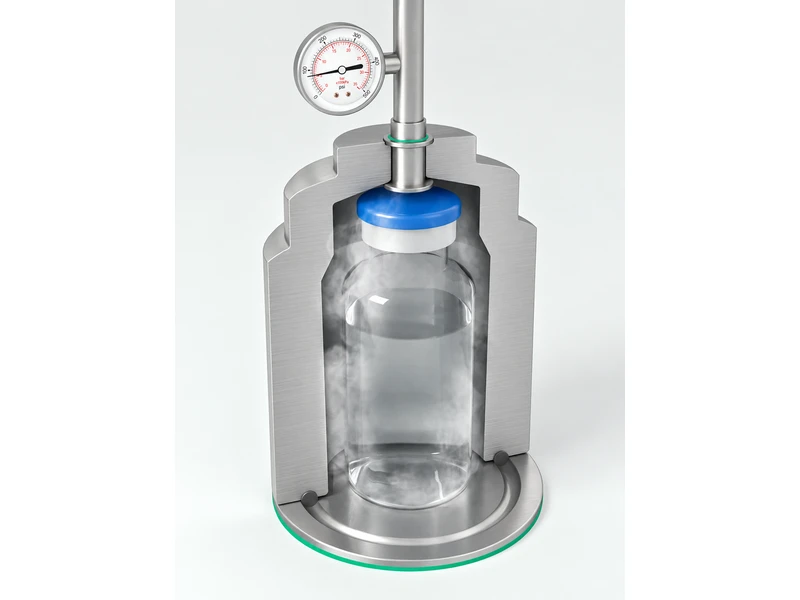
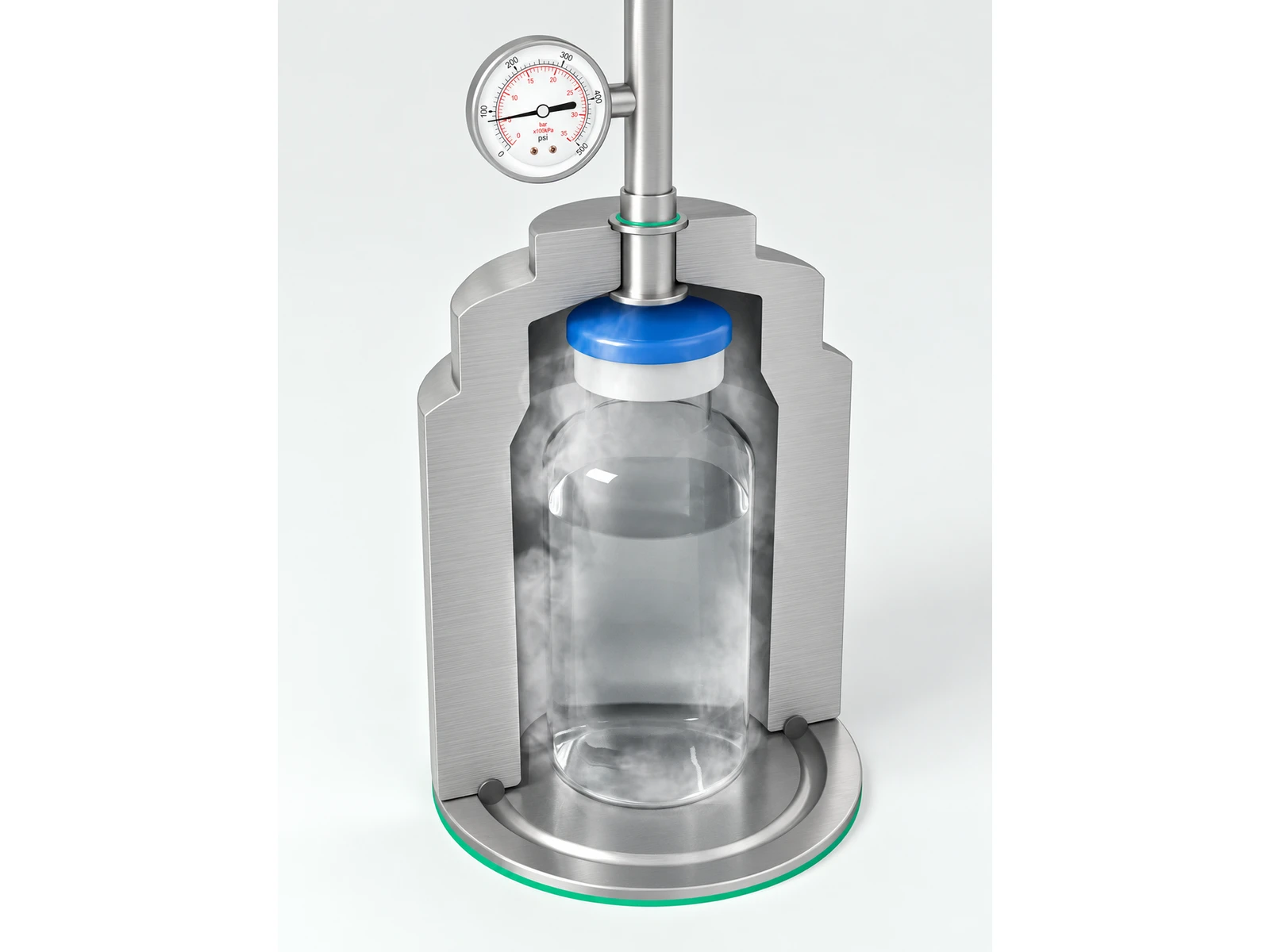
Container in a transparent test chamber with a pressure gauge

Stabilize before interpreting the signal

Separate normal package and chamber transients from the response of a characterized leak.

Stabilization

Control thermal, mechanical and gas-related transients

Pressure response

Apply the package-specific measurement and decision method

Process challenges

Method selection: compare candidate integrity methods against the package, product and relevant failure mechanism. A universal ranking by leak size or destructiveness is not justified.

Read details

Method selection: compare candidate integrity methods against the package, product and relevant failure mechanism. A universal ranking by leak size or destructiveness is not justified.

Measurement chain: fixture fit, chamber volume, valves and sensor behaviour influence the result as well as the selected vacuum or pressure level.

Sample response: temperature, wall deformation and product state can produce a transient signal without a leak.

Method evidence: justify suitability, challenge materials, decision criteria and repeatability for the actual application. Equipment selection alone does not establish regulatory compliance.

Lyophilized products: closure history, headspace and product condition may affect integrity testing. Evaluate the method with representative sealed presentations rather than assuming one waiting period or method suits all products.

Technical data & features

Chamber fit, package flexibility, temperature and settling time influence the baseline and the achievable test cycle.

Container in a transparent test chamber with a pressure gauge
Technical data & features · Parameter comparison
Measurement element Application-specific consideration
Method Select vacuum or pressure operation and the measured response for the package.
Applied pressure Assess the required differential together with package and product compatibility.
Detection criterion Establish using characterized challenges and intact variation, not a universal pore-size claim.
Test timing Define conditioning, stabilization and measurement periods from the actual response.
Working rate Include loading, equilibration, measurement, recovery and reject handling.
Package geometry Match fixtures to rigid or flexible walls and the relevant closure regions.
Product state Account for liquid wetting, headspace, outgassing and temperature behaviour.
Test chamber Minimize uncontrolled leakage and assess the volume and fixture fit.
Pressure measurement Verify the sensing chain and distinguish resolution from demonstrated method performance.
Method acceptance Retain suitability and validation evidence for the product and package.
Records Link recipe, pressure response, result and sample disposition as configured.
Test phase, purpose and evidence Load and seal: locate the package in its fixture and establish the chamber boundary. Condition: apply the selected vacuum or pressure while monitoring the system response. Stabilize: allow thermal, mechanical and gas-related transients to reach the defined condition. Measure: record the pressure-time response over the approved observation period. Decide: compare the response with the application-specific criterion and preserve the result.

Recover and unload: return the system to a safe condition and track the package to its assigned destination.

How it works

How-To

How is the stabilization period established?

Observe intact and challenged packages across the expected temperature and handling range. Define when normal chamber and package transients are sufficiently controlled for the measurement period to begin.

Why can a flexible container need special support?

Wall movement changes the test volume and pressure response. A suitable fixture may constrain or reproducibly support the package, but it must not seal over or mask the defect region being tested.

How can liquid affect a leak challenge?

Liquid may wet or block a pathway, and vacuum exposure may change evaporation or gas release. Use representative fill and conditioning and characterize the challenge under the intended test conditions.

What must be reviewed when changing container format?

Review chamber fit, dead volume, closure, wall compliance, product and timing. A stored recipe does not by itself demonstrate that the new format meets the same decision criterion.

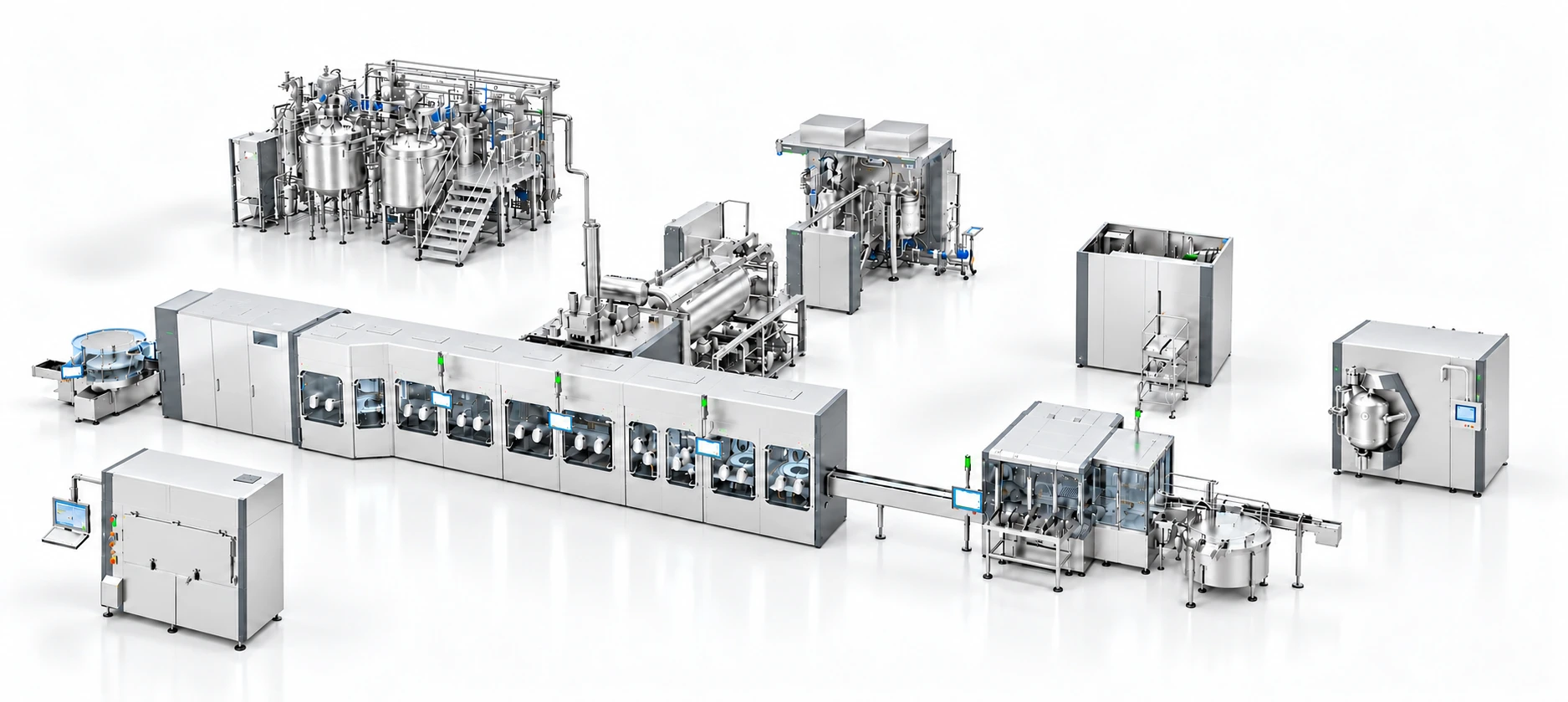
ADC · vial fill–finish operations. Explore vial preparation, filling, dryer transfer and freeze drying, with closing and parallel support equipment.

Production line · Equipment context

ADC · vial fill–finish operations

Explore the process areas on the production line associated with this equipment.

Skip tour
Production layout 10 equipment areas · Scroll to explore

Explore vial preparation, filling, dryer transfer and freeze drying, with closing and parallel support equipment.

Related production lines: Antibody-Drug Conjugate Manufacturing & Fill-Finish · GLP-1 Filling & Drug-Delivery Equipment · Plasma-Derived Product Preparation & Fill-Finish

Line integration

Closed package from the relevant sealing operation

Defined conditioning and test fixture

Integrity decision with physical sample tracking

Selected downstream inspection or packaging route

Support throughout your project and production

Define the equipment scope

Chamber fit, package flexibility, temperature and settling time influence the baseline and the achievable test cycle.

Learn more

Agree the acceptance test

Agree a reference leak and an intact control with the test team before defining acceptance limits.

Learn more

Prepare for operation

Identify the contact parts and format tooling for Pressure & Vacuum Decay CCIT. Agree access for cleaning, the spares to hold and the operating records the site will need.

Learn more

Knowledge hub

2 resources

Frequently asked questions

Does vacuum decay always mean that pressure falls during measurement?

No. In an evacuated chamber, gas entering through a package leak can cause chamber pressure to rise. State the actual test architecture and measured response.

Is the test non-destructive for every package?

No universal claim is appropriate. The pressure differential and exposure can affect flexible packaging or sensitive products. Demonstrate compatibility for the intended application.

Can one threshold be used for every fill volume?

Not automatically. Headspace, product state, wall behaviour and chamber fit can change the signal. Evaluate the relevant conditions before sharing a criterion.

Can a calibrated leak replace all package challenges?

A reference leak helps verify part of the measurement system, but package defects can involve different geometry, wetting and material behaviour. Use a justified combination of references and representative packages.

Does the system automatically meet all CCIT regulations?

No. Suitability and the complete validation and record strategy must be assessed for the actual product, equipment configuration and applicable requirements.

Contact

For a configuration review, include container drawing, product-contact materials, intended dose, closure format, batch size.

Discuss your project
Container in a transparent test chamber with a pressure gauge