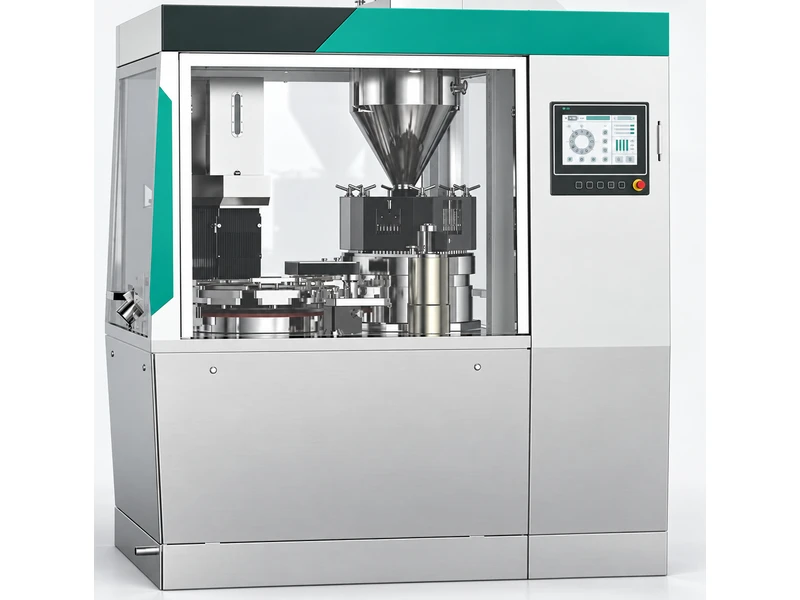
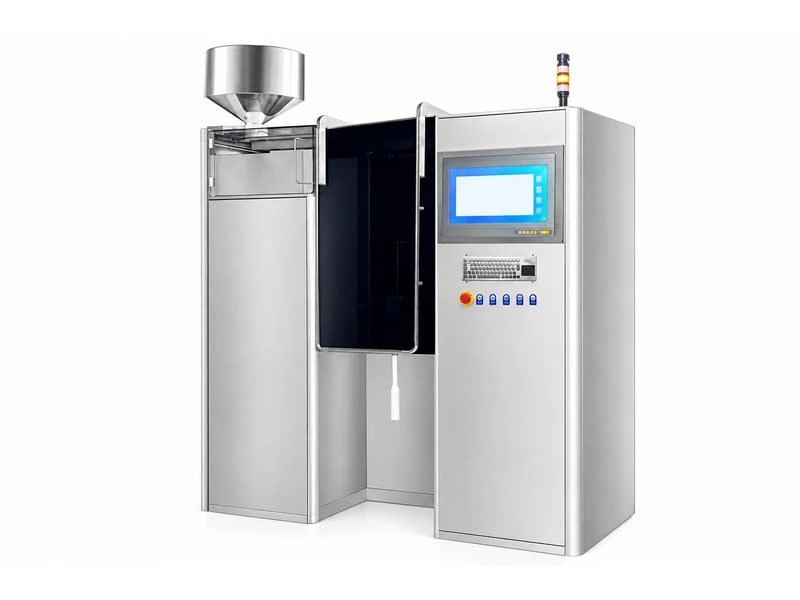
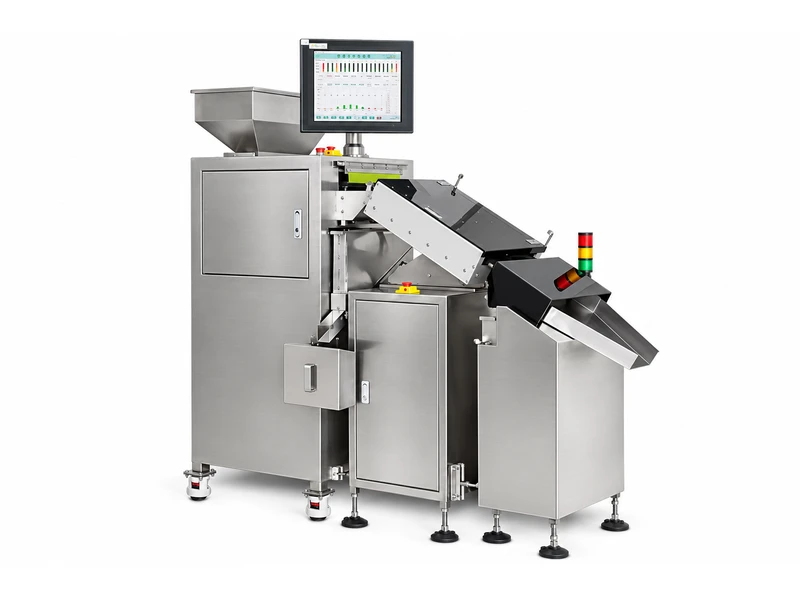
Solid-dose bottle filling
Product feeding
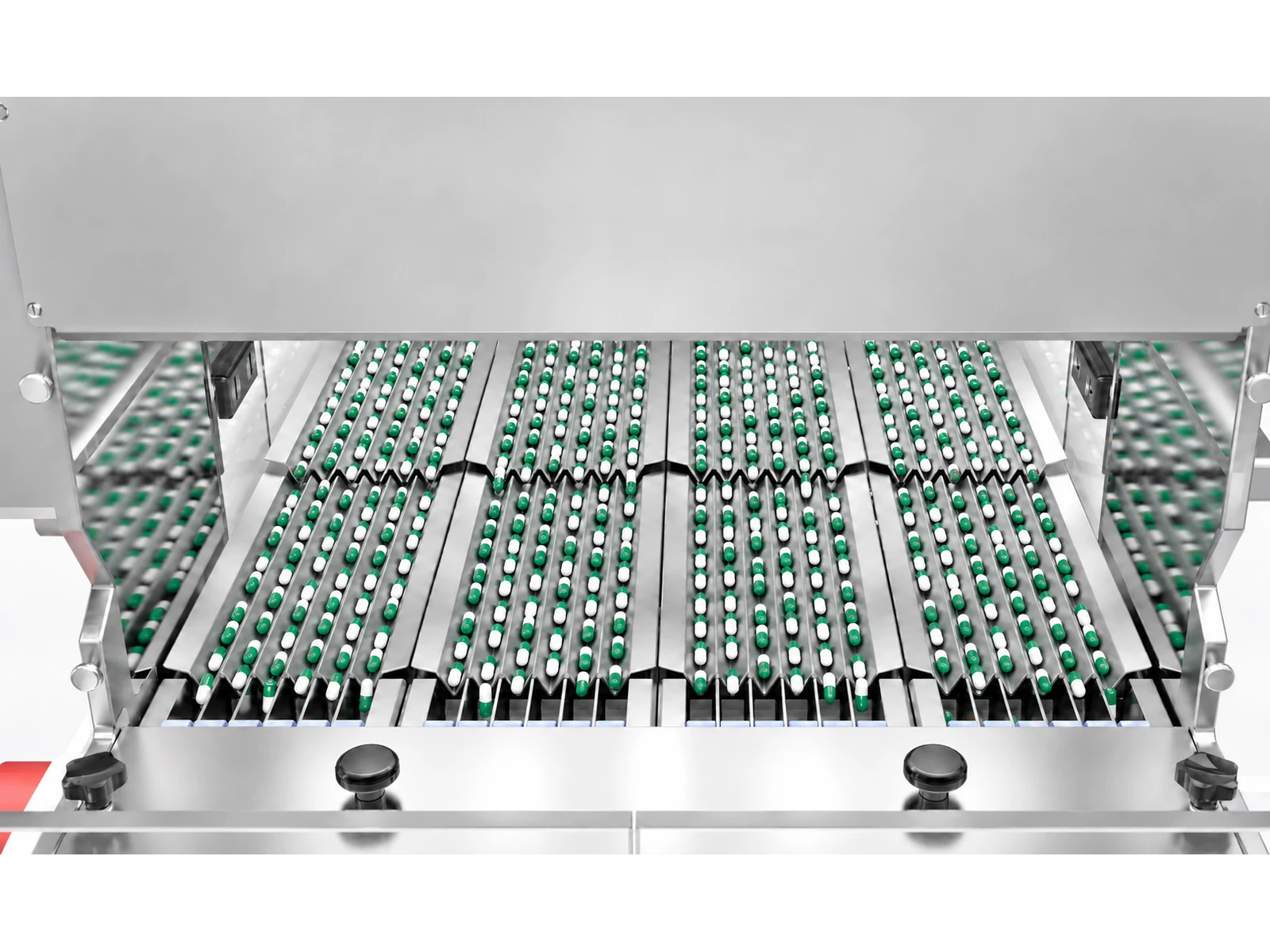
Distribute tablets or capsules into separate lanes so overlapping units can be resolved.
Explore technology
Process expertise. Chinese manufacturing. Global perspective.

Equipment & technology
Count tablets, capsules or compatible softgels into the selected bottle, with visual inspection where included. When inspection precedes counting, rejected pieces must leave before the accepted batch is released into its bottle.
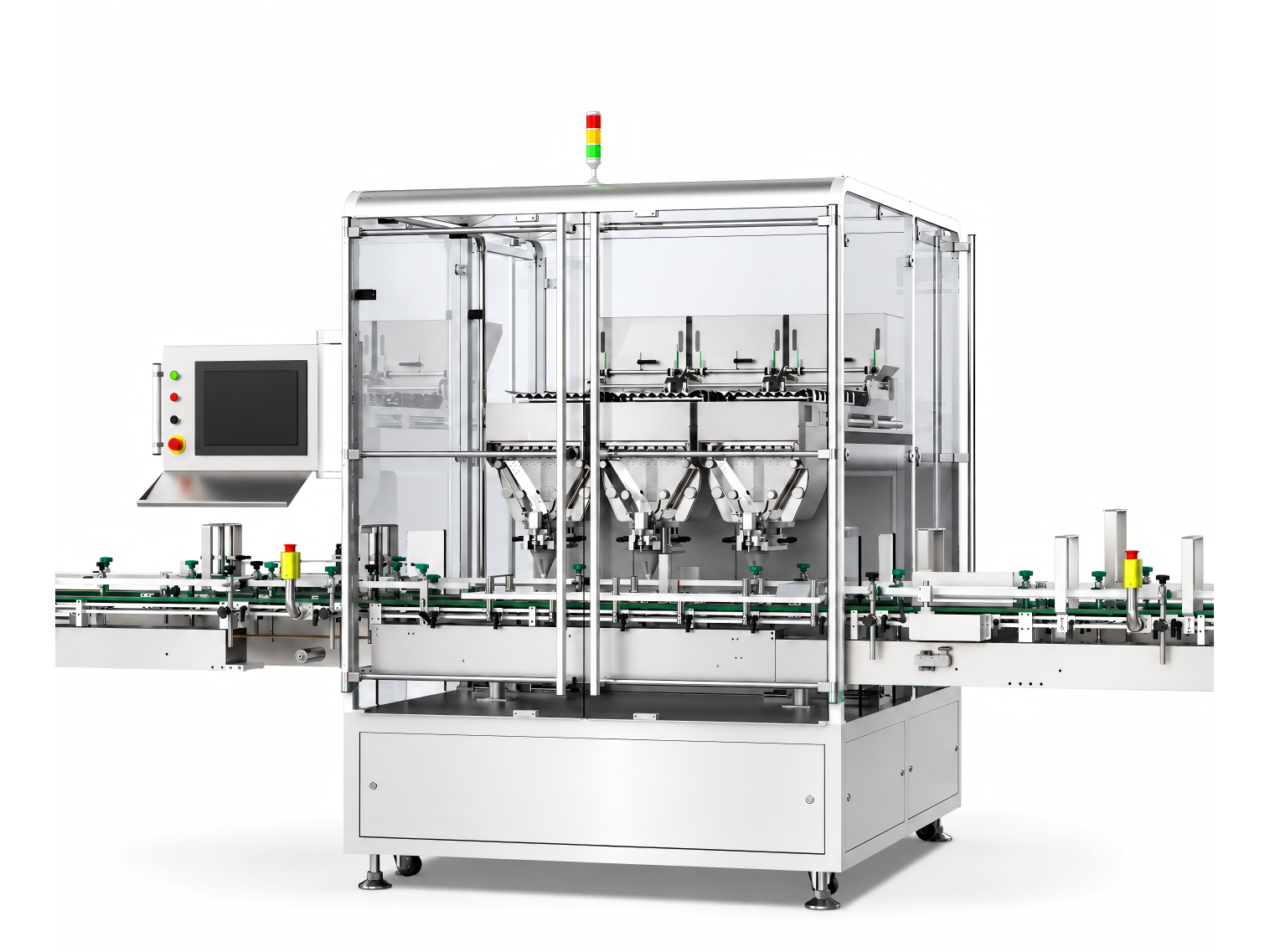
Separated tablets, capsules or softgels pass through the selected inspection views before the accepted quantity is discharged into a bottle. Overlap, dust and reflective surfaces affect the optical presentation; bottle-neck clearance affects the final transfer.
Inspection, counting and bottle tracking connect three different decisions: which units are acceptable, how many have been collected, and which bottle received them. A rejected unit or interrupted discharge must remain accounted for before the next bottle advances.
Process at a glance
Inspection rate and finished-bottle output describe different parts of the process. Product presentation and count per bottle connect them.
Inspect
Present separated products to the selected optical views
Count
Release the accepted quantity into the bottle
—
Product formats
—
Process options
Solid-dose bottle filling
Distribute tablets or capsules into separate lanes so overlapping units can be resolved.
Explore technology Solid-dose bottle filling
Inspect the presented product against the agreed defect sample set and separate rejects before counting.
Explore technology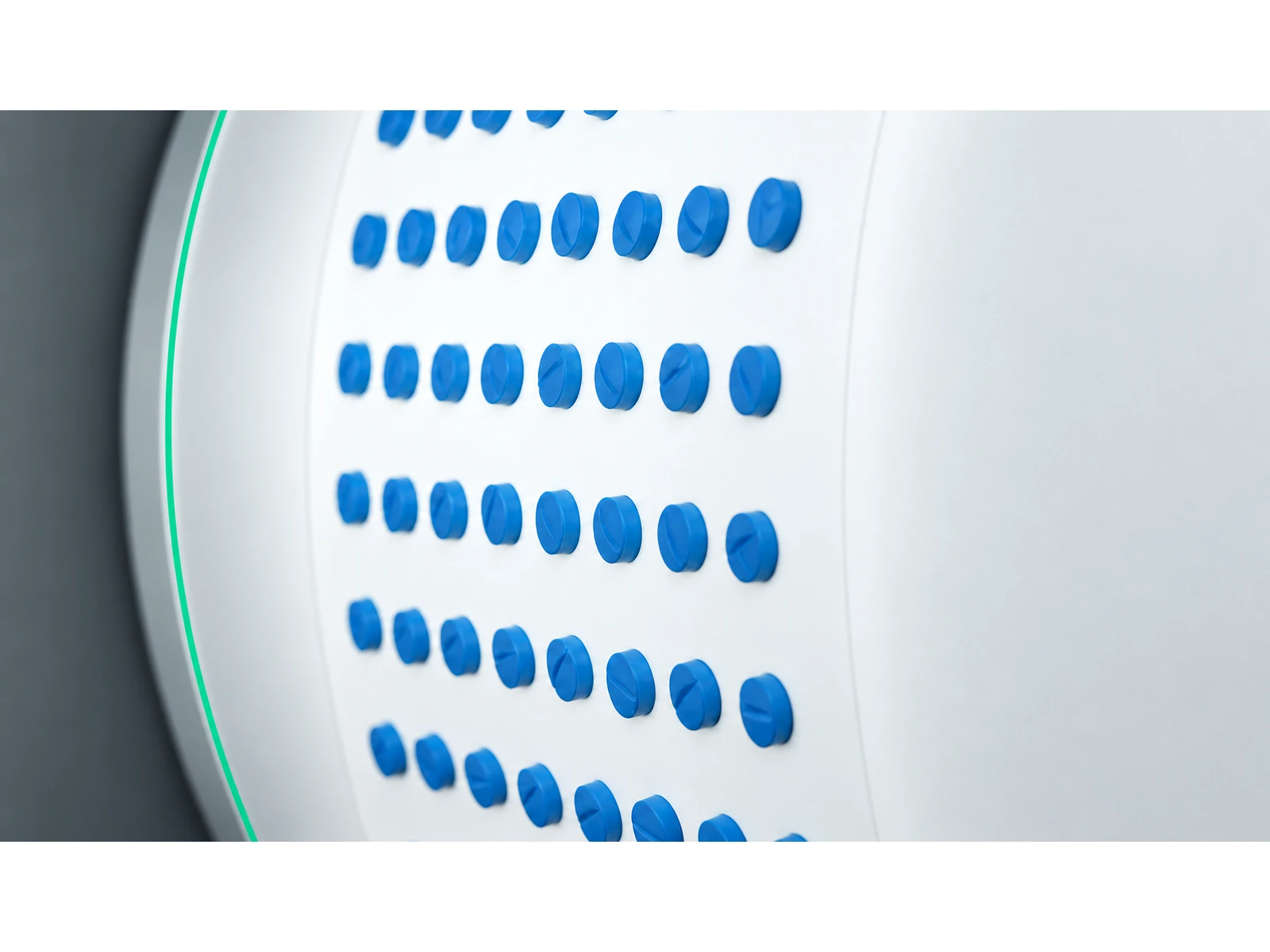
Solid-dose bottle filling
Synchronise the accepted count with the bottle position and the opening of the discharge gate.
Explore technology Solid-dose bottle filling
Confirm the count state before the bottle leaves filling for closure and labelling.
Explore technology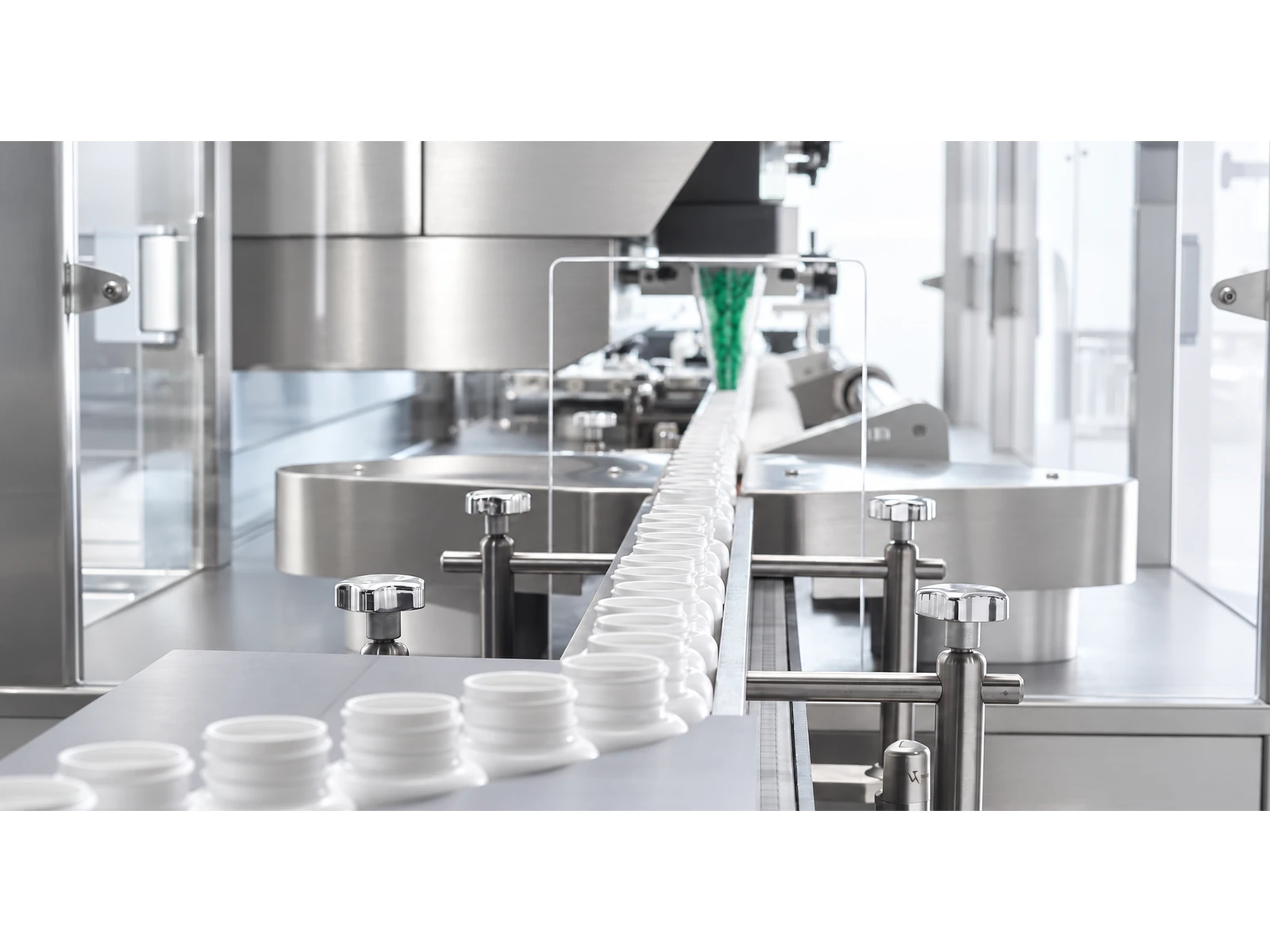
Accepted counting depends on separated product presentation and a defined discharge cycle. Overlaps and interrupted fills are evaluated as part of the counting sequence.
Visible-defect inspection and unit counting answer different questions. The selected views address the agreed defect set before accepted products enter the bottle.
An integrated station reduces a transfer boundary, while separate stations offer a different layout and access arrangement. Their suitability depends on product handling and control interfaces.
A desiccant is part of the approved package specification. Its type, quantity and presence check must match the product and bottle.
Cap application, seal formation and closure inspection are distinct tasks. Their acceptance criteria are set for the actual cap and bottle system.
Changeover includes product clearance and counting setup as well as bottle and closure tooling. The complete verified change defines its duration.
Upstream supply and downstream acceptance affect the usable bottle rate. Buffering and stop signals keep incomplete bottles separate from released packs.
| Industry problem | Counting and bottle-filling design considerations |
|---|---|
| Double counting / miscounts at high speed | Challenge overlaps and interruptions using the actual product. Verify that the accepted counter and discharge gate assign the intended quantity to one identified bottle. |
| Defects reach the bottle | Define the visible-defect set, viewing coverage and acceptance criteria with samples. Demonstrate rejection and examine both accepted and rejected streams. |
| Inspection + counting = double handling | Compare a combined station with separate stations on transfer damage, access, buffering and reject reconciliation; the appropriate arrangement depends on the product and available line space. |
| Missing desiccant | Confirm component feeding and the agreed presence or quantity check, then demonstrate how a failed check identifies and rejects the affected bottle. |
| Inconsistent closure quality | Specify the closure process and separate checks for cap position, applied torque and seal condition where applicable. |
| Long changeover times | Time the agreed changeover from the last acceptable old-format bottle to the first verified new-format bottle, including clearance, cleaning and setup checks. |
| Line integration gaps | Define the line boundary, control handshake and ownership of every incomplete or rejected bottle before selecting optional stations. |
Product shape, dust, bottle opening and count per bottle affect feeding and lane selection.
Product separation gives the inspection and counting stages a defined viewing window. Lane geometry and transfer timing are developed around shape, friability and surface appearance.
Inspection throughput describes individual units; finished-bottle output also depends on units per bottle, buffering and discharge time. Increasing count per bottle therefore changes the balance of the line.
Hard tablets, hard capsules and softgels behave differently in feeding. The handling path must control overlap without damaging edges, shells or surfaces.
Bottle guides hold the opening beneath the discharge. Neck diameter, bottle stability and retained material at the outlet determine how the counted batch enters the pack.
A desiccant feeder, where selected, places the specified moisture-control component into the package. Its presence check is separate from product counting.
Capping acts on the selected bottle and closure. Cap-presence, application torque and induction-seal checks address different conditions and are configured separately.
Product lanes, optical recipes, bottle guides and closure tooling may all change with format. First-off count and reject challenges establish the correct relationship between the new settings and the pack.
Select checkweighing, component feeding, label verification or code handling where the pack requires them. A gross bottle-weight check complements count controls but is not a direct measurement of every unit inside.
Plan access to feed lanes, camera windows, discharge gates and product-contact parts. Establish cleaning and reassembly checks, inspect wear at handling and rejection points, and challenge count recovery after a stop during acceptance and subsequent maintenance.

Observe the product entering separated lanes and the transition from inspection to accepted counting. Introduce the agreed defect samples and verify their removal before the bottle count is completed. At discharge, check that the bottle is present, the gate releases the accepted batch and the count resets for the next bottle.
Interrupt a fill at several points in the counting and discharge sequence. Check how incomplete bottles are held or removed and how loose product is reconciled before restart. Challenge the missing-unit and reject cases in the acceptance plan; a successful nominal run alone does not verify recovery.
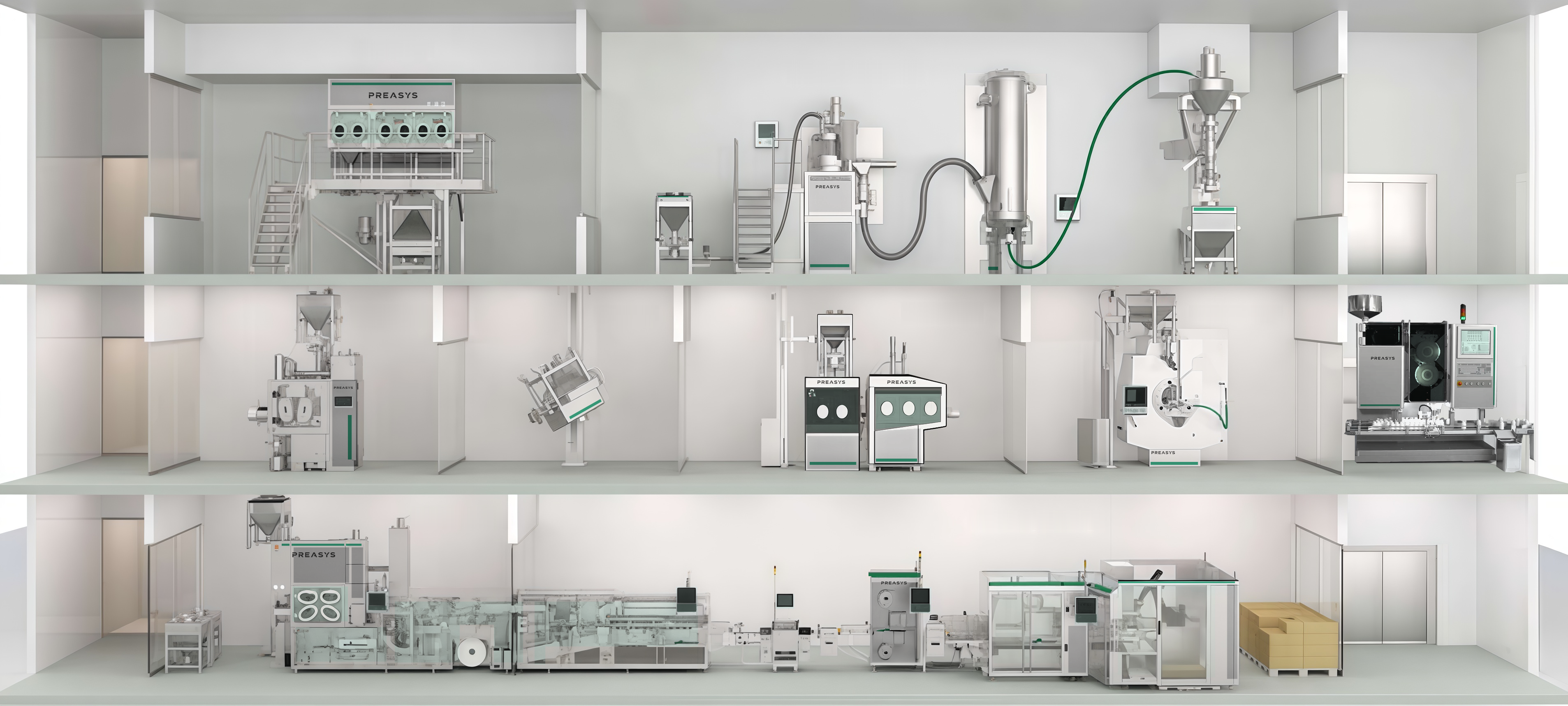
Oral solid dosage · Integrated production
Discover the equipment behind your solid dosage process.
Route selection. Wet and dry granulation are alternatives. Select tablet compression or capsule filling for the dosage form; include coating when required.
Illustrated equipment and packaging options show process relationships. The facility layout and equipment configuration are defined for each project.
Agree the sequence from product presentation to inspection, rejected-product separation, accepted counting and bottle discharge. Define how the control handles an empty bottle position, a reject or a stopped fill.
Place desiccant or other specified protective components at the agreed point. Confirm bottle identification and reject ownership across any weighing or component-presence check.
Transfer the filled bottle to the selected capper and seal process. Establish the discharge status of an interrupted or incomplete bottle before it can reach labelling or packing.
Agree conveyor height, accumulation, ready/stop signals and batch reconciliation between filling, labelling and downstream cartoning. Define the data exchange separately from the mechanical handoff.
Product shape, dust, bottle opening and count per bottle affect feeding and lane selection.
Learn moreTrack rejected units separately from the accepted count and verify what happens after an interrupted fill.
Learn moreIdentify the contact parts and format tooling for Bottle Filling. Agree access for cleaning, the spares to hold and the operating records the site will need.
Learn moreShare count per bottle, tablet or capsule dimensions and bottle neck.
Request product information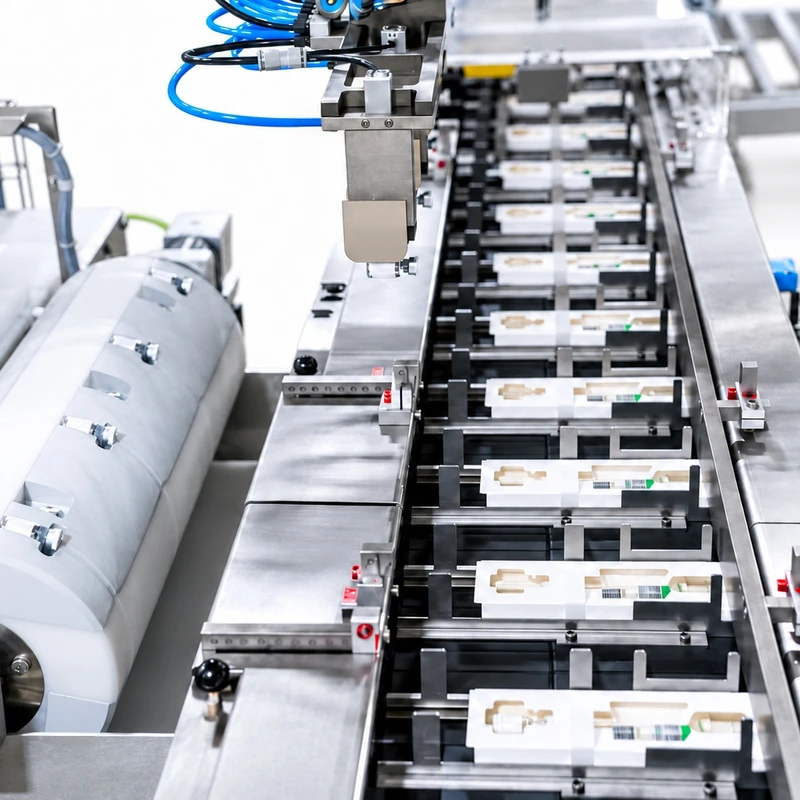
2 resources
No. Inspection rate counts individual products. Finished-bottle output also depends on products per bottle, discharge time, bottle handling, rejection and downstream availability. Specify both quantities for the proposed format.
Provide samples and a defined defect set for a viewing and feeding trial. Optical behaviour, orientation and surface condition determine the required setup; transparent-product compatibility should be confirmed for the selected configuration.
The line needs a defined incomplete-bottle state and recovery procedure. Agree whether that bottle is held, removed or otherwise reconciled, and demonstrate that restart cannot mix the unfinished count with the next bottle.
A gross-weight check can identify some discrepancies, but bottle and product-weight variation limit what it establishes. Use it alongside the specified accepted-unit counting and discharge controls, with agreed reject limits.
Send product and defect samples, bottle and cap drawings, count per bottle and the required finished-bottle output. Include cleaning constraints and the checks needed before a bottle can be released.
Discuss your project →