Define the equipment scope
Use the intended tooling and compression profile when comparing formulations or investigating sticking and capping.
Learn moreProcess expertise. Chinese manufacturing. Global perspective.

Equipment & technology
A tablet press simulator applies a defined punch movement or force history to a small powder sample. It helps relate compaction behaviour to the tablet that results, supporting formulation comparison and investigation of defects before a production press trial.
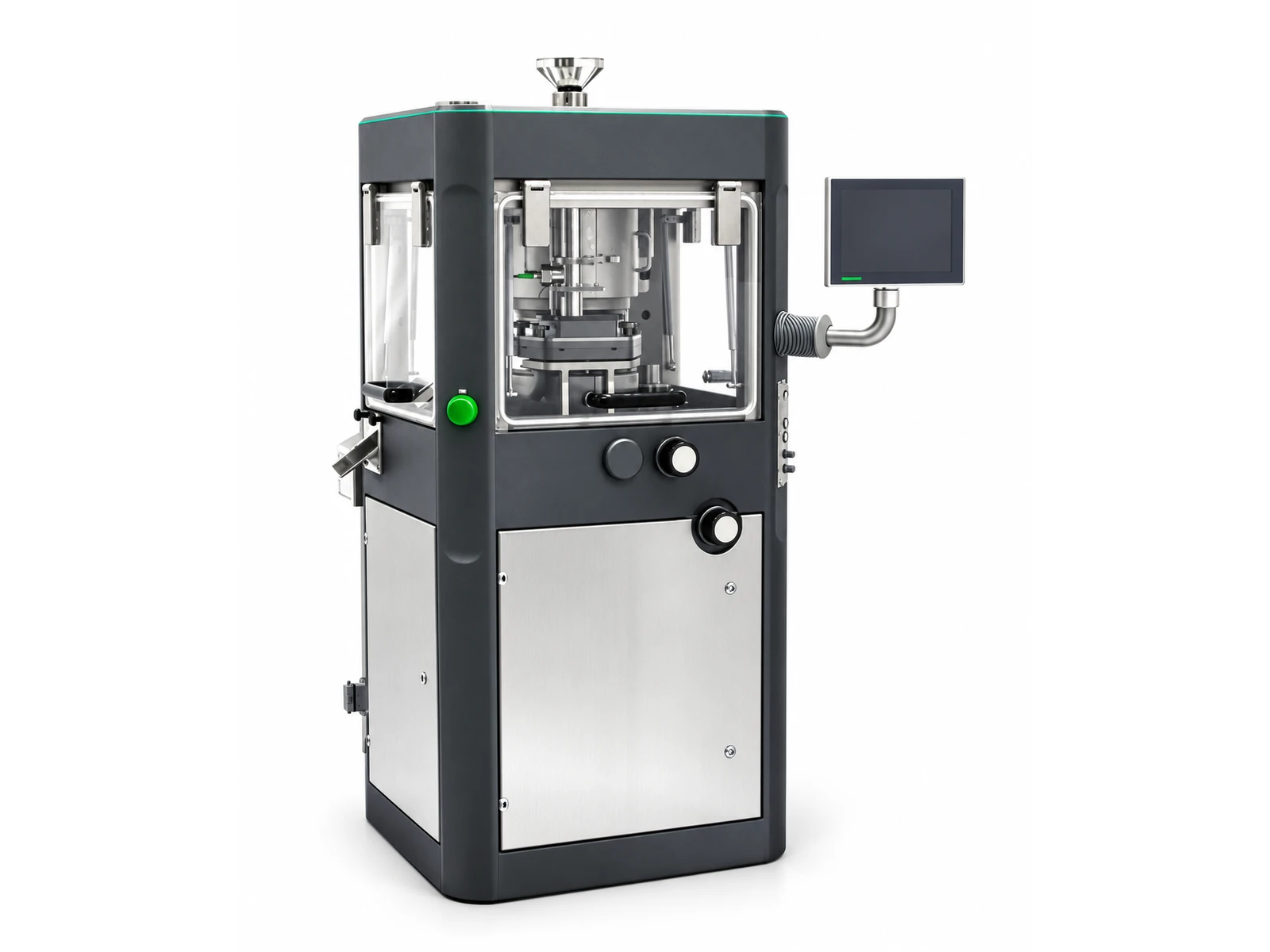
During compaction, the punches load and unload the powder in the die before the compact is ejected. The force-displacement history shows how the material responds under that selected motion; the finished tablet provides separate evidence about dimensions, strength and visible defects. Neither record alone describes the complete result.
Example project input
Hold blend and tooling constant to compare force–displacement traces and the resulting compacts. This is a development trial, not rotary-press output.
3
Compression profiles
8
Compacts per profile
24
Compacts for comparison
—
Process options
Capping, sticking or a change in strength may arise from the formulation, tooling or loading history. Controlled comparisons keep those influences distinct. A simulator reproduces selected press conditions; it does not reproduce continuous turret feeding, every transfer or an extended production run.
Tooling geometry and fill mass define the compact being formed. Precompression, main compression, dwell and unloading shape its mechanical history, while ejection adds a further interaction with the die. Record the supported sensor traces alongside the measured tablets so a changed result can be traced to the intended experiment.

Use the same intended tooling, fill basis and compaction profile for the comparison. Relate measured tablet properties to the supported force and displacement record, keeping sample identity and test conditions traceable.
Record when the defect appears and inspect the compact and tooling surfaces. Compare loading, unloading and ejection observations, then change one defined factor to distinguish material behaviour from a tooling or profile effect.
Clean the contact surfaces and inspect punches and die for deposits or damage. Verify the required measurement and setup references according to the selected instrument before collecting a new comparison set.
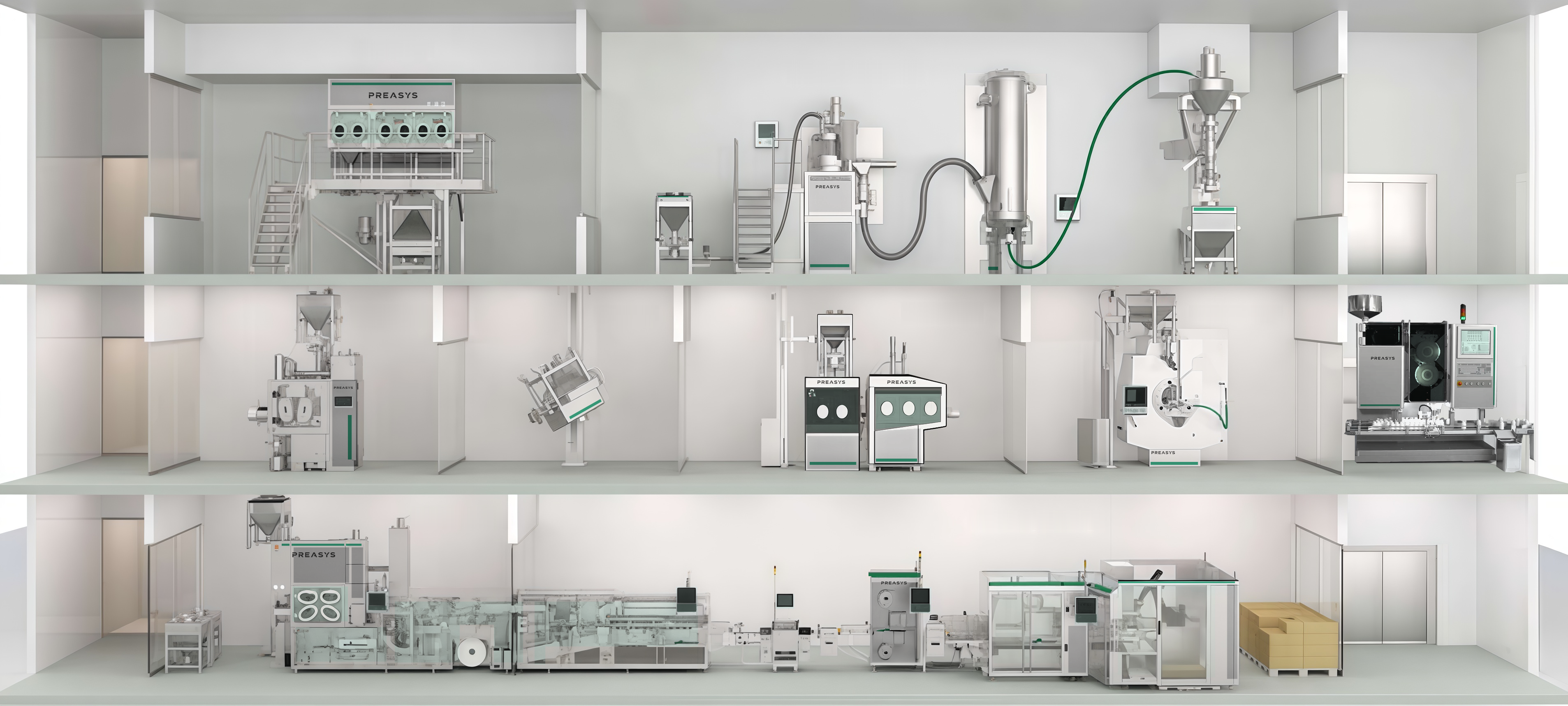
Oral solid dosage · Integrated production
Discover the equipment behind your solid dosage process.
Route selection. Wet and dry granulation are alternatives. Select tablet compression or capsule filling for the dosage form; include coating when required.
Illustrated equipment and packaging options show process relationships. The facility layout and equipment configuration are defined for each project.
Use the simulator record to guide a production-press trial: formulation and tooling identity, applied profile, ejection observations and tablet measurements stay together. The receiving rotary press must establish sustained feeding, actual operating rate and downstream handling on its own configuration.
Use the intended tooling and compression profile when comparing formulations or investigating sticking and capping.
Learn moreCompare the force-displacement record and resulting tablet properties with the intended production press.
Learn moreIdentify the contact parts and format tooling for Tablet Press Simulator (Compaction). Agree access for cleaning, the spares to hold and the operating records the site will need.
Learn moreShare powder blend, tooling format and compression study requirements.
Request product information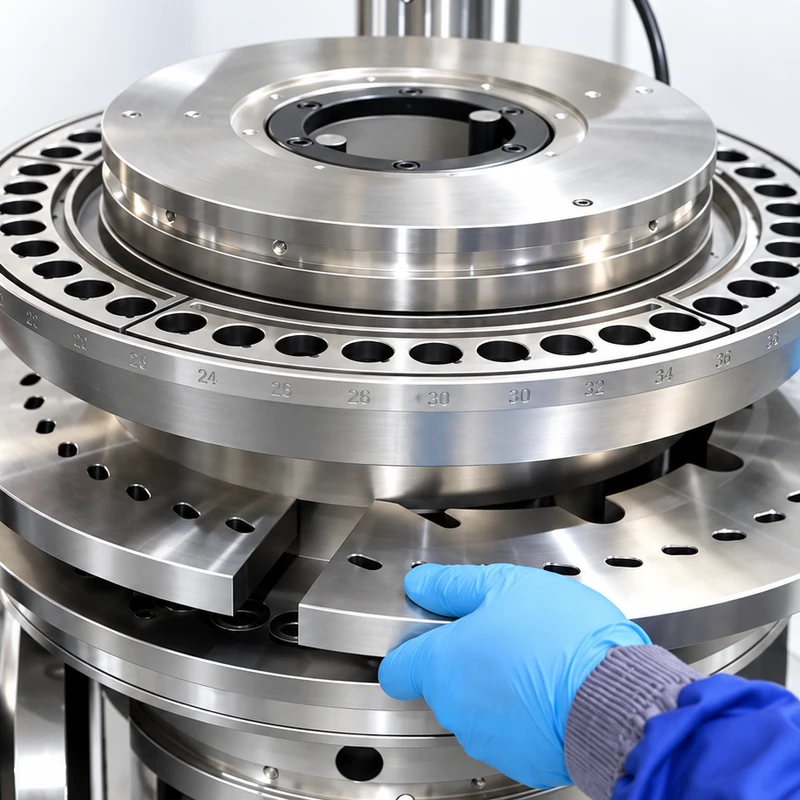
Brochure
Tablet Press Simulator (Compaction)
Available by enquiry
Request product informationCase
Tablet Press Simulator (Compaction)
Available by enquiry
Discuss project references2 resources
No. The simulator studies a defined compaction condition with limited material. Sustained feeding and working output belong to the production-press trial.
Formulation comparisons hold the chosen test conditions consistent so materials can be compared. Transfer trials reproduce relevant features of the intended press cycle and tooling; agreement in one test condition does not guarantee equivalent production behaviour.
No universal equivalence is assumed. The supported motion and force range and the selected profile must be compared with the target press conditions.
Share the formulation characteristics, target tablet geometry, tooling drawing and press profile you want to reproduce.
Discuss a compaction trial