Skip to content

Process expertise. Chinese manufacturing. Global perspective.

PREASYS

Equipment & technology

Coating Thickness Measurement

Coating-layer measurement examines the film applied to a tablet rather than the total tablet thickness. Terahertz pulsed imaging is one candidate method: reflections from suitable material interfaces can be used to estimate layer thickness and examine variation across measured tablets.

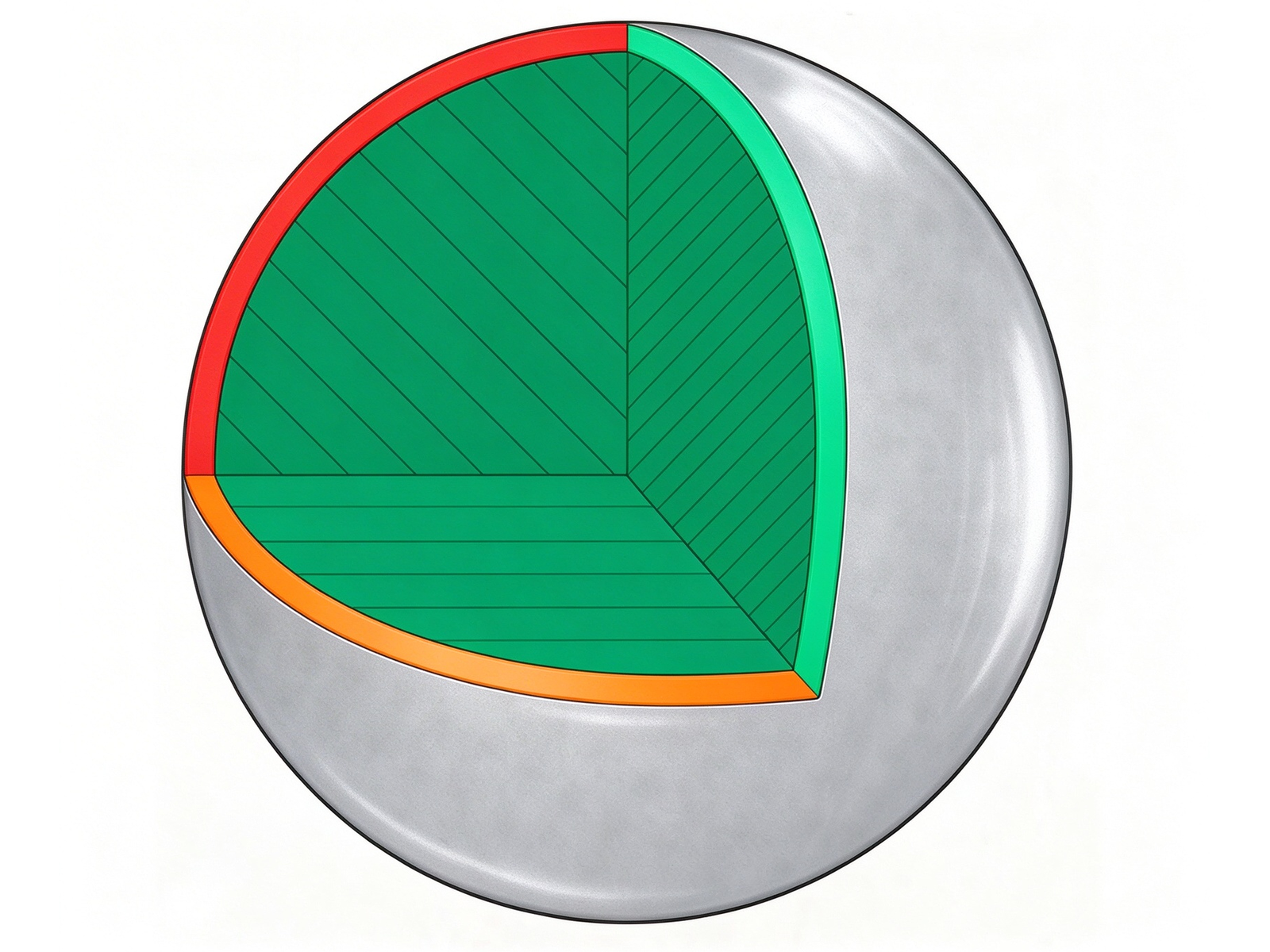
Cross-section of a pellet showing the core and surrounding layers
Process context · Cross-section of a pellet showing the core and surrounding layers

Coating Thickness Measurement

Resolve the coating layer, not the whole tablet

Terahertz interface measurement for suitable coatings

A terahertz pulse can produce separate reflections at the coating surface and coating-core interface. The time separation, together with the relevant optical properties, supports a thickness estimate. Absorption, weak interface contrast, thin or overlapping layers and curved surfaces can limit the usable signal. Reference measurements and representative samples are therefore essential when evaluating a new formulation.

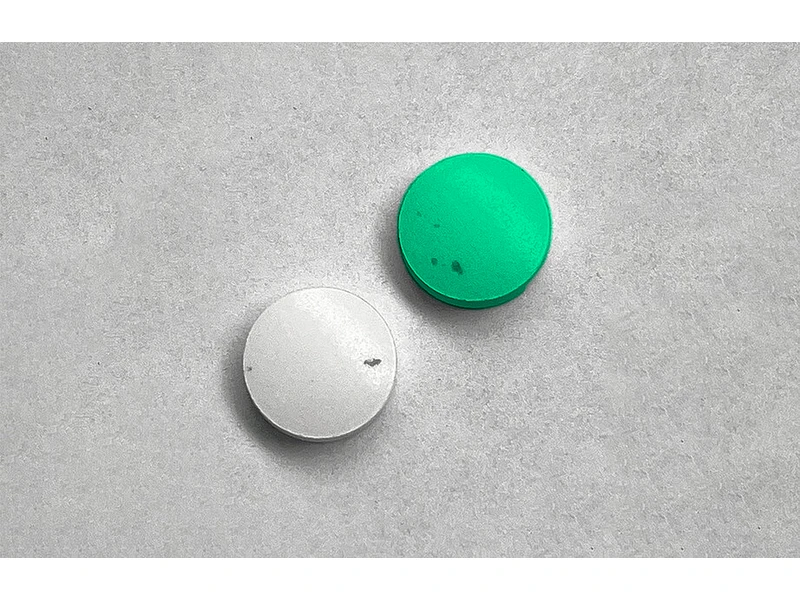
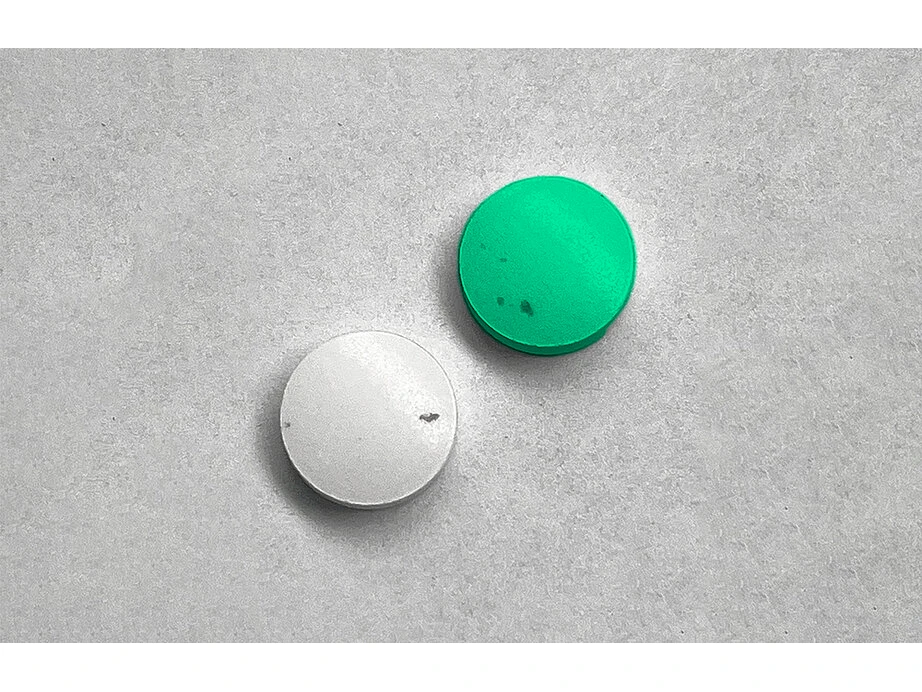
Two round tablets with different surface finishes
Process context · Two round tablets with different surface finishes

Separate layer thickness from tablet dimensions

Evaluate the coating interface signal and its reference basis.

Film layer

Measure the applied coating at suitable observed positions

Process challenges

Coating-thickness variation must be interpreted with the sampled locations and the product’s coating requirements.

Read details

Layer variation: a mean coating weight gain can conceal differences between tablets or positions. Thickness measurements describe the locations actually sampled.

Sampling: at-line mapping and an in-line probe observe different populations and orientations. The sampling plan determines which variability can be seen.

Process interpretation: a changing thickness trend can prompt investigation, but the sensor does not uniquely diagnose a blocked gun or other mechanical fault.

Non-contact assessment: suitable signals can be collected without sectioning every tablet, while a reference method is still needed to establish interpretation.

Endpoint use: thickness can inform coating decisions after its relationship to the product requirement has been demonstrated.

Resolution: thin or closely spaced layers may not produce separable reflections. Suitability must be demonstrated for the actual film structure.

Technical data & features

Method suitability depends on coating composition, tablet shape and the distinction between surface and bulk measurements.

Two round tablets with different surface finishes

Method and installation choices

Measured population: document the valid measurements and rejected orientations rather than assuming every tablet is observed.

Installation: choose at-line mapping or a compatible probe position in the coater.

Signal suitability: evaluate coating absorption, interface contrast and tablet curvature.

Trend review: compare thickness distribution with spray, drying and mixing records before assigning a cause.

Reference basis: the thickness calculation depends on the appropriate optical properties and product-specific verification.

Layer separation: demonstrate that the interfaces of interest can be resolved.

Quality interpretation: relate thickness to the coating objective; release testing remains a distinct activity.

Method element Product-specific assessment
Measurement principle Time-separated terahertz reflections at suitable coating interfaces.
Sampling arrangement At-line mapping or an evaluated in-line probe position.
Measurement population Record valid readings, orientation exclusions and their sampling basis.
Layer suitability Demonstrate penetration, interface contrast and signal separation.
Reference information Verify the optical properties and compare with an appropriate reference measurement.
Process interpretation Correlate trends with process records; do not infer a unique fault from thickness alone.
Reported output Thickness estimates and distributions for the measured locations and accepted signals.

How it works

How can method suitability be checked before installation?

Measure representative tablets covering the intended layer range and compare results with an appropriate reference method. Inspect the signals for distinguishable interfaces instead of relying only on the reported thickness number.

How should an in-line trend be interpreted?

Review the sampled orientations, valid-reading rate and thickness distribution alongside spray and drying conditions. A trend may indicate a process change without identifying its cause.

How does a multilayer tablet change the measurement?

Each relevant interface must provide a resolvable signal with suitable optical information. Closely spaced or absorbing layers can prevent an independent thickness estimate for every layer.

Line integration

Coated tablets or an assessed in-line probe position → Signal collection from suitable orientations

→ Validated thickness estimates → Distribution and trend review → Coating-process investigation ↓

Measurement evidence → Product-specific coating decisions and the required independent quality tests

Support throughout your project and production

Define the equipment scope

Method suitability depends on coating composition, tablet shape and the distinction between surface and bulk measurements.

Learn more

Agree the acceptance test

Use reference samples and compare measurements across positions and batches before interpreting a trend.

Learn more

Prepare for operation

Identify the contact parts and format tooling for Coating Thickness Measurement. Agree access for cleaning, the spares to hold and the operating records the site will need.

Learn more

Knowledge hub

2 resources

Frequently asked questions

Does coating thickness prove dissolution performance?

No. Thickness can be one relevant attribute, but composition, porosity and film structure also affect release. Establish a product-specific correlation and retain the required dissolution testing.

Is this the same as a tablet thickness gauge?

No. A gauge measures the overall tablet dimension. Coating-layer measurement aims to distinguish the film from the underlying core.

Can terahertz measurement resolve every coating?

No. Material absorption, interface contrast, curvature and layer spacing affect suitability. Demonstrate the proposed method on representative tablets.

Is calibration or reference work unnecessary?

No universal claim is justified. The calculation and its uncertainty depend on appropriate optical information and product-specific verification against reference measurements.

Contact

Provide the layer materials, tablet geometry, expected thickness range and intended measurement location. Include reference samples and the quality question the measurement should answer.

Discuss your project →
Two round tablets with different surface finishes