Define the equipment scope
Fill rheology, ribbon thickness and die geometry determine which capsule shape and fill volume can be assessed.
Learn moreProcess expertise. Chinese manufacturing. Global perspective.

Equipment & technology
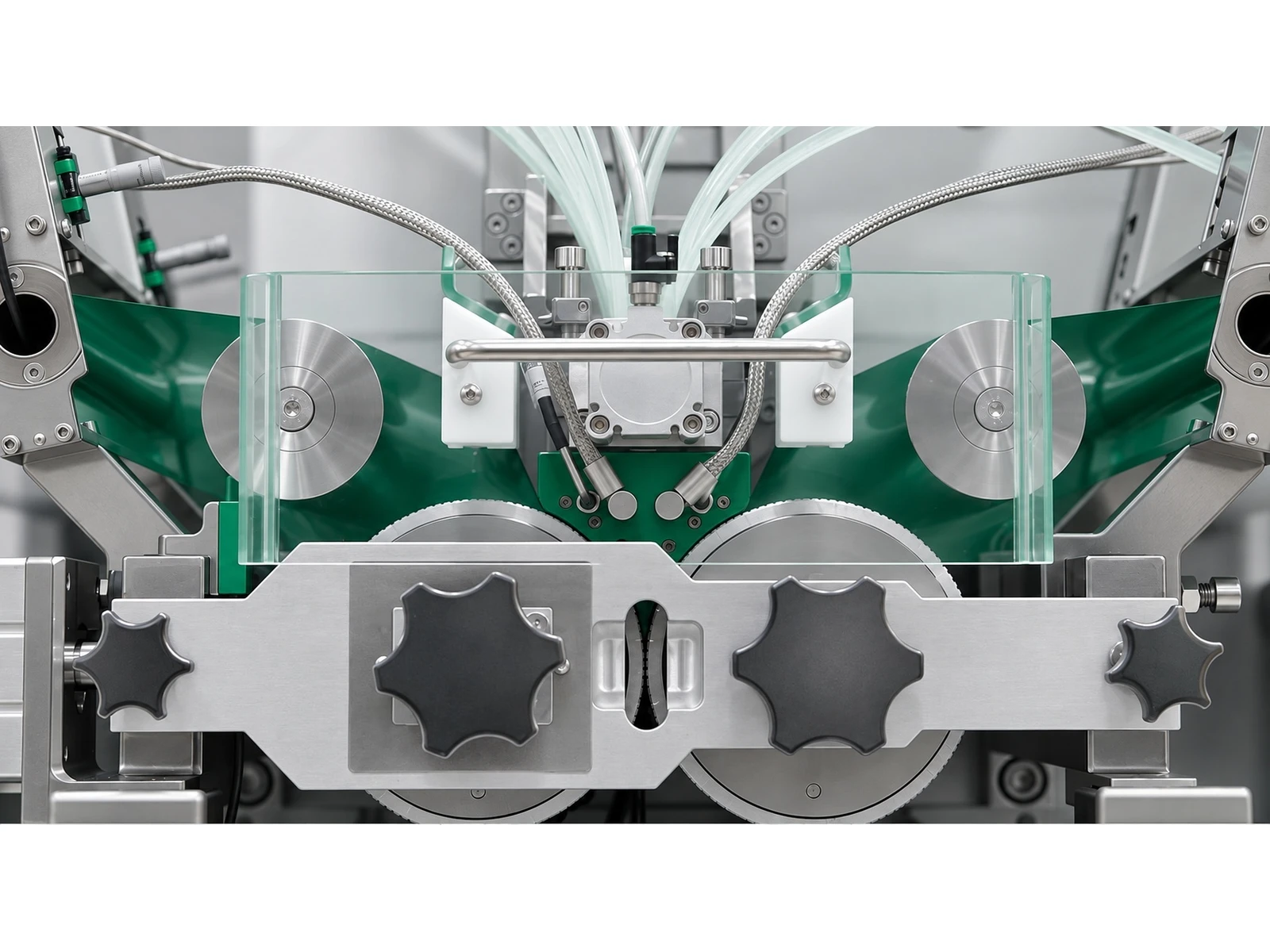
A rotary-die softgel encapsulator brings two shell ribbons around a metered fill, forming and closing the capsule before it enters drying.
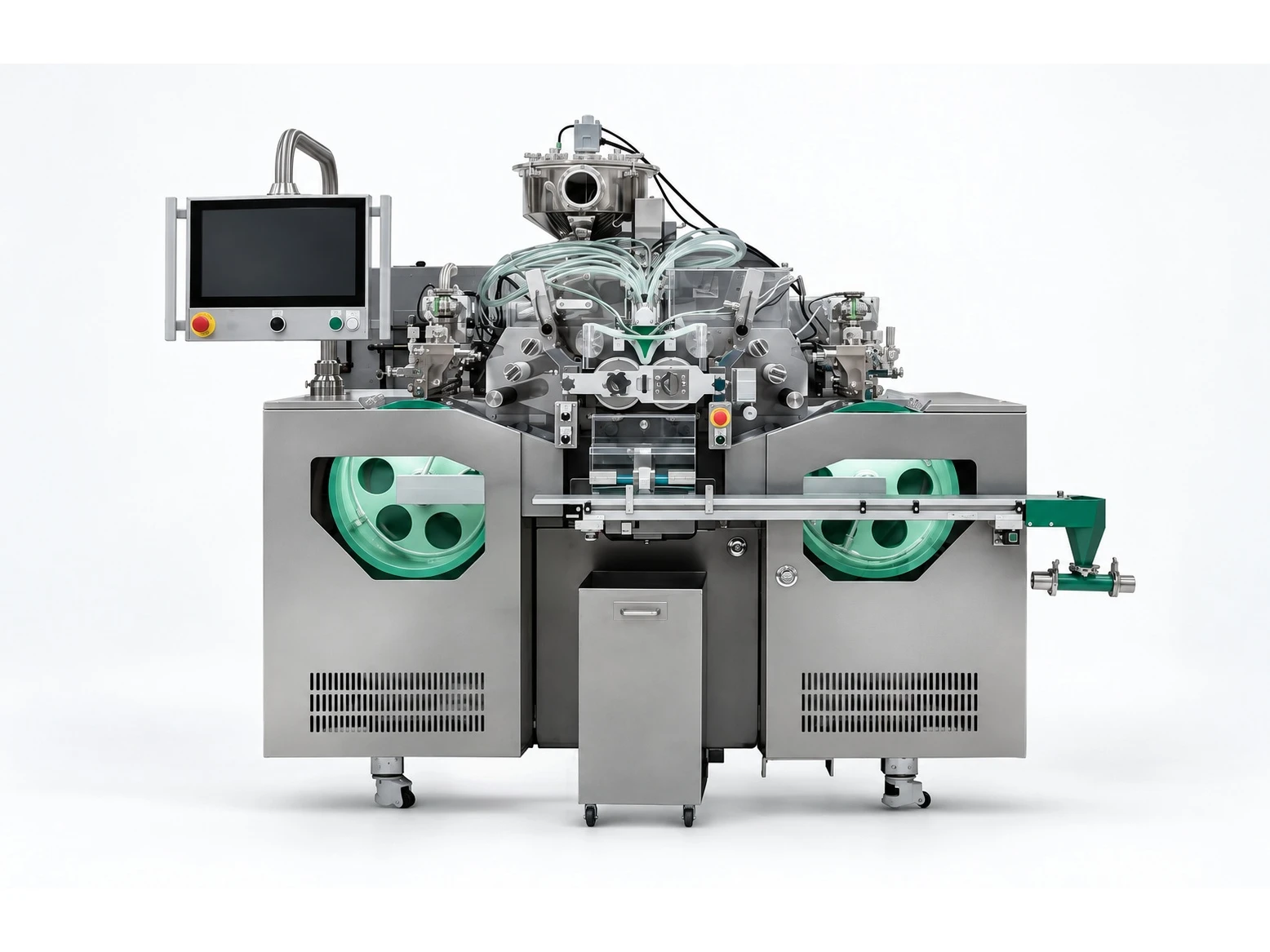
Coordinate the shell ribbon, fill delivery and die pocket
Prepared shell material forms two ribbons that converge at the die rolls. A dosing system delivers the fill as the pockets meet, and the dies form, seal and separate the wet capsules. Ribbon thickness and temperature, dosing timing and fill behaviour jointly influence the seam and capsule mass.
Process at a glance
Shell and fill formulation determine the operating window; die dimensions alone do not establish accepted output.
Ribbon
Form two shell layers at controlled conditions
Fill
Time the dose to the closing die pockets
Seam
Assess the closure before and after drying
—
Process options
The process must support both shell formation and the fill formulation. An oil, suspension or paste can change dosing and seam conditions; compatibility is established using the intended shell system and subsequent drying route.
The die pocket establishes capsule geometry, while the dosing stroke and its timing determine how fill enters the closing ribbons. Premature filling or unstable ribbon delivery can disturb the seam even when average fill mass appears correct.
Wet capsules continue to change shape and moisture after encapsulation. Seam inspection, leak assessment and fill-mass checks therefore use samples at defined points before and after drying. Die surfaces, wedge interfaces and ribbon paths need residue and wear checks during maintenance.
The comparisons below describe engineering variables rather than verified model ratings. Die tooling and the shell/fill combination determine the useful operating condition.
| Die consideration | Effect on the capsule |
|---|---|
| Pocket geometry | Defines the intended capsule shape and separation edge. |
| Pocket volume | Must accommodate the fill and the forming shell. |
| Pocket arrangement | Affects the available fill timing and ribbon utilization. |
| Ribbon thickness | Changes shell material available at the seam. |
| Ribbon temperature | Changes deformability and seam formation. |
| Fill condition | Viscosity and suspended material affect delivery. |
| Die condition | Wear or retained material can disturb closing and separation. |
| Process variable | At encapsulation | After conditioning |
|---|---|---|
| Shell formulation | Ribbon formation and handling | Shape, moisture and compatibility |
| Fill formulation | Metering and seam-zone behaviour | Stability and leakage assessment |
| Dose setting | Mass delivered at the dosing point | Mass distribution in accepted capsules |
| Die tooling | Pocket and seam geometry | Final shape and seam appearance |
| Product contact path | Residue, cleaning and reassembly | Batch-clearance records |
| Drying handoff | Wet-shell sticking and transfer | Final moisture distribution |
| Acceptance scope | Defined samples and operating condition | Defined product tests after drying |

Observe the relationship between the dose, pocket closure and capsule separation. Compare fill mass and seam condition when adjusting timing; a good average weight cannot exclude local seam disturbance.
Record ribbon thickness and temperature alongside dose and die settings. Compare unfilled ribbon behaviour and identified capsule samples while changing one condition at a time.
Track a capsule batch from die discharge through its first drying stage. Record sticking, deformation and seam condition, then compare the same attributes after final conditioning.
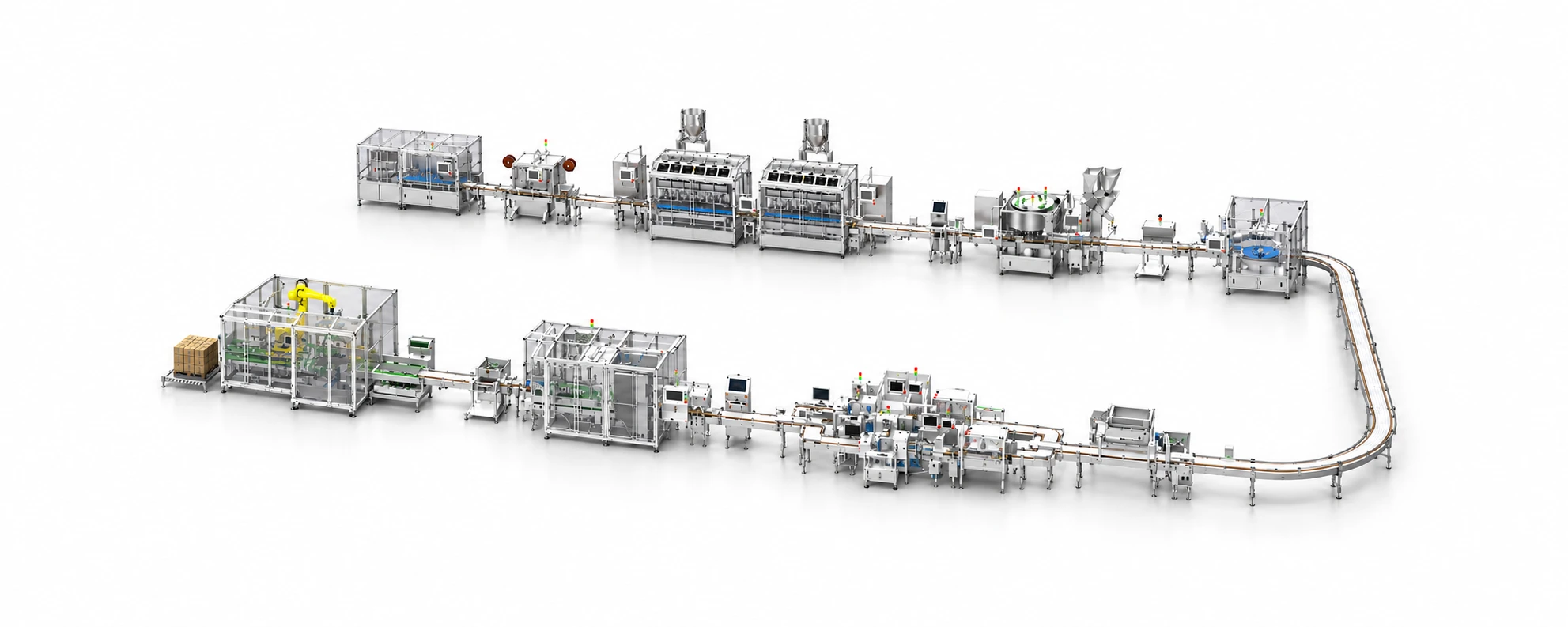
Production line · Equipment context
Explore the process areas on the production line associated with this equipment.
Follow a bottled nutritional tablet or capsule presentation through counting, filling, closing and end-of-line packing. The line provides process context; the individual product is not identified as a separate station in this view.
Related production lines: Nutrition Product Processing & Packaging
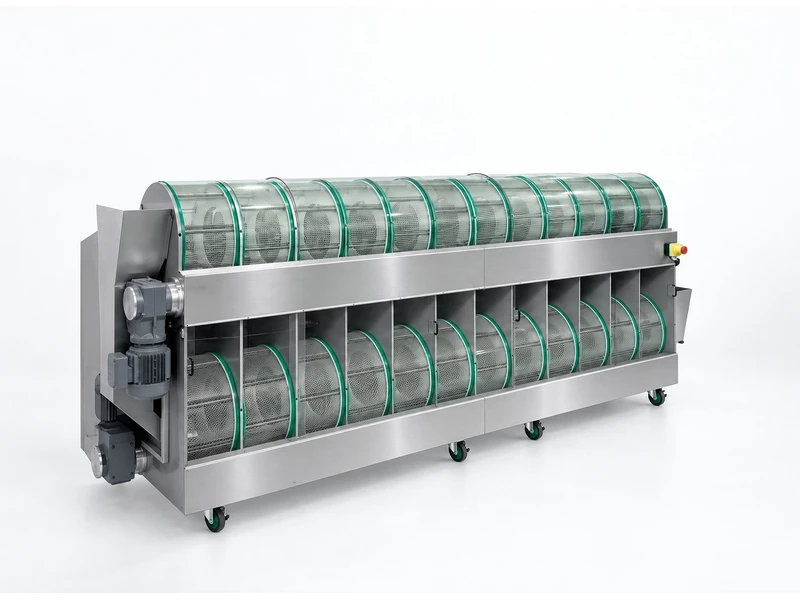
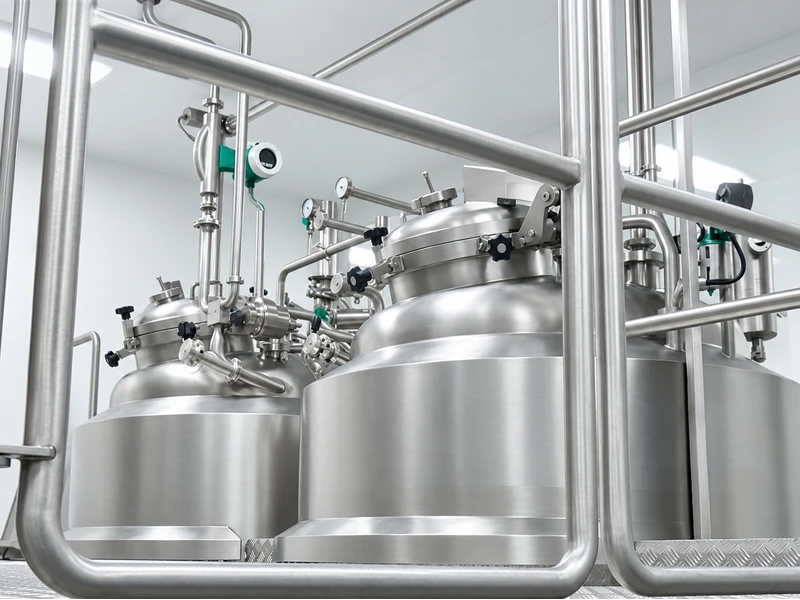
Shell and fill preparations arrive through separate paths. Wet capsules leave the die area for the selected initial and final drying stages; controlled handling prevents a transfer bottleneck from changing their surface condition.
Fill rheology, ribbon thickness and die geometry determine which capsule shape and fill volume can be assessed.
Learn moreEvaluate seam quality after drying as well as immediately at discharge from the dies.
Learn moreIdentify the contact parts and format tooling for Softgel Encapsulation. Agree access for cleaning, the spares to hold and the operating records the site will need.
Learn moreShare shell and fill material, die shape and ribbon thickness.
Request product information
2 resources
No. The fill must be compatible with the shell during formation, drying and storage. Water activity, solvents, viscosity and suspended material can change that compatibility.
A different shell formulation can require different preparation, ribbon and drying conditions. Compatibility with the proposed machine and tooling is assessed for that shell system.
Moisture loss and shell contraction can reveal differences that were not apparent at die discharge. Final conditioned samples connect encapsulation settings to the finished capsule.
For a configuration review, include shell and fill material, die shape, ribbon thickness, seam inspection method.
Discuss your project