Skip to content

Process expertise. Chinese manufacturing. Global perspective.

PREASYS

Equipment & technology

Softgel Drying

Softgel drying removes shell moisture in controlled stages while preserving capsule shape, seam condition and compatibility with the fill.

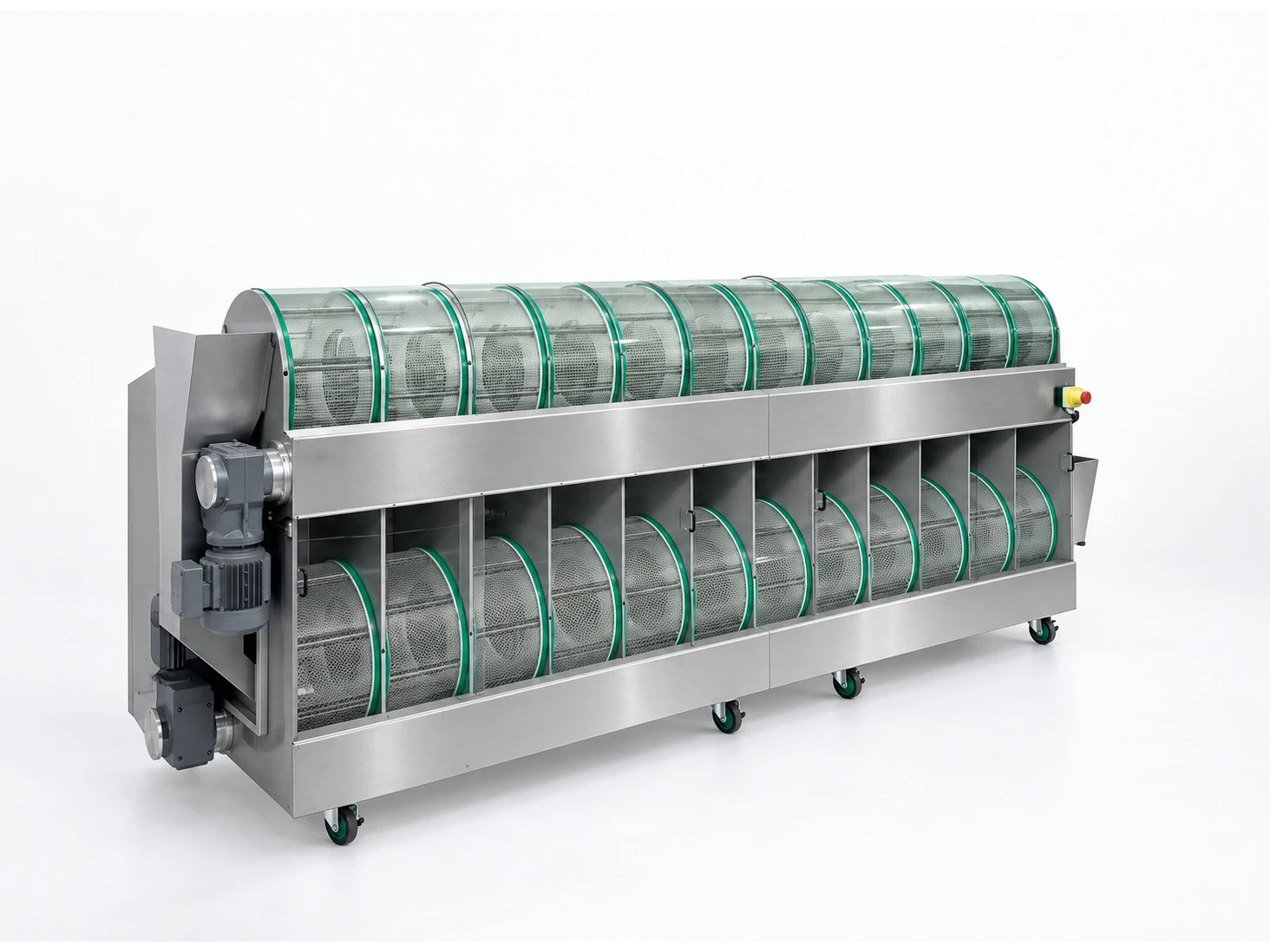
Row of perforated drying drums for soft capsules

Softgel Drying

Condition the shell after encapsulation

Fresh softgels have a deformable shell and require careful handling as moisture leaves it. Initial tumble drying can separate and condition capsules before a selected final tray or continuous drying route. Air temperature, humidity, flow and loading influence the drying curve; the endpoint belongs to the shell-and-fill combination.

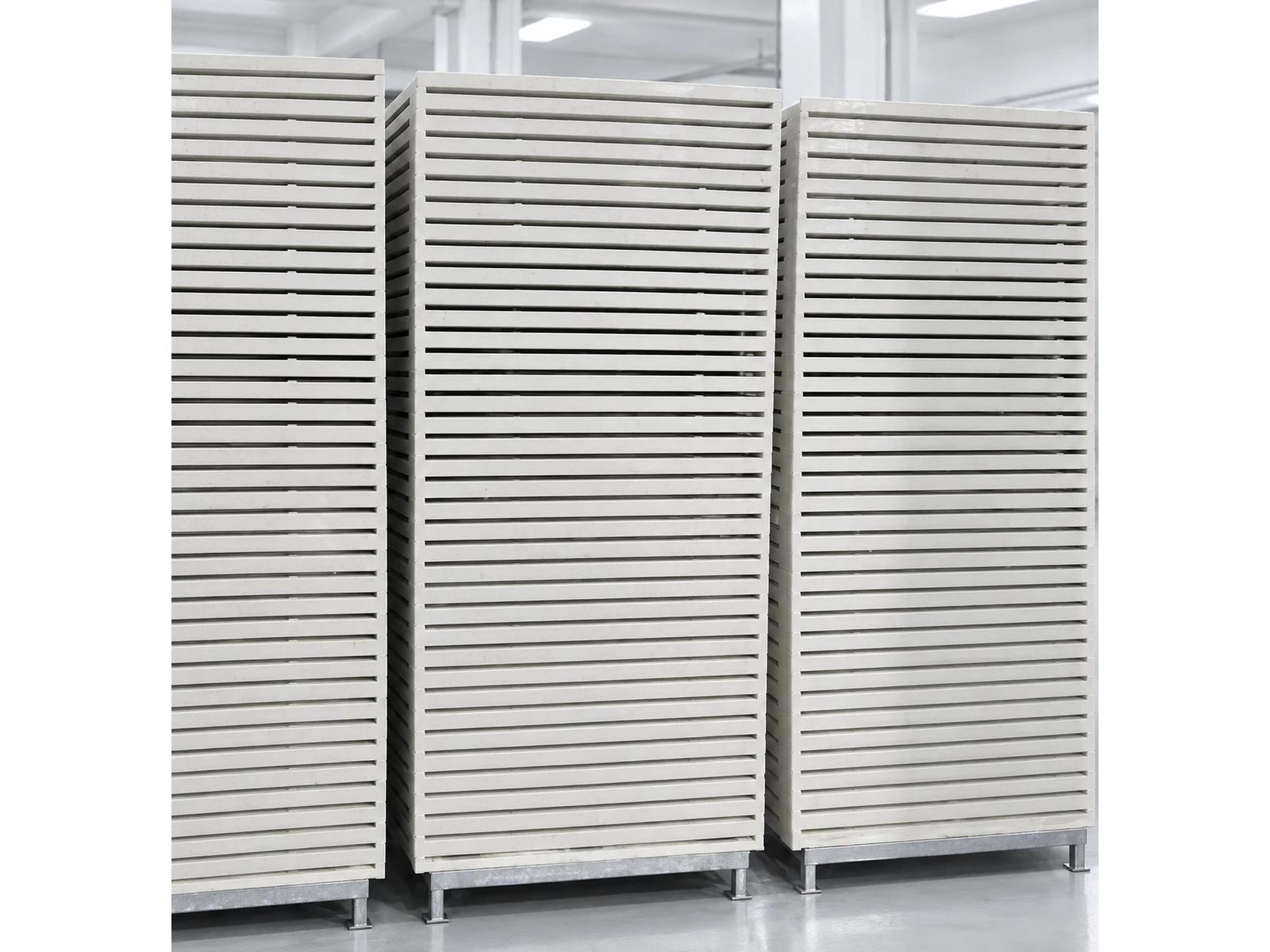
Mobile racks with shallow trays for conditioned drying
Process context · Mobile racks with shallow trays for conditioned drying

Process at a glance

The acceptable endpoint depends on shell and fill behaviour; residence time and load pattern are established together.

Condition

Remove shell moisture through the selected drying stages

Process challenges

Rapid moisture removal at the surface can produce a different condition from the interior. Air exposure is developed around the shell response rather than assumed to prevent skinning.

Read details

Rapid moisture removal at the surface can produce a different condition from the interior. Air exposure is developed around the shell response rather than assumed to prevent skinning.

Load pattern and incoming air affect the drying curve. Representative positions reveal differences that one chamber sensor may miss.

The dryer must accommodate wet-capsule arrival and the necessary residence time. Increasing feed can change load depth and drying uniformity.

Tray handling and continuous transport impose different movement and residence patterns. Their suitability follows capsule sensitivity and the production sequence.

Fresh shells can stick or deform before enough moisture is removed. Initial handling is assessed with the actual wet capsule.

Room dimensions and service access shape the airflow and loading arrangement. Construction details must support the intended cleaning tasks.

Building and fire requirements apply to the selected installation. Drying-process performance does not establish those approvals.

Technical data & features

Capsule size, shell composition and fill material influence the drying sequence and handling between stages.

Mobile racks with shallow trays for conditioned drying

Air conditions and capsule loading

A drying air path carries moisture away from the shell. Its condition changes as it passes the load, so inlet conditions alone do not establish uniform drying at every position.

Tray or room construction determines loading access, air distribution and cleanability. Installation space also includes utility connections and service access.

Materials and fire-performance declarations relate to the selected construction and site requirements. They are reviewed separately from the product drying process.

Drying capacity follows wet-capsule arrival, residence time and allowable loading. Greater tray depth can change moisture removal and capsule contact conditions.

Air distribution, loading pattern and endpoint sampling

Size the installation around the drying duty

Characteristic Tray/tunnel drying Continuous drying Tumble stage
Movement Capsules held on trays Capsules advance through the selected path Capsules move in a rotating drum
Loading variable Tray depth and spacing Feed rate and residence distribution Charge and movement conditions
Air interaction Distribution across tray positions Condition along the travel path Exposure during rotation
Process role Selected final conditioning route Selected continuous conditioning route Selected initial conditioning step
Acceptance evidence Moisture and shape across the load Endpoint across time and discharge Sticking, shape and handoff condition

How it works

Evaluate drying and final capsule condition

How is drying uniformity assessed?

Sample defined positions across the load or across a continuous discharge period. Compare moisture and physical condition using the same sample-conditioning and measurement method.

How is an overloaded dryer recognized?

Relate loading depth or feed changes to the drying curve and endpoint distribution. Inspect sticking and deformation as well as average moisture.

How are initial and final drying connected?

Define the shell condition leaving the initial stage and track its hold before final drying. A changed delay can alter sticking and moisture history.

What should be checked after maintenance?

Verify air paths, filters, seals and sensor condition against the installation procedure. Re-establish the agreed air distribution and endpoint evidence before using the changed arrangement.

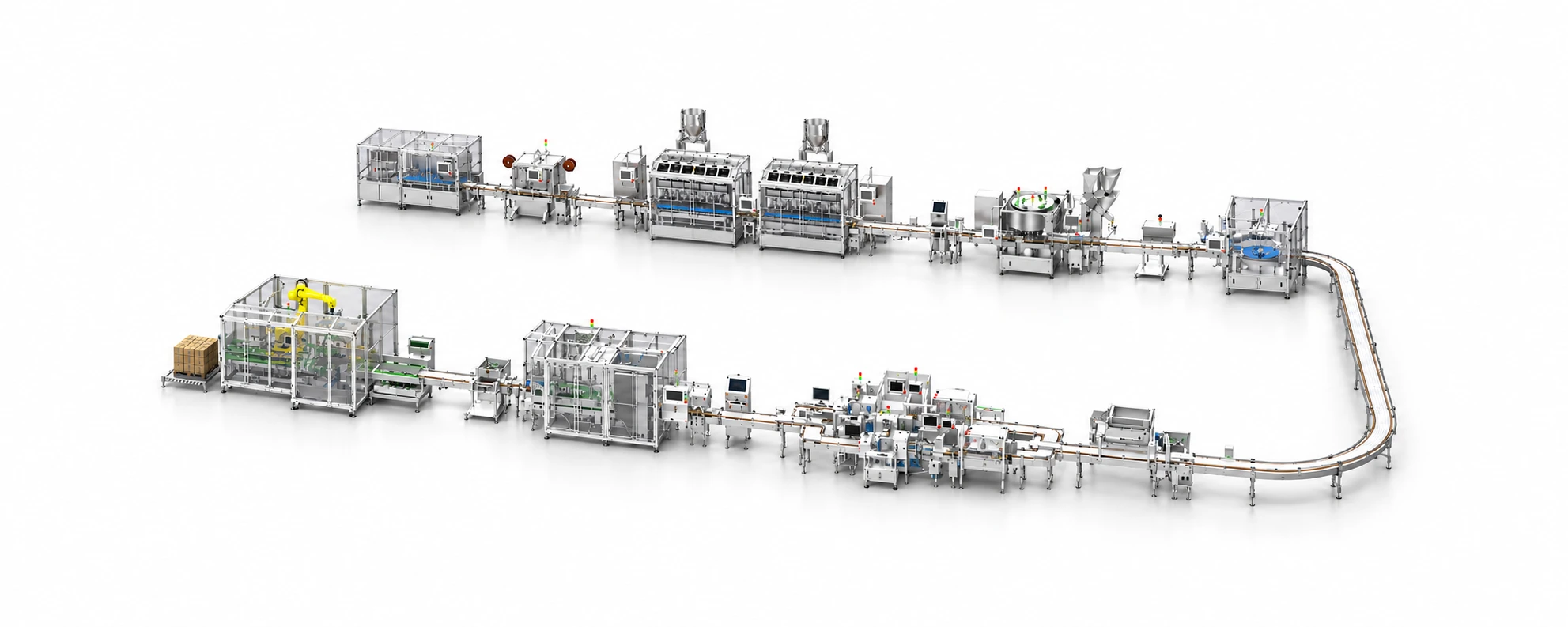
Nutrition · counting and bottle packing. Follow a bottled nutritional tablet or capsule presentation through counting, filling, closing and end-of-line packing. The line provides process context; the individual product is not identified as a separate station in this view.

Production line · Equipment context

Nutrition · counting and bottle packing

Explore the process areas on the production line associated with this equipment.

Skip tour
Production layout 5 equipment areas · Scroll to explore

Follow a bottled nutritional tablet or capsule presentation through counting, filling, closing and end-of-line packing. The line provides process context; the individual product is not identified as a separate station in this view.

Related production lines: Nutrition Product Processing & Packaging

Line integration

Wet softgels from the encapsulator

↓

Selected softgel drying route:

Selected initial tumble stage → Selected final drying route

Tray/tunnel or continuous final drying, according to the product process

↓

Conditioned softgels → Selected surface finishing, if required → Inspection → Selected bottle or blister packing; confirm the capsule condition after any finishing step.

Upstream: wet capsules from the selected softgel encapsulator

Downstream: product-compatible finishing, where required, followed by inspection and packing

The encapsulator, transfers and dryer must share a defined wet-capsule supply and discharge condition. Buffering cannot replace the residence time required by the shell.

Construction and qualification scope

Support throughout your project and production

Define the equipment scope

Capsule size, shell composition and fill material influence the drying sequence and handling between stages.

Learn more

Agree the acceptance test

Sample at defined points and check seam integrity, shape and handling before inspection and packaging.

Learn more

Prepare for operation

Identify the contact parts and format tooling for Softgel Drying. Agree access for cleaning, the spares to hold and the operating records the site will need.

Learn more

Knowledge hub

2 resources

Frequently asked questions

Is tumble drying sufficient for every softgel?

No. It can serve an initial conditioning role, while the product may need a further controlled drying stage. The endpoint is established for the shell and fill.

Does a tray route mean the capsule experiences no stress?

No. Loading, unloading and contact with neighbouring capsules still matter. Static drying changes the handling pattern but does not guarantee freedom from damage.

Can drying time be fixed from capsule size alone?

No. Shell composition, fill interactions, air conditions and load depth also influence moisture removal. Size is one input to the process assessment.

Contact

Share shell and fill formulations, the condition and flow of wet capsules, and the intended drying endpoint. Include room conditions, handling sensitivity and the proposed downstream inspection.

Discuss your project →
Mobile racks with shallow trays for conditioned drying